
Is Morpho a Good Buy at Current Prices?
Morpho trades around a quarter below its twelve-month high while still holding above its long-term average. What argues for and against buying into the DeFi lending token at this level.




Which topics should we dive deeper into?
Select what genuinely interests you. Your picks feed directly into our editorial planning.
Crypto news that's actually worth your time.
Weekly. 60 seconds. Carefully curated by our editors: no hype, no promo flood, no spam.
Morpho trades at $2.20, around 24.5 percent below its twelve-month high of $2.91 from 24 August 2026 and about 114 percent above the twelve-month low of $1.03 marked on 6 February 2026. The token of one of the largest lending protocols in decentralised finance has given back a fifth of its value in a month, and it now sits almost exactly on the line that separates a long correction from a broken trend. Is Morpho a good buy at these prices?
cryptoticker.io compiled the figures in this analysis on 28 October 2026 from the daily closing prices published by CoinMarketCap. The moving averages, the relative strength index and the distances to the twelve-month extremes are our own calculations on that series.
Morpho price analysis: where the token stands today
The current price of $2.20 puts Morpho just above its 200-day average of $2.12, a gap of roughly three percent. Above that sits the 50-day average at $2.38, which the token lost in early October and has not recovered since. Between those two lines lies the zone the price has been working in for several weeks, and it is narrow: a move of eight percent in either direction decides which of the two averages the market respects.
The levels are easy to name. The twelve-month low of $1.03 has not been tested since February and is too far away to matter for a short-term decision. The level that does matter is the 200-day average at $2.12, which has held on every pullback since July. Resistance is the 50-day average at $2.38, and above it the August peak at $2.91.
Zoom out and the picture changes character. Morpho is down 9.0 percent over seven days and 19.8 percent over 30, yet up 11.6 percent over 90 days and 7.0 percent over twelve months. A market capitalisation of $1.17 billion places it at rank 57. The drawdown is real, but it has not undone the year.
Is the Morpho downtrend broken or only interrupted?
A downtrend is a sequence of lower highs and lower lows. Morpho has produced the first part since late August: the peak at $2.91 was followed by progressively weaker rebounds, each of them capped below the previous one. The second part is missing. The September and October lows came in above the summer lows, and the price has not spent a single daily close below the 200-day average at $2.12 during this leg.
That makes the move a correction within a rising structure rather than a reversal, for now. The distinction matters: in a correction the long-term average is the line buyers defend, in a reversal it becomes the ceiling sellers use. Morpho sits on the first side of it, with little room to spare.
The condition under which this reading is wrong is specific: two consecutive weekly closes below $2.12 would turn the 200-day average from support into resistance and put the February area back into play. Until then the trend is interrupted; after that, the case built below no longer holds.
What RSI and moving averages mean for a Morpho entry
The 14-day relative strength index stands at 37.4. That is in the lower third of its range without being oversold, which conventionally starts at 30. For an entry, this is the least comfortable reading of the three: a reading below 30 would signal an exhausted sell-off, a reading above 50 would signal returning momentum. At 37.4, the market is simply tired.
The two averages tell the same story from a different angle. The price above the 200-day line at $2.12 keeps the long-term structure intact; the price below the 50-day line at $2.38 says the medium-term momentum belongs to the sellers. Crossovers matter here. The 50-day average has been falling since the start of October, and if it keeps falling at its current pace it will meet the 200-day average in the coming weeks. Such a crossing is widely watched and tends to attract systematic selling, whatever one thinks of its predictive value.
For an entry that argues for patience. Buying into a falling medium-term average while the long-term line holds is a bet that the correction ends before the two cross, which makes it a bet on timing rather than on valuation.
 Compare the best crypto exchanges
What trading volume reveals about demand for Morpho
Morpho turned over $17.5 million in the past 24 hours. Measured against a market capitalisation of $1.17 billion, that is a daily turnover of roughly 1.5 percent. The 30-day average sits higher at $26.0 million, so current activity is running about a third below the recent norm.
This is the most informative number in the whole analysis, and it cuts both ways. Volume did not spike during the 19.8 percent decline of the past month. Forced selling, liquidation cascades and capitulation all leave the same fingerprint: a sharp rise in turnover at the lows. Morpho shows none of it. The decline looks like buyers stepping back rather than holders rushing out, which is the gentler of the two explanations.
The flip side is liquidity. A token that trades 1.5 percent of its capitalisation per day is thin by large-cap standards, where three to five percent is routine. Thin books widen spreads and amplify moves in both directions, so anyone sizing a position should assume the exit costs more than the entry.
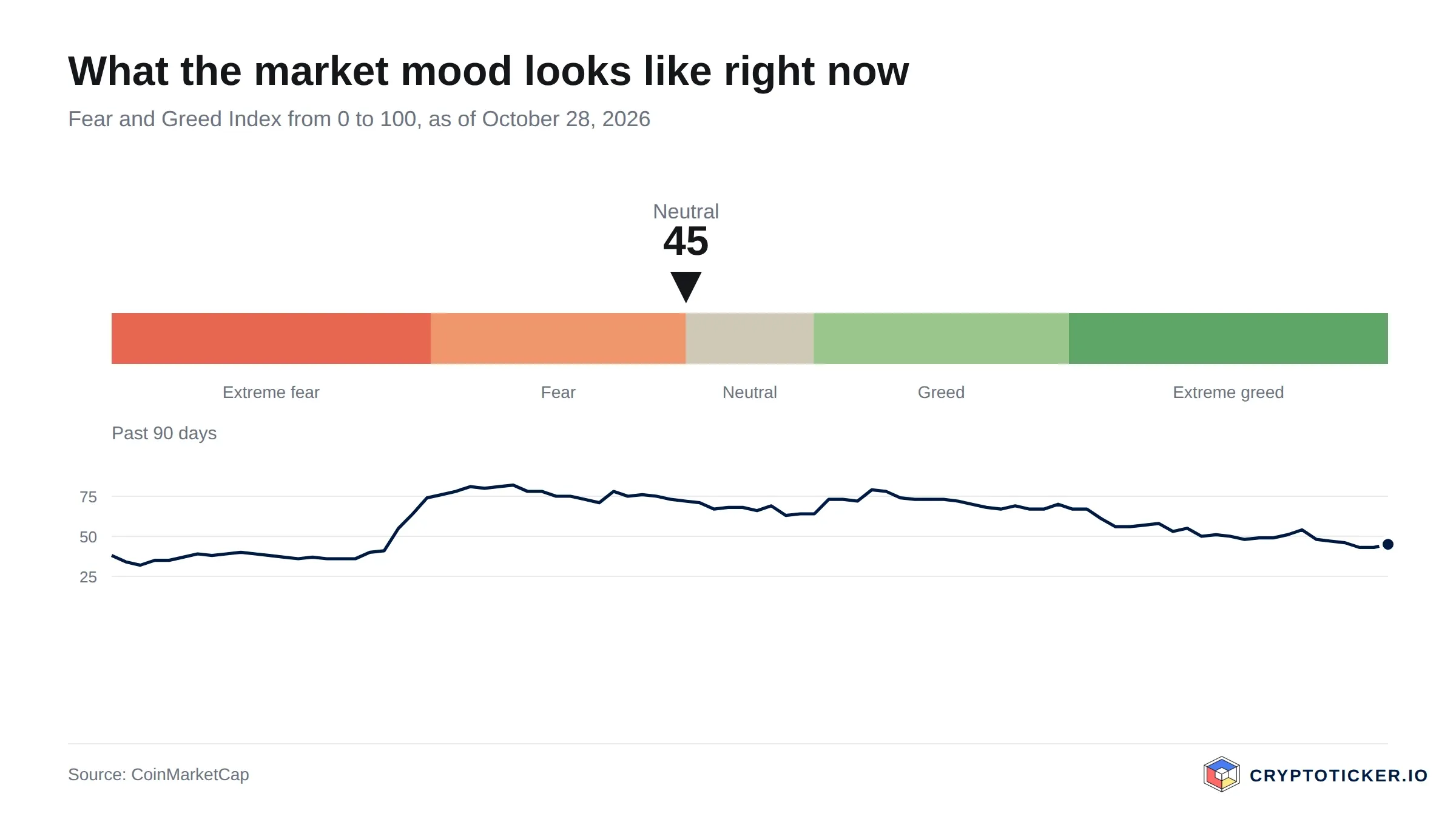
Market sentiment offers no help either way. The Fear and Greed Index stands at 45, squarely neutral, so the Morpho decline is not simply the market's mood in miniature.
The structural factors that speak for Morpho
Morpho is a lending protocol on the Ethereum blockchain that also runs on Base. It matches lenders and borrowers in isolated markets, each of which fixes a collateral pair, a liquidation loan-to-value threshold and a price oracle at creation. The full architecture is set out in the project documentation.
Three properties matter for the valuation. The markets are separated, so trouble in one exotic market does not spread. The core contracts are designed to be immutable, which rules out later changes to the terms a lender agreed to. And market selection is delegated to curators who bundle deposits into vaults for a share of the interest.
The supply mechanics are clearly defined. Of a total of one billion tokens, around 534.3 million circulate, roughly 53 percent. MORPHO governs how the protocol is used, so its value rests on the protocol's relevance.
On the usage side, Morpho is tied to Ethereum, where the bulk of its collateralised loans sit. The next protocol steps are set out in the Ethereum roadmap; cheaper transactions lower the cost of a leveraged lending position directly.
On regulation, a decentralised lending protocol in the EU does not fall under the same rules as a centralised exchange. The obligations under MiCA land first with the venue you buy through, and our overview of regulated crypto exchanges shows which are authorised. Whether such protocols will carry obligations of their own is open, and that is an assumption.
What argues for buying Morpho at current prices
Three points carry weight here. First, the long-term structure is intact. At $2.20 the price holds above the 200-day average of $2.12, a line that has absorbed every pullback since July, and the twelve-month balance is still positive at 7.0 percent despite a month that took a fifth off the price.
Second, the decline came without a volume spike. Turnover of $17.5 million during the drop, below the $26.0 million 30-day average, points to absent buyers rather than departing holders. Such corrections tend to resolve faster than those driven by forced liquidation.
Third, the distance to the twelve-month high is substantial. At 24.5 percent below $2.91, a buyer today pays considerably less than in August for the same protocol, and a capitalisation of $1.17 billion is small enough that better protocol usage can still move the price.
 Compare the best crypto lending platforms
What argues against buying Morpho at current prices
Three points cut the other way, and they are not minor. First, the supply overhang. The 47 percent of the total supply that is not yet circulating becomes available over time, and every one of those releases meets a market that turns over 1.5 percent of its capitalisation per day. Thin liquidity and a scheduled increase in supply are an awkward combination, and this is the single most concrete risk in the position.
Second, the medium-term momentum is against the buyer. The price sits below the falling 50-day average of $2.38, the RSI at 37.4 shows no sign of a turn, and the two moving averages are converging in a way that typically draws systematic selling if they cross. None of that predicts the next move, but all of it means an entry today is fighting the prevailing direction.
Third, the token has no direct claim on protocol revenue. MORPHO is a governance token, so its price depends on the protocol's standing rather than on a modellable cash flow. Lending volumes can grow while the token lags, and that gap has opened before in this sector.
How to buy Morpho at current prices
MORPHO is listed on several large venues. For most investors the practical choice is a regulated provider that accepts bank transfers in their own currency. Our reviews of Kraken and Bitpanda set out fees, deposit routes and limits in detail.
Two cost items decide what an entry actually costs. The trading fee at most venues runs between 0.1 and 1.5 percent per order, and on top comes the bid-ask spread, which at 1.5 percent daily turnover is wider than for Bitcoin. In a book this thin, a limit order usually saves more than switching provider does.
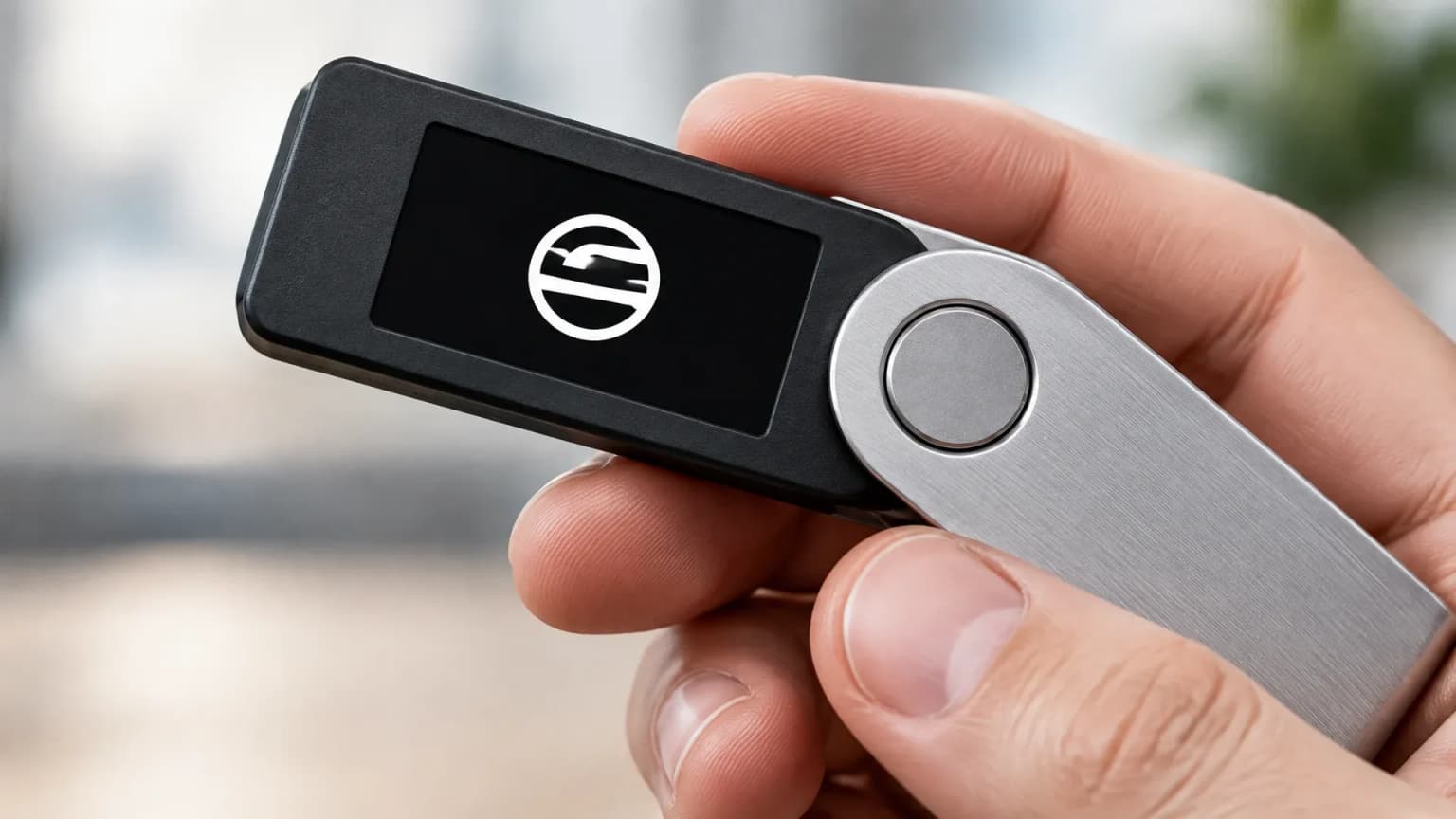
On custody: anyone holding Morpho longer than a trade should not leave the tokens on an exchange account. A hardware wallet keeps the keys offline, and our hardware wallet comparison covers the current devices. Governance participation requires your own wallet in any case.
On tax, the rules differ by country and change more often than the protocol does. Holding periods and allowances vary widely, and anyone lending tokens should check the treatment before opening the position.
So is Morpho a good buy at current prices?
In the short term the evidence is thin. The price at $2.20 is trapped between a 200-day average of $2.12 that it needs and a falling 50-day average of $2.38 that caps every rebound. An RSI of 37.4 offers neither an exhaustion signal nor momentum, and daily turnover of $17.5 million against a $26.0 million average shows no returning interest. Nothing in that configuration makes a convincing case for buying this week rather than next month.
Over a longer horizon the question is different: does Morpho's lending volume grow faster than its supply unlocks? If it does, a capitalisation of $1.17 billion at rank 57 leaves room, and an entry 24.5 percent below the August high of $2.91 will look reasonable. If it does not, the supply schedule sets the price.
The assumption behind the constructive reading is testable, which is the point of naming it. It is refuted by two consecutive weekly closes below the 200-day average at $2.12, by a sustained fall in turnover below the current $17.5 million while supply unlocks continue, or by a drop in protocol deposits over a full quarter. Any one of those would remove the ground this reading stands on. None of this is investment advice.
Buying Morpho: What to take away
- Check where the price stands relative to the 200-day average at $2.12 before anything else. Above it, the correction reading holds; below it for two weekly closes, the structure has changed. Our crypto exchange comparison shows where the token can be bought once that question is settled.
- Size the position for the liquidity, not for the conviction. At 1.5 percent daily turnover the exit costs more than the entry, and a limit order is worth more than a provider switch. The overview of regulated exchanges lists the authorised venues.
- Move tokens you intend to hold off the exchange. Governance participation requires your own wallet anyway, and our hardware wallet comparison covers the devices that keep the keys offline.
Disclosure: Some of the providers mentioned in this article work with us through partner programmes. This has no influence on the price analysis or on the assessment of the chart situation; the price data comes from a public market data source and can be verified there.
(Last updated: 28 October 2026. This article is not investment advice. Prices, fees and terms change; check them with the provider yourself before every purchase. Crypto assets are subject to high price swings, and a total loss is possible.)
Frequently asked questions about Morpho
Transparency note: This article was produced with the assistance of artificial intelligence and reviewed by our editorial team before publication. All figures and claims were checked against the primary sources linked in the text. The feature image was generated with AI.
Related articles
Which topics should we dive deeper into?
Select what genuinely interests you. Your picks feed directly into our editorial planning.
Crypto news that's actually worth your time.
Weekly. 60 seconds. Carefully curated by our editors: no hype, no promo flood, no spam.

October 27, 2026 11:25 PM

Is Arbitrum a Good Buy at Current Prices?
Arbitrum sits well below its twelve-month high and above its long-term average. We check what argues for and against buying ARB at this level, and which condition would prove the recovery wrong.
October 21, 2026 12:33 AM
Is Worldcoin a Good Buy at Current Prices?
Worldcoin has reclaimed both of its moving averages, and the 50-day line has crossed above the 200-day line for the first time this year. Whether that makes WLD a buy depends on the locked supply and on whether demand holds.
September 28, 2026 4:28 AM

Is Quant a Good Buy at the Current Price?
Quant climbed as high as 357 dollars after the bank mandate and has since fallen back sharply. Is QNT a good buy at the current price? We check the chart, volume, the banks' timetable and the token's role with our own data.
September 20, 2026 9:21 AM

Is Ethena a Good Buy at Current Prices?
Ethena has rebounded hard off its twelve-month low and still trades far below its high. Is ENA a good buy at current prices? We check the chart, the supply schedule and the source of the yield with our own price data.

April 6, 2026 6:24 PM
Ethereum Price Analysis: ETH Consolidates Between $1,800 and $2,100, What’s Next?
Ethereum price is stuck in a tight range between $1,800 and $2,100. Analysts warn of a decisive breakout or breakdown as volatility reaches a boiling point.

February 26, 2026 4:18 PM

Cardano Price Analysis: ADA Jumps 8% as Bulls Eye $0.30 Breakout
Cardano (ADA) surges 8% to $0.29. Analysts eye the $0.30 resistance as a make-or-break point for the next major price move toward $0.35.
July 21, 2025 5:00 AM

Cardano Price Prediction: ADA Finally Wakes Up After Bitcoin ATH
Cardano has been lagging — until now. While Bitcoin topped out weeks ago, ADA is just starting to move. What’s next for the ADA price?
October 26, 2026 11:22 PM

Is Sky a Good Buy at Current Prices?
Sky is the renamed MakerDAO, and its governance token is tied to the earnings of a lending protocol with its own stablecoin. Is SKY a good buy at current prices? We weigh the chart position, the savings rate, supply mechanics and the open question of European regulation.
August 27, 2026 11:25 AM

Is Pump.fun a Good Buy at Current Prices?
PUMP now sits only just above its 50-day average and still trades below its twelve-month high. We check with our own price data what argues for and against buying Pump.fun at the current price.
August 27, 2026 6:38 AM
Is NEAR Protocol a Good Buy at Current Prices?
NEAR has nearly tripled since August, and the trend break we defined back then has happened. What ETF buying, leverage and issuance mean now: is NEAR Protocol a good buy at current prices?
August 27, 2026 6:23 AM
Is Bittensor a Good Buy at Current Prices?
Bittensor has passed the trend test we set in August: a weekly close above the 200-day average and a moving-average crossover in September. What the correction since the peak means: is Bittensor a good buy at current prices?
August 27, 2026 4:31 AM

Is AAVE a Good Buy at Current Prices?
AAVE has worked its way back above both the 200-day and the 50-day moving average, yet still trades far below its twelve-month high. Using our own price data, we examine what speaks for and against an entry at current prices.
August 27, 2026 3:39 AM

Is Cronos a Good Buy at Current Prices?
Cronos has reclaimed its 200-day line for the first time since the spring, and the RSI is back out of overbought. We weigh what speaks for and against buying CRO at the current price.
August 27, 2026 3:24 AM

Is Hedera a Good Buy at Current Prices?
Hedera met our trend-reversal test in September, then gave back the entire IBM jump. What higher lows, HashPack's stock tokens and Hitachi's exit from the council mean now: is Hedera a good buy at current prices?
August 27, 2026 2:21 AM

Is SUI a Good Buy at Current Prices?
SUI is holding its 200-day moving average and trades 51 percent above its twelve-month low, with the 50-day line now above the 200-day. We check whether the coin is a good buy at current prices.
August 26, 2026 4:21 AM
Is Uniswap a Good Buy at Current Prices?
Uniswap has gained about three quarters since August, and the trend test we set back then has been passed. What the fee switch, CME futures and the correction since September mean now: is Uniswap a good buy at current prices?
August 16, 2026 12:21 PM

Is Toncoin a Good Buy at Current Prices?
Toncoin, now traded as Gram (GRAM), has fallen back below both moving averages and the September breakout has failed. What the Telegram wallet, volume and the base mean now: is Toncoin a good buy at current prices?
May 18, 2026 1:07 PM

Is Solana a Good Buy in 2026? SOL Price Analysis and Potential ROI
Solana (SOL) trades at $101.73 after clearing the $100 resistance. Here's how SOL's potential returns stack up against BTC, ETH, and XRP.
May 13, 2026 11:02 AM

Is PEPE Coin worth Buying in 2026?
PEPE still holds both its 50 day and its 200 day average, while the past month has gone sideways and weekly turnover has picked up again. What that means for anyone buying at current prices, and the two levels that settle it.
May 2, 2026 8:43 AM
Top 5 Cryptocurrencies to Buy in May 2026: Altcoin Season Next?
May 2026 starts with Bitcoin leading the charge above $78k. While some altcoins lag, others present unique accumulation opportunities for investors.
April 24, 2026 3:29 PM
XRP Price Prediction: Why Ripple is Stuck in a Sideways Grind
XRP price remains stagnant despite regulatory wins. This XRP price prediction analyzes the technical chart and identifies the key breakout levels for 2026.
July 22, 2025 9:28 AM
XRP Price Prediction: Is Now the Right Time to Buy XRP After the Dip?
XRP price pulled back -2.6% in the last 24 hours following a sharp +22% weekly surge. Should you buy the dip or wait for a better entry?
April 10, 2022 1:17 PM

IOTA Price is about to POP 10%! BUY IOTA?
IOTA price today is seeking to make higher highs. With the current technicals in place, this seems very plausible. Is IOTA up soon?
September 28, 2026 9:47 AM
XRP Price Drops Below $1.50: Where Is Ripple Heading This Week?
XRP price slips under $1.50 after a red weekend. Here is the XRP price analysis with the higher and lower targets that matter this week.
August 9, 2024 10:16 AM

Bitcoin Price Prediction: After Breaking The $60k Mark, Can BTC Price Surpass $70k Next?
A huge surge in Bitcoin price is on the horizon with multiple signals waving for investors to grab this opportunity. Explore the potential for BTC price...

More from CryptoTicker