

 CryptoTicker.io




Updated on 22 October 2026: completely revised, with the terms of Bitpanda, Crypto.com, Nexo, Coinbase and Bybit as published by the providers, plus issuers and MiCA licences. Crypto.com foreign exchange fees reflect the version in force since 1 October 2026.
A crypto credit card in Europe is almost always a Visa or Mastercard debit or prepaid card that converts your crypto into a fiat currency such as the euro in real time when you pay. Without a base fee, the Bitpanda Card pays 1% cashback in Bitcoin. Crypto.com (1.5% to 4.5% in CRO) and Nexo (up to 2% in NEXO) pay higher rates, but only with a subscription, staked tokens or a minimum balance. Fee structures differ widely, and four numbers decide which card pays off for you: the base fee, the cap on rewards, the foreign exchange fee and the free ATM allowance.
The table below compares five cards available to residents of the European Economic Area. Further down you will find a worked example, issuers and licences, which needs each card covers and what matters for tax. The figures apply to the EEA versions of the cards; conditions in the UK or the US can differ.
Crypto credit cards: key facts at a glance
- Almost all crypto credit cards in Europe are debit or prepaid cards. Of the five cards here, only Nexo offers a credit line in its Credit Mode, with interest from 1.9% a year.
- The Bitpanda Card has no base fee and pays 1% cashback in Bitcoin, but only on purchases with crypto assets, not on payments from euros, stocks, metals or stablecoins.
- Crypto.com rewards 1.5% on up to USD 750 of spending a month in its Ruby Steel tier. You cannot earn more than USD 11.25 in CRO a month there, for a subscription of €3.99 a month.
- Since 1 October 2026, Crypto.com also charges foreign exchange fees on Ruby Steel and Royal Indigo: 0.2% within the EU and the UK, and outside them 2% above a monthly allowance of €400 and €800 respectively.
- Nexo charges foreign exchange fees by day of the week: outside the EEA, the UK and Switzerland, a payment costs 2% on weekdays and 2.5% at weekends.
- In many European countries, every card payment from a crypto balance is a taxable disposal; in Germany the gain stays tax free after one year of holding or below €1,000 a year (law as of 22 October 2026).
Five cards at a glance: fees, cashback and ATM
The table reflects the terms as of 22 October 2026, taken from the providers' card and fee pages: Bitpanda Card, Crypto.com Visa Card with its fee schedule for Europe, Nexo Card, the Coinbase help page on the card in the EU and the Bybit EU announcement of 19 January 2026.
| Card | Type and network | Base fee | Cashback | Foreign exchange | ATM |
|---|---|---|---|---|---|
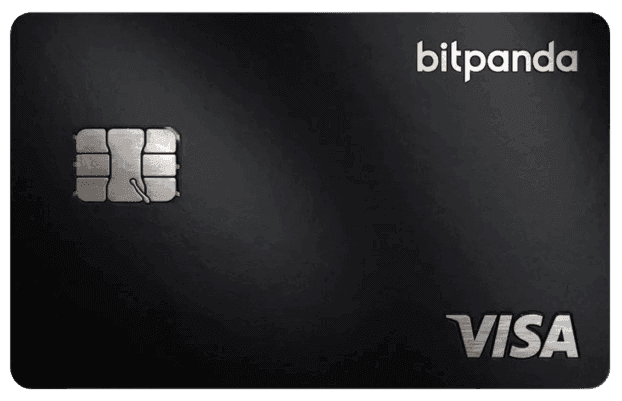
| Bitpanda Card | Debit card, Visa | none, first delivery free | 1% in Bitcoin on payments from cryptocurrencies | 0%, Visa surcharges possible | 2%, at least €2, limit €500 a day |
| Crypto.com Visa Card | Prepaid card, Visa | Midnight Blue free (plastic card €4.99), Ruby Steel €3.99 a month, €39.90 a year or €450 in CRO staking for 12 months, Royal Indigo and Jade Green €24.99 a month, €249.90 a year or €4,500 in CRO staking | Midnight Blue 0%, Ruby Steel 1.5% on up to USD 750, Royal Indigo 2.5% on up to USD 1,500 a month, paid in CRO; higher tiers 3.5% and 4.5% | 0.2% within the EU and UK; outside 2%, for Ruby Steel only above €400 and for Royal Indigo above €800 a month | free €200 (Midnight Blue), €400 (Ruby Steel), €800 (Royal Indigo) a month, then 2% |
| Nexo Card | Mastercard with Credit Mode and Debit Mode | no monthly, annual or inactivity fee | only in Credit Mode with a balance above USD 5,000: 0.5% to 2% in NEXO or 0.1% to 0.5% in Bitcoin | weekdays 0.2% (EEA, UK, Switzerland) and 2% (rest of world), weekends 0.7% and 2.5% | free €200 to €2,000 a month by tier, then 2%, at least €1.99 |
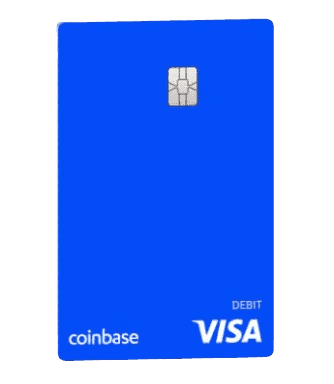
| Coinbase Card | Debit card, Visa | no application fee and no transaction fee, spread on conversion | no cashback in the EU, rewards only for users in the US | not stated in the EU help page | no fee from Coinbase, ATM operator fee possible |
| Bybit Card | Mastercard | no annual fee | 2% to 10% by rewards tier, in Bitcoin or USDC, credited daily | per card terms in the app | allowance by tier, fee above it per app |
The higher Crypto.com tiers add extra benefits: Ruby Steel refunds three months of Spotify, Royal Indigo six months of Spotify and Netflix and, with an annual subscription, airport lounge access up to twice a year. The matrix above lists the Bitpanda Card and the Coinbase Card with a direct application link. The Gemini Credit Card in the matrix is issued in the US and, according to Gemini, is not available outside the US. How the platforms behind the cards perform is covered in our reviews of Bitpanda, Crypto.com, Coinbase and Bybit.
Crypto credit card, debit card or prepaid: three types
The name crypto credit card is usually inaccurate. Of the five cards in the table, three are crypto debit cards (Bitpanda, Coinbase, Bybit), one is a prepaid card (Crypto.com), and only Nexo also offers a real credit mode. The type determines how the card works: where the money comes from when you pay, and whether coins are sold in the process.
- Crypto debit card: When you pay, the card draws on your crypto balance with the provider and converts the selected cryptocurrency into euros at the same moment. With Bitpanda you choose a main asset and a fallback asset, for example Bitcoin and Ethereum. You cannot go into debt with a debit card.
- Prepaid cards: You top up the card with euros in advance, at Crypto.com from the cash account, from crypto that is converted into euros in the process, or by bank card with a 1% fee. The conversion, and so the taxable sale, happens when you top up, not when you pay. The card balance is capped at €25,000.
- Credit line against crypto: In the Credit Mode of the Nexo Card you pay from a loan secured by your crypto. Nothing is sold, but interest starts at 1.9% a year. If the value of the collateral falls sharply, it can be liquidated, as with any crypto loan; our crypto lending comparison covers providers of such loans.
All five cards run on Visa or Mastercard and work for shopping in stores and online wherever those networks are accepted. The Bitpanda Card supports Apple Pay, while Nexo and Bybit support Apple Pay and Google Pay. The Coinbase Card cannot be added to mobile wallets in the EU; it works as a plastic card and as a virtual card in the app.
Worked example: what €1,000 of monthly card spending earns
The assumptions: you spend €1,000 a month with the card in the euro area, paid from a crypto balance, and withdraw €300 once from an ATM. US dollar caps are converted at the European Central Bank reference rate of 21 October 2026, when €1 was worth USD 1.1234. The USD 750 cap of Ruby Steel equals €667.62, the USD 1,500 cap of Royal Indigo €1,335.23.
| Card and tier | Cashback per month | Costs per month | Net per month | Net per year |
|---|---|---|---|---|
| Bitpanda Card | €10.00 in Bitcoin | €6.00 for the withdrawal | +€4.00 | +€48 |
| Crypto.com Midnight Blue | €0.00 | €2.00 (€100 above the allowance) | -€2.00 | -€24, plus €4.99 once for the card |
| Crypto.com Ruby Steel, monthly plan | €10.01 in CRO (cap €667.62) | €3.99 subscription | +€6.02 | +€72, about +€80 with the annual plan |
| Crypto.com Royal Indigo, monthly plan | €25.00 in CRO | €24.99 subscription | +€0.01 | €0, about +€50 with the annual plan |
| Nexo Card, base tier, Credit Mode | €5.00 in NEXO or €1.00 in Bitcoin | €2.00 (€100 above the allowance) | +€3.00 or -€1.00 | +€36 or -€12, excluding loan interest |
| Coinbase Card | €0.00 | no fee, spread in the conversion rate | €0 minus spread | €0 minus spread |
Our assessment: at around €1,000 of spending, the difference between the cards is a single-digit euro amount per month despite different cashback rates. Ruby Steel breaks even from €266 of monthly spending, Royal Indigo on the monthly plan only from just under €1,000, and it then earns at most €8.39 a month. If you withdraw cash often, the Bitpanda Card quickly loses its edge, and if you are rewarded in CRO or NEXO, you carry the price risk of those tokens. The Bybit Card is not in the calculation because its rate depends on your personal rewards tier.
When travelling outside Europe, the picture changes. A €500 payment in a foreign currency, here US dollars, costs this much in foreign exchange fees per transaction:
| Card | €500 in US dollars |
|---|---|
| Bitpanda Card | €0.00, Visa surcharges possible |
| Crypto.com Midnight Blue | €10.00 |
| Crypto.com Ruby Steel | €2.00 (€400 a month free) |
| Crypto.com Royal Indigo | €0.00 (€800 a month free) |
| Nexo Card on a weekday | €10.00 |
| Nexo Card at the weekend | €12.50 |

Issuer, licence and availability in the EEA
Every crypto card involves two companies: a payment institution that issues the card and a crypto service provider that holds and converts your balance. Since the transition period ended on 1 July 2026, the crypto service provider needs a licence under the EU MiCA regulation. Whether a provider is licensed is shown in the public register of the European Securities and Markets Authority (ESMA); the details below follow the register file as of 19 October 2026.
| Card | Card issuer | Crypto service provider and licence | Who can apply |
|---|---|---|---|
| Bitpanda Card | Transact Payments Malta Limited, Visa licence, supervised by the MFSA in Malta | Bitpanda GmbH, MiCA licence from the Austrian FMA since 9 April 2025 | citizens of a euro area country with a verified account; not after verification via Bankident |
| Crypto.com Visa Card | Foris MT Limited, e-money institution supervised by the MFSA in Malta | Foris DAX MT Limited, MiCA licence from the MFSA since 27 January 2025 | residents of the EEA |
| Nexo Card | DiPocket UAB, Lithuania | Nexo itself has no entry in the ESMA register; custody for EEA clients has been handled since July 2026 by Tangany GmbH, MiCA licence from the German BaFin since 8 August 2025 | citizens and residents of selected European countries, including the EEA and the UK |
| Coinbase Card | Pathward N.A. with a Visa licence, according to the EU help page | Coinbase Luxembourg S.A., MiCA licence from the CSSF in Luxembourg since 20 June 2025 | residents of 31 countries, including Germany, France, Spain and the UK |
| Bybit Card | operated by Bybit EU GmbH | Bybit EU GmbH, MiCA licence from the Austrian FMA since 28 May 2025 | residents of the EEA except Malta |
The card itself is an e-money or payment product with these providers. Balances on it are not covered by the statutory deposit guarantee that applies to current accounts at banks, as Bitpanda states explicitly in its card terms. Which exchanges and brokers hold a MiCA licence is listed in our comparison of regulated crypto exchanges.
Which crypto credit card fits your needs
Our assessment by spending pattern, based on the table and the worked example:
- No base fee, little travel abroad: The Bitpanda Card pays 1% in Bitcoin on crypto payments and charges 0% foreign exchange fee. If you often withdraw cash, the 2% per withdrawal costs you the advantage.
- Higher cashback with regular spending: Crypto.com Ruby Steel pays off from €266 a month, earlier with the annual plan. Above USD 750 of monthly spending the tier earns no further rewards.
- Spend without selling: The Credit Mode of the Nexo Card borrows against your holdings instead of selling them. Cashback only starts at a balance of USD 5,000, and the loan costs interest.
- Already a Coinbase customer: The Coinbase Card charges no transaction fee but pays no cashback in the EU; the cost is in the spread. Our article on Coinbase Card fees, conversion and tax has the calculation.
- Bitcoin cashback above 1%: The Bybit Card pays 2% to 10% in Bitcoin or USDC depending on the rewards tier. The app shows your rate before you apply.
Tax: every crypto payment is a disposal
When you pay with the card from Bitcoin, Ethereum or other coins, the provider sells them for fiat money. In many European countries that is a taxable disposal. In the UK, HMRC lists using tokens to pay for goods or services as a disposal for Capital Gains Tax (GOV.UK guidance). In France, paying with crypto counts as a taxable disposal once your total disposal proceeds for the year exceed €305 (BOFiP). In Germany it is a private sale under section 23 of the Income Tax Act: gains on coins held for no more than one year are taxable unless all private sale gains for the year stay below €1,000.
A draft from the German Federal Ministry of Finance would abolish the tax-free holding period for crypto acquired after 31 December 2026; the cabinet discussion planned for 14 October 2026 did not take place, and nothing has been passed (as of 22 October 2026). Every payment therefore needs the purchase date, purchase price and the price at the moment of payment. Our explainer on crypto credit card tax in Germany covers the details, and crypto tax software can import card transactions from the provider's app.
Security and self-custody with crypto cards
With all five cards, your crypto balance is held by the provider, not in your own crypto wallet. That makes paying easy, but you carry the provider's risk. Check the register entry before applying and only keep as much on the card account as you plan to spend in the coming weeks. Everyday security includes two-factor login, freezing the card in the app and 3D Secure for online payments.
There are also cards with self-custody. Gnosis Pay, for example, links a Visa card issued by the British Monavate Limited to a smart contract account; you keep control of the coins yourself. The price is more technology: you manage access and recovery yourself, and a mistake cannot be reversed by customer support. Our software wallet comparison shows which wallets are suitable.
FAQ: crypto credit cards
Which crypto credit card is best in Europe?
It depends on how much you spend and how often you travel. Without a base fee, the Bitpanda Card pays 1% cashback in Bitcoin on payments made from crypto and charges 0% foreign exchange fee. Crypto.com pays higher rates from €3.99 a month, capped at USD 750 of spending. At €1,000 of monthly spending, the cards in our worked example range from minus €2 to plus €6 a month.
Is there a crypto card without KYC?
Not from regulated providers. All five cards in this comparison require an account with identity verification, because card issuers and crypto service providers in the EU are subject to anti-money laundering rules. Offers without identity checks operate outside this supervision, and in a dispute you have no protection.
Is a crypto credit card a real credit card?
Usually not. Bitpanda, Coinbase and Bybit issue debit cards and Crypto.com a prepaid card, so you always pay from an existing balance. Only the Nexo Card has a Credit Mode in which you borrow against your crypto from 1.9% interest a year, without a credit check.
Do I pay tax when I spend crypto with a card?
In many European countries, yes. Paying with crypto means the provider sells your coins, which counts as a disposal: in the UK for Capital Gains Tax, in Germany as a private sale if you held the coins for one year or less and your gains reach €1,000 a year. Paying from a euro balance or in a credit mode sells nothing.
Can I withdraw cash for free with a crypto card?
Up to an allowance, yes. Crypto.com lets you withdraw €200 to €1,000 a month free depending on the tier, Nexo €200 to €2,000, and both charge 2% above that. Bitpanda charges 2% from the first euro, at least €2. Coinbase charges no fee of its own, but ATM operators may add their own charges.