
Bitpanda fees from 0.99 to 2.49 percent: what is behind it
Bitpanda assigns every coin to one of four price tiers, from 0.99 percent for Bitcoin to 2.49 percent for small caps. What 100 euros costs in and out, why the spread is missing from the mandatory document, and where 0.25 percent is enough under the same roof.




Which topics should we dive deeper into?
Select what genuinely interests you. Your picks feed directly into our editorial planning.
Crypto news that's actually worth your time.
Weekly. 60 seconds. Carefully curated by our editors: no hype, no promo flood, no spam.
Anyone buying crypto on Bitpanda pays a trading fee of between 0.99 and 2.49 percent. Which of the four tiers applies to your coin is set out in a mandatory disclosure document that few buyers ever open. The current version is dated July 8, 2026, and for the trading fee it answers the question “what does a purchase on Bitpanda cost me?” very precisely. A second type of cost, one that arises at every broker, does not appear in it at all. This article covers both: the numbers you can check yourself, and the point where you have to look for them yourself.
The reason the arithmetic is worth doing is unspectacular. On a savings plan of 100 euros a month, the gap between the cheapest and the most expensive tier comes to 18 euros a year. On a single purchase of 1,000 euros it is 15 euros. That decides no investment, but it is money you hand over for nothing if you do not know which tier your coin sits in.
Four price tiers from 0.99 to 2.49 percent: how Bitpanda sorts every coin
At Bitpanda the trading fee is not one uniform figure. It depends on the price tier a coin has been assigned to. The cost information document for crypto assets, in its version of July 8, 2026, names four of them:
- Tier 1 — stablecoins: 0.99 percent. For the euro stablecoin EURCV the document states 0 percent.
- Tier 2 — Bitcoin and VSN: 0.99 percent. Bitcoin therefore sits in the cheapest group for a freely tradable coin.
- Tier 3 — all other crypto assets: 1.49 percent. This is where everything lands that is neither a stablecoin nor Bitcoin and that clears the threshold set in tier 4, so Ethereum and Solana too.
- Tier 4 — small caps and Spotlight assets: 2.49 percent. The classification applies at a market capitalisation below 100 million euros and to the assets from the company’s own Spotlight programme.
Price tier here means a fixed percentage service fee charged at the level of the individual coin, for market access and execution. According to the document, this rate is calculated on the basis of a binding quote from Bitpanda. That half-sentence matters more than it looks, and the section on the spread comes back to it.
What the classification means for you in practice: the same order costs two and a half times as much depending on the coin. A coin can also change tier when its market capitalisation rises above or falls below the 100 million mark. The tier of an individual coin is not in this document, however; it is shown to you during the purchase process.
What 100 euros costs: the arithmetic for buying and selling
A percentage on its own says little, because the fee is charged twice: once on the purchase and once on the sale. On the sale it applies to the then smaller amount. Calculated on a stake of 100 euros, once in and once out, that gives:
- Tier 2 at 0.99 percent: 0.99 euros on the purchase, so 99.01 euros end up in the coin. On the sale 0.98 euros comes off and you get 98.03 euros back. Total cost: 1.97 euros.
- Tier 3 at 1.49 percent: 1.49 euros on the purchase, 98.51 euros in the coin, 1.47 euros on the sale, 97.04 euros back. Total cost: 2.96 euros.
- Tier 4 at 2.49 percent: 2.49 euros on the purchase, 97.51 euros in the coin, 2.43 euros on the sale, 95.08 euros back. Total cost: 4.92 euros.
From that follows a threshold you can keep in your head: a tier 4 coin has to gain around 5 percent before a purchase and a later sale leave you at break-even. At tier 2, just under 2 percent is enough. Anyone who reshuffles often pays that span again every time.

The spread does not appear in the cost document
In its standard business Bitpanda acts as a broker: you are not trading against other users in an order book, you are accepting a quote from the house. That is what the wording about a “binding quote” in the cost document refers to. Under this model there is always a second quantity alongside the trading fee: the spread, meaning the gap between the price at which you can buy and the price at which you could sell at the same moment.
The cost information document in its version of July 8, 2026 describes the trading fee, the tiered scale for Bitpanda Fusion, the staking commission, the blockchain fees, the margin rates and a recovery fee. The word spread does not appear in it at any point. The same goes for the public price display: it shows one rate per coin, without a bid and an ask next to each other.
That is not an accusation, nor is it a peculiarity of this provider. It is the nature of the broker model, and it runs right through the German market: at the Bison app it is 1.25 percent of spread, disclosed as the only block of cost; at Trade Republic no spread is published at all; and through Sparkasse and Volksbank, 1.5 percent of commission plus the spread add up. At Coinbase, too, part of the cost sits in the rate rather than in the fee line.
The difference lies in what follows from it for you: the trading fee you can look up before you buy, the spread you have to read off yourself. That takes two minutes in any app. Display the buy price and the sell price for the same coin and divide the difference by the buy price. That number is added to the trading fee, it appears in no table, and it moves with the market. A provider comparison that merely lines up the disclosed percentages should therefore be read with care, including our comparison of crypto brokers, which collects the published terms and cannot show the spread, because hardly anyone publishes it.
 Find the right crypto broker
Bitpanda Fusion: 0.25 percent instead of 1.49 percent under the same roof
The same cost document contains a second fee schedule that has little to do with the first. Bitpanda Fusion is the provider’s trading interface for active users, and there billing goes by volume rather than by coin tier. The scale starts at 0.25 percent for a trading volume up to 100,000 euros and falls through six further steps to 0.02 percent above 250 million euros.
The bottom Fusion step therefore applies to practically every retail investor, because 100,000 euros of volume is not something you normally reach. And it changes the arithmetic above considerably: the same 100 euros in and out costs 50 cents through Fusion instead of 2.96 euros. At tier 3 that is almost a sixfold difference, at tier 4 almost tenfold.
On a savings plan it adds up. Anyone paying in 100 euros a month for twelve months pays 11.88 euros of purchase fees on Bitcoin through the standard interface, and 17.88 euros on a tier 3 coin. Through Fusion it is 3 euros. What is added there in spread depends on the order book and is a different quantity from the broker quote: with an order book you see both sides of the market.
The catch is in the handling, not in the price. An interface with an order book, order types and charts takes more learning than a buy button. For an investor who buys twice a year and leaves it alone, six euros of saving a year is not worth that. For a savings plan running over several years, or for larger single amounts, the calculation turns out differently.
Staking commission: 20 percent of the rewards goes to the provider
Anyone who signs their coins up for staking through Bitpanda, handing them to the blockchain for a fee to help secure it, does not receive the proceeds in full. The cost document names a commission of 20 percent of the rewards, deducted automatically before the rest reaches the customer.
A gross yield of 4 percent therefore becomes 3.2 percent, 5 percent becomes 4 percent, and 8 percent becomes 6.4 percent. For “Passive Earn” the document describes the same order of magnitude the other way round: the passive rewards there correspond to 20 percent of the attributable net income, pro rata by the amount signed up and by time.
Some context: 20 percent is within the usual range for custodial staking through a platform. The Bison app says it keeps 27 percent. Anyone who runs a validator themselves or delegates from their own wallet pays less, and carries the technology and the downtime risk instead. Nor is the commission a fixed quantity over the years; it stands in this particular document and can change with the next version.
Crypto indices and the monthly rebalancing at 1.99 percent
The Bitpanda Crypto Indices bundle several coins into one product that is adjusted monthly to a model portfolio from MarketVector. Buying and selling an index costs 1.99 percent according to the cost document. For holding it, no additional fee applies.
The figure that is easy to miss comes one sentence later: in the monthly adjustment, crypto assets are swapped automatically, and those automatic transactions also carry 1.99 percent. How much that amounts to over a year depends on how far the weightings shift. In a quiet month little is swapped; after a strong move in individual positions, more. No fixed annual figure can be derived from it, and the document names none.
There is also a detail for the exit: if individual assets are requested out of an index, trading fees may apply, provided those assets are reported on an index basis only. An index is therefore not a product to reshuffle often without a look at the costs.

Margin trading: 0.18 percent a day, 5.4 percent a month
Leveraged positions have a schedule of their own, and it is the most expensive in the whole document. The purchase fee is 0 percent; instead a daily fee runs, charged every four hours and falling with the holding period: 0.18 percent a day for days 1 to 60, then 0.12 percent to day 100, 0.06 percent to day 180 and 0.0312 percent from day 181. Closing adds 0.3 percent, and a liquidation a further 1 percent.
In absolute numbers: a week costs 1.26 percent of the position value, a month 5.4 percent, and the full 60 days at the most expensive rate 10.8 percent plus the 0.3 percent for closing. These costs run regardless of where the price moves. For shares, ETFs and ETCs on margin the same scale applies.
Hence the real point of this section: under this cost model a leveraged position is not an instrument to leave lying around. Anyone holding one for weeks needs a price move in the high single digits for the holding costs alone, on top of the risk that a liquidation ends the position first and costs 1 percent extra.
MiCA and the BaFin register: where the duty to disclose costs comes from
That this document exists at all is not a courtesy but European law. The Markets in Crypto-Assets Regulation, MiCA for short, obliges authorised providers among other things to disclose their costs. Bitpanda collects the mandatory documents, the cost information, the crypto white papers and the reference to the MiCA register of the European supervisor ESMA, on its legal page.
For you as an investor in Germany, one check follows from that which costs nothing: whether a provider is authorised in Germany can be looked up in BaFin’s company database, rather than relying on a marketing claim. The same regulation is also the reason the figures above can be recalculated at all, and the reason a provider without such documents is a warning sign. What obligations the regulation places on companies up to 2026 is set out together in our overview of the MiCA obligations.
That an authorisation is no blank cheque is clear from a look at enforcement: the first published MiCA penalty was imposed on Bitpanda, and it concerned a white paper. What that case means for the reading of white papers we have taken apart in a piece of its own. The lesson for the cost view is the same as there: the mandatory documents are the starting point of the check, not its end.
 Find the right exchange for your tokens
A savings plan over one year: 11.88 or 17.88 euros, depending on the coin
For a savings plan what counts is the sum over the term, not the single order. Twelve instalments of 100 euros make a stake of 1,200 euros a year. Of that, the purchase fee takes:
- Bitcoin or a stablecoin, tiers 1 and 2: 11.88 euros a year.
- A tier 3 coin, Ethereum or Solana for instance: 17.88 euros a year.
- A small cap from tier 4: 29.88 euros a year.
- The same instalments through Fusion: 3 euros a year.
The sale is not yet in these figures, and the spread is added on top of every single instalment. Anyone planning a savings plan over ten years should therefore work out the cost side once before placing the first instalment: at tier 4 it comes to almost 300 euros over ten years in purchase fees alone. How savings plans are built at the various providers is collected in our comparison of Bitcoin savings plans.
A second lever is the number of instalments. Four quarterly instalments of 300 euros cost the same percentage fee as twelve monthly instalments of 100 euros, because the fee is a percentage and has no minimum flat charge. At providers with a fixed order fee it would be otherwise. Here the question of rhythm changes nothing about the cost; it is a question of entry prices, not of price.
What the fees do to your tax bill
Fees are not lost on the tax authority. When crypto assets are sold as a private disposal under Section 23 of the German Income Tax Act (Einkommensteuergesetz), what counts is the gain, and incidental acquisition costs reduce the taxable amount. The trading fee on the purchase is one of them, as is the fee on the sale as a cost of disposal. Anyone who invests 1,200 euros a year and pays 17.88 euros in fees therefore also has a taxable gain lower by that amount, provided the sale falls within the one-year period.
That presupposes that you can document the fees. At most providers the statements remain available only for a limited time, and anyone trying to reconstruct their purchase fees after three years has a problem. How big that can become is shown by the planned reform, under which the tax office is to treat half of the sale price as the gain where there is no record of the purchase. A portfolio tracker that collects the statements continuously takes that work off your hands; the common programmes are in our comparison of tax tools.
Two points that often get mixed up here: the one-year holding period applies to the sale, not to the purchase, and it runs separately for each purchase tranche. And staking proceeds are a category of income in their own right, on which the one-year period for selling the staked coins does not automatically have the same effect. Where there is doubt, you settle that allocation with a tax adviser, not with a spreadsheet.
Bitpanda alongside Bison, Trade Republic and the Sparkasse
The interesting question is not whether 1.49 percent is a lot, but how it stands within the German market. The comparison with what other providers publish gives this picture:
- Bitpanda, standard interface: 0.99 to 2.49 percent trading fee by tier, spread not disclosed.
- Bitpanda Fusion: from 0.25 percent by volume, plus the spread of the order book.
- Bison app: 1.25 percent, disclosed as a spread rather than as a fee.
- Sparkasse and Volksbank: 1.5 percent commission, with the spread on top.
- Trade Republic: an order fee, with no published spread.
Two things stand out. First, Bitpanda with Bitcoin on the cheapest tier sits below what the high-street banks charge and above what an exchange with an order book costs. Second, comparability is limited as long as the spread is missing at almost all of them: a disclosed fee of 1.25 percent can be more expensive than one of 1.49 percent if the rate behind it sits further from the market.
Anyone wanting to derive a decision from this should therefore work through a test purchase of a small amount instead of sorting the percentages: how many coins do you get for 50 euros, and what would the same coins be worth at another provider at the same moment? That single number contains the fee and the spread together. Which houses are authorised in Germany at all is in our overview of the crypto exchanges.
What the cost document does not answer
Honesty requires saying what remains open even after reading it. The document covers the trading, staking, index and margin fees, as well as the recovery fee of 15 percent for crypto assets deposited incorrectly. Deposits and withdrawals in euros do not appear in it, and the statements of third-party portals on the subject contradict one another: sometimes all routes are said to be free, sometimes a surcharge of 1.5 percent is named for card payments.
As long as that cannot be documented from a source of the provider, the same applies to this point as to the spread: the figure appears in the purchase process, before you confirm. Blockchain fees for withdrawing to your own wallet are independent of this; they go to the network and, according to the document, are neither set nor retained by Bitpanda.
Bitpanda fees: your next three steps
- Establish the tier of your coin. Look in the purchase process to see which percentage is shown for the coin you want to buy, and scale it up to the amount you are planning: at 1,000 euros it is 9.90 or 24.90 euros depending on the tier. How this looks at other houses is in the broker comparison.
- Read the spread off yourself. Have the buy price and the sell price displayed for the same coin and divide the difference by the buy price. You add the result to the trading fee. Only that sum can sensibly be laid alongside the terms from our exchange comparison.
- Keep the statements from the start. Download the purchase statement after every order and file it, so the fees can reduce the taxable gain later. A tracker from the tax tool comparison handles the collecting automatically.
(As of October 1, 2026. This article is not investment advice. Prices and fee structures change; check the terms with the provider before you buy.)
Frequently asked questions about Bitpanda fees
Transparency note: This article was produced with the assistance of artificial intelligence and reviewed by our editorial team before publication. All figures and claims were checked against the primary sources linked in the text. The feature image was generated with AI.
Related articles
- Crypto Fees at Neobrokers: Why the PFOF Ban Raises Your Stock Costs but Leaves Your Coin Purchase Untouched
- Bitpanda Launches Bitpanda Fusion 2.0: Here's What to Expect...
- Coinbase Fees: What a Purchase Really Costs, and Where the Spread Is Hidden
- Bitpanda Fusion Trading Competition in April 2026: The Competition Has Ended
- 100 Euros Into Bitcoin Without Fees: What Actually Arrives at Five Providers
Which topics should we dive deeper into?
Select what genuinely interests you. Your picks feed directly into our editorial planning.
Crypto news that's actually worth your time.
Weekly. 60 seconds. Carefully curated by our editors: no hype, no promo flood, no spam.

April 18, 2026 2:45 AM
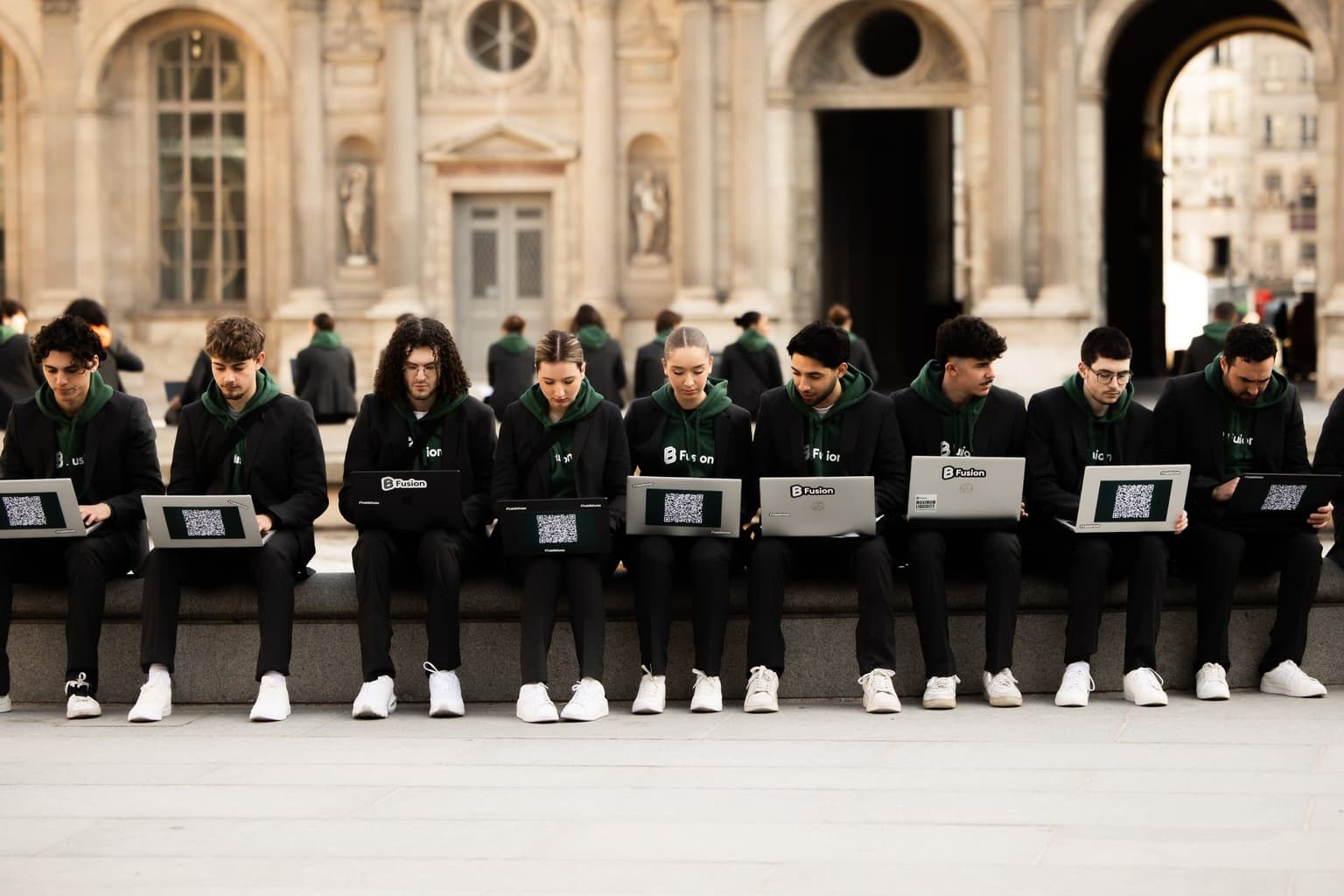
Bitpanda Fusion Hits Paris: 100 Traders Take Over the Louvre for Paris Blockchain Week
Bitpanda Fusion takes over Paris with a massive trader flashmob at the Louvre during Paris Blockchain Week 2026. Discover the impact of this liquidity stunt.

May 18, 2026 8:15 AM
Bitget Review 2026: Fees, Safety After the $388M Hack and Who Can Use It
Bitget review for October 2026: fees, the $388 million hack, withdrawals, Proof of Reserves and the countries where Bitget cannot be used.
September 12, 2026 7:11 PM
Ethereum Staking Fees: What 14 Providers Take From Your Rewards
On September 12, 2026 we pulled the staking pages of 14 Ethereum providers and noted which commission figure appears in the text there. Only five name a specific number, and the range runs from zero to fifty percent.
October 7, 2026 1:36 PM

100 euros of crypto at Scalable Capital costs 1.98 euros: the spread mark-up does most of it
A crypto purchase of 100 euros costs 1.98 euros at Scalable Capital on the FREE tariff, almost two percent of the stake. This analysis sets the two tariffs against each other, shows the spread mark-up as the actual crypto fee and names the threshold from which the PRIME+ subscription pays off at all.
September 6, 2026 10:27 PM
Crypto Through Sparkasse and Volksbank: 1.5 Percent Commission Plus a Spread, and No Product Page Names the Price
Crypto trading through your own bank costs twice over: a commission and a spread. A survey of 41 institutions carried out for this article shows that not one of the reachable product pages names a figure.
April 8, 2026 11:46 PM
BXB Market Review 2026: Platform, Pricing, and What Traders Should Know
Considering using BXB Market? Here's a detailed look at their platform, account tiers, spread discounts, and trading conditions as of 2026.
October 16, 2026 4:34 AM

25 cents to trade, 1.31 euros to withdraw: the Bitvavo fees on 100 euros of Bitcoin
The trading fee is the smallest of four cost items: on 100 euros the purchase costs 25 cents, while moving Bitcoin to your own wallet costs 1.31 euros. We recorded every item separately on 15 October 2026 and measured the spreads of the four largest euro pairs ourselves.
July 8, 2026 12:35 PM
Bitpanda Launches 20x Margin Trading on Real Stocks and ETFs — a First for Europe
Bitpanda just went live with leveraged trading on 875+ real stocks and ETFs at up to 20x — no CFDs, no synthetic contracts, just direct exposure.
September 11, 2026 1:40 PM

Inactivity Fees at Crypto Exchanges: How to Check Whether Your Dormant Account Loses Money Every Month
Two providers have just raised their rates for dormant accounts, one of them to as much as 52 US dollars a month. Our own survey of 15 fee pages shows why you will almost never find the answer for your account without logging in.
August 20, 2026 1:28 PM

Crypto Trading Bots: How They Work, What They Cost and When They Pay Off
A crypto trading bot trades around the clock to fixed rules, and every one of those rules costs a fee. This guide works the costs through over twelve months, sets out the German tax position under Section 23 EStG and shows when a provider needs a BaFin licence.

June 17, 2024 10:59 AM
TOP 3 DEX for June 2024
What are the best DEXs to use in 2024? Here are the top 3 for June 2024!
September 23, 2026 1:12 PM

Bitwise Lighter Staking ETP Lists on Xetra: What to Check on BLIT Before You Buy
Bitwise is bringing the first exchange-traded product on the LIT token of the derivatives platform Lighter to the Deutsche Börse today. It trades through an ordinary securities account, costs 0.85 percent a year, and the staking yield it is named after is not being paid yet.
September 6, 2026 10:20 PM
Bison App: a 1.25 Percent Spread, 27 Percent of the Staking Rewards and Trading Without an Order Book
The crypto app of Boerse Stuttgart advertises freedom from fees. You pay through the spread instead. What the licences actually cover, why there is no order book, and why the tax report loses its value once you transfer coins out.
October 16, 2026 7:16 AM

Staking ETF: the SEC must decide by November 15, and Europe has had the product since January
The SEC has until November 15, 2026 to rule on the first American fund on a liquid staking token, and it can no longer delay. In Europe the same product has been on the shelf since January, with assets of $1.19 million.
October 5, 2026 10:35 AM

"We deliberately invested in our expansion": Bitpanda reports a loss of around 14 million euros for 2025
Bitpanda GmbH reports a loss of around 14 million euros for 2025, after a profit of 61.7 million euros the year before, on adjusted revenue that rose to 371 million euros. What the numbers mean for your custody, your terms and the holding period.
September 10, 2026 4:15 PM
BW-Bank Opens Bitcoin Trading Inside the Securities Account: What to Check Before Your First Buy
Since September 9, 2026, BW-Bank customers have been able to trade ten crypto assets through their securities account, executed and held in custody by Bitpanda. The familiar securities-account setting hides three points you should settle before your first order.
October 12, 2026 6:50 PM
Kraken Lands Full Dubai Licence: Dirham Trading Goes Live for UAE Crypto Investors
Kraken has won full VARA approval in Dubai, clearing the way for dirham trading, margin, staking and tokenized stocks. Here is what UAE traders get.
October 11, 2026 4:28 AM

Coinbase Card Without a Transaction Fee: What Investors Need to Know About Conversion and the Holding Period
Coinbase charges no transaction fee for paying with the card. It gets expensive in two places that appear on no receipt: the conversion of the balance and the holding period.
September 24, 2026 4:22 AM

Options on Crypto ETFs: What the SEC Deadline on September 27 Means for Your ETP
On September 27 a 45-day deadline expires at the SEC on a filing that would allow options on crypto ETFs through a rule test instead of case-by-case approvals. Nothing changes in your European portfolio that day, but the bid-ask spread of your ETP is something you can measure yourself.
September 19, 2026 4:11 PM
MiCA Consultation Closes September 30: What to Check and Submit Before Then
The European Commission is reviewing the MiCA crypto regulation and will accept submissions until September 30, 2026 at 23:59 CEST. Staking, DeFi, lending, stablecoins and custody are all under examination, and you can take part without a lawyer.
August 21, 2026 7:30 AM
Crypto ETF Approval in the US: Why the SEC Is Rewriting Its Rules for Staking and Altcoin Funds
The US securities regulator has opened a proceeding that will help decide the next generation of crypto funds, and is putting 27 questions on the table. Anyone can file a comment until August 31, 2026, from Europe as much as from the United States.
August 20, 2026 1:17 AM

Crypto Withdrawal Fees: What Moving Coins to Your Own Wallet Really Costs
We measured the withdrawal fees for 475 assets on August 17, 2026 and set them against the actual network fee. For Bitcoin, the exchange charged eight to sixteen times what a transaction cost in the same minute.
October 29, 2023 2:38 PM
Crypto Exchange: How to use Bitget Exchange?
Bitget exchange stands as a strong option. In this article, we guide you step by step on how to start trading cryptos with the lowest fees.

April 7, 2020 2:31 PM
With Paymium exchange you will be paid for every trade
Starting this week, Paymium, the world’s first bitcoin exchange launched in 2010, introduces negative trading fees. Market makers, i.e., traders who place limit orders, receive a refund of 0.1% on their order size for every transaction. In other words, they […]
October 21, 2026 10:13 PM

Revolut wins a crypto licence in Gibraltar, but your German account stays with Cyprus
The Gibraltar Financial Services Commission has authorised Revolut Global Digital Assets Limited for order execution, custody and staking. For customers in Germany the Cypriot EU entity remains the counterparty, and that is what decides which regulator and which MiCA rights apply to your balance.
October 19, 2026 7:16 PM

Only 1.59 percent of Shiba Inu trading runs in euros: SHIB vs Bitcoin in the order book
A proprietary analysis of the hundred largest SHIB trading pairs on October 19, 2026 shows the euro carrying 1.59 percent of turnover and the Turkish lira 6.54 percent. Between the cheapest and the most expensive euro pair, the bid-ask spread differs 30-fold on the same day.
September 10, 2026 1:21 AM

Crypto Exchanges Head to Head: Which Pairing Is Cheaper Where
Before opening an account, the question is rarely which exchange is best overall, but whether it should be this one or that one. This article sorts through the most searched head-to-heads, puts the cost per 1,000 euros side by side and explains the most expensive mix-up: one provider with two interfaces and a factor of seventeen between them.
More from CryptoTicker