




































Where to Buy Bitcoin: The Four Providers We Recommend
The matrix above compares 30 platforms on the cost of a 1,000 euro purchase, licensing, minimum order, payment routes and whether the Bitcoin can leave the platform afterwards. Four names carry this comparison, and the sections below explain what each of them is for. The remaining providers follow underneath in short, so that the text and the table say the same thing.
Bitpanda Fusion, 4.6, and Bitpanda, 4.3
Why they lead here: Bitpanda is the only provider in this comparison holding MiCA authorisations in three jurisdictions at once, Austria through the FMA, Germany through BaFin and Malta. Fusion is the professional interface on that same licence and custody: 0.25 percent, a total of 3.00 euros on a 1,000 euro purchase, which is the cheapest of the four providers we recommend, with orders from one euro and withdrawals to your own wallet at 2.91 euros.
The difference between the two: the standard Bitpanda account costs 0.99 percent, or 9.90 euros per 1,000 euros, and buys you convenience for it: more than 650 assets including precious metals and fractional stocks, savings plans and staking, none of which Fusion offers. Cost transparency is rated as given on both.
Weakness: the price gap between the two interfaces is more than three to one for identical custody, and Fusion carries just over 100 assets. If you buy once and hold, use Fusion; if you want a savings plan, the standard account is the one that has it.
Details in our Bitpanda Fusion review and our Bitpanda review.
Coinbase, 4.8, and Coinbase Advanced, 4.2
Why they lead here: Coinbase was the first company to hold a BaFin crypto licence, the deficiencies flagged in 2022 have been remediated, and it moves Bitcoin to your own wallet for 24 cents, the cheapest withdrawal of any provider in this matrix. Purchases start at one euro, PayPal works as a funding route, and savings plans and staking are both available across more than 260 assets.
The cheaper door into the same house: Coinbase Advanced uses identical custody at 0.6 percent, a total of 6.30 euros per 1,000 euros instead of 14.90, with transparent pricing and free instant PayPal payouts in euro. It has no savings plan, and the trading view asks more of a first-time buyer.
Weakness: the standard interface costs 1.49 percent and cost transparency is rated as absent, because the fee depends on the route you take through the app. If you buy more than occasionally, the Advanced interface is the one that makes sense.
Details in our Coinbase review and our Coinbase Advanced review.
Bitget, 4.9
Why it leads here: the highest score in this matrix. Bitget charges 0.1 percent, a total of 4.00 euros per 1,000 euros with transparent pricing, lists more than 1,080 assets, which is the widest selection of all 30 providers, and takes orders from five euros. If you intend to buy anything beyond Bitcoin and the largest caps, this is the only platform here that will have it.
Weakness: Bitget holds no MiCA authorisation. A CASP application was pending with the Austrian FMA as of August 2026, and the operating entity BG Limited sits in the Seychelles, so EU investor protection does not currently apply. Withdrawals to your own wallet cost 7.47 euros, among the highest here, and the interface pushes popups and notifications at you after login.
Details in our Bitget review.
XTB, 4.5
Why it leads here: the broadest supervision in the comparison. XTB S.A. is regulated by the Polish KNF, by CySEC in Cyprus and by the FCA in the UK, and the parent company is listed on the Warsaw Stock Exchange, so its capital position is published quarterly. Crypto instruments carry no commission, the same account trades real stocks and ETFs at 0 percent up to 100,000 euros of monthly volume, and security is the strongest in the field with TOTP two-factor authentication and an emergency lock.
Weakness, and it is the decisive one on this page: XTB offers 30+ crypto Contracts for Difference and ETNs, not coins. You are buying exposure to the Bitcoin price, not Bitcoin, so there is no wallet transfer and nothing to move into self-custody. Costs sit in variable spreads and swap fees, which is why the matrix records the total as not comparable. For a long-term Bitcoin position, use one of the three above. For trading the price alongside equities in one supervised account, XTB is the strongest choice here.
Details in our XTB review.
The Other 24 Providers in the Matrix
All of them are usable and all of them are in the table above with their exact figures. In short, and in the order of our rating:
Global exchanges: OKX (4.5) is the cheapest platform in the whole matrix at 1.10 euros per 1,000 euros and holds a Maltese MiCA licence. Kraken Pro (4.4) charges 4.10 euros on more than 380 assets under MiCA, CFTC and FCA supervision, and Kraken (4.2) is the same house at 9.90 euros with savings plans. Binance (4.3) has the deepest liquidity but was refused a German licence by BaFin, and its buy interface costs 18.50 euros where Binance Pro (4.1) costs 1.10. crypto.com (4.2) is fully MiCA compliant but charges 44.81 euros to move coins out. Bybit EU (4.1) holds an Austrian MiCAR licence on just over 100 assets, KuCoin (3.9) an Austrian MiCA licence, although the FMA does not yet permit it to commence operations, and Gate.io (3.7) a Maltese one on around 360 trading pairs at 0.1 percent. Bitvavo (3.3) is cheap at 2.60 euros under a Dutch MiCA licence, on a German entity with a short track record.
German venues and marketplaces: BSDEX (4.1) is the Stuttgart Stock Exchange venue, 4.50 euros per purchase and the only platform here with free withdrawals, on ten assets. Bitcoin.de (3.2) is the veteran marketplace at 5.00 euros, with a 60 euro minimum and a dated interface. BISON (2.5) belongs to Boerse Stuttgart too, with free transfers and a tax report, at 12.50 euros.
Bitcoin specialists: Relai (4.2) buys straight into your own wallet at 9.00 euros, from 50 euros. 21bitcoin (4.0) is the cheapest per order at 0.79 percent and forwards automatically for around 75 cents.
Banking apps and neobrokers: Revolut (4.3) carries more than 210 coins at the highest cost in the field, 26.90 euros. eToro (4.3) charges 29.00 euros and takes no external deposit. Smartbroker+ (4.4), Flatex (3.1), finanzen.net ZERO (3.1), justTrade (3.0), Scalable Capital (2.9), Trade Republic (2.9) and Traders Place (2.7) all hold real coins through a BaFin-licensed custodian, and none of them lets you withdraw those coins to a wallet of your own, which is the reason they sit where they sit in this matrix.
Buying your first Bitcoin can feel overwhelming, but the process has become remarkably straightforward in 2026. Whether you want to hedge against inflation, diversify your portfolio, or simply explore digital assets, this guide walks you through everything from choosing a platform to securing your holdings. By the end, you’ll understand exactly how to buy bitcoin safely and what to do with it afterward.
Why buy Bitcoin in 2026?
Bitcoin remains the oldest and largest cryptocurrency by market capitalization, often called “digital gold” due to its fixed supply and store-of-value properties. Launched in 2009, it has weathered multiple market cycles and continues to dominate with over 50% of total crypto market cap. The circulating supply sits close to 19.7 million BTC out of a hard-capped maximum of 21 million.
Several factors drive people to purchase bitcoin today. The April 2024 halving reduced new BTC issuance to approximately 450 coins daily, historically a catalyst for price appreciation. Meanwhile, institutional adoption has accelerated, with spot Bitcoin ETFs attracting over $50 billion in inflows since their 2024 approval.
You don’t need thousands of dollars to start. Bitcoin is divisible to 0.00000001 BTC (called a satoshi), meaning you can begin with as little as $10.
Key benefits of buying Bitcoin:
- Hedge against fiat currency inflation and monetary policy changes
- Portfolio diversification with low correlation (0.2-0.4) to traditional stocks
- Borderless payments with network fees often under $1
- Entry point into the broader crypto ecosystem
- Long-term capital preservation potential
What is Bitcoin (BTC)?
Bitcoin launched in January 2009, created by the pseudonymous Satoshi Nakamoto following the October 2008 whitepaper release. It emerged during the global financial crisis as a response to centralized banking vulnerabilities—a digital currency designed to operate without intermediaries.
The bitcoin blockchain functions as a public ledger recording every transaction since the genesis block. Miners compete to solve cryptographic puzzles using specialized hardware, validating blocks approximately every 10 minutes. Once confirmed (typically 1-6 blocks), transactions become practically irreversible due to the immense computational cost required to alter them.
Understanding the difference between public addresses and private keys is essential. Your public address works like an email address—share it freely to receive funds. Your private keys are 256-bit secrets that authorize spending. Lose them, and you lose access permanently. An estimated 3 million BTC are lost forever due to misplaced keys.
Bitcoin at a glance:
- Launch year: 2009
- Maximum supply: 21 million BTC
- Smallest unit: 1 satoshi (0.00000001 BTC)
- Consensus mechanism: Proof-of-Work (SHA-256)
- Main use cases: Store of value, payments, DeFi collateral
- Most recent halving: April 2024 (block reward: 3.125 BTC)

Before you buy Bitcoin: what to look out for
Bitcoin’s price volatility is real—drawdowns exceeding 30% within a single year are common. Never invest more than you can afford to lose, and financial advisors typically recommend capping crypto exposure at 1-5% of net worth.
Regulatory and tax considerations vary by jurisdiction. In the U.S., the IRS classifies Bitcoin as property, meaning every sale triggers capital gains reporting. Short-term gains face rates up to 37%, while long-term holdings (over one year) benefit from 0-20% rates. The EU’s MiCA framework now requires licensing for virtual currency business activity providers and mandates consumer protections. Check your local rules before making bitcoin purchases.
Security basics cannot be overstated. Enable two factor authentication using authenticator apps (avoid SMS due to SIM-swap risks). Create strong passwords of 20+ characters. Watch for phishing sites mimicking major exchanges—scams stole $4.5 billion in 2025 according to blockchain analytics firms.
Bitcoin transactions are pseudonymous, not anonymous. Your balances link to public addresses visible on the blockchain. Chain analysis tools can deanonymize users through transaction patterns, so avoid address reuse for better privacy.
Pre-purchase checklist:
- Verify Bitcoin is legal in your jurisdiction
- Understand local tax reporting requirements
- Prepare government ID for KYC verification
- Set up a secure email and password manager
- Plan your storage solution (exchange vs. personal wallet)
- Define your investment horizon and risk tolerance
- Start with an amount you’re comfortable losing entirely
How to buy Bitcoin: typical step-by-step process
This section walks through the standard process most beginners follow when using a regulated exchange or broker to buy btc for the first time.
Step 1 – Choose a platform. Select a reputable, regulated crypto exchange or brokerage. Compare trading fees (typically 0.1-0.5%), deposit methods, supported countries, and security track record. Look for platforms with proof-of-reserves audits and regulatory compliance in your region. Kraken offers transparent security practices, while other major platforms provide similar safeguards.
Step 2 – Create and verify your account. Sign up using your email or phone number, then set a strong unique password and enable 2FA immediately. Complete identity verification by uploading government ID, taking a selfie, and sometimes providing proof of address. Basic verification takes a few minutes, though peak periods may extend this to 24-48 hours. Enhanced due diligence applies for larger transactions under anti-money laundering regulations.
Step 3 – Connect a payment method. Link your preferred payment method—bank account for lower fees, or debit card bank transfer for faster access. Available options vary by region: U.S. users typically have ACH, while European users access SEPA transfers. Some platforms support Apple Pay or Google Pay for added convenience.
Step 4 – Deposit funds. If buying with fiat currency, initiate a transfer from your bank. SEPA transfers settle in 0-1 business days, U.S. ACH takes 1-3 days, and wire transfers often clear same-day but carry higher fees. Card payments credit instantly but cost more in percentage fees.
Step 5 – Place your first order. Navigate to the trading section and select btc. Enter either your fiat amount (e.g., $100) or BTC quantity (e.g., 0.001 BTC). For beginners, a simple market buy executes immediately at the current price. More experienced users might set limit orders to control their entry price within specific trading pairs.
Step 6 – Secure your Bitcoin. For long-term holding, transfer crypto to a personal bitcoin wallet rather than leaving it on the exchange. Double-check the wallet address before confirming—send a small test transaction first if you’re nervous. On-chain confirmations typically take 10-60 minutes.
Different ways to buy Bitcoin
Beyond standard exchanges, multiple purchase routes exist with varying trade-offs in fees, speed, and privacy.
Centralized exchanges and brokerages
The most common method for beginners. These platforms handle fiat on-ramps, offer mobile apps, and provide integrated wallets. KYC is mandatory, but fees remain competitive at 0.1-0.5% for trading. Major platforms operate under regulatory oversight, offering secure transactions and customer support. You can buy cryptocurrencies beyond Bitcoin once comfortable.
P2P marketplaces
Peer-to-peer platforms match buyers directly with sellers, supporting bank transfers, cash deposits, and local payment methods. Escrow systems protect both parties, while reputation scores help identify trustworthy traders. Exercise caution—trade only on established platforms, verify payment before releasing funds, and watch for chargeback fraud on reversible payment methods.
Bitcoin ATMs
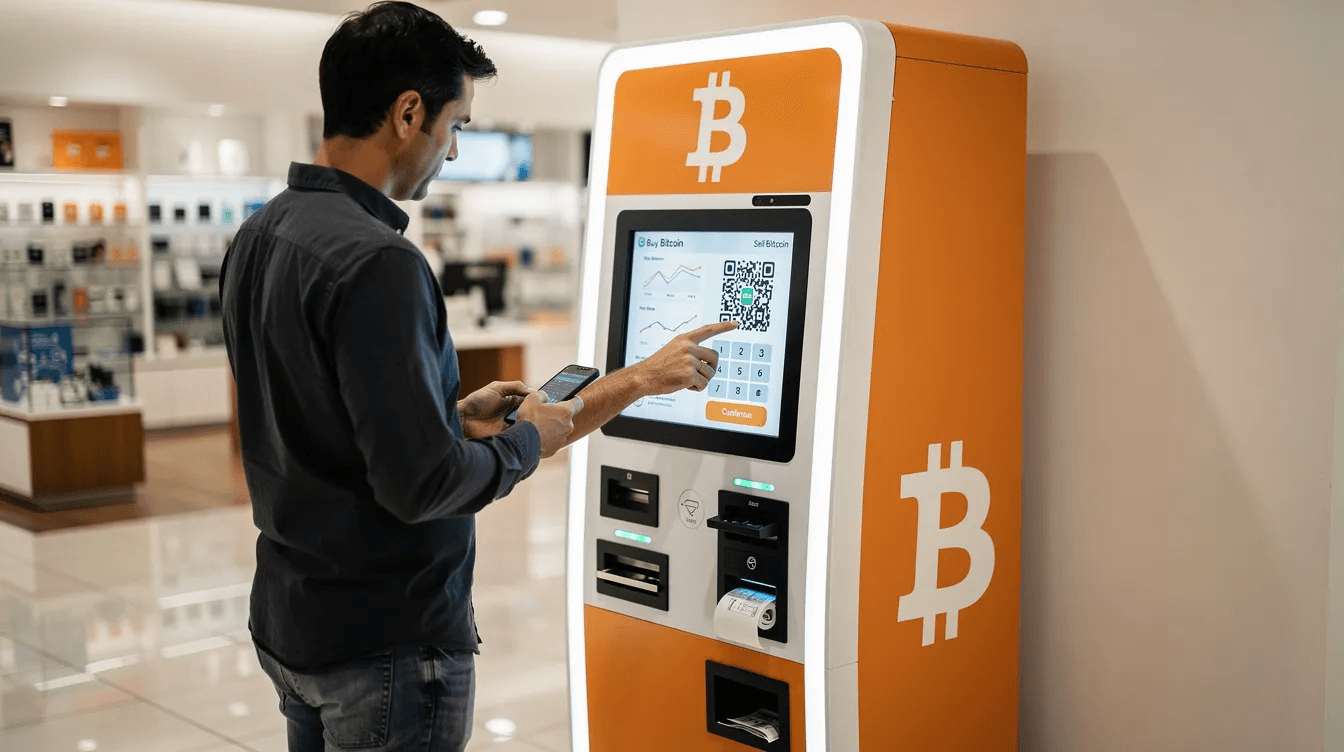
Over 20,000 Bitcoin ATMs operate globally. Find nearby machines using ATM map services, insert cash or card, scan your wallet address via qr code, and receive BTC directly. Fees run higher (5-20%) than online exchanges, but the process is straightforward. ID requirements typically kick in above $250-900 depending on jurisdiction.
Payment apps
Services like PayPal, Cash App, and Revolut let you buy crypto within familiar interfaces. Some restrict withdrawals to an external wallet in certain regions, essentially offering exposure without full custody. Check whether you can send bitcoin or transfer crypto to your own address before committing. A paypal account may use paypal usd for purchases in supported regions.
Buying from friends or OTC desks
For large amounts, over-the-counter desks provide liquidity at fixed premiums without moving markets. Buying from trusted individuals can work but requires clear pricing, transaction receipts, and safety measures. Never meet strangers carrying significant cash in isolated locations.
Payment methods: how to pay for Bitcoin
Fees, speed, and chargeback risk differ significantly across payment types. Compare options before committing to a purchase method.
Bank transfers (ACH, SEPA, wire): Usually the lowest fees (0-1%), ideal for larger amounts. Settlement takes 1-3 business days for ACH, 0-1 days for SEPA, and same-day for wires with higher costs. Your bank account connects directly to the exchange.
Debit cards: Near-instant BTC credit, but fees typically run 2-4%. Some banks block crypto transactions—contact yours beforehand. A debit card provides quick access when speed matters more than cost.
Credit cards: Issuers often classify bitcoin with a credit purchase as a cash advance, triggering immediate interest (25%+ APR) plus additional fees. Combining leverage with market volatility amplifies risk. Not recommended for beginners. Credit card purchases rarely make economic sense.
E-wallets and third party provider services: PayPal, Apple Pay, and Google Pay offer familiarity and convenience but may add spreads or daily limits. Verify withdrawal capabilities and compare the exchange rate against spot prices.
Cash via ATMs or in-person: Maximum privacy potential but 5-20% fees at machines. In-person deals carry safety concerns—use public locations and bring someone you trust. Always verify you’ve received funds before parting with cash.
Where to store your Bitcoin after buying
Buying BTC is only half the job. Safe storage determines how much control you actually maintain over your digital currency.
“Not your keys, not your coins” means that if someone else holds your private keys (like an exchange), they ultimately control your Bitcoin. Self-custody transfers that control entirely to you.
Exchange wallets
Convenient for active trading but introduces counterparty risk. Exchange hacks (like Mt. Gox’s 850,000 BTC loss in 2014) and insolvencies can result in permanent fund loss. Use exchanges for trading, not as primary long-term storage. Verify the platform publishes proof-of-reserves audits.
Hot wallets
Mobile and desktop apps connected to the internet. A hot wallet suits small everyday balances and frequent transactions. Enable biometrics and 2FA, back up your recovery phrase immediately, and never store large amounts here. Think of it as your spending wallet.
Cold wallets
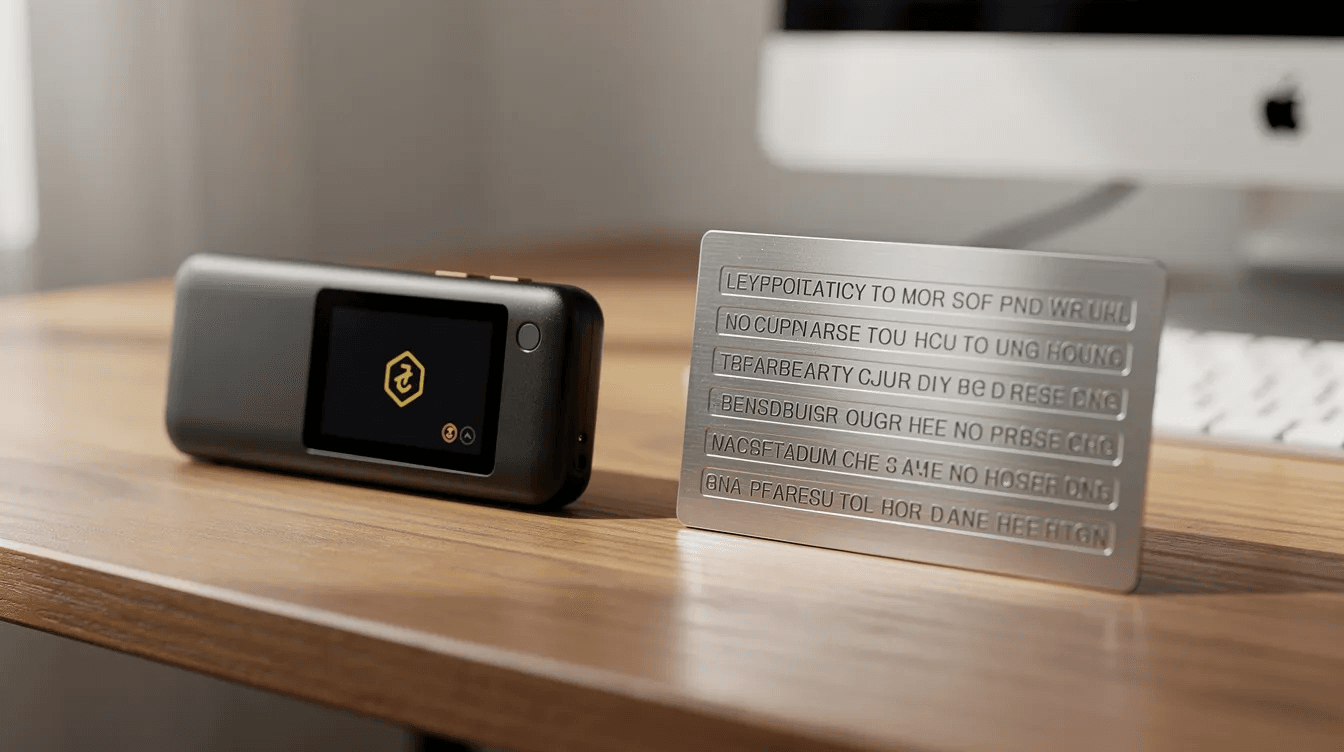
Hardware devices keep private keys offline, isolated from internet threats. A cold wallet like a dedicated USB-style device provides maximum security for larger, long-term holdings. Metal backups of seed phrases survive fire and water damage. This is your savings vault.
Seed phrases (12-24 words) regenerate your entire wallet if devices fail. Write them down on paper or metal—never digitally. Never type them into websites. Never share them with anyone, including “support agents.”
What can you do with Bitcoin after you buy it?
Bitcoin serves multiple purposes depending on your goals—hold it, spend it, trade bitcoin for other assets, or put it to work.
Holding (HODLing): The simplest strategy. Dollar-cost averaging $25-100 weekly smooths out volatility and historically outperforms timing attempts. View BTC as long-term savings rather than a quick trade. Bitcoin remains volatile but has appreciated significantly over 4-year cycles.
Trading and swapping: Sell bitcoin back to fiat currencies (us dollar, EUR, GBP) or convert cryptocurrency to other crypto assets like ETH or stablecoins. Most platforms offer simple convert features alongside advanced spot trading.
Payments: Over one million merchants accept BTC directly or via payment processors. Send crypto globally within minutes at lower fees than traditional cross-border transfers, especially for larger amounts.
Lending and yield: Some platforms let you lend BTC or use it as collateral to borrow. Yields range from 2-5% APY, but counterparty and smart-contract risks exist. Conduct your own research thoroughly before depositing.
Common post-purchase actions:
- Hold for long-term appreciation
- Trade for other digital assets
- Spend at accepting merchants
- Lend for yield (with caution)
- Donate to charities accepting crypto
Risks and common mistakes when buying Bitcoin
Bitcoin prices exhibit significant market volatility. Previous bull markets don’t guarantee future returns. The 2022 bear market saw 80%+ drawdowns from peak values.
Mistakes to avoid:
- Investing essential funds: Don’t use rent money. Surveys show 40% of new investors break this rule and regret it.
- Using high-interest credit or debit card debt: Cash advance rates compound losses during downturns.
- Panic-selling during dips: Emotional decisions lock in losses that patient holders often recover from.
- FOMO-buying at peaks: Sharp rallies attract late buyers who suffer immediate drawdowns.
- Ignoring security basics: Skipping 2FA or using weak passwords invites account compromise.
- Storing seed phrases digitally: Screenshots and cloud notes get hacked. Use physical backups only.
- Trusting unsolicited messages: No legitimate support agent will ever request your private keys or seed phrase.
Platform risks include hacks, insolvency, and withdrawal freezes. Favor regulated venues with transparent security practices, proof-of-reserves audits, and advanced security measures. A free account on a shady platform isn’t worth the risk.
Frequently asked questions about buying Bitcoin
How much bitcoin should I buy as a beginner? Start with only what you can afford to lose entirely. Most advisors suggest 1-2% of your portfolio. Consider dollar-cost averaging with small regular purchases—$25-100 monthly—rather than a single large buy. This approach smooths out price volatility and removes timing pressure from your crypto journey.
Can I buy less than 1 Bitcoin? Absolutely. Bitcoin divides into 100 million satoshis. At a hypothetical price of $85,000, $85 buys roughly 0.001 BTC. Your platform will show the exact amount based on the current price. There’s no minimum BTC requirement.
Is it too late to buy Bitcoin in 2026? BTC has appreciated significantly since 2009, but cycles continue. Timing the market rarely works—even experts fail consistently. Focus on time in the market, risk management, and a long-term horizon rather than chasing exact entry points.
How long does it take to receive my Bitcoin after buying? Card and card details payments typically credit BTC within minutes. On-chain confirmations take 10-60 minutes. Bank transfers require 1-3 business days to clear before you can buy. Plan accordingly.
Do I need a wallet before I buy Bitcoin? Many platforms create a custodial wallet automatically. However, for secure long-term holding, set up a personal wallet—hot or cold—before or immediately after your first purchase.
Can I sell Bitcoin for cash later? Yes. Sell BTC back to fiat on the same platform, then withdraw to your bank via supported methods. Fees typically run 0.1-1%, and tax reporting obligations apply to all disposals.