
Crypto Fees at Neobrokers: Why the PFOF Ban Raises Your Stock Costs but Leaves Your Coin Purchase Untouched
Since September 2, N26 charges 0.90 euros per stock order again, while the same provider takes 1.5 to 3.5 percent for a coin purchase. We retrieved and analysed the crypto costs of ten providers ourselves.



Which topics should we dive deeper into?
Select what genuinely interests you. Your picks feed directly into our editorial planning.
Crypto news that's actually worth your time.
Weekly. 60 seconds. Carefully curated by our editors: no hype, no promo flood, no spam.
Since September 2, 2026, a stock or ETF order at N26 costs money again: 0.90 euros per transaction. Anyone buying a coin in the same account still pays between 1.5 and 3.5 percent of the order volume. On a 1,000 euro trade that is 15 to 35 euros against 90 cents. The reason for the equity fee is a European ban that simply does not apply to crypto assets.
The ban concerns payment for order flow, or PFOF. It describes a practice in which a broker is paid by a trading venue for routing client orders to that venue. For you as an investor, this was for years the reason share purchases at neobrokers cost almost nothing: the bill went to the trading venue, not to you. Since July 1, 2026, that revenue stream has been fully banned in Germany, and providers are now collecting the money directly from you.
Nothing changes for cryptocurrencies, because they never fell under the rule in the first place. That is exactly what makes the current moment interesting. The equity fee becomes a clearly disclosed number, while crypto costs remain what they always were: a percentage or a spread that almost nobody works out. This analysis was compiled by cryptoticker.io on September 3, 2026.
What Is the PFOF Ban, and Why Has It Only Applied in Full Since July 2026?
Payment for order flow is a payment from a trading venue to a broker in return for routing client orders to that venue. The ban was introduced by Regulation (EU) 2024/791, the MiFIR review. It added a new Article 39a to the European financial markets regulation MiFIR. That article prohibits investment firms from accepting fees, commissions or non-monetary benefits from third parties for routing retail or professional client orders to a particular execution venue.
Paragraph 2 of the same article contained a narrowly defined option for member states. Where PFOF was already in use before March 28, 2024, the practice was allowed to continue on a transitional basis for domestic clients until June 30, 2026. Germany was the only member state to make use of it; the Federal Ministry of Finance set out its reasoning in a press release on March 21, 2024. The German exception ended on July 1, 2026.
For brokers this was a far-reaching restructuring. A revenue stream that had carried commission-free equity trading in the first place fell away with nothing to replace it. Order fees, subscription models, spreads and the interest margin on client balances have taken its place. N26 is not the first provider to respond, but it is the first where the effect can be observed so cleanly next to the crypto prices of the same house.
Why the PFOF Ban Does Not Cover Your Coin Purchase
Article 39a MiFIR applies to investment firms and to financial instruments within the meaning of the European markets directive MiFID II. Shares, ETFs, bonds and derivatives fall under it. Buying a cryptocurrency directly does not, because crypto assets in the EU have been governed since 2024 by their own rulebook, the Markets in Crypto-Assets Regulation, or MiCA.
That separation is not a technicality; it has an immediate price effect. For securities, lawmakers banned a form of remuneration that left investors unable to see who was actually earning what. For crypto assets, no such provision exists. A provider may continue to structure its crypto margin however it likes, as long as it meets the MiCA requirements on price transparency.
On July 22, 2026, BaFin published a supervisory notice on handling the PFOF ban, number 05/2026 (WA), valid until June 30, 2029. Law firm analyses single out one sentence in particular: merely renaming a payment flow does not take it outside the scope of Article 39a(1) MiFIR. The supervisor therefore looks at economic substance, not at the label. According to the analysis available to us, the notice does not mention crypto assets, which fits the structure, since it is a securities supervision notice.
N26 Head to Head: 0.90 Euros for the Share, up to 3.5 Percent for the Coin
N26's equity page states that buying and selling shares, ETFs and ETCs through the app costs 0.90 euros per transaction. Paid account tiers get a free allowance: N26 Go lists three free trades per month, N26 Metal ten. These free trades expressly apply only to shares, ETFs and ETCs. Savings plans are unaffected.
The crypto page of the same provider shows a different calculation. Bitcoin costs 1.5 percent per transaction, other coins 2.5 percent, and particularly thinly traded assets 3.5 percent. Metal customers receive a 0.5 percentage point discount on all transaction fees, though capped at 5,000 euros of trading volume per calendar month. Above that, the regular rate applies again. The minimum amount is one euro per purchase and sale.
One footnote on the crypto page is notable: the fees and prices of the cryptocurrencies are not set by N26 but by Bitpanda Asset Management GmbH. N26 acts here as an intermediary for a partner offering. For you as a customer that changes nothing about the number, but it explains why the two pricing models inside the same house look so different: they are two separate businesses under two separate rulebooks.
If you want to know how this construction stacks up against specialist providers, our comparison of the best crypto brokers sets the cost models side by side.

Our Own Survey: How We Checked Ten Providers
To put the order of magnitude on a solid footing, on September 3, 2026 we retrieved the public pricing, fee and product pages of ten providers that allow German retail clients to buy cryptocurrencies, and assessed whether and how they quantify trading costs there. We checked N26, BISON, finanzen.net zero, Kraken, justTRADE, Bitpanda, Trade Republic, Scalable Capital, Bitvavo and Coinbase.
The result in one sentence: five of the ten providers state their crypto trading costs with concrete figures on a freely accessible page, and five do not on the pages we retrieved.
The Five Providers With Publicly Quantified Crypto Costs
- justTRADE: 0.125 percent of order volume plus the trading venue spread. The size of the spread is not quantified on the page.
- finanzen.net zero: 1 percent commission. For trades below 500 euros of order volume, a small-order surcharge of 1 euro is added. An additional spread, described by the provider as reduced, is mentioned but not expressed in figures.
- Kraken: 1 percent on instant and recurring purchases, 1.5 percent on individual orders. In the order book of the Pro interface, the lowest tier is 0.40 percent for makers and 0.80 percent for takers.
- BISON: no order fee, but a proportional spread averaging 1.25 percent on Bitcoin and Ethereum and averaging 1.75 percent on all other cryptocurrencies. Instant deposits by SEPA Instant, credit card or wallet cost an additional 2.49 percent of the amount.
- N26: 1.5 percent for Bitcoin, 2.5 percent for other coins, 3.5 percent for particularly thinly traded assets, in each case set by Bitpanda Asset Management GmbH.
What We Could Not Check
With five providers we could not reach a quantified figure by the route we chose. Bitpanda's German pricing page states a fee of 1 euro per trade for shares and fractional shares, but no figure for crypto purchases. The pricing overview from Trade Republic and the fee page from Bitvavo do respond technically, but only deliver their tables once scripts have run in the browser, and stayed empty for our retrieval. Scalable Capital's pricing page redirected to a login page.
On Trade Republic, several trade portals consistently report a third-party cost flat fee of 1 euro per crypto order plus a variable spread. We list this explicitly as a third-party statement and not as our own measurement, because we could not confirm it at the primary source. It is therefore left out of the analysis below.
This gap is itself a finding. At every provider whose equity fee we found within seconds, the crypto fee was either absent or considerably better hidden. The euro figure for the securities order has become a marketing argument; the percentage for the coin has not.
 Crypto Brokers on Cost
What 1,000 Euros of Order Volume Costs at Which Provider
Percentages are hard to compare as long as they stay abstract. So here are the same figures, calculated on a single purchase of 1,000 euros. All values come from the pages named above.
- justTRADE: 1.25 euros plus the unquantified trading venue spread
- Kraken Pro, lowest tier, taker: 8.00 euros
- finanzen.net zero: 10.00 euros
- Kraken, instant purchase in the app: 10.00 euros
- BISON, Bitcoin or Ethereum: around 12.50 euros via the average spread
- N26, Bitcoin: 15.00 euros
- BISON, other cryptocurrencies: around 17.50 euros
- N26, other coins: 25.00 euros
- N26, particularly thinly traded assets: 35.00 euros
Between the cheapest and the most expensive value in this list lies a factor of 28. For comparison: the same 1,000 euros invested in an ETF costs exactly 90 cents at N26 since September 2. The figure carries weight because it applies at the same provider, in the same app and on the same day.
Two qualifications belong with it. First, spreads are not fixed fees; BISON expressly reports averages that shift with market conditions and order size. Second, the pure trading price says nothing about total costs. Anyone later moving their coins to a self-custody wallet pays withdrawal and network fees on top, which we broke down in a separate analysis of withdrawal fees.
Spread Instead of Fee: Why Crypto Costs Are Harder to Spot
The spread is the difference between the price at which a provider buys and the price at which it sells. It appears on no statement as a separate item. You only see a price, and that price already contains the margin. That is precisely the difference from an order fee, which stands as a number on your statement and which you can add up at the end of the year.
For your tax return this distinction matters. Trading fees raise your acquisition costs as incidental acquisition costs and therefore reduce the taxable gain. A spread, by contrast, is already inside the acquisition price and appears nowhere separately. The tools for keeping track of both are in our overview of crypto tax and portfolio tools.
A second effect comes on top. Anyone who does not perceive the spread as a cost trades more often. At a provider with a 2.5 percent margin, every switch from one coin into another costs the rate twice, once on the sale and once on the purchase. Five such switches a year add up to a double-digit percentage of the capital deployed, without an invoice ever arriving.
Do You Have to Agree to the New Fee, and What Happens Otherwise?
The N26 change is tied to an amended contractual term that customers have to accept actively. The fee therefore does not take effect automatically when a contract rolls over. The accounts available to us do not name a fixed deadline for that consent.
In practice this means: if a notice about changed terms appears in your banking app, that is the process at issue here. Read which product groups the change covers. In N26's case these are shares, ETFs and ETCs, not crypto trading, whose terms continue unchanged.
The shift concerns more than one provider, incidentally. The PFOF ban has applied since July 1, 2026 to all investment firms domiciled in Germany. That the responses come at different times is down to differing contract periods and price lists, not to differing rules.
 Regulated Crypto Exchanges for European Investors
Savings Plan Instead of Single Purchase: Where the Flat Fee Falls Away
One detail regularly gets lost in the debate about order fees: at many providers, savings plans are exempt from the new flat fees. At N26, savings plans for shares and ETFs remain free, while a single purchase costs 0.90 euros. At Trade Republic too, according to company statements, the third-party cost flat fee does not apply within a savings plan.
For crypto assets the picture is less consistent, because billing there is percentage-based anyway and a flat fee that could fall away often does not exist at all. Where a provider offers a crypto savings plan without a surcharge, that is still a tangible cost advantage over many small individual purchases with a small-order surcharge. Which providers offer this, and on what terms, is set out in our overview of the Bitcoin savings plan.
The rule of thumb for you: check whether your regular purchases can run as a savings plan. With a flat fee, the difference between a savings plan and a single purchase quickly reaches three figures a year if you are servicing several positions every month.
What Investors Should Check Right Now
The occasion for this piece is a fee change at a single provider. The finding behind it is more general: for securities, European law now forces providers to disclose their remuneration and collect it directly from the client. For crypto assets, no such compulsion exists in this form, and the costs are several times higher.
No recommendation against any particular provider follows from that. A provider with a higher margin can still be the right one for you if you already hold your account there, buy small amounts and would rather avoid the effort of a second point of access. At 50 euros a month, the difference between 1 and 2.5 percent is all of 75 cents. At 1,000 euros a month it is 180 euros a year, and then switching pays off.
So do the maths with your own amounts, not with the example figures from a table. The decisive quantity is your annual trading volume multiplied by the difference between the percentages, and that calculation fits on the back of an envelope.
Checking Crypto Fees: What to Take Away
- Look up what your coin purchase actually costs. Open your provider's pricing page and search specifically for the percentage or the spread for crypto assets, not for the order fee on shares. If you cannot find a figure, that is already a signal. A classification of the common models is in the crypto broker comparison.
- Work out your annual amount. Multiply your planned annual volume by your provider's percentage and by that of a cheaper one. If the difference exceeds the effort of a second point of access, the move to a specialist platform is worth it. The regulated providers for the German market are in the crypto exchange comparison.
- Record fees and spread separately. Trading fees raise your acquisition costs and reduce the taxable gain; a spread appears nowhere as an item. Documenting both cleanly saves time and money on your tax return, and suitable tools are in the overview of crypto tax tools.
(As of September 3, 2026. This article is not investment advice. Prices and fee structures change; check the terms with the provider before you buy.)
Transparency note: This article was produced with the assistance of artificial intelligence and reviewed by our editorial team before publication. All figures and claims were checked against the primary sources linked in the text. The feature image was generated with AI.
Related articles
- 100 euros of crypto at Scalable Capital costs 1.98 euros: the spread mark-up does most of it
- Bitpanda fees from 0.99 to 2.49 percent: what is behind it
- Crypto Through Sparkasse and Volksbank: 1.5 Percent Commission Plus a Spread, and No Product Page Names the Price
- Coinbase Fees: What a Purchase Really Costs, and Where the Spread Is Hidden
- Bitget Review 2026: Fees, Safety After the $388M Hack and Who Can Use It
Which topics should we dive deeper into?
Select what genuinely interests you. Your picks feed directly into our editorial planning.
Crypto news that's actually worth your time.
Weekly. 60 seconds. Carefully curated by our editors: no hype, no promo flood, no spam.

August 10, 2026 9:15 PM
Selling Bitcoin at an ATM: Tax Rules in Austria
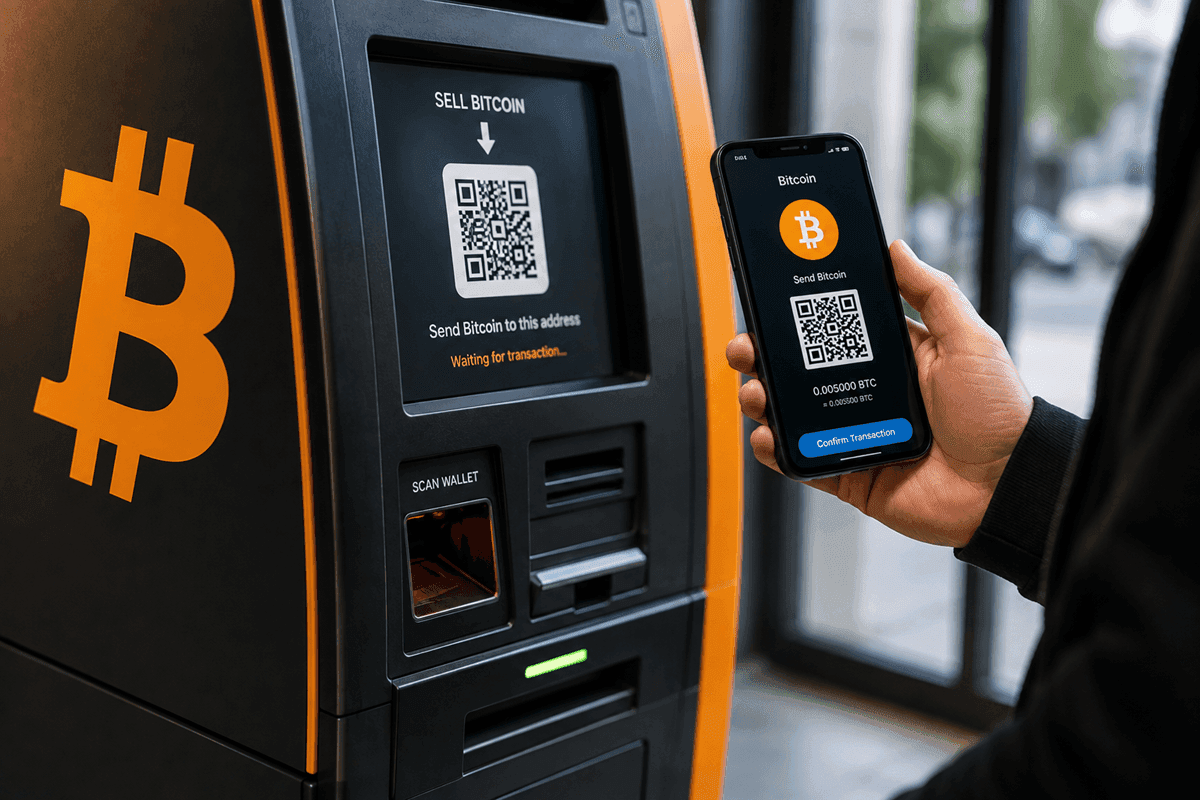
Selling bitcoin for cash at an ATM: when the 27.5 percent rate applies in Austria and which records you need to keep.

April 8, 2026 11:46 PM
BXB Market Review 2026: Platform, Pricing, and What Traders Should Know
Considering using BXB Market? Here's a detailed look at their platform, account tiers, spread discounts, and trading conditions as of 2026.

February 23, 2026 6:00 AM
Is Iran Still the Cheapest Place to Mine Bitcoin in 2026?
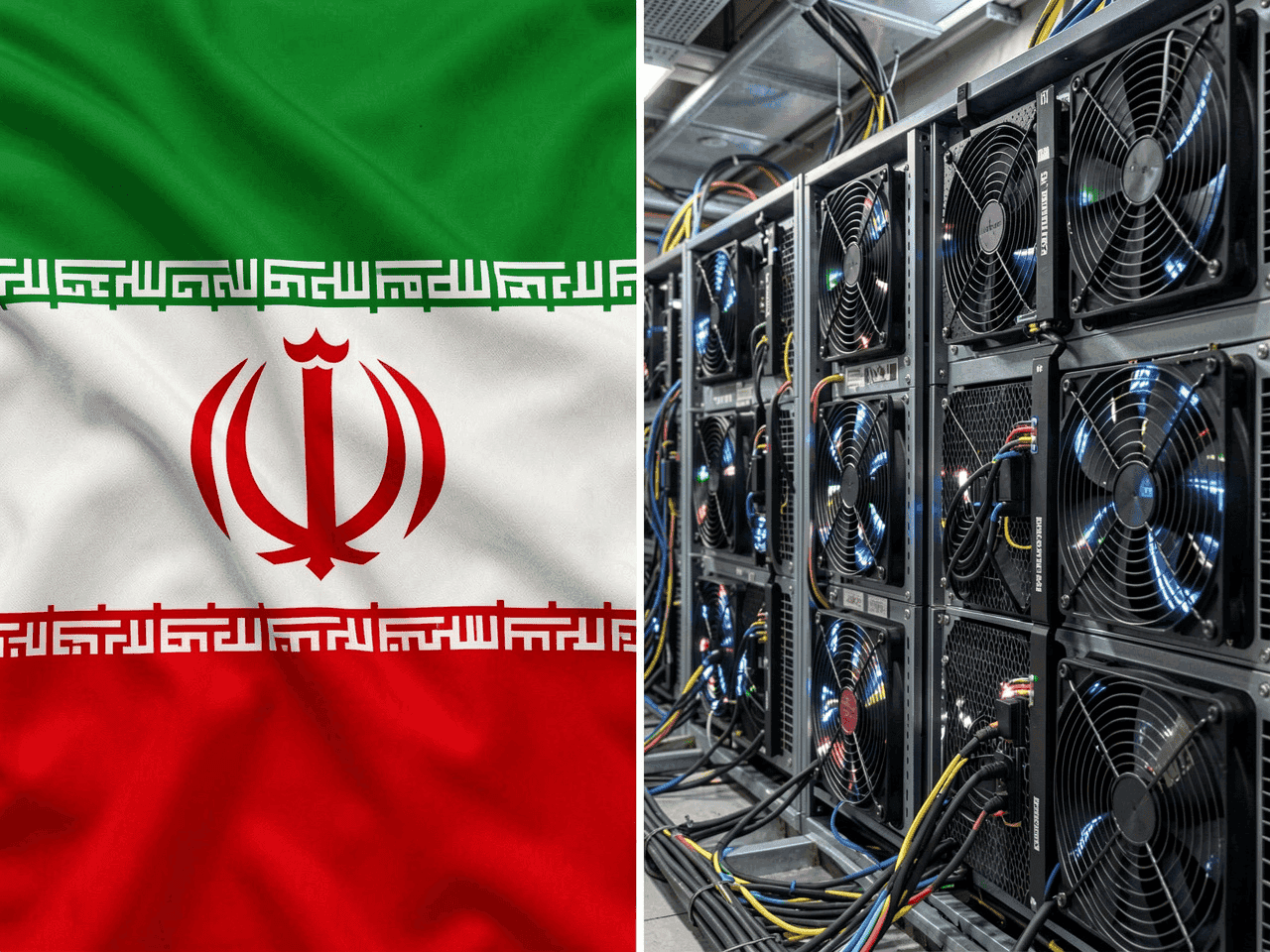
Mining 1 Bitcoin in Iran costs just $1,320 due to subsidized power. Explore how miners achieve a 50x ROI despite government crackdowns and sanctions.
September 17, 2026 12:32 PM
Trump Says Oil Will Tumble When the Iran War Ends: What That Would Mean for Crypto
Trump expects the Iran war to end after the midterms and oil to fall hard. Oil is near a four-month high instead. Here is why crypto should still care.
October 4, 2026 4:24 PM
Bitcoin by credit card: the surcharge runs up to 9.94 euros per 100 euros
Anyone buying Bitcoin with a credit card pays two fees instead of one: the trading venue's, and their own bank's, which often settles the purchase like a cash withdrawal. On 100 euros of card spending up to 9.94 euros add up, while the SEPA transfer costs nothing at the same providers.
September 30, 2026 1:32 PM
100 Euros Into Bitcoin Without Fees: What Actually Arrives at Five Providers
Five providers serving German retail customers, €100 invested: after the disclosed fee, between €98.50 and €100 is left. Only one provider names the spread as well, and with it the whole price.

April 7, 2020 2:31 PM
With Paymium exchange you will be paid for every trade
Starting this week, Paymium, the world’s first bitcoin exchange launched in 2010, introduces negative trading fees. Market makers, i.e., traders who place limit orders, receive a refund of 0.1% on their order size for every transaction. In other words, they […]
September 14, 2026 7:40 PM
Bitcoin Order Before the Fed Decision: What Slippage Really Costs You
Two days before the US central bank's rate decision the euro order books are thin, and a market order pays the difference. We measured the order book depth of five exchanges ourselves: between the cheapest and the most expensive execution lay a factor of 31.
August 18, 2026 4:45 PM

Crypto Savings Plans Compared: What Bison, justTRADE and Kraken State on Fees, Minimum Instalment and Interval
Crypto savings plans advertise free execution, yet the price almost always sits in the spread. On August 14, 2026 we retrieved nine provider pages and evaluated which terms actually stand there.

May 28, 2023 9:06 PM

China’s Potential Crypto Ban Lift Could Trigger Crypto Market Explosion?
Understanding the reasons behind these bans and examining the potential implications of lifting China's crypto market ban is crucial.
October 18, 2022 12:44 PM

Binance Review 2022 – Is Binance a Good Exchange?
Is Binance a good crypto exchange? In this Binance review 2022, we take you through the pros and cons for dealing with Binance crypto.
August 21, 2026 1:33 PM
Bitcoin With No Cost Basis: How Austria Taxes the Sale
Bitcoin purchase price no longer provable? How Austria works out the capital gains tax, when a flat-rate cost basis applies and what investors can do.
February 7, 2026 6:56 AM
Crypto Trading 101: How to Spot High-Probability Setups During Volatility
Master crypto trading 101 and learn how to trade Bitcoin during volatility. Here are professional crypto trading tips to spot high-probability setups now.
August 20, 2026 4:24 PM
Bitcoin Across Multiple Wallets: How Austria Works Out the Acquisition Cost
Bitcoin spread across several wallets? How Austria works out the acquisition cost and the rolling average price for tax purposes.

December 28, 2023 1:30 PM
Bitcoin Market Trends: Whale Buys and Upcoming Catalysts Analyzed
Dive into CryptosRUs' analysis of Bitcoin's market trends, highlighting whale buying activities, the impact of potential ETF approvals, and the rise of Layer 2 solutions in the evolving crypto landscape.
October 22, 2023 2:14 AM

3 Cryptos under 10 cents to Buy TODAY!
We've analyzed project fundamentals and technical data to identify 3 cryptos under 10 cents that you might want to consider today.
October 6, 2023 3:30 AM
Ethereum Transaction Costs Take a Steep Dive to $1.13, ETH Pumping soon?
Ethereum's average transaction fees plummet to a mere $1.13. What does this tell us about the network's activity, and could this signal a potential price rebound for the cryptocurrency?
September 10, 2023 5:11 PM

Top 5 Cryptos under 10 cents to Buy in September 2023
If you're looking to diversify your portfolio without breaking the bank, here are the top 5 cryptos under 10 cents you should consider.
January 7, 2022 2:58 PM
Top 3 Cryptocurrency Exchanges for 2022
Cryptocurrency investment and trading have become extremely popular. This post is all about the top 3 cryptocurrency exchanges for 2022

February 1, 2021 4:31 PM

India Aims at Another Crypto Ban!
These past months it has been exciting, tumultuous, and downright thrilling to be part of the cryptocurrency market. From all-time-highs across the board to Redditors taking control of markets, this winter is sure to go down in cryptocurrency history. Through […]

October 24, 2018 10:59 AM

Will China Proceed Towards Blockchain Innovation with Cryptocurrency Ban?
China has stated it will proceed with Blockchain innovation despite its move to stop and ban all virtual communications related to cryptocurrencies.
August 18, 2026 7:13 AM
Bitcoin Tax Reporting in Austria 2026: What Applies
Bitcoin tax reporting in Austria: which data investors can request from crypto exchanges in 2026, and when the report matters for the tax return.
September 3, 2026 11:37 AM

Standard Chartered Just Opened Institutional Bitcoin Trading in the UAE
Standard Chartered launches institutional Bitcoin and Ether spot trading in the UAE. Here is what it means for BTC and ETH prices right now.
April 15, 2026 12:00 PM
Bitcoin Price Corrects After $76,000 High: Is This a Consolidation or a Crash?
Bitcoin price faces a healthy correction after hitting $76,000. Learn how to trade consolidation phases and use support and resistance levels effectively.
August 16, 2026 9:11 PM
Swapping Bitcoin for Stablecoins: Does Austria Charge Tax?
Anyone swapping bitcoin for USDT or another stablecoin usually pays no tax in Austria yet. When the swap does become taxable after all.

More from CryptoTicker