
Bitcoin Tax Audit: What Proof Austria Requires
Which bitcoin records can the Austrian tax office examine? Purchase dates, wallet transfers, acquisition costs and sale proceeds are what count.





Which topics should we dive deeper into?
Select what genuinely interests you. Your picks feed directly into our editorial planning.
Crypto news that's actually worth your time.
Weekly. 60 seconds. Carefully curated by our editors: no hype, no promo flood, no spam.
Bitcoin Tax Audit in Austria: What Proof the Tax Office Can Demand
Bitcoin transactions run over a blockchain, but the blockchain does not answer every tax question. It shows transfers between addresses, yet not automatically who owns a wallet, why a transaction took place, or which acquisition costs apply for tax purposes.
Anyone declaring larger bitcoin gains, or moving holdings across several exchanges and wallets, should therefore work with detailed documentation.
Acquisition costs matter most, because taxable realised gains are derived in principle from the difference between the sale proceeds and the tax cost base.
Purchase Records Are the Foundation
Where matters are unclear, the tax office may in particular want to trace:
- when the bitcoin was acquired,
- how many BTC were bought,
- at which euro price,
- through which platform,
- which fees arose,
- where the money used for the purchase came from.
- Suitable records can include, for example:
- exchange statements,
- CSV exports,
- bank account statements,
- purchase confirmations,
- tax reports.
- With long-held bitcoin in particular, the original purchase date can be decisive.
 Compare crypto tax tools and portfolio trackers
A Wallet Transfer Is Not Automatically a Sale
A transaction on the blockchain initially shows only that bitcoin moved from one address to another. When investors move bitcoin between their own wallets, they should therefore document that this really was a self-transfer and not a sale.
Helpful items are:
- the sending address,
- the receiving address,
- the transaction ID,
- proof of control over both wallets,
- the timing against exchange withdrawals or deposits.
This becomes especially relevant when coins are sold years later on a different platform.
Missing Acquisition Costs Can Get Expensive
Austrian crypto service providers need reliable acquisition data, among other things, in order to withhold capital gains tax correctly. Where such data is missing or the figures do not appear plausible, flat-rate tax rules can apply. The Austrian finance ministry has developed its own requirements for these transfer cases.
The same applies towards the tax office: a claim such as “I bought the bitcoin in 2018” is considerably more robust when old account records, exchange data or blockchain transactions can support it.
Document Crypto-to-Crypto Swaps as Well
The bitcoin may not have been bought directly against euros. Anyone who first bought another cryptocurrency and later swapped it tax-neutrally into bitcoin must be able to trace the carried-over cost base.
Austria does not in principle treat the swap of one qualifying cryptocurrency for another as a realisation. The acquisition costs are carried over to the cryptocurrency received. A tax audit can therefore reach transactions that took place years before the actual bitcoin sale.
The Price Source Can Matter Too
Not every crypto transaction settles directly against euros. For tax valuations, the Austrian rules set out an order of precedence for suitable price sources. Where particular exchange rates are unavailable, other market or dealer prices can be used. What matters is a consistent valuation method.
Anyone determining historical values themselves should therefore document which price source was used.
These Records Investors Should Secure
For robust bitcoin tax documentation, the following are particularly useful:
- complete transaction histories,
- purchase and sale statements,
- wallet addresses,
- transaction IDs,
- self-transfers,
- acquisition costs,
- acquisition dates,
- fees,
- the exchange rates used,
- tax reports,
- bank deposits and withdrawals.
Where wallet structures are complex, documentation that assigns every larger movement to a clear economic cause is advisable.
Conclusion
In a bitcoin tax audit, the blockchain alone is often not enough. The Austrian tax office must be able to trace when the bitcoin was acquired, which acquisition costs apply, and what lies behind later wallet transfers and sales. The older and more complex the transaction history, the more important exchange exports, account statements and cleanly documented wallet movements become.
Compare crypto tax tools and portfolio trackersTransparency note: This article was produced with the assistance of artificial intelligence and reviewed by our editorial team before publication. All figures and claims were checked against the primary sources linked in the text.
More on Bitcoin: All Bitcoin news at a glance
Related articles
Which topics should we dive deeper into?
Select what genuinely interests you. Your picks feed directly into our editorial planning.
Crypto news that's actually worth your time.
Weekly. 60 seconds. Carefully curated by our editors: no hype, no promo flood, no spam.

September 14, 2026 1:27 PM

Bitcoin Lost to a Scam: What Counts as a Tax Loss in Austria
Lost bitcoin to a scam? Why Austria generally does not recognise the damage as a tax loss for privately held assets, and when compensation payments start to matter.
September 3, 2026 10:21 AM

Bitcoin Lost in a Wallet Hack: What Tax Applies in Austria?
Bitcoin lost to hackers? In Austria, the theft of privately held coins generally does not create a capital loss you can use for tax. Only a later payout can change that.
August 24, 2026 10:26 AM
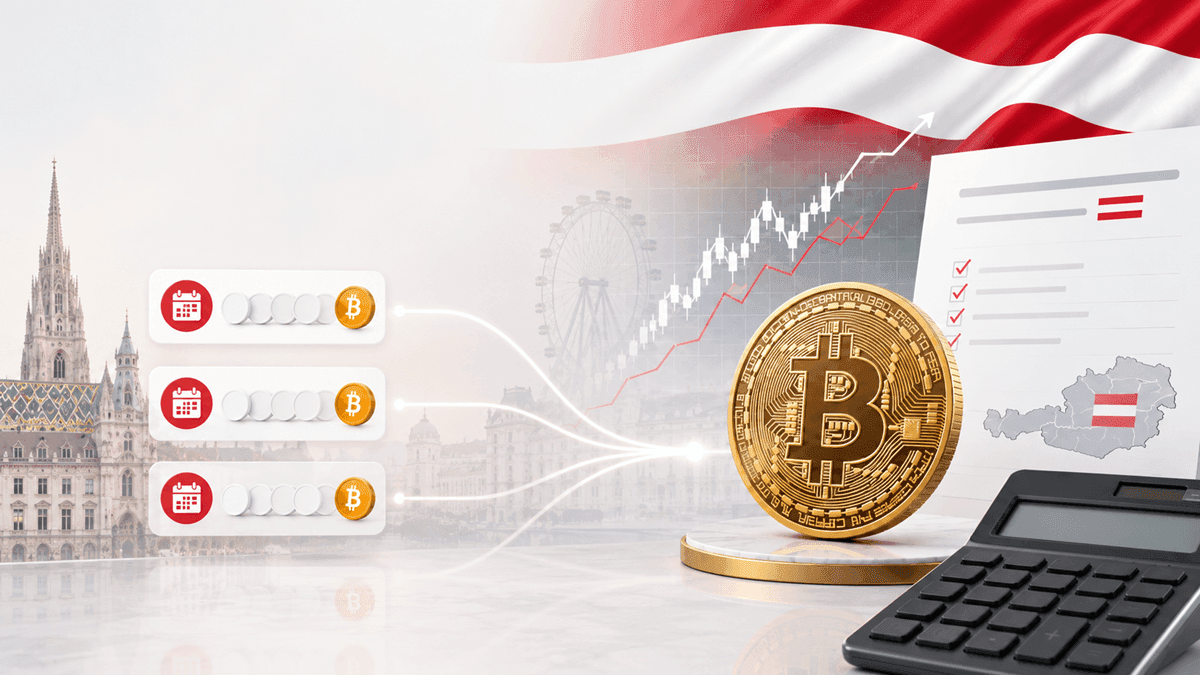
Bitcoin Savings Plan in Austria: How the Purchase Price Is Calculated
Bought bitcoin through a savings plan? For multiple purchases Austria applies the moving average price as a matter of principle when working out taxable gains.
September 7, 2026 10:24 AM

Gifting Bitcoin to Children: Tax Rules in Austria
Giving bitcoin to your children? When a gift notification is required in Austria, and which acquisition costs the child takes over.
August 14, 2026 6:18 PM

Bitcoin From a Foreign Exchange to Austria: Which Tax Data You Need
Transferring Bitcoin from a foreign exchange to an Austrian platform: which tax data can be missing for the withholding tax. And what investors need to watch out for.
August 12, 2026 9:12 AM

Bitcoin Losses and Dividends in Austria: How the Tax Offset Works
Can a Bitcoin loss be offset against dividends? This is how loss offsetting works in Austria. It also shows when a tax return is needed for it.
September 17, 2026 7:12 PM

Gifting Bitcoin to Children: Allowance, Holding Period and the Tax Office Report
Transferring Bitcoin to your child hands over your holding period and your entry price along with the coins. This guide sets out what really applies in Germany on the allowance, the reporting deadline, representation and custody.
August 26, 2026 10:25 PM

Selling Bitcoin at a Loss: Loss Offsetting in Austria
Sold Bitcoin at a loss? Austria allows the loss to be offset against certain investment income. When loss offsetting is possible and which limits apply.
September 19, 2026 7:12 PM

Bitcoin Sold Without Austrian Tax Withheld: What to Do Next
Sold Bitcoin but no Austrian capital gains tax was withheld? That does not make the sale tax free. When investors have to declare the gain themselves at 27.5 percent.
August 27, 2026 10:16 AM
Bitcoin Tax Return in Austria: When You Must File
Even with a crypto exchange, a tax return can still be necessary in Austria. Foreign platforms, missing capital gains tax withholding and cross-provider losses are the typical triggers.
August 22, 2026 4:47 PM

Offsetting Bitcoin Losses Against Stock Gains in Austria
Offset bitcoin losses against gains on shares? Austria allows it in principle, but only under certain conditions and usually via the tax return.
September 10, 2026 7:14 AM

Bitcoin Loan Liquidated: Tax Consequences in Austria
If a lender liquidates Bitcoin pledged as loan collateral, a taxable capital gain can arise in Austria. That holds even when the investor never chose to sell.
September 4, 2026 1:34 PM

Bitcoin as Loan Collateral: When No Tax Applies in Austria
Pledging Bitcoin as collateral for a loan? As long as the coins are not realised, no sale arises in Austria in principle.
August 31, 2026 10:23 AM

Bitcoin Abroad: The Tax Duty Austrian Investors Carry Themselves
Sold bitcoin through a foreign platform? When Austrian investors have to declare gains themselves and account for the 27.5 percent tax rate.
August 22, 2026 7:31 AM

Bitcoin Exit Tax in Austria: Which Value Counts?
Anyone emigrating from Austria with Bitcoin can trigger exit tax. What is decisive in principle is the market value at the moment the taxing right is lost.
August 16, 2026 9:11 PM
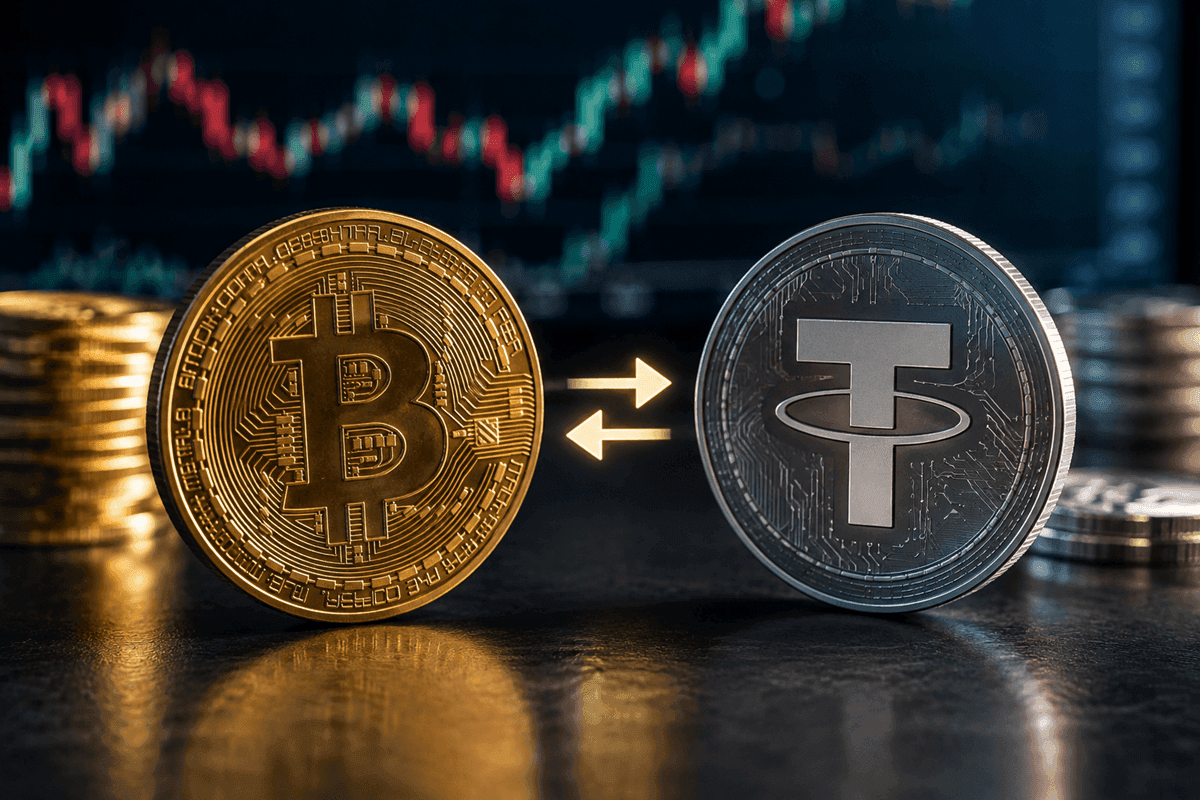
Swapping Bitcoin for Stablecoins: Does Austria Charge Tax?
Anyone swapping bitcoin for USDT or another stablecoin usually pays no tax in Austria yet. When the swap does become taxable after all.
August 17, 2026 10:24 PM

Bitcoin Capital Gains Tax in Austria: When Exchanges Withhold 27.5 Percent
When Austrian crypto exchanges deduct 27.5 percent capital gains tax automatically, which Bitcoin gains are affected and when investors have to declare the income themselves.
October 19, 2026 4:15 AM

Crypto FIFO across several exchanges: each wallet counts on its own in Germany
Hold bitcoin on several exchanges and in wallets of your own, and the holding period is calculated per pot, not across the total holding. What paragraph 62 of the BMF guidance orders, and why 31 December 2026 hangs on it.
September 16, 2026 7:12 PM

Borrowing Against Bitcoin Instead of Selling: When German Tax Still Applies
Posting Bitcoin as collateral for a loan is not a sale in Germany, because section 39 of the Fiscal Code keeps the coins attributed to you for tax purposes. Tax arises only when the collateral is liquidated, and then the one thing that decides the bill is how long you held the coins beforehand.
October 6, 2026 1:23 AM

50 euros a month in Bitcoin, 118 instalments since 2017: savings plan vs lump sum
118 monthly instalments of 50 euros since January 2017 add up to €5,900 paid in and around €54,500 today. The same instalment since January 2024 is up only 14.5 percent, and since October 2025 the savings plan beats the lump sum by almost 39 percentage points.

August 20, 2024 3:00 PM

New US Senate Proposal Submitted For Crypto Tax Exemption
The US Senate has recently submitted a new proposal to exempt crypto transactions from federal taxes. Here are more details of this submission, and a list of exempted countries it could be joining...
August 20, 2026 4:12 AM

Wrapped Bitcoin in Austria: Is Converting BTC to WBTC Tax-Neutral?
Swapping BTC for Wrapped Bitcoin: when the move to WBTC can be tax-neutral in Austria, and which tax risks investors should know about. Acquisition costs carry over, but the classification of the token decides the outcome.
September 9, 2026 4:22 PM
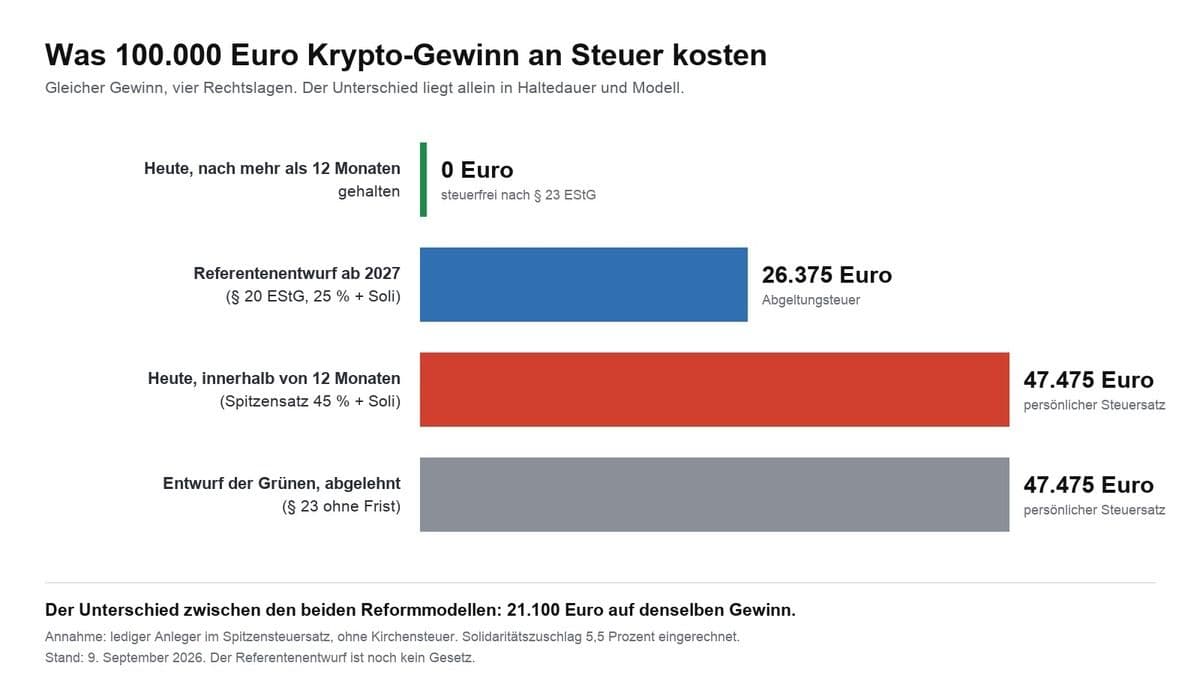
Crypto Tax in Germany: What Applies in 2026 and What Is Set to Change in 2027
Crypto gains are tax-free after twelve months; before that your personal tax rate of up to 45 percent applies. What triggers tax, how the holding period is calculated, what happens with staking and losses, and what the draft bill would change from 2027.
September 22, 2026 4:37 AM

Crypto Tax Audit: What Evidence the Tax Office May Demand
If the tax office asks about your crypto gains, the only thing that counts is what you can produce. The German Fiscal Code governs what may be demanded and what happens when the documents are missing.
October 9, 2026 1:18 PM

Bitcoin Tax: One Year Past the $126,080 Peak, Losses No Longer Count
Bitcoin trades at $82,558 on Friday morning, 34.5 percent below an all-time high that is now a good year old. Anyone who bought back then loses more than the prospect of a quick recovery when the one-year period expires: the tax value of the loss goes with it.
August 10, 2026 5:15 PM
Bitcoin Lending in Austria: When Tax Falls Due
Lending Bitcoin and earning interest: when lending income is taxed at 27.5 percent in Austria and which exchange rate counts.
October 6, 2026 4:32 AM
Bitcoin for a gift card: what paying with crypto means for your holding period
Paying for a gift card with Bitcoin is a sale for tax purposes. What counts as the disposal proceeds, when the twelve-month holding period bites, and the four records the tax office expects.
More from CryptoTicker