
Kraken Review: Fees, MiCA Licence and Withdrawals in Euro
A purchase through Kraken's standard interface costs 1 percent plus spread; on Kraken Pro it is 0.40 to 0.80 percent. What deposits, trading, withdrawals and tax records really cost at the crypto exchange, with the numbers from the official fee schedule.



Which topics should we dive deeper into?
Select what genuinely interests you. Your picks feed directly into our editorial planning.
Crypto news that's actually worth your time.
Weekly. 60 seconds. Carefully curated by our editors: no hype, no promo flood, no spam.
Buying through Kraken's standard interface costs a 1 percent trading fee plus a spread that is baked into the price you see. The same purchase on the Kraken Pro trading interface costs 0.40 percent as a maker and 0.80 percent as a taker at the entry tier. Depositing euros by SEPA transfer is free; withdrawing costs 1 euro. Those are the numbers that matter in any Kraken review that talks about fees, and they are what the exchange's official fee schedule shows on September 20, 2026.
This article works the cost through a concrete example, places the MiCA licence Kraken has held from Ireland since June 2025 in context, and follows the money all the way: deposit, purchase, withdrawal, tax records. No price target, no recommendation. Anyone buying cryptocurrencies can lose the full amount they put in, and the choice of platform does not change that.
What does it cost to buy Bitcoin on Kraken? A worked example
Take 500 euros and a Bitcoin purchase. Through the simple buy form Kraken calls "Instant Buy", the fee is 1 percent, or 5 euros. On top comes the spread, which the exchange builds into the displayed price and does not show as a separate line. Place that same Bitcoin purchase on Kraken Pro as a limit order that rests in the order book and you pay 0.40 percent at the entry tier, or 2 euros. Take the market price there straight away and it is 0.80 percent, so 4 euros.
The gap between 2 and 5 euros sounds small. On a monthly purchase over a year it comes to 36 euros, and the spread is not yet part of that calculation. To know what a purchase really costs, you have to keep two things apart: the trading fee that is stated, and the portion that disappears into the price.
Trading fee is the percentage the exchange charges on the volume of an order and shows separately. Spread is the gap between the market price and the price at which you actually complete the trade. Both are trading costs; one appears on the statement and the other does not.
Instant Buy or Kraken Pro: why the same exchange has two prices
Kraken runs two doors into the same market. The buy form in the app and on the website is aimed at investors who want to enter an amount and be done. Kraken Pro is the trading interface with an order book, charts and order types. Both draw on the same liquidity, yet the fee model differs sharply.
The official fee schedule lists this for the simple route: 1 percent on instant and recurring purchases, 1.5 percent on so-called custom orders. For very small residual balances below the minimum order size, the "Convert Small Balances" function carries a flat rate of 3 percent. Anyone entering by card payment also pays the payment charge covered further down.
This split is not a Kraken peculiarity; it is the standard at almost every large crypto exchange. How wide the gap between the convenient route and the cheap one runs at other providers is set out in our crypto exchange comparison, which puts the fee models side by side.
Maker and taker: how the Kraken fee tiers work in spot trading
Maker describes an order that places liquidity into the order book, meaning a limit order that is not filled immediately. Taker describes an order that removes existing liquidity, typically a market order. Kraken grades both across twelve tiers plus five professional tiers, and the distance between them is considerable.
At tier 1, meaning from a trading volume of zero, maker fees stand at 0.40 percent and taker fees at 0.80 percent. From $2,500 of volume in 30 days they fall to 0.30 and 0.60 percent, and from $10,000 to 0.22 and 0.38 percent. Only from $10 million does the maker fee drop to zero.
For the average retail investor that means one thing: advertising that promises "fees from 0 percent" describes a tier they will never reach. The first three tiers are the realistic ones. For comparison, we described the same pattern at Coinbase on September 20, 2026, a convenient interface carrying a high markup alongside a pro interface with graduated rates.
Assets on Platform: when your balance lowers the trading fee
One change has barely been described in German-language coverage so far: Kraken has moved its fee tiers onto a system the exchange calls "Cross-platform Fee Tiers". Your tier used to depend on trading volume within each individual product. Now the better of two figures counts, either your spot trading volume over the past 30 days or the balance you hold on the platform, listed in the fee schedule as "Assets on Platform" and abbreviated AoP.
In concrete terms: from $20,000 of balance in the account you reach tier 3 with 0.22 percent maker and 0.38 percent taker, even if you have not made a single trade in thirty days. From $100,000 of balance, tier 5 applies at 0.15 and 0.30 percent.
That lowers trading costs for investors who leave larger holdings on the exchange anyway. It also creates an incentive to do exactly that, which runs against the rule of thumb of moving holdings to your own wallet. Taking the discount means paying for it in custody risk. That is a trade-off, not an arithmetic problem.
The spread is the part of the cost that never appears on a statement
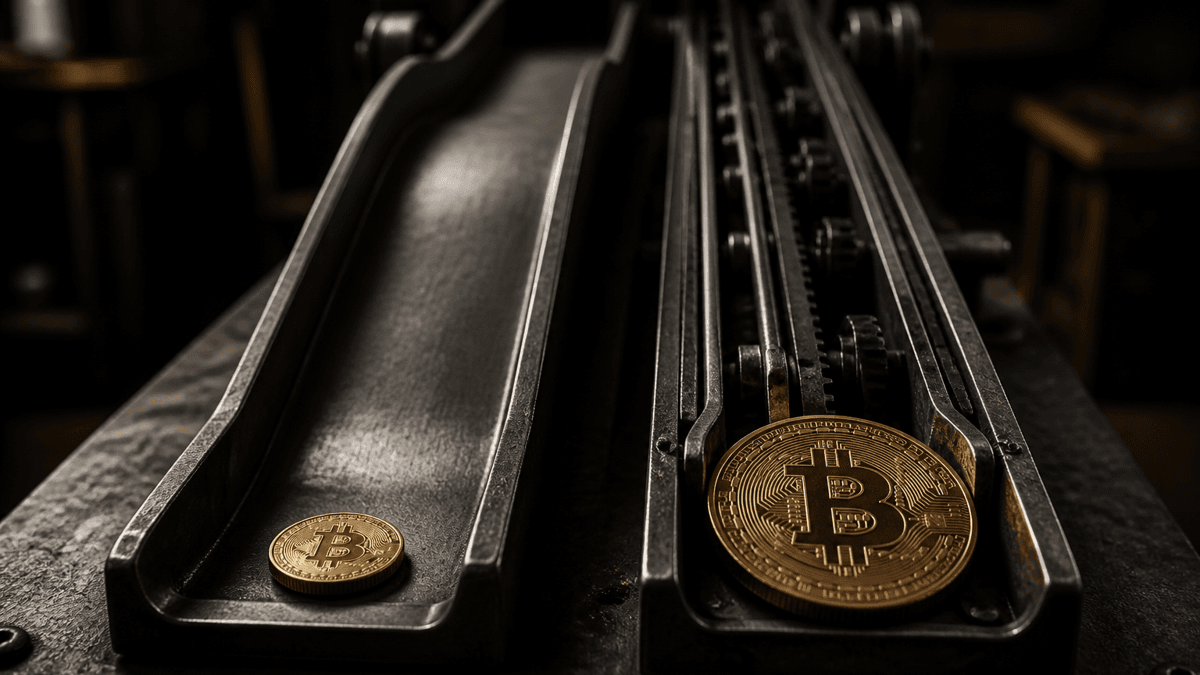
Kraken describes the spread openly in its own fee schedule as the difference between the market price and the price you receive, and states that the exchange may retain any surplus from that gap. Its size varies with market conditions, asset class, order size, order type and account activity. The exchange names no fixed figure, which is why none appears here either.
This is the real reason fee comparisons between trading platforms are so hard to run. Two providers can both state 1 percent and still differ several times over in actual cost. There is only one way to check: read the market price in a second window, put the offered price beside it and work out the difference before you confirm the purchase.
On Kraken Pro this item largely falls away, because you trade directly in the order book and set the price yourself. That is the second, less visible reason the Pro interface works out cheaper for regular purchases than the buy form.
 Which crypto exchange suits you
Does Kraken have a MiCA licence? What the Irish authorisation means
Yes. Kraken received authorisation under the European Markets in Crypto-Assets Regulation from the Central Bank of Ireland in June 2025. The exchange itself describes the step in its announcement as enabling it to "offer regulated services and serve customers directly across all 30 EEA member states". The licence is held by the group's European entity; the US parent company is based in San Francisco.
For you as a European customer this has three tangible consequences. First, Kraken falls under the supervision of an EU authority rather than national transitional registers alone. Second, the information, complaint and custody obligations of the MiCA Regulation apply. Third, the exchange may offer its services across the bloc under the EU passport without needing a separate national permission in each country.
A MiCA licence is therefore a solid point of difference against platforms without authorisation. It does not work as an absolute, and the next section explains why.
What the MiCA licence does not cover: deposit protection and self-custody
The statutory deposit protection of 100,000 euros you know from your current account applies to bank deposits. Crypto-assets in an exchange account do not fall under it, and the euro balance parked there is treated differently in law from a balance at your own bank. The regulation requires client assets to be segregated from the firm's own and sets custody requirements. That makes a platform failure less likely, but it neither rules one out nor makes good the loss.
Kraken says it keeps the bulk of customer holdings in cold storage, meaning on systems without a network connection, and relies for security on two-factor authentication, a configurable global account lock and address approvals for withdrawals. Those security standards only take effect once you switch them on. The most important lever in practice sits with you: an active second factor that does not run over SMS protects against the most common line of attack on exchange accounts.
Anyone holding larger amounts for the long term usually moves them to their own hardware wallet and leaves on the exchange only what they intend to trade. If authorisation matters to you as a selection criterion, the overview of regulated crypto exchanges helps with the comparison.
Depositing euros: SEPA free, card payment at 3.75 percent
The cost gap shows up most clearly on deposits. Via SEPA transfer or SEPA Instant, Kraken charges no fee on a minimum amount of 1 euro; depending on the payment service provider it takes anywhere between a few seconds and three banking days. A card payment within the euro area, by contrast, costs 0.25 euros plus 3.75 percent on a minimum of 10 euros. A SWIFT deposit comes in at 3 euros, and with PayPal the payment service's own charges apply.
Weigh that up: on 500 euros the card costs 19 euros and the SEPA transfer nothing. The trading fee for the actual purchase then comes on top. That makes card payment by far the most expensive way to get money into a Kraken account, and it is also the one the interface puts closest to hand.
A practical note on deposits: for some payment routes Kraken requires the transfer to carry your account identifier as the reference. Without it the credit can get stuck. Deposits through certain routes also trigger a temporary withdrawal hold, typically 72 hours for card purchases.
Withdrawing euros: what a SEPA transfer from Kraken costs
Withdrawal is where user accounts of the experience diverge, because the price depends on the payment service provider your account runs through. According to the exchange's "Cash withdrawal options" help page, as of September 20, 2026, the euro position is this: a standard SEPA withdrawal costs 1 euro on a minimum of 2 euros and takes up to five banking days. An instant SEPA withdrawal through one of the providers costs 0.90 euros on a minimum of 3 euros and usually arrives within minutes. A SWIFT withdrawal costs 5 euros and requires at least 100 euros.
Two pitfalls sit in the small print. First, a transfer can be processed as SWIFT if your IBAN is not reachable over SEPA, and the higher rates then apply. Second, the charges depend on the country your account is registered in. Check the display in the withdrawal dialogue before you confirm; the amount actually deducted is shown there.

Moving crypto to your own wallet: network fee instead of trading fee
Withdraw coins rather than euros and a different price tag applies. The exchange charges a fixed rate per cryptocurrency that covers the cost of the transfer on the respective network, and sets a minimum withdrawal amount. Both change as network fees fluctuate; the binding figure is the one in the confirmation dialogue.
What drives the amount is the network, not the sum being moved. A transfer over an expensive base layer costs the same fixed rate whether you move 50 or 5,000 euros. On small amounts that eats several percent in short order. How exchange fee and network fee combine on a withdrawal, and where the adjustment points sit, is taken apart in our piece on withdrawal fees and network fees.
The practical consequence for regular savers: let holdings accumulate on the exchange until the amount puts the withdrawal fee into a sensible proportion, instead of moving each monthly purchase off on its own. Turn that around and you pay twelve withdrawals in place of one.
 A tax report without the manual work
Crypto savings plan and Kraken+: when the subscription pays off
A crypto savings plan runs through recurring purchases at Kraken, and the same rate of 1 percent applies as for an instant buy. Alongside it the exchange offers a paid subscription called Kraken+, which waives the trading fee on a monthly trading volume of up to $10,000 or the equivalent in euros. The waiver expressly covers only purchases, sales and conversions through the simple interface, not spot trading on Kraken Pro, not futures trading and not business done through the programming interface.
One point here is easily skimmed over: the spread remains in place under the subscription, and so do card charges. The discount touches only the portion of the cost that is disclosed. Whether it pays off therefore hangs on how large the spread is on your purchases, and that is precisely the figure you do not know in advance.
On a savings plan of 100 euros a month, the trading fee saved amounts to 1 euro. A subscription costing more than that does not carry itself by this route alone. Do the sum with your actual volume, not the one you intend to reach next year.
Staking on Kraken: 20 percent commission on the rewards
Staking means committing coins from a proof-of-stake network to help secure it and receiving a yield in return. Kraken charges no transaction fee of its own for this, but takes a commission from the yield earned. For flexible staking on assets with an unbonding period on the network, and for the assets in the rewards programme, the fee schedule names 20 percent. For bonded staking and for assets without an unbonding period on the network, the commission depends on the amount staked per asset.
For tax purposes, staking is a chapter of its own in Germany: the running yield is regularly treated as other income and must be recorded in the year it accrues, irrespective of the holding period of the underlying coins. Anyone using staking should document the yield continuously, because it is hard to reconstruct after the fact.
Whether staking is offered on your account at all depends on your country of residence and on the individual cryptocurrency. The offering in the EU has narrowed over the past years of regulatory steps, more than the marketing copy on some comparison sites suggests.
Margin, futures and perps: the offering beyond spot trading
Alongside spot trading, Kraken runs margin trading, futures trading and perpetual contracts, known in the market as perps. For these contracts the fee schedule shows 0.25 percent on the notional value when opening a position and another 0.25 percent when closing it. Margin trading adds an opening fee and ongoing financing costs.
These products are designed for experienced traders and are not accessible to everyone; availability depends on country of residence and account level. The decisive point lies elsewhere: in leveraged trading the loss can exceed the stake, and a liquidation runs without asking. That is a different risk class from a purchase on the spot market, even though both live in the same interface.
Tax: holding period, exemption limit and what to export from your account
In Germany, gains from selling cryptocurrencies fall under private disposal transactions pursuant to section 23 of the Income Tax Act. If the period between acquisition and disposal is no more than one year, the gain is taxable and is charged at your personal income tax rate. After a year has passed, the sale is tax-free. An exemption limit applies on top: gains stay tax-free if the total gain from all private disposal transactions in the calendar year comes to less than 1,000 euros. An exemption limit is not a tax-free allowance. Reach 1,000 euros and the entire amount is taxable, not merely the part above the line.
For your tax return you need the complete transaction history from the account, with timestamp, quantity, value and fee for each event. Kraken provides export files for this in the account area. Pull them regularly, ideally at the turn of the year: after an account closure or a delisting, older data may no longer be within reach, and the tax office asks for records rather than screenshots.
The fees themselves are more than an annoyance here. Incidental acquisition costs increase the acquisition cost and thereby reduce the taxable gain. Failing to export your fee lines gives money away at exactly this point.
From 2026 the exchange reports itself: Germany's crypto tax transparency act
Since January 1, 2026, new reporting and due diligence obligations have applied to providers of crypto-asset services in Germany. The basis is the Crypto-Asset Tax Transparency Act, KStTG for short, through which Germany implemented the European administrative cooperation directive DAC8. Under section 9 KStTG, providers must report the required information to the Federal Central Tax Office annually by July 31 at the latest for the preceding reporting period; section 10 sets the calendar year as the reporting period.
In practice that means the first full year reported on is 2026, with the report due by the end of July 2027. The notion that crypto gains stay undetected as long as they are not declared is finished for regulated platforms. Kraken falls under these obligations as an authorised provider.
Anyone who failed to declare gains in past years should clear that up with tax advice before the first data matching. This article is no substitute for such advice, and judging an individual case belongs in the hands of a tax adviser.
What are the drawbacks of Kraken? Three points that hit German users
First, the entry price. Anyone using the app without switching to Kraken Pro pays considerably more than necessary at 1 percent plus spread. The cheap side of the exchange sits behind a change of interface that many users never make.
Second, the product situation. The crypto offering is broad but not stable: Kraken halted trading for 21 tokens in September 2026, and steps like that hit investors holding smaller coins there. Anyone invested in niche assets should follow the exchange's announcements, because only a limited withdrawal window remains after a trading halt.
Third, ease of use for beginners. The standard interface is lean, the Pro interface demands some study, and customer service runs largely in writing. Anyone moving through the crypto market for the first time needs to allow time for that.
Is Kraken safe? What the licence proves and what scammers do with the name
The question comes up regularly in search results, so here is the sober answer: Kraken has been in the market since 2011, holds a MiCA authorisation from Ireland and is therefore a supervised provider. There is no indication of fraud in its business model, and anyone claiming otherwise should be able to prove it.
At the same time, the names of well-known crypto exchanges get used by third parties for fraud attempts. Forged emails in an exchange's name, cloned login pages and supposed support staff asking for the second factor hit the customers of large platforms first. Kraken asks for neither your password, nor your second factor, nor a recovery phrase, by email or by telephone. Any message that does is an attack, however genuine the sender may look.
The second group of complaints concerns frozen accounts. Freezes after irregularities are a prescribed procedure at regulated providers rather than arbitrary acts, but they hit users who have no idea they are coming, and resolving them takes time. To avoid that, keep your details current and steer clear of unusual deposit and withdrawal patterns through third parties.
Kraken compared: who the exchange suits and who it does not
For regular mid-sized purchases through the Pro interface, Kraken is competitive on price, particularly if you work with limit orders and use the maker fees. For investors who buy a small amount once a month and do not want to switch interfaces, the route through the buy form is expensive in relation to the result. For pure card purchases, the exchange is the wrong address.
For a short rule of thumb: the effort of learning the Pro interface once pays for itself at a purchase volume of a few hundred euros a year. Below that, the deciding factor is not the fee table but whether you are comfortable operating the platform.
Kraken review: what to take away
- Check which interface you are buying through before you transfer the next amount. The difference between 1 percent and 0.40 percent is the biggest lever in this whole calculation, and it costs you nothing beyond learning the interface once. How other providers fare is set out in the crypto exchange comparison.
- Decide deliberately what stays on the exchange. The fee discount tied to your balance on the platform is a genuine advantage and at the same time an incentive to take on custody risk. For long-term holdings the route to self-custody runs through the hardware wallet comparison.
- Pull your transaction data now, not next spring. From the 2026 reporting period the tax authorities match provider data, and your own record of acquisition costs and fees determines the size of the taxable gain. Tools for that are listed under crypto tax software.
The fee figures in this article come from Kraken's official fee schedule and the help pages on deposits and withdrawals. The authorisation is documented in the exchange's announcement of the MiCA licence from the Central Bank of Ireland.
(As of September 20, 2026. This article is not investment advice. Prices and fee structures change; check the terms with the provider before you buy.)
Transparency note: This article was produced with the assistance of artificial intelligence and reviewed by our editorial team before publication. All figures and claims were checked against the primary sources linked in the text. The feature image was generated with AI.
Related articles
- Bitget Review 2026: Fees, Safety After the $388M Hack and Who Can Use It
- Your Crypto Exchange Is Telling You to Withdraw: How to Spot Phishing After the MiCA Deadline
- Crypto Exchanges Head to Head: Which Pairing Is Cheaper Where
- Bison App: a 1.25 Percent Spread, 27 Percent of the Staking Rewards and Trading Without an Order Book
- BXB Market Review 2026: Platform, Pricing, and What Traders Should Know
Which topics should we dive deeper into?
Select what genuinely interests you. Your picks feed directly into our editorial planning.
Crypto news that's actually worth your time.
Weekly. 60 seconds. Carefully curated by our editors: no hype, no promo flood, no spam.

September 6, 2026 10:12 PM

MoonPay Fees: Up to 4.5 Percent, a Partner Margin on Top, and a Markup You Never See as a Fee
MoonPay is the buy button built into many crypto wallets. The European price list names four layers of cost, and only three of them show up as line items. What the provider is allowed to do, and what it expressly is not.
September 26, 2026 4:14 PM
Bitget Withdrawals Resume on September 28: What to Check on a Residual Balance Now
Bitget is releasing the withdrawals frozen after the September 24 incident in four stages from September 28. For a residual balance held from Germany that is a deadline, not a reason to wait.

July 2, 2026 8:59 PM
Binance Is Out of the EU: How to Move to a MiCA-Regulated Exchange
Binance has left the EU market. Which exchanges hold a MiCA licence, how to verify an authorisation is real, and how to move your holdings across step by step.
October 5, 2026 10:35 AM

"We deliberately invested in our expansion": Bitpanda reports a loss of around 14 million euros for 2025
Bitpanda GmbH reports a loss of around 14 million euros for 2025, after a profit of 61.7 million euros the year before, on adjusted revenue that rose to 371 million euros. What the numbers mean for your custody, your terms and the holding period.
August 6, 2026 3:05 PM
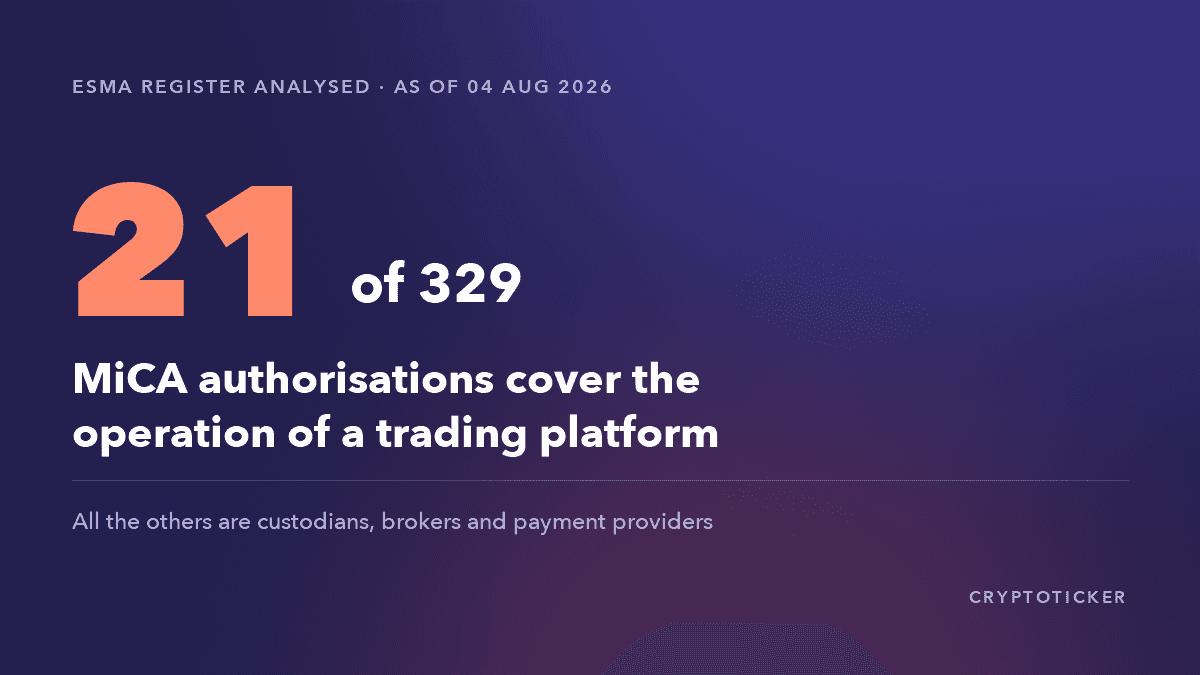
MiCA Register 2026: Only 21 of 329 Licences Are Real Exchanges
ESMA publishes the register of MiCA-authorised providers as an open file. We worked through all of it — and the result is not what the phrase “licensed crypto exchange” suggests.
September 29, 2026 7:12 PM
MEXC Refunds $340,000: The Attacker's API Key Survived the Account Freeze
During an account takeover at MEXC, an attacker created an API key with withdrawal rights that the exchange did not revoke when it restored the account. Twenty-seven minutes after the withdrawal freeze expired, roughly $340,000 was gone.

June 30, 2026 11:20 PM

How to Switch from Binance to a MiCA Regulated Crypto Exchange
Binance is winding down EU services after missing the MiCA deadline. Here's why it's happening and how to move your funds to a regulated platform safely.
May 19, 2024 1:23 PM
Will Tether (USDT) Get Delisted In Europe?
With growing concerns revolving around the reliability and compliance regulations of stablecoins, some crypto exchanges opt to delist some of them. Will this be the case for Tether in Europe?
September 11, 2026 1:40 PM

Inactivity Fees at Crypto Exchanges: How to Check Whether Your Dormant Account Loses Money Every Month
Two providers have just raised their rates for dormant accounts, one of them to as much as 52 US dollars a month. Our own survey of 15 fee pages shows why you will almost never find the answer for your account without logging in.
September 29, 2026 10:33 AM
ESMA puts reverse solicitation on its 2027 watch list: what investors need to know about exchanges without an EU licence
ESMA presented its work programme for 2027 on September 28, 2026 and made reverse solicitation a supervisory priority. What that means if your coins sit with a provider without EU authorisation, and which three steps make sense now.
September 23, 2026 10:11 AM
Kraken: 45 coins are on cancel only, 21 were announced – what to check when trading pairs are blocked
On September 23, 2026 we counted the public market directories of three trading venues. At Kraken, 82 of 1,450 trading pairs are listed as cancel only, a state in which an order can only be cancelled and no longer executed. The 45 underlying assets affected include just 21 that appear in the delisting notice we reported on September 3.
September 15, 2026 10:12 AM
CoinEx Is Shutting Down: The Deadline to Withdraw Your Balance
Crypto exchange CoinEx is winding down and the withdrawal channel closes on December 22, 2026. Our own measurement on the day of the first wind-down stage shows which 37 currencies cannot be withdrawn right now and why the chain you pick decides a double-digit percentage of your residual balance.
June 26, 2026 5:35 PM
Binance Is Leaving the EU on July 1 — What It Means for Your Funds
Binance will stop serving EU customers from July 1 after failing to secure a MiCA licence. Here's what it means for your funds and your next move.
August 23, 2026 4:43 AM
Withdrawal Hold and Minimum Amount: Why Your Balance Will Not Leave Before the Deadline
A withdrawal hold pins your balance down for days after certain deposits, and a minimum withdrawal amount blocks small residual holdings entirely. On August 22, 2026 we checked which trading venues name these two rules publicly at all.
August 20, 2026 1:17 AM
Crypto Withdrawal Fees: What Moving Coins to Your Own Wallet Really Costs
We measured the withdrawal fees for 475 assets on August 17, 2026 and set them against the actual network fee. For Bitcoin, the exchange charged eight to sixteen times what a transaction cost in the same minute.

September 26, 2026 7:40 AM
The RAIN Token After the Enlivex Termination: What to Check on Access, Forced Sale and Holding Period
Enlivex terminated a share placement of 66,666,667 shares payable in RAIN tokens on September 22, 2026. The token sits 46.4 percent below its all-time high, and at Kraken the withdrawal deadline expired long ago.
September 26, 2026 4:21 AM
Operation Herakles disconnects 13,888 phone numbers: what to check on crypto investment calls
Six authorities have disconnected 13,888 phone numbers used by investment fraudsters to call their victims in Operation Herakles, 9,304 of them in the past three months alone. What the Federal Network Agency now requires of telecoms providers and which three checks protect you from the scheme.
August 15, 2026 9:31 PM
Crypto Exchange Shutting Down: What to Do Before the Deadline Passes
Binance, BitMart, Luno and Revolut have ended or cut back their European business within seven weeks. This guide shows which deadline expires first, how a forced sale is treated for tax, and what to secure before the account closes.
October 5, 2026 1:29 AM

Chainalysis attributes $387 million from the Bitget hack to North Korea: what matters now for investors in Germany
The analytics firm Chainalysis attributes the theft of around $387 million at Bitget to actors with ties to the DPRK and puts the annual total above one billion dollars. What that means for custody, choice of exchange and record-keeping in Germany.
October 1, 2026 4:21 AM

Velocity Replaces Drift After the 285 Million Dollar Hack: What Changes for Investors in Germany
The Solana perp DEX Drift is back as Velocity, and since September 29, 2026 a new team has been running it. What the overhaul after the outflow of 285 million dollars means for your deposits, for settlement in USDT and for the legal position in Germany.
September 4, 2026 4:39 AM

Source of Funds at a Crypto Exchange: Why a Deposit Can Freeze Your Account for 15 Days
OKX chief Star Xu described on September 2 what an unusual deposit sets off: reviews of 15 days and longer, during which balances and account functions can be restricted. What that means for investors in Germany, and which documents you should keep to hand.

June 20, 2025 11:00 PM
Why OKX Might Be the Best Crypto Exchange in Europe – Hands-On Experience
Looking for a beginner-friendly, low-fee crypto platform? In this OKX review, we explore everything from sign-up to crypto trading, earning, and how to get €10 in Bitcoin with our exclusive CryptoTicker referral link.
September 30, 2026 10:40 PM

ESMA Calls for Advertising Rules on Crypto Influencers: Six Changes Now Sitting With the EU Commission
The EU securities watchdog filed its response to the MiCA review on the final day of the consultation. Among the demands are disclosure on staking, a licensable DeFi gateway and the power to freeze crypto assets.
September 3, 2026 4:41 AM
Kraken Delists 21 Tokens: Trading End on September 11 Has Passed, Withdrawals Run Until December 10
As of September 27, 2026: Kraken had set the end of trading and deposits for 21 cryptocurrencies for September 11, 2026 at 14:00 UTC, and that date has passed. According to the exchange, withdrawals remain possible until December 10, 2026 at 15:00 UTC. Our September 3 survey showed that none of these tokens could be deposited at Bitvavo, Coinbase or Bitstamp.
August 22, 2026 1:23 AM

Binance Withdrawal Deadline September 9: What ALCX, ARDR, NFP and POND Holders Should Know Now It Has Passed
Recap as of September 27, 2026: Binance had announced it would stop withdrawals of ALCX, ARDR, NFP and POND on September 9, 2026 at 03:00 UTC. Spot trading in these tokens had been suspended since July 10, and the exchange is winding down its EU business. This article describes the situation before the deadline.
August 18, 2026 10:11 AM

Kraken Delisting: 56 Tokens Face Forced Liquidation, Two Withdrawal Deadlines Have Passed, the Third Ends November 6
As of September 27, 2026: Kraken is removing 56 cryptocurrencies from trading across three cycles. The withdrawal deadlines of August 27 and September 25, 2026 have passed. For the 21 tokens from the July cycle, withdrawals remain open until November 6, 2026 at 14:00 UTC, after which the exchange sells any remaining balances itself.

More from CryptoTicker