
Withdrawal Hold and Minimum Amount: Why Your Balance Will Not Leave Before the Deadline
A withdrawal hold pins your balance down for days after certain deposits, and a minimum withdrawal amount blocks small residual holdings entirely. On August 22, 2026 we checked which trading venues name these two rules publicly at all.




Which topics should we dive deeper into?
Select what genuinely interests you. Your picks feed directly into our editorial planning.
Crypto news that's actually worth your time.
Weekly. 60 seconds. Carefully curated by our editors: no hype, no promo flood, no spam.
When a deadline is running and you want to get your balance off an exchange, two rules can get in your way that have nothing to do with the deadline itself: a withdrawal hold that pins your funds down for hours or days, and a minimum withdrawal amount below which the exchange will not technically execute the transfer at all. Both take effect quietly. You can see your balance, you can trade with it, and still nothing goes out.
This is no marginal matter. Between August 23 and the end of September 2026, dates fall due at several trading venues by which customers must have withdrawn their holdings. Anyone pressing the withdrawal button only on the eve of such a date may have no buffer left for a hold period that only starts running then.
On August 22, 2026, cryptoticker.io checked how well these two hurdles are documented publicly at all. The result is set out further down in the section on our own survey, and it comes out thin.
Withdrawal Hold and Minimum Withdrawal Amount: What the Two Hurdles Are
A withdrawal hold is a time-limited block an exchange places on a balance after money has been deposited or coins bought in a particular way. It serves fraud prevention: payment routes such as card or direct debit can be reversed after the fact, and the exchange wants to prevent the coins bought with them from having long since left the building by then.
A minimum withdrawal amount is the lower limit from which a withdrawal is executed at all. It has a technical reason: every withdrawal is a transaction on a blockchain, and that transaction costs a network fee. If the withdrawal amount were below that fee, the exchange would be paying out of pocket for you.
The two rules bite at different points. The hold costs you time; the minimum may cost you the remainder. Each is understandable in itself. Combined with a fixed deadline they become a problem, because they push back the earliest point at which you can act.
A 72-Hour Withdrawal Hold After a Card Purchase: How the Kraken Rule Works
The only one among thirteen providers checked that has its rules set out in full on freely accessible help pages is Kraken. That is why the mechanics can be evidenced cleanly on this example, while at the others they could only be guessed at.
According to Kraken, certain instant purchases trigger a withdrawal hold of 72 hours. Named are purchases by debit or credit card as well as through digital wallets such as Apple Pay or Google Pay. The help page in question is dated August 3, 2026.
Two details in this matter more than they appear to at first glance.
What Is Held Is the Purchase Amount, Not the Whole Account
Kraken states explicitly that the size of the hold corresponds to the purchase amount and not to the entire account balance. So anyone who has had a larger holding sitting on the exchange for months and tops up with another 200 euros shortly before the deadline can still withdraw the older holding. Only the 200 euros are stuck.
On US Dollar Card Purchases the Hold Applies Every Time
For debit and credit card purchases in US dollars, the 72-hour hold applies according to Kraken on every purchase, not only the first. With Apple Pay and Google Pay the rule relates to the first purchase with the respective card or payment method. Anyone regularly topping up small amounts by card therefore has part of the balance under a hold more or less permanently.
The hold also works across currencies: according to Kraken it applies to withdrawals in every crypto and every fiat currency. So it does not help you to swap the held amount into another currency beforehand.

A Seven-Day Hold After a Bank Transfer: Why the Deposit Method Decides
The hold turns out considerably longer on one particular deposit route. Kraken names a hold period of seven days for cash deposits via ACH Plaid. ACH is the US direct debit and transfer system; Plaid is the service provider through which the bank connection is established. For customers in Germany this route is not usually the standard one; here the deposit mostly runs via SEPA.
The underlying point applies generally all the same: how long your money is stuck depends less on which coins you buy than on the route by which the money came in. Reversible payment routes bring longer holds than a transfer already executed.
Kraken names a further trigger that is easily overlooked: several deposits of the same amount within 72 hours can be classified as a possible duplicate entry and stopped. The house recommendation is to use different amounts when making several transfers.
Minimum Withdrawal Amount: When the Exchange Technically Refuses the Transfer
The second hurdle hits small holdings. Kraken's guide to crypto withdrawals contains the sentence that the transaction cannot be processed if your balance is below the minimum amount. That page is dated August 19, 2026.
In practice this means: a residue of a few euros in a token the exchange is currently removing from trading may not be transferable to your own wallet. It has not disappeared, but it does not move.
Kraken also describes how the case shows up in the account. The error picture given is a notice that the balance is insufficient for the withdrawal, along with a display showing the balance as held back or blocking withdrawals. Anyone seeing that message for the first time easily takes it for an exchange malfunction. It is a rule.
 Regulated crypto exchanges compared
Our Own Survey: How Many Providers State the Hold and Minimum Publicly
To be able to judge how well these rules can be read up on at all before a deadline, we went looking for them ourselves. This assessment was carried out by cryptoticker.io itself on August 22, 2026.
Method in one sentence: on August 22, 2026, 22 public fee, help and terms pages from 13 trading venues were retrieved automatically with a browser identifier, the HTTP status was recorded, and the text delivered was examined for whether it names a withdrawal hold or a minimum withdrawal amount.
Pages checked were those of Kraken, Binance, Coinbase, Bitfinex, Bitvavo, Bitpanda, Bitstamp, OKX, Bitget, Crypto.com, Gemini, BISON and BitMEX.
The Result in Figures
- 14 of the 22 addresses responded normally.
- Of those 14, 11 delivered readable text at all; three returned a practically empty page whose contents are only loaded in the browser.
- Two addresses returned an empty page and six could not be read.
- Six addresses named a withdrawal hold or a minimum withdrawal amount in the text delivered. All six belonged to a single provider.
Of thirteen trading venues checked, exactly one therefore answered the question on a freely accessible page. At the remaining twelve, neither a hold period nor a minimum threshold was to be found in the text delivered.
What this analysis does not cover: content behind a login, meaning in particular the amounts shown in the withdrawal dialogue of a logged-in account. Nor the fee tables that are only loaded in the browser, nor the content of the six addresses that could not be read. It was also not possible to establish whether and how individual providers alert their customers to holds by email, and how many accounts in Germany are affected.
From this finding an uncomfortable practical consequence follows: the figure that matters for you is generally not on a web page you can read in advance, but only in the withdrawal dialogue of your own account. That is exactly the place where you can no longer check it at leisure on the day of the deadline.
Network Choice and Minimum Threshold: Why Different Routes Have Different Limits
When withdrawing you usually select a network. Many tokens exist on several blockchains, and the same token can be sent by different routes. In its withdrawal guide, Kraken points out that every supported network brings its own fees and its own minimum limits.
For you that means: if a withdrawal fails at the minimum threshold, that need not be the end of it. Another network can have a lower limit. Before you take that route, however, you must check whether the destination address supports the network selected. A withdrawal into the wrong network is in many cases not recoverable.
How far withdrawal fees and actual network costs can diverge was measured by cryptoticker.io across 475 assets in its own survey of August 17, 2026; on Bitcoin the fee charged by exchanges there was several times the pure network cost. That figure comes from our own analysis and not from an outside source.
Converting Dust Balances: What Converting Small Holdings Costs
For amounts below the minimum order size, several trading venues offer a conversion function that swaps small residual balances into a common currency. In its fee overview, Kraken names a fixed fee of 3 percent for this function on amounts below the minimum order size.
Three percent is a noticeable discount measured against usual trading fees. Set against a residual holding that cannot be moved at all before a deadline, it is the cheaper outcome. The calculation pays off above all when a token is being taken out of trading anyway and you can neither hold nor transfer it.
If you are facing the question of where a holding should go after an exchange closure anyway, a look at the overview of crypto exchanges helps, because trading venues with European licensing and their terms are set side by side there.
Trading Stays Possible, Withdrawal Does Not: What That Means for a Deadline
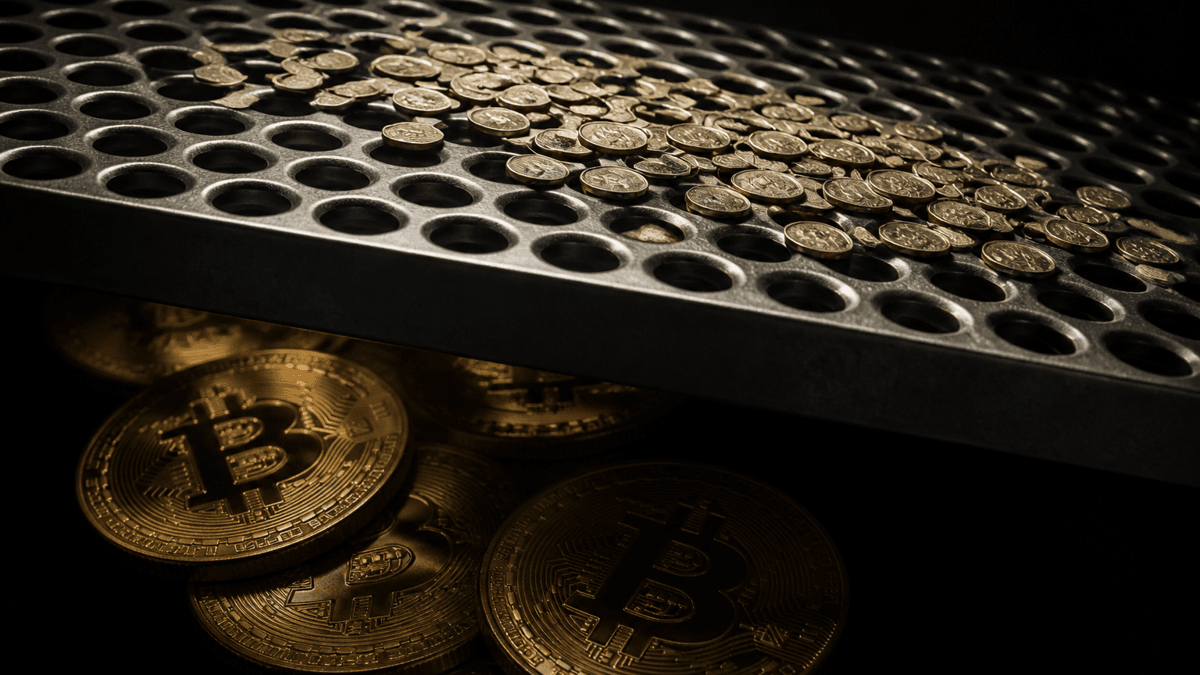
One detail of the hold regularly leads to misjudgements. Kraken records that trading remains untouched during a withdrawal hold: you can carry on buying and selling, you just cannot take anything out.
That creates a deceptive picture. An account that operates normally does not look blocked. Anyone who merely checks before a date whether they can still trade misses the hold entirely, until they actually trigger the withdrawal.
For a deadline the distinction is decisive. When an exchange stops trading in a token and sets a later date for withdrawal, those are two separate dates. A withdrawal hold hits only the second, but it can catch you there precisely when you have shifted a position shortly beforehand and paid in fresh money for it.
 Compare hardware wallets
Late-Summer Deadlines: How Much Lead Time a Withdrawal Really Needs
The calendar is dense at the moment. Our overview Crypto exchange deadlines: the dates up to August 31 of August 16, 2026 gathers several dates that concern German investors; the data named there comes from that compilation of our own.
For planning your own withdrawal, a plain rule of thumb follows: reckon with at least three days of lead time if you have bought by card or digital wallet in the preceding days, and with a week if you have paid in via a reversible method. These periods are evidenced for Kraken; at other providers you have to look inside your own account, because on our survey they do not state their rules publicly.
Three Checks Worth Making Before Any Deadline
Open the withdrawal dialogue once as a trial, without submitting the withdrawal. The minimum threshold is stated there, and that is also where the notice appears if part of your balance is being held back. Check second whether your residual holding is above that threshold, and plan for conversion if it is below. And third, do without card top-ups in the days before a deadline, because that saddles you with a fresh hold for no reason.
If you move your holding into self-custody after the withdrawal, the address you withdraw to becomes the critical point. The wallet has to support the network selected, and you have to store access to it securely before the first amount arrives there.
What the Price Has to Do With It, and What It Does Not
In a volatile phase, the hold period is more than an administrative step. Anyone wanting to withdraw Bitcoin while the market is moving fast carries the price risk of the hold period without being able to react, at least as far as the withdrawal is concerned. You can still sell. What you cannot do is take the coins out of the exchange's reach during that time.
No statement about the further course of prices is bound up with this. The point is solely that a hold restricts your room for action for a certain time, and that you should know that time before you need it.
Checking for a Withdrawal Hold: What to Take Away
- Open the withdrawal dialogue before the deadline presses. Only there do you see the minimum threshold for your token and any hold notice. If in doing so you find that your trading venue does not disclose its rules, that is an argument for a provider with clear European licensing: the regulated crypto exchanges compared show who is licensed in the EU.
- Check whether your residual holding is above the minimum threshold. If it is below, convert it or sell it before the deadline rather than waiting for a withdrawal that will not be executed. How a sale works and what to watch for in the terms is set out in our guide on selling Bitcoin.
- Plan the destination of the withdrawal before the date, not after. The address has to support the network selected, and access to the wallet has to be secured before amounts arrive there. Our hardware wallet comparison offers orientation on that.
The evidenced rules in this text come from Kraken's public help and fee pages: the explanation of the withdrawal hold and the guide to crypto withdrawals. Whether the same periods apply at your provider cannot be inferred from them.
(As of August 22, 2026. This article is not investment advice. Prices and fee structures change; check the terms with the provider before you buy.)
Transparency note: This article was produced with the assistance of artificial intelligence and reviewed by our editorial team before publication. All figures and claims were checked against the primary sources linked in the text. The feature image was generated with AI.
Related articles
- Kraken: 45 coins are on cancel only, 21 were announced – what to check when trading pairs are blocked
- BitMart Before the Trading Halt: Which Coins Already Have Withdrawals Blocked
- Crypto Withdrawal Fees: What Moving Coins to Your Own Wallet Really Costs
- Bitvavo Delisting of Kava, Nano and Ravencoin: What to Do Before Friday, 2 p.m.
- Kraken Delists 21 Tokens: Trading End on September 11 Has Passed, Withdrawals Run Until December 10
Which topics should we dive deeper into?
Select what genuinely interests you. Your picks feed directly into our editorial planning.
Crypto news that's actually worth your time.
Weekly. 60 seconds. Carefully curated by our editors: no hype, no promo flood, no spam.

August 18, 2026 10:11 AM

Kraken Delisting: 56 Tokens Face Forced Liquidation, Two Withdrawal Deadlines Have Passed, the Third Ends November 6
As of September 27, 2026: Kraken is removing 56 cryptocurrencies from trading across three cycles. The withdrawal deadlines of August 27 and September 25, 2026 have passed. For the 21 tokens from the July cycle, withdrawals remain open until November 6, 2026 at 14:00 UTC, after which the exchange sells any remaining balances itself.
September 27, 2026 7:22 AM
CoinEx Forced Conversion: Withdraw Non-USDT Balances by September 29
On September 29 at 02:00 UTC spot trading ends at CoinEx, and all holdings outside USDT are sold or delisted after that. What this means for your holding period, your tax bill and your withdrawal.
September 15, 2026 10:12 AM
CoinEx Is Shutting Down: The Deadline to Withdraw Your Balance
Crypto exchange CoinEx is winding down and the withdrawal channel closes on December 22, 2026. Our own measurement on the day of the first wind-down stage shows which 37 currencies cannot be withdrawn right now and why the chain you pick decides a double-digit percentage of your residual balance.
September 13, 2026 10:13 AM

Humanity Protocol Unlock of September 23: What H Holders Should Know Now the Kraken Deadline Has Passed
Recap as of September 27, 2026: Humanity Protocol was scheduled to release 292,857,143 H on September 23, 2026, and Kraken withdrawals for H and HUMANITY ended on September 25. This article recalculates the tranches and describes what holders should have checked before those dates.
September 20, 2026 10:11 PM
Kraken Review: Fees, MiCA Licence and Withdrawals in Euro
A purchase through Kraken's standard interface costs 1 percent plus spread; on Kraken Pro it is 0.40 to 0.80 percent. What deposits, trading, withdrawals and tax records really cost at the crypto exchange, with the numbers from the official fee schedule.

September 26, 2026 7:40 AM

The RAIN Token After the Enlivex Termination: What to Check on Access, Forced Sale and Holding Period
Enlivex terminated a share placement of 66,666,667 shares payable in RAIN tokens on September 22, 2026. The token sits 46.4 percent below its all-time high, and at Kraken the withdrawal deadline expired long ago.
August 15, 2026 9:31 PM

Crypto Exchange Shutting Down: What to Do Before the Deadline Passes
Binance, BitMart, Luno and Revolut have ended or cut back their European business within seven weeks. This guide shows which deadline expires first, how a forced sale is treated for tax, and what to secure before the account closes.
September 9, 2026 1:25 AM
KuCoin delists 25 tokens: you have until October 7 to withdraw them — and the official deadline list shows only 10
KuCoin halted trading in 25 tokens on September 7, 2026, and the withdrawal window closes on October 7 at 8:00 UTC. Our count shows that only ten of them were on the official deadline overview.
September 4, 2026 10:32 AM

Crypto Deadlines This Autumn: Nine Cut-Off Dates Checked, and Only Three Leave You Time After Trading Ends
Nine running crypto deadlines, eleven provider pages, one query date: we counted how much time really lies between the end of trading and the withdrawal cut-off. In six of nine cases the stated date is the end of the line.
August 28, 2026 1:33 AM
Sending Crypto: Why the Wrong Network Costs You the Balance on 51 of the 100 Largest Crypto Assets
When you withdraw from a crypto exchange, the network you pick decides whether your balance arrives or is lost for good. Our own analysis of August 26, 2026 shows that 51 of the 100 largest crypto assets exist on several chains at once.
October 8, 2026 7:18 PM

Kraken delisting on October 23: what you can do about the 13 removed tokens
Kraken halts trading in 13 crypto assets on October 23, 2026, with withdrawals running until the end of January 2027. Eleven of the assets have a euro pair, and across all eleven together only around 22,300 euros changed hands in a single day.
September 11, 2026 1:17 PM

Bybit Delisting of VIC and L3: Two Withdrawal Deadlines for Your Calendar
Bybit ends trading in Viction (VIC) and Layer3 (L3) on September 17, 2026. VIC withdrawals run until December 16, while at Binance the same token only has until October 17.
September 5, 2026 4:11 PM

Kraken Withdrawal Deadline of 25 September Has Passed: What Humanity and Beldex Holders Should Know Now
Recap as of 27 September 2026: the Kraken withdrawal deadline for $H, $HUMANITY, $BDX and $BELDEX ended on 25 September 2026 at 14:00 UTC. According to its own notice, the exchange sells whatever remains in accounts between 28 September and 2 October. This article describes the situation before the deadline.
August 22, 2026 1:23 AM

Binance Withdrawal Deadline September 9: What ALCX, ARDR, NFP and POND Holders Should Know Now It Has Passed
Recap as of September 27, 2026: Binance had announced it would stop withdrawals of ALCX, ARDR, NFP and POND on September 9, 2026 at 03:00 UTC. Spot trading in these tokens had been suspended since July 10, and the exchange is winding down its EU business. This article describes the situation before the deadline.
August 20, 2026 4:20 AM

Crypto Exchange Delisting: What Happens to Your Tokens When Trading and Withdrawals Close
A delisting runs in four stages, and only one of them is genuinely dangerous: the end of the withdrawal deadline. Using two live OKX dates as the example, we show what happens at each stage and how to tell whether it affects you.

July 26, 2026 7:57 AM
BitMart Shuts Down: Second Major Crypto Exchange to Announce Closure in One Week
BitMart is winding down just three days after BitMEX. Here are the withdrawal deadlines, what triggered the closures, and what it means for CEX users.
October 12, 2026 6:50 PM
Kraken Lands Full Dubai Licence: Dirham Trading Goes Live for UAE Crypto Investors
Kraken has won full VARA approval in Dubai, clearing the way for dirham trading, margin, staking and tokenized stocks. Here is what UAE traders get.
October 7, 2026 1:28 PM
Buying Solana with PayPal: a 72-hour lock and a minimum balance nobody mentions
PayPal does not deal in crypto assets in Germany, yet it works as a deposit route at an exchange. What the detour costs, why the SOL are stuck for three days, and which minimum balance every Solana wallet needs.
September 27, 2026 4:32 AM

Hester Peirce Leaves the SEC: What Now Applies to Your Custody in Germany
The most crypto-friendly voice at the US securities regulator goes on October 2, 2026, and the commission shrinks to two members. For investors in Germany it is still the European rulebook that decides, and there a deadline falls in July 2027.
September 10, 2026 7:17 PM
Binance Delists USDP: You Have Until November 24 to Withdraw Your Pax Dollar
Binance is removing the Pax Dollar stablecoin from its platform altogether. For holders in the European Economic Area the date that counts is the withdrawal deadline on November 24, 2026, well after the trading halt on September 24.
August 23, 2026 4:46 PM

BitMart Plans Restructuring Instead of Wind-Down: What Customers Should Know Now the August 26 Deadline Has Passed
Recap as of September 27, 2026: BitMart announced a possible restructuring plan on August 21, 2026, but the dates did not change: trading was set to end on August 26 at 01:00 UTC and withdrawal requests had to be submitted by 05:00 UTC. This article describes the situation before the deadline.
August 23, 2026 4:25 AM
Crypto Exchange Closure: What Happens to Your Residual Balance and When the Fee Starts
When a crypto exchange stops operating, trading ends on a set date but the account does not. Anyone leaving a residual balance behind now pays a monthly fee at the wind-downs currently under way.
August 22, 2026 10:37 PM
Transferring Delisted Tokens: 16 of 21 Kraken Assets Have No Fallback Exchange
On 27 August at 14:00 UTC Kraken closes withdrawals for 21 delisted tokens, and from 1 September the exchange sells the remainder itself. Our count of 34 tokens against six venues shows which assets still have a transfer destination at all.
August 22, 2026 1:27 PM
Binance Delists ICX, SCRT and STORJ: From August 21, One Door Closes After Another
Binance removes ICON, Secret and Storj from spot trading on September 3, 2026 at 03:00 UTC. The wind-down starts on August 21 with margin and direct purchase, and ICX holders face a second deadline through the ICON shutdown.
September 8, 2026 7:33 AM

Withdrawal Whitelist at the Crypto Exchange: How to Lock the Withdrawal Path Against Foreign Addresses
A withdrawal whitelist lets balances leave only to addresses approved in advance, and it works even when password and second factor are compromised. On September 8, 2026 we checked which of thirteen providers document the function publicly.
August 20, 2026 1:18 PM

Kraken Liquidates Rain (RAIN): What Holders Should Know Now the September 15 Withdrawal Deadline Has Passed
Recap as of September 27, 2026: Kraken had announced it would switch off withdrawals for Rain (RAIN) on September 15, 2026 at 14:00 UTC and then sell any remaining balances itself. This article describes the situation before the deadline and our own measurement of the trading venues, which shows how narrow the alternative route was.
August 11, 2026 9:18 AM

Your Crypto Exchange Is Telling You to Withdraw: How to Spot Phishing After the MiCA Deadline
Unauthorised crypto providers now have to tell their EU customers to withdraw, which leaves fraudsters an easy run with faked requests. Here is how to check in two minutes whether the message is genuine.
More from CryptoTicker