
Binance Withdrawal Deadline September 9: What ALCX, ARDR, NFP and POND Holders Should Know Now It Has Passed
Recap as of September 27, 2026: Binance had announced it would stop withdrawals of ALCX, ARDR, NFP and POND on September 9, 2026 at 03:00 UTC. Spot trading in these tokens had been suspended since July 10, and the exchange is winding down its EU business. This article describes the situation before the deadline.





Which topics should we dive deeper into?
Select what genuinely interests you. Your picks feed directly into our editorial planning.
Crypto news that's actually worth your time.
Weekly. 60 seconds. Carefully curated by our editors: no hype, no promo flood, no spam.
Anyone still holding Alchemix (ALCX), Ardor (ARDR), NFPrompt (NFP) or Marlin (POND) in a Binance account is now working against a fixed clock. On Wednesday, September 9, 2026, at 03:00 UTC, the exchange stops withdrawals of these four tokens. That is 05:00 in the morning in Germany. Until then, twenty-one days remain.
The date comes from the delisting announcement of June 26, 2026. It is worth noting because it meets a second circumstance: Binance has been winding down its EU business since July 1. For holders in Germany, the combination leaves a single route open, and it closes in three weeks.
What exactly ends at Binance on September 9 at 03:00 UTC
At large exchanges a delisting runs in stages, and the final stage is always the withdrawal. That is the one falling due now. Under the announcement, withdrawals of the four tokens will no longer be supported after September 9, 2026, 03:00 UTC. Anyone who has not sent the balance to a personal wallet or another provider by then loses the regular route to it.
The distinction that matters is between the balance and access to it. The tokens do not disappear: ALCX, ARDR, NFP and POND continue to exist unchanged on their respective blockchains, and a delisting is not an expropriation. What ends is the function through which the exchange releases the balance. After that, everything depends on what Binance does with the remainder and how quickly customer support replies.
A second point often registers too late in practice. Spot trading in these four tokens has been switched off since July 10. Selling through the deleted trading pairs is therefore no longer possible, which removes the option that would ordinarily be the most convenient one in a normal delisting. What is left is the withdrawal itself.
ALCX, ARDR, NFP and POND: why Binance pulled the four tokens from spot trading
Binance reviews its inventory of listed assets at regular intervals. According to the exchange, the review covers trading volume and liquidity, the stability and security of the underlying network, the activity of the development team and the regulatory environment, among other criteria. Anything that stands out in that review first receives the Monitoring Tag, an internal warning marker. The tag is an observation stage rather than a verdict; in many cases it precedes a delisting.
For these four tokens, the observation ended in removal. The market reaction on the day of the announcement was clear: NFPrompt and Marlin lost around 20 percent according to Crypto Economy, Alchemix a similar amount, Ardor about 6 percent. At the time of the notice, ALCX was quoted at roughly $2.67, NFP at around $0.0054 and POND at approximately $0.0011.
The special case of NFPrompt
NFP is the token whose path reveals the most about the mechanics of such lists. Binance brought it to market in December 2023 through its own Launchpool programme. After the market launch it reached $1.17; on Crypto Economy's figures, about one percent of that high is left. An exchange removing a token it introduced itself follows the same review routine as any other removal. For holders, only one consequence follows from that: the origin of a token is no protection against its delisting.
The delisting timeline: futures settlement, spot halt, deposit stop
The June 26 announcement names four dates, and three of them have already passed. On July 2 at 09:00 UTC, Binance Futures closed the related contracts and settled them automatically. On July 10 at 03:00 UTC, spot trading ended for all pairs of the four tokens. A day later, on July 11 at 03:00 UTC, incoming deposits were no longer credited.
That sequence is standard at Binance, and it explains why the last date is so easy to miss. Anyone who noticed in July that trading was ending often filed the matter away as done. The withdrawal window then runs on for another two months without anything visible happening in the app. The balances now at stake sit in exactly that quiet phase. We broke down how such a calendar of deadlines reads using the six tokens removed in August, in our piece on the Binance delisting of August 17.

Stablecoin conversion from September 10: what can happen to leftover balances
For the period after the deadline, the announcement names one more date. From September 10, 2026, 03:00 UTC, delisted tokens may be converted into stablecoins on behalf of users. The word that carries the weight is "may". The version published by the Thai Binance entity states expressly that such a conversion is not guaranteed and that affected users must otherwise contact customer support.
The situation after September 9 can therefore be described, but not planned for. It is possible that a leftover balance is converted automatically into a stablecoin and credited to the account. It is equally possible that it sits untouched and can only be moved through a support ticket. Which of the two routes an individual account falls into cannot be known in advance, and the notice creates no entitlement to either.
Anyone who meets the deadline never has to ask that question at all. That is the real reason to deal with this in the next few days rather than in the first week of September.
 Crypto exchanges with MiCA authorisation compared
Binance and the MiCA exit: why selling is no longer an option for EU customers
The second part of the story has nothing to do with the four tokens and still makes them more urgent. On July 1, 2026, the transition phase of the MiCA crypto regulation ended across the EU. Since then, anyone wanting to offer crypto services in the European Union on a regular basis needs an authorisation. Binance had withdrawn its application to the Greek supervisory authority HCMC shortly before the deadline, explaining that a decision in that procedure could not be expected in time.
The result is an orderly retreat from the EU business. According to the company, the assets of existing customers remain accessible during the wind-down, and selling or transferring is said to remain possible. What that means in an individual case depends on whether a market for the asset still exists on the platform at all. For ALCX, ARDR, NFP and POND it has not existed since July 10. The two processes interlock here: the general wind-down permits selling, while the delisting has already closed the venue required for it.
Any authorised provider is a possible destination; our comparison of regulated crypto exchanges shows which firms operate under MiCA in Germany.
What ESMA requires of providers without authorisation
The framework for this wind-down comes from the European securities regulator rather than from Binance. In a public statement of June 23, 2026, ESMA described what it expects of unauthorised service providers: stop onboarding new EU customers immediately, end all marketing, and limit services to what is needed to sell, transfer, reallocate or close existing positions. Custody of customer assets may continue only for as long as an orderly exit requires.
That last clause is the most important one for holders. It means custody is a temporary state. How long that time lasts in a specific case is not fixed to a calendar day by any law; the deadline for the four tokens, by contrast, is dated to the minute. Between an open-ended end and a defined one, the defined one is the sensible yardstick for your own action.
In the same statement, ESMA also requires that customers be informed clearly, promptly and repeatedly about the wind-down steps. In practice that means emails from the exchange on this subject are not marketing. And because fake messages tend to circulate around announcements like this, every link in a supposed exchange email belongs under scrutiny. The safe route runs through the address you type in yourself, or through the exchange's own app.
Withdrawing to your own wallet: network, minimum amount and self-custody
The withdrawal itself is routine, but it has three points where it can go wrong. The first is the network. Ardor runs on its own blockchain, Alchemix and Marlin are Ethereum tokens, NFPrompt comes from the B environment. The destination account has to support the relevant network, otherwise the transfer will not arrive. Sending a withdrawal to an address that does not know the selected network means losing the amount permanently in many cases.
The second point is the minimum withdrawal. Every exchange sets a minimum amount per token and deducts a network fee. If the remaining balance falls below it, the withdrawal cannot be triggered technically. The amounts Binance applies to ALCX, ARDR, NFP and POND appear in the withdrawal dialogue of the account and change with network fees; read those figures there rather than taking them from an article.
The third point is self-custody. A token held at an address you control yourself is no longer subject to any exchange deadline. That is the real gain from this exercise, quite apart from what the four positions are currently worth. Whether a hardware device or a software wallet fits depends on the amount and on your own routine.

Tax in Germany: why a withdrawal is not a sale, but a conversion can be
A transfer from an exchange account to a wallet the holder owns is not a disposal. No owner changes, no purchase price flows, and the acquisition data carry on unchanged. In tax terms, then, nothing happens at the withdrawal that would have to be declared. Only the documentation matters: the acquisition date and acquisition cost have to remain provable later, and the transaction history belongs in an export before any account closure.
The picture differs when a leftover balance is converted into a stablecoin after September 10. In Germany, swapping one crypto asset for another counts as a disposal of the asset given up, with everything that entails: gain or loss, holding period, duty of proof. So a tax-relevant event arises precisely in the case where the holder decided nothing. Our piece on the forced sale at a crypto exchange sets out how this plays out in detail for involuntary events.
For positions well below their purchase price, a realised loss can even be useful. It arises only through an actual disposal and within the rules that apply to it, though, and not because a token becomes unreachable. A balance that nobody can reach any more is the least favourable of all tax positions.
 Hardware wallets for self-custody compared
Five minutes of checking: how to find leftover balances in your Binance account
Most of the affected balances are small ones. That is exactly why nobody notices they are still there: remnants from a Launchpool, an old trade, a position left lying after a 90 percent decline. Anyone who never deliberately bought the four names should still take a look.
The route runs through the account's asset overview. All balances can be displayed there, including those with a very small value, which the default view often hides. Searching for the four tickers individually answers the question in a few minutes. Alongside the spot balance, earn or savings products deserve a check as well, since tokens can be locked there; in that case they are not freely available and have to be released before a withdrawal.
Anyone who is in the account anyway should widen the view a little. The exchange's ongoing retreat from the EU turns every balance left there into a position on borrowed time, not just these four. Several providers have deadlines of this kind running in parallel this summer; an account untouched for months is the likeliest place for a missed one.
What this deadline is not
Two misunderstandings are worth clearing up. A delisting at an exchange is no verdict on the project behind a token; it is a decision by that one trading platform according to its own criteria. And the September 9 deadline applies solely to balances at Binance. Anyone holding the same tokens at another exchange or in a personal wallet has nothing to do with this date.
Checking the Binance withdrawal deadline: what to take away
- Look today, not in early September. Check your Binance account for ALCX, ARDR, NFP and POND, including locked balances in savings or earn products. If something is there, release it and withdraw it while the route is open. If you would rather move the balance off the platform entirely, alternatives with MiCA authorisation appear in our comparison of regulated crypto exchanges.
- Pick the right network and start with a small amount. Address and network have to match, otherwise the amount is lost. A destination in self-custody removes the balance from every exchange deadline for good; suitable devices are listed in the hardware wallet comparison.
- Export the history before the account goes quiet. The tax office will want the acquisition date and acquisition cost later, and after an account closure they are hard to reconstruct. Tools for the analysis are collected under crypto tax tools and portfolio trackers.
(As of August 19, 2026. This article is not investment advice. Prices and fee structures change; check the terms with the provider before you buy.)
Transparency note: This article was produced with the assistance of artificial intelligence and reviewed by our editorial team before publication. All figures and claims were checked against the primary sources linked in the text. The feature image was generated with AI.
Related articles
- BitMart Before the Trading Halt: Which Coins Already Have Withdrawals Blocked
- Crypto Exchange Deadlines in August: What Still Applies Now the Seven Cut-Off Dates to August 31 Have Passed
- Crypto Exchange Closure: What Happens to Your Residual Balance and When the Fee Starts
- Binance Delists USDP: You Have Until November 24 to Withdraw Your Pax Dollar
- BitMart Shuts Down: Second Major Crypto Exchange to Announce Closure in One Week
Which topics should we dive deeper into?
Select what genuinely interests you. Your picks feed directly into our editorial planning.
Crypto news that's actually worth your time.
Weekly. 60 seconds. Carefully curated by our editors: no hype, no promo flood, no spam.

August 23, 2026 4:46 PM

BitMart Plans Restructuring Instead of Wind-Down: What Customers Should Know Now the August 26 Deadline Has Passed
Recap as of September 27, 2026: BitMart announced a possible restructuring plan on August 21, 2026, but the dates did not change: trading was set to end on August 26 at 01:00 UTC and withdrawal requests had to be submitted by 05:00 UTC. This article describes the situation before the deadline.
August 22, 2026 1:27 PM
Binance Delists ICX, SCRT and STORJ: From August 21, One Door Closes After Another
Binance removes ICON, Secret and Storj from spot trading on September 3, 2026 at 03:00 UTC. The wind-down starts on August 21 with margin and direct purchase, and ICX holders face a second deadline through the ICON shutdown.

July 2, 2026 8:59 PM

Binance Is Out of the EU: How to Move to a MiCA-Regulated Exchange
Binance has left the EU market. Which exchanges hold a MiCA licence, how to verify an authorisation is real, and how to move your holdings across step by step.
August 23, 2026 7:17 AM

OKX Delisting: What MAJOR and J Holders Should Know Now the August 26 Withdrawal Deadline Has Passed
Recap as of September 27, 2026: OKX had announced it would halt withdrawals of the tokens MAJOR and J on August 26, 2026 at 08:00 UTC; they had not been tradable there since the start of June. This article describes the situation before the deadline.
October 14, 2026 7:34 PM

Binance delisting of EPIC and QUICK from October 20: what to check now
Binance is removing Epic Chain and QuickSwap on October 28. Four deadlines, however, already fall on October 20, and from then on the exchange decides when your position is unwound.
August 22, 2026 10:37 PM
Transferring Delisted Tokens: 16 of 21 Kraken Assets Have No Fallback Exchange
On 27 August at 14:00 UTC Kraken closes withdrawals for 21 delisted tokens, and from 1 September the exchange sells the remainder itself. Our count of 34 tokens against six venues shows which assets still have a transfer destination at all.
August 20, 2026 4:20 AM

Crypto Exchange Delisting: What Happens to Your Tokens When Trading and Withdrawals Close
A delisting runs in four stages, and only one of them is genuinely dangerous: the end of the withdrawal deadline. Using two live OKX dates as the example, we show what happens at each stage and how to tell whether it affects you.
August 15, 2026 9:31 PM

Crypto Exchange Shutting Down: What to Do Before the Deadline Passes
Binance, BitMart, Luno and Revolut have ended or cut back their European business within seven weeks. This guide shows which deadline expires first, how a forced sale is treated for tax, and what to secure before the account closes.
July 9, 2026 10:12 AM
MiCA Wiped Out 92% of Europe's Crypto Firms: Here's Who Survived and Who's Cashing In
The July 1 deadline turned 3,000+ EU crypto firms into a few hundred. Binance is out, Tether's gone, and a handful of winners now own the market.

June 30, 2026 11:20 PM

How to Switch from Binance to a MiCA Regulated Crypto Exchange
Binance is winding down EU services after missing the MiCA deadline. Here's why it's happening and how to move your funds to a regulated platform safely.
September 9, 2026 1:25 AM

KuCoin delists 25 tokens: you have until October 7 to withdraw them — and the official deadline list shows only 10
KuCoin halted trading in 25 tokens on September 7, 2026, and the withdrawal window closes on October 7 at 8:00 UTC. Our count shows that only ten of them were on the official deadline overview.
June 26, 2026 5:35 PM
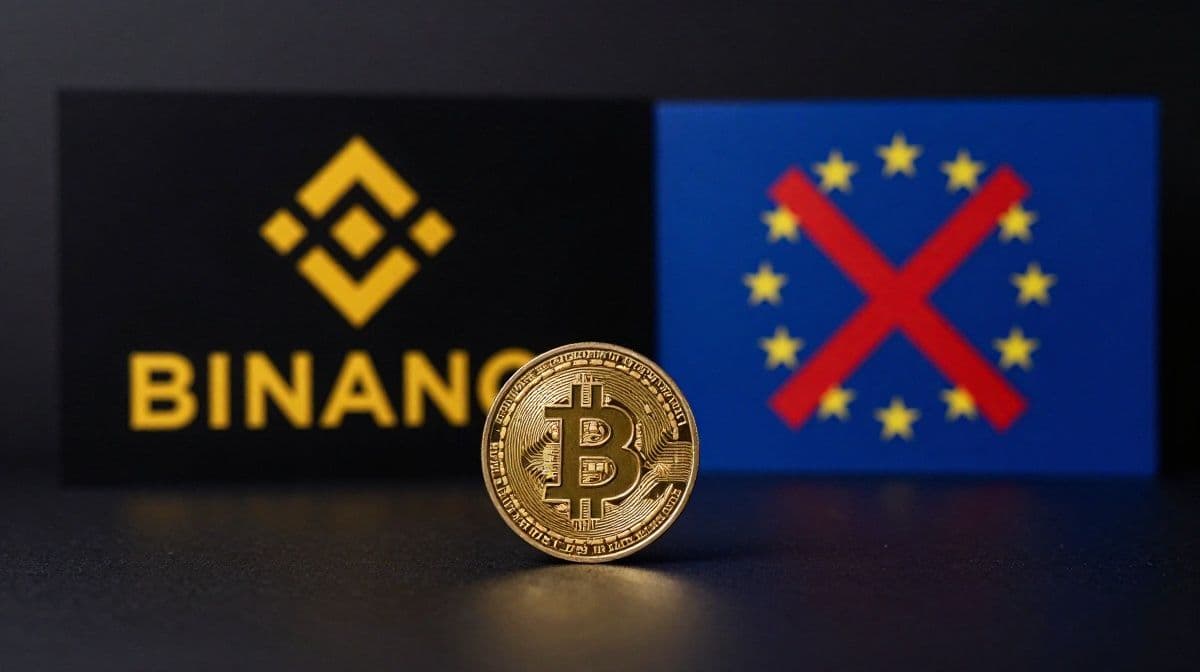
Binance Is Leaving the EU on July 1 — What It Means for Your Funds
Binance will stop serving EU customers from July 1 after failing to secure a MiCA licence. Here's what it means for your funds and your next move.
August 26, 2026 7:25 AM
BitMEX Closed on September 23: The Deadlines That Applied and What Remains for Your Balance
Recap as of September 27, 2026: BitMEX ceased operations on September 23, 2026 at 04:00 UTC. According to the operator, login and withdrawals remain available via the website, and an account fee applies to remaining balances. This article describes the cut-off dates before the closure, from the risk limits on August 26 to the early settlement of the perpetual swaps on September 2.
July 10, 2026 10:30 AM

Binance Reveals Where Its EU Users Went After MiCA
Binance just revealed where most departing EU users moved their crypto after MiCA — and the answer is raising hard questions about the new rulebook.
September 16, 2026 1:12 PM
Bitvavo Delisting of Kava, Nano and Ravencoin: What to Do Before Friday, 2 p.m.
Bitvavo drops KAVA, XNO and RVN on September 18, 2026, and three deadlines expire in a single afternoon. Nano has no withdrawal route at all, and the automatic euro conversion on September 28 counts as a sale for tax purposes.
September 11, 2026 1:17 PM

Bybit Delisting of VIC and L3: Two Withdrawal Deadlines for Your Calendar
Bybit ends trading in Viction (VIC) and Layer3 (L3) on September 17, 2026. VIC withdrawals run until December 16, while at Binance the same token only has until October 17.
September 15, 2026 10:12 AM
CoinEx Is Shutting Down: The Deadline to Withdraw Your Balance
Crypto exchange CoinEx is winding down and the withdrawal channel closes on December 22, 2026. Our own measurement on the day of the first wind-down stage shows which 37 currencies cannot be withdrawn right now and why the chain you pick decides a double-digit percentage of your residual balance.
September 4, 2026 10:32 AM

Crypto Deadlines This Autumn: Nine Cut-Off Dates Checked, and Only Three Leave You Time After Trading Ends
Nine running crypto deadlines, eleven provider pages, one query date: we counted how much time really lies between the end of trading and the withdrawal cut-off. In six of nine cases the stated date is the end of the line.

September 26, 2026 7:40 AM

The RAIN Token After the Enlivex Termination: What to Check on Access, Forced Sale and Holding Period
Enlivex terminated a share placement of 66,666,667 shares payable in RAIN tokens on September 22, 2026. The token sits 46.4 percent below its all-time high, and at Kraken the withdrawal deadline expired long ago.
June 17, 2026 7:21 PM
Binance EU Access at Risk: What MiCA Could Mean for BNB and Crypto Users
Binance is facing one of its biggest regulatory tests in Europe as the MiCA deadline approaches. Could this put BNB and EU crypto users under pressure?
September 23, 2026 10:11 AM

Kraken: 45 coins are on cancel only, 21 were announced – what to check when trading pairs are blocked
On September 23, 2026 we counted the public market directories of three trading venues. At Kraken, 82 of 1,450 trading pairs are listed as cancel only, a state in which an order can only be cancelled and no longer executed. The 45 underlying assets affected include just 21 that appear in the delisting notice we reported on September 3.
September 27, 2026 4:32 AM

Hester Peirce Leaves the SEC: What Now Applies to Your Custody in Germany
The most crypto-friendly voice at the US securities regulator goes on October 2, 2026, and the commission shrinks to two members. For investors in Germany it is still the European rulebook that decides, and there a deadline falls in July 2027.
September 3, 2026 4:41 AM

Kraken Delists 21 Tokens: Trading End on September 11 Has Passed, Withdrawals Run Until December 10
As of September 27, 2026: Kraken had set the end of trading and deposits for 21 cryptocurrencies for September 11, 2026 at 14:00 UTC, and that date has passed. According to the exchange, withdrawals remain possible until December 10, 2026 at 15:00 UTC. Our September 3 survey showed that none of these tokens could be deposited at Bitvavo, Coinbase or Bitstamp.
August 18, 2026 10:11 AM

Kraken Delisting: 56 Tokens Face Forced Liquidation, Two Withdrawal Deadlines Have Passed, the Third Ends November 6
As of September 27, 2026: Kraken is removing 56 cryptocurrencies from trading across three cycles. The withdrawal deadlines of August 27 and September 25, 2026 have passed. For the 21 tokens from the July cycle, withdrawals remain open until November 6, 2026 at 14:00 UTC, after which the exchange sells any remaining balances itself.
September 27, 2026 7:22 AM

CoinEx Forced Conversion: Withdraw Non-USDT Balances by September 29
On September 29 at 02:00 UTC spot trading ends at CoinEx, and all holdings outside USDT are sold or delisted after that. What this means for your holding period, your tax bill and your withdrawal.
September 5, 2026 4:11 PM

Kraken Withdrawal Deadline of 25 September Has Passed: What Humanity and Beldex Holders Should Know Now
Recap as of 27 September 2026: the Kraken withdrawal deadline for $H, $HUMANITY, $BDX and $BELDEX ended on 25 September 2026 at 14:00 UTC. According to its own notice, the exchange sells whatever remains in accounts between 28 September and 2 October. This article describes the situation before the deadline.
September 1, 2026 7:18 AM

Redeem aUSDT: What Happens to Your Tether Gold on September 17
Anyone holding aUSDT has until September 17, 2026 to return the gold stablecoin through Alloy by Tether, or the route to the underlying Tether Gold closes. On-chain, there is still no sign of redemptions.
More from CryptoTicker