
Your Crypto Exchange Is Telling You to Withdraw: How to Spot Phishing After the MiCA Deadline
Unauthorised crypto providers now have to tell their EU customers to withdraw, which leaves fraudsters an easy run with faked requests. Here is how to check in two minutes whether the message is genuine.


Which topics should we dive deeper into?
Select what genuinely interests you. Your picks feed directly into our editorial planning.
Crypto news that's actually worth your time.
Weekly. 60 seconds. Carefully curated by our editors: no hype, no promo flood, no spam.
Since 1 July 2026, crypto service providers in the European Union may only operate if they hold an authorisation under the MiCA regulation. Anyone who failed to obtain one by that date has to wind down their EU business and ask customers to withdraw their balances. A wave of fraud has grown out of exactly that: tens of thousands of investors across Europe are right now receiving a perfectly legitimate message telling them to move their money elsewhere. For criminals this is the most convenient starting position in years, because their own demand no longer has to sound plausible. It only has to look genuine.
Supervisors in several EU member states have issued warnings over the past few days. According to the French markets regulator AMF, quoted in international reporting on 5 and 6 August, perpetrators pose as staff of supervisory authorities or licensed trading venues and instruct customers of unauthorised providers to move their holdings urgently. Stéphane Pontoizeau, who covers this area at the AMF, is quoted as saying that the current moment offers fraudsters a better opportunity than usual. The same reports note that ESMA has found its own name and logo being misused in letters of this kind.
This article is written as a checklist: how to recognise a genuine withdrawal request, which two registers you need for that, and what to do if your provider really is winding down.
Why crypto phishing works so well after the MiCA deadline
Fraud in the crypto market normally depends on talking a victim into an action they would never take on their own. A stranger writes that there is a security problem and that the balance has to move to a safe wallet immediately. Anyone who has read about this before grows suspicious, because the request comes out of nowhere.
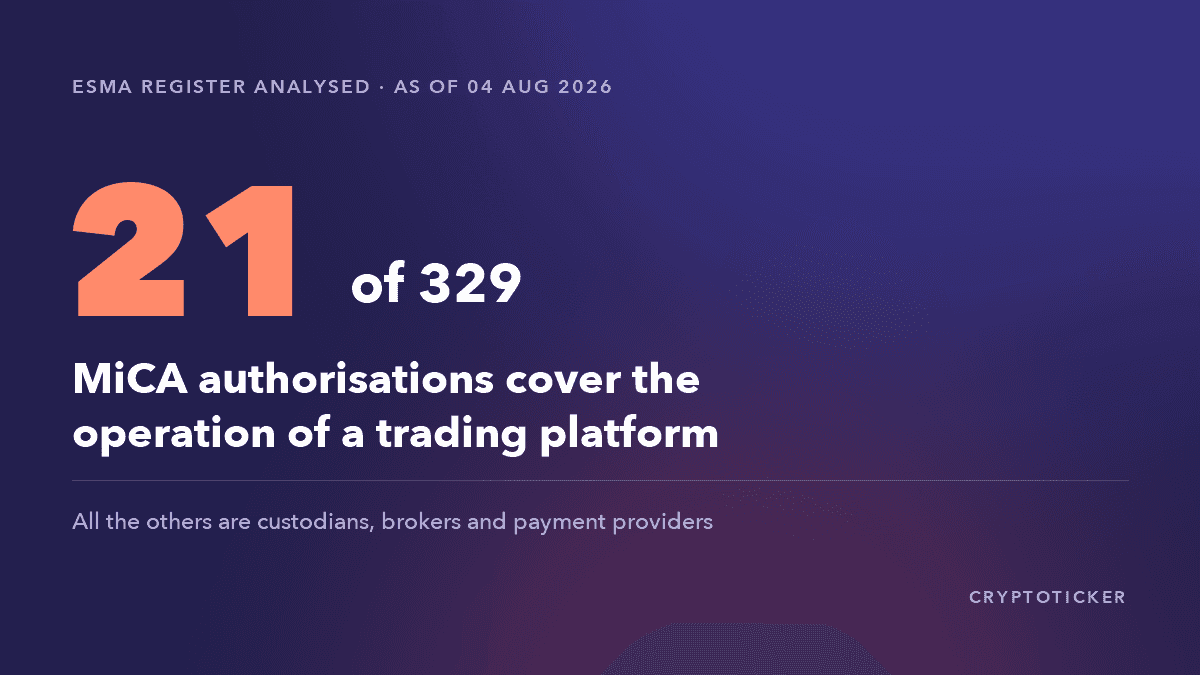
In the summer of 2026 that layer of protection is missing. The request does not come out of nowhere. It is the routine process that the supervisors themselves ordered. According to reporting on the state of the register, around 323 companies have received a MiCA authorisation, while more than 1,700 others have to stop doing business in the EU. Those figures come from analyses at the end of July and keep shifting, because further authorisations are still coming through. In our own review of the register, only 21 of those entries were trading platforms in the narrower sense, meaning providers where retail investors actually buy and sell. How it came to that is set out in our analysis of the MiCA register.
The result is a window in which a great many people are all expecting a legitimate message that tells them to move their money. The AMF says it deliberately avoided short wind-down deadlines, because time pressure drives those affected straight into the hands of the perpetrators. After this week, that is the most important point for you: a genuine wind-down gives you time. If something is rushing you, that alone is the warning signal.
What a fake withdrawal request looks like
The letters that have reached the authorities are well made. What has been described includes rebuilt websites that follow a genuine provider or authority down to the layout, documents carrying copied letterheads and file references, messages from supposed officials, and transfer instructions pointing to wallets that belong to the perpetrators. Phone calls come on top of that.
What is striking is what these letters regularly leave out. They rarely give the file reference of a wind-down, they do not point to a register entry you could look up yourself, and they give you no route by which to reach the sender independently. What they do supply is a destination address and a reason to hurry.
A second variant is more subtle. Instead of a wallet address you receive a link to a platform that is supposedly MiCA-licensed. You open an account there, you even verify yourself with an ID document, and you then see your balance as a number on an interface that belongs to the operators. Withdrawals subsequently fail because of alleged taxes. This version is the more dangerous one, because it copies the familiar process of opening an account.
The register test: is the crypto exchange MiCA-licensed at all?
There is one check that settles the great majority of these cases, and it costs you two minutes: look the provider up in an official register, using an address you type in yourself rather than a link from the message.
The reason is straightforward. Fraudsters can send any claim, rebuild any logo and fake any confirmation page. What they cannot do is create an entry in a supervisory authority's database. If a supposedly licensed provider is not in there, the matter is settled, however convincing the letter looks.
The ESMA register: every MiCA authorisation in the EU
The European securities regulator maintains the central directory of all service providers authorised under MiCA. It shows you whether a company holds an authorisation, which member state granted it and which services it covers. A provider may well be authorised without that authorisation covering every activity. Open the ESMA MiCA register and search for the legal entity name, not the brand. Many trading venues operate under a brand name but are registered under a different company. If the message gives no company name at all, that too is a finding.
The BaFin database: crypto custody and trading in Germany
For providers holding a German authorisation, the Federal Financial Supervisory Authority maintains its own company database. It is the faster route if your provider is based in Germany, and it additionally shows which permission was granted. The BaFin company database can be used without registering.
Both registers, however, only answer the question of whether a company is authorised, not the question of whether your email really came from that company. Hence the second step.
Second step: reach the provider through the official channel
Once you know the provider exists, you check whether the message came from it. A single rule applies here, and it is less comfortable than it sounds: you use no contact route whatsoever taken from the message. No telephone number from the email, no link, no attached PDF, no QR code.
Instead you open the app you already have on your phone, or you type in the provider's domain yourself. If there is no notice about a wind-down inside the logged-in area, then as far as you are concerned that wind-down does not exist. A company telling its EU customers to withdraw does so in the account itself, precisely because it fears this kind of confusion.
Authorities, incidentally, virtually never write to retail investors directly in such cases. Neither BaFin nor ESMA will email you asking you to move balances to a particular address. A message that does exactly that while looking official can be treated as a forgery without any further checking.
Language markers: how to spot a phishing email in the text
If you have a message in front of you and cannot reach the registers at that moment, a handful of markers will help. None of them is proof on its own, but together they paint a clear picture.
- A specific destination address in the text. Genuine wind-down notices describe routes, not wallets. If a recipient address appears in the message, that is the clearest indication there is.
- A deadline of a few days or hours. Wind-downs under MiCA run over weeks and months.
- A new contact channel. If the conversation moves to a messenger when everything so far arrived by email, something is wrong.
- A request for login credentials or the recovery phrase. There is no legitimate process in which anybody needs your twelve or twenty-four words.
- A domain that is almost right. An extra hyphen, a different ending, one letter swapped. Compare it character by character against your password manager.
- Fees payable before the withdrawal. If you are asked to pay in order to reach your own balance, the case is clear.
Conversely, a professional appearance is not a mark of authenticity. The forgeries the supervisors are warning about are a problem precisely because they are well made. Spelling mistakes as a giveaway are advice from an earlier era.
When your crypto exchange really does close its EU business
Suppose the check comes out like this: the message is genuine, your provider did not receive a MiCA authorisation and is closing its EU business. You then have a real but solvable problem. The order matters, because a wrong first step gets expensive.
Secure your paperwork first. Download transaction histories, account statements and tax reports while you still have access. Once the service is switched off you often only reach that data through written requests, and you need it for your German tax return: the acquisition date and acquisition cost of every position decide whether a later sale falls under the one-year holding period.
Only then do you look for a destination. An authorised trading venue is the obvious choice if you want to carry on trading; which providers cleared the MiCA hurdle and how they differ on fees and custody is set out in our comparison of regulated crypto exchanges. If you intend to hold for the long run anyway, self-custody is the alternative that makes you independent of the authorisation question.
Only after that do you move any balance, and you do it with a test amount. Send a small sum, wait for it to arrive and transfer the rest afterwards. That costs one extra network fee and protects you from the most expensive mistake of all, the wrongly copied address.
One note on tax: a pure transfer between two accounts that both belong to you is not a disposal and triggers no tax in Germany. Selling because the provider only pays out in euro, by contrast, is a taxable event. So check beforehand whether it hands over the coins themselves.
Crypto sent and fraud noticed: what still helps
A crypto transfer cannot be reversed. Anyone promising you otherwise on the telephone belongs to the second wave: so-called recovery services, which get in touch after a loss and offer to retrieve the funds against an advance payment, are a well-documented fraud pattern in their own right.
Plenty is still worth doing. File a report with the police, because investigators piece addresses together and exchanges can freeze blocked funds when a withdrawal is attempted. Report the incident to BaFin. Preserve messages, domains and transaction hashes before the other side shuts its infrastructure down. And change the passwords and two-factor methods of every account you logged into on the fake site.
 Find the right exchange for your tokens
What changes permanently for crypto investors in the EU
For you, the licensing requirement leaves behind a habit that outlasts this summer: before you deposit money with a provider, you look it up in the register. That was hard before MiCA, because there was no single directory. Since this year it is one search query. Anyone wanting to follow the market clear-out in context will find the wider picture in our analysis of the winners and losers of the MiCA deadline.
Transparency note: in our comparisons we assess providers with some of whom partnerships exist. This has no bearing on the checks described here; the registers linked above are official directories.
What to take away
- Check the provider in the register before you move anything. Type the address of the ESMA register or the BaFin database in yourself and search for the legal entity name. If it is not there, the message is dealt with. Which authorised trading venues are open to you is shown in our comparison of regulated crypto exchanges.
- Confirm every withdrawal request inside your logged-in account. Open the app or the website by your own route, never through a link from the message. If no notice is waiting there, you do nothing. If you are switching anyway, our overview of crypto exchanges compared will help you choose.
- Move your holdings into self-custody if you intend to hold for the long run. That way you no longer depend on any service provider's authorisation. Which device is suitable and what matters for the backup is covered in our hardware wallet comparison. Here too, send a test amount first.
(As of August 7, 2026. This article is not investment advice. Prices and fee structures change; check the terms with the provider before you buy.)
Partner links: some links on this page are partner links. If you become a customer through one of them, we may earn a commission at no extra cost to you. Selection, ratings and ranking are decided independently by our editorial team. Ethics and Independence · Ownership and Funding
Transparency note: This article was produced with the assistance of artificial intelligence. Figures and claims are based on the primary sources linked in the text. The feature image was generated with AI.
For later? Save this article and find it again in your profile.
Related articles
- How to spot crypto phishing: wallet drainers took nearly $84 million in 2025
- Bitstamp exchange review: a 0.40 percent taker fee and a MiCA licence from Luxembourg
- Eurojust raid on fake trading platforms: more than 100 servers seized, seven arrests
- Crypto withdrawal deadlines: where to get your funds out now
- MiCA authorisation: 98 providers at BaFin, what matters in the ESMA register
Which topics should we dive deeper into?
Select what genuinely interests you. Your picks feed directly into our editorial planning.
Crypto news that's actually worth your time.
Weekly. 60 seconds. Carefully curated by our editors: no hype, no promo flood, no spam.

October 31, 2026 12:37 PM

Floin Cyberattack: MiCA Crypto Platform From Liechtenstein Goes Offline
Liechtenstein-based crypto platform Floin reports a cyberattack, remains offline and has now confirmed a data breach. What is known about the MiCA-licensed company, which customer data may be affected and what investors should do now.
October 19, 2026 7:51 AM

Euro balances on a crypto exchange: what to watch after the ESMA answer on MiCA article 70
The European securities regulator ESMA spelled out on October 16, 2026 where a crypto asset service provider may hold your euro balance. A payment service provider without a banking licence is only a staging post of at most one business day.
October 16, 2026 1:35 PM

Kraken parent Payward buys Saldo Bank: the first crypto firm with a bank of its own in the EU
Payward, the parent of Kraken, agreed on October 14 to buy the Lithuanian Saldo Bank and would be the first crypto firm with a bank of its own in the EU. What is established, what stays open until the planned completion in 2027 and what may change for the protection of your euros.
October 16, 2026 4:15 AM
241 scam sites taken offline, the recovery scam lives on: what to check now
The Brooklyn District Attorney and the FBI shut down a fraud network of 241 websites and 112 servers on 14 October 2026; the second stage of the scheme was a purported recovery service. Five days earlier, German regulator BaFin had warned about exactly this pattern at a purported bank.

October 15, 2026 7:29 AM

17 of 20 top coins down, Ethereum at $2,380: where the sell-off is measured
Ether loses 5.41 percent over 24 hours and falls to a daily low of $2,332.43. Our own count of the 25 largest cryptocurrencies shows how broadly the sell-off really carries.
October 14, 2026 1:29 AM
South Korea blocks 27 unregistered exchanges, KuCoin and MEXC are on the list
South Korea's anti-money-laundering unit blocked access to 27 websites of unregistered foreign exchanges on October 13, 2026, KuCoin, MEXC and BingX among them. In Germany the grandfathering for legacy providers lapsed back on December 31, 2025, and at KuCoin a granted EU licence stands against an order that still prohibits the commencement of business.
October 13, 2026 10:37 PM
ESMA will supervise only 10 to 15 of 360 crypto firms: your exchange stays with its home regulator
On October 9, 2026 EU finance ministers agreed to place only the largest crypto service providers under direct ESMA supervision. For the vast majority of the roughly 360 authorised firms, the national authority stays in charge, in Germany BaFin.
October 12, 2026 7:32 PM
WhiteBIT Coin (WBT): Lightning Brings Bitcoin Withdrawals at 0.15 Percent, What You Can Do Now
The crypto exchange WhiteBIT has accepted Bitcoin over the Lightning Network since October 8 and pays it out the same way, for 0.25 and 0.15 percent respectively. Because both rates are percentages, the size of your withdrawal decides whether the new route is cheaper than the main chain.

October 12, 2026 6:50 PM
Kraken Lands Full Dubai Licence: Dirham Trading Goes Live for UAE Crypto Investors
Kraken has won full VARA approval in Dubai, clearing the way for dirham trading, margin, staking and tokenized stocks. Here is what UAE traders get.
October 10, 2026 1:39 AM
“Not an official EBA register and appears to be forged”, BaFin says of a rebuilt EU registry
BaFin has warned about a supposed bank that pointed customers to a self-run EU register to verify its authorisation. That shifts the question for investors: no longer only whether a provider is in the register, but whether the register is real.
October 7, 2026 10:41 AM

Three routes and no dates: the BaFin refuses bitcoin.de the MiCAR licence, futurum bank AG keeps holding customer assets
The BaFin has refused futurum bank AG the MiCAR authorisation, and with it the previous forbearance for bitcoin.de ends. What the mandatory disclosure says about your balance, which three routes the company names and which records you should secure now.
October 5, 2026 1:15 AM

Five of nine BaFin warnings cite the Crypto Markets Supervision Act: "This is a case of identity misuse"
Within four days at the end of September, BaFin publicly named nine providers, five of them over unauthorised crypto-asset services. Behind the warnings stands the Crypto Markets Supervision Act, and since the transitional period ran out there is no grey area left for crypto providers in Germany.
September 29, 2026 7:12 PM
MEXC Refunds $340,000: The Attacker's API Key Survived the Account Freeze
During an account takeover at MEXC, an attacker created an API key with withdrawal rights that the exchange did not revoke when it restored the account. Twenty-seven minutes after the withdrawal freeze expired, roughly $340,000 was gone.
September 29, 2026 10:33 AM
ESMA puts reverse solicitation on its 2027 watch list: what investors need to know about exchanges without an EU licence
ESMA presented its work programme for 2027 on September 28, 2026 and made reverse solicitation a supervisory priority. What that means if your coins sit with a provider without EU authorisation, and which three steps make sense now.
September 26, 2026 4:14 PM
Bitget Withdrawals Resume on September 28: What to Check on a Residual Balance Now
Bitget is releasing the withdrawals frozen after the September 24 incident in four stages from September 28. For a residual balance held from Germany that is a deadline, not a reason to wait.
September 26, 2026 4:21 AM
Operation Herakles disconnects 13,888 phone numbers: what to check on crypto investment calls
Six authorities have disconnected 13,888 phone numbers used by investment fraudsters to call their victims in Operation Herakles, 9,304 of them in the past three months alone. What the Federal Network Agency now requires of telecoms providers and which three checks protect you from the scheme.
September 25, 2026 4:11 AM
Bitget Pauses Withdrawals: Where Existing Customers in Europe Stand
Bitget reports unauthorised outflows of around $351.6 million (later revised to $387.5 million) and has suspended withdrawals. For existing customers in Europe, that closes the one route MiCA had left them.
September 20, 2026 10:11 PM
Kraken Review: Fees, MiCA Licence and Withdrawals in Euro
A purchase through Kraken's standard interface costs 1 percent plus spread; on Kraken Pro it is 0.40 to 0.80 percent. What deposits, trading, withdrawals and tax records really cost at the crypto exchange, with the numbers from the official fee schedule.
September 20, 2026 4:15 PM
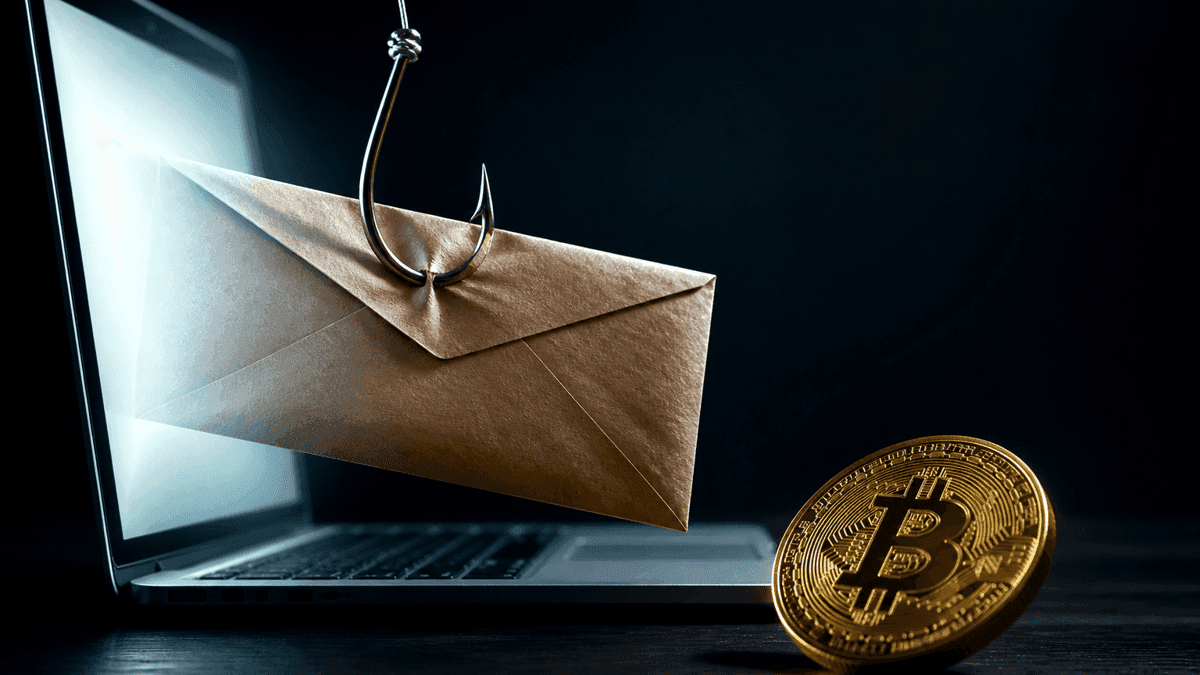
Crypto Phishing After a Data Breach: The Warning Signs in a Fake Exchange Email
After every major data breach, the number of phishing emails sent in the name of crypto exchanges and wallet manufacturers rises. This article shows you how to recognise such a message, which data a reputable provider never requests by email, and what to do in the first hour after a click.
September 15, 2026 4:12 AM
Using Hyperliquid from Germany: What Applies to Your Funds Without a MiCA Licence
Hyperliquid is not entered in any EU register as an authorised crypto-asset service provider, and for perpetual futures a MiCA licence would be the wrong paperwork anyway. Here is what that means in concrete terms for your funds, your keys and your tax return.
September 12, 2026 7:13 AM

BaFin Warnings in September: How to Check in Three Minutes Whether a Crypto Provider Holds Authorisation
Twelve consumer notices in ten days, five of them on crypto-asset services and two with the entry point in WhatsApp or Telegram. We evaluated all twelve notices ourselves and show the check that takes you three minutes.
August 26, 2026 7:15 AM
BaFin Warning Over Identity Misuse: When a Crypto Platform Borrows a Real German Company's Name
BaFin has been warning since August 24, 2026 about a crypto website that, according to the regulator's findings, misuses the identity of a real German company. Why the commercial register and the imprint are worthless as proof, and how to check a provider yourself in a few minutes.
August 19, 2026 10:26 PM

EU warning list for crypto providers: 167 entries, 165 of them from Italy, none from BaFin
ESMA maintains a Europe-wide register of non-compliant crypto providers. We counted it on August 16, 2026 and called up every web address stored in it. Three of 30 supervisory authorities supply any entries at all, and BaFin is not among them.
August 18, 2026 10:19 AM

BaFin Warnings 2026: 24 Crypto Platform Series With 639 Domains, and How to Check Your Provider
In 2026 BaFin is increasingly warning about entire series of near-identical crypto websites rather than about single providers. Our own count of the complete stock of warnings shows how large the phenomenon has become and which two register checks reliably vet a provider.
August 15, 2026 9:31 PM
Crypto Exchange Shutting Down: What to Do Before the Deadline Passes
Binance, BitMart, Luno and Revolut have ended or cut back their European business within seven weeks. This guide shows which deadline expires first, how a forced sale is treated for tax, and what to secure before the account closes.
More from CryptoTicker