
MiCA Wiped Out 92% of Europe's Crypto Firms: Here's Who Survived and Who's Cashing In
The July 1 deadline turned 3,000+ EU crypto firms into a few hundred. Binance is out, Tether's gone, and a handful of winners now own the market.




Which topics should we dive deeper into?
Select what genuinely interests you. Your picks feed directly into our editorial planning.
Crypto news that's actually worth your time.
Weekly. 60 seconds. Carefully curated by our editors: no hype, no promo flood, no spam.
The MiCA transition period ended on July 1, 2026, and the damage is now measurable. This wasn't a soft compliance nudge — it was a mass extinction event that redrew the entire European crypto map in a single day. While the market obsessed over price charts, the more consequential story is who's still legally allowed to operate on the continent, and who just quietly disappeared.
 Trading under MiCA: regulated exchanges compared
How many crypto firms actually survived MiCA?
The numbers are brutal. Public mirrors of the bloc's register counted 244 licensed CASPs across 25 jurisdictions once the deadline passed. Before MiCA, roughly 3,167 firms held national crypto registrations across Europe. Measured against that base, close to 92% of the market did not make the cut.
Framed against the pre-MiCA legacy pool, only 210 of 1,200+ EU crypto firms converted to MiCA authorization. The other 83% are now in breach of EU law. Either way you count it, the vast majority of the old market is gone — and there are no do-overs. The European Securities and Markets Authority has confirmed that there are no extensions and no grace periods.
Who are the biggest casualties?
Two names dominate the losers' column, and both are giants. The two biggest casualties are private. Binance, the largest exchange in the world, withdrew its license application in Greece days before the deadline and restricted services in several EU countries. Tether, the largest stablecoin issuer, chose to stay out rather than restructure its reserves to MiCA's standard.
Tether's exit was a deliberate strategic call, not a failure to qualify. CEO Paolo Ardoino called MiCA's stablecoin reserve requirements "very dangerous" — specifically the rule requiring issuers to hold 60% of reserves in EU bank deposits, which Tether argued creates systemic bank exposure. The practical result is stark: $USDT, the most-traded stablecoin on earth, has been pulled from every EU-licensed venue.
Binance isn't necessarily gone forever, though. Binance is pursuing a French MiCA licence. If granted, passporting rules allow it to re-enter the EU. The July 1 deadline suspended services; it did not permanently revoke the ability to apply.
Why does this matter for the survivors?
Because every euro of displaced volume has to go somewhere legal. That matters for the public names because it removes their toughest competition from the regulated arena. Every euro of EU volume that can no longer legally touch Binance or USDT has to find a licensed home.
The market has already tilted decisively toward the compliant perimeter. Approximately 70 percent of EU crypto transactions now occur on MiCA-compliant exchanges, and that share can only grow as unlicensed platforms wind down.
Which exchanges are the winners?
The survivor list is short and increasingly powerful. Major exchanges have secured licenses. The strategic weapon here is passporting: Coinbase spent the run-up securing a MiCA license and opening a Luxembourg hub to passport regulated services across all 27 EU member states. One license now covers a 450-million-person market, a barrier that smaller, unlicensed rivals cannot cross.
On the stablecoin side, the winner is even clearer. Circle is the only issuer among the ten largest stablecoins to secure MiCA authorization for both its dollar token, $USDC, and its euro token, EURC. With $USDT locked out, regulated euro rails now run largely through Circle.
Is the European market healthier or just smaller?
That's the open question. The market that emerges in late 2026 will be smaller, more concentrated, and governed by a single rulebook. Whether that is a feature or a flaw depends on who is still standing. For traders, the upside is real: fewer, better-regulated venues with clearer legal protection. The downside is reduced competition and the friction of migrating away from familiar USDT pairs.
What should EU traders do now?
If your funds are still sitting on an unlicensed platform, the clock has already run out — move them to a MiCA-authorized exchange. You can compare the fully regulated survivors side by side in our broker comparison.
Related articles
- Binance EU Access at Risk: What MiCA Could Mean for BNB and Crypto Users
- How to Switch from Binance to a MiCA Regulated Crypto Exchange
- Binance Is Out of the EU: How to Move to a MiCA-Regulated Exchange
- Binance Reveals Where Its EU Users Went After MiCA
- MiCA Register 2026: Only 21 of 329 Licences Are Real Exchanges
Which topics should we dive deeper into?
Select what genuinely interests you. Your picks feed directly into our editorial planning.
Crypto news that's actually worth your time.
Weekly. 60 seconds. Carefully curated by our editors: no hype, no promo flood, no spam.

May 19, 2024 1:23 PM
Will Tether (USDT) Get Delisted In Europe?
With growing concerns revolving around the reliability and compliance regulations of stablecoins, some crypto exchanges opt to delist some of them. Will this be the case for Tether in Europe?
June 26, 2026 5:35 PM
Binance Is Leaving the EU on July 1 — What It Means for Your Funds
Binance will stop serving EU customers from July 1 after failing to secure a MiCA licence. Here's what it means for your funds and your next move.
July 7, 2025 8:12 PM

BIG Crypto News: EU Approves 14 Stablecoin Issuers Under MiCA
Six months into the MiCA rollout, Europe’s crypto regulatory landscape is taking shape. From authorized stablecoin issuers to licensed crypto service providers, here’s the full July 2025 update.

August 22, 2026 1:23 AM

Binance Withdrawal Deadline September 9: What ALCX, ARDR, NFP and POND Holders Should Know Now It Has Passed
Recap as of September 27, 2026: Binance had announced it would stop withdrawals of ALCX, ARDR, NFP and POND on September 9, 2026 at 03:00 UTC. Spot trading in these tokens had been suspended since July 10, and the exchange is winding down its EU business. This article describes the situation before the deadline.
July 6, 2026 11:17 AM
XRP Just Got a Massive EU Green Light — But There's a Catch Nobody's Talking About
Ripple scored preliminary MiCA approval to run crypto services across all 30 EEA countries — and $XRP is up ~8% this week. Here's what it really means.
September 19, 2026 4:11 PM

MiCA Consultation Closes September 30: What to Check and Submit Before Then
The European Commission is reviewing the MiCA crypto regulation and will accept submissions until September 30, 2026 at 23:59 CEST. Staking, DeFi, lending, stablecoins and custody are all under examination, and you can take part without a lawyer.
July 1, 2026 10:47 AM

Crypto News Today: Binance Exits the EU, Circle Craters, and Bitcoin Slides Below $59K
MiCA reshapes the market as Binance leaves the EU, a 140-firm stablecoin rocks Circle, and Bitcoin sags near multi-year lows. Here's what's moving crypto today.
May 12, 2025 9:05 PM

US-EU Trade Tensions Rise as US-China Conflict Cools Down
Just as the long-standing US-China trade war appears to ease, new tensions are emerging between the United States and the European Union. With Trump calling Europe “nastier than China,” are we about to witness a new transatlantic trade conflict?
June 25, 2026 11:19 AM

Binance Pulls Its EU Licence Bid: What It Means for Your Crypto
Binance just withdrew its MiCA licence application in Greece days before the EU deadline. Here's what it means for users, your funds, and the crypto market.
September 29, 2026 10:33 AM

ESMA puts reverse solicitation on its 2027 watch list: what investors need to know about exchanges without an EU licence
ESMA presented its work programme for 2027 on September 28, 2026 and made reverse solicitation a supervisory priority. What that means if your coins sit with a provider without EU authorisation, and which three steps make sense now.

March 13, 2025 11:00 PM

OKX Event in Malta: A New Contender for Crypto in Europe
OKX celebrated a major milestone at Fort Manoel in Malta, announcing its full MiCA and MIFID2 licenses and plans to expand compliant crypto trading across Europe.
September 10, 2026 1:21 AM

Crypto Exchanges Head to Head: Which Pairing Is Cheaper Where
Before opening an account, the question is rarely which exchange is best overall, but whether it should be this one or that one. This article sorts through the most searched head-to-heads, puts the cost per 1,000 euros side by side and explains the most expensive mix-up: one provider with two interfaces and a factor of seventeen between them.
June 19, 2023 3:35 PM

SEC’s Crypto Securities List Consequences
The recent lawsuits by the SEC against crypto exchanges Binance and Coinbase have had a big impact on the industry. Here's the crypto securities list.
August 20, 2026 10:24 PM

MiCA Review: What the European Commission Could Change About the EU Crypto Rules
The European Commission has reopened MiCA for review after barely two years and is asking 86 questions covering the stablecoin interest ban, staking, lending and DeFi. Brussels is taking responses until September 30, 2026.
October 13, 2026 7:19 AM

Financial Stability Board on 300 billion dollars in stablecoins: “untested in severe stress and insolvency”
The Financial Stability Board handed the G20 a status report on stablecoins on 12 October: a market worth 300 billion dollars, 99 percent of it pegged to the US dollar, and a supervisory structure that remains untested in severe stress and insolvency. Here is what the gaps it describes mean for holders in Europe, where MiCA already closes them and which ones stay open.
August 19, 2026 7:16 AM

Crypto Exchange Deadlines in August: What Still Applies Now the Seven Cut-Off Dates to August 31 Have Passed
Recap as of September 27, 2026: between August 17 and August 31, 2026, deadlines expired at seven providers that affected investors in Germany. We had recorded the dates ourselves on August 16. Only the withdrawal of the six tokens delisted by Binance remains open, possible until October 17, 2026 at 03:00 UTC.
February 22, 2025 3:35 PM
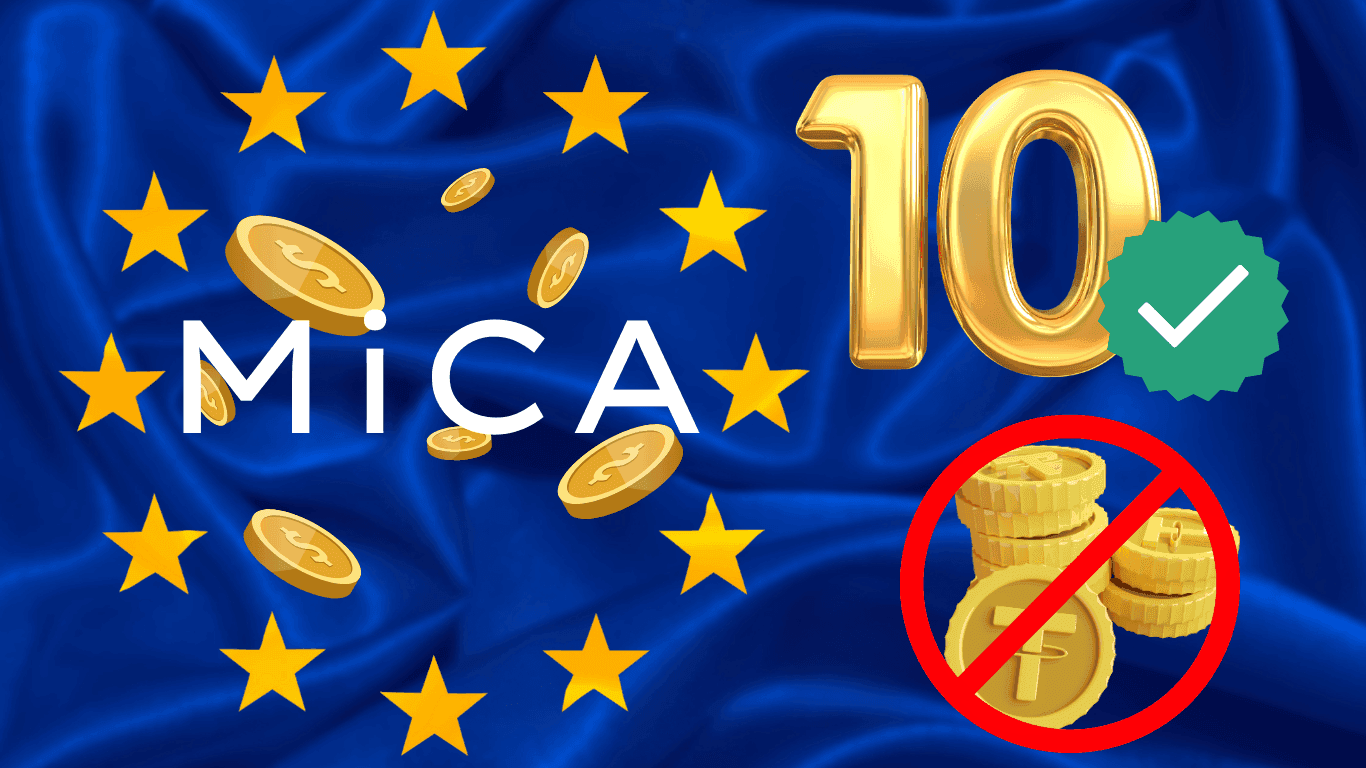
EU Approves 10 Stablecoin Issuers Under MiCA – But WHY Was Tether Left OUT?
The European Union has approved 10 stablecoin issuers under its MiCA regulations, notably excluding Tether's USDT. This decision raises questions about the future of stablecoin regulation and market dynamics within the EU.
October 20, 2023 9:34 PM

SEC’s Crypto Securities List Consequences…What will Happen?
The recent lawsuits by the SEC against crypto exchanges Binance and Coinbase have had a big impact on the industry. What happens next?

September 25, 2023 5:47 AM

Binance Anticipates Delisting Stablecoins Due to Upcoming MiCA Regulation
Unravel the implications of the EU's MiCA regulation on Binance's potential stablecoin delisting. Discover how evolving regulations shape the cryptocurrency landscape.
October 12, 2026 6:50 PM
Kraken Lands Full Dubai Licence: Dirham Trading Goes Live for UAE Crypto Investors
Kraken has won full VARA approval in Dubai, clearing the way for dirham trading, margin, staking and tokenized stocks. Here is what UAE traders get.
September 29, 2026 11:45 AM

Tether Freezes $550 Million in Iran-Linked USDT as Senate Probe Turns Up the Heat
Tether says it helped freeze nearly $550 million in Iran-linked USDT in 2026, one day after Senate investigators called USDT central to Iran's shadow banking.
October 10, 2026 4:37 PM

Coinbase delists USDT and DAI on October 30: what to check before the deadline
Coinbase gives customers in the European Economic Area only until October 30, 2026 to move USDT, PYUSD, DAI and further stablecoins off the exchange. After that it converts remaining holdings into USDC itself, and tokens arriving later are no longer credited to the account.
August 13, 2026 6:18 AM

Revolut Delists USDT: Forced Conversion on August 31, 2026 Counts as a Sale
Revolut is taking USDT off the table on August 31, 2026: purchases have already stopped, deposits are blocked, and anyone who fails to act before the deadline faces an automatic conversion that counts as a sale for tax purposes. This article explains the deadlines, the tax treatment under section 23 of the German Income Tax Act and what you can do now.
August 15, 2026 9:31 PM

Crypto Exchange Shutting Down: What to Do Before the Deadline Passes
Binance, BitMart, Luno and Revolut have ended or cut back their European business within seven weeks. This guide shows which deadline expires first, how a forced sale is treated for tax, and what to secure before the account closes.
October 16, 2026 1:35 PM

Kraken parent Payward buys Saldo Bank: the first crypto firm with a bank of its own in the EU
Payward, the parent of Kraken, agreed on October 14 to buy the Lithuanian Saldo Bank and would be the first crypto firm with a bank of its own in the EU. What is established, what stays open until the planned completion in 2027 and what may change for the protection of your euros.
October 14, 2026 1:29 AM

South Korea blocks 27 unregistered exchanges, KuCoin and MEXC are on the list
South Korea's anti-money-laundering unit blocked access to 27 websites of unregistered foreign exchanges on October 13, 2026, KuCoin, MEXC and BingX among them. In Germany the grandfathering for legacy providers lapsed back on December 31, 2025, and at KuCoin a granted EU licence stands against an order that still prohibits the commencement of business.
October 13, 2026 10:37 PM

ESMA will supervise only 10 to 15 of 360 crypto firms: your exchange stays with its home regulator
On October 9, 2026 EU finance ministers agreed to place only the largest crypto service providers under direct ESMA supervision. For the vast majority of the roughly 360 authorised firms, the national authority stays in charge, in Germany BaFin.
More from CryptoTicker