
Binance EU Access at Risk: What MiCA Could Mean for BNB and Crypto Users
Binance is facing one of its biggest regulatory tests in Europe as the MiCA deadline approaches. Could this put BNB and EU crypto users under pressure?





Which topics should we dive deeper into?
Select what genuinely interests you. Your picks feed directly into our editorial planning.
Crypto news that's actually worth your time.
Weekly. 60 seconds. Carefully curated by our editors: no hype, no promo flood, no spam.
Binance is facing a major regulatory test in Europe, and the timing could not be more important for the crypto market.
According to Reuters, Binance could lose permission to serve European Union clients from next month because its MiCA license application in Greece is reportedly expected to be rejected. The report comes just before the end of the EU’s MiCA transition period, when crypto companies must secure proper authorization to continue offering services across the bloc.
For Binance, this is more than another regulatory headline. It could affect the exchange’s European operations, investor sentiment around BNB, and the way crypto users across the EU access trading, custody, and other digital asset services.
Why Is Binance EU Access at Risk?
Binance applied for a MiCA license through Greece’s Hellenic Capital Market Commission. If approved, that license would allow Binance to operate across the European Union through MiCA’s passporting system.
But Reuters reported that the application is expected to be rejected, citing people familiar with the matter. Binance, however, has said it worked with regulators for months and believes it has met the requirements for MiCA authorization. The exchange also said it plans to provide another update before the June 30 deadline.
That means the situation is still not fully finalized. Binance has not officially announced an EU shutdown, and there has not yet been a confirmed final decision from the Greek regulator. Still, the risk is now serious enough to matter for users, traders, and the broader crypto market.
What Is MiCA and Why Does It Matter?
MiCA, short for Markets in Crypto-Assets, is the European Union’s regulatory framework for the crypto industry. It is designed to create one unified rulebook for crypto companies operating across EU member states.
Instead of dealing with completely separate rules in every country, crypto asset service providers can apply for authorization in one EU member state. Once approved, they can use that license to serve clients across the wider EU through passporting.
This is why the Binance case is so important. A MiCA license is not just a local approval. It can decide whether an exchange has access to the entire EU market.
For crypto users, MiCA is meant to bring more transparency, stronger investor protection, and clearer oversight. For exchanges, it creates a stricter compliance environment where operating without authorization may no longer be tolerated.
What Could This Mean for Binance Users in Europe?
For European Binance users, the biggest question is whether services could be limited, paused, transferred, or restructured if Binance fails to secure MiCA approval in time.
At this stage, users should avoid panic because nothing has been officially confirmed as a final outcome. However, Binance may need to give clear guidance quickly if the deadline arrives without approval.
Possible outcomes include a last minute regulatory solution, a temporary transition plan, restrictions in some EU markets, or a broader restructuring of Binance’s European business. The exchange may also need to explain how it would protect user access, balances, withdrawals, and account services if the regulatory issue escalates.
The main uncertainty is not whether Binance remains a major global exchange. It is whether Binance can continue serving EU users under the new MiCA framework without disruption.

Could BNB Be Affected?
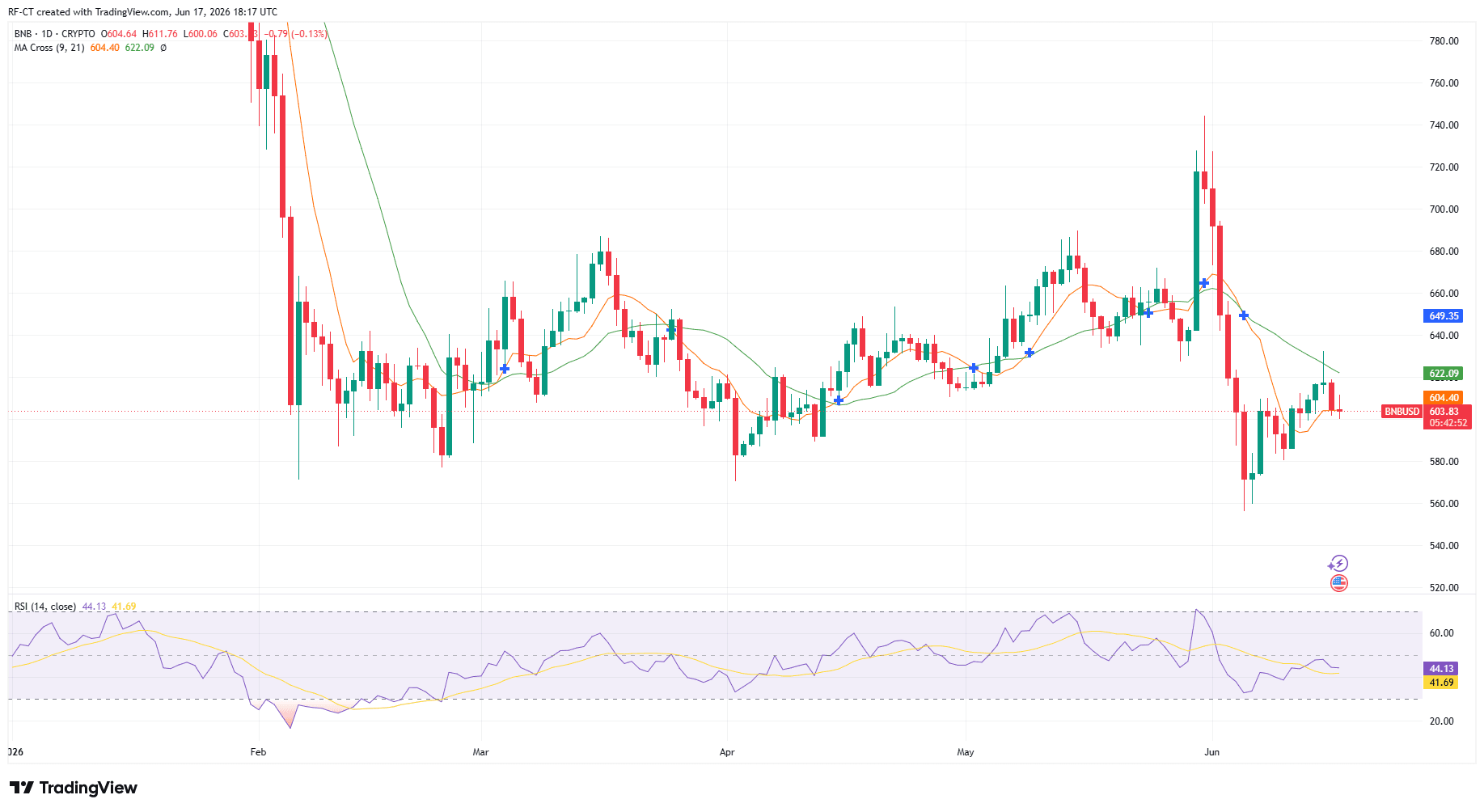
BNB could come under pressure if the Binance EU situation worsens. The token often reacts to Binance related headlines because traders associate BNB with the strength, reputation, and activity of the Binance ecosystem.
If Binance secures MiCA approval or finds a smooth regulatory solution, BNB could stabilize as uncertainty fades. But if the reported rejection becomes official and Binance announces service restrictions in Europe, the token may face renewed selling pressure.
This does not mean BNB would collapse automatically. Binance remains one of the largest crypto exchanges in the world, and its business extends far beyond Europe. However, Europe is a major regulated market, and losing access or facing uncertainty there would be a negative sentiment event.
For BNB traders, the next major catalyst is likely not only the broader crypto market. It is Binance’s next regulatory update.
Why This Story Matters Beyond Binance
The Binance MiCA issue is also important because it shows how Europe’s crypto market is changing.
For years, many crypto platforms operated across multiple jurisdictions under different national rules. MiCA is changing that model. The EU is moving toward a more formal licensing system where exchanges must meet clear requirements or risk losing access to users.
This could create a stronger divide between regulated and unregulated crypto platforms. Exchanges that secure MiCA licenses may gain credibility with users, banks, institutions, and regulators. Platforms that fail to secure approval could face user migration, liquidity pressure, or enforcement risk.
That makes this story much bigger than Binance alone. It is a test of how strict Europe will be with the world’s largest crypto companies under the new regulatory framework.
Binance EU Outlook: What Happens Next?
The next key date to watch is June 30. Binance has said it will provide another update before that deadline, which makes the coming days critical.
If Binance confirms a clear path to MiCA authorization, the market reaction could become more positive. It would remove a major uncertainty and allow the exchange to continue competing in Europe under a regulated structure.
If the reported rejection becomes official, the consequences could be more serious. Binance may have to limit services, shift users to another structure, or pause certain activities for EU clients.
For now, the safest way to frame the story is clear: Binance has not officially lost EU access yet, but its European operations are under pressure as the MiCA deadline approaches.
Final Thoughts
Binance has faced major regulatory challenges before, but MiCA is different because it affects access to the entire European Union market.
The EU is no longer only asking crypto companies to improve compliance. It is creating a licensing system where authorization determines whether platforms can legally serve users across the bloc.
For Binance, this could become one of the most important regulatory moments of 2026. For BNB, it could become a major sentiment driver. And for European crypto users, it could decide how they access one of the world’s largest exchanges in the months ahead.
Related articles
- MiCA Wiped Out 92% of Europe's Crypto Firms: Here's Who Survived and Who's Cashing In
- Binance Reveals Where Its EU Users Went After MiCA
- Binance Is Out of the EU: How to Move to a MiCA-Regulated Exchange
- How to Switch from Binance to a MiCA Regulated Crypto Exchange
- XRP Just Got a Massive EU Green Light — But There's a Catch Nobody's Talking About
Which topics should we dive deeper into?
Select what genuinely interests you. Your picks feed directly into our editorial planning.
Crypto news that's actually worth your time.
Weekly. 60 seconds. Carefully curated by our editors: no hype, no promo flood, no spam.

June 26, 2026 5:35 PM
Binance Is Leaving the EU on July 1 — What It Means for Your Funds
Binance will stop serving EU customers from July 1 after failing to secure a MiCA licence. Here's what it means for your funds and your next move.
June 25, 2026 11:19 AM
Binance Pulls Its EU Licence Bid: What It Means for Your Crypto
Binance just withdrew its MiCA licence application in Greece days before the EU deadline. Here's what it means for users, your funds, and the crypto market.

August 6, 2026 3:05 PM
MiCA Register 2026: Only 21 of 329 Licences Are Real Exchanges
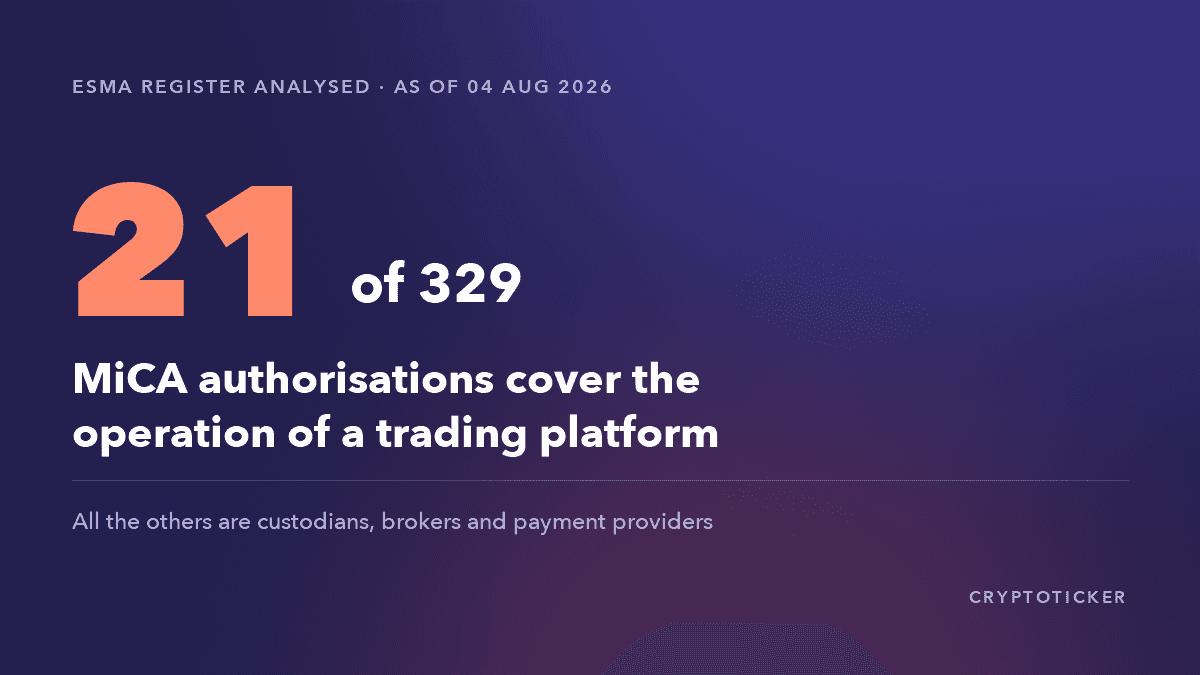
ESMA publishes the register of MiCA-authorised providers as an open file. We worked through all of it — and the result is not what the phrase “licensed crypto exchange” suggests.
July 7, 2025 8:12 PM

BIG Crypto News: EU Approves 14 Stablecoin Issuers Under MiCA
Six months into the MiCA rollout, Europe’s crypto regulatory landscape is taking shape. From authorized stablecoin issuers to licensed crypto service providers, here’s the full July 2025 update.
October 5, 2025 7:09 AM
BNB Price Surges Past $1,150 – This Rally Might NOT Continue...
BNB has soared above $1,150 after breaking past key resistances. Uptober momentum fuels optimism, but will global uncertainty limit further gains?
July 28, 2025 9:27 AM

Trump–EU Trade War is OVER: What It Means for Bitcoin and Altcoins
President Trump just struck a $1.3 trillion trade framework with the EU, aimed at stability, zero tariffs, and massive energy deals. Here’s how this could shape Bitcoin’s next move.

September 19, 2026 7:17 AM

Chainlink Jumps Above $12: What LINK Holders Should Check Now
Chainlink trades at $12.34, 7.4 percent higher than yesterday. What part of the move is the broad market rally, what Chainlink itself contributes, and the three things you should check as a LINK holder.

March 13, 2025 11:00 PM
OKX Event in Malta: A New Contender for Crypto in Europe
OKX celebrated a major milestone at Fort Manoel in Malta, announcing its full MiCA and MIFID2 licenses and plans to expand compliant crypto trading across Europe.

September 19, 2026 4:02 PM
Binance MiCA License: Did Lagarde Personally Block Binance From the EU?
The WSJ says ECB chief Christine Lagarde asked Greece not to approve Binance's MiCA license. Here is what happened, and why the ECB had no formal say.
July 1, 2026 10:47 AM

Crypto News Today: Binance Exits the EU, Circle Craters, and Bitcoin Slides Below $59K
MiCA reshapes the market as Binance leaves the EU, a 140-firm stablecoin rocks Circle, and Bitcoin sags near multi-year lows. Here's what's moving crypto today.

December 14, 2022 7:44 AM

BNB Price Prediction: Is the Binance Exchange Next to Collapse?
What ended up causing the BNB price decrease, and can the drop become scary? This article is all about the BNB price prediction.
August 20, 2026 10:24 PM

MiCA Review: What the European Commission Could Change About the EU Crypto Rules
The European Commission has reopened MiCA for review after barely two years and is asking 86 questions covering the stablecoin interest ban, staking, lending and DeFi. Brussels is taking responses until September 30, 2026.
September 19, 2026 4:11 PM

MiCA Consultation Closes September 30: What to Check and Submit Before Then
The European Commission is reviewing the MiCA crypto regulation and will accept submissions until September 30, 2026 at 23:59 CEST. Staking, DeFi, lending, stablecoins and custody are all under examination, and you can take part without a lawyer.
September 20, 2026 4:13 AM

Zcash Above $1,500: What ZEC Holders Should Check on Tax and Custody
Zcash rose above $1,500 on September 19 for the first time since 2016 and, after an intraday high of $1,590.80, trades back at around $1,474. For German holders three questions hang on that jump: the one-year holding period, the planned year-end cut-off and the EU anti-money-laundering regulation from July 2027.

March 7, 2024 12:53 AM

Binance Coin (BNB) Price Prediction: How High can BNB go?
In this article, we explore Binance Coin (BNB), a leading cryptocurrency, covering its essentials, current market trends, and future outlook.
September 25, 2023 5:47 AM

Binance Anticipates Delisting Stablecoins Due to Upcoming MiCA Regulation
Unravel the implications of the EU's MiCA regulation on Binance's potential stablecoin delisting. Discover how evolving regulations shape the cryptocurrency landscape.
May 12, 2025 9:05 PM

US-EU Trade Tensions Rise as US-China Conflict Cools Down
Just as the long-standing US-China trade war appears to ease, new tensions are emerging between the United States and the European Union. With Trump calling Europe “nastier than China,” are we about to witness a new transatlantic trade conflict?
October 3, 2026 10:38 AM

44 Percent Below the Record: BNB's 37th Burn Follows in Mid-October
A year ago BNB stood at $1,370; today it is around $767. The price has been swinging between $750 and $800 for weeks, and the next quarterly burn is due around the anniversary of the record. Here are the levels that count and what the burn actually does.
September 13, 2024 12:23 PM

Ripple, SEC, and Grayscale: The Ripple Effect on XRP Price
This is how Ripple’s legal battles and Grayscale’s XRP Trust launch are shaping the future of XRP and the crypto market...
July 1, 2024 9:20 AM

Bitcoin News Today: Why Is Bitcoin Price Up Starting July?
Starting July, recent market movements, political debates, and court rulings are shaping the future of Bitcoin and the broader crypto market. Here are the latest insights and analysis...
October 21, 2025 4:17 PM

Bitcoin Surges Past $112,000 as the Fed Opens Doors to Crypto: What’s Next?
Bitcoin jumps above $112,000 after the U.S. Federal Reserve hinted at granting crypto firms access to its payment network. Here’s what this means for BTC and the broader market.
March 3, 2025 6:01 AM

Bitcoin Price Prediction: BTC Price to Surpass $100K BEFORE or AFTER the Crypto Summit?
Minutes after Trump's crypto reserve announcement and less than a week to the Crypto Summit, the global crypto market triggered an over 11% in total market cap surge, but...
October 13, 2025 12:09 PM
Is Binance’s $283M Payout the Catalyst Behind BNB’s Surprise Rally?
BNB just bounced back hard up nearly 12% in a day right after Binance paid out a massive $283 million.
July 28, 2024 4:04 PM

Solana Crypto Surge: How Did Solana Take Over BNB?
How did Solana (SOL) grow so fast and surge past Binance Coin (BNB) to become the fourth largest cryptocurrency? Here is how it happened...
June 5, 2024 5:52 PM

Floki Inu (FLOKI) Skyrockets Like Pepe (PEPE): Will PlayDoge Follow?
Floki Inu reaches a new high, but is PlayDoge the next meme coin to explode? Here are the similarities, potential, and why experts are bullish on both and you decide!

More from CryptoTicker