
Binance Reveals Where Its EU Users Went After MiCA
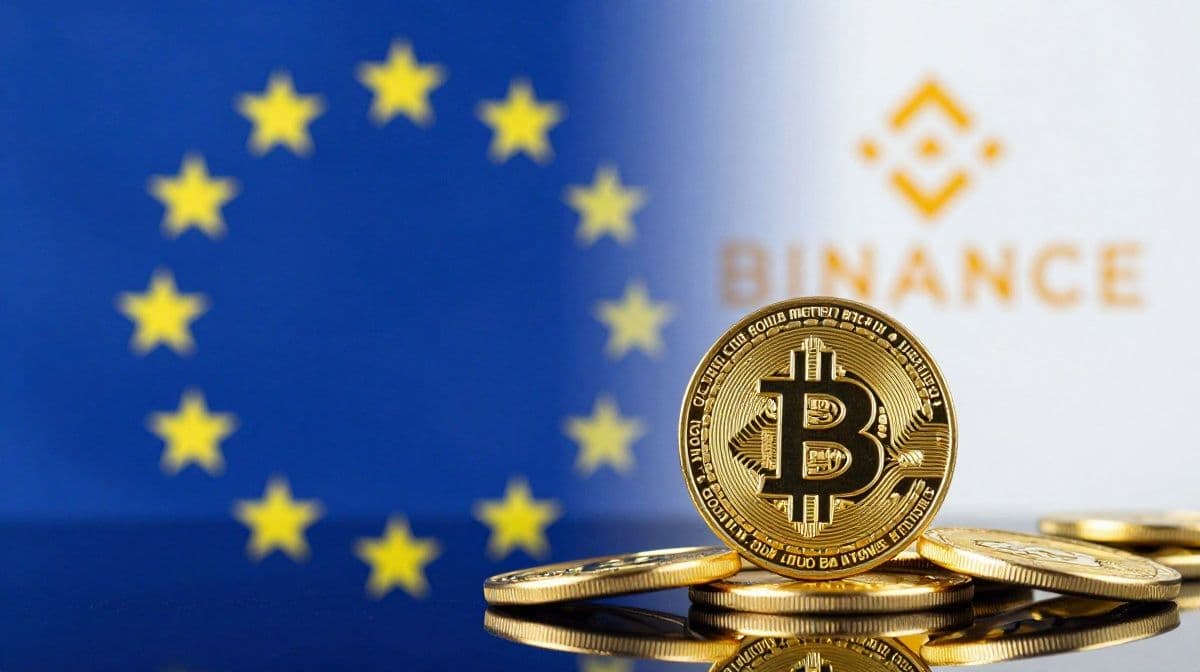
Binance just revealed where most departing EU users moved their crypto after MiCA — and the answer is raising hard questions about the new rulebook.



Which topics should we dive deeper into?
Select what genuinely interests you. Your picks feed directly into our editorial planning.
Crypto news that's actually worth your time.
Weekly. 60 seconds. Carefully curated by our editors: no hype, no promo flood, no spam.
When the EU's MiCA transition deadline reshaped the European crypto market on July 1, the big question was simple: where would displaced users go? Binance has now offered an answer — and it is not the one Brussels was hoping for. Here is what the numbers show and why licensed regulated crypto exchanges are throwing serious money at anyone willing to move.
What Did Binance's CEO Reveal About EU Users?
Speaking at the Reuters NEXT Asia summit in Singapore on July 9, Binance co-CEO Richard Teng dropped a striking statistic. Of the EU users who withdrew funds from the platform after the MiCA transition, roughly 70% moved their crypto into self-hosted wallets, while only about 30% flowed to MiCA-regulated entities.
Teng, a former regulator himself, framed it as a warning shot at the EU. His argument: pushing users toward self-hosted wallets actually undercuts the consumer protection MiCA was designed to deliver, because non-custodial wallets fall outside the AML and KYC controls that licensed exchanges must run. In his words, once crypto goes into a self-hosted wallet, the risks amplify rather than shrink.
The claim has been widely reported by Cointelegraph, Reuters, Yahoo Finance and others, so the 70/30 figure is Binance's own data — and it comes with obvious self-interest, given the exchange's exclusion from the bloc. Supporters of self-custody read the same numbers very differently: holding your own keys removes counterparty risk, and many see direct control as the whole point of crypto, not a loophole.
Why Did So Many Binance Users Leave?
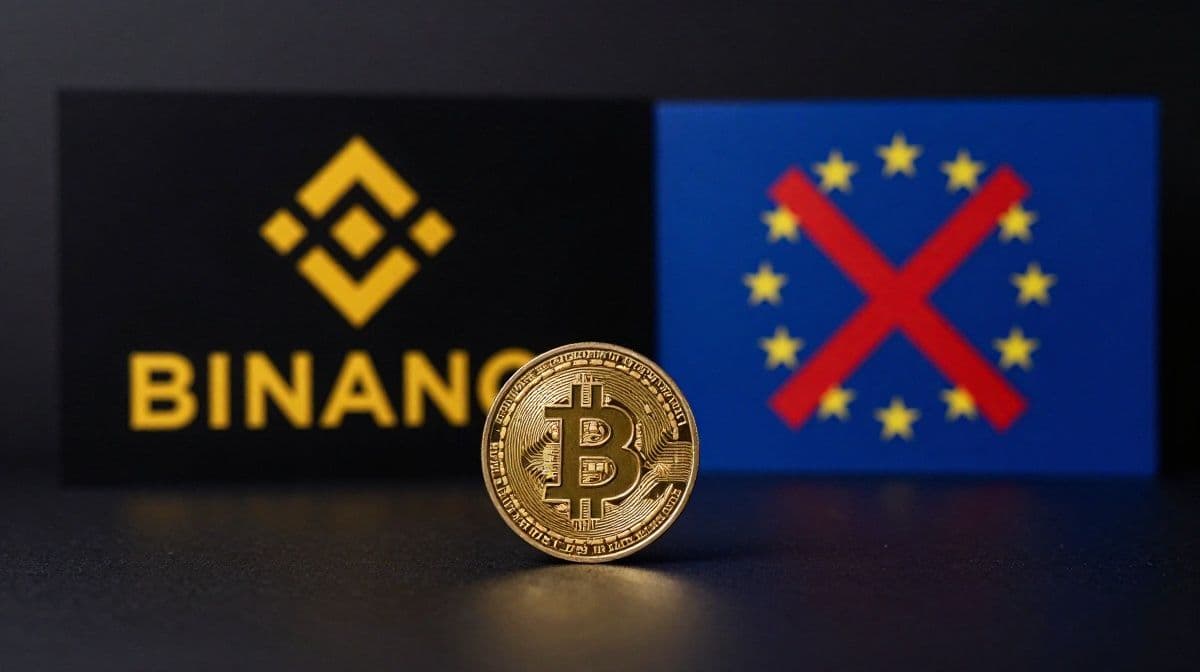
The exodus was triggered by Binance's own regulatory setback. The exchange withdrew its MiCA regulation license application in Greece on June 24, after reports that the Greek regulator was preparing to reject it. With no license in place by the July 1 deadline, Binance stopped serving new EU customers and began restricting services, forcing existing users to decide where to move their balances.
The result was Binance's heaviest weekly outflows in more than three years. Net outflows hit roughly $1.23 billion in the week beginning June 29 — up about 207% from the prior week, according to DefiLlama data reviewed by Cointelegraph. That is a lot of capital suddenly looking for a new home.
Are EU Exchanges Welcoming Ex-Binance Traders?
Absolutely — and aggressively. The MiCA deadline handed licensed platforms a rare opening: a wave of experienced traders, already holding funds, being forced to move whether they like it or not. What followed is best described as a land grab, with regulated crypto exchanges competing hard for every migrating account.
The offers have been substantial. OKX Europe rolled out its "Time to Switch" campaign with deposit bonuses of up to 8% (paid out over 52 weeks) plus 400 euros in BTC welcome rewards for new users, and reported record EU sign-ups in the run-up to the deadline. Coinbase countered with a transfer bonus of up to 5% for users moving funds before mid-July.
These campaigns are structurally different from typical crypto marketing. Instead of chasing newcomers, they target established capital from users who already know how to move funds — and are being pushed to do so anyway. Every migrated account becomes a durable source of trading volume, staking balances and fees, which is exactly why the incentives are so generous.
Which MiCA Exchanges Offer the Biggest Rewards?
This is the key question for anyone with funds still sitting on Binance or another platform that did not make the MiCA cut. The bonuses are real, but they are time-limited, capped, and vary a lot by exchange, region and deposit method — so it pays to compare before you move rather than jumping at the first offer you see.
We have put together a full, up-to-date breakdown of every MiCA-regulated exchange currently paying users to switch, including the exact bonus structures, caps and deadlines: see our complete comparison of the best regulated MiCA exchanges here.
What Does This Mean for Europe's Crypto Market?
Teng's 70/30 split points to a deeper shift: many Europeans are not simply swapping one exchange for another — they are choosing to hold assets directly. That leaves the EU with a narrower, more heavily supervised market on the licensed side, and a growing pool of self-custodied capital that sits beyond any regulator's reach. MiCA has settled who is allowed to operate. The open question now is where users actually want to keep their crypto — on a regulated platform, or in their own wallet.
Frequently asked questions about Binance and its EU users after MiCA
Related articles
- Binance Is Out of the EU: How to Move to a MiCA-Regulated Exchange
- How to Switch from Binance to a MiCA Regulated Crypto Exchange
- MiCA Register 2026: Only 21 of 329 Licences Are Real Exchanges
- Binance EU Access at Risk: What MiCA Could Mean for BNB and Crypto Users
- MiCA Wiped Out 92% of Europe's Crypto Firms: Here's Who Survived and Who's Cashing In
Which topics should we dive deeper into?
Select what genuinely interests you. Your picks feed directly into our editorial planning.
Crypto news that's actually worth your time.
Weekly. 60 seconds. Carefully curated by our editors: no hype, no promo flood, no spam.

June 26, 2026 5:35 PM
Binance Is Leaving the EU on July 1 — What It Means for Your Funds
Binance will stop serving EU customers from July 1 after failing to secure a MiCA licence. Here's what it means for your funds and your next move.
June 25, 2026 11:19 AM

Binance Pulls Its EU Licence Bid: What It Means for Your Crypto
Binance just withdrew its MiCA licence application in Greece days before the EU deadline. Here's what it means for users, your funds, and the crypto market.

August 21, 2026 4:17 PM

Crypto Withdrawals to Your Own Wallet: Why Exchanges Demand Proof of Address Ownership Above €1,000
Above €1,000 your provider has to establish whether the destination address really belongs to you. Article 14(5) of the transfer of funds regulation, five permitted methods, and the reason a withdrawal stalls without this step.
August 22, 2026 1:23 AM

Binance Withdrawal Deadline September 9: What ALCX, ARDR, NFP and POND Holders Should Know Now It Has Passed
Recap as of September 27, 2026: Binance had announced it would stop withdrawals of ALCX, ARDR, NFP and POND on September 9, 2026 at 03:00 UTC. Spot trading in these tokens had been suspended since July 10, and the exchange is winding down its EU business. This article describes the situation before the deadline.
September 29, 2026 10:14 AM
Bitget discloses the flaw at its supplier and sets out the timetable for withdrawals
Bitget has disclosed how the attackers reached its withdrawal systems on September 24: through a previously unknown flaw in a security product it had bought in. The second stage of the withdrawal schedule opens today at 08:00 UTC, and for the balance you keep on any exchange the case changes the arithmetic.
September 27, 2026 4:32 AM

Hester Peirce Leaves the SEC: What Now Applies to Your Custody in Germany
The most crypto-friendly voice at the US securities regulator goes on October 2, 2026, and the commission shrinks to two members. For investors in Germany it is still the European rulebook that decides, and there a deadline falls in July 2027.

September 19, 2026 7:17 AM

Chainlink Jumps Above $12: What LINK Holders Should Check Now
Chainlink trades at $12.34, 7.4 percent higher than yesterday. What part of the move is the broad market rally, what Chainlink itself contributes, and the three things you should check as a LINK holder.
October 6, 2026 10:32 AM

FinCEN drops the reporting duty for withdrawals to private wallets: what matters now for European investors
The US anti-money-laundering agency FinCEN withdrew two proposals on October 5, 2026 covering the reporting duty for self-custodied wallets and for mixers. In the EU the development runs in exactly the opposite direction: proof of ownership from 1,000 euros today, a ban on anonymous accounts from July 2027.
August 20, 2026 10:24 PM

MiCA Review: What the European Commission Could Change About the EU Crypto Rules
The European Commission has reopened MiCA for review after barely two years and is asking 86 questions covering the stablecoin interest ban, staking, lending and DeFi. Brussels is taking responses until September 30, 2026.
September 19, 2026 4:11 PM

MiCA Consultation Closes September 30: What to Check and Submit Before Then
The European Commission is reviewing the MiCA crypto regulation and will accept submissions until September 30, 2026 at 23:59 CEST. Staking, DeFi, lending, stablecoins and custody are all under examination, and you can take part without a lawyer.
September 26, 2026 4:14 PM

Bitget Withdrawals Resume on September 28: What to Check on a Residual Balance Now
Bitget is releasing the withdrawals frozen after the September 24 incident in four stages from September 28. For a residual balance held from Germany that is a deadline, not a reason to wait.

September 25, 2023 5:47 AM

Binance Anticipates Delisting Stablecoins Due to Upcoming MiCA Regulation
Unravel the implications of the EU's MiCA regulation on Binance's potential stablecoin delisting. Discover how evolving regulations shape the cryptocurrency landscape.
August 11, 2026 9:18 AM

Your Crypto Exchange Is Telling You to Withdraw: How to Spot Phishing After the MiCA Deadline
Unauthorised crypto providers now have to tell their EU customers to withdraw, which leaves fraudsters an easy run with faked requests. Here is how to check in two minutes whether the message is genuine.
September 29, 2026 7:12 PM
MEXC Refunds $340,000: The Attacker's API Key Survived the Account Freeze
During an account takeover at MEXC, an attacker created an API key with withdrawal rights that the exchange did not revoke when it restored the account. Twenty-seven minutes after the withdrawal freeze expired, roughly $340,000 was gone.
September 10, 2026 1:21 AM

Crypto Exchanges Head to Head: Which Pairing Is Cheaper Where
Before opening an account, the question is rarely which exchange is best overall, but whether it should be this one or that one. This article sorts through the most searched head-to-heads, puts the cost per 1,000 euros side by side and explains the most expensive mix-up: one provider with two interfaces and a factor of seventeen between them.
October 19, 2026 7:51 AM

Euro balances on a crypto exchange: what to watch after the ESMA answer on MiCA article 70
The European securities regulator ESMA spelled out on October 16, 2026 where a crypto asset service provider may hold your euro balance. A payment service provider without a banking licence is only a staging post of at most one business day.
October 12, 2026 6:50 PM
Kraken Lands Full Dubai Licence: Dirham Trading Goes Live for UAE Crypto Investors
Kraken has won full VARA approval in Dubai, clearing the way for dirham trading, margin, staking and tokenized stocks. Here is what UAE traders get.
July 7, 2025 8:12 PM

BIG Crypto News: EU Approves 14 Stablecoin Issuers Under MiCA
Six months into the MiCA rollout, Europe’s crypto regulatory landscape is taking shape. From authorized stablecoin issuers to licensed crypto service providers, here’s the full July 2025 update.
September 29, 2026 10:33 AM
ESMA puts reverse solicitation on its 2027 watch list: what investors need to know about exchanges without an EU licence
ESMA presented its work programme for 2027 on September 28, 2026 and made reverse solicitation a supervisory priority. What that means if your coins sit with a provider without EU authorisation, and which three steps make sense now.
September 16, 2026 1:28 PM
Crypto Withdrawal to Your Own Wallet: Ten Providers Checked, Three Will Not Let Your Coins Out
Seven of ten providers available in Germany offer a payout to a wallet address you control yourself; three do not. Our survey of September 16, 2026, shows how to spot the difference before you buy, and why the question matters right now.
August 21, 2026 10:27 AM
Complaining About a Crypto Exchange: the Deadlines Article 71 MiCAR Sets and Why BaFin Will Not Decide Your Case
Authorised crypto providers have to run a formal complaints procedure, and Delegated Regulation (EU) 2025/294 sets a hard limit of two months for it. Our own analysis of the ESMA list shows at the same time that no complaints link is on file for Germany to this day.
August 15, 2026 9:31 PM

Crypto Exchange Shutting Down: What to Do Before the Deadline Passes
Binance, BitMart, Luno and Revolut have ended or cut back their European business within seven weeks. This guide shows which deadline expires first, how a forced sale is treated for tax, and what to secure before the account closes.
October 16, 2026 1:35 PM

Kraken parent Payward buys Saldo Bank: the first crypto firm with a bank of its own in the EU
Payward, the parent of Kraken, agreed on October 14 to buy the Lithuanian Saldo Bank and would be the first crypto firm with a bank of its own in the EU. What is established, what stays open until the planned completion in 2027 and what may change for the protection of your euros.

October 15, 2026 7:29 AM

17 of 20 top coins down, Ethereum at $2,380: where the sell-off is measured
Ether loses 5.41 percent over 24 hours and falls to a daily low of $2,332.43. Our own count of the 25 largest cryptocurrencies shows how broadly the sell-off really carries.
October 14, 2026 1:29 AM

South Korea blocks 27 unregistered exchanges, KuCoin and MEXC are on the list
South Korea's anti-money-laundering unit blocked access to 27 websites of unregistered foreign exchanges on October 13, 2026, KuCoin, MEXC and BingX among them. In Germany the grandfathering for legacy providers lapsed back on December 31, 2025, and at KuCoin a granted EU licence stands against an order that still prohibits the commencement of business.
October 13, 2026 10:37 PM

ESMA will supervise only 10 to 15 of 360 crypto firms: your exchange stays with its home regulator
On October 9, 2026 EU finance ministers agreed to place only the largest crypto service providers under direct ESMA supervision. For the vast majority of the roughly 360 authorised firms, the national authority stays in charge, in Germany BaFin.
October 12, 2026 4:16 AM

Binance fees: 0.1 percent to trade, and one drawback compared with MiCA-licensed exchanges
Binance charges 0.1 percent in spot trading and 0.02 and 0.05 percent in derivatives. Since July 1, 2026 the exchange has lacked the MiCA authorisation for the EU, which leaves the fee table answering only half the question German investors are asking.
More from CryptoTicker