
Standard Chartered Just Opened Institutional Bitcoin Trading in the UAE
Standard Chartered launches institutional Bitcoin and Ether spot trading in the UAE. Here is what it means for BTC and ETH prices right now.





Which topics should we dive deeper into?
Select what genuinely interests you. Your picks feed directly into our editorial planning.
Crypto news that's actually worth your time.
Weekly. 60 seconds. Carefully curated by our editors: no hype, no promo flood, no spam.
Standard Chartered has switched on institutional Bitcoin and Ether spot trading in the UAE, becoming the first Global Systemically Important Bank to offer the service in the country and, by its own account, the only global bank currently providing institutional digital asset spot trading in the region.
What Exactly Did Standard Chartered Launch in the UAE?
The service runs through Standard Chartered DIFC, the bank's branch in the Dubai International Financial Centre, regulated by the Dubai Financial Services Authority. Eligible institutional clients can now trade deliverable BTC/USD and ETH/USD through the bank's existing electronic trading channels, using the same FX interfaces their treasury desks already use for dollars, euros and yen.
 Regulated crypto exchanges compared
Two details matter more than the headline. First, this is deliverable spot, not a derivative tracking a price. Clients end up holding the actual coins. Second, settlement is custodian agnostic. Clients can use whichever custodian they want, including Standard Chartered's own UAE digital asset custody service, which went live back in September 2024.
That combination is the real product: execution plus custody plus governance inside one banking relationship, rather than an exchange account sitting awkwardly outside the risk framework.
Why Is the UAE Launch a Big Deal for Institutional Crypto?
Standard Chartered first rolled out institutional Bitcoin and Ether spot trading through its UK branch in July 2025, when it became the first G-SIB to offer deliverable spot crypto to institutional clients. The UAE launch extends a capability that has already been road tested into a market with an unusually clear digital assets rulebook.
Dubai has spent years building a regulatory framework specifically designed to let regulated institutions touch crypto without ambiguity, and the region is not short of capital looking for a compliant on-ramp. Sovereign funds, family offices and regional asset managers who could not justify opening accounts on crypto native venues now have a route that passes internal compliance without a fight.
It also lands in a busier neighbourhood than it would have a year ago. RAKBANK opened Bitcoin trading to its Islamic banking customers in late August, and the Gulf banking sector is clearly no longer treating digital assets as a fringe experiment.

 Hardware wallets compared: hold your own keys
Will This Push Bitcoin and Ethereum Prices Higher?
Short answer: not today, and probably not this week.
At the time of writing, $Bitcoin is trading in the high $70,000s after slipping from around $79,000 last week, while $Ether sits just under $2,400 following a rough few sessions. Both are being driven by macro, not by banking press releases. Hawkish Fed repricing has done most of the damage, with rate hike odds for this month flipping from unlikely to more likely than not in the space of a week, and renewed Middle East geopolitical tension has added a risk-off layer on top.
Set against that, a single bank enabling spot access for a restricted client list is a structural story, not a catalyst. There is no forced buying attached to it. No flows are announced. Nothing here obliges a single institution to actually place a trade, and the eligible client base is narrow by design.
The honest read is that announcements like this do not move price on the day. They change who is able to buy on some future day. Bitcoin spot ETFs looked underwhelming in their first weeks too, and the flows only mattered once distribution caught up with access.
What Should Traders Actually Watch Next?
Three things worth tracking rather than the headline itself.
Volume disclosure is the first. If Standard Chartered or the DIFC start publishing institutional digital asset turnover, that is the number that tells you whether access converted into demand.
Product expansion is the second. The bank flagged crypto non deliverable forwards as a follow up when it launched in the UK. Derivatives arriving in the Gulf would signal that clients are asking for more than directional spot exposure.
Peer response is the third and probably the most important. A G-SIB going first in a market usually pulls competitors in behind it, and it is the second and third bank that turn a niche into an actual liquidity channel.
For now, this is a slow burn bullish datapoint in a market being pushed around by the Fed. Worth noting, not worth trading.
More on Bitcoin: All Bitcoin news at a glance
Related articles
- Bitcoin News Today: Why Is Bitcoin Price Up Starting July?
- Bitcoin ETF Inflows Hit $2.44B in April: Is the Bull Market Back?
- Bitcoin March 2025 Price Prediction: After the WORST February for BTC Price in 11 years - How Will March Unfold?
- Bitcoin Price Crashes Below $66,000 as Liquidations Pass $50M
- Bitcoin Price Prediction: BTC Price to Surpass $100K BEFORE or AFTER the Crypto Summit?
Which topics should we dive deeper into?
Select what genuinely interests you. Your picks feed directly into our editorial planning.
Crypto news that's actually worth your time.
Weekly. 60 seconds. Carefully curated by our editors: no hype, no promo flood, no spam.

May 12, 2026 3:51 PM

Bitcoin Holds $80,000 as XRP Outpaces Market Amid ETF Surge
Bitcoin maintains its $80,000 support while XRP breaks key resistance. Discover how institutional ETF inflows and market shifts are driving crypto prices today.

July 12, 2024 3:46 PM

Why Only XRP Price Surge Amid Crypto Market Decline?
XRP emerges as the only major cryptocurrency in the green while Bitcoin and the broader crypto market face declines. What is driving this XRP price surge, and what to expect for other major Altcoins?
March 26, 2025 4:00 AM

BlackRock NEWS: BUIDL Fund Live on Solana and Bitcoin ETP Launch in Europe
BlackRock's dual crypto push—expanding its BUIDL fund to Solana and launching a Bitcoin ETP in Europe—has ignited market interest. Solana price surged to its best performance this week; so what's next?
May 14, 2024 12:51 PM

SEC Decision on Spot Ethereum ETF in 9 Days: What to Expect?
In anticipation of the SEC's decision on Ethereum ETFs, here is the unique trading strategy proposed by a crypto hedge fund...
April 11, 2026 11:59 AM
Crypto Market Rallies: Bitcoin Hits $73,000 as Institutional Inflows Surge
Bitcoin hits $73,000 amid $350M ETF inflows and new CME altcoin futures, signaling a massive institutional shift in the crypto market this April.
February 12, 2025 8:00 AM

Crypto News & Finance Updates: Hong Kong Recognizes Bitcoin & Ethereum for Investment Visa
Hong Kong has officially recognized Bitcoin and Ethereum as valid proof of wealth for its CIES. Could this decision drive BTC and ETH prices higher signaling a major shift in crypto adoption?
February 15, 2025 11:34 AM
Bitcoin Price Surges Amid International Governmental Adoption - Can It Break $100K?
Bitcoin price is on the rise, fueled by massive international adoption and growing interest in crypto custody services. Will these developments push Bitcoin past the elusive $100K mark?
July 1, 2025 2:12 PM

Germany’s Banking Giants Go Crypto: Deutsche Bank and Sparkassen, the 2026 Launch Status
Deutsche Bank plans crypto custody for institutional clients by the end of 2026, the Sparkassen want to offer crypto trading in their app from mid-October. Where both plans stand.
February 19, 2025 7:00 AM
Best Bitcoin Strategy: 21 Rules of Bitcoin by Michael Saylor
The best Bitcoin strategy by the Founder of Strategy, with his 21 rules of Bitcoin, amid a bullish Bitcoin price prediction from Standard Chartered.
March 4, 2025 9:17 PM
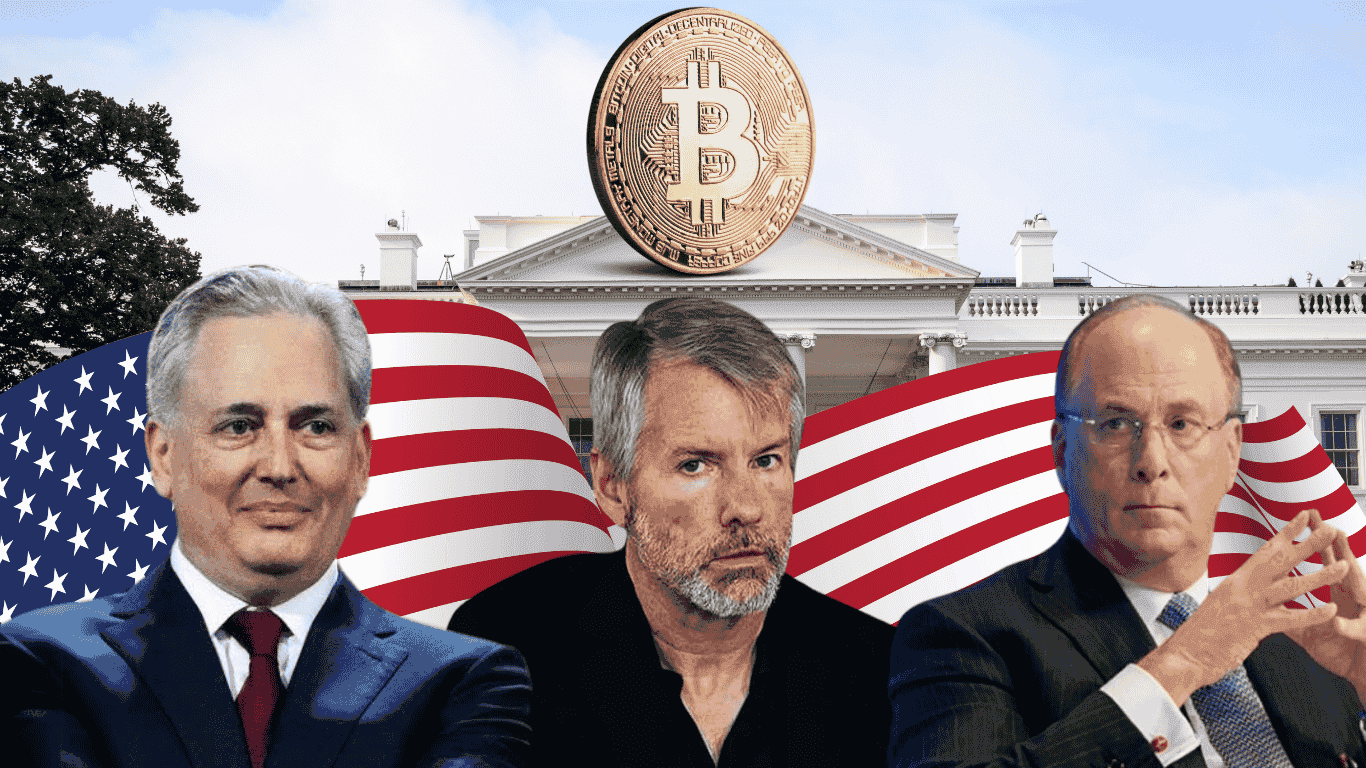
Bitcoin Price Prediction ahead of the Upcoming White House Crypto Summit
With the remarkable Bitcoin volatility, and after briefly surging earlier this week before dropping again. Is a Bitcoin price surge expected ahead of or after the upcoming White House Crypto Summit?
August 22, 2024 9:00 PM

MAJOR Bitcoin News: Bitcoin Price SURGE Expected At This Level
Bitcoin and Ethereum are at critical junctures, with key resistance levels in sight. Are the markets poised for a breakout, or will bearish pressures prevail? Explore the latest analysis and insights.
March 12, 2026 9:58 AM
SEC and CFTC Unite on Crypto Regulation: What It Means for Bitcoin and Altcoins
SEC and CFTC sign historic agreement to coordinate crypto regulation. Could regulatory clarity trigger the next Bitcoin and altcoin rally?
May 6, 2025 4:00 AM

Crypto News Today: Bitcoin, Ethereum, and Top Altcoins in May 2025
The crypto market enters May 2025 with mixed signals: Bitcoin stabilizes, Ethereum gas fees drop, XRP nears a rebound, and Cardano eyes recovery. Here’s what you need to know.
June 26, 2024 5:00 PM

Bitcoin Price Prediction: The Tenfold Surge SOON?
After the Fall, the Surge? Bitcoin's tenfold potential predicted by experts: Could Bitcoin surpass $100K?
July 11, 2026 6:49 PM

Crypto Price Today: Bitcoin Holds $64K as Robinhood Lets AI Bots Trade Crypto
The market is green again as BTC clings to a key level — but the bigger shift is that AI bots may soon be placing your trades for you. Here's today's snapshot.
November 21, 2024 11:50 AM
Bitcoin Price Is 2% Away From $100,000: Is Today THE DAY?
With almost 2% away from breaking the Bitcoin $100,000 price mark, a historic milestone for the crypto market. Could Today be The Day?
July 27, 2024 2:34 PM

Why Is The Crypto Market Up TODAY?
With the Bitcoin 2024 Conference taking place now in Nashville, the crypto market is showing bullish signals, intriguing traders around the future of Bitcoin and Altcoins.
March 13, 2026 10:50 AM

Bitcoin Price Hits $72,500 as Joint SEC-CFTC Regulatory Framework Sparks Bullish Momentum
Bitcoin surges to $72,500 as the SEC and CFTC announce a joint regulatory framework, while BlackRock’s new ETHB ETF records a strong $15.5M debut.
February 23, 2026 4:46 PM

Crypto Market Watch: Volatility Returns as Trump’s Tariff Jolts Bitcoin Below $65,000
Bitcoin drops below $65,000 on Feb 23, 2026, as President Trump’s 15% tariff hike sparks market volatility. Discover the latest on BTC, ETH, and institutional moves.
May 22, 2024 7:27 PM

SEC 'APPROVES' Ethereum Spot ETF: Will It Happen TOMORROW?
May 23rd is the anticipated day for SEC to announce its decision concerning ETH spot ETF. In less than 24 hours, an approval, rejection, or postponement will be among the top headlines, but what do analysts foresee?
January 26, 2026 6:30 PM

Crypto Markets Turn Cold as U.S. Freezes Hit — Is This a Chill or a Reset?
Crypto markets cool amid U.S. freezes, regulatory delays, and macro shifts. Is this a temporary chill or a deeper market reset?
April 4, 2026 9:30 AM

Bitcoin Bottom Near? Goldman Sachs and Regulatory Shifts Signal April Recovery
Goldman Sachs signals a Bitcoin bottom as institutional inflows return and the U.S. prepares the "Clarity Act" for a major April 2026 crypto market shift.
November 11, 2025 10:25 AM

US Government Reopens After 41 Days – What It Means for Bitcoin, Crypto, and Global Markets
The US government reopens after a record 41-day shutdown. Rate cuts, QT ending, and new crypto laws could reshape markets—here’s what investors must know.
October 10, 2026 1:19 PM

Crypto ETF Outflows Pass $1 Billion in October: Is Wall Street Dumping Bitcoin and Ethereum?
Bitcoin and Ethereum ETFs just bled over $1 billion in October. Here is who is selling, who is still buying, and what it means for your coins.
July 15, 2026 5:09 PM

Japan Recognizes Crypto as Financial Assets — Are Bitcoin ETFs and a 20% Tax Next?
Japan has passed a landmark crypto law. Could regulated Bitcoin ETFs and a lower 20% tax rate bring billions into the market?

More from CryptoTicker