
Japan Recognizes Crypto as Financial Assets — Are Bitcoin ETFs and a 20% Tax Next?
Japan has passed a landmark crypto law. Could regulated Bitcoin ETFs and a lower 20% tax rate bring billions into the market?





Which topics should we dive deeper into?
Select what genuinely interests you. Your picks feed directly into our editorial planning.
Crypto news that's actually worth your time.
Weekly. 60 seconds. Carefully curated by our editors: no hype, no promo flood, no spam.
Japan has taken one of its most significant steps toward integrating cryptocurrencies into the traditional financial system.
The Japanese parliament has passed an amendment formally designating cryptocurrencies as “financial assets.” Until now, crypto assets in Japan were primarily regulated under the country’s Payment Services Act. The new classification brings them closer to financial products such as stocks, bonds and investment funds.
The decision could eventually lead to lower taxes, stronger investor protections and the introduction of regulated cryptocurrency exchange-traded funds in Japan.
However, the reform does not mean that Japanese Bitcoin ETFs are already trading or that every crypto investor will immediately benefit from a 20% tax rate. Further regulatory and tax implementation measures will still be required.
What changes under Japan’s new crypto law?
By bringing crypto assets under the Financial Instruments and Exchange Act, Japan is shifting its regulatory focus from payments toward investment and market oversight.
Crypto exchanges and other financial institutions could face rules similar to those applied to traditional securities companies. These may include stricter disclosure obligations, enhanced consumer protections and controls against insider trading and market manipulation.
Earlier proposals from Japan’s Financial Services Agency suggested applying the new framework to more than 100 cryptocurrencies available through approved Japanese exchanges, including Bitcoin and Ethereum.
The legislation could therefore make Japan’s crypto market more regulated, but also more accessible to traditional financial institutions.
Will Japan reduce crypto taxes to 20%?
Japan currently treats many cryptocurrency profits as miscellaneous income. Depending on an investor’s total income, the combined tax rate can reach approximately 55%.
This has long been criticized by Japanese crypto companies and investors. Traditional stock gains, by comparison, are generally taxed separately at around 20%.
The new financial-asset classification establishes the legal foundation for Japan to move eligible crypto gains toward a similar separate taxation system. Reports indicate that lawmakers are targeting an effective rate of approximately 20%, although the tax reduction is expected to require separate implementation and may not take effect until 2028.
Reducing the rate from as much as 55% to around 20% could encourage Japanese investors to keep their trading activity inside regulated domestic platforms rather than moving funds abroad.
It could also make Bitcoin and Ethereum more attractive as long-term investment assets.
Does the law approve Bitcoin ETFs?
The law does not appear to provide immediate approval for a Japanese spot Bitcoin ETF.
Instead, classifying cryptocurrencies as financial products removes one of the most important legal barriers preventing crypto assets from being included in conventional investment products.
Japan’s regulators could now develop rules allowing investment trusts and exchange-traded funds to hold Bitcoin, Ethereum or other approved crypto assets.
Previous reports said the reform was designed partly to open the door to products such as crypto ETFs. The timing will depend on detailed regulations, product applications and approval from Japanese financial authorities.
Therefore, the most accurate interpretation is that Japan has created a potential pathway for Bitcoin ETFs—not that such funds have already been approved.
Could Japanese Bitcoin ETFs move the crypto market?
Japan is one of the world’s largest economies and has a substantial household savings market.
Japanese investors held more than 5 trillion yen in crypto assets in mid-2025, equivalent to roughly $33 billion at the time. The amount had increased by approximately 25% within one month, demonstrating growing domestic interest in digital assets.
A regulated Bitcoin ETF could give pension funds, asset managers, banks and cautious retail investors a more familiar way to gain crypto exposure.
The immediate market impact would depend on the size of the products and the amount of capital they attract. Japan’s decision alone does not guarantee large Bitcoin purchases.
Nevertheless, the combination of lower taxation and regulated ETFs could gradually unlock a new source of demand for Bitcoin and Ethereum.
 Regulated exchanges compared: licences and oversight
Why Japan’s decision matters globally
Japan was among the first major countries to establish a formal licensing system for cryptocurrency exchanges following several high-profile industry failures.
The new legislation represents the next stage of that approach. Instead of treating crypto mainly as a speculative payment technology, Japan is recognizing it as part of the broader investment market.
The shift also reflects a wider international trend. Governments are increasingly moving from debating whether crypto should exist toward deciding how it should be regulated, taxed and integrated into financial markets.
Japan’s decision could place additional pressure on other Asian economies to create competitive tax and investment frameworks.
What happens next?
Investors should now watch for three major developments:
First, Japan must publish detailed regulations explaining which crypto assets and companies will fall under the new financial framework.
Second, lawmakers must finalize the proposed tax changes, including the eligibility requirements and implementation date for the approximately 20% rate.
Third, Japanese asset managers may begin preparing applications for Bitcoin or Ethereum investment products once regulators establish an ETF framework.
The law is therefore an important milestone, but it is the beginning of Japan’s next crypto phase rather than the final step.
Japan crypto outlook
Recognizing cryptocurrencies as financial assets could fundamentally reshape Japan’s digital-asset market.
Lower taxes may encourage more domestic participation, while regulated ETFs could provide access to investors who currently avoid cryptocurrency exchanges. Stronger market rules could also improve institutional confidence.
For Bitcoin, the long-term impact may be more important than the immediate price reaction.
Japan has not simply announced support for crypto. It has started building the legal infrastructure required to place digital assets alongside traditional investments—and that could eventually bring a new wave of capital into the market.
Frequently asked questions about Japan's crypto law
More on Bitcoin: All Bitcoin news at a glance
Related articles
- SEC Approves Ethereum ETFs: A New Era for Crypto Investments
- After Bitcoin Crash, Will Altcoins Gains Reach 500%?
- Ethereum Price Analysis: Why is Ethereum Price Down?
- Crypto News & Finance Updates: Hong Kong Recognizes Bitcoin & Ethereum for Investment Visa
- Bitcoin ETF Inflows Hit $2.44B in April: Is the Bull Market Back?
Which topics should we dive deeper into?
Select what genuinely interests you. Your picks feed directly into our editorial planning.
Crypto news that's actually worth your time.
Weekly. 60 seconds. Carefully curated by our editors: no hype, no promo flood, no spam.

October 17, 2021 3:49 PM
Bitcoin ETF Is Likely To Be Approved As BTC Crosses $60K
Bitcoin ETF has been highly sought after as a conduit to bring fresh money into the crypto arena and it may be approved finally.

November 11, 2025 10:25 AM

US Government Reopens After 41 Days – What It Means for Bitcoin, Crypto, and Global Markets
The US government reopens after a record 41-day shutdown. Rate cuts, QT ending, and new crypto laws could reshape markets—here’s what investors must know.
April 10, 2026 8:12 AM
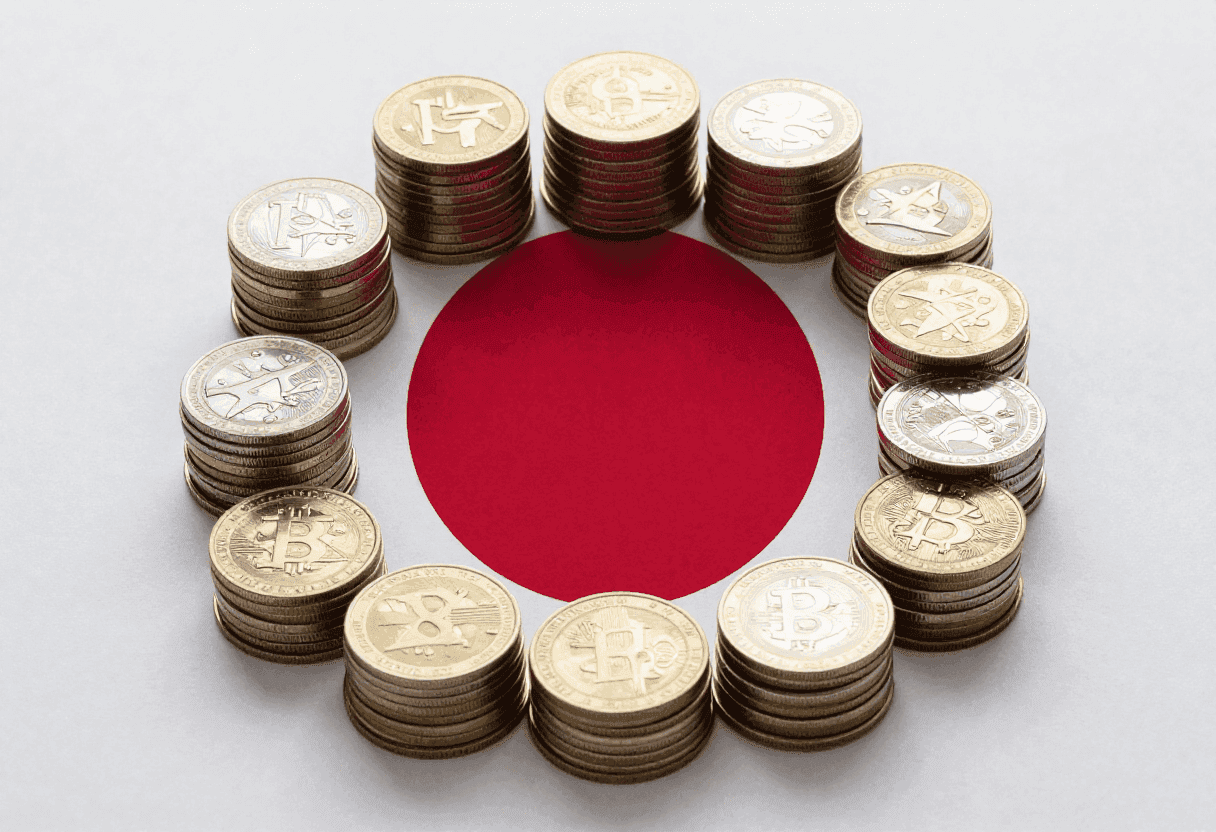
Japan Officially Reclassifies Crypto as Financial Assets: What This Means for Investors
Japan's Cabinet has approved a landmark bill reclassifying cryptocurrencies as financial assets, paving the way for a 20% flat tax and institutional growth.
June 5, 2024 5:03 PM

Crypto Market Up: Bitcoin Breaches $71K, Altcoins Follow Suit, Eyes on New Highs
Cryptocurrencies are experiencing a surge, with Bitcoin leading the charge by surpassing $71,000. This bullish trend extends to altcoins, igniting optimism across the market. Will Bitcoin reach new highs?
March 1, 2025 2:14 PM
Bitcoin March 2025 Price Prediction: After the WORST February for BTC Price in 11 years - How Will March Unfold?
February 2025 saw Bitcoin's sharpest decline in over a decade. Explore the factors behind this downturn and the potential for a market rebound.
March 3, 2025 6:01 AM

Bitcoin Price Prediction: BTC Price to Surpass $100K BEFORE or AFTER the Crypto Summit?
Minutes after Trump's crypto reserve announcement and less than a week to the Crypto Summit, the global crypto market triggered an over 11% in total market cap surge, but...

May 12, 2026 3:51 PM
Bitcoin Holds $80,000 as XRP Outpaces Market Amid ETF Surge
Bitcoin maintains its $80,000 support while XRP breaks key resistance. Discover how institutional ETF inflows and market shifts are driving crypto prices today.
August 20, 2024 3:00 PM

New US Senate Proposal Submitted For Crypto Tax Exemption
The US Senate has recently submitted a new proposal to exempt crypto transactions from federal taxes. Here are more details of this submission, and a list of exempted countries it could be joining...
April 16, 2026 11:26 AM

Crypto News Today: Bitcoin Holds $74,000 as iShares Launches ETH Staking
Bitcoin eyes $75,000 while BlackRock's iShares partners with Coinbase for ETH staking. Explore the latest market shifts and SEC regulatory updates for April 2026.
May 12, 2025 9:05 PM

US-EU Trade Tensions Rise as US-China Conflict Cools Down
Just as the long-standing US-China trade war appears to ease, new tensions are emerging between the United States and the European Union. With Trump calling Europe “nastier than China,” are we about to witness a new transatlantic trade conflict?

January 10, 2022 2:23 PM

These 4 Famous Companies entered the Crypto World in 2021…Who will we See in 2022?
Let's take a look at 4 big crypto companies that have enriched the crypto market over the past year and embraced blockchain tech.

October 13, 2018 10:27 PM
Crypto-tokens: The future of Indian Crypto-Finance
The Government of India is considering launching Crypto tokens for financial transactions in the country, even as the existing ban on cryptocurrency is likely to continue. “Crypto token operate in a closed system and doesn’t impact the country’s monetary policy […]
February 18, 2024 11:00 PM

Bitget Report: 33% of Banking Professionals are Switching to Crypto
Bitget report: there is a notable shift of banking professionals towards the cryptocurrency sector. Are Crypto Jobs Better?

December 16, 2023 1:04 PM
The Rise of Bitcoin ETFs in the Dominant U.S. ETF Market
Explore how the dominance of three major firms in the U.S. ETF market impacts the upcoming Bitcoin ETFs, raising key regulatory and market concerns.
September 27, 2023 3:19 PM
When will SEC Approve Bitcoin ETF and Ethereum ETF?
The narrative surrounding Bitcoin ETF and Ethereum ETF has become a focal point in the crypto community. When will the sec finally approve?

January 20, 2021 9:15 PM
What does Joe Biden Presidency mean for the crypto market?
Today, on January 20, 2021, Joe Biden was sworn in and became the 46th president of the United States. For the most part, traders around the world considered Donald Trump as a great asset for the stock market. Considering the […]
January 24, 2020 2:07 AM

Can Cryptocurrency be Regulated?
Cryptocurrency market is relatively new and still maturing. Its largely unregulated currently, which is why its heavily manipulated. Even though, the basic premise of crypto-assets and blockchain technology is to create a decentralized, tamper-resistant and censor-free world. An unregulated market […]
August 22, 2019 9:55 AM

JP Morgan: Blockchain winning hearts, crypto falling out of favour
Recently, many have voiced their love for blockchain, but not so much for crypto. They are of the opinion that blockchain could revolutionize many industries but cryptocurrency is the wrong use case. This is in a world which is still […]
June 4, 2025 1:59 PM

Crypto News Today: ETF Shocks, Trump’s Bold Bitcoin Play, and Altcoin Momentum Surging
The crypto market is pulsing with energy. From Trump’s ETF push to $1B BlackRock outflows and an altcoin breakout, today’s headlines mark a momentum shift for traders and institutions alike.
January 26, 2026 6:30 PM

Crypto Markets Turn Cold as U.S. Freezes Hit — Is This a Chill or a Reset?
Crypto markets cool amid U.S. freezes, regulatory delays, and macro shifts. Is this a temporary chill or a deeper market reset?
July 1, 2024 9:20 AM

Bitcoin News Today: Why Is Bitcoin Price Up Starting July?
Starting July, recent market movements, political debates, and court rulings are shaping the future of Bitcoin and the broader crypto market. Here are the latest insights and analysis...
April 30, 2024 2:52 PM

What Bitcoin Strategy yields $400M in Profits?
A Bitcoin Strategy adopted by a major company's co-founder reported to have earned him $400M in profits: Fact or Fiction?
March 12, 2026 9:58 AM
SEC and CFTC Unite on Crypto Regulation: What It Means for Bitcoin and Altcoins
SEC and CFTC sign historic agreement to coordinate crypto regulation. Could regulatory clarity trigger the next Bitcoin and altcoin rally?

December 31, 2021 1:07 PM
Here’s why Cryptos are STILL Not Mainstream – Can 2022 Rock Cryptos?
What is stopping crypto from gaining mainstream adoption? Let's deep dive to know a few reasons why only the OGs are confident about cryptos.

July 23, 2021 4:06 PM

All about The B Word Conference
The B Word, the most expected conference focused on the cryptocurrency Bitcoin, began yesterday July 21st at 9 a.m. PDT (Pacific Daylight Time). Some of

July 10, 2020 10:43 PM

Can the Wirecard scandal be repeated with cryptocurrencies? Bitcoins in danger?
A DAX company with a glaring hole of 1.900.000.000 € in the balance sheet. By this time, every person interested in finance should have heard something about the Wirecard scandal. In this article, we will reflect the chronology of the […]

October 13, 2018 8:26 PM

Global Cryptocurrency investment set to Double, says ING Study
A broad ING bank led study has discovered that global interest in investing in cryptocurrency is set to double. The study comes at a time when cryptocurrency prices are at their lowest this year, with concerns about mainstream adoption, scalability […]
More from CryptoTicker