
100 euros of crypto at Scalable Capital costs 1.98 euros: the spread mark-up does most of it
A crypto purchase of 100 euros costs 1.98 euros at Scalable Capital on the FREE tariff, almost two percent of the stake. This analysis sets the two tariffs against each other, shows the spread mark-up as the actual crypto fee and names the threshold from which the PRIME+ subscription pays off at all.




Which topics should we dive deeper into?
Select what genuinely interests you. Your picks feed directly into our editorial planning.
Crypto news that's actually worth your time.
Weekly. 60 seconds. Carefully curated by our editors: no hype, no promo flood, no spam.
A purchase of 100 euros in a crypto ETP costs 1.98 euros at Scalable Capital on the free FREE tariff. That is 0.99 euros of order fee and a 0.99 percent spread mark-up on the price. On the PRIME+ subscription the mark-up falls to 0.69 percent, but the order fee only disappears from an order volume of 250 euros. At 100 euros you pay 1.68 euros there plus a monthly charge of 4.99 euros.
cryptoticker.io compiled this analysis itself on October 7, 2026. The basis is three price and product pages from Scalable Capital, the cost overview for the two tariffs FREE and PRIME+, the product page for crypto ETPs and the page on the PRIME+ subscription, plus the three ETPs the provider itself highlights on its product page. The calculation covers three order sizes and both tariffs, so six cases.
The figure that surprises most in this is not the order fee. It is the spread mark-up. It appears in the price table under a line of its own named crypto fees and is charged as a percentage, not as a flat amount. That is precisely why it grows with every euro you invest, while the order fee stays at 0.99 euros.
Scalable Capital and crypto: you buy ETPs, not coins
The most important sentence first, because it determines everything else: at Scalable Capital you trade crypto exclusively through ETPs. The provider's product page itself calls the offering crypto ETPs and describes the route in a way that needs no additional wallet. According to the provider, 32 cryptocurrencies are available as ETPs, with a minimum of one euro, and some papers come with staking rewards.
ETP stands for exchange traded product. It is an exchange-traded security that tracks the price of another asset, here the price of a cryptocurrency. So you acquire a paper in your securities account, not a coin on a blockchain. Anyone who buys Bitcoin via such a paper has afterwards no private key, no address and no way to send the holding to a wallet of their own.
That is neither good nor bad; it is a different product with different properties. The differences between coin, ETN and certificate we have taken apart in a separate article. Anyone who first wants to see which exchange-traded crypto products are available in Germany at all will find the situation in the overview of crypto ETFs and ETPs in Germany.
What ends up in the securities account and what does not
What ends up there is a security with an ISIN, tradable like a share. What does not end up there is a balance you could withdraw, send or secure in a hardware device. Custody, according to the provider, sits with the ETP issuer, which stores the underlying cryptocurrencies with specialised custodians.
The 0.99 percent spread mark-up is the actual crypto fee
Scalable Capital's price table has one line that applies to crypto alone. That line is named crypto fees and states a spread mark-up of 0.99 percent on the FREE tariff and 0.69 percent on PRIME+. A footnote in the provider's cost overview makes clear that this line applies to all financial instruments that track the value of cryptocurrencies, ETPs, ETCs and ETNs included.
A spread is the gap between the buying and selling price of a paper. A spread mark-up means that something is added on top of that gap, which exists anyway. On your settlement statement this mark-up does not appear as a fee item of its own. It sits in the price at which you are filled. Anyone who looks only at the line with the order fee thereby misses the larger part of the cost as soon as the order volume is above around one hundred euros.
For the calculation below, the obvious assumption applies that the percentage mark-up relates to the order volume. On a purchase of 1,000 euros, 0.99 percent is therefore 9.90 euros, with the order fee beside it at 0.99 euros. The ratio flips completely with order size: at 100 euros both items carry the same weight, at 1,000 euros the mark-up carries ten times the order fee.
The calculation: what is left of 100, 250 and 1,000 euros in the ETP
Here are the six calculated cases. The percentages relate to the respective order volume; the monthly charge for PRIME+ is not yet included in this table, because it is incurred independently of individual purchases.
| Order volume | FREE: cost | FREE: share | PRIME+: cost | PRIME+: share |
|---|---|---|---|---|
| 100 euros | 1.98 euros | 1.98 percent | 1.68 euros | 1.68 percent |
| 250 euros | 3.47 euros | 1.39 percent | 1.73 euros | 0.69 percent |
| 1,000 euros | 10.89 euros | 1.09 percent | 6.90 euros | 0.69 percent |
Of 100 euros, then, 98.02 euros arrives in the paper on the FREE tariff. At 250 euros it is 246.53 euros, at 1,000 euros 989.11 euros. The share falls with order size, because the fixed order fee spreads across more euros, but it falls only as far as the floor set by the spread mark-up. A FREE purchase never gets below 0.99 percent, however large it is.
On PRIME+ that floor sits at 0.69 percent, and from 250 euros it is also the entire price, because the order fee drops to zero there. That is why the PRIME+ column shows an identical 0.69 percent at both 250 and 1,000 euros.

PRIME+ at 4.99 euros a month: from what order volume the subscription pays off
PRIME+ costs 4.99 euros a month, FREE costs nothing. For crypto the subscription brings two advantages: the spread mark-up falls by 0.30 percentage points, and the order fee of 0.99 euros disappears from an order volume of 250 euros. Both have to earn the monthly charge back first.
Assuming a single crypto purchase a month, the tariffs break even at an order volume of around 1,334 euros. Below that FREE is cheaper, above it PRIME+. An example in the other direction: anyone who puts 1,000 euros into a crypto ETP once a month pays 10.89 euros on FREE and 11.89 euros on PRIME+ including the subscription. In that case the subscription is one euro more expensive, even though it has the lower fee line.
This calculation looks at crypto alone. Anyone holding the subscription for shares, ETFs or derivatives anyway gets the lower crypto mark-up thrown in for free. Anyone considering PRIME+ only for crypto should first set the threshold of around 1,334 euros of monthly order volume beside their own purchase amounts. How other providers set that threshold is shown by the overview of the best crypto brokers.
 Compare crypto brokers and fees
Savings plan from 1 euro with no order fee: the mark-up stays all the same
Savings plan executions are free of charge at Scalable Capital on all broker models, from a savings rate of one euro. That sounds like a zero tariff, and with shares and ETFs it is one. With crypto the spread mark-up is untouched by it, because it does not belong to the order fee but to the crypto fees line.
In practice that means: a monthly crypto savings rate of 100 euros costs 0.99 euros per execution on FREE and 0.69 euros on PRIME+. Over twelve months that adds up to 11.88 and 8.28 euros respectively. For the savings plan case the subscription threshold shifts markedly upwards, because PRIME+ can no longer save any order fee here: only from a monthly savings rate of around 1,664 euros does the lower mark-up carry the monthly charge.
Anyone saving in small instalments is therefore better off with crypto on the free tariff, and across a very wide range. That is the reverse of the reflex one is used to with brokers.
TER from 0.15 to 2.50 percent: product costs vary by more than sixteenfold
Alongside the broker's costs sits the ongoing charge of the paper itself. The technical term for it is the TER, the total expense ratio: the annual costs of an exchange-traded product as a percentage of the amount invested. This rate is never debited. It is taken from the product's assets on an ongoing basis and thereby depresses the price.
Scalable Capital highlights three papers on its crypto product page, and their TERs lie far apart:
| ETP | ISIN | TER per year | Cost on 1,000 euros a year |
|---|---|---|---|
| CoinShares Physical Bitcoin | GB00BLD4ZL17 | 0.15 percent | 1.50 euros |
| Bitwise Physical Ethereum | DE000A3GMKD7 | 1.49 percent | 14.90 euros |
| 21Shares Solana Staking | CH1114873776 | 2.50 percent | 25.00 euros |
Between the cheapest and the most expensive of these three papers lies more than sixteenfold on the ongoing cost rate. Calculated on 1,000 euros and one year, that is 1.50 euros against 25.00 euros, a difference of 23.50 euros. The broker's spread mark-up is incurred once, at purchase; the TER is incurred every year. Over a holding period of several years, product selection is therefore the bigger lever than the choice of tariff.
A side effect of the table: the most expensive of the three papers is the one with staking rewards. Whether the distributed income outweighs the higher TER depends on the staking yield of the respective network and on the issuer's terms. That yield varies from month to month; the paper's ongoing cost rate stays constant.
Where to look up the TER yourself
The TER appears in the key information document of the respective paper, which every issuer has to publish, and additionally on the product page in your securities account. Anyone comparing two ETPs on the same cryptocurrency compares that figure first, then the trading spread on the chosen exchange.
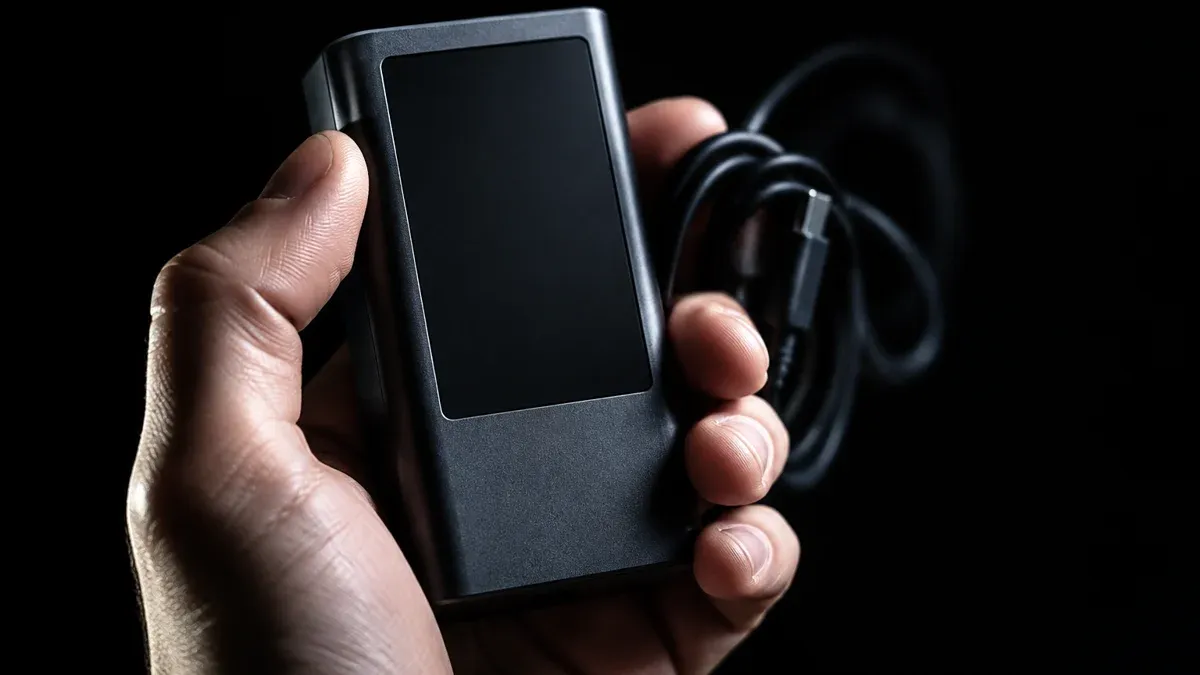
Custody with the ETP issuer: no delivery claim, no wallet of your own
Scalable Capital describes custody clearly. Responsibility sits with the ETP issuer, which stores the underlying cryptocurrencies with specialised custodians. For you that removes key management, and with it the risk of losing a seed phrase.
What you have bought instead is a different risk. An ETP is as a rule a bearer bond, that is a claim against the issuer. If that issuer becomes insolvent, the collateralisation helps you only as far as it is legally separated from its remaining assets. This issuer risk does not exist with a coin in your own wallet; there you carry the risk of your own custody instead.
Anyone who wants to hold both side by side, an ETP in the securities account and a holding in self-custody, needs a route other than Scalable Capital for the second part. An exchange that pays out real coins, and a device that keeps the keys offline, are the usual building blocks for that.
Exchange trading hours: a crypto ETP stands still at the weekend
Crypto markets run around the clock, seven days a week. For ETPs that does not hold. On its product page Scalable Capital points out explicitly that ETPs are tradable only during regular exchange trading hours and that prices reflect the underlying crypto markets.
For a savings plan that is irrelevant. For someone who wants to react to a price slump on a Sunday evening, it is the decisive difference from buying directly on a crypto exchange. The price then keeps moving, only your order does not. On Monday morning the gap to the Friday close can be considerable, and you will be filled at whatever price applies then.
 Compare crypto tax software
Tax on crypto ETPs: why the holding period depends on the delivery claim
With cryptocurrencies held directly in private assets, the one-year rule under section 23 of the German Income Tax Act applies: after more than twelve months of holding, the gain stays tax-free; inside the period your personal tax rate applies. With a security that is not automatically the case.
What matters is whether the paper embodies a delivery claim, that is the right to exchange the bond for the actual cryptocurrency. Physically backed papers with such a claim are regularly treated like a direct investment, so under section 23 with the one-year rule. A pure bearer bond without that claim falls under section 20, and then the flat withholding tax of 25 percent plus the solidarity surcharge applies, regardless of how long you have held. The revised circular of the German Federal Ministry of Finance of March 6, 2025 is the authoritative administrative basis for this.
In practice that means: the broker does not give you the answer. It is to be found in the securities prospectus and in the key information document of the individual ETP. Two papers on the same cryptocurrency can run differently for tax purposes. Anyone holding several positions should settle that before buying rather than at tax return time, and in case of doubt speak to a tax adviser. This article does not replace tax advice.
Trade Republic, comdirect and Bitpanda: where Scalable Capital sits beside them
Scalable Capital is not alone with this model. Several German providers make crypto available via securities and charge the lion's share through a percentage spread rather than a visible fee. The comparison is therefore worth making along two questions: how high is the percentage share, and do I get real coins or a paper?
At Scalable Capital the answer to the second question is unambiguously a paper. With providers that sell real coins, the question of withdrawability is added, that is whether and at what price you can send the holding to an address of your own. The two cannot be set off against each other; they are different products with different risks.
On the cost side a simple rule of thumb follows from this analysis: below 250 euros of order volume the fixed order fee decides, above it the percentage decides. A provider with one euro of order fee and a 0.5 percent spread is more expensive on small purchases and markedly cheaper on large ones than one with no order fee and a one percent spread.
Scalable Capital crypto in figures: the balance of this analysis
The visible fee at Scalable Capital is low at 0.99 euros per order, and with crypto it is the smaller part of the cost. The larger part is carried by the spread mark-up, 0.99 percent on FREE and 0.69 percent on PRIME+, and it grows with every euro invested. On 100 euros that adds up to 1.98 euros of cost, on 1,000 euros to 10.89 euros.
The PRIME+ subscription pays off for crypto alone only at amounts far above what a typical savings plan moves. And over several years it is the TER of the chosen paper that decides, not the tariff: between 0.15 and 2.50 percent a year lies more than sixteenfold. Anyone who picks the paper carefully saves more than with any change of tariff.
That leaves the point no fee table captures: an ETP is a security. You get the price, not the coin, and you get the exchange trading hours thrown in. Anyone who wants exactly that will find it comfortable. Anyone who wants their own keys is in the wrong place here, and that is not a question of cost.
Scalable Capital and crypto: Your next three steps
- Work through your own order size before you choose the tariff. If your monthly crypto outlay is below around 1,334 euros on single purchases, or below around 1,664 euros on a savings plan, FREE is the cheaper choice. How other providers price the same case is shown by the overview of crypto savings plans on Bitcoin.
- Decide deliberately between paper and coin. If you want to hold the position in your own custody at some point, you need real coins, and therefore a route other than an ETP account. Which devices keep the keys offline is in the hardware wallet comparison.
- Check the TER and the delivery claim on the ETP you pick. The TER decides the ongoing cost, the delivery claim decides the tax. Both are in the key information document. Anyone who would rather buy directly will find the licensed trading venues among the best crypto exchanges.
(As of October 7, 2026. This article is not investment advice. Prices and fee structures change; check the terms with the provider before you buy.)
Frequently asked questions about crypto at Scalable Capital
Transparency note: This article was produced with the assistance of artificial intelligence and reviewed by our editorial team before publication. All figures and claims were checked against the primary sources linked in the text. The feature image was generated with AI.
Related articles
- Crypto Fees at Neobrokers: Why the PFOF Ban Raises Your Stock Costs but Leaves Your Coin Purchase Untouched
- Bitpanda fees from 0.99 to 2.49 percent: what is behind it
- Crypto Through Sparkasse and Volksbank: 1.5 Percent Commission Plus a Spread, and No Product Page Names the Price
- Coinbase Fees: What a Purchase Really Costs, and Where the Spread Is Hidden
- Crypto Cards in Everyday Use: What Bitpanda, Crypto.com and Nexo Cost
Which topics should we dive deeper into?
Select what genuinely interests you. Your picks feed directly into our editorial planning.
Crypto news that's actually worth your time.
Weekly. 60 seconds. Carefully curated by our editors: no hype, no promo flood, no spam.

September 24, 2026 4:22 AM

Options on Crypto ETFs: What the SEC Deadline on September 27 Means for Your ETP
On September 27 a 45-day deadline expires at the SEC on a filing that would allow options on crypto ETFs through a rule test instead of case-by-case approvals. Nothing changes in your European portfolio that day, but the bid-ask spread of your ETP is something you can measure yourself.
September 25, 2026 1:30 PM

NEAR Staking ETP Passes $100 Million: What to Check on Yield, Brokerage Account and Holding Period
The Bitwise NEAR staking ETP has crossed $100 million in assets under management while NEAR climbs to $4.99. Our own retrieval of the issuer's figures shows the price made the jump, not the inflows.
August 18, 2026 7:13 AM
Bitcoin Tax Reporting in Austria 2026: What Applies
Bitcoin tax reporting in Austria: which data investors can request from crypto exchanges in 2026, and when the report matters for the tax return.
October 4, 2026 1:42 AM

Five crypto apps for beginners: costs and custody compared
Fee-free rarely means free of charge with crypto apps: between 0.15 and 2.49 percent per purchase lies a factor of ten. What five apps cost German beginners, who holds the coins and which app permits a transfer to your own wallet.
October 11, 2026 4:28 AM

Coinbase Card Without a Transaction Fee: What Investors Need to Know About Conversion and the Holding Period
Coinbase charges no transaction fee for paying with the card. It gets expensive in two places that appear on no receipt: the conversion of the balance and the holding period.
October 1, 2026 7:32 AM
Starting a crypto company in Germany: legal form, BaFin licence and capital
Setting up a crypto company in Germany: which business models need BaFin authorisation under MiCA, GmbH or UG, how much capital is required and where public support is available.

April 8, 2026 11:46 PM
BXB Market Review 2026: Platform, Pricing, and What Traders Should Know
Considering using BXB Market? Here's a detailed look at their platform, account tiers, spread discounts, and trading conditions as of 2026.
October 14, 2026 1:19 PM

Solana ETF in Hong Kong at 0.6 percent: what changes for European investors
Hong Kong has launched its second spot ETF on Solana at a management fee of 0.6 percent. You cannot buy it from Europe, but the number throws light on European costs: on Xetra, a full percentage point a year separates two Solana wrappers.

October 6, 2026 1:34 AM

93.56 million dollars out of the Zcash ETF in one week: what changes for ZEC holders in Europe
The Grayscale Zcash ETF lost money for the first time since launch in the week to October 5, 2026, a net $93.56 million. What the figure says about demand and what it means for ZEC holders in Europe.
September 21, 2026 1:13 PM

Ethereum Rises While ETF Money Leaves: What ETH Holders Should Check Now
US ether funds lost $140 million in the week to September 18, ending four weeks of inflows. The ETH price still gained a good 5 percent.
August 18, 2026 4:45 PM

Crypto Savings Plans Compared: What Bison, justTRADE and Kraken State on Fees, Minimum Instalment and Interval
Crypto savings plans advertise free execution, yet the price almost always sits in the spread. On August 14, 2026 we retrieved nine provider pages and evaluated which terms actually stand there.
August 10, 2026 9:15 PM
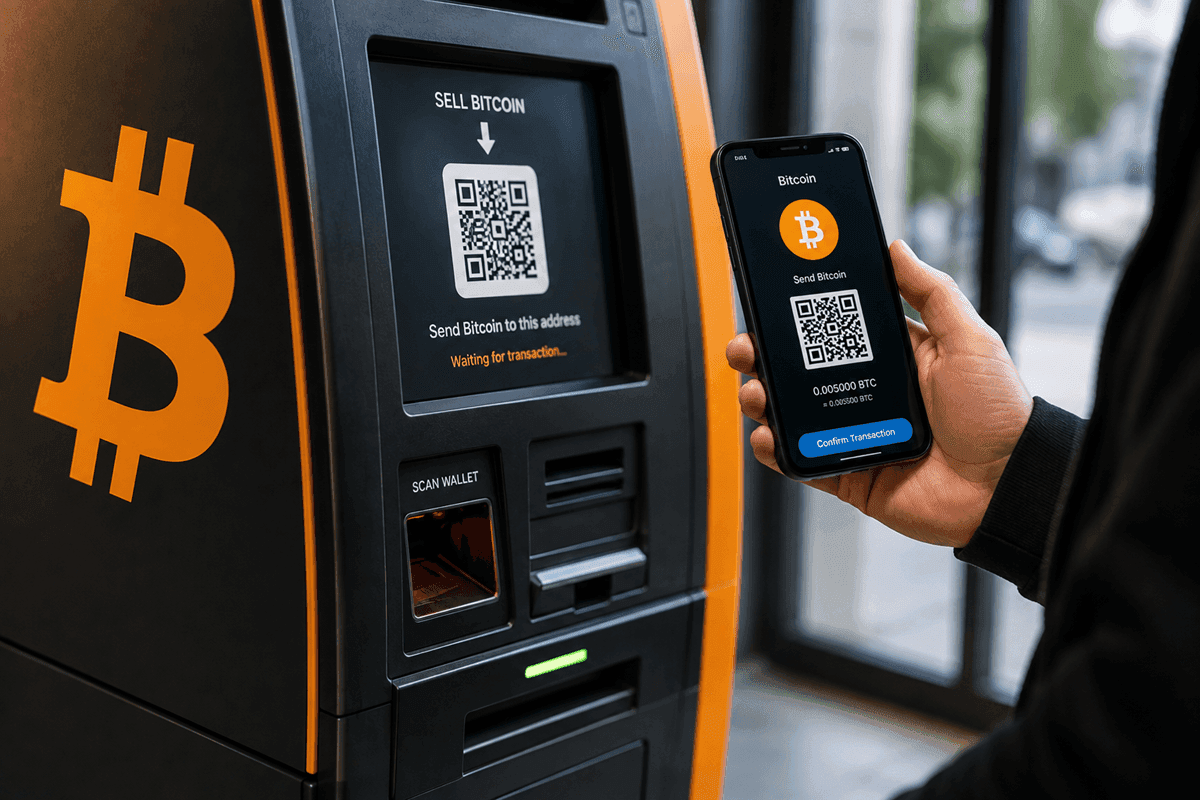
Selling Bitcoin at an ATM: Tax Rules in Austria
Selling bitcoin for cash at an ATM: when the 27.5 percent rate applies in Austria and which records you need to keep.

August 2, 2024 10:32 PM
Ethereum Price Crash: What Next Support Levels For ETH Price Below $3K?
Ethereum fees just hit their lowest since late 2023, and now Ethereum price is trading near $3K with a high potential to drop below it... What's next?
October 16, 2026 4:34 AM

25 cents to trade, 1.31 euros to withdraw: the Bitvavo fees on 100 euros of Bitcoin
The trading fee is the smallest of four cost items: on 100 euros the purchase costs 25 cents, while moving Bitcoin to your own wallet costs 1.31 euros. We recorded every item separately on 15 October 2026 and measured the spreads of the four largest euro pairs ourselves.
October 9, 2026 7:29 AM
Exodus Wallet: 71.5 percent of revenue comes from swaps, the spread vs the exchange fee
The Exodus Wallet is free to download, yet 71.5 percent of the provider's revenue in the second quarter of 2026 came from swaps inside the app. What the spread costs, how custody works and from what point a device of your own pays off.
October 7, 2026 7:18 AM

Certificate, Bitcoin ETN or the coin itself: what each route means for tax and custody
A Bitcoin certificate, an ETN and the coin itself all lead to the same price, but to three different tax treatments and three different risks. The comparison shows which route fits your portfolio and why December 31, 2026 becomes the cut-off date.
October 4, 2026 10:14 AM

Dogecoin price at $0.0929: why the 200-day line sits at $0.0878 and not at $0.093
Dogecoin trades at $0.0929 on Sunday morning. Market reports put the 200-day line at around $0.093; recalculated from 366 daily closes it sits at $0.0878. Two October dates that matter for investors in Germany run alongside it.
September 30, 2026 1:32 PM
100 Euros Into Bitcoin Without Fees: What Actually Arrives at Five Providers
Five providers serving German retail customers, €100 invested: after the disclosed fee, between €98.50 and €100 is left. Only one provider names the spread as well, and with it the whole price.
August 22, 2026 4:30 AM
Setting Crypto Order Types Correctly: Market, Limit and Stop-Loss Compared
A market order buys immediately, a limit order only at your price, and a stop-loss triggers only at a set level. This guide shows which order type fits which situation, and where spread, slippage and the fee model shift your entry price.

October 6, 2023 3:30 AM
Ethereum Transaction Costs Take a Steep Dive to $1.13, ETH Pumping soon?
Ethereum's average transaction fees plummet to a mere $1.13. What does this tell us about the network's activity, and could this signal a potential price rebound for the cryptocurrency?
August 28, 2026 9:12 AM
Top 3 Reasons Why Crypto Prices Are Up Right Now
Bitcoin is up 23% in August and heading for its best month since 2017. Three things explain almost all of it, and only one is about crypto.
July 27, 2024 2:34 PM

Why Is The Crypto Market Up TODAY?
With the Bitcoin 2024 Conference taking place now in Nashville, the crypto market is showing bullish signals, intriguing traders around the future of Bitcoin and Altcoins.
October 6, 2026 1:46 AM

Why Gram makes way for Litecoin in the Virtune altcoin ETP on Xetra: the reasons behind the rebalancing
Virtune has rebalanced the altcoin index of its Xetra-listed ETP: Gram is out, Litecoin is in, and all ten positions stand at 10.00 percent again. What the change means for your account, the trading hours and the tax question.
December 3, 2025 8:44 AM
Crypto Market Turns Green Overnight: What’s Happening?
Bitcoin rebounds sharply as markets turn green overnight. Liquidity sweeps, macro shifts, and a gold-to-BTC rotation fuel a powerful recovery.
January 4, 2026 7:04 AM
Crypto Prices Kept Rising at the Start of 2026, With Bitcoin Leading: What Happened Next
On 4 January 2026 Bitcoin held above $91,000 and altcoins followed. The momentum lasted until mid-January: then Bitcoin fell to about $58,600 by July.
October 5, 2026 1:40 AM

Crypto at comdirect: 29 certificates with no order fee in a savings plan, but not a single coin
comdirect puts crypto into your securities account as a certificate, not as a coin. Our count of October 4, 2026 shows 29 securities from five issuers on 12 cryptocurrencies. On a one-off purchase the minimum fee of 9.90 euros amounts to 9.90 percent on 100 euros invested; in a savings plan the 1.5 percent is waived until the end of 2027.
January 23, 2025 11:45 PM
TRUMP Crypto Executive Order to make America the Capital of AI and Crypto - Bitcoin Reserve Coming?
Following one of the most awaited Trump actions, the Trump crypto executive order, empowering AI, cryptos, and technology, what would be David Sacks role in this? Here is all you need to know...
More from CryptoTicker