
Setting Crypto Order Types Correctly: Market, Limit and Stop-Loss Compared
A market order buys immediately, a limit order only at your price, and a stop-loss triggers only at a set level. This guide shows which order type fits which situation, and where spread, slippage and the fee model shift your entry price.




Which topics should we dive deeper into?
Select what genuinely interests you. Your picks feed directly into our editorial planning.
Crypto news that's actually worth your time.
Weekly. 60 seconds. Carefully curated by our editors: no hype, no promo flood, no spam.
A market order buys immediately at the next best price available in the market. A limit order buys only at the price you set yourself, or better, and if that price never materializes, nothing happens at all. A stop-loss is not a third way of buying but a trigger: it sends an order into the market only once a price you have defined is touched.
These three tools decide, on every purchase and every sale, whether you end up with the price you saw on screen. Anyone who buys Bitcoin through an app and never opens any screen other than the big buy button pays extra in three places: on the trading spread, on the fee tier and on the execution itself. Together that adds up to a markup most investors never quantify, because it appears nowhere as a line item.
What an Order on a Crypto Exchange Actually Is
An order is a binding instruction to your trading venue to buy or sell a certain quantity of a coin. Every order contains three pieces of information: direction, quantity and the condition under which it may be executed. That third item is what separates the order types from one another.
There is no person on the other side searching the exchange on your behalf. What your order meets is a list. The order book collects all open buy orders on one side and all open sell orders on the other. Your order hits that list and is worked through as soon as a matching counterparty is found. At venues that operate without an order book and quote you a fixed price instead, this mechanism does not apply, and with it most of the choices discussed here disappear.
Market Order: Immediate Execution at the Next Best Price
A market order names only the quantity, not the price. It is worked against the opposite side of the order book, starting with the cheapest offer available, and continues until your quantity is filled.
The advantage is certainty of execution. If you have to sell because you need the money, a market order sells. The price is whatever is left over. In a calm market with deep order books, the difference from the displayed price is tiny. In a thin market, in a small trading pair or in the minutes after a news item, it can become noticeable.
When a Market Order Is the Right Choice
This order type fits when three things come together: the amount is small relative to the trading pair, the pair is one of the large ones, and timing matters more to you than the last decimal place. For a monthly savings plan amount in a Bitcoin-euro pair, that is generally the case.
Limit Order: Your Price or No Trade
A limit order names quantity and price. On a purchase it means: no more than this. On a sale: no less than this. If no counterparty is found on those terms, the order stays open in the order book until it is executed, expires or is cancelled by you.
That reverses the relationship. With a market order, execution is guaranteed and the price is open. With a limit order, the price is guaranteed and execution is open. A price that never touches your mark produces an order that is never executed, and that is not a fault in the system. It is precisely the commitment you made yourself.
Frequently underestimated is the partial fill: if only part of the desired quantity is available at your limit, that part is executed and the rest remains standing. At venues with a minimum order size, the remainder left behind can fall below it and then sit there indefinitely. A glance at your open orders after each trading day costs ten seconds and stops you puzzling over half a position weeks later.
Stop-Loss and Stop-Limit: When an Order Triggers Automatically
A stop-loss is a sleeping order with a wake-up mark. Only when the price touches the stop mark you have set does the order behind it become active and enter the order book. What happens then depends on the variant.
With the classic stop-market, a market order is sent once the trigger fires. You will therefore be executed with high probability, but at a price nobody guarantees. With the stop-limit, a limit order is sent once the trigger fires. You know the worst price you will accept, but you risk not getting out at all if the price runs straight through your limit.
This distinction is the heart of the matter. A stop-limit whose limit sits very close beneath the stop mark looks like clean protection in a calm market and fails in exactly the moment it was set for. Anyone using this variant should choose the distance between stop mark and limit generously and deliberately.
Take-Profit and Time in Force: the Two Settings Alongside
A take-profit works on the same mechanism as the stop-loss, only in the other direction: it triggers when a price target you have set to the upside is reached. Together the two form a bracket around an existing position.
The second setting, which many people click past, is the time in force. It determines how long an unexecuted order stays in the book. Three variants are common: valid indefinitely until cancelled, valid only for the current trading day, or execute immediately and discard whatever cannot be filled. Anyone who places a limit order as a day order and looks for it the next morning will not find it.
Order Book and Market Depth: Why Size Decides Your Price
The market depth describes how much volume sits on each individual price level of the order book. That is exactly what explains why two identical buy instructions for different amounts can end up at different average prices.
A worked example with freely chosen figures makes it tangible. On the first price level sit coins worth 2,000 euros, on the second level, 0.3 percent more expensive, another 3,000 euros, and on the third level, 0.9 percent more expensive, the rest. An order for 1,500 euros is served entirely on the first level and gets exactly the displayed price. An order for 8,000 euros eats through all three levels and lands at an average noticeably above the first level. The displayed price was the same for both.
At venues with futures contracts and perpetual positions this effect becomes more pronounced still, because large amounts there meet comparatively narrow books. Anyone interested will find the differences broken down in the overview of perp DEX venues.
 Crypto Exchanges Compared
Spread: the Gap Between Bid and Ask Is a Cost Factor
The spread is the distance between the highest bid and the lowest ask in the order book. It is not a fee in the accounting sense and is real expense nonetheless, because it is the amount you lose immediately if you buy and sell again in the same moment.
How large it turns out depends on the trading pair. Large pairs against the euro or against a widely traded stablecoin have narrow spreads. Small pairs, exotic quote currencies and trading hours with little activity have wide ones. That is precisely why it costs more than it looks when an exchange offers you no euro pair for a coin and you have to take the detour via a stablecoin. We broke that side effect down in detail in our article on missing euro trading pairs and the detour via USDT.
The spread also explains why a limit order to buy should rarely sit exactly on the displayed price. Anyone setting their buy limit precisely at the last traded price lands on the wrong side of the gap and may wait a very long time.

Slippage: Why Market Orders Sometimes Fill Worse Than Displayed
Slippage is the deviation between the price you saw when submitting the order and the price at which it was actually executed. It can arise from two sources: from market depth, when your quantity clears several price levels, and from the time that passes between your click and the processing.
Only order types without a price limit are affected. A limit order cannot by definition suffer negative slippage, because it simply is not executed once the price leaves your boundary. Many venues therefore offer a slippage tolerance on market orders: a percentage figure beyond which execution is aborted. A low value protects against outliers and causes orders to fail in volatile phases. A high value almost always leads to execution, occasionally at a price you would not have wanted.
In decentralized trading environments a further point applies. There an open order is publicly visible for a brief moment before it is processed. A generously set tolerance can then be exploited deliberately, because it defines the room within which intervention pays off for the other side.
Maker and Taker: Why Your Order Type Changes Your Fee Tier
Most venues with an order book charge two different fee rates. A taker is anyone who removes an existing order from the book, that is, gets executed immediately. A maker is anyone who places a new order into the book, which waits there for the time being and thereby provides tradable quantity. The maker rate is usually lower; at some providers it stands at zero.
From this follows a rule that moves a surprising amount of money and is nonetheless barely known: a market order is always a taker order. A limit order is a maker order for as long as it is not executed immediately. Anyone who trades regularly and uses market orders exclusively pays the higher rate on every single trade.
Some venues offer a dedicated setting for this that explicitly discards a limit order if it would be immediately executable. That is how maker status can be enforced. What matters here is knowing the difference from the withdrawal and network fees, which arise when moving the coins out and have nothing to do with the trade itself.
Best Execution Under MiCA: What Your Provider Has Owed Since Late 2024
Since December 30, 2024, the rules of the Markets in Crypto-Assets Regulation, MiCA for short, have applied in the European Union to crypto-asset service providers. Supervision in Germany rests with BaFin, which has published its own guidance note on crypto-asset services; the European securities regulator ESMA collects the legal framework on its MiCA overview page.
For order types, one point from it is immediately practical. Article 78 of the regulation obliges providers executing orders for clients to take all necessary steps to obtain the best possible result: in terms of price, costs and speed of execution. That duty is known in the jargon as best execution. Providers must disclose their order execution policy and explain it comprehensibly.
The catch stands in the same article: if you give an explicit instruction, the duty applies only in limited form. And a limit order with a price set by you is exactly such an instruction. In practice that means you carry responsibility for that price yourself when you specify one, while the provider is more strongly bound on an open order. Anyone wanting to know how their venue routes orders will find it in the published execution policy, usually under this or a similar heading in the provider's legal texts.
 Hardware Wallets Compared
Which Order Type Suits Which Situation?
Four situations cover the everyday needs of most retail investors.
Regular Purchases of Small Amounts
Here the effort of specifying a price is rarely justified. A market order in a large euro pair costs the spread and the taker fee, and that is that. Anyone wanting to capture the maker rate instead places a limit order just below the current price and accepts that on some days it will not be executed.
A Larger One-Off Sum
As soon as the amount becomes noticeable relative to the trading pair, there is barely a way around a limit order. It also helps to break the sum into several partial instructions rather than clearing the book several levels deep with a single one.
Hedging an Existing Position
A stop-market makes sure you get out and leaves the price open. A stop-limit secures the price and leaves open whether you get out. Which of the two uncertainties you prefer depends on whether the position is a building block of your assets or a short-term matter.
A Small, Thinly Traded Pair
Here the market order is the most expensive tool in the box. A limit order, small partial amounts and patience are the only way to get anywhere near the displayed price.
Five Mistakes That Regularly Cost Money When Placing Crypto Orders
The following points come up again and again in reader questions.
- Placing the stop-loss on a round mark. Round numbers are popular places for price moves. A stop a few percent below or above is collected less often.
- Stop-limit with too tight a gap. If the limit sits immediately against the stop mark, the protection fails precisely in fast moves.
- Ignoring the time in force. A day order you believe to be open-ended has vanished by the next morning, and the protection you are relying on no longer exists.
- Raising the slippage tolerance on suspicion. Simply doubling the value after a failed execution solves the problem and at the same time opens the door to a considerably worse price.
- Not following up partial fills. A remainder below the minimum order size stays put and may block funds.
None of these points has anything to do with a market view. All of them arise at the order screen, in the seconds before submission.
Setting Crypto Order Types Correctly: What to Take Away
- Check which order types your venue offers at all. Providers without an order book quote you a fixed price and thereby take limit, stop and the maker discount out of your hands. Which provider runs which model is shown by the crypto exchange comparison.
- Compare maker and taker rates before settling into an order type out of habit. With regular trading, the difference over a year is larger than most fee promotions. The cost models sit side by side in the broker comparison.
- Automate only once you have mastered the order types by hand. A trading program places the same order types, only faster and without asking. What to watch out for is in the overview of crypto trading bots.
(As of August 20, 2026. This article is not investment advice. Prices and fee structures change; check the terms with the provider before you buy.)
Transparency note: This article was produced with the assistance of artificial intelligence and reviewed by our editorial team before publication. All figures and claims were checked against the primary sources linked in the text. The feature image was generated with AI.
Related articles
- Bitcoin Order Before the Fed Decision: What Slippage Really Costs You
- Crypto Trading for Beginners: Order Types, Charts and Risk Explained
- Decentralised Crypto Exchanges (DEX): Network Fee Against Pool Fee, and Why Custody Decides
- Coinbase Fees: What a Purchase Really Costs, and Where the Spread Is Hidden
- Bitcoin ETP Trading Hours Before the Fed Decision: When Your Venue Is Really Open
Which topics should we dive deeper into?
Select what genuinely interests you. Your picks feed directly into our editorial planning.
Crypto news that's actually worth your time.
Weekly. 60 seconds. Carefully curated by our editors: no hype, no promo flood, no spam.

October 16, 2026 4:34 AM

25 cents to trade, 1.31 euros to withdraw: the Bitvavo fees on 100 euros of Bitcoin
The trading fee is the smallest of four cost items: on 100 euros the purchase costs 25 cents, while moving Bitcoin to your own wallet costs 1.31 euros. We recorded every item separately on 15 October 2026 and measured the spreads of the four largest euro pairs ourselves.

April 8, 2026 11:46 PM

BXB Market Review 2026: Platform, Pricing, and What Traders Should Know
Considering using BXB Market? Here's a detailed look at their platform, account tiers, spread discounts, and trading conditions as of 2026.
October 12, 2026 4:16 AM

Binance fees: 0.1 percent to trade, and one drawback compared with MiCA-licensed exchanges
Binance charges 0.1 percent in spot trading and 0.02 and 0.05 percent in derivatives. Since July 1, 2026 the exchange has lacked the MiCA authorisation for the EU, which leaves the fee table answering only half the question German investors are asking.
October 19, 2026 7:16 PM

Only 1.59 percent of Shiba Inu trading runs in euros: SHIB vs Bitcoin in the order book
A proprietary analysis of the hundred largest SHIB trading pairs on October 19, 2026 shows the euro carrying 1.59 percent of turnover and the Turkish lira 6.54 percent. Between the cheapest and the most expensive euro pair, the bid-ask spread differs 30-fold on the same day.
September 30, 2026 1:32 PM
100 Euros Into Bitcoin Without Fees: What Actually Arrives at Five Providers
Five providers serving German retail customers, €100 invested: after the disclosed fee, between €98.50 and €100 is left. Only one provider names the spread as well, and with it the whole price.

April 7, 2020 2:31 PM
With Paymium exchange you will be paid for every trade
Starting this week, Paymium, the world’s first bitcoin exchange launched in 2010, introduces negative trading fees. Market makers, i.e., traders who place limit orders, receive a refund of 0.1% on their order size for every transaction. In other words, they […]
September 3, 2026 10:32 PM

Crypto Fees at Neobrokers: Why the PFOF Ban Raises Your Stock Costs but Leaves Your Coin Purchase Untouched
Since September 2, N26 charges 0.90 euros per stock order again, while the same provider takes 1.5 to 3.5 percent for a coin purchase. We retrieved and analysed the crypto costs of ten providers ourselves.
October 1, 2026 7:15 PM
Bitpanda fees from 0.99 to 2.49 percent: what is behind it
Bitpanda assigns every coin to one of four price tiers, from 0.99 percent for Bitcoin to 2.49 percent for small caps. What 100 euros costs in and out, why the spread is missing from the mandatory document, and where 0.25 percent is enough under the same roof.
September 6, 2026 10:27 PM

Crypto Through Sparkasse and Volksbank: 1.5 Percent Commission Plus a Spread, and No Product Page Names the Price
Crypto trading through your own bank costs twice over: a commission and a spread. A survey of 41 institutions carried out for this article shows that not one of the reachable product pages names a figure.

May 6, 2025 4:00 AM

Crypto News Today: Bitcoin, Ethereum, and Top Altcoins in May 2025
The crypto market enters May 2025 with mixed signals: Bitcoin stabilizes, Ethereum gas fees drop, XRP nears a rebound, and Cardano eyes recovery. Here’s what you need to know.

October 12, 2026 1:17 AM

$25.09 billion market capitalisation, $106,017 of daily volume: how to proceed before you buy
Four of the 25 largest cryptocurrencies turn over less than 0.32 percent of their market capitalisation in a day, one of them without a single listed trading venue. What the ranking leaves out, and how to spot a thin market before you buy.
October 9, 2026 1:18 PM

Bitcoin Tax: One Year Past the $126,080 Peak, Losses No Longer Count
Bitcoin trades at $82,558 on Friday morning, 34.5 percent below an all-time high that is now a good year old. Anyone who bought back then loses more than the prospect of a quick recovery when the one-year period expires: the tax value of the loss goes with it.
October 7, 2026 1:36 PM

100 euros of crypto at Scalable Capital costs 1.98 euros: the spread mark-up does most of it
A crypto purchase of 100 euros costs 1.98 euros at Scalable Capital on the FREE tariff, almost two percent of the stake. This analysis sets the two tariffs against each other, shows the spread mark-up as the actual crypto fee and names the threshold from which the PRIME+ subscription pays off at all.
March 30, 2026 6:35 PM
Tech Giants Lose $5 Trillion: Why Crypto Is Holding Steady (For Now)
The Magnificent 7 tech giants have wiped out $5 trillion in market value. While crypto prices remain stable today, historical trends suggest a potential shift.
March 7, 2025 8:24 AM
BREAKING: President Trump Crypto Reserve is Officially Signed, BUT Why are Cryptos Crashing?
President Trump has signed an executive order to establish a Strategic Bitcoin Reserve, marking the biggest milestone in crypto history. But why is the crypto crash still happening?
October 19, 2026 1:25 AM

Impermanent loss in a liquidity pool: 5.72 percent missing when the price doubles, what investors need to know
Put coins into a liquidity pool and you earn trading fees while paying a gap against simply holding. At a doubled price that gap is 5.72 percent, turning €150 into €141.42: the formula, a worked calculation and what a fee yield recovers from it.
September 29, 2026 7:30 PM

Shiba Inu Holds 5.50 Millionths of a Dollar: Stronger Than Dogecoin Over 30 Days
Shiba Inu stands at 5.742 millionths of a dollar on Tuesday evening. What decides matters, though, is the depth of the euro order book: it carried only 28 percent of the dollar turnover, and at the best ask price it held around 10 euros.
August 18, 2026 4:45 PM

Crypto Savings Plans Compared: What Bison, justTRADE and Kraken State on Fees, Minimum Instalment and Interval
Crypto savings plans advertise free execution, yet the price almost always sits in the spread. On August 14, 2026 we retrieved nine provider pages and evaluated which terms actually stand there.
January 10, 2026 1:25 PM

Global Liquidity Surge in January 2026: Were Crypto Prices Ready for a Massive Breakout?
In January 2026 the Fed, China's central bank, the US Treasury and Trump's mortgage bond order all added liquidity, and a crypto breakout looked imminent. It did not come.
August 2, 2024 10:32 PM
Ethereum Price Crash: What Next Support Levels For ETH Price Below $3K?
Ethereum fees just hit their lowest since late 2023, and now Ethereum price is trading near $3K with a high potential to drop below it... What's next?
November 30, 2022 12:28 PM
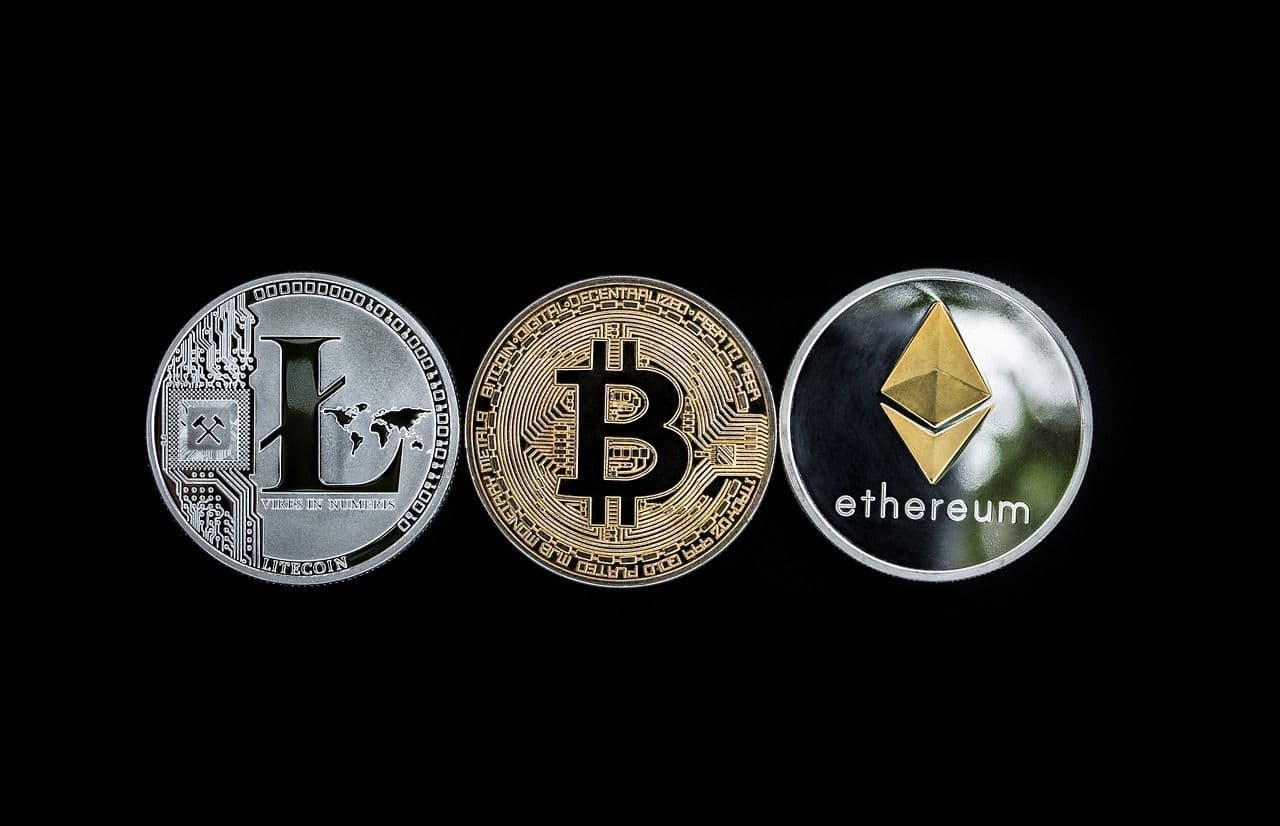
Understanding Crypto Types – Which Crypto is the BEST?
In this article, we will be looking into the different crypto types in the cryptocurrency market and some examples of these tokens.

March 15, 2024 1:24 PM
Bitcoin Slumps to $67K, Crypto Market Loses $250 Billion as Asia Trades
Discover why Bitcoin fell to $67K and caused a $250B loss in the crypto market, revealing broader economic impacts and investor concerns.
October 22, 2026 1:26 AM

Two €1,000 limits for crypto ETNs, and only one works on its own
Crypto ETNs in a securities account generate investment income, and there the bank withholds tax from the first euro without an exemption order. Directly held coins run through a different section of the law, where the same €1,000 works by entirely different rules.
October 11, 2026 10:39 PM
Buying Dogecoin: instant buy at one percent or the order book at 0.8?
Seven cents per €100 separated the best asks of three authorised exchanges on Sunday evening. Between instant buy and order book at the same provider lie 75 cents.
October 9, 2026 7:29 AM

Exodus Wallet: 71.5 percent of revenue comes from swaps, the spread vs the exchange fee
The Exodus Wallet is free to download, yet 71.5 percent of the provider's revenue in the second quarter of 2026 came from swaps inside the app. What the spread costs, how custody works and from what point a device of your own pays off.
October 7, 2026 10:24 AM

4.79 percent down with a turnover ratio of 2.53 percent: the level that decides the Shiba Inu price prediction
Shiba Inu stands at $0.00000557 and loses 4.79 percent in 24 hours, more than any other of the six large coins. Dogecoin gives up 3.66 percent while being traded three times as intensively relative to its size, which makes an exit from SHIB the dearer one.
October 6, 2026 4:16 AM

13 exchanges list MemeCore, not one euro pair: hold or sell M?
Not one of the 14 markets that list MemeCore trades against the euro: every exit runs through Tether or USDC. What the thin order book, the monthly tranche of 56.1 million M and the holding period mean for your M position.
More from CryptoTicker