
Suiet Wallet is shutting down: you have until November 14 to move your SUI
The Sui wallet Suiet switches off its servers on November 14, 2026, but your coins stay on the blockchain. How to back up your recovery phrase and keys and move to a new wallet in time.


Which topics should we dive deeper into?
Select what genuinely interests you. Your picks feed directly into our editorial planning.
Crypto news that's actually worth your time.
Weekly. 60 seconds. Carefully curated by our editors: no hype, no promo flood, no spam.
Suiet Wallet is being discontinued. The team behind the browser extension for the Sui blockchain will run its servers only until Saturday, November 14, 2026. Your coins do not disappear as a result, because they sit on the blockchain and not with Suiet. What you need before that date is a backed-up recovery phrase or a private key for every account, and a new Sui wallet into which you import those accounts. If you miss the deadline you will usually still be able to reach your SUI later, but you will have to do it under time pressure and with an extension that may no longer show any balances.
This guide shows what concretely stops working after the deadline, how to set up a clean backup, which wallets are suitable replacements and what to watch for with staked SUI and DeFi positions. To choose new software, our software wallet comparison sets features and supported blockchains side by side.
Suiet Wallet shutting down: what stops working from November 14
In its notice "Sunsetting Suiet" on its own website, the team writes that it has made the difficult decision to end development and maintenance of the wallet. The API services, meaning the servers the extension uses to query balances and pass transactions on to the network, will run up to and including November 14, 2026. After that, according to Suiet, the wallet may no longer display balances reliably, cannot send transactions and cannot connect to applications.
The notice contains two further points. Suiet has no mobile app, so only users of the browser extension are affected. And that extension is also due to disappear from the Chrome Web Store "soon". Suiet gives no fixed date for this. Extensions that are already installed can stay on your computer, but there is no longer any guarantee that they will work after the deadline.
Why a wallet without servers stops working properly
A browser wallet is above all a user interface. The extension manages your keys locally but needs a connection to the network for everything else: reading the balance, estimating fees, submitting a signed transaction. At Suiet, that connection ran through its own services. If they go, what remains is a shell that still knows your keys but no longer talks to the Sui blockchain.
Are your SUI at risk? What self-custody means when a provider closes
Suiet is a self-custody wallet. The term means that you alone hold the private key that controls your coins; no company holds it for you. That is exactly what protects you now. Your SUI, tokens and NFTs are objects on the Sui blockchain that are assigned to an address. Suiet itself stresses that shutting down the wallet moves or deletes none of them.
Things would be different with an exchange that holds your coins and ceases operations. There you depend on the provider's wind-down plan. With Suiet you depend only on yourself, and on a single piece of information: the recovery phrase or the private key. If you have neither and lose access to the extension, nobody can help you, not Suiet, not the Sui Foundation and not another wallet.
How the underlying blockchain is built and why Sui works with objects rather than account balances is explained in our article What is Sui?. For the move, one sentence from it is enough: whoever has the key has the coins, regardless of which software displays them.

Back up your recovery phrase and private key: the first step before moving
The recovery phrase, often called a seed phrase, is a sequence of usually twelve words from which all accounts of a wallet can be derived. The private key, by contrast, applies to a single account only. In its instructions, Suiet asks users to back up the phrase or key for every account and points to a trap: accounts you imported later and separately are not tied to your main phrase. Each of them needs its own backup.
Checklist for your Suiet accounts
- Open the extension and list all the accounts set up there, including the first and last characters of their addresses.
- Export the recovery phrase for the main wallet and copy it out by hand, in the correct order.
- Export the private key for each separately imported account and note which address it belongs to.
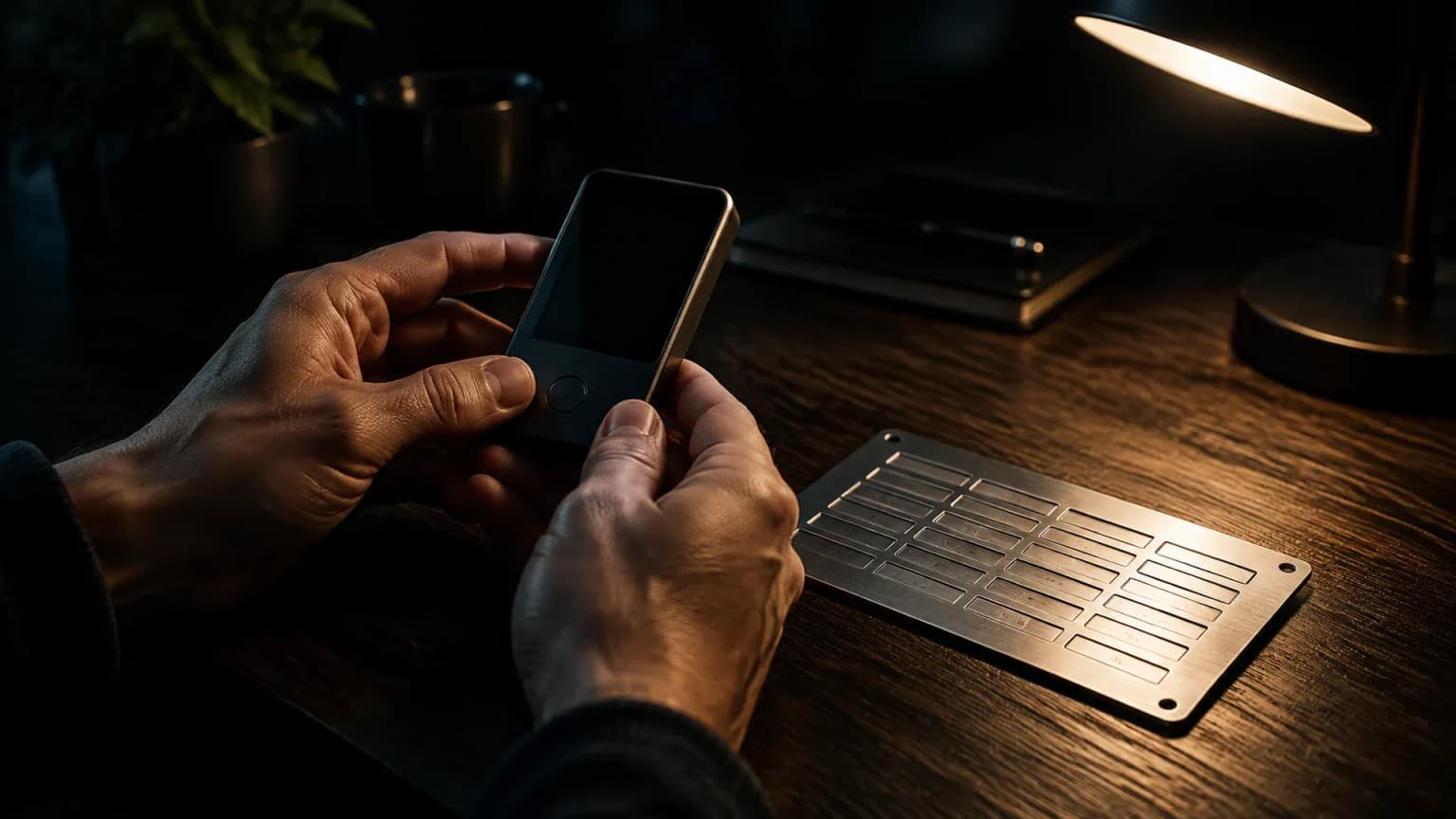
- Keep the notes offline: paper in an envelope, or better a stamped metal plate, but never as a photo, in a cloud note or in a chat.
- Uninstall Suiet only once all accounts are visible in the new wallet.
Suiet phrases the last point explicitly as a warning: only once you have confirmed access in the new wallet should you remove the extension or delete its data. Anyone who tidies up before that may delete the only copy of a key.
 Find a new Sui wallet: compare software wallets
Sui wallet alternatives: Slush, Ledger and multi-chain wallets
Several wallets for Sui accept a recovery phrase or a private key. Which one suits you depends on whether you use only Sui or several blockchains, and whether you prefer to work on your phone or in the browser. The choice has recently become smaller, so it is worth looking at how closely a provider is tied to Sui.
Slush: the wallet from the Sui developers' camp
Slush comes from Mysten Labs, the company that developed Sui, and is listed as a Sui wallet in the official Sui documentation. It is available as a browser extension, a web app and a mobile app for iOS and Android. According to its help page, Slush accepts both a recovery phrase and a private key via "Import Existing Account". Check the publisher when installing, because fake extensions with similar names keep appearing in the stores.
Hardware wallet with a Sui app
A hardware wallet stores the private key on its own chip, and transactions are confirmed on the device. Common hardware wallets such as Ledger have a Sui app for this, and the Sui documentation describes how to connect such a device to Slush. For larger holdings this is the most solid solution. Bear in mind, though: if you import your old Suiet phrase into a hardware wallet, that phrase has already been on an internet-connected computer. It is safer to generate a new phrase on the device and move the coins by transfer.
Multi-chain wallets: OKX Wallet, Bitget Wallet and others
Several wallets from large providers support Sui alongside Ethereum, Solana and Bitcoin, among them OKX Wallet and Bitget Wallet, both of which publish their own guides to importing Sui accounts. The advantage is one interface for everything. The drawback became apparent at Phantom in the summer. The wallet dropped its support for Sui again, as we described in our article Phantom Wallet drops Sui and Monad. A wallet for many blockchains decides on the basis of costs and user numbers which blockchain it keeps.
Importing your seed phrase: moving a Suiet account into a new Sui wallet
Suiet names two routes. The first is importing: you enter your recovery phrase or private key in the new wallet through its official import dialog. The new software derives the same address from it, and your coins appear there without anything moving on the blockchain. There is no network fee, because no transaction takes place.
The second route is a fresh start: you create a new wallet with its own phrase and transfer your transferable assets from the old address to the new one while Suiet can still send. Normal network fees apply, and some positions cannot simply be sent, as explained below.
The address is the test
Whichever route you choose, after the import compare the address in the new wallet character by character with the address in Suiet. If it matches, you will see the same coins. If it differs, the new wallet has derived a different account from your phrase, for example because it uses a different key scheme. In that case, importing the private key of the individual account usually helps. For a transfer to a new address the old rule applies: first a small test amount, then the rest.
Staked SUI and DeFi positions: what comes along when you switch wallets
Suiet reminds users to check staking positions and assets held in applications as well. When staking, you delegate SUI to a validator, one of the machines that confirm transactions on the network, and receive rewards in return. The staked SUI still belongs to your address. If you import the same address into the new wallet, the position is there, provided the wallet displays staking. Slush, for example, offers staking directly in the app.
It is different with a fresh start on a new address. Staked SUI cannot simply be transferred; you first have to end the delegation and then send the freed SUI. That takes time and a working wallet, so it has to happen before November 14. The same applies to deposits in lending protocols, liquidity pools or open positions on decentralised exchanges: these assets are also tied to your address, but you can only withdraw them with a wallet that connects to the application in question. If you want to keep earning rewards on SUI after the move, you will find providers and terms in our staking comparison.
 Trade or sell SUI: compare crypto exchanges
Phishing after the shutdown: spotting fake Suiet migration sites
Every wallet shutdown attracts scammers. The pattern is well known: a website or a direct message offering an "official migration" and asking for your recovery phrase in return. Suiet explicitly warns against this in its notice. Never give your phrase or key to anyone, not even someone who claims to speak for Suiet. Never type it into a website and never send it to a support team.
The only place your phrase belongs is the import dialog of a wallet that you installed yourself from a reliable source. A tool that handles the move "automatically" does not and cannot exist for a self-custody wallet, because someone else would have to know your key for it to work. Mysten Labs also writes in its guidance on Slush that any request for a seed phrase is an attempt at theft.
Warning signs at a glance
- Time pressure in messages on X, Telegram or Discord, often using the real November 14 deadline as bait.
- Links to domains that combine "suiet" with additions such as "migrate" or "claim".
- Supposed airdrops or compensation for Suiet users that require a wallet connection.
Whether moving coins between your own wallets has tax consequences depends on the rules of the country you live in. If you move to a new address, record the old address, the new address, the date, the amount and the transaction ID from the block explorer, so that you can show the sequence of your transfers in full later.
Sui ecosystem under pressure: Phantom, Suiball and falling TVL
Suiet is not the first provider to pull back from Sui. As Cointelegraph reports, the hardware wallet project Suiball announced its end on November 10, Phantom has already ended its support for Sui, and the DeFi project Full Sail shut down after a security incident with losses of around $91,000.
The figures behind this: the value locked in DeFi applications on Sui, the total value locked (TVL), stood at around $413 million on Wednesday according to DefiLlama, more than 22 percent less than a month earlier. According to Token Terminal data, an average of about 128,000 addresses used Sui per day in October, compared with around 601,000 in November 2025. Over the same period the number of transactions rose from 101 million to 324 million. More transactions therefore do not mean more users. On top of that come four network outages in 2026 with a combined downtime of around 22 hours, as the Sui Foundation itself has reported.
Kadan Stadelmann, formerly chief technology officer of the Komodo Platform, told Cointelegraph he sees economic reasons rather than technical ones: high development costs and few users, without any flaw having been found in the protocol's core design. For you as a holder, this means two things. The blockchain keeps running and your SUI remain accessible. But the number of tools you can manage them with is shrinking, which argues for a wallet that is closely tied to the project or that keeps your keys on a dedicated device independent of any app. If you want to sell SUI instead, you need an exchange that accepts Sui deposits; which platforms list the coin and what they charge is shown in our crypto exchange comparison.
Suiet migration: back up by Saturday, then switch without time pressure
- Create a backup: Export the phrase or key for every Suiet account, note it offline and leave the extension installed for now. An overview of suitable replacement wallets is in our software wallet comparison.
- Secure larger holdings: Above an amount whose loss would hurt you, the key belongs on a dedicated device. Models with Sui support are compared in our hardware wallet comparison.
- Reorganise staking: After the import, check whether your delegation is visible in the new wallet, and compare the rewards with the offers in our staking comparison.
(As of November 12, 2026. This article is not investment advice. Prices and fee structures change; check the terms with the provider before you buy.)
Frequently asked questions about Suiet Wallet
Partner links: some links on this page are partner links. If you become a customer through one of them, we may earn a commission at no extra cost to you. Selection, ratings and ranking are decided independently by our editorial team. Ethics and Independence · Ownership and Funding
Transparency note: This article was produced with the assistance of artificial intelligence and reviewed by our editorial team before publication. All figures and claims were checked against the primary sources linked in the text. The feature image was generated with AI.
Related articles
- iOS vulnerability worse_query: are crypto wallets on the iPhone at risk?
- Coinbase Wallet setup: since September the Base App is called Coinbase Wallet again
- What Is Sui? The Layer-1 Blockchain With an Object Model and Ten Billion SUI
- Phantom wallet setup: twelve words decide the fate of your Solana coins
- Keplr Wallet halts Google and Apple login after Web3Auth flaw drains accounts
Which topics should we dive deeper into?
Select what genuinely interests you. Your picks feed directly into our editorial planning.
Crypto news that's actually worth your time.
Weekly. 60 seconds. Carefully curated by our editors: no hype, no promo flood, no spam.

November 7, 2026 9:15 PM

Dogecoin news: Why Mishaboar warns against social login wallets
Analysis: Dogecoin contributor Mishaboar warns against wallets that can be created with a Google or Apple account. The trigger was unauthorised transactions at Keplr and the suspension of the service provider Web3Auth.
November 6, 2026 3:28 AM
Trust Wallet Phishing: Fake .cam Site Also Targets Phantom and OKX Wallet
The fake site trastwallet[.]cam imitates Trust Wallet and, once a wallet is connected, prepares transfers to fixed addresses. How to recognise the fake and what helps after an accidental signature.
November 4, 2026 1:22 AM
Restoring a Crypto Wallet: Your Seed Phrase Gets the Coins Back
Phone gone or hardware wallet broken? Twelve or 24 words get you back to your coins. Here is how the recovery works, and where it most often fails.
November 3, 2026 1:45 AM

Foundation Passport: 23,000 phishing emails came from the wallet maker's own systems
Hardware wallet maker Foundation has admitted that attackers got into its backend infrastructure through a self-hosted application and sent more than 23,000 phishing emails from the company's genuine systems. According to the company, the Passport devices and private keys are untouched, but around 5,600 postal addresses are not.
November 2, 2026 9:43 PM

How to store crypto safely: protect yourself from hacks like the one at Binance
After the $6.3 billion hack at Binance: how to store your cryptocurrencies safely. Hardware wallets compared, wallet scanners such as MetaMask Security Alerts, the key settings on your exchange account and a seven-step checklist.
November 2, 2026 9:25 AM
Trezor Safe 5 implant reported at CryptoBilis: who needs a new wallet now
Trezor is warning everyone who has ordered from former reseller CryptoBilis since March 2026: an extra board with a cellular module in a Safe 5 is said to read the recovery phrase. Who is affected, why weighing the device does not help, and how to move to a new wallet.
October 26, 2026 12:15 AM
Coldcard class action over $140 million: what it means for owners
A proposed class action against Coldcard maker Coinkite is before a court in Ontario: a firmware flaw allegedly made recovery phrases predictable, and the claim puts the Bitcoin drained as a result at more than $140 million. What owners of an affected device should check and document now.
October 25, 2026 12:35 PM
Private key and public key: 256 bits decide who owns your coins
A private key is a secret number with 78 digits, and the public key can be calculated from it, while the way back cannot. Signature, seed and address all hang on it, and at an exchange or in your own wallet this single value decides who owns the coins.
October 23, 2026 10:21 PM

Ngrave phishing: $2.56 million left 70 wallets after a hijacked push provider
Attackers hijacked the push provider of Belgian hardware wallet maker Ngrave and sent fake security alerts to users of the LIQUID app on October 17. Anyone who entered their recovery words lost their balance: between $2.56 million and $2.65 million flowed out, while the devices themselves remained untouched according to the company.
October 17, 2026 10:44 PM
Creating a Bitcoin wallet: the first ten minutes decide who has access
A Bitcoin wallet is set up in ten minutes, and that is precisely the danger. Which four steps every setup runs through, why the first transfer should be a test amount, and which five mistakes cost the most.
October 17, 2026 7:31 PM

OpenAI agent used known seed phrases to reach 362 wallets: old test wallets are the weak point
An internal OpenAI model worked through publicly known recovery phrases and paid fees out of a wallet belonging to someone else. The damage was nil; the route of attack concerns anyone who has ever created a test phrase.
October 13, 2026 1:16 AM

Ledger Confirms Implant in a Hardware Wallet as Reports Reach Europe: What Is Behind It
Ledger confirms an unauthorised additional circuit board in a tampered device and traces the confirmed cases to a reseller in South-East Asia. One report from European retail is still open, which makes the purchase route of your own device the criterion.
October 8, 2026 1:37 AM

MyNearWallet Closes on October 31: What It Means for Your NEAR Coins
MyNearWallet shuts down on October 31, 2026, and its feature set starts shrinking in October. Your NEAR stay onchain, but browser access falls away: what to know about migration, the staking unbonding period, phishing and the holding period.
October 5, 2026 1:36 PM

Paper Wallet with a Single Key: The Printed Storage Method Compared with the Seed Phrase
A paper wallet carries a single private key on paper, and that is exactly where its weaknesses lie: printers, change, misread characters. What the storage method achieves, where it fails and how to wind up an old sheet safely.
October 2, 2026 10:36 AM
Hot Wallet or Cold Wallet: the Private Key Decides How Safe Your Coins Are
Hot wallet or cold wallet: the difference rests solely on whether the private key is online. What separates the two forms, where the limits of hardware lie and why moving to your own device triggers no tax.
September 30, 2026 7:16 AM
Tangem Wallet: The Card Without a Seed Phrase vs the Classic Hardware Wallet
The Tangem Wallet secures crypto with two or three identical cards instead of 24 words. What the sets cost, which security findings exist and why we no longer recommend Tangem.
September 28, 2026 10:26 AM
Phantom Wallet and Solscan: What a Solana Transfer Really Costs and Where It Fails
A transfer on Solana costs 0.000005 SOL, a new token account ties up 0.00148844 SOL once — both values measured on-chain by us today. This practical guide shows how to set up Phantom, how to get there from the exchange, how to read Solscan and what applies for tax in Germany.
September 23, 2026 4:12 AM
How to Set Up a Crypto Wallet: Securing Your Coins in Seven Steps
Your own crypto wallet is set up in twenty minutes, yet a single step decides everything that follows. This guide takes you through wallet type, recovery words and the test amount, and sets out what BaFin and the tax office expect.
September 20, 2026 4:15 PM

Crypto Phishing After a Data Breach: The Warning Signs in a Fake Exchange Email
After every major data breach, the number of phishing emails sent in the name of crypto exchanges and wallet manufacturers rises. This article shows you how to recognise such a message, which data a reputable provider never requests by email, and what to do in the first hour after a click.
September 17, 2026 4:14 PM
D'CENT App Wallet: How to Tell If Your Recovery Phrase Has to Move Now
Manufacturer IoTrust reports suspicious asset transfers in the D'CENT app wallet and asks users to move their holdings. One question decides the matter: has your recovery phrase ever been entered into the app?
September 16, 2026 4:12 AM
Wallet Drops a Network: How to Rescue Your Coins Before the Deadline
Phantom is ending Sui support on September 24, 2026, and Trust Wallet has already removed 25 networks: five shutdowns of this kind in four weeks alone. What really happens to your balance, which two routes you have before the deadline and where the move most often fails.

September 10, 2026 9:13 AM

Trezor Hack Scare: That STM32 Entropy Email Is a Phishing Attack
Trezor users received a fake STM32 entropy warning sent from a real Trezor address. Here is what happened and what to do if you clicked.
September 4, 2026 10:17 AM

Cypher Shutdown on September 6: What Users Should Know Now the Withdrawal Deadline Has Passed
Recap as of September 27, 2026: Cypher had announced it would take its app, dApp and withdrawal window offline on September 6, 2026 and end the token protocol. This article describes the situation before the deadline, how the payout worked and what our own measurement showed at the time about what was left of the CYPR token.
August 31, 2026 1:22 PM

Cosmostation Wallet Shutdown on September 1: What Cosmos Wallet Users Should Know Now the Deadline Has Passed
Recap as of September 27, 2026: Cosmostation had announced it would discontinue its wallet apps on September 1, 2026, leaving only the export of the recovery phrase and the private key. This article describes the situation before the deadline and how to move Cosmos holdings, including delegated ATOM.
August 25, 2026 10:31 PM

Crypto Wallet Phishing by Letter: Why the QR Code From Your Postbox Wants Your Recovery Phrase
Letters carrying a QR code urge a supposedly urgent wallet update on grounds of quantum resistance and lead to a page that asks for the recovery phrase. The Federal Office for Cybersecurity reported the ploy on August 18, 2026.
August 24, 2026 1:22 PM
Phantom Wallet Ends Sui and Monad Support: What to Do Before the Deadlines
Phantom Wallet removes Monad from its app on August 26 and Sui on September 24. The balances are not lost, but only one of the two ways out leaves your tax position untouched.
August 11, 2026 1:32 PM

How to Store a Seed Phrase Safely: What Steel, a Passphrase and Multisig Do for Your Wallet Backup
The Coldcard case pushed the manufacturer question to the front, while barely touching on where the backup is kept. This guide places paper, steel, the passphrase and splitting methods against the BIP-39 and SLIP-0039 standards.
More from CryptoTicker