
Tangem Wallet: The Card Without a Seed Phrase vs the Classic Hardware Wallet
The Tangem Wallet secures crypto with two or three identical cards instead of 24 words. What the sets cost, what the EAL6+ chip delivers and why losing every card is final.



Which topics should we dive deeper into?
Select what genuinely interests you. Your picks feed directly into our editorial planning.
Crypto news that's actually worth your time.
Weekly. 60 seconds. Carefully curated by our editors: no hype, no promo flood, no spam.
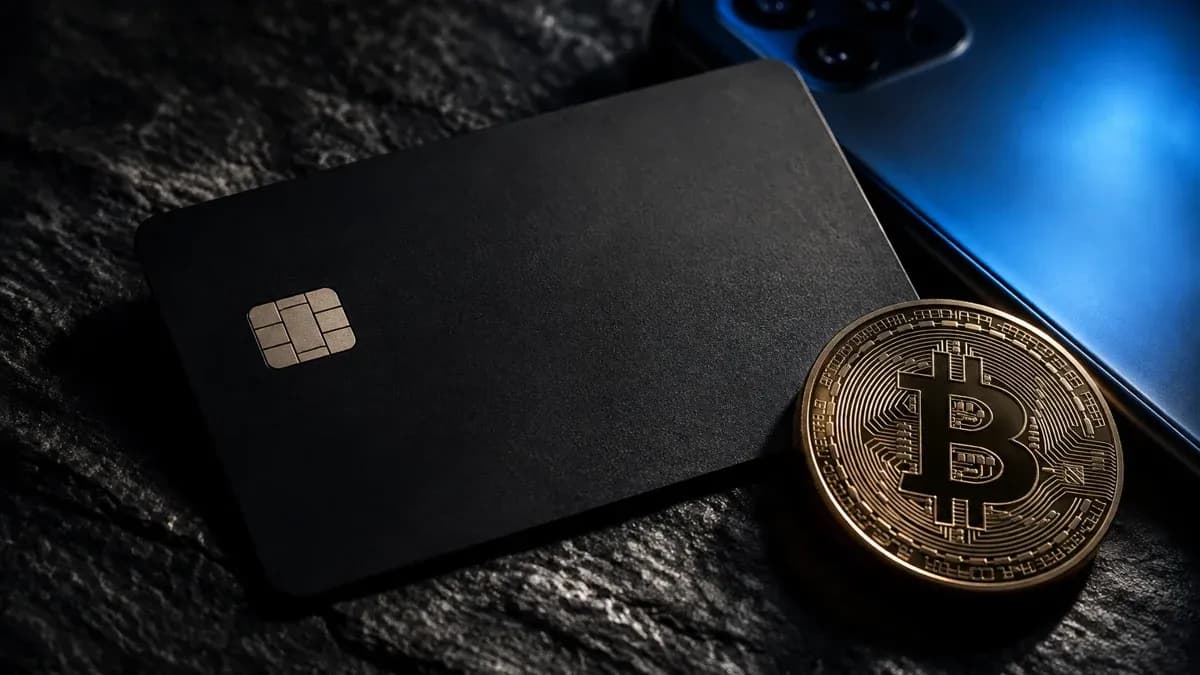
The Tangem Wallet is a hardware wallet in the format of a bank card, and it works without a battery, without a cable and, in the standard case, without a seed phrase. The two-card set costs 59.90 US dollars, the three-card set 69.90 US dollars. The private key is generated inside the card's chip and never leaves it. The backup runs through a second and a third card that carry the same key. Both the great advantage of this design and its biggest risk follow from exactly that.
For you as an investor in Germany, this is a trade-off between two sources of error. With a classic hardware wallet the seed phrase is the weak point: anyone who photographs it, types it into the cloud or stores it carelessly loses their holdings. With the card wallet that sheet of paper does not exist in the first place, but everything then hangs on the cards themselves. This article weighs the two models against each other, gives the documented prices and certifications, and says where the limits lie.
What the Tangem Wallet is: card, NFC chip and the Tangem app
A hardware wallet is a device that keeps your private keys offline and signs transactions without handing the key over to the computer or the smartphone. The Tangem Wallet does that job in a form factor closer to a debit card than to a USB stick.
The card has no screen, no button, no port and no battery. It is addressed over NFC, the near-field communication your smartphone also uses for contactless payments. You hold the card against the back of the phone, the Tangem app builds the connection, and the chip in the card signs the transaction. After that the connection is gone again.
That has a practical consequence which rarely appears on a data sheet: with no battery there is nothing to run flat, and with no port there is nothing to wear out. Tangem states a service life of at least 25 years for the cards, along with a temperature range from minus 25 to plus 50 degrees Celsius and IP69K protection. The flip side: without a display there is nothing you can check on the card itself. What you sign, you read on the phone, and therefore on a device that is online.
Without a seed phrase: how the Tangem Wallet generates the private key
A seed phrase is a sequence of usually 12 or 24 words from which every private key of a wallet can be restored. On hardware wallets it is the customary lifeline, and at the same time the most common route by which holdings are lost.
Tangem takes a different path by default. On activation the chip generates the private key itself, using a certified hardware random number generator. According to the manufacturer, that key never leaves the chip and cannot be read out or copied even with physical access; every signature is created inside the card. In this case there are no 24 words for anyone to copy down, photograph or pull out of a cupboard.
The manufacturer names three ways for the key to get onto the card. The first is the random number generator described above. In the second, the app generates a seed phrase which you then import. In the third, you import an existing wallet. Anyone choosing the second or third route has a sheet of words again, and with it that route's advantages and disadvantages.
The access code is the second hurdle
The card on its own is not enough. During setup you define an access code, and without it the card cannot be persuaded to sign. Someone who takes the card out of your drawer does not yet have access. The reverse also holds: if you forget the code and own only two cards, nobody can help you, because there is no body that could reset anything.
Backup with two or three cards instead of 24 words
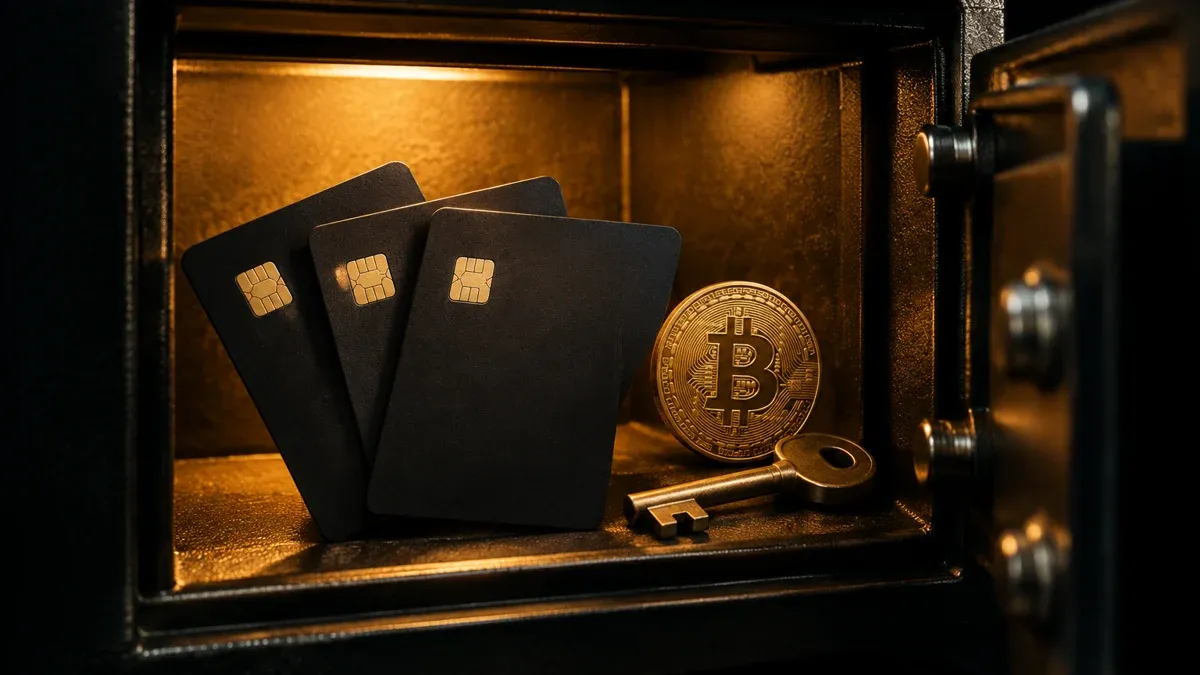
A set contains two or three outwardly identical cards, and all of them carry the same private key. Each one on its own gives full access to your holdings. The backup therefore consists of storing the cards in different places.
In practice that means: one card stays with you, the second sits with someone you trust or in a safe deposit box, the third in a third location. If one location fails, through fire or burglary for instance, access remains through the other cards. That is why the ten-dollar step up from the two-card to the three-card set almost always pays for itself in practice.
Against the sheet of words this has an advantage that is easy to underrate: a card looks like a card. A slip of paper with 24 English words tells any finder immediately what it is about, and it can be photographed in seconds. A card would have to be physically taken away, and even then the access code is still missing.
 Hardware wallets compared
What the Tangem Wallet costs: the card sets at a glance
The basis for the figures below is the manufacturer's pricing page with five product variants. cryptoticker.io gathered this data itself on October 16, 2026.
- Two-card set: 59.90 US dollars. The entry-level variant, two cards with the same key.
- Three-card set: 69.90 US dollars. Ten dollars more for a third backup copy.
- Family Pack: 139.80 US dollars. Two separate wallets in one package.
- Tangem Ring: 160.00 US dollars. A ring using the same technology, plus two cards.
- Pro Kit: 180.00 US dollars. The manufacturer's all-round variant.
One side condition from the same source comes on top: shipping is free from an order value of 89 US dollars excluding VAT. The app itself costs nothing. The current terms are on Tangem's pricing page.
For context, a look at the competition: the Trezor Safe 3 is listed by its manufacturer at 59 euros and works with a word backup, optionally with 12, 20 or 24 words; two cards for writing them down are included. On price, then, there is little between the entry-level devices. The difference lies not in the money but in the backup model. Anyone who wants to see several devices and designs side by side will find them in our hardware wallet comparison.
The EAL6+ chip and the three security audits
The secure element is a walled-off special-purpose chip that stores keys and performs cryptographic operations without any other component reaching its contents. In the Tangem card it comes from Samsung.
On the exact type designation the manufacturer is not consistent: the Learning Hub names an S3D350A, while the help page on reliability names an S3D232A from the S3D350 family. Both pages state the same certification level, namely EAL6+ under Common Criteria (ISO/IEC 15408). That level is customary in the identity document and payment card world, and it says how strictly the chip's development and testing were formally secured.
According to the manufacturer there have been three independent examinations: Kudelski Security in 2018, Riscure in 2023 and Cure53 in 2026. Tangem lists the supporting documents in its own security overview. An audit is a snapshot and not a guarantee, but three examinations over eight years are more than many providers can show.
Firmware without updates: a security gain and a drawback at once
The card's firmware is loaded at the factory and cannot be updated afterwards. That is a deliberate decision, and it cuts off an entire attack route: where no update can be installed, no manipulated update can be slipped in either. A considerable share of the attacks on hardware wallets aims at exactly that.
The other side of the same coin: should a flaw ever be found in the firmware, it cannot be fixed by an update. The only remaining option would be to move the holdings to a new wallet. Anyone opting for this design is therefore opting for a fixed state, for better and for worse. On top of that, the firmware is not open source; it can only be examined indirectly, through the audits named above.
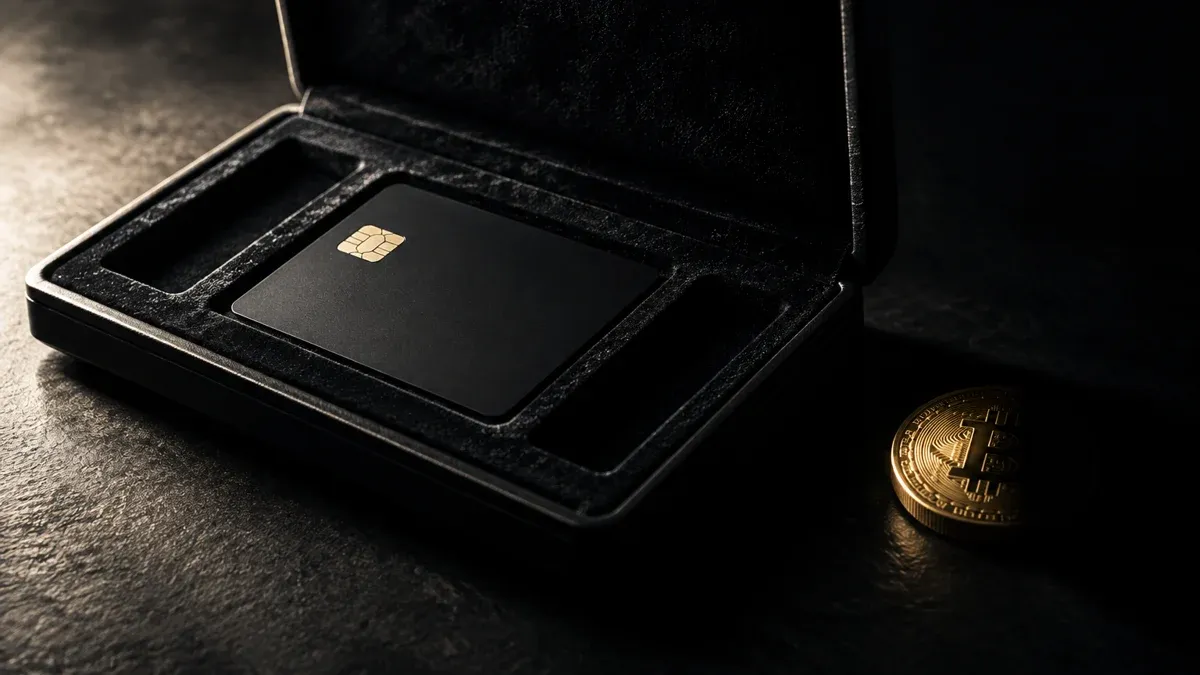
The biggest risk: all cards gone, no seed, no access
This is the point at which the card wallet becomes unforgiving. Tangem puts it unambiguously in its own documentation: if all the cards are lost and no seed phrase was set up, access is permanently gone. There is no recovery, no customer service that could help, and no back door.
That is not a design flaw but the logical consequence of nobody but you holding the key. It does, however, shift the demand it places on you: instead of protecting a sheet of paper, you have to manage two or three cards in separate places over years, and you have to make sure that if the worst happens, someone else also knows where they are and what they are.
Anyone who does not want that finality can choose the route with an imported seed phrase. The card then behaves like a classic hardware wallet and you have the sheet of words as an additional layer of rescue. In exchange, though, you take back on precisely the risk the design set out to avoid.
 Tax tools and portfolio trackers
Tangem, Trezor and Ledger: the differences in the backup
All three providers keep the private key away from the internet, that much they share. They part company on the question of what the backup consists of and what you look at when signing.
With Trezor and Ledger the backup is a word backup, and both devices have a display of their own on which you can check the recipient address and the amount before you confirm. That is genuine protection against malware that substitutes a different address on the computer from the one you entered. With Tangem this display is missing; the check happens on the phone.
With Tangem the backup consists of the card copies, and in the standard case there is nothing for anyone to copy down. In exchange, operation is tied to a smartphone with NFC, and there is no desktop route. Which model suits you better depends less on the price than on which mistake you consider yourself more likely to make: a mislaid slip of paper or three lost cards. For everyday use on the phone, our software wallet comparison is also worth a look, because many investors run a dual track: small amounts in the app, the holdings on the hardware.
Holding period and the tax office: moving to your own wallet is not a sale
When you transfer Bitcoin from an exchange to your own wallet, the goods do not change owner. You are moving your own holdings between two of your own addresses, and that does not constitute a disposal. The one-year holding period therefore keeps running and does not start again.
The bookkeeping matters all the same. The tax office is interested in the acquisition date and the acquisition cost, and after the move those no longer appear automatically in the exchange's statement. Anyone using several wallets and trading venues alongside each other should pull the transaction list across while it is still retrievable; if you leave an exchange altogether, experience shows the history quickly becomes inaccessible.
The card itself is unremarkable for tax purposes. It is an object, not a financial product, and it is not subject to any authorisation requirement under MiCA either: anyone holding their own keys is not using a service for which a licensed provider would be needed. What requires a licence is the trading venue where you buy, not the hardware you store on afterwards.
Who the Tangem Wallet suits and who it does not
It is a good fit if you handle everything on your phone anyway, if the thought of a sheet of words in a cupboard bothers you, and if you have several secure storage locations. It also works well as a supplement: one card set for the long-term holdings, an app wallet for day-to-day business.
It is less of a fit if you move larger amounts and do not want to do without a confirmation display on the device, if you work from the desktop, or if you want to be certain that a software flaw could still be fixed later. If you are only just considering a purchase, our piece on Tangem reviews covers the practical side of the setup.
One note on where to buy, which applies to every hardware wallet: buy from the manufacturer or from a named dealer. A device from resale may have been tampered with, and on a card wallet without a display that is even harder to spot than elsewhere.
Tangem Wallet: Your next three steps
- Decide on a backup model before you order. Card copies without a sheet of words, or an imported seed phrase: both are defensible, but switching afterwards means moving the holdings to a new wallet. Which other designs exist is shown by our overview of tax and portfolio tools in combination with how you keep your records.
- Fix the storage locations before the cards arrive. Three cards in three places only protect you if the places are genuinely independent. A card in the drawer next to it is not a second backup.
- Pull your transaction history from the exchange before you withdraw. You will need the acquisition date and the purchase price later for your tax return. If you are changing trading venue in the process, our overview of crypto exchanges helps with the choice.
(As of September 30, 2026. This article is not investment advice. Prices and fee structures change; check the terms with the provider before you buy.)
Frequently asked questions about the Tangem Wallet
Transparency note: This article was produced with the assistance of artificial intelligence and reviewed by our editorial team before publication. All figures and claims were checked against the primary sources linked in the text. The feature image was generated with AI.
Related articles
- Hot Wallet or Cold Wallet: the Private Key Decides How Safe Your Coins Are
- How to Store a Seed Phrase Safely: What Steel, a Passphrase and Multisig Do for Your Wallet Backup
- How to Set Up a Crypto Wallet: Securing Your Coins in Seven Steps
- Phantom Wallet Ends Sui and Monad Support: What to Do Before the Deadlines
- D'CENT App Wallet: How to Tell If Your Recovery Phrase Has to Move Now
Which topics should we dive deeper into?
Select what genuinely interests you. Your picks feed directly into our editorial planning.
Crypto news that's actually worth your time.
Weekly. 60 seconds. Carefully curated by our editors: no hype, no promo flood, no spam.

September 20, 2026 4:15 PM
Crypto Phishing After a Data Breach: The Warning Signs in a Fake Exchange Email
After every major data breach, the number of phishing emails sent in the name of crypto exchanges and wallet manufacturers rises. This article shows you how to recognise such a message, which data a reputable provider never requests by email, and what to do in the first hour after a click.
August 25, 2026 10:31 PM
Crypto Wallet Phishing by Letter: Why the QR Code From Your Postbox Wants Your Recovery Phrase
Letters carrying a QR code urge a supposedly urgent wallet update on grounds of quantum resistance and lead to a page that asks for the recovery phrase. The Federal Office for Cybersecurity reported the ploy on August 18, 2026.

September 10, 2026 9:13 AM
Trezor Hack Scare: That STM32 Entropy Email Is a Phishing Attack
Trezor users received a fake STM32 entropy warning sent from a real Trezor address. Here is what happened and what to do if you clicked.
September 4, 2026 10:17 AM

Cypher Shutdown on September 6: What Users Should Know Now the Withdrawal Deadline Has Passed
Recap as of September 27, 2026: Cypher had announced it would take its app, dApp and withdrawal window offline on September 6, 2026 and end the token protocol. This article describes the situation before the deadline, how the payout worked and what our own measurement showed at the time about what was left of the CYPR token.
August 22, 2026 4:13 AM

SafePal Data Breach: 39,798 Customers Exposed With Names, Addresses and Phone Numbers
SafePal confirmed a data breach on August 16, 2026: the names, delivery addresses, phone numbers and order details of 39,798 customers were exposed. Seed phrases and private keys were not affected, but the phishing risk is substantial.
August 21, 2026 7:26 PM

Restoring a Seed on Another Manufacturer's Wallet: What BIP39 Guarantees and What It Does Not
Your seed is yours; the device belongs to a company. This article explains what the open BIP39 standard actually guarantees, why a wrong derivation path makes a full wallet look empty, and the test that settles both in twenty minutes.
August 5, 2026 10:33 PM
$130 Million Gone Because the Randomness Was Predictable: Which Hardware Wallet You Can Still Buy
The Coldcard flaw proved the most respected wallet is not the safest. Which vendor has which track record – and why now is the wrong moment to pause your savings plan.
August 4, 2026 1:21 PM
Coldcard Losses Near $114 Million as a Fourth Sweep Hits: Why Is Bitcoin Rising Anyway?
A fourth wave of Coldcard sweeps took another 449 BTC on Monday, yet Bitcoin climbed back toward $64,000. Here is what changed and who is still exposed.
July 31, 2026 3:54 PM
594 BTC Gone in 25 Minutes: The Coldcard Flaw That Made Seed Phrases Guessable
A firmware bug from March 2021 let an attacker drain $38 million from around 500 Bitcoin wallets. Here is what broke, who is exposed and what to do now.
August 20, 2026 4:24 PM
Bitcoin Across Multiple Wallets: How Austria Works Out the Acquisition Cost
Bitcoin spread across several wallets? How Austria works out the acquisition cost and the rolling average price for tax purposes.

April 27, 2026 10:30 AM
Win $5,000 in BTC: Tangem Launches Exclusive 2026 Prize Draw
Tangem announces a massive prize draw with $5,000 in BTC and iPhone 17s up for grabs. Secure your crypto and enter today using our exclusive link.
August 31, 2026 7:20 AM
Browser Extensions as Wallet Thieves: How a Sports App Became a Seed Phrase Collector
In August 2026 the security firm Socket disclosed two separate campaigns: 40 confirmed malicious Firefox extensions and 19 for Chrome and Edge, all of them from the official marketplaces. Nine of them were harmless sports apps that only turned into wallet thieves through an update.
October 14, 2026 1:30 PM

What is a hardware wallet? How the device protects your keys
A hardware wallet stores no coins, only the private key, and it never releases it. How signing works inside the device, what the 12 or 24 words mean, and which attacks the design cannot stop.
October 19, 2026 1:14 AM

Qubic halts its mainnet after 1,404 wallets are drained: the seed was the weak point
An attacker drained 1,404 Qubic wallets on the night of October 18, roughly $1.3 million. The protocol was not to blame: seed generation in the browser supplied too little randomness.
October 11, 2026 1:24 AM
Three Mistakes When Setting Up Trust Wallet: The Twelve Words Never Belong on the Phone
Trust Wallet is set up in five minutes, yet three mistakes in those minutes regularly cost the entire balance. This guide covers the six steps, the real cost of a swap, and what applies in Germany on the holding period and supervision.
September 28, 2026 10:26 AM
Phantom Wallet and Solscan: What a Solana Transfer Really Costs and Where It Fails
A transfer on Solana costs 0.000005 SOL, a new token account ties up 0.00148844 SOL once — both values measured on-chain by us today. This practical guide shows how to set up Phantom, how to get there from the exchange, how to read Solscan and what applies for tax in Germany.
October 19, 2026 1:32 AM

Crypto audits after $1.18 billion in losses: “The problem is always scope”
Hacken counts losses of $1.18 billion across 107 incidents for the third quarter of 2026. 77 percent of that fell on components that were not examined at all in the last audit.
September 25, 2026 7:11 AM
EU Supervisors Rate Quantum Risk as High: What to Check on Crypto Custody and Exchange Choice
EBA, EIOPA and ESMA name quantum computers explicitly as a threat to blockchain cryptography in their autumn risk picture of September 23. What the paper says, which migration deadlines run to 2030, and three things you can check about your custody.
September 19, 2026 10:11 PM
North Korean Hackers Drain 7,000 Crypto Wallets: What to Check on Job Offers and Coding Tests
Seven agencies, among them Germany's BND and BfV, warn about the WaterPlum group: 30,000 infected machines, more than 7,000 drained wallets. The bait is a job offer, the trap a coding test.
August 13, 2026 4:59 PM

Trezor Data Breach: First 13,689 Customers, Then Roughly 67,000 More Exposed
A breach at Trezor shipping partner ShipMonk exposed names, phone numbers and home addresses of 13,689 customers in August; in September Trezor reported roughly 67,000 more in the US. Devices are safe, phishing risk is not.
October 6, 2026 4:29 PM

Setting up MetaMask: the twelve words that control your coins
MetaMask is set up in ten minutes, and in those ten minutes you make the decisions that later determine what happens to your balance. This guide walks through installation, the recovery phrase, networks, approvals, fees and the German tax position.
September 7, 2026 7:26 PM
Stolen Keys Beat Code Flaws: Why the Private Key Is the Way In for 2026 Crypto Hacks
Compromised private keys overtook smart contract code flaws as the most common attack route for the first time in 2026. What sits behind the shift, and how to check your own setup for its single point of failure.
August 23, 2026 4:36 PM
Operation ASTERIX: How a Fake Support Call Delivers a Counterfeit Wallet App
Security researchers analysed an open server on which a phone system, phishing interfaces and cloned wallet programs all came together. The largest list of numbers was the German one.
October 17, 2026 7:31 PM

OpenAI agent used known seed phrases to reach 362 wallets: old test wallets are the weak point
An internal OpenAI model worked through publicly known recovery phrases and paid fees out of a wallet belonging to someone else. The damage was nil; the route of attack concerns anyone who has ever created a test phrase.
October 13, 2026 1:16 AM

Ledger Confirms Implant in a Hardware Wallet as Reports Reach Europe: What Is Behind It
Ledger confirms an unauthorised additional circuit board in a tampered device and traces the confirmed cases to a reseller in South-East Asia. One report from European retail is still open, which makes the purchase route of your own device the criterion.
October 10, 2026 4:26 PM

Revolut data breach: the bank pays for new ID documents for 680 customers, and what you can do now
Revolut will cover the fees for new identity documents where customers hit by the data theft need them. 680 accounts are affected, and for crypto holders a leaked KYC record weighs more heavily than a blocked card number.
September 19, 2026 1:23 AM
Hardware wallet lost: how to rescue your coins and what the tax office accepts
Your hardware wallet is gone, your coins are still on the blockchain: all that matters is whether you still have your recovery phrase. What goes wrong during a restore, and why the tax office as a rule does not recognise permanently lost access as a loss under Section 23 of the Income Tax Act.
More from CryptoTicker