
Qubic halts its mainnet after 1,404 wallets are drained: the seed was the weak point
An attacker drained 1,404 Qubic wallets on the night of October 18, roughly $1.3 million. The protocol was not to blame: seed generation in the browser supplied too little randomness.





Which topics should we dive deeper into?
Select what genuinely interests you. Your picks feed directly into our editorial planning.
Crypto news that's actually worth your time.
Weekly. 60 seconds. Carefully curated by our editors: no hype, no promo flood, no spam.
On the night of October 18, 2026, the Qubic network shut down its own operations. An attacker had drained 1,404 wallets before that, roughly 2.94 trillion QU worth about $1.3 million. According to the project, the cause lies outside the Qubic protocol: some wallets generated their recovery phrase in a way that made it predictable. If you hold QU and ever created your wallet in a browser on an iPhone or iPad, or in Safari on a Mac, you have to assume your seed is on the published list.
The case does not end with Qubic. A seed that a random number generator produces inside a browser depends on the quality of that generator. That applies to every wallet created in a browser, whatever the coin.
What happened in the Qubic network on the night of October 18
The window is narrow and well documented. After the project's disclosure, reported in the same terms by Crypto Briefing and Bitcoin.com News, the outflows began on October 17 at 23:42 UTC and ended on October 18 at 01:26 UTC. That is one hour and 44 minutes, in which 1,404 accounts were emptied.
Both reports put the amount at roughly 2.94 trillion QU. QU is a token with a very large number of units and a correspondingly low unit price, which is why the count sounds larger than the value behind it: about $1.3 million at the time of the theft.
The validators then intervened. They halted the blockchain at tick 85,371,949. A tick is Qubic's unit of count for one processing step of the network, comparable to a block on Bitcoin. A halted network processes nothing at all, further outflows included.
The flaw sat in seed generation, not in the Qubic protocol
A seed is the character string from which a wallet derives all of its private keys. On Qubic it is a sequence of 55 lower-case letters. Whoever knows it has full access to the balance, with no password and no device.
The developers state that the blockchain's own program code was not attacked. The vulnerable point lay one step earlier: the generation of those 55 characters. If software does not draw the characters at genuine random but follows a pattern that can be reproduced, an attacker can work through the sequence. That is what happened, according to the Qubic announcement that the on-chain service Lookonchain passed on during the night.
What “insufficient randomness” means in practice
A seed of 55 characters has so many possible combinations on paper that no computer on earth could work through them. That protection rests entirely on each of the 55 positions being truly unpredictable. If the number of actually possible starting values shrinks to a few million, the 55 characters are no more than a facade. The attacker does not calculate one seed, he calculates every seed the software could ever have produced, then checks which of them hold a balance.
Seeds from iPhone browsers, Mac Safari and the early iOS app are affected
Qubic has named the affected routes. On that list, the following count as vulnerable:
- seeds created before October 18, 2026 in any browser on an iPhone or iPad,
- seeds created before the same date in Safari on a Mac,
- seeds created before July 2025 through the Qubic app for iOS.
The line therefore runs along the Apple platform. That is no coincidence: on the iPhone and iPad every browser has to use Safari's rendering engine, even when the label on the front says Chrome or Firefox. A flaw in that single engine hits every browser on the device at once.
If you set up your Qubic wallet on Windows, Android or Linux instead, or used the desktop application, this list does not put you on the risk side. That is not a guarantee: the list comes from the project itself and may grow as the post-mortem continues.
Entropy: why a random number generator in a browser can be weaker
Entropy is the measure of how much genuine unpredictability sits inside a number. An operating system collects that unpredictability from many sources, among them the intervals between keystrokes, sensor noise, or a dedicated unit inside the processor.
A web page inside a browser reaches those sources only indirectly. It asks an interface for random numbers and gets whatever the browser hands over. If that interface is poorly supplied with entropy, shortly after the device starts for instance, the result is weaker than the length of the string suggests. The user sees none of it. Their seed looks just as jumbled as any other.
That gives a rule of thumb which reaches beyond this case: the fewer layers between the source of randomness and your seed, the better. A device that does nothing but hold keys has the shortest path here. Which devices are available in Germany and what they cost is set out in the hardware wallet comparison.

87.1 percent of the haul is stuck in the network, 12.9 percent reached MEXC
This is where the case turns unusual. The attacker never got most of the stolen amount out of the Qubic network at all. On the matching figures in both reports, 87.1 percent of the QU remains on the blockchain, where it can neither be moved nor sold while the network is halted.
The remaining 12.9 percent reached the exchange MEXC. The inflow was noticed there: the venue says it froze the receiving account within an hour because it suspected a connection to the attack. At that speed this is not a given, and it stopped that share from draining into the market as well.
The network halt at tick 85,371,949 and what it means for holders
A halted network protects the haul from being sold on, but it also pins down everyone else. If you hold QU and are not affected at all, you cannot reach your balance either until the restart. That is the price of the measure, and the project paid it deliberately.
QEARN, the network's staking function, is not affected according to the developers. Nothing has been decided yet about compensating the victims. Responsibility lies with the Computor cluster, the operators who carry the network and vote on its direction. So far there is no commitment, only the statement that the decision will be taken there.
Bitget pauses QUBIC deposits and withdrawals, client 4.26.4 closes the flaw
While the network stands still, two trading venues have acted. MEXC froze the account where the haul landed. The exchange Bitget suspended deposits and withdrawals for QUBIC for as long as the situation remains unresolved. Both steps prevent stolen tokens from being passed on through regulated trading.
On the software side, the Crypto Briefing report names client version 4.26.4 as the release that fixes the weakness in seed generation. The developers also say they moved further endangered balances to safety ahead of the attacker. A new program version, however, only repairs the generation of future seeds. A seed that was already created weakly stays weak, whatever version runs on top of it.
QU trades at $0.0000004268 with a market value of $61 million
For a sense of scale: QU was quoted at $0.0000004268 on Sunday evening, with a market value of around $61.4 million and rank 385 in the overall market. Against the previous day that is a loss of 13.6 percent. cryptoticker.io collected these figures itself on October 18, 2026.
The stolen amount therefore corresponds to roughly two percent of the entire market value. For a project of this size that is noticeable; for the crypto market as a whole it is a small number. If you want to follow the price from here, you will find it in the Qubic price prediction.
The case concerns more than Qubic holders
Three things make this incident interesting beyond the project. First, it hit the software in front of the blockchain while the blockchain itself remained untouched. Second, the weakness persisted unnoticed for years, without any user being able to spot it. Third, it struck the route that feels most convenient of all: the wallet in the browser, set up in seconds, with nothing to install.
A similar lesson sat behind the case in which an OpenAI agent used known seed phrases to reach 362 wallets. There, too, no blockchain was broken, only an assumption about where the keys came from. The debate about quantum risk for Bitcoin addresses turns on the same question at its core: how good is the procedure that produced your key?

Hardware wallet, software wallet, exchange: where the seed is created in Germany
In practice what counts is who generates the key for you. There are three routes, and they differ at exactly that point.
The hardware wallet creates the seed inside the device
A device of that kind draws its randomness from a dedicated unit and never passes the seed on to a computer. The browser does not appear in the process at all. In exchange you pay a three-figure sum and carry responsibility for the backup yourself.
The software wallet depends on the device's source of randomness
This is where the Qubic case sits. An application on a phone or a computer can use a good generator or a weak one, and from the outside that cannot be seen. What matters is whether the software takes the operating system's generator and whether its code is open. Both can be read up before setup, and neither can be changed afterwards.
With an exchange there is no seed for you at all
If you buy through an exchange and leave the coins there, the provider holds the keys. A weak seed on your side then cannot arise in the first place. In exchange everything hangs on the provider, and with a provider that holds no licence it hangs on nothing. That such providers exist was shown by BaFin with several warnings this October.

Moving coins between your own wallets is not a sale
If you transfer your coins to a new wallet because of a questionable seed, you are not selling them. A transfer between two addresses that both belong to you is not a disposal, and it does not restart the one-year holding period under German tax law.
The only thing that matters is that you carry the acquisition data over. Your tax software or portfolio tracker has to recognise both addresses as yours, otherwise the incoming amount at the new address shows up as a deposit without an acquisition, and the gain is calculated wrongly later. Record the move in your files with the date, both addresses and the transaction ID before you delete the old wallet.
Filing a police report: what Qubic asks of those affected
The project calls on victims to file a report. That sounds like a formality, and yet it is the point at which the frozen funds may later become movable again: an exchange that freezes an account on suspicion needs an official basis at some stage in order to release the balance or return it.
In Germany you file the report at any police station, and in most federal states online through the Internetwache as well. Take what you have: your Qubic address, the attacker's address, the time and size of the outflow, and proof that the wallet belongs to you. Compensation does not follow from it. Qubic has promised none, and the Computor cluster has yet to decide.
Qubic theft: a seed created in a browser belongs in the bin
The numbers are small, the lesson is not. If your recovery phrase came into being inside a browser window, you do not know how much randomness actually sits in it. Three steps take you out of that uncertainty:
- Establish the origin. Go through every wallet holding a meaningful amount and write down what you created it with: browser, app, hardware device, operating system. Anything created in a browser on an Apple device belongs on the risk list for Qubic and at least on the review list for any other coin. Which application fits your case is shown in the software wallet comparison.
- Generate a new seed by the shortest route. Set up a fresh wallet where the randomness comes from: on a device that exists for nothing else. Then transfer the balance in full and leave the old address empty. The devices and their prices are listed in the hardware wallet comparison.
- Keep the rest at a supervised trading venue. For amounts where self-custody is too much effort, custody with a provider remains. Its licence then decides your risk. Which houses hold a MiCA licence in the EU is set out in the overview of regulated crypto exchanges.
The Qubic network is not running at the moment. When it will start again and what happens to the frozen QU then is open. Until it does, the most useful part of this night remains the question anyone can answer for their own wallets: where did the randomness come from?
(As of October 18, 2026. This article is not investment advice. Prices and fee structures change; check the terms with the provider before you buy.)
Frequently asked questions about Qubic
Transparency note: This article was produced with the assistance of artificial intelligence and reviewed by our editorial team before publication. All figures and claims were checked against the primary sources linked in the text. The feature image was generated with AI.
Related articles
- Trezor Hack Scare: That STM32 Entropy Email Is a Phishing Attack
- Breaking: Trust Wallet Chrome Extension Hack Drains $7M, Full Reimbursements Promised
- $1.26 Billion in Three Months: Crypto Hacks Hit Their 2026 High
- Trezor Data Breach: First 13,689 Customers, Then Roughly 67,000 More Exposed
- Chainalysis attributes $387 million from the Bitget hack to North Korea: what matters now for investors in Germany
Which topics should we dive deeper into?
Select what genuinely interests you. Your picks feed directly into our editorial planning.
Crypto news that's actually worth your time.
Weekly. 60 seconds. Carefully curated by our editors: no hype, no promo flood, no spam.

September 25, 2026 4:11 AM
Bitget Pauses Withdrawals: Where Existing Customers in Europe Stand
Bitget reports unauthorised outflows of around $351.6 million (later revised to $387.5 million) and has suspended withdrawals. For existing customers in Europe, that closes the one route MiCA had left them.
September 7, 2026 7:26 PM
Stolen Keys Beat Code Flaws: Why the Private Key Is the Way In for 2026 Crypto Hacks
Compromised private keys overtook smart contract code flaws as the most common attack route for the first time in 2026. What sits behind the shift, and how to check your own setup for its single point of failure.
August 25, 2026 10:31 PM
Crypto Wallet Phishing by Letter: Why the QR Code From Your Postbox Wants Your Recovery Phrase
Letters carrying a QR code urge a supposedly urgent wallet update on grounds of quantum resistance and lead to a page that asks for the recovery phrase. The Federal Office for Cybersecurity reported the ploy on August 18, 2026.
August 22, 2026 4:13 AM
SafePal Data Breach: 39,798 Customers Exposed With Names, Addresses and Phone Numbers
SafePal confirmed a data breach on August 16, 2026: the names, delivery addresses, phone numbers and order details of 39,798 customers were exposed. Seed phrases and private keys were not affected, but the phishing risk is substantial.
August 5, 2026 10:33 PM
$130 Million Gone Because the Randomness Was Predictable: Which Hardware Wallet You Can Still Buy
The Coldcard flaw proved the most respected wallet is not the safest. Which vendor has which track record – and why now is the wrong moment to pause your savings plan.

July 31, 2026 3:54 PM
594 BTC Gone in 25 Minutes: The Coldcard Flaw That Made Seed Phrases Guessable
A firmware bug from March 2021 let an attacker drain $38 million from around 500 Bitcoin wallets. Here is what broke, who is exposed and what to do now.
October 11, 2026 4:50 AM
90 Crypto Kidnappings and Robberies in 7 Months: Why France Is the Most Dangerous Country for Bitcoin Holders
France logged 90 crypto kidnappings, extortions and violent thefts this year, one every 2.5 days. Leaked tax data is to blame. Here is how to protect yourself.
September 23, 2026 4:12 AM
How to Set Up a Crypto Wallet: Securing Your Coins in Seven Steps
Your own crypto wallet is set up in twenty minutes, yet a single step decides everything that follows. This guide takes you through wallet type, recovery words and the test amount, and sets out what BaFin and the tax office expect.
August 11, 2026 1:32 PM
How to Store a Seed Phrase Safely: What Steel, a Passphrase and Multisig Do for Your Wallet Backup
The Coldcard case pushed the manufacturer question to the front, while barely touching on where the backup is kept. This guide places paper, steel, the passphrase and splitting methods against the BIP-39 and SLIP-0039 standards.
October 9, 2026 5:36 PM
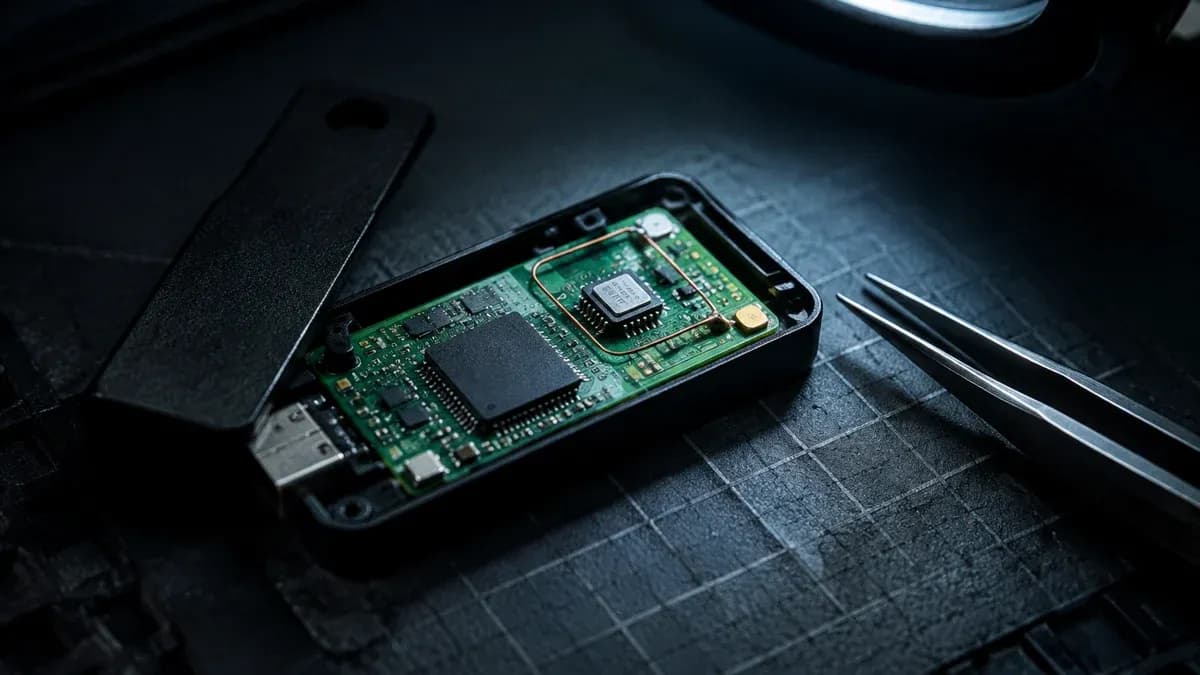
Ledger Hack? $86 Million Drained: What Is Behind the Tampered Wallets From Southeast Asia
Since Friday, Ledger users in Southeast Asia have been reporting empty wallets, and analysts count more than $86 million. Ledger has halted the reseller CryptoBilis. An implant inside the device reportedly reads the seed phrase. What is known, what CZ advises and what you should do now.
September 20, 2026 4:15 PM
Crypto Phishing After a Data Breach: The Warning Signs in a Fake Exchange Email
After every major data breach, the number of phishing emails sent in the name of crypto exchanges and wallet manufacturers rises. This article shows you how to recognise such a message, which data a reputable provider never requests by email, and what to do in the first hour after a click.
September 1, 2026 7:27 AM

Clipboard Attack: How Malware Swaps the Wallet Address You Copied
A clipper replaces the receiving address between copying and pasting with the attacker’s, and your wallet’s checksum notices nothing. What Microsoft and the Federal Office for Cybersecurity have documented, and which check really makes the attack come to nothing.

April 27, 2026 10:30 AM
Win $5,000 in BTC: Tangem Launches Exclusive 2026 Prize Draw
Tangem announces a massive prize draw with $5,000 in BTC and iPhone 17s up for grabs. Secure your crypto and enter today using our exclusive link.

December 22, 2020 3:49 PM

Crypto Wallet Provider Ledger Hacked: Data Leak Results in Phishing Scams
Ledger, a cryptocurrency wallet provider has encountered a data breach. The official Twitter account of the hardware wallet tweeted that they have been alerted to the dump of a client database.
October 2, 2026 10:36 AM
Hot Wallet or Cold Wallet: the Private Key Decides How Safe Your Coins Are
Hot wallet or cold wallet: the difference rests solely on whether the private key is online. What separates the two forms, where the limits of hardware lie and why moving to your own device triggers no tax.
September 30, 2026 7:16 AM
Tangem Wallet: The Card Without a Seed Phrase vs the Classic Hardware Wallet
The Tangem Wallet secures crypto with two or three identical cards instead of 24 words. What the sets cost, what the EAL6+ chip delivers and why losing every card is final.
September 17, 2026 4:14 PM
D'CENT App Wallet: How to Tell If Your Recovery Phrase Has to Move Now
Manufacturer IoTrust reports suspicious asset transfers in the D'CENT app wallet and asks users to move their holdings. One question decides the matter: has your recovery phrase ever been entered into the app?
October 19, 2026 1:32 AM

Crypto audits after $1.18 billion in losses: “The problem is always scope”
Hacken counts losses of $1.18 billion across 107 incidents for the third quarter of 2026. 77 percent of that fell on components that were not examined at all in the last audit.
September 25, 2026 1:47 PM
Magic Eden and Limit Break exploit: 530 WETH and thousands of NFTs drained, how to revoke your approvals
A bug in Limit Break's Payment Processor, the protocol behind Magic Eden's former Ethereum marketplace, has been draining NFTs and WETH since Thursday. Our blockchain analysis shows 911 affected wallets. What happened, why hardware wallets do not protect you and which two approvals to revoke now.
September 19, 2026 10:11 PM
North Korean Hackers Drain 7,000 Crypto Wallets: What to Check on Job Offers and Coding Tests
Seven agencies, among them Germany's BND and BfV, warn about the WaterPlum group: 30,000 infected machines, more than 7,000 drained wallets. The bait is a job offer, the trap a coding test.
August 18, 2026 7:23 PM
Inheriting Crypto: How Your Heirs Actually Get Access, and Why the Seed Does Not Belong in a Will
The German Federal Court of Justice made clear in 2018 that digital accounts are inherited like everything else. With self-custodied coins succession law still achieves nothing: no key, no access. And anyone who writes the seed into a will has a court send it to every party involved.
December 28, 2018 3:02 PM

How To Use a Trezor Wallet?
Trezor is a hardware wallet which gives exceptional security for managing Bitcoin and other cryptocurrencies private keys.It incorporates and deposits personal keys securely and enables users to carry trade without an Internet link. Trezor grants its users with numerous benefits, […]
May 27, 2024 11:56 AM
Wave of Crypto Hacks and Exploits Hits Influencers and Memecoins: WATCH OUT!
A series of hacks on crypto influencers, celebrities, and a major memecoin exploit have raised serious security concerns within the cryptocurrency community. Here is what you need to watch out for!
September 10, 2026 1:14 PM
Phishing Email From the Real Sender Address: How to Check a Wallet Security Warning
An alleged security warning to wallet customers travelled through the manufacturer's genuine sending channel and passed every technical authenticity check. The test that still holds costs you four minutes.
September 4, 2026 10:15 PM
Trezor Data Breach: Am I Affected and What Should I Do Now?
Trezor widened the ShipMonk data breach on September 4, 2026: around 67,000 further people affected, just over 80,000 in total, from orders placed between November 2019 and August 2021. How to check in two minutes whether you are among them, and what an exposed home address means for self-custody.

More from CryptoTicker