
Stolen Keys Beat Code Flaws: Why the Private Key Is the Way In for 2026 Crypto Hacks
Compromised private keys overtook smart contract code flaws as the most common attack route for the first time in 2026. What sits behind the shift, and how to check your own setup for its single point of failure.




Which topics should we dive deeper into?
Select what genuinely interests you. Your picks feed directly into our editorial planning.
Crypto news that's actually worth your time.
Weekly. 60 seconds. Carefully curated by our editors: no hype, no promo flood, no spam.
Anyone who lost crypto assets in 2026 mostly lost them to a stolen key rather than to a programming error. On September 4, 2026 the trade service crypto.news drew up the balance for the first eight months: at least $1.3 billion in damage across DeFi, and for the first time since records began, compromised private keys rank ahead of flaws in smart contract code. For you as an investor that shifts the question you need to ask. It now points at who holds the keys and how many of them it takes to move your balance. Whether an application has been audited is only half the answer.
Stolen Private Keys Overtake Smart Contract Bugs: What the 2026 Numbers Show
A private key is the string of characters used to sign a transaction; whoever holds it can dispose of the associated balance, regardless of who owns it. That property is exactly what makes it the most rewarding target.
The shift shows up in two independent surveys. crypto.news puts total DeFi damage for the first eight months of the year at a minimum of $1.3 billion, drawing on analyses by CertiK and TRM Labs. Blockscout, which operates a blockchain explorer, dated the tipping point as early as July 21, 2026: in May 2026, compromised accounts and stolen keys accounted for more than half of all DeFi attacks by number of incidents for the first time.
The two surveys count differently, one by loss amount and the other by incident count. That they still point the same way is the real finding. In addition, the Rekt.news loss list records more than thirty exploits above three million dollars for 2026.
Why the Number of Incidents Matters More Than the Record Sum
Large individual losses pull the statistics upward and say little about your own risk. The incident count says more: it describes how often an attack route works at all. A route that works every week gets reused against smaller targets once the big ones have been cleared out.
What a Compromised Key Actually Is and How It Goes Missing
Compromised means the key is still there, but a second party knows it as well. Nothing feels broken, nothing reports an error, and the loss only becomes visible once the balance is gone.
The routes to that point are rarely spectacular in technical terms. Malware on the computer where a wallet file sits. Login details from a data breach that happen to fit an account because the same password was used more than once. A number swap at the mobile operator, in order to intercept a confirmation text message. A doctored development component that a team pulls in unchecked. And the plainest variant, which works all the same: somebody poses as support and asks for the recovery phrase.
For 2026 Blockscout adds a case that shows the range: at MetaMask, according to the report, an employee with a North Korean background was involved in development for around a month before being removed. What all these routes have in common is that they target the human being and not the blockchain.
Drift, KelpDAO and AFX Trade: Three Cases Where the Key Was the Way In
Three documented incidents make the pattern tangible, and in none of them was a hole in the published contract code the trigger.
At Drift Protocol, around $285 million disappeared on April 1, 2026. On the account given by crypto.news, the attackers had worked their way toward an administration key over a period of months and then completed the outflow in 128 seconds. Preparation took months; execution took a good two minutes.
At KelpDAO, a bridge connection via LayerZero was hit on April 18, 2026. Figures for the scale of the loss differ slightly: crypto.news gives around $290 million, Blockscout around $292 million. Both houses attribute the incident to actors with North Korean links; crypto.news assigns the TraderTraitor group from the Lazarus orbit at least $575 million together with the Drift case, roughly 44 percent of all losses for the year.
The third case sat closer to European users. At the perp DEX AFX Trade on Arbitrum, around $24.15 million flowed out on July 22, 2026. cryptoticker.io reported the incident on July 24, 2026 with a loss of around $24 million; the more precise figure comes from the annual balance drawn up by crypto.news.
Coldcard: How a Firmware Flaw Turned Self-Custody Into a Single-Key Risk
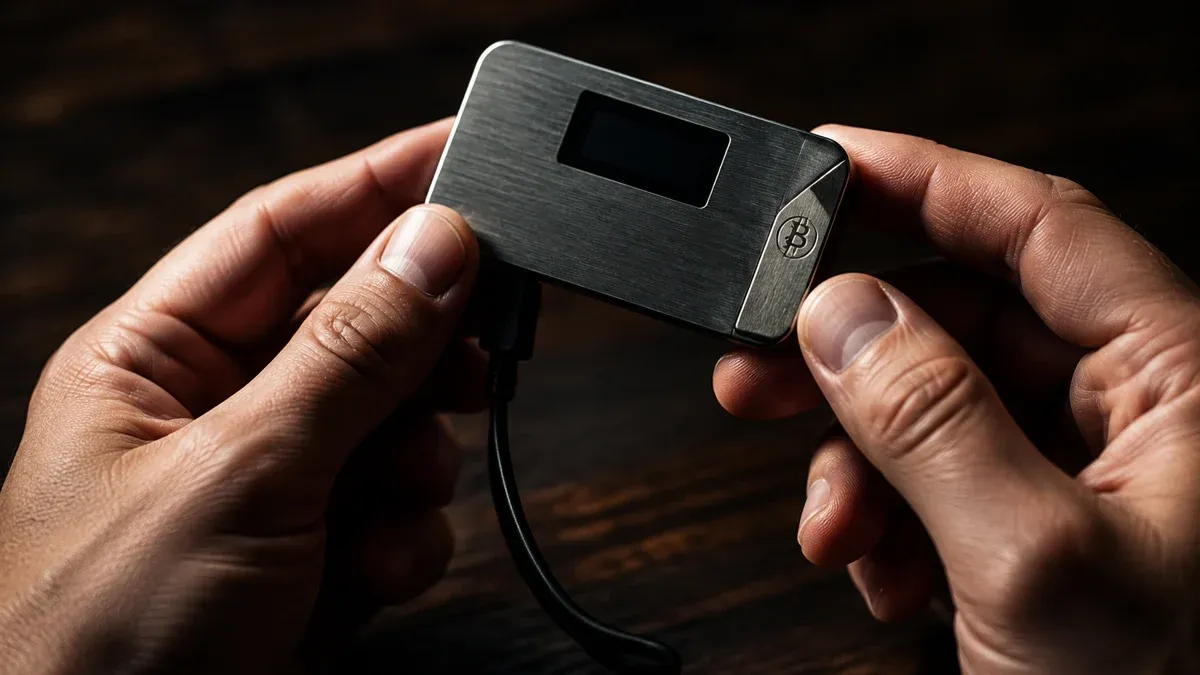
The case that shaped the 2026 debate most strongly concerned, of all things, a device built for self-custody. A flaw in the firmware of a hardware wallet meant that the recovery phrases it generated were predictable. The loss total grew over weeks as more and more affected addresses surfaced: TRM Labs puts it at around $116 million, while crypto.news lists the case at around $130 million as of July 30, 2026. Early reports at the end of July were still well below that.
For you the lesson matters more than the sum. A device that stays offline and never touches the internet protects you against remote access. It does not protect you against a key that was already weak when it was generated. Anyone who generated a phrase on such a device during the affected period should treat it as exposed and move the balance to a newly generated phrase; the steps are set out in our guide to generating a new seed after the firmware flaw.
 Hardware wallets compared
Why a Passed Code Audit Says Nothing About the Safety of Your Balance
An audit is an examination of the published contract code by a specialist house. It states that none of the weaknesses looked for were found in that code at the time of the review. On the question of who keeps the keys that administer this contract, and how, it says nothing.
Ronghui Gu, co-founder of the audit house CertiK, put it to crypto.news in a single sentence: a protocol can pass a flawless code audit and still lose millions because an administration key was compromised. The audit badge on an application's home page therefore describes one section of the ground, and specifically the section that in 2026 was no longer the most dangerous.
The Question to Ask Instead
Rather than looking for the audit badge, it pays to look at the administrative rights: is there an administration access that can move funds or swap out contracts? Does it sit on a single address or on an address with several authorized signers? And is there a time lock that lets a change take effect only after a waiting period? Serious projects answer this in their documentation. Where the answer is missing, that is itself an answer.
Single-Verifier Configuration: The Quiet Single Point in Bridges and Cross-Chain Applications
A verifier is the entity that confirms a message from one blockchain is genuine on another. In a single-verifier configuration, one entity alone does that. If it fails or is taken over, there is no second opinion to object.
crypto.news puts the share of LayerZero applications running in this setting at 47 percent. This is no flaw in the sense of a hole; it is a deliberate default that saves costs. For you it means this: when you send a balance across a bridge, the security of that transfer may hang on a single confirmer rather than on the blockchain you actually trust.
Multisig and MPC: How to Do Away With the Single Key
The most effective lever against the theft of a key is to make the single key redundant. Two established methods exist for that.
Multisig stands for an address that requires several signatures before a transaction becomes valid, two out of three deposited keys for instance. One stolen key is then no longer enough, and one lost key does not lock you out either.
MPC stands for multi-party computation. Here the complete key never exists in one place at any point; several participants compute the signature together from their shares. The result resembles multisig, but on the blockchain it looks like an ordinary single address.
Both come at a price. Multisig means more devices, more backup copies and more effort with every payout. MPC generally ties you to a provider whose software manages the shares. For small amounts that effort is often out of proportion; from the order of magnitude where a loss would hurt, the ratio reverses. Which devices can be combined for such a setup and what they cost is set out in our hardware wallet comparison. For the portion of your holdings you move daily, a software wallet remains the more practical choice.
Hardware Wallet, Software Wallet or Regulated Custodian: Where Your Holdings Belong
There is no single form of storage that is right for every amount. What makes sense is a split by purpose, and you can settle it in an afternoon.
The amount you trade or pay with belongs in a software wallet on your phone or in an exchange account. The attack surface is largest there, which is why only what you could absorb losing should sit there. Long-term holdings belong on a device that stays separate from your everyday computer, and above a sum that would hurt, on an arrangement requiring several signatures.
For part of your holdings a supervised custodian can also be the right answer, particularly if you do not trust yourself with key management. Since the MiCA transition period ended on July 1, 2026, only licensed providers may offer custody in the EU, and the licence can be verified publicly. That relocates the risk without removing it: you swap the risk of your own key for the risk of the provider. How heavily Bitcoin is weighted in your portfolio makes no difference to this decision, incidentally; the custody question arises equally for every position.
 Regulated crypto exchanges at a glance
Five Checkpoints for Your Own Setup
The following points cost you about an hour together and cover the routes by which keys actually went missing in 2026.
First, take stock. Write down which addresses and accounts hold your balance and which key controls each of them. If a single string of characters controls more than half your holdings, you have found the single point this article is about.
Second, the origin of the recovery phrase. Check which device and which firmware version your phrase was generated on. If that falls in a period for which the manufacturer has acknowledged a flaw, you move rather than wait.
Third, the mobile number. Wherever a confirmation runs by text message, set up a porting lock or a customer password with your operator and switch to an authenticator app as well. Swapping the number is one of the cheapest attacks there is.
Fourth, passwords from data breaches. If you use a password for an exchange account that you have already used somewhere else, replace it. Crypto providers lost customer data through service partners several times in 2026; the combination of a known address and a known password is precisely the lever.
Fifth, a dry run. Imagine your everyday computer were in someone else's hands as of today. Could you still reach your balance, and would the attacker fail to? If you answer no to either question, you have your next task.
What This Check Does Not Do
It does not protect you against a flaw in a protocol you use, nor against a custodian failing. It clears away the attack route that was the most frequent by incident count in 2026. That much, and no less.
Checking Your Key Risk: What to Take Away
- Find your single point. Go through your addresses and mark the ones where a single key controls an amount that would be painful for you. For that part of your holdings, look at a device with separate storage; the models and their prices are in the hardware wallet comparison.
- Separate everyday use from holdings. What you move stays in a wallet on your phone; what stays put goes elsewhere. Which software wallets suit the everyday portion is shown by the software wallet comparison.
- Check the licence before you deposit. If you want part of your holdings held in custody, look first at whether the provider has a valid EU licence. Which houses meet that is listed in the overview of regulated crypto exchanges.
(As of September 7, 2026. This article is not investment advice. Prices and fee structures change; check the terms with the provider before you buy.)
Transparency note: This article was produced with the assistance of artificial intelligence and reviewed by our editorial team before publication. All figures and claims were checked against the primary sources linked in the text. The feature image was generated with AI.
Related articles
- $1.26 Billion in Three Months: Crypto Hacks Hit Their 2026 High
- Trezor Data Breach: First 13,689 Customers, Then Roughly 67,000 More Exposed
- How to Store a Seed Phrase Safely: What Steel, a Passphrase and Multisig Do for Your Wallet Backup
- Trezor Data Breach: Am I Affected and What Should I Do Now?
- $130 Million Gone Because the Randomness Was Predictable: Which Hardware Wallet You Can Still Buy
Which topics should we dive deeper into?
Select what genuinely interests you. Your picks feed directly into our editorial planning.
Crypto news that's actually worth your time.
Weekly. 60 seconds. Carefully curated by our editors: no hype, no promo flood, no spam.

October 12, 2026 1:42 AM

Bitget Wallet is not the exchange: one of two required key shares sits on Bitget's server
The attack on the Bitget exchange of September 24, 2026 hit the venue's hot and warm wallets, not the keys in users' wallets. What matters all the same is which variant you run: in the keyless wallet every signature needs a key share from the provider's server.
September 17, 2026 4:14 PM
D'CENT App Wallet: How to Tell If Your Recovery Phrase Has to Move Now
Manufacturer IoTrust reports suspicious asset transfers in the D'CENT app wallet and asks users to move their holdings. One question decides the matter: has your recovery phrase ever been entered into the app?
September 29, 2026 10:14 AM
Bitget discloses the flaw at its supplier and sets out the timetable for withdrawals
Bitget has disclosed how the attackers reached its withdrawal systems on September 24: through a previously unknown flaw in a security product it had bought in. The second stage of the withdrawal schedule opens today at 08:00 UTC, and for the balance you keep on any exchange the case changes the arithmetic.
October 2, 2026 4:32 AM

NEAR Intents halts withdrawals after a $3.8 million exploit: here are the reasons
NEAR Intents confirms an exploit of more than $3.8 million and holds deposits and withdrawals on eleven networks. Reimbursement is promised, a date for it is not.

August 4, 2026 1:21 PM
Coldcard Losses Near $114 Million as a Fourth Sweep Hits: Why Is Bitcoin Rising Anyway?
A fourth wave of Coldcard sweeps took another 449 BTC on Monday, yet Bitcoin climbed back toward $64,000. Here is what changed and who is still exposed.
July 31, 2026 3:54 PM
594 BTC Gone in 25 Minutes: The Coldcard Flaw That Made Seed Phrases Guessable
A firmware bug from March 2021 let an attacker drain $38 million from around 500 Bitcoin wallets. Here is what broke, who is exposed and what to do now.
August 21, 2026 4:27 PM

Wallet App Without BaFin Authorisation: When Holding Crypto-Assets Requires a Licence
On 19 August 2026 BaFin published two consumer notices on wallet offerings. Who controls the means of access decides whether an authorisation is needed.
October 9, 2026 7:29 AM
Exodus Wallet: 71.5 percent of revenue comes from swaps, the spread vs the exchange fee
The Exodus Wallet is free to download, yet 71.5 percent of the provider's revenue in the second quarter of 2026 came from swaps inside the app. What the spread costs, how custody works and from what point a device of your own pays off.
September 23, 2026 4:12 AM
How to Set Up a Crypto Wallet: Securing Your Coins in Seven Steps
Your own crypto wallet is set up in twenty minutes, yet a single step decides everything that follows. This guide takes you through wallet type, recovery words and the test amount, and sets out what BaFin and the tax office expect.
December 26, 2025 1:50 PM

Breaking: Trust Wallet Chrome Extension Hack Drains $7M, Full Reimbursements Promised
A supply-chain attack hit Trust Wallet’s Chrome extension, draining $7M from users. Binance’s CZ says all victims will be reimbursed.
September 29, 2026 7:12 PM
MEXC Refunds $340,000: The Attacker's API Key Survived the Account Freeze
During an account takeover at MEXC, an attacker created an API key with withdrawal rights that the exchange did not revoke when it restored the account. Twenty-seven minutes after the withdrawal freeze expired, roughly $340,000 was gone.
September 3, 2026 10:21 AM
Bitcoin Lost in a Wallet Hack: What Tax Applies in Austria?
Bitcoin lost to hackers? In Austria, the theft of privately held coins generally does not create a capital loss you can use for tax. Only a later payout can change that.
May 27, 2024 11:56 AM

Wave of Crypto Hacks and Exploits Hits Influencers and Memecoins: WATCH OUT!
A series of hacks on crypto influencers, celebrities, and a major memecoin exploit have raised serious security concerns within the cryptocurrency community. Here is what you need to watch out for!
August 21, 2026 4:17 PM

Crypto Withdrawals to Your Own Wallet: Why Exchanges Demand Proof of Address Ownership Above €1,000
Above €1,000 your provider has to establish whether the destination address really belongs to you. Article 14(5) of the transfer of funds regulation, five permitted methods, and the reason a withdrawal stalls without this step.
October 11, 2026 1:24 AM
Three Mistakes When Setting Up Trust Wallet: The Twelve Words Never Belong on the Phone
Trust Wallet is set up in five minutes, yet three mistakes in those minutes regularly cost the entire balance. This guide covers the six steps, the real cost of a swap, and what applies in Germany on the holding period and supervision.
October 2, 2026 10:36 AM
Hot Wallet or Cold Wallet: the Private Key Decides How Safe Your Coins Are
Hot wallet or cold wallet: the difference rests solely on whether the private key is online. What separates the two forms, where the limits of hardware lie and why moving to your own device triggers no tax.

April 17, 2026 10:14 PM

FIBE Berlin 2026 Review: Bitcoin, AI Trading & Tokenization at Europe's Biggest FinTech Conference
FIBE Berlin 2026 brought together the future of finance — from AI-powered crypto portfolios to Bitcoin self-custody and tokenized real-world assets.
October 5, 2026 1:29 AM

Chainalysis attributes $387 million from the Bitget hack to North Korea: what matters now for investors in Germany
The analytics firm Chainalysis attributes the theft of around $387 million at Bitget to actors with ties to the DPRK and puts the annual total above one billion dollars. What that means for custody, choice of exchange and record-keeping in Germany.
September 30, 2026 10:24 PM

$766 Million Lost to Crypto Hacks in One Month: What It Means for Your Custody
CertiK counts around $766.4 million in damage for September 2026, the highest monthly figure of the year. Two incidents carry more than 92 percent of it, and both hit a place where your balance could be sitting too.
September 25, 2026 4:11 AM
Bitget Pauses Withdrawals: Where Existing Customers in Europe Stand
Bitget reports unauthorised outflows of around $351.6 million (later revised to $387.5 million) and has suspended withdrawals. For existing customers in Europe, that closes the one route MiCA had left them.

December 28, 2018 3:02 PM

How To Use a Trezor Wallet?
Trezor is a hardware wallet which gives exceptional security for managing Bitcoin and other cryptocurrencies private keys.It incorporates and deposits personal keys securely and enables users to carry trade without an Internet link. Trezor grants its users with numerous benefits, […]
October 17, 2026 7:31 PM

OpenAI agent used known seed phrases to reach 362 wallets: old test wallets are the weak point
An internal OpenAI model worked through publicly known recovery phrases and paid fees out of a wallet belonging to someone else. The damage was nil; the route of attack concerns anyone who has ever created a test phrase.
October 6, 2026 10:32 AM

FinCEN drops the reporting duty for withdrawals to private wallets: what matters now for European investors
The US anti-money-laundering agency FinCEN withdrew two proposals on October 5, 2026 covering the reporting duty for self-custodied wallets and for mixers. In the EU the development runs in exactly the opposite direction: proof of ownership from 1,000 euros today, a ban on anonymous accounts from July 2027.
October 5, 2026 10:24 AM

$6 million out of a Base vault: what you can do now with your DeFi deposits
A vault on Base was drained of around 1,783 wstETH on October 4, 2026, about $6 million. The route ran through an entry on the permission list, not through a hole in Aave's protocol.
September 26, 2026 4:14 PM

Bitget Withdrawals Resume on September 28: What to Check on a Residual Balance Now
Bitget is releasing the withdrawals frozen after the September 24 incident in four stages from September 28. For a residual balance held from Germany that is a deadline, not a reason to wait.
September 10, 2026 9:13 AM
Trezor Hack Scare: That STM32 Entropy Email Is a Phishing Attack
Trezor users received a fake STM32 entropy warning sent from a real Trezor address. Here is what happened and what to do if you clicked.
September 4, 2026 10:17 AM

Cypher Shutdown on September 6: What Users Should Know Now the Withdrawal Deadline Has Passed
Recap as of September 27, 2026: Cypher had announced it would take its app, dApp and withdrawal window offline on September 6, 2026 and end the token protocol. This article describes the situation before the deadline, how the payout worked and what our own measurement showed at the time about what was left of the CYPR token.
More from CryptoTicker