
Trezor Safe 5 implant reported at CryptoBilis: who needs a new wallet now
Trezor is warning everyone who has ordered from former reseller CryptoBilis since March 2026: an extra board with a cellular module in a Safe 5 is said to read the recovery phrase. Who is affected, why weighing the device does not help, and how to move to a new wallet.




Which topics should we dive deeper into?
Select what genuinely interests you. Your picks feed directly into our editorial planning.
Crypto news that's actually worth your time.
Weekly. 60 seconds. Carefully curated by our editors: no hype, no promo flood, no spam.
On October 30, 2026, Trezor warned all customers who have bought a device from former reseller CryptoBilis since March 2026. A buyer reported an additional circuit board with a cellular module inside a Trezor Safe 5, said to read and transmit the screen content, including the recovery phrase. Anyone who bought their device directly from Trezor or from another reseller is not affected on current information: Trezor has no reports involving other resellers or regions.
The implant has not yet been verified. At the time of its warning, the manufacturer did not have the device in hand and relied on the customer's description and a video call with them. Even so, Trezor advises all CryptoBilis buyers to move their coins to a new wallet with a new recovery phrase. This article sets out what has been reported, who needs to act and why the case also matters to buyers in Germany who have never dealt with CryptoBilis.
Trezor Safe 5: what the manufacturer reported on October 30
According to Trezor's notice, its security team received a so-called responsible disclosure on October 28, 2026. Responsible disclosure means reporting a vulnerability confidentially to the manufacturer before it becomes public. The report concerned a hardware implant in a Trezor Safe 5 that the customer had bought from CryptoBilis via the online marketplace Tokopedia in August 2026. Two days later, on October 30, Trezor went public with a warning.
In it, the manufacturer stresses that it has not yet verified the report. It does, however, consider it credible. Industry outlet The Block quotes Danny Sanders, Chief Commercial Officer at Trezor, on the reasoning behind the move: “We'd rather warn people now than wait for confirmation and find out someone lost their funds in the meantime.”
Two points in the notice matter for putting this in context. The customer who reported the implant had already moved their coins off the device before discovering the extra board. And by the time of publication, not a single CryptoBilis buyer had reported a loss to Trezor. Trezor says it will update the notice if that changes. Because Trezor wallets are self-custodial, the manufacturer cannot see its customers' balances and depends on such reports.
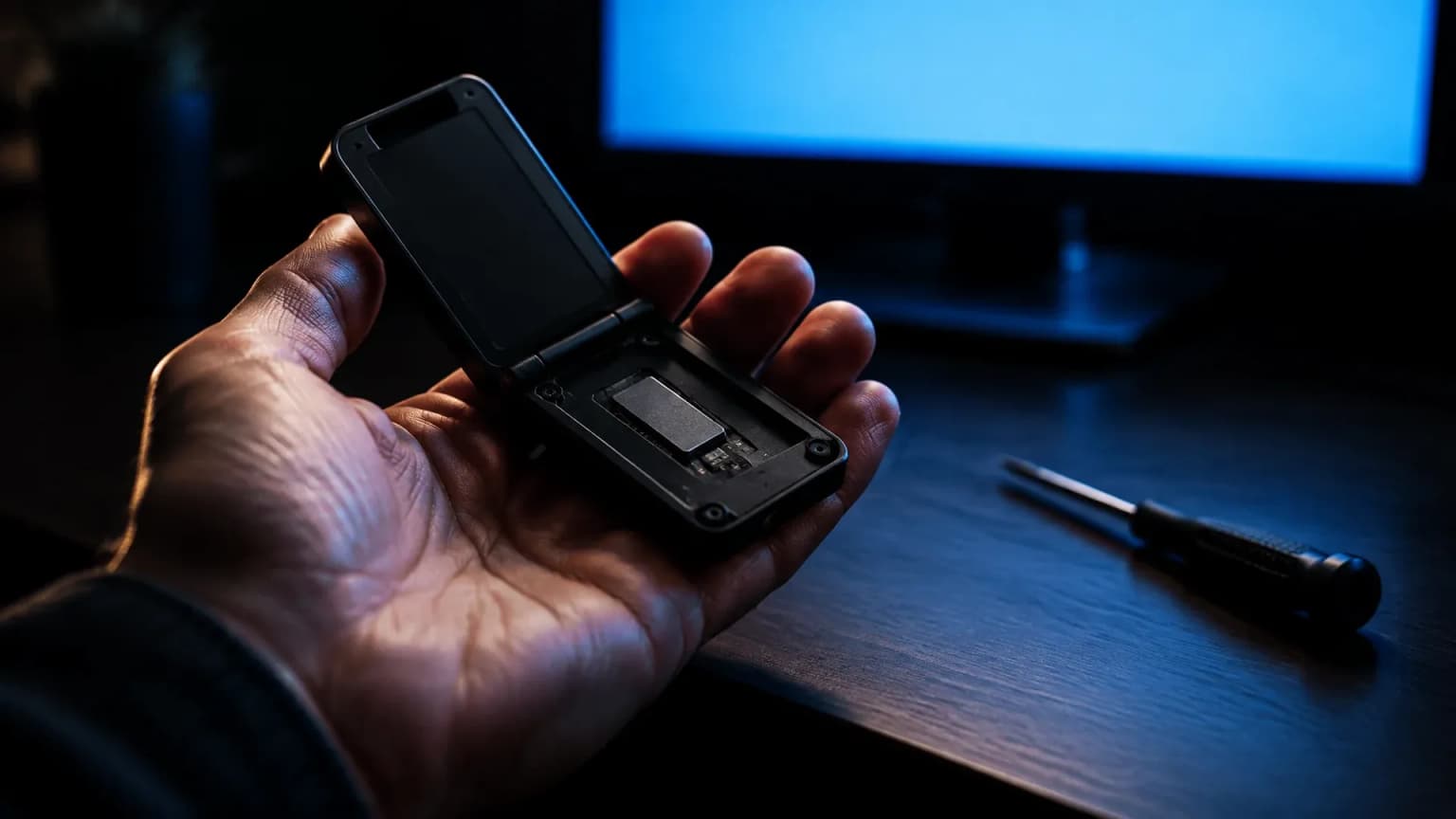
Hardware implant: extra board with a cellular module between main board and display
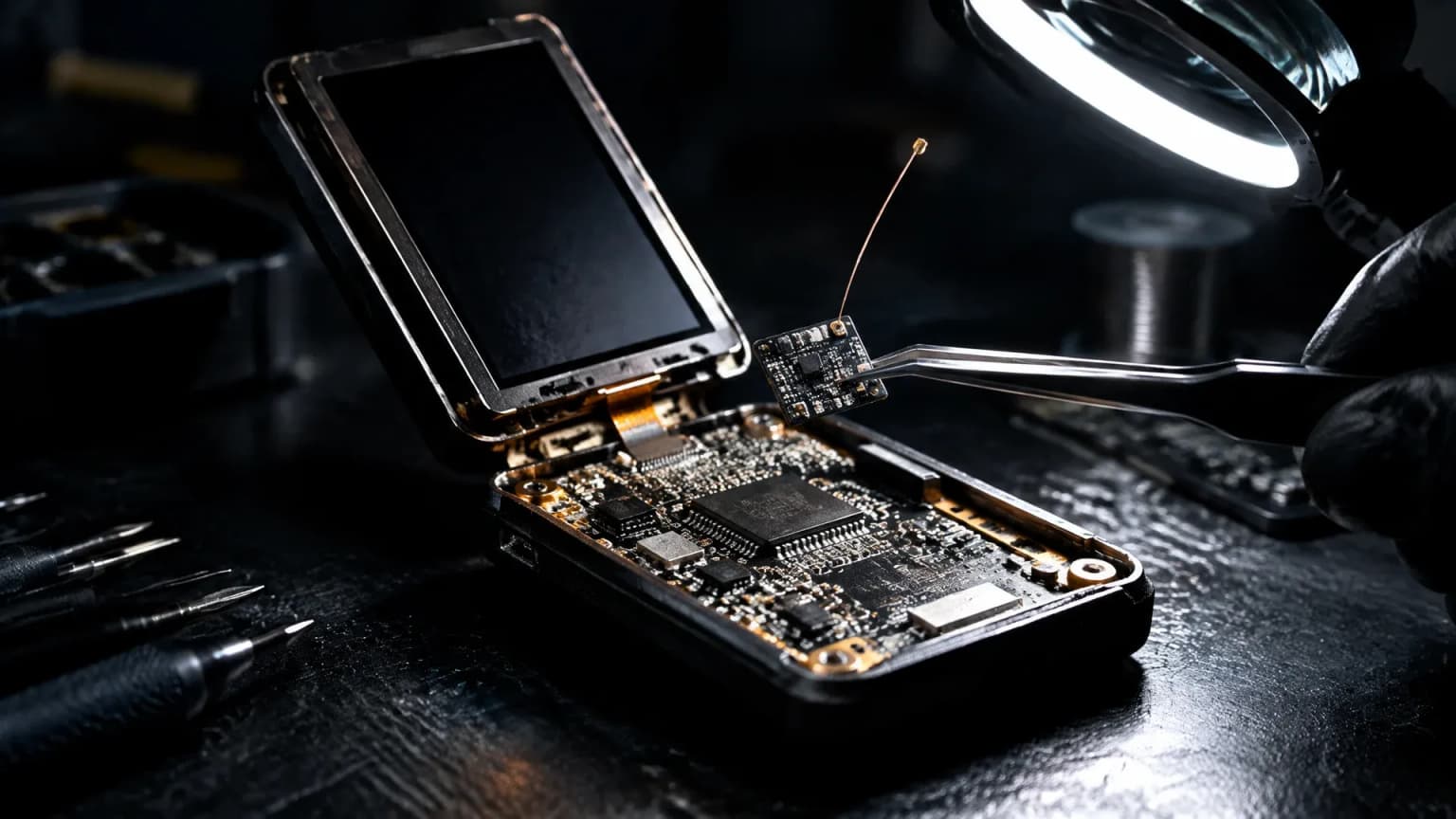
A hardware implant is a component fitted after the fact that secretly adds a function to a device that the manufacturer never intended. In the reported Safe 5, it is said to be an additional printed circuit board sitting between the main board and the screen. According to the description, it carries a cellular module and an antenna.
According to the customer's report, this board reads what the screen displays, including the wallet backup, and transmits the content over the mobile network as soon as the device is connected. Trezor states explicitly that it has not tested this mode of operation itself. According to the notice, the implant appears to work in a similar way to the components previously found in Ledger devices. Trezor expressly declines to compare the attackers while the investigation is ongoing; who is behind the implant is unknown, according to the manufacturer.
The attack path explains why such a component is so dangerous. A hardware wallet protects the private key by never passing it to the computer or smartphone. The recovery phrase, also known as the seed phrase, is the list of words from which all the wallet's keys can be recalculated. The phrase appears on the display during setup so that you can write it down. Anyone who reads exactly that moment needs neither a password nor the device PIN: with the phrase, the wallet can be restored on any device and emptied.
CryptoBilis: the same reseller as in the Ledger case in October
CryptoBilis is a distribution partner from Southeast Asia that has sold devices from both Ledger and Trezor. On October 9, 2026, Ledger began investigating losses among customers who had bought their devices from CryptoBilis, and later confirmed physical tampering on individual devices. On the same day, Trezor removed CryptoBilis from its network of authorised resellers, by its own account as a precaution and before there was any sign of affected Trezor devices.
The extent of the damage in the Ledger case has not been finally established. On-chain analysts estimated the losses in Bitcoin, Ether and Tron at more than $86 million, according to The Block; Ledger has not confirmed that figure. cryptoticker.io reported on the start of the case on October 9, 2026. In Germany, MediaMarkt and Saturn temporarily pulled Ledger devices from sale after a customer reported an implant, as we reported on October 13, 2026; the details are in our article on the sales halt at MediaMarkt and Saturn.
Since then, according to The Block, Trezor has examined four more customer devices from the CryptoBilis stock and found no trace of tampering on any of them. On October 13, the manufacturer also announced that it would significantly shrink its reseller network worldwide. Delisted partners may sell off their remaining stock until January 1, 2027, as we described on October 18, 2026 in our report on the end of Trezor reseller authorisations.
 Compare the best hardware wallets
Who is affected: Trezor purchases from CryptoBilis since March 2026
Trezor deliberately draws the circle of those affected widely. It covers anyone who has bought a Trezor device from CryptoBilis since March 2026, regardless of model. A Trezor Safe 3 or Safe 7 from this channel is therefore just as much included as the reported Safe 5. It also covers all marketplaces on which devices supplied by CryptoBilis were offered, explicitly including the shop on Tokopedia.
On current information, anyone who bought elsewhere is not affected. Trezor writes that there are no reports concerning other resellers or regions, and says it will inform customers if that changes. A device from the official Trezor shop or from an authorised reseller outside this channel is therefore not under suspicion.
If you are unsure where your device came from, the answer is usually in the order confirmation or on the invoice. A device from a third-party seller's marketplace listing whose supplier can no longer be traced deserves more caution than one with a clear invoice from the manufacturer. Trezor ties the entitlement to a replacement device to a purchase from CryptoBilis, so you should keep the receipt.
Trezor customers in Germany: the purchase channel matters more than the model
For buyers in Germany, direct exposure is low based on everything known so far. CryptoBilis was a distribution partner for Southeast Asia, and the reported case stems from a purchase via an Indonesian marketplace. The case still matters, because it is the second reported attack through the same reseller within a few weeks and now involves a second manufacturer.
The lesson applies to anyone buying a hardware wallet. A supply chain attack is one that does not hit the finished product at the user's end but a stage before it: manufacturing, warehousing, shipping or distribution. A tampered device looks like any other from the outside. Whether a device is safe therefore depends above all on how many hands it has passed through. If you are looking for a new device, the cryptoticker.io hardware wallet comparison lists the common models along with where to buy them.
A second point concerns all Trezor customers, whatever the reseller. Trezor says it expects scammers to exploit the incident and warns of phishing by email, letter and phone. Trezor customers have already been targeted by such attempts this year: The Block recalls the data leak at shipping provider ShipMonk, which affected the data of around 13,700 customers in August, and a further roughly 67,000 customers in the US who were reported as affected in September. Anyone who now receives a message about a supposedly affected device should read it with suspicion.
How to protect yourself from tampered hardware wallets in the resale chain
What happened: On October 28, 2026, a customer reported to Trezor an extra board with a cellular module in a Safe 5 bought from CryptoBilis via Tokopedia in August 2026. Trezor has not yet examined the device but considers the report credible; no loss had been reported as of October 30, 2026 (Trezor).
Are you affected? Anyone who has bought a Trezor device of any model since March 2026 from CryptoBilis or from a marketplace shop selling CryptoBilis stock may be affected. Anyone who bought directly from Trezor or from another reseller is not affected on current information. An implant cannot be detected from the outside; the only thing that counts is the purchase channel on your invoice.
- Move your funds: If coins sit on a CryptoBilis device, transfer them as soon as possible to a new wallet with a newly generated recovery phrase, because the old phrase must be treated as known.
- Never reuse the old phrase: Do not restore the backup of the affected device on another device either, because Trezor explicitly points out that the problem would then remain.
- Do not set it up: Do not switch on a device from this channel that is still in its original packaging, and never enter an existing recovery phrase on it.
- Request a replacement: Keep the device together with the receipt and contact Trezor support, which offers a new device or a voucher worth a new device.
- Fend off phishing: Never give your recovery phrase to anyone, including a supposed support agent, because Trezor never asks for it and warns of emails, letters and calls about this incident.
You can find the comparable devices in the hardware wallet comparison.
 Find a crypto exchange with EU authorisation
Why weighing and unscrewing are no substitute for an implant check
The obvious move would be to simply check your own device. Trezor advises against it. The customer who reported the implant had noticed a difference in weight, but according to the manufacturer a scale can neither reliably prove nor reliably rule out tampering. The notice puts it this way: “there's no dependable way to inspect a device yourself.”
Opening the casing is no solution either. An opened device is less informative for a later examination by the manufacturer, and a layperson can hardly tell a tiny extra board from a regular component. Trezor instead recommends the approach that works without any inspection: move your funds, keep the device and contact support.
The reason for this stance lies in the risk. Anyone who mistakes a tampered device for a clean one can lose everything in the worst case. Anyone who replaces a clean device as a precaution loses only some time and a transaction fee for the move.
New seed phrase: a stopgap without a second hardware wallet
Not everyone has a second, secure device to hand. For this case, Trezor names two interim solutions: a software wallet or an exchange you know. A software wallet is an app on a smartphone or computer that manages the keys itself. Such an app is more convenient, but exposed to the risks of the device it runs on. The software wallet comparison shows which apps are suitable.
An exchange, by contrast, holds the coins for you. Since MiCA, the EU's Markets in Crypto-Assets regulation, providers in the EU need authorisation to do so. Anyone choosing this route for a few days should pick a provider with that licence; the comparison of regulated crypto exchanges offers an overview. Trezor's advice is particularly relevant during the move: check the complete receiving address before you send, not just the beginning and end.
As soon as the replacement device arrives, generate a new recovery phrase on it, write it down offline and move the coins back from the stopgap. The phrase of the CryptoBilis device then stays permanently unused.
Lab result pending: how Trezor is now examining the Safe 5
Confirmation is the main open question. Trezor plans to examine the reported Safe 5 in its lab as soon as the device arrives and then update the notice. Only then will it be clear whether the implant works as described. The manufacturer says it is working with Ledger and other parties and thanks the emergency team SEAL 911, a group of security researchers that helps crypto users under attack.
The overhaul of the reseller network, which Trezor announced on October 13, is also under way; in the new notice, the manufacturer describes limiting its authorised sellers as a precautionary measure. For buyers, that is good news for now, because it reduces the number of stops between factory and customer. Until the delisted resellers lose their authorisation on January 1, 2027, buying directly from the manufacturer or from a clearly listed reseller remains the safest route.
Trezor implant: purchases from CryptoBilis since March 2026 are what count
On current information, the reported case affects a narrowly defined group, and no loss is known. Anyone who did not buy through CryptoBilis does not need to move anything. Three steps still make sense:
- Establish the purchase channel: Dig out the invoice or order confirmation. If the device came from CryptoBilis, follow the five steps above; the hardware wallet comparison helps with a new device.
- Secure the transition: If you lack a second device, use a vetted app from the software wallet comparison for a few days and check every receiving address in full.
- Only licensed exchanges: If you park coins temporarily on a trading platform, choose a provider from the comparison of regulated crypto exchanges.
(As of November 2, 2026. This article is not investment advice. Prices and fee structures change; check the terms with the provider before you buy.)
Frequently asked questions about the Trezor implant
Transparency note: This article was produced with the assistance of artificial intelligence and reviewed by our editorial team before publication. All figures and claims were checked against the primary sources linked in the text. The feature image was generated with AI.
Related articles
- Ledger Hack? $86 Million Drained: What Is Behind the Tampered Wallets From Southeast Asia
- Ledger Confirms Implant in a Hardware Wallet as Reports Reach Europe: What Is Behind It
- Trezor cuts its authorized dealers: the authorizations end on January 1, 2027
- Tampered hardware wallet bought in a store: your rights as a buyer under German law
- MediaMarkt and Saturn halt Ledger sales after a customer reports an implant
Which topics should we dive deeper into?
Select what genuinely interests you. Your picks feed directly into our editorial planning.
Crypto news that's actually worth your time.
Weekly. 60 seconds. Carefully curated by our editors: no hype, no promo flood, no spam.

September 10, 2026 9:13 AM
Trezor Hack Scare: That STM32 Entropy Email Is a Phishing Attack
Trezor users received a fake STM32 entropy warning sent from a real Trezor address. Here is what happened and what to do if you clicked.

September 10, 2026 1:14 PM
Phishing Email From the Real Sender Address: How to Check a Wallet Security Warning
An alleged security warning to wallet customers travelled through the manufacturer's genuine sending channel and passed every technical authenticity check. The test that still holds costs you four minutes.
August 22, 2026 4:13 AM
SafePal Data Breach: 39,798 Customers Exposed With Names, Addresses and Phone Numbers
SafePal confirmed a data breach on August 16, 2026: the names, delivery addresses, phone numbers and order details of 39,798 customers were exposed. Seed phrases and private keys were not affected, but the phishing risk is substantial.
August 11, 2026 1:32 PM
How to Store a Seed Phrase Safely: What Steel, a Passphrase and Multisig Do for Your Wallet Backup
The Coldcard case pushed the manufacturer question to the front, while barely touching on where the backup is kept. This guide places paper, steel, the passphrase and splitting methods against the BIP-39 and SLIP-0039 standards.
December 26, 2025 1:50 PM
Breaking: Trust Wallet Chrome Extension Hack Drains $7M, Full Reimbursements Promised
A supply-chain attack hit Trust Wallet’s Chrome extension, draining $7M from users. Binance’s CZ says all victims will be reimbursed.
August 25, 2026 10:31 PM
Crypto Wallet Phishing by Letter: Why the QR Code From Your Postbox Wants Your Recovery Phrase
Letters carrying a QR code urge a supposedly urgent wallet update on grounds of quantum resistance and lead to a page that asks for the recovery phrase. The Federal Office for Cybersecurity reported the ploy on August 18, 2026.
September 23, 2026 4:12 AM
How to Set Up a Crypto Wallet: Securing Your Coins in Seven Steps
Your own crypto wallet is set up in twenty minutes, yet a single step decides everything that follows. This guide takes you through wallet type, recovery words and the test amount, and sets out what BaFin and the tax office expect.
October 2, 2026 10:36 AM
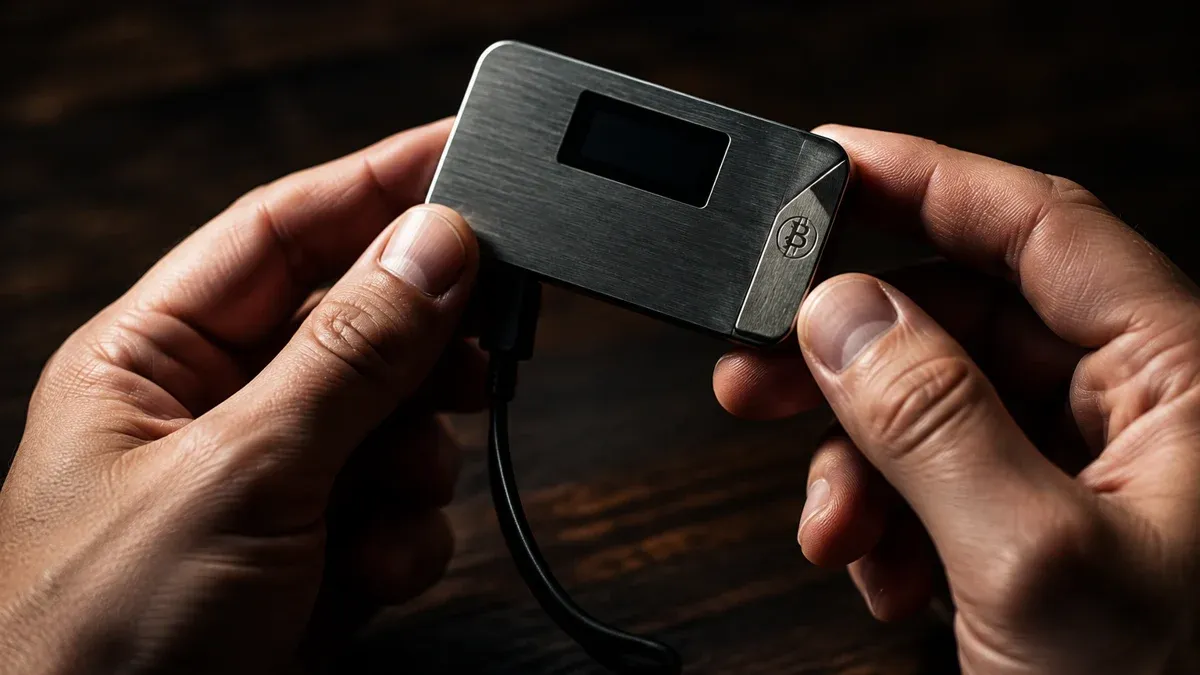
Hot Wallet or Cold Wallet: the Private Key Decides How Safe Your Coins Are
Hot wallet or cold wallet: the difference rests solely on whether the private key is online. What separates the two forms, where the limits of hardware lie and why moving to your own device triggers no tax.
September 30, 2026 7:16 AM
Tangem Wallet: The Card Without a Seed Phrase vs the Classic Hardware Wallet
The Tangem Wallet secures crypto with two or three identical cards instead of 24 words. What the sets cost, what the EAL6+ chip delivers and why losing every card is final.
August 13, 2026 4:59 PM
Trezor Data Breach: First 13,689 Customers, Then Roughly 67,000 More Exposed
A breach at Trezor shipping partner ShipMonk exposed names, phone numbers and home addresses of 13,689 customers in August; in September Trezor reported roughly 67,000 more in the US. Devices are safe, phishing risk is not.
October 30, 2026 3:44 PM
$6.5 billion in October: the infrastructure failed, not the smart contract
An in-house count of DefiLlama's hack register for October 2026 finds 32 incidents with $6.5 billion in losses. 99.5 percent of that flowed out through compromised infrastructure, while smart contract flaws cost less than $16 million.
October 23, 2026 10:21 PM
Ngrave phishing: $2.56 million left 70 wallets after a hijacked push provider
Attackers hijacked the push provider of Belgian hardware wallet maker Ngrave and sent fake security alerts to users of the LIQUID app on October 17. Anyone who entered their recovery words lost their balance: between $2.56 million and $2.65 million flowed out, while the devices themselves remained untouched according to the company.
September 20, 2026 4:15 PM
Crypto Phishing After a Data Breach: The Warning Signs in a Fake Exchange Email
After every major data breach, the number of phishing emails sent in the name of crypto exchanges and wallet manufacturers rises. This article shows you how to recognise such a message, which data a reputable provider never requests by email, and what to do in the first hour after a click.
October 29, 2026 3:40 PM
$13.84 million in 48 hours: Arkham says the drainer is “still moving funds”
Arkham Intelligence puts the haul of the CryptoBilis Ledger drainer at 95.35 million dollars across 1,486 addresses and reports 13.84 million dollars moved within 48 hours. Ten million USDT sit frozen, and Ledger traces every confirmed case back to one retail route.
October 26, 2026 12:15 AM
Coldcard class action over $140 million: what it means for owners
A proposed class action against Coldcard maker Coinkite is before a court in Ontario: a firmware flaw allegedly made recovery phrases predictable, and the claim puts the Bitcoin drained as a result at more than $140 million. What owners of an affected device should check and document now.
October 16, 2026 4:41 PM
Fake Ledger firmware updates: SlowMist reports phishing pages with a replica Genuine Check
A phishing campaign reproduces the sequence of an official Ledger update and asks, at the end, for the 24 recovery words. SlowMist reported it on October 16; Ledger had set out its reading of the underlying implant case a day earlier.
August 22, 2026 10:29 AM
Bitcoin Fork: What Happens to Your Coins When the Chain Splits
On October 31, 2026 a new chain called ECX splits off from Bitcoin, and every holder is credited automatically. Who actually receives the coins depends on the private keys, on voluntary replay protection and on a tax rule many overlook.
August 21, 2026 7:26 PM
Restoring a Seed on Another Manufacturer's Wallet: What BIP39 Guarantees and What It Does Not
Your seed is yours; the device belongs to a company. This article explains what the open BIP39 standard actually guarantees, why a wrong derivation path makes a full wallet look empty, and the test that settles both in twenty minutes.
August 4, 2026 1:21 PM
Coldcard Losses Near $114 Million as a Fourth Sweep Hits: Why Is Bitcoin Rising Anyway?
A fourth wave of Coldcard sweeps took another 449 BTC on Monday, yet Bitcoin climbed back toward $64,000. Here is what changed and who is still exposed.
July 31, 2026 3:54 PM
594 BTC Gone in 25 Minutes: The Coldcard Flaw That Made Seed Phrases Guessable
A firmware bug from March 2021 let an attacker drain $38 million from around 500 Bitcoin wallets. Here is what broke, who is exposed and what to do now.
October 17, 2026 10:44 PM
Creating a Bitcoin wallet: the first ten minutes decide who has access
A Bitcoin wallet is set up in ten minutes, and that is precisely the danger. Which four steps every setup runs through, why the first transfer should be a test amount, and which five mistakes cost the most.
September 17, 2026 4:14 PM
D'CENT App Wallet: How to Tell If Your Recovery Phrase Has to Move Now
Manufacturer IoTrust reports suspicious asset transfers in the D'CENT app wallet and asks users to move their holdings. One question decides the matter: has your recovery phrase ever been entered into the app?
October 14, 2026 1:30 PM
What is a hardware wallet? How the device protects your keys
A hardware wallet stores no coins, only the private key, and it never releases it. How signing works inside the device, what the 12 or 24 words mean, and which attacks the design cannot stop.
August 24, 2026 1:22 PM
Phantom Wallet Ends Sui and Monad Support: What to Do Before the Deadlines
Phantom Wallet removes Monad from its app on August 26 and Sui on September 24. The balances are not lost, but only one of the two ways out leaves your tax position untouched.
October 20, 2023 9:53 PM
How to Keep Crypto Safe
After the $6.3 billion Binance hack: how to keep crypto safe. Hardware wallets compared, wallet scanners such as MetaMask security alerts, the exchange settings that matter and a seven-step checklist.
October 19, 2026 1:14 AM

Qubic halts its mainnet after 1,404 wallets are drained: the seed was the weak point
An attacker drained 1,404 Qubic wallets on the night of October 18, roughly $1.3 million. The protocol was not to blame: seed generation in the browser supplied too little randomness.
October 5, 2026 1:36 PM
Paper Wallet with a Single Key: The Printed Storage Method Compared with the Seed Phrase
A paper wallet carries a single private key on paper, and that is exactly where its weaknesses lie: printers, change, misread characters. What the storage method achieves, where it fails and how to wind up an old sheet safely.
More from CryptoTicker