
Polymarket attack via a third-party provider: what users should watch now
A compromised third-party provider enabled unauthorized withdrawals of around $2.65 million at Polymarket, and trading was temporarily switched to cancel-only. The company has promised full reimbursement, but the weak point lies in the access layers around the platform.





Which topics should we dive deeper into?
Select what genuinely interests you. Your picks feed directly into our editorial planning.
Crypto news that's actually worth your time.
Weekly. 60 seconds. Carefully curated by our editors: no hype, no promo flood, no spam.
Polymarket temporarily halted trading on its international platform on October 29, 2026, after users reported unauthorized withdrawals. The attack ran through an external service provider that gave the attackers a way into accounts. The platform's trading contracts themselves were not affected. The company reopened trading the same day and promised full reimbursement to everyone affected.
For users in Germany, the incident shifts the question. The key issue is not whether a trading contract on the blockchain has been cleanly programmed. What matters more is how many outside services run on a trading site and what happens if one of them is taken over.
What happened at Polymarket: a compromised provider, not a code bug
Polymarket is a prediction market, a trading platform on which users buy and sell shares in the outcome of future events, with prices reflecting the estimated probability. Settlement runs through smart contracts, programs on a blockchain that execute stakes and payouts without an administering body.
According to the company, those programs were not the problem. Instead, attackers gained access to a provider whose code the platform had embedded in its website. Whoever controls such a service can change what the user sees and confirms in the browser without touching a single line of the trading contract.
The company has not named the provider. Citing an unnamed source, the news agency Reuters names a service for monitoring website speed; Forbes describes it as a website performance monitoring platform. Polymarket has not confirmed this attribution, and until it does, it remains second-hand information.
Around $2.65 million in POL: the range of loss estimates
There is no official figure. Polymarket itself has published neither the size of the loss nor the number of affected accounts. Observers' figures diverge, and they are presented here as a range.
Analyses by the research firm Arkham, cited by several trade outlets, put the figure at around $2.65 million, drained in POL, the token of the Polygon network on which Polymarket settles. The data service DeFiLlama lists just under $2.7 million. Crypto Economy reports $2.65 million and the resumption of trading.
The figures on the number of victims diverge even further. One report speaks of around $2.6 million across almost 1,000 accounts, another of about $3 million from fewer than 15 accounts. Both cannot be true at once, and each points to a different interpretation. A broad outflow across hundreds of accounts suggests a manipulated interface for all visitors, a narrow one suggests a few large accounts. Which reading holds is still open on the morning of October 30.
Cancel-only mode: how trading was temporarily narrowed
Polymarket put trading into a state in which no new orders could be placed, but existing ones could be cancelled. It was therefore not a complete shutdown. This cancel-only mode is the standard tool at exchanges during a disruption: it freezes the inflow while letting anyone out who wants out.
Reports of how long it lasted vary, from about half an hour to a longer interruption in the afternoon. What is certain is that the platform was running again the same day and the company reported all systems operational while the investigation continues.
Reimbursement and prosecution: what the company has promised
Polymarket has said it has fixed the problem and will fully reimburse all affected traders. According to Reuters, as reported by Forbes, the company has handed the case to UK law enforcement.
A promise is not yet a payment. If you are affected, you have no claim against a platform without a licence in the European Union that a German regulator would enforce. The only reliable evidence remains your own records: the time of the unauthorized withdrawal, the transaction ID on the blockchain and your correspondence with the provider.

The third incident since the spring: a pattern in the access layers
The case is not an isolated one. On June 28, 2026, cryptoticker.io reported on an incident at the same platform in which, as things stood then, around $3.1 million was drained; our assessment at the time is in our report on the Polymarket hack and the security risk of prediction markets. There too, a supplier was the starting point.
That is the real finding. For months, the attacks have come through the access points around the platform, not through its core. Interface, API and embedded third-party services are the soft layer on top of hard settlement.
 Compare the best hardware wallets
Third-party providers as a gateway: why outside code runs on a trading site
Almost every major trading site embeds services it does not operate itself: error logging, load-time measurement, usage statistics, chat windows, payment modules. Each of these services delivers code that runs in the user's browser with the same rights as the site itself.
This attack route has a name: a supply chain attack, an attack not on the target but on one of its suppliers. It is attractive because a single compromised provider gives the attacker access to dozens of sites at once, and it is practically invisible to the user, since the address bar, certificate and branding remain unchanged.
A parallel from our own coverage is close at hand. In a data leak at a Coinbase service provider at the end of October 2026, balances were not affected; what leaked were contact details that could then be used for phishing. The pattern is the same: it was the exchange's supplier that was attacked.
Prediction markets and EU licensing: the framework for users in Germany
In Europe, prediction markets operate in an unsettled area. Depending on their design, they fall under financial instruments, under gambling or under neither category, and that classification decides which supervisor would be responsible at all. A licence under the EU Markets in Crypto-Assets regulation, MiCA for short, covers trading in crypto assets, not automatically bets on events.
In practice this means that anyone trading through a platform not licensed in the EU bears the default risk themselves. The deposit protection of up to €100,000 that applies at a bank does not exist here, and a complaint to BaFin against a provider without a German licence leads to no enforceable result. Trading through a provider licensed in the EU instead at least puts a supervisor behind you in a dispute.
Balances on a platform: custody and a trading account are not the same
In a case like this, the difference determines the damage. If a balance sits in a trading account, the provider holds the keys and keeps an internal record of your claim. If it sits in your own wallet, a program or device that stores the private key itself, control stays with the owner.
At Polymarket, users typically connect their own wallet to the platform. That is the better route, but it is not the safe route, because a connection is a permission. Once granted, it allows an application to dispose of your funds to a certain extent, and that permission is exactly the target when the interface is manipulated. The hardware wallet comparison shows which devices keep the key outside the browser and what they cost.

Wallet connection permissions: where a third-party provider gets in
In practice, a wallet connection covers more than displaying a balance. It includes approvals for individual tokens, which allow a contract to move a certain amount of a token, often with no upper limit and no expiry date.
An unlimited approval granted last year is still active today. The most important step after an incident like this is therefore to revoke old approvals, even before withdrawing your balance. If you have never done this, you are usually carrying around a dozen open permissions, most of which you have forgotten.
 Find a regulated crypto exchange
Leverage and liquidation: what a trading halt means for open positions
A leveraged trade means that a trader holds a larger position with borrowed money than their stake covers; if the price moves past a certain threshold, the position is forcibly closed. That point is called liquidation.
A trading halt hits twice here. If you cannot add margin or sell while the market moves, you lose control over your own stake. On prediction markets, positions usually run without leverage. At derivatives exchanges it is different, and there a cancel-only mode is the difference between limiting a loss and a forced close at the worst price. If you trade with leverage, you should know which outage rules your provider has set out in writing for disruptions.
Holding period and tax: what a reimbursement payment triggers in Germany
For tax purposes the case is awkward, because it mixes several transactions. Under the prevailing view, a theft of crypto assets is not a sale and therefore does not trigger a taxable gain; whether a loss can be claimed is disputed and depends on the individual case.
A reimbursement paid voluntarily by a provider, on the other hand, may be treated as a return of funds, and if it is paid in a different token from the one lost, that constitutes an exchange with its own holding period. The one-year holding period for private disposals starts afresh for the amount received. For your records, that means documenting the date and amount of the outflow and the date and form of the reimbursement separately. This is not tax advice, and for larger amounts the matter belongs in expert hands.
Polymarket: reimbursement promised, the risk remains in the access layer
The platform is trading again, and the promise of full reimbursement is more than users get after many incidents of this kind. Even so, the incident has shown where the weak point lies, and it is not where most people assume. Three things make sense now:
- Revoke approvals. Withdraw old, unlimited token approvals for trading platforms, including platforms you no longer use. The software wallet comparison shows which wallets have this overview built in.
- Separate trading balances from holdings. Leave only the amount you actively trade on the platform and move the rest into your own custody. A regulated exchange does not replace your own wallet; it is simply the route with a supervisor behind it.
- Record what happened. Save transaction IDs, timestamps and correspondence before any reimbursement arrives, because the tax treatment needs both. A tax tool with a portfolio overview keeps the timestamps traceable.
(As of October 30, 2026. This article is not investment advice. Prices and fee structures change; check the terms with the provider before you buy.)
Frequently asked questions about the Polymarket attack
Transparency note: This article was produced with the assistance of artificial intelligence and reviewed by our editorial team before publication. All figures and claims were checked against the primary sources linked in the text. The feature image was generated with AI.
Related articles
- $6.5 billion in October: the infrastructure failed, not the smart contract
- Breaking: Trust Wallet Chrome Extension Hack Drains $7M, Full Reimbursements Promised
- Ledger Hack? $86 Million Drained: What Is Behind the Tampered Wallets From Southeast Asia
- Polymarket Hack: $3.1M Stolen as Prediction Market Hype Faces Its Biggest Test
- Tampered hardware wallet bought in a store: your rights as a buyer under German law
Which topics should we dive deeper into?
Select what genuinely interests you. Your picks feed directly into our editorial planning.
Crypto news that's actually worth your time.
Weekly. 60 seconds. Carefully curated by our editors: no hype, no promo flood, no spam.

November 2, 2026 9:25 AM
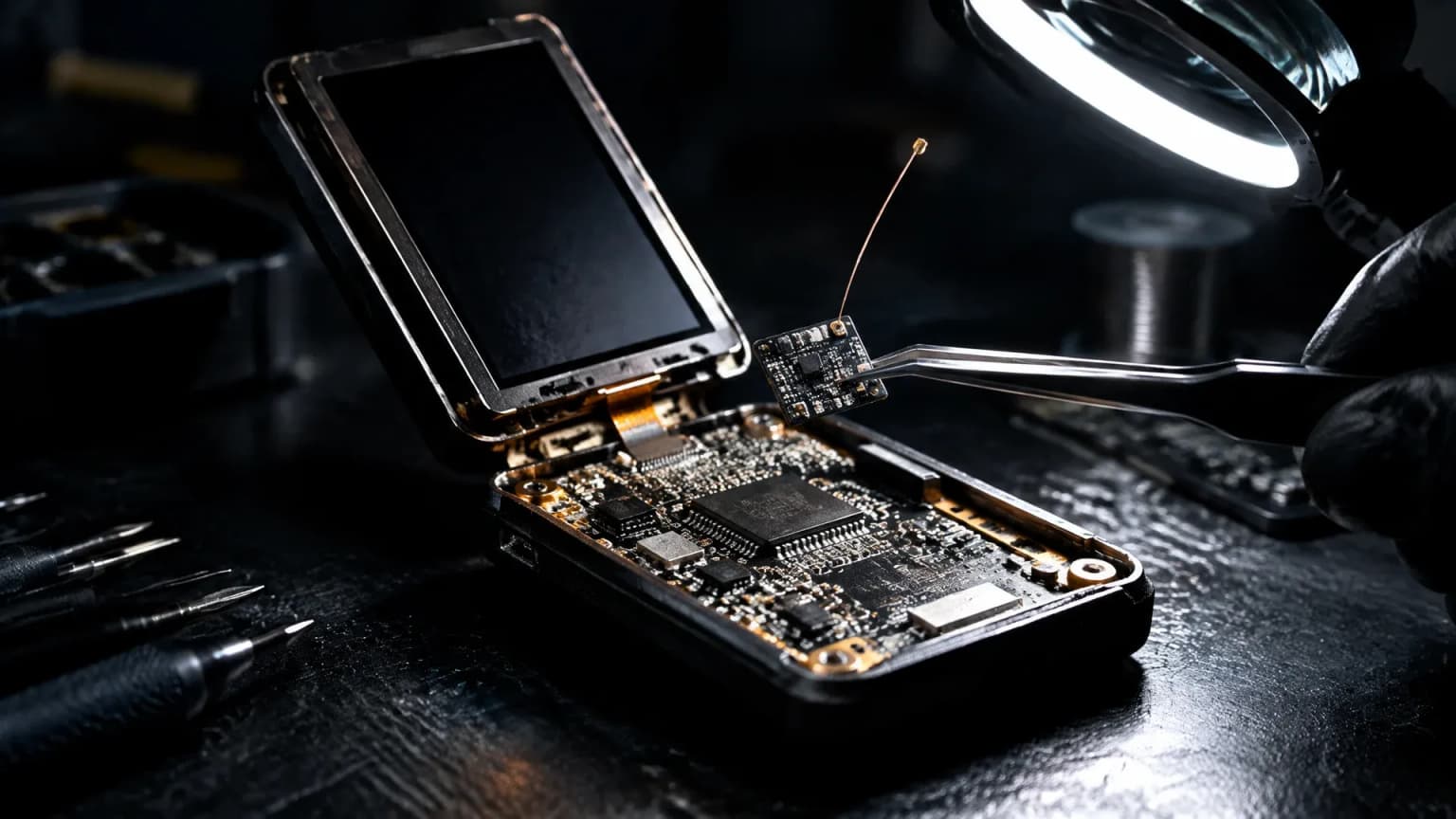
Trezor Safe 5 implant reported at CryptoBilis: who needs a new wallet now
Trezor is warning everyone who has ordered from former reseller CryptoBilis since March 2026: an extra board with a cellular module in a Safe 5 is said to read the recovery phrase. Who is affected, why weighing the device does not help, and how to move to a new wallet.
October 18, 2026 4:18 AM

Trezor cuts its authorized dealers: the authorizations end on January 1, 2027
After the supply chain attack on Ledger devices, Trezor is shrinking its dealer network and ending the authorizations on January 1, 2027. Until then, dropped partners may sell down their remaining stock, so the whole Christmas season still falls under the old list.
October 13, 2026 1:16 AM

Ledger Confirms Implant in a Hardware Wallet as Reports Reach Europe: What Is Behind It
Ledger confirms an unauthorised additional circuit board in a tampered device and traces the confirmed cases to a reseller in South-East Asia. One report from European retail is still open, which makes the purchase route of your own device the criterion.
September 29, 2026 10:14 AM
Bitget discloses the flaw at its supplier and sets out the timetable for withdrawals
Bitget has disclosed how the attackers reached its withdrawal systems on September 24: through a previously unknown flaw in a security product it had bought in. The second stage of the withdrawal schedule opens today at 08:00 UTC, and for the balance you keep on any exchange the case changes the arithmetic.

February 18, 2024 11:00 PM
Bitget Report Unveils 250% Surge in Crypto Custodial Assets
A Bitget report recently unveiled a report showcasing a remarkable 250% surge in assets within third-party custodial accounts.
October 30, 2026 1:50 AM

Binance Hack On-Chain Analysis: 50 Signatures, 197,460 ETH and $2.83 Billion Frozen
What really happened in the Binance hack? We analyzed the blockchain ourselves: 50 signatures in one transaction, $2.83 billion frozen, 197,460 ETH with the attacker and an Aave trick. Plus the key voices from X and our conclusion.

September 1, 2024 1:30 PM
Bitcoin Price Prediction: How Will September Unfold For BTC Price?
Bitcoin price is facing significant market volatility, as it hovers around $58,000. What are the key indicators and on-chain data shaping the future of BTC Price, and how will September unfold?

October 3, 2026 10:38 AM

44 Percent Below the Record: BNB's 37th Burn Follows in Mid-October
A year ago BNB stood at $1,370; today it is around $767. The price has been swinging between $750 and $800 for weeks, and the next quarterly burn is due around the anniversary of the record. Here are the levels that count and what the burn actually does.
October 2, 2026 4:32 AM

NEAR Intents halts withdrawals after a $3.8 million exploit: here are the reasons
NEAR Intents confirms an exploit of more than $3.8 million and holds deposits and withdrawals on eleven networks. Reimbursement is promised, a date for it is not.
September 25, 2026 1:47 PM

Magic Eden and Limit Break exploit: 530 WETH and thousands of NFTs drained, how to revoke your approvals
A bug in Limit Break's Payment Processor, the protocol behind Magic Eden's former Ethereum marketplace, has been draining NFTs and WETH since Thursday. Our blockchain analysis shows 911 affected wallets. What happened, why hardware wallets do not protect you and which two approvals to revoke now.
February 25, 2025 12:14 PM
BREAKING: Ethereum Price Crashes Below $2,500 as Crypto Market Drops 10%
Ethereum crashes below $2,500 as the crypto market drops over 10% in 24 hours. Bitcoin dips under $90K, raising concerns of further ETH declines to $1,800. Here’s what’s causing the crash.
December 26, 2024 1:08 PM
BGB News: Bitget Token Reaches New ATH Amid Market Momentum
Bitget Token (BGB) defies the market downtrend, hitting a new ATH of $7.32. What's driving this 368% surge and what the future holds for this top-performing cryptocurrency?
June 28, 2024 5:22 PM

TON Coin Price Prediction: A New SURGE or DIP Ahead?
Toncoin's on-chain data shows significant activity from large investors, hinting at a potential price rally. But how high can TON go, and at what level will it fall back?
September 30, 2026 10:39 AM

The Polygon Network Runs on POL Instead of MATIC: What to Watch in Your Wallet, Fees and Polygonscan
MATIC has become POL, one to one and without any haircut in value. What that means for your holding, how to set Polygon up, what a transfer costs and how to read Polygonscan.
September 28, 2026 7:17 PM
Polygon 2026: Polymarket Takes 84 Percent of the Fees With It to Its Own Chain
Polygon holds $765 million, and 83.6 percent of its fees come from a single protocol that has announced a move to its own chain. What is left of the ecosystem afterwards, what POL is still worth and what holders in Germany should watch.
September 13, 2026 4:13 AM

Symbiosis Hack: How to Check Whether Your Bridged Bitcoin Can Still Get Out
An attacker minted billions of unbacked syBTC on the cross-chain bridge Symbiosis and pulled out roughly $336,000. We checked for ourselves on September 12 which routes are still running: the way into the bridge is suspended, the way out is open.
August 13, 2026 4:59 PM

Trezor Data Breach: First 13,689 Customers, Then Roughly 67,000 More Exposed
A breach at Trezor shipping partner ShipMonk exposed names, phone numbers and home addresses of 13,689 customers in August; in September Trezor reported roughly 67,000 more in the US. Devices are safe, phishing risk is not.
August 26, 2024 7:44 PM

DOGS Token Major 120% Surge Within Hours Of Its Listing: BUY NOW?
The DOGS token experienced a dramatic surge of over 120% on Binance following its listing. How did the Telegram Open Network (TON) drive this surge?
July 8, 2024 7:51 AM

Crypto Market Crash News As BTC Price Crash Back To 56K
With the crypto market crash, and Bitcoin price drop to below 56k with recent dormant BTC whales activity, what comes next: a correction or further crash soon?
June 24, 2024 10:37 AM
Bitcoin Price Prediction: Can BTC Price Fall Below 50K?
The profitability of Bitcoin futures cash-and-carry trades has plummeted amid a significant crypto market selloff. What are the reasons behind the decline and what can traders expect next?
November 2, 2026 8:23 AM

BTCPay Server Hack: Bitcoin Hot Wallets Drained, Shut Your Server Down Now
BTCPay Server warns of swept Bitcoin hot wallets on older installs and tells operators to shut down. What happened, who is affected and what to do now.
April 7, 2026 3:54 PM

Crypto Market Prediction: Will Bitcoin Rally or Crash After US-Iran Decision?
Crypto markets await a key US-Iran decision. Will Bitcoin rally or crash next? Here are the 3 scenarios investors must watch.
March 15, 2025 5:40 PM

Bitcoin Price Prediction March 2025 with FOMC and TRUMP in Play
Bitcoin price prediction for March 2025 is one to expect, ahead of the upcoming FOMC meeting and Trump's strategic crypto reserve. What to expect for BTC price?
January 9, 2025 3:30 PM

2025 Bitcoin Price Prediction: What if BTC Price breaks below $90K Support?
The 2025 Bitcoin price prediction hinges on its critical $90,000 support level. Will it hold, or could we see declines to lower levels? Explore key insights shaping the short-term Bitcoin trajectory.
July 29, 2024 10:29 AM
XRP Price Prediction: Will XRP Break Its Next Resistance Level Today?
With the current market uptrend, all cryptos are showing bullish signals. With XRP struggling to surpass the $0.60 resistance level, could this market surge help do it?


More from CryptoTicker