
$13.84 million in 48 hours: Arkham says the drainer is “still moving funds”
Arkham Intelligence puts the haul of the CryptoBilis Ledger drainer at 95.35 million dollars across 1,486 addresses and reports 13.84 million dollars moved within 48 hours. Ten million USDT sit frozen, and Ledger traces every confirmed case back to one retail route.

Which topics should we dive deeper into?
Select what genuinely interests you. Your picks feed directly into our editorial planning.
Crypto news that's actually worth your time.
Weekly. 60 seconds. Carefully curated by our editors: no hype, no promo flood, no spam.
The attacker behind the so-called CryptoBilis Ledger drainer is not sitting still. The analytics firm Arkham Intelligence put the stolen holdings at 95.35 million dollars across 1,486 addresses on October 29, 2026, and noted that 13.84 million dollars had been moved on in the preceding 48 hours. For anyone holding a hardware wallet, that is the real news of the day: the case is three weeks old, but it is not closed.
Arkham wrote on X, quoted by crypto.news: “The CryptoBilis Ledger Drainer stole $95M, and is still moving funds.” A drainer is the technical term for a scheme in which an attacker empties a wallet completely as soon as they hold the access to it.
Arkham counts 95.35 million dollars across 1,486 addresses
The figure is an update, not a new discovery. When we picked up the case in mid-October, 86 million dollars and the question of the tampered devices were the focus. Arkham has since attributed further addresses. The outflows themselves fall between October 7 and October 9, 2026, according to the analysis.
Ledger has expressly not confirmed this total. The company points out that the estimates come from third parties and have not been verified by it. That is more than a formality, because the numbers diverge.
Bitquery arrived at 102 million dollars, Arkham at 95.35
The data firm Bitquery had named around 102 million dollars in an investigation published on October 16. Earlier analyses landed at 86 to 93 million dollars. Ranges like that arise because every analytics firm has to decide for itself which address it attributes to the attacker. Count an address that is later identified as someone else's, and the total comes out higher.
What holds up, therefore, is not the single round number but the range: between 86 and 102 million dollars, depending on attribution and cut-off date. The direction is the same across all the analyses, and it points upwards.
13.84 million dollars moved on within 48 hours
That funds are still in motion is the more important piece of information for those affected. Stolen holdings pushed across several addresses and blockchains usually end up at a service that swaps them into other money. That is exactly where investigators and stablecoin issuers step in, and that is where it is decided whether anything comes back from a theft.
Arkham currently attributes 30.44 million dollars to the addresses it has labelled. That is the portion that is visible and therefore, in principle, reachable. It is not an amount that victims would have a claim to, and it is no assurance that it will be frozen.
Tether keeps 10,000,010 USDT frozen on Tron
Part of the money has in fact been locked down. Following the intervention by stablecoin issuer Tether on October 9, 10,000,010 USDT sit frozen on the Tron blockchain. Freezing here means that the issuer puts the address in question on a blocklist, so the tokens there can no longer be transferred.
That works with centrally issued stablecoins, because there is an issuer who can intervene. With holdings that have no issuer, that lever does not exist. So anyone who wants to know how much of a theft is recoverable has to ask first what kind of value the loot sits in.
 Compare the best hardware wallets
The implant read the 24-word recovery phrase during setup
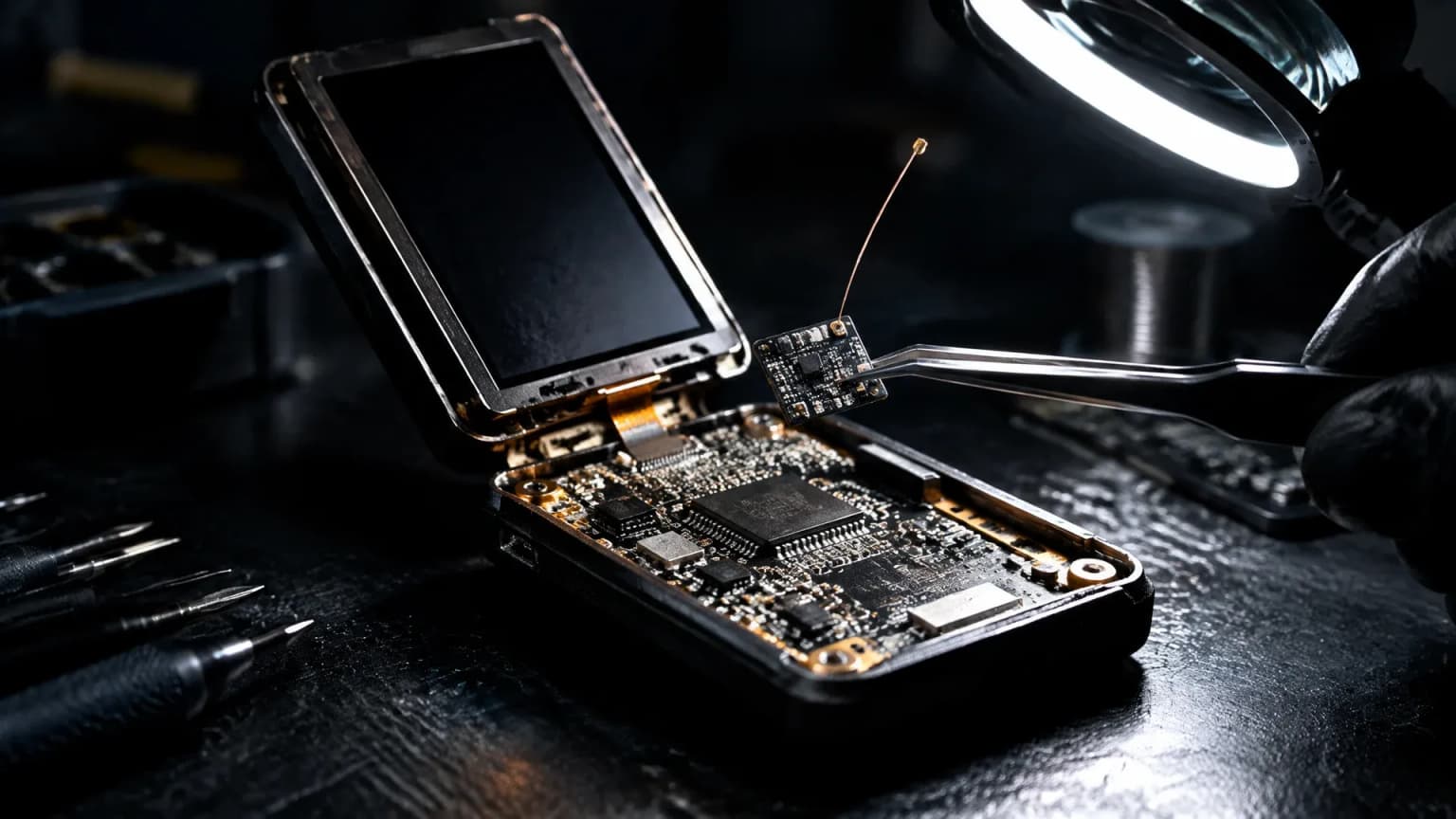
The technical basis of the case was disclosed by Ledger's security division Donjon, and it is the reason this incident sits differently from an ordinary phishing attack. Affected devices contained an additional component. It intercepts the 24 words of the recovery phrase at the moment the device is set up and sends them out over the mobile network, using an eSIM that has been provisioned for the purpose.
The recovery phrase, also called the seed phrase, is the sequence of words from which all of a wallet's keys can be recalculated. Whoever holds it holds the funds, regardless of where the device happens to be. Reading it out during setup is therefore the complete loss of control, and that is why it did not help those affected that their device went on working normally afterwards.
Why the attack only became visible weeks later
Time can pass between the interception and the emptying, because the attacker decides for themselves when to strike. According to the analysis, the bulk of the outflows fell within a window of 51 minutes on October 9. Until then there was nothing for those affected to see: no suspicious update, no error message, no unusual transaction.
51 minutes on October 9: the window that carried most of the outflows
That bunching explains why the total reached three digits so quickly. The attacker already had the phrases and only had to trigger the transactions. For the investigation that is an advantage, because a narrow window makes it easier to attribute addresses. For those affected it was the worst case, because reacting within that time was practically impossible.
Secure element and operating system were untouched, Ledger's findings say
Ledger stresses one point that matters for every other device: the implant alters neither the secure element, the hardened chip in which the keys sit, nor the device's operating system. Nor does it interfere with transactions or signatures. The company also states that there is no indication that its own infrastructure or its direct sales channel has been compromised.
Two conclusions follow, one reassuring and one uncomfortable. The reassuring one: anyone who bought their device directly from the manufacturer is not affected by this route. The uncomfortable one: the security of a hardware wallet therefore does not rest on its technology alone, but also on whose hands it passed through before it was first switched on. To weigh a device against that yardstick, the common models and their supply routes are set out in our crypto hardware wallet comparison.
Ledger traces every confirmed case back to one retailer's devices
According to Ledger's own investigation, all confirmed thefts came from devices sold through the South-East Asian retailer CryptoBilis. Ledger Support stated on October 10: “Ledger can confirm that one of the impacted users' devices contained an unauthorized hardware implant.”
How the components got into those devices, Ledger says it has not yet established. No accusation against the retailer is attached to this; CryptoBilis has suspended sales and shipments of Ledger devices for the duration of the investigation. Separately, The Record reported on the mechanism of the implant and the assessment by Ledger's security team.
 Find a regulated crypto exchange
MediaMarkt and Saturn halted sales, CryptoBilis halted shipments
For Germany, that is the concrete point of contact. After a report of a tampered device in the country, MediaMarkt and Saturn suspended sales of Ledger devices, and they did so before it was established whether the German case is connected to the series in South-East Asia. In parallel, Ledger has tightened its security requirements for retailers and stopped authorised sales in several South-East Asian markets.
Anyone who bought a device in a physical shop is in no worse a legal position than with any other defect. A tampered device is defective, and the claims lie against the seller, not the manufacturer.
What Ledger recommends to buyers of affected devices
The manufacturer's guidance distinguishes three situations. Anyone who bought a device from CryptoBilis and has not yet set it up should not set it up and should contact support. Anyone who has already set it up should move their holdings to a new device with a new recovery phrase. And anyone who has lost money should involve law enforcement before the device is opened, because the component is evidence.
That last point is easily overlooked. A device that has been unscrewed is worth considerably less to an investigation, and the temptation to take a look yourself is strong.
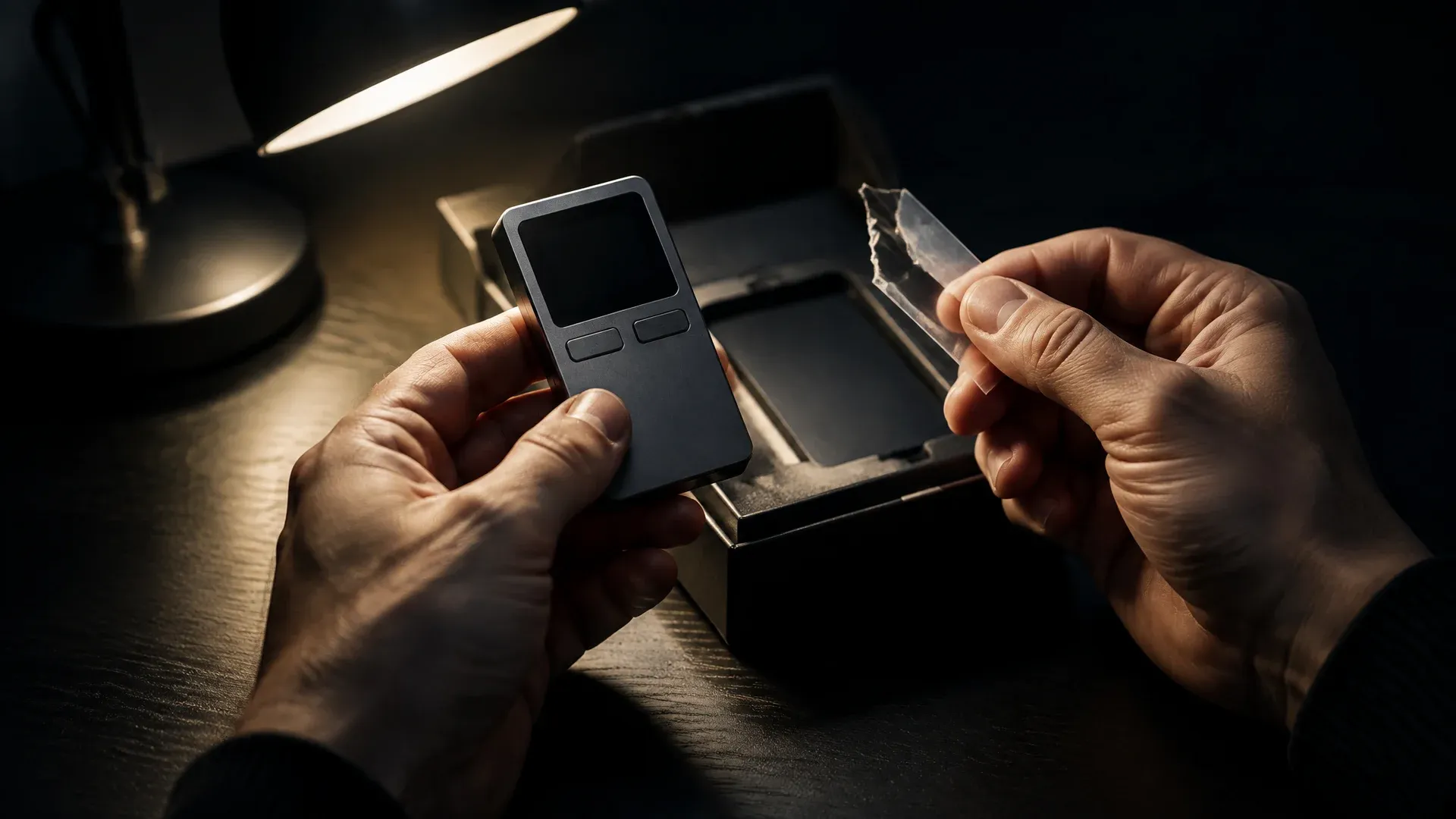
Police in Singapore report two further cases on October 28
On October 28, police in Singapore reported two cases of compromised wallets in which components may have intercepted recovery phrases or private keys. Ledger is examining further reports beyond those, among them one concerning a device bought at Singapore airport. A connection to the known series is not confirmed there.
Whether a second strand emerges from this is open. All that can be stated is that after three weeks the case keeps growing, in the number of reports as much as in the total.
A regulated alternative for anyone done with self-custody
A case like this also supports the opposite conclusion. Self-custody demands that you control the entire supply chain, from manufacture through to setup. Anyone unwilling to take that on can hand custody over, and under the EU's MiCA regulation that is done by providers with authorisation and supervisory obligations.
That choice has a price, and its name is counterparty risk: you trade responsibility for a device for trust in a company. There is no universally correct answer, only one that fits the sum involved and your own diligence.
Ledger drainer: 30.44 million sit on labelled addresses
- Check which route your device was bought through, and keep the receipt. If a replacement is due, compare the supply routes in the hardware wallet comparison and buy from the manufacturer or from a retailer it names itself.
- At any doubt, set up a new wallet with a new recovery phrase and move your holdings there. For the transition, or for small amounts, the software wallet comparison shows which applications are candidates.
- Decide deliberately how much you want to hold yourself. Anything beyond that can sit with an authorised provider; the criteria for that are set out under regulated exchanges.
(As of October 29, 2026. This article is not investment advice. Prices and fee structures change; check the terms with the provider before you buy.)
Frequently asked questions about the CryptoBilis Ledger drainer
Partner links: some links on this page are partner links. If you become a customer through one of them, we may earn a commission at no extra cost to you. Selection, ratings and ranking are decided independently by our editorial team. Ethics and Independence · Ownership and Funding
Transparency note: This article was produced with the assistance of artificial intelligence. Figures and claims are based on the primary sources linked in the text. The feature image was generated with AI.
For later? Save this article and find it again in your profile.
Related articles
- How to spot crypto phishing: wallet drainers took nearly $84 million in 2025
- FaceStealer: FBI warns of fake Zoom calls that drain crypto wallets
- iOS vulnerability worse_query: are crypto wallets on the iPhone at risk?
- Coinbase Wallet setup: since September the Base App is called Coinbase Wallet again
- Phantom wallet setup: twelve words decide the fate of your Solana coins
Which topics should we dive deeper into?
Select what genuinely interests you. Your picks feed directly into our editorial planning.
Crypto news that's actually worth your time.
Weekly. 60 seconds. Carefully curated by our editors: no hype, no promo flood, no spam.

November 7, 2026 11:12 PM
Keplr Wallet halts Google and Apple login after Web3Auth flaw drains accounts
Keplr has suspended login via Google and Apple after users reported unauthorised transactions; according to Web3Auth, the cause lies in its own infrastructure. Accounts with their own seed phrase or a hardware wallet are not affected, based on a preliminary review.
November 6, 2026 3:28 AM
Trust Wallet Phishing: Fake .cam Site Also Targets Phantom and OKX Wallet
The fake site trastwallet[.]cam imitates Trust Wallet and, once a wallet is connected, prepares transfers to fixed addresses. How to recognise the fake and what helps after an accidental signature.
November 4, 2026 1:22 AM
Restoring a Crypto Wallet: Your Seed Phrase Gets the Coins Back
Phone gone or hardware wallet broken? Twelve or 24 words get you back to your coins. Here is how the recovery works, and where it most often fails.
November 3, 2026 1:45 AM

Foundation Passport: 23,000 phishing emails came from the wallet maker's own systems
Hardware wallet maker Foundation has admitted that attackers got into its backend infrastructure through a self-hosted application and sent more than 23,000 phishing emails from the company's genuine systems. According to the company, the Passport devices and private keys are untouched, but around 5,600 postal addresses are not.
November 2, 2026 9:43 PM
How to store crypto safely: protect yourself from hacks like the one at Binance
After the $6.3 billion hack at Binance: how to store your cryptocurrencies safely. Hardware wallets compared, wallet scanners such as MetaMask Security Alerts, the key settings on your exchange account and a seven-step checklist.
November 2, 2026 9:25 AM
Trezor Safe 5 implant reported at CryptoBilis: who needs a new wallet now
Trezor is warning everyone who has ordered from former reseller CryptoBilis since March 2026: an extra board with a cellular module in a Safe 5 is said to read the recovery phrase. Who is affected, why weighing the device does not help, and how to move to a new wallet.
October 26, 2026 12:15 AM

Coldcard class action over $140 million: what it means for owners
A proposed class action against Coldcard maker Coinkite is before a court in Ontario: a firmware flaw allegedly made recovery phrases predictable, and the claim puts the Bitcoin drained as a result at more than $140 million. What owners of an affected device should check and document now.
October 23, 2026 10:21 PM
Ngrave phishing: $2.56 million left 70 wallets after a hijacked push provider
Attackers hijacked the push provider of Belgian hardware wallet maker Ngrave and sent fake security alerts to users of the LIQUID app on October 17. Anyone who entered their recovery words lost their balance: between $2.56 million and $2.65 million flowed out, while the devices themselves remained untouched according to the company.
October 18, 2026 4:18 AM
Trezor cuts its authorized dealers: the authorizations end on January 1, 2027
After the supply chain attack on Ledger devices, Trezor is shrinking its dealer network and ending the authorizations on January 1, 2027. Until then, dropped partners may sell down their remaining stock, so the whole Christmas season still falls under the old list.
October 17, 2026 10:44 PM
Creating a Bitcoin wallet: the first ten minutes decide who has access
A Bitcoin wallet is set up in ten minutes, and that is precisely the danger. Which four steps every setup runs through, why the first transfer should be a test amount, and which five mistakes cost the most.
October 16, 2026 4:50 PM
Ledger sells the Atom at $849 through its own shop only: “For years, our customers have been asking us for a Ledger phone”
Ledger presented the Android device Atom on October 15 and sells it exclusively through its own shop. After tampered devices were found in the intermediate trade, the distribution route itself becomes a security question.
October 16, 2026 4:41 PM
Fake Ledger firmware updates: SlowMist reports phishing pages with a replica Genuine Check
A phishing campaign reproduces the sequence of an official Ledger update and asks, at the end, for the 24 recovery words. SlowMist reported it on October 16; Ledger had set out its reading of the underlying implant case a day earlier.
October 14, 2026 1:30 PM
What is a hardware wallet? How the device protects your keys
A hardware wallet stores no coins, only the private key, and it never releases it. How signing works inside the device, what the 12 or 24 words mean, and which attacks the design cannot stop.
October 14, 2026 1:36 AM
MediaMarkt and Saturn halt Ledger sales after a customer reports an implant
Since October 13 MediaMarkt and Saturn have sold no Ledger devices, neither in store nor online. The trigger is a customer's report of an implant. What Ledger confirms, why the authenticity check does not help, and which steps make sense for devices bought in a store.
October 13, 2026 1:16 AM
Ledger Confirms Implant in a Hardware Wallet as Reports Reach Europe: What Is Behind It
Ledger confirms an unauthorised additional circuit board in a tampered device and traces the confirmed cases to a reseller in South-East Asia. One report from European retail is still open, which makes the purchase route of your own device the criterion.
October 12, 2026 10:41 AM
14.7 million swapped into USDD, 20 addresses frozen: what to check with your stablecoin
After the thefts among Ledger buyers, Tether has frozen more than 20 addresses and locked up around $10 million. Because part of the loot was swapped into USDD, the case shows exactly how far a stablecoin's freeze function reaches.
October 10, 2026 10:35 PM
Fake Ledger Site Tops Google Search: “Once the recovery phrase has been handed over, the wallet must be regarded as compromised”
A security researcher reports a rebuilt Ledger site high up in Google's results that asks for the 24-word phrase. Running alongside it are emails with an invented deadline of October 15.
October 9, 2026 5:36 PM
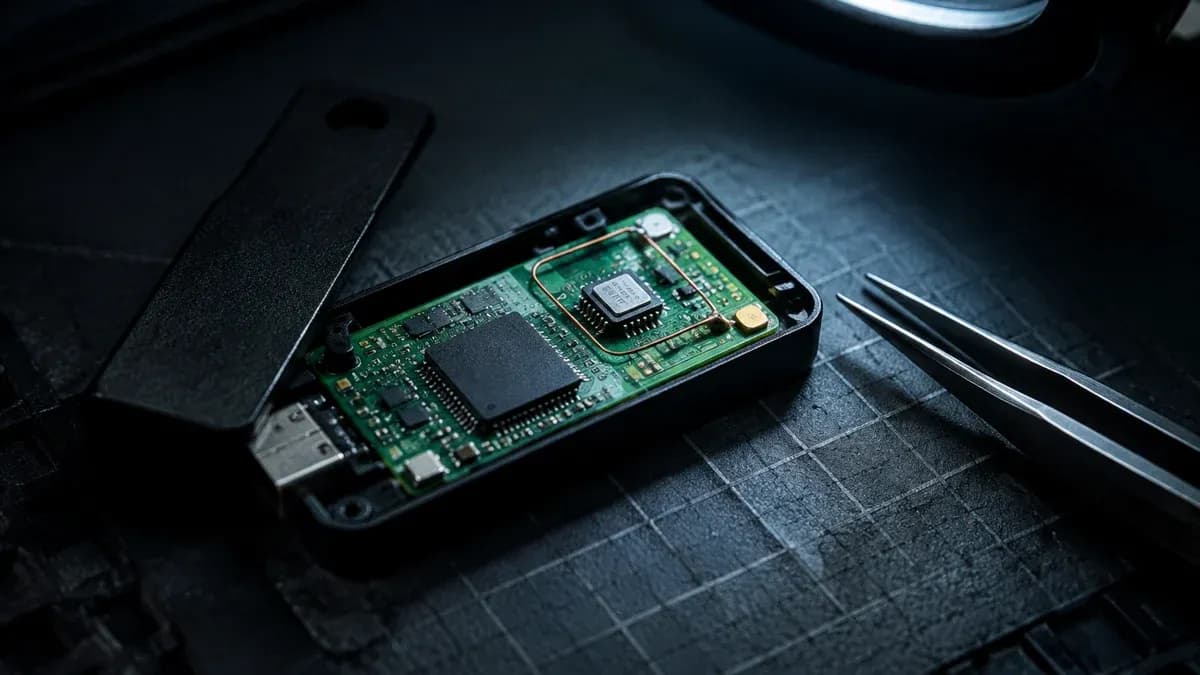
Ledger Hack? $86 Million Drained: What Is Behind the Tampered Wallets From Southeast Asia
Since Friday, Ledger users in Southeast Asia have been reporting empty wallets, and analysts count more than $86 million. Ledger has halted the reseller CryptoBilis. An implant inside the device reportedly reads the seed phrase. What is known, what CZ advises and what you should do now.
October 6, 2026 4:29 PM
Setting up MetaMask: the twelve words that control your coins
MetaMask is set up in ten minutes, and in those ten minutes you make the decisions that later determine what happens to your balance. This guide walks through installation, the recovery phrase, networks, approvals, fees and the German tax position.
October 2, 2026 10:36 AM
Hot Wallet or Cold Wallet: the Private Key Decides How Safe Your Coins Are
Hot wallet or cold wallet: the difference rests solely on whether the private key is online. What separates the two forms, where the limits of hardware lie and why moving to your own device triggers no tax.
September 30, 2026 7:16 AM
Tangem Wallet: The Card Without a Seed Phrase vs the Classic Hardware Wallet
The Tangem Wallet secures crypto with two or three identical cards instead of 24 words. What the sets cost, which security findings exist and why we no longer recommend Tangem.
September 20, 2026 4:15 PM
Crypto Phishing After a Data Breach: The Warning Signs in a Fake Exchange Email
After every major data breach, the number of phishing emails sent in the name of crypto exchanges and wallet manufacturers rises. This article shows you how to recognise such a message, which data a reputable provider never requests by email, and what to do in the first hour after a click.
September 19, 2026 1:23 AM
Hardware wallet lost: how to rescue your coins and what the tax office accepts
Your hardware wallet is gone, your coins are still on the blockchain: all that matters is whether you still have your recovery phrase. What goes wrong during a restore, and why the tax office as a rule does not recognise permanently lost access as a loss under Section 23 of the Income Tax Act.
September 17, 2026 4:14 PM
D'CENT App Wallet: How to Tell If Your Recovery Phrase Has to Move Now
Manufacturer IoTrust reports suspicious asset transfers in the D'CENT app wallet and asks users to move their holdings. One question decides the matter: has your recovery phrase ever been entered into the app?

September 10, 2026 9:13 AM
Trezor Hack Scare: That STM32 Entropy Email Is a Phishing Attack
Trezor users received a fake STM32 entropy warning sent from a real Trezor address. Here is what happened and what to do if you clicked.
August 25, 2026 10:31 PM
Crypto Wallet Phishing by Letter: Why the QR Code From Your Postbox Wants Your Recovery Phrase
Letters carrying a QR code urge a supposedly urgent wallet update on grounds of quantum resistance and lead to a page that asks for the recovery phrase. The Federal Office for Cybersecurity reported the ploy on August 18, 2026.
August 21, 2026 7:26 PM
Restoring a Seed on Another Manufacturer's Wallet: What BIP39 Guarantees and What It Does Not
Your seed is yours; the device belongs to a company. This article explains what the open BIP39 standard actually guarantees, why a wrong derivation path makes a full wallet look empty, and the test that settles both in twenty minutes.
More from CryptoTicker