
MediaMarkt and Saturn halt Ledger sales after a customer reports an implant
Since October 13 MediaMarkt and Saturn have sold no Ledger devices, neither in store nor online. The trigger is a customer's report of an implant. What Ledger confirms, why the authenticity check does not help, and which steps make sense for devices bought in a store.




Which topics should we dive deeper into?
Select what genuinely interests you. Your picks feed directly into our editorial planning.
Crypto news that's actually worth your time.
Weekly. 60 seconds. Carefully curated by our editors: no hype, no promo flood, no spam.
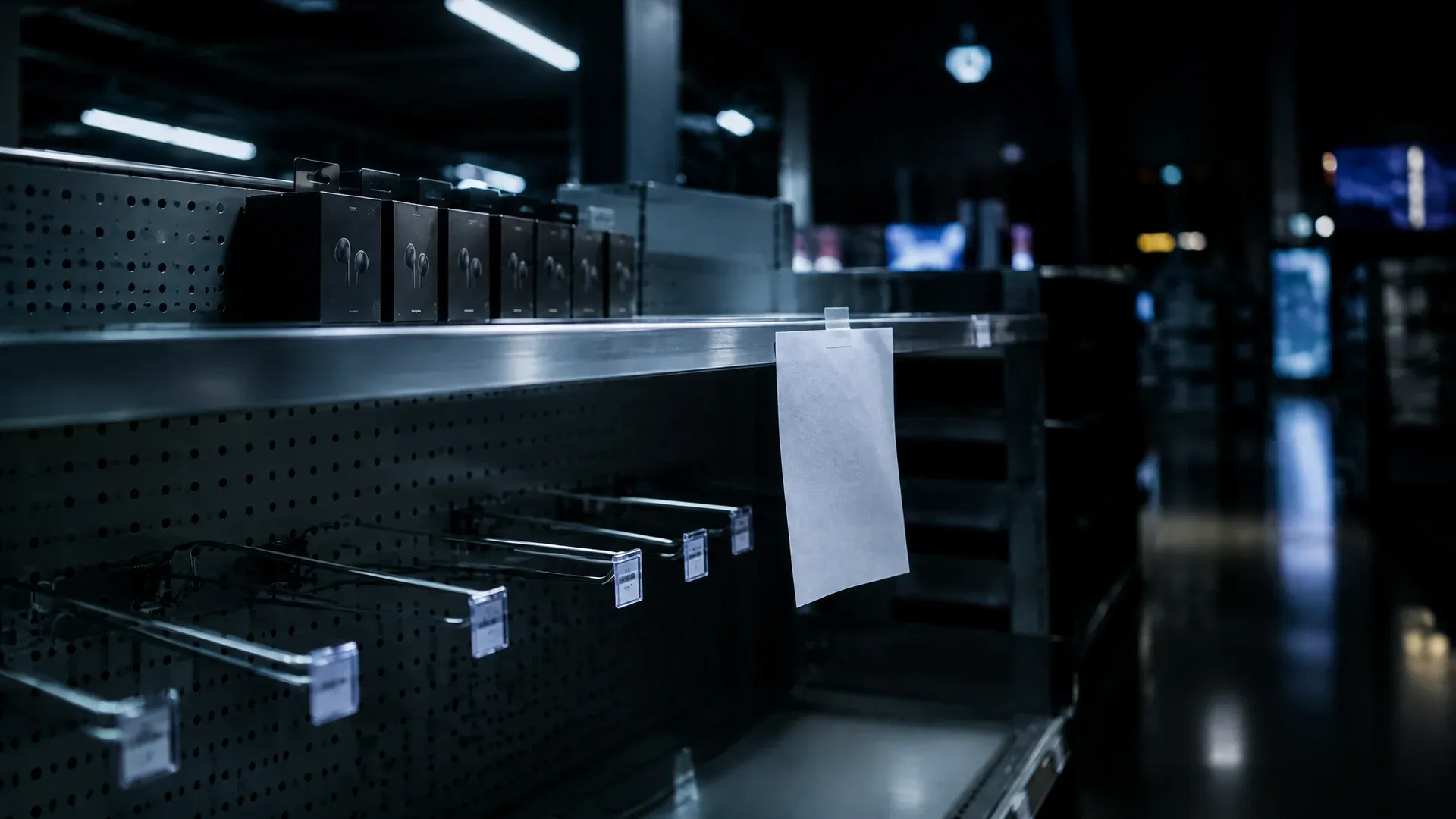
Anyone looking to buy a Ledger at MediaMarkt or Saturn today will find none. Since Tuesday, October 13, 2026, the electronics chain has stopped selling hardware wallets made by the French manufacturer in Germany, neither in its stores nor online. Ledger confirmed the step itself on X: MediaMarkt Saturn has halted sales "in coordination with Ledger" while the investigation runs. The trigger is the report of a customer in Germany who says he found an implant in his device.
The key context first: for the German case Ledger reports no lost customer funds and no indication of a breach of its own systems. All thefts confirmed so far go back to devices sold by the retailer CryptoBilis in Southeast Asia. The sales halt is a clear signal nonetheless, because it affects the country's largest electronics retailer. What follows is what is documented, what is open, and what to do if your Ledger came from a store.
Ledger at MediaMarkt and Saturn: what applies since October 13
Ledger made the sales halt public on October 13 in a post on X. According to it, MediaMarkt Saturn has discontinued the sale of Ledger devices while the investigation continues. The occasion is said to be the report of a customer in Germany about an implant. Ledger writes that there is no indication that infrastructure, systems or services were compromised, and that no customer funds were lost in this case. The security team Donjon is examining the devices sent in, and customer service is evaluating the reports.
MediaMarktSaturn confirmed to the industry service Cointelegraph that it had pulled all Ledger products from its stores and online platforms. It takes the incident "very seriously" and is in contact with the manufacturer, the crypto portal Blocktrainer quotes from the statement. Neither Ledger nor the retailer has said when the devices will return to the shelf. On returns of devices already sold there is likewise no information as of the afternoon of October 13.
How many devices have to be checked, and whether the German case is connected to the tampered devices from Southeast Asia, is open. The portal crypto.news, among the first outlets to report the halt, stresses that too.
The report from Germany: two devices from two stores
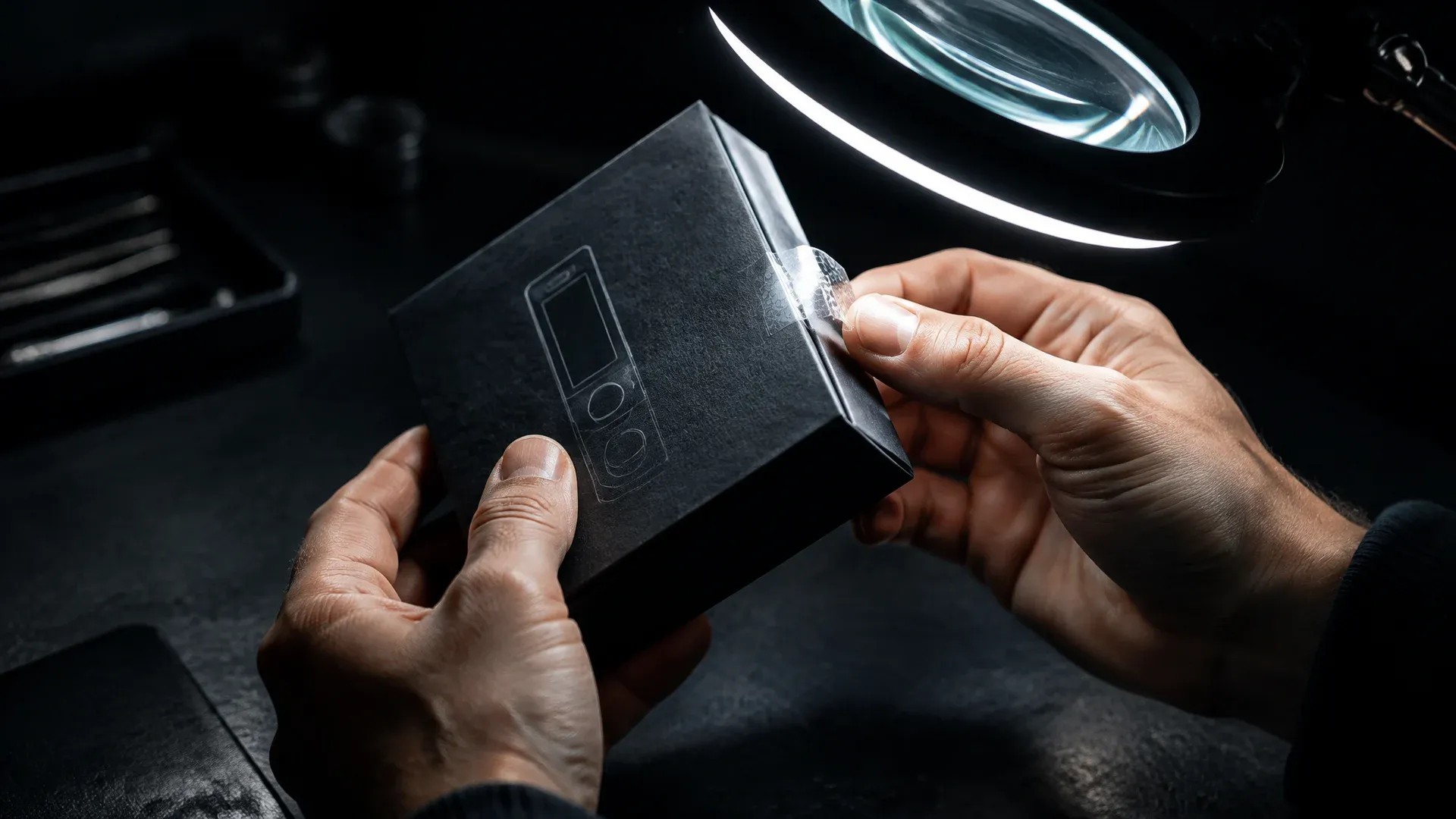
The case was made public by a user who writes on X under the name @0xJohannes_. At the weekend he reported a tampered device from a MediaMarkt store, and on Monday a second one from a different store, filming himself unboxing it. In both devices he says he found the same modifications: additional cables and a mobile network module. A member of staff confirmed to him that the second device was not another customer's return. By his own account he sent one device to Ledger and the other to Mark Karpelès, the former head of the exchange Mt. Gox, who has himself taken apart and documented tampered devices in recent days.
These details come from the customer himself. Ledger has not named the model, the store or the type of tampering in the German case. Our article of October 12 still carried the report from European retail as unconfirmed. With the sales halt the position has changed: manufacturer and retailer take the report seriously enough to sell nothing nationwide.
 Compare the best hardware wallets
What Ledger has confirmed about the implant
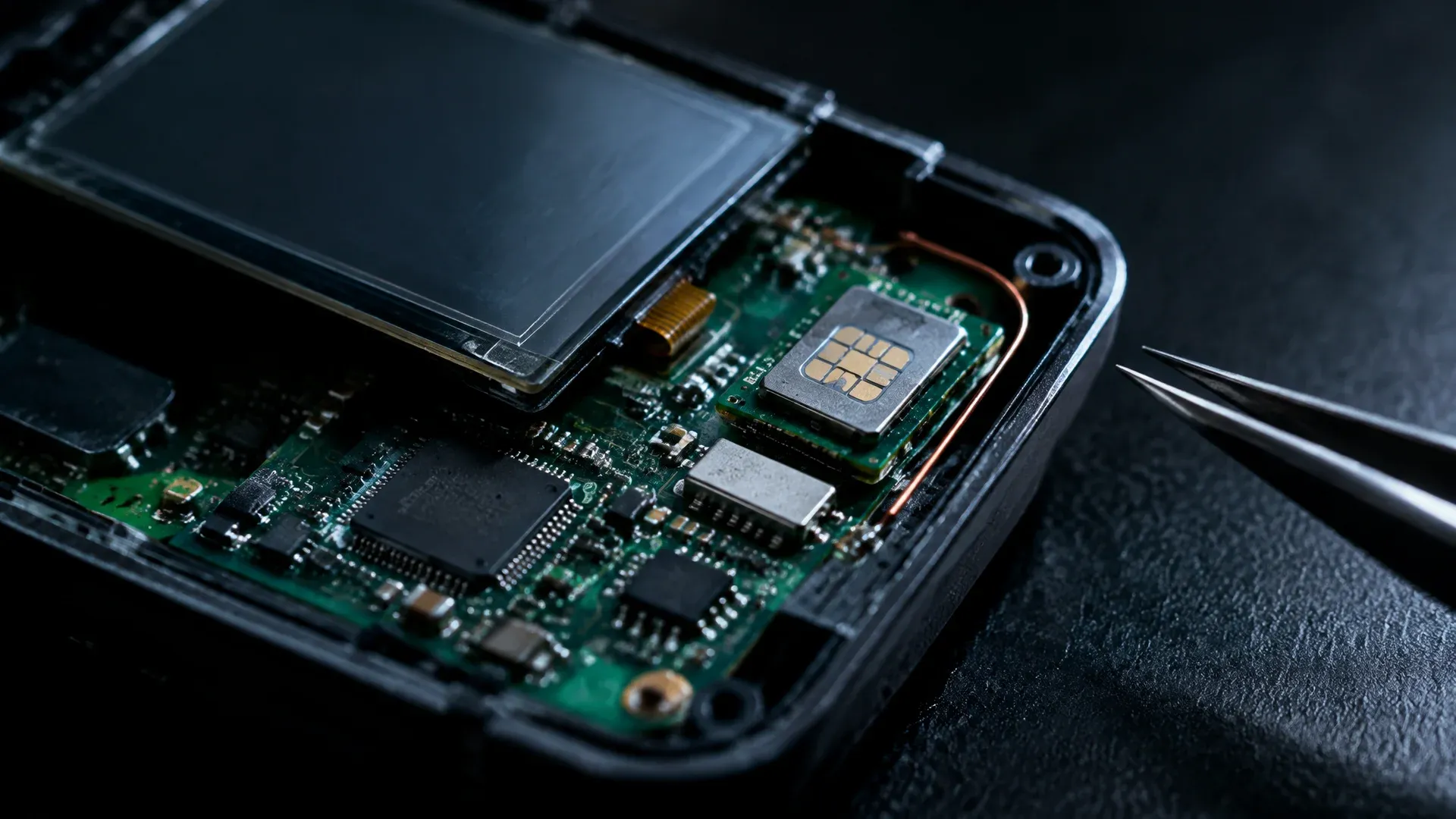
Behind the sales halt stands the CryptoBilis case, which we have been covering since October 9. On October 10 Ledger confirmed that an unauthorised additional circuit board sat inside a device from that Southeast Asian retailer. According to the manufacturer's account, which CoinDesk summarised on October 13, the implant works like this: a microcontroller of its own reads the 24 words of the recovery phrase off the display while the device is being set up, and sends them to the attackers over an eSIM via LTE mobile network.
The secure element, the operating system and the signatures of transactions were not altered, according to Ledger. Chief technology officer Charles Guillemet announced a review of reseller controls and of tamper protection. Chief executive Pascal Gauthier said the investigation should establish who tampered with the devices and at which point in distribution that happened. Ledger notes that every confirmed loss so far concerns a device from CryptoBilis. An outflow from a device bought elsewhere has not been verified.
Damage of more than $100 million, with no figure confirmed
There is no official damage total, and Ledger names none itself. The estimates of on-chain analysts diverge, because they attribute different numbers of wallets to the case:
| Source | Estimate | As of |
|---|---|---|
| Galaxy Research (Alex Thorn) | around $91 million | October 9 |
| On-chain researchers via CoinDesk | up to $93.2 million across more than 300 wallets | October 13 |
| Bitquery via crypto.news | around $102 million across 324 wallets | October 12 |
Tether has frozen USDT worth $10 million linked to the thefts, according to CoinDesk. For those affected that is a small ray of light, because frozen stablecoins can be returned later. Anything that flowed out in Bitcoin or Ether, by contrast, cannot be recovered.
Why the authenticity check does not help here
Many Ledger owners rely on the genuine check in the Ledger Live app. It verifies that the secure element is genuine and that the firmware comes from Ledger. Those are precisely the parts the implant left alone. A tampered device therefore passes the check, as Karpelès showed on his test unit. The additional board can only be spotted by opening the casing.
An uncomfortable truth follows from that: it is not the device that decides your security, but the route by which it reached you, and the moment the 24 words stand on the display. Set up a tampered device and you give away your recovery phrase at the instant you write it down. Background on the sequence is in our article on Ledger confirming the implant in a hardware wallet, and the prior history in the first report on the CryptoBilis case.
 Get security alerts first by email
A Ledger from MediaMarkt or Saturn: return, new phrase, moving the coins
Ledger officially recommends swapping the device only to buyers from CryptoBilis. For devices from German retail there is no recommendation from the manufacturer yet. These steps serve as orientation for anyone who wants to be on the safe side:
- Device still shrink-wrapped or not set up: do not set it up. Ask the retailer whether it will take the device back, and contact official Ledger support. Devices bought online can usually be returned within 14 days.
- Device set up, bought at MediaMarkt or Saturn: the safest solution is a new device straight from the manufacturer, a freshly generated recovery phrase and moving all coins onto it. Important: restoring the old phrase on a new device is no protection. Once it has been read out, the attacker knows it.
- Device bought directly from Ledger: as things stand today there is no confirmed case from direct sales. Following the situation is enough here.
- In every case: never enter your 24 words anywhere, neither on a website nor in a form nor over the phone. Ledger never calls unprompted, sends no direct messages and never asks for the recovery phrase.
Fraudsters exploit situations like this deliberately. Fake Ledger pages turned up in Google search as early as October 11. How to spot them is in our guide to spotting a fake Ledger website in Google. We advise non-experts against unscrewing the device: the warranty can lapse in the process, and without a reference image an implant is hard to tell apart from genuine components.
Buying a hardware wallet directly from the manufacturer: what it achieves
The case shows that every additional stop between factory and customer is a risk. A purchase in the manufacturer's own shop shortens the route to the minimum. That holds for Ledger as much as for Trezor, Tangem or OneKey. Which devices exist, how they handle recovery and what they cost is shown in our comparison of hardware wallets. Our experience with the best-selling entry-level model is summarised in our test of the Ledger Nano S Plus.
A second protection is splitting up: larger amounts can be spread across several wallets, and anyone using a multisig setup needs several devices for a payout. A single tampered device then cannot give everything away.
Ledger sales halt: what to take away
The sales halt at MediaMarkt and Saturn is a precaution, not evidence of thefts in Germany. Losses are confirmed so far only for devices from Southeast Asia. What is also clear: an implant that passes the authenticity check makes the route of purchase the most important security question. Buy a hardware wallet and you are best served buying it directly from the manufacturer, setting it up yourself and keeping the 24 words to yourself. We will update this article as soon as Ledger or MediaMarktSaturn provide new information.
Frequently asked questions about the Ledger sales halt at MediaMarkt and Saturn
Transparency note: This article was produced with the assistance of artificial intelligence and reviewed by our editorial team before publication. All figures and claims were checked against the primary sources linked in the text. The feature image was generated with AI.
Related articles
- Ledger Hack? $86 Million Drained: What Is Behind the Tampered Wallets From Southeast Asia
- Ledger Confirms Implant in a Hardware Wallet as Reports Reach Europe: What Is Behind It
- Buying More Bitcoin at $77,000: Savings Plan or Lump Sum
- $130 Million Gone Because the Randomness Was Predictable: Which Hardware Wallet You Can Still Buy
- How to Buy Bitcoin on Bitget: A Step-by-Step Guide
Which topics should we dive deeper into?
Select what genuinely interests you. Your picks feed directly into our editorial planning.
Crypto news that's actually worth your time.
Weekly. 60 seconds. Carefully curated by our editors: no hype, no promo flood, no spam.

September 16, 2026 4:19 AM

Check Your Safe Wallet Modules: How One Module Moved $7.7 Million Without a Signature
On September 15, 2,882 rsETH drained out of a Safe multisig without a single owner signing. An enabled module was to blame, and this is how you check your own wallet in five minutes.
September 21, 2026 4:13 AM
How to Buy XRP in Germany: Exchange, Destination Tag and Tax
Buying XRP works through a crypto exchange with MiCA authorisation, through a broker, or through an ETP in your securities account. This guide shows what matters on fees, the destination tag, custody and the German holding period.
October 10, 2026 10:35 PM
Fake Ledger Site Tops Google Search: “Once the recovery phrase has been handed over, the wallet must be regarded as compromised”
A security researcher reports a rebuilt Ledger site high up in Google's results that asks for the 24-word phrase. Running alongside it are emails with an invented deadline of October 15.

December 22, 2020 3:49 PM

Crypto Wallet Provider Ledger Hacked: Data Leak Results in Phishing Scams
Ledger, a cryptocurrency wallet provider has encountered a data breach. The official Twitter account of the hardware wallet tweeted that they have been alerted to the dump of a client database.
October 12, 2026 10:41 AM
14.7 million swapped into USDD, 20 addresses frozen: what to check with your stablecoin
After the thefts among Ledger buyers, Tether has frozen more than 20 addresses and locked up around $10 million. Because part of the loot was swapped into USDD, the case shows exactly how far a stablecoin's freeze function reaches.
October 5, 2026 10:35 AM

"We deliberately invested in our expansion": Bitpanda reports a loss of around 14 million euros for 2025
Bitpanda GmbH reports a loss of around 14 million euros for 2025, after a profit of 61.7 million euros the year before, on adjusted revenue that rose to 371 million euros. What the numbers mean for your custody, your terms and the holding period.

September 25, 2026 1:12 PM

XRP Jumps to $1.56: What Holders Should Check on Buying Route, Holding Period and Leverage
XRP trades at $1.56 on September 25, 2026, up 6.85 percent on the day and 16.64 percent on the week. What the on-chain data and the US ETF inflows actually show, and what investors in Germany should check now on buying route, holding period, leverage and custody.
August 25, 2026 10:11 PM

Ledger Closes a Gap in the Ethereum App: When the Display Shows Something Other Than What You Sign
Ledger has closed a flaw in its Ethereum app that let a malicious application swap the reviewed transaction for a different one. Anyone holding Ether or ERC-20 tokens on the device should check the app version and clear out old token approvals.

May 18, 2024 11:00 PM
Bitget Wallet Unveils Bitget Onchain Layer, Rolls Out $10M BWB Ecosystem Fund
Bitget Wallet, a leading non-custodial wallet and decentralized ecosystem platform, has announced the launch of its latest product blueprint.

October 12, 2026 10:27 AM
Is Bitcoin Still a Good Investment in October 2026?
Spot ETFs have changed who sets the Bitcoin price, and the easy repricing is behind us. What still supports BTC, what could break it, and how much belongs in a portfolio today.
August 31, 2026 10:12 AM
Fake AML Checks for Crypto Wallets: How to Spot the Scam Sites
Fraudulent websites pose as money-laundering screening services for crypto addresses and ask you to connect your wallet. A genuine check needs only the public address, and three of the domains named by Malwarebytes still respond twelve days later.
June 1, 2024 11:00 PM
Bitget Wallet Token (BWB) makes debut on the Bitget Launchpad
Bitget, the world's leading cryptocurrency exchange and Web3 company, has announced the launch of Bitget Wallet's BWB token on its Launchpad.
September 23, 2026 4:12 AM
How to Set Up a Crypto Wallet: Securing Your Coins in Seven Steps
Your own crypto wallet is set up in twenty minutes, yet a single step decides everything that follows. This guide takes you through wallet type, recovery words and the test amount, and sets out what BaFin and the tax office expect.
August 20, 2026 4:24 PM
Bitcoin Across Multiple Wallets: How Austria Works Out the Acquisition Cost
Bitcoin spread across several wallets? How Austria works out the acquisition cost and the rolling average price for tax purposes.
September 23, 2024 8:44 AM
Is it a Good Idea to Buy XRP below $0.60?
With recent XRP price drops positioning it below the $0.60 mark, investors are left pondering. Is it a good idea to buy XRP below $0.60?
October 2, 2026 10:36 AM
Hot Wallet or Cold Wallet: the Private Key Decides How Safe Your Coins Are
Hot wallet or cold wallet: the difference rests solely on whether the private key is online. What separates the two forms, where the limits of hardware lie and why moving to your own device triggers no tax.
September 30, 2026 7:16 AM
Tangem Wallet: The Card Without a Seed Phrase vs the Classic Hardware Wallet
The Tangem Wallet secures crypto with two or three identical cards instead of 24 words. What the sets cost, what the EAL6+ chip delivers and why losing every card is final.
September 28, 2026 4:28 AM

Is Quant a Good Buy at the Current Price?
Quant has broken out sharply after a mandate in US payments and stands at its highest level in twelve months. Is QNT a good buy at the current price? We examine the chart situation, volume and supply mechanics with our own data.
September 15, 2026 4:12 AM

Using Hyperliquid from Germany: What Applies to Your Funds Without a MiCA Licence
Hyperliquid is not entered in any EU register as an authorised crypto-asset service provider, and for perpetual futures a MiCA licence would be the wrong paperwork anyway. Here is what that means in concrete terms for your funds, your keys and your tax return.
August 23, 2026 1:16 AM

Is PEPE a Good Buy at the Current Price?
PEPE is back above both moving averages and the 50-day has crossed the 200-day. Is the memecoin a good buy at the current price, or is the rally already running on thin volume?
February 11, 2026 7:05 AM
5 Things to Look for BEFORE Buying Bitcoin
Thinking about entering the crypto market? Discover the 5 essential factors to check before you buy Bitcoin to secure your investment and strategy.
June 23, 2024 2:57 PM
Bitcoin Price Crash: Who is Buying the Dip?
Bitcoin price crashed and fell below its psychological price of $70,000. Despite this price dip, some investors are still buying Bitcoin. Who are they?
October 5, 2026 1:40 AM
Crypto at comdirect: 29 certificates with no order fee in a savings plan, but not a single coin
comdirect puts crypto into your securities account as a certificate, not as a coin. Our count of October 4, 2026 shows 29 securities from five issuers on 12 cryptocurrencies. On a one-off purchase the minimum fee of 9.90 euros amounts to 9.90 percent on 100 euros invested; in a savings plan the 1.5 percent is waived until the end of 2027.
September 25, 2026 4:11 AM
Bitget Pauses Withdrawals: Where Existing Customers in Europe Stand
Bitget reports unauthorised outflows of around $351.6 million (later revised to $387.5 million) and has suspended withdrawals. For existing customers in Europe, that closes the one route MiCA had left them.
September 22, 2026 4:12 PM

Nearly $1 Billion Into Bitcoin ETFs: What to Check on ETNs, Portfolio and Holding Period
US spot bitcoin ETFs took in a net $999 million on September 21, the third consecutive day of inflows. German investors cannot reach these funds: what ETNs, the holding period and your buying route mean for you.
September 20, 2026 4:15 PM
Crypto Phishing After a Data Breach: The Warning Signs in a Fake Exchange Email
After every major data breach, the number of phishing emails sent in the name of crypto exchanges and wallet manufacturers rises. This article shows you how to recognise such a message, which data a reputable provider never requests by email, and what to do in the first hour after a click.
More from CryptoTicker