
Setting up MetaMask: the twelve words that control your coins
MetaMask is set up in ten minutes, and in those ten minutes you make the decisions that later determine what happens to your balance. This guide walks through installation, the recovery phrase, networks, approvals, fees and the German tax position.


Which topics should we dive deeper into?
Select what genuinely interests you. Your picks feed directly into our editorial planning.
Crypto news that's actually worth your time.
Weekly. 60 seconds. Carefully curated by our editors: no hype, no promo flood, no spam.
Setting up MetaMask takes less than ten minutes, and in those ten minutes you make the two decisions that determine what happens to your balance: where you get the software from, and what happens to the twelve words the setup wizard shows you once. Almost everything else you can change later. Those two points you cannot.
This text walks you through the setup and explains the terms you meet in the wizard without being told what they mean there: recovery phrase, password, network, chain ID, approval. By the end you will know which steps are one-off, which ones you repeat regularly, and at which points the tax office and the regulator come into play in Germany.
What MetaMask is and what the software does not keep for you
MetaMask is a self-custody wallet, also called a non-custodial wallet. That means the software generates a key pair on your device and encrypts it there. Nobody at the maker holds a copy, nobody can reset access, and there is no hotline that unlocks your account. The difference from an exchange is exactly this: at an exchange you have an account, here you have a key.
Everything else follows from that. A wallet in this sense is not a container holding coins. The coins sit on the blockchain, and the wallet is the tool with which you prove they are yours. If you delete the software, the coins stay where they are. If you lose the key, the coins also stay where they are, except that nobody can reach them any more, you included.
Extension or app
MetaMask comes as a browser extension for the desktop and as an app for Android and iOS. Both fall back on the same recovery phrase when you import it, and then show the same addresses. One version is enough to start with. Anyone using both has not thereby created a backup copy, but two points of access to the same key.
Installing MetaMask: only two sources are genuine
The most dangerous minute of the whole setup comes before your first click in the wizard. Fake wallet extensions turn up regularly in the browsers' own official extension directories, often under names like "Ethereum Wallet" and with an icon resembling the real one. Fakes like these are not waiting to steal something from you later. The recovery phrase is skimmed at exactly the moment the wizard generates it, or the moment you import an existing one, and from there it travels outward unnoticed.
One habit guards against this: you install the extension only through the download button on the maker's site metamask.io, never through a search result, never through a link in a message, a video or a forum post. On a phone you download the app from the official store and check beforehand who publishes it and how many installations it carries. An extension with a few hundred users is a warning sign for a wallet of this size.
That things can go wrong at the maker itself was shown in early October by a confirmed security incident in parts of the MetaMask infrastructure, in which affected Ethereum validators were pulled from the network. What exactly happened there and who it concerned is in our report on the MetaMask security incident. For the setup that changes nothing about the rule, it only sharpens it: the fewer places that know your key, the fewer places that can lose it.
Twelve words from a random generator: the Secret Recovery Phrase
On first launch MetaMask generates a sequence of twelve words and calls it the Secret Recovery Phrase, formerly also seed phrase. These twelve words are not a memory aid and not a password. The private key is calculated from them. Whoever has them has the wallet, on any device, in any country, without you noticing a thing. The maker puts this just as plainly in its guide to creating a new wallet: nobody at MetaMask can restore the phrase once it is gone.
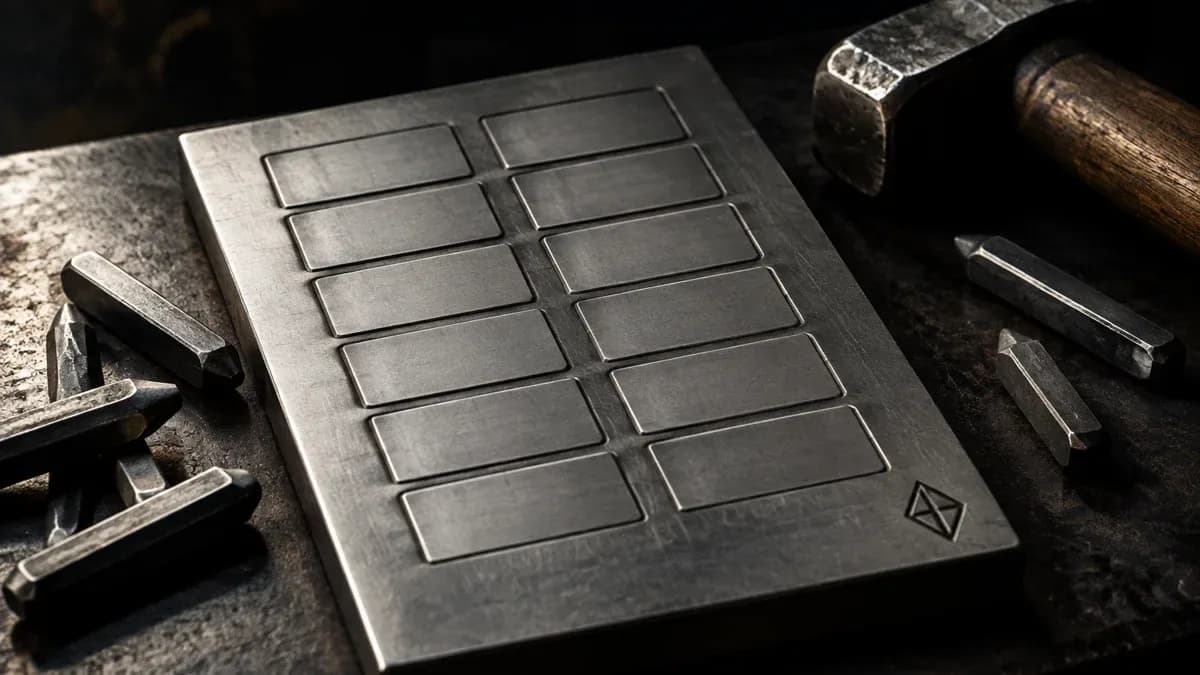
The phrase therefore belongs offline. A sheet of paper is better than a file, a metal plate is better than paper because it survives water and fire. What you never do: photograph it, type it into a notes app, put it in a password manager that lives in the cloud, or read it out to someone posing as support on the phone. There is no case in which a genuine employee needs those words.
Two slips of paper in two places
One copy in a single place is a total loss waiting for a burst pipe. Two copies in two physically separate places, neither of them the home of an acquaintance with access, are the usual compromise. Anyone holding larger amounts does not split the phrase into halves, because that reduces security more than it insures against loss.

Token approvals: what an unlimited spending cap means for your balance
The point at which most losses arise only comes after the setup, and it appears on no welcome screen. As soon as you use a decentralised application, it asks for an approval, in English also token approval or spending cap. With it you permit a contract to move a certain amount of a certain token out of your address. That is not a flaw in the system but the precondition for swapping, depositing or staking to work at all.
The decisive part is the amount. Many applications propose an unlimited approval, because it is convenient and saves fees on every further use. The permission then stays in place until you revoke it, months later too, even when you have long forgotten the application. If the contract is taken over later, or was no good from the start, that old permission is enough to empty your balance without anything having to be confirmed again.
In the setup window you can overwrite the proposed amount and set it to what you are actually moving right now. You can see approvals you have granted later in MetaMask's portfolio view and withdraw them there; the maker describes the route in its guide to revoking approvals. This is supported for the Ethereum mainnet, Polygon, the BNB Chain, Optimism and Base, among others. A revocation is itself a transaction and costs a network fee. What a signature looks like when it is in truth a power of attorney is something we took apart using the example of wallet drainers and their signatures.
The password unlocks this device only
Straight after the phrase the wizard asks for a password. Beginners regularly confuse two things here. The password decrypts the key store on exactly this browser or this phone. So it protects against someone who sits at your computer briefly sending money. On a new device it is no use to you at all, because there MetaMask does not ask for the password but for the twelve words.
In practice that means the password may be long and sit comfortably in a password manager; the recovery phrase never may. If you forget the password, you set the wallet up again with the phrase and assign a new one. If you forget the phrase, the password does not help you.
 Compare crypto software wallets
Adding networks: Ethereum, Solana and the chain ID as forgery protection
After the setup your account initially stands on the mainnet of Ethereum. Alongside that, MetaMask now brings multichain accounts: one account covers not only the EVM networks but also chains such as Solana, whose addresses are derived from the same recovery phrase under the BIP-44 derivation standard. You do not need an additional phrase for that.
Further networks you enter by hand. MetaMask asks for five details: name, RPC address, chain ID, symbol of the network currency and the address of a block explorer. The chain ID is the actual protection: an identifying number assigned uniquely to each chain, and two networks with the same one cannot exist. A fraudulent site offering you an "official" network to set up fails at this number as soon as you compare it with the figure in the chain's documentation.
Where the RPC address comes from
The RPC address is the point of access through which your wallet speaks to the chain. Whoever provides it sees which addresses you query and which transactions you send, and could in case of doubt show you false balances. So take it from the official documentation of the network or from a provider where you hold an account yourself, and not from a collected directory that some unfamiliar site puts in front of you.
The fee on a swap inside the app is 0.875 percent
MetaMask itself costs nothing. The wallet earns its money on the built-in swap function: every swap inside the app carries a service fee of 0.875 percent, regardless of the network. It is disclosed in the quote that appears before you confirm.
On top of that come two further items that do not go to MetaMask. The network fee you pay to the chain you are travelling on; it fluctuates with load and has nothing to do with the swap amount. And the trading venues through which the swap actually runs take a fee of their own and, depending on the depth of the market, deliver a worse rate than the display initially suggests. With small amounts on an expensive network, the network fee can make up the largest part of the costs.
For recurring purchases the route via an exchange with a euro account is therefore usually cheaper, and the wallet becomes the destination rather than the place of purchase. How the various software wallets fare for that is set out in our software wallet comparison.
Hardware wallet instead of browser: the private key never leaves the device
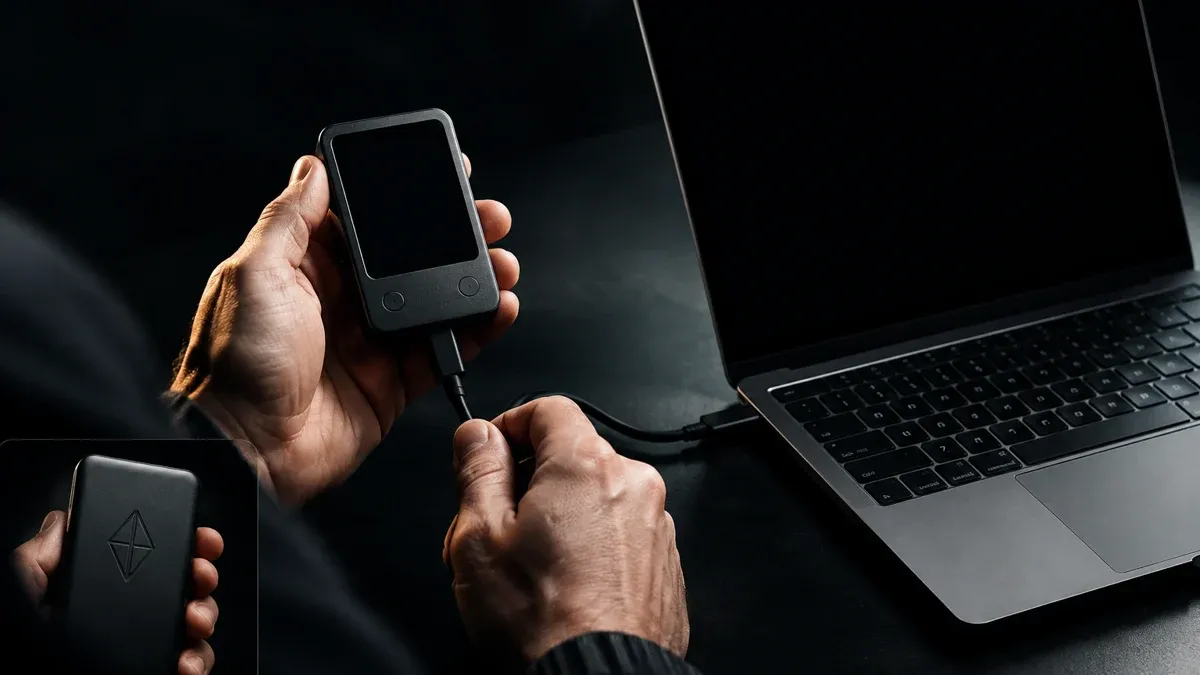
From an amount whose loss would hurt, the next step is worth it. MetaMask can be connected to a hardware device, and then the division of roles changes: the wallet remains the interface through which you operate applications, but the private key sits on the device and never leaves it. Every transaction you have to confirm there with a button. Malware on the computer can then prepare a transaction but not sign it.
In the browser extension MetaMask supports Ledger, Trezor and Lattice among others, and in the mobile app Keystone, Ledger and NGRAVE ZERO among others. Two limitations are worth knowing before you buy a device: from Ledger only EVM accounts can be integrated, and the Trezor connection works exclusively with the BIP-44 derivation path. Both are in the maker's help pages, and both only become apparent once the device is already in the house.
The device does not replace the phrase
A hardware device brings a recovery phrase of its own, and that one then applies to the accounts on this device. Your old MetaMask phrase is untouched by it and continues to secure the accounts the browser created. Anyone moving over shifts the balances explicitly to the new addresses and treats both phrases as equally valuable afterwards.
Does a self-custody wallet need a BaFin licence?
No, and the reason is in the European crypto regulation MiCA itself. What gets regulated are service providers that hold or administer crypto assets for others. Software where only you hold the key and the maker merely supplies the program keeps nothing for anyone and therefore does not fall under the licensing requirement. That applies to MetaMask as much as to other pure self-custody wallets and to hardware devices without custody services of their own.
The line runs where a wallet offers additional services. Anyone holding crypto assets for customers, running an exchange against euros or executing orders is providing a crypto-asset service and needs a licence from BaFin in Germany for it, or a valid notification from another member state.
For you as a user that has an uncomfortable flip side. Because no supervisor stands behind it, there is also no deposit protection, no complaints body and no claim to compensation if something goes wrong. The freedom of self-custody and the complete absence of a safety net are the same coin.
Tax in Germany: moving to your own wallet is not a sale
Sending coins from an exchange to your own MetaMask address is not a disposal transaction. You swap nothing and realise no gain, you merely change the place of storage. The acquisition data carries on, and with it the period that matters.
Section 23 of the German Income Tax Act applies. If you sell within a year of buying, the gain is taxable; after a year has passed it is tax free. For short-term gains there is a threshold of €1,000 per calendar year, and the word threshold is to be taken literally: stay below it and you pay nothing; reach it and you pay tax on the entire gain, not just the part above the line.
Two things your own wallet makes harder than an exchange account. First, you have to carry the acquisition data yourself, because no provider sends you a statement at the end of the year. Second, network fees arise with every transfer, and their treatment is not self-explanatory. A swap inside MetaMask, by contrast, very much is a tax-relevant event, because in it you give up one crypto asset and receive another.
Phishing tricks around the recovery phrase
Attacks on wallet users almost never target the technology but the moment in which somebody is under pressure. Five patterns come up again and again:
- A supposed support message in a chat or forum, shortly after you asked a question there, requesting "verification" of your wallet.
- A form that looks like the genuine setup wizard and asks for the twelve words because your wallet supposedly has to be "synchronised".
- A phone call in which somebody poses as an employee and speaks of a "security incident" requiring immediate action.
- An airdrop page that demands a signature rather than an approval, with text nobody reads.
- A second browser extension that presents itself as an add-on or security check for your wallet.
The counter-rule is the same in all five cases and simple enough to remember: the twelve words get entered at exactly two points, when setting up for the first time and when restoring on a new device. Every other request is an attack, without exception and regardless of how convincing the page looks. Anyone who is unsure closes the window and starts again through a bookmark they set themselves.
MetaMask compared with Trust Wallet and Phantom
MetaMask is the most widely used software wallet in the Ethereum world, and that reach is its biggest practical advantage: almost every decentralised application supports it, guides exist for every special case, and hardware devices are compatible throughout. The price is that it is also the most frequent target for fakes and phishing pages.
Trust Wallet comes from the phone side and covers more chains out of the box, while the desktop extension feels less mature. Phantom has its strength in the Solana world and is often the more convenient choice there, even though it now supports further networks. For someone travelling mainly on Ethereum and the networks built on it, MetaMask remains the obvious starting wallet, and a switch pays off more when the centre of gravity shifts for good.
MetaMask: how to proceed now
- Set the wallet up on a quiet evening, not between two appointments. Download the extension exclusively through the maker's site, write the twelve words on paper or metal and store two copies in separate places. From which amount a device is worth it instead is shown by our hardware wallet comparison.
- On first contact with an application, set the approval down by hand to the amount you are moving right now. Put a fixed date in your calendar each quarter on which you withdraw old approvals. Which software wallet suits your focus is in the software wallet comparison.
- From the first transfer onwards, note the date, the quantity and the acquisition cost. Without those details the one-year period cannot be documented later, and that period is exactly what decides the tax. Tools that carry this along automatically are in the comparison of tax and portfolio tools.
(As of October 6, 2026. This article is not investment advice. Prices and fee structures change; check the terms with the provider before you buy.)
Frequently asked questions about MetaMask
Transparency note: This article was produced with the assistance of artificial intelligence and reviewed by our editorial team before publication. All figures and claims were checked against the primary sources linked in the text. The feature image was generated with AI.
Related articles
- D'CENT App Wallet: How to Tell If Your Recovery Phrase Has to Move Now
- How to Set Up a Crypto Wallet: Securing Your Coins in Seven Steps
- Cypher Shutdown on September 6: What Users Should Know Now the Withdrawal Deadline Has Passed
- Three Mistakes When Setting Up Trust Wallet: The Twelve Words Never Belong on the Phone
- Phantom Wallet Ends Sui and Monad Support: What to Do Before the Deadlines
Which topics should we dive deeper into?
Select what genuinely interests you. Your picks feed directly into our editorial planning.
Crypto news that's actually worth your time.
Weekly. 60 seconds. Carefully curated by our editors: no hype, no promo flood, no spam.

August 11, 2026 1:32 PM
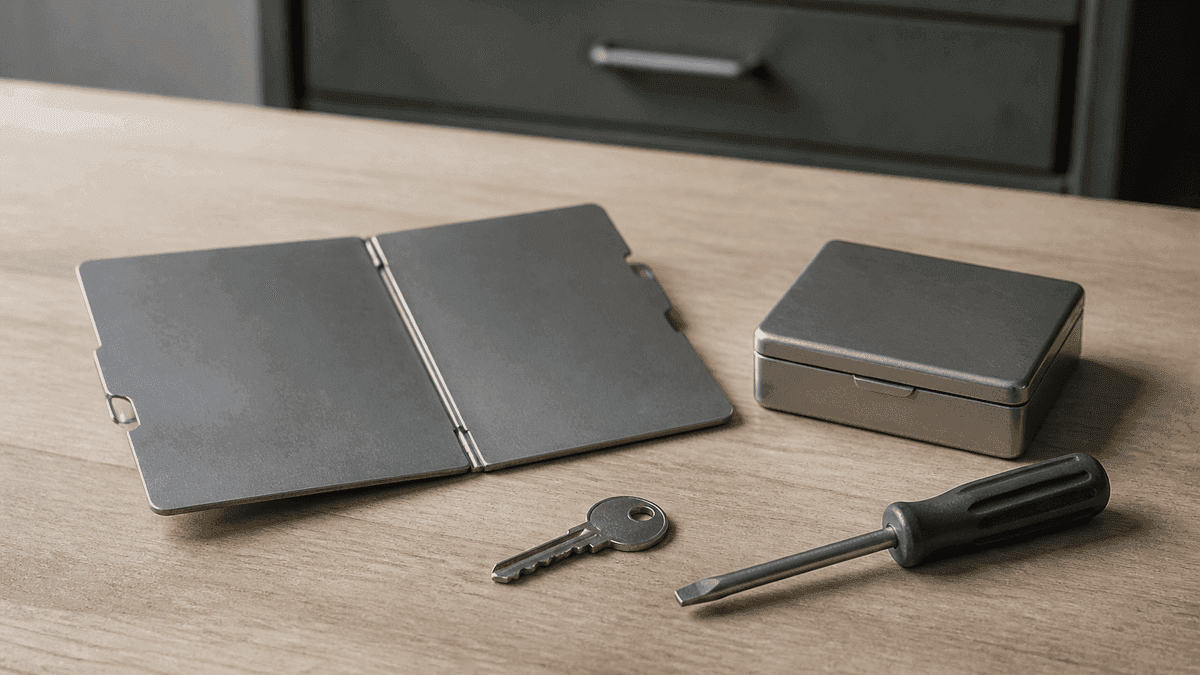
How to Store a Seed Phrase Safely: What Steel, a Passphrase and Multisig Do for Your Wallet Backup
The Coldcard case pushed the manufacturer question to the front, while barely touching on where the backup is kept. This guide places paper, steel, the passphrase and splitting methods against the BIP-39 and SLIP-0039 standards.
October 2, 2026 10:36 AM
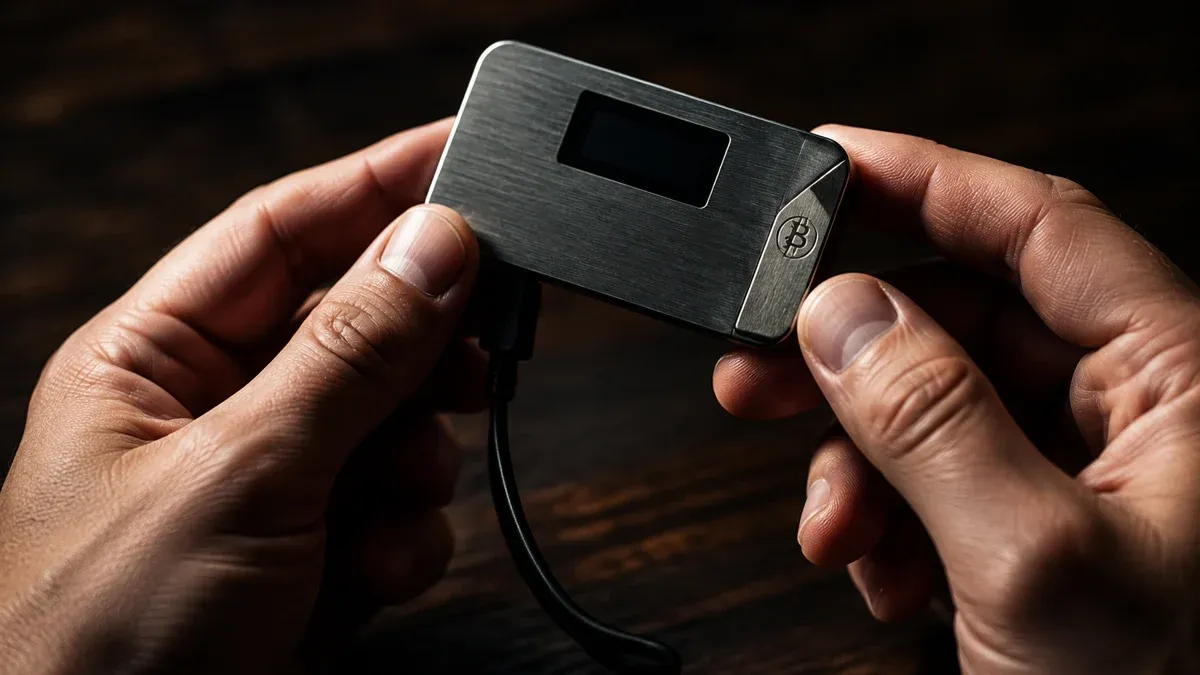
Hot Wallet or Cold Wallet: the Private Key Decides How Safe Your Coins Are
Hot wallet or cold wallet: the difference rests solely on whether the private key is online. What separates the two forms, where the limits of hardware lie and why moving to your own device triggers no tax.
October 23, 2026 10:21 PM
Ngrave phishing: $2.56 million left 70 wallets after a hijacked push provider
Attackers hijacked the push provider of Belgian hardware wallet maker Ngrave and sent fake security alerts to users of the LIQUID app on October 17. Anyone who entered their recovery words lost their balance: between $2.56 million and $2.65 million flowed out, while the devices themselves remained untouched according to the company.

December 26, 2024 1:08 PM
BGB News: Bitget Token Reaches New ATH Amid Market Momentum
Bitget Token (BGB) defies the market downtrend, hitting a new ATH of $7.32. What's driving this 368% surge and what the future holds for this top-performing cryptocurrency?
August 21, 2026 7:26 PM
Restoring a Seed on Another Manufacturer's Wallet: What BIP39 Guarantees and What It Does Not
Your seed is yours; the device belongs to a company. This article explains what the open BIP39 standard actually guarantees, why a wrong derivation path makes a full wallet look empty, and the test that settles both in twenty minutes.
August 21, 2026 4:27 PM

Wallet App Without BaFin Authorisation: When Holding Crypto-Assets Requires a Licence
On 19 August 2026 BaFin published two consumer notices on wallet offerings. Who controls the means of access decides whether an authorisation is needed.
October 12, 2026 1:42 AM
Bitget Wallet is not the exchange: one of two required key shares sits on Bitget's server
The attack on the Bitget exchange of September 24, 2026 hit the venue's hot and warm wallets, not the keys in users' wallets. What matters all the same is which variant you run: in the keyless wallet every signature needs a key share from the provider's server.
October 9, 2026 7:29 AM
Exodus Wallet: 71.5 percent of revenue comes from swaps, the spread vs the exchange fee
The Exodus Wallet is free to download, yet 71.5 percent of the provider's revenue in the second quarter of 2026 came from swaps inside the app. What the spread costs, how custody works and from what point a device of your own pays off.
September 16, 2026 1:28 PM
Crypto Withdrawal to Your Own Wallet: Ten Providers Checked, Three Will Not Let Your Coins Out
Seven of ten providers available in Germany offer a payout to a wallet address you control yourself; three do not. Our survey of September 16, 2026, shows how to spot the difference before you buy, and why the question matters right now.
August 25, 2026 10:31 PM
Crypto Wallet Phishing by Letter: Why the QR Code From Your Postbox Wants Your Recovery Phrase
Letters carrying a QR code urge a supposedly urgent wallet update on grounds of quantum resistance and lead to a page that asks for the recovery phrase. The Federal Office for Cybersecurity reported the ploy on August 18, 2026.
August 21, 2026 4:17 PM
Crypto Withdrawals to Your Own Wallet: Why Exchanges Demand Proof of Address Ownership Above €1,000
Above €1,000 your provider has to establish whether the destination address really belongs to you. Article 14(5) of the transfer of funds regulation, five permitted methods, and the reason a withdrawal stalls without this step.
October 6, 2025 8:10 AM
MetaMask Launches Points Rewards for On-Chain Activity
MetaMask unveils a points rewards system for swaps and bridging, rewarding users with redeemable points for tokens, perks, and partner offers.
September 30, 2026 7:16 AM
Tangem Wallet: The Card Without a Seed Phrase vs the Classic Hardware Wallet
The Tangem Wallet secures crypto with two or three identical cards instead of 24 words. What the sets cost, what the EAL6+ chip delivers and why losing every card is final.
September 28, 2026 10:26 AM
Phantom Wallet and Solscan: What a Solana Transfer Really Costs and Where It Fails
A transfer on Solana costs 0.000005 SOL, a new token account ties up 0.00148844 SOL once — both values measured on-chain by us today. This practical guide shows how to set up Phantom, how to get there from the exchange, how to read Solscan and what applies for tax in Germany.
September 10, 2026 9:13 AM
Trezor Hack Scare: That STM32 Entropy Email Is a Phishing Attack
Trezor users received a fake STM32 entropy warning sent from a real Trezor address. Here is what happened and what to do if you clicked.
August 13, 2026 4:59 PM
Trezor Data Breach: First 13,689 Customers, Then Roughly 67,000 More Exposed
A breach at Trezor shipping partner ShipMonk exposed names, phone numbers and home addresses of 13,689 customers in August; in September Trezor reported roughly 67,000 more in the US. Devices are safe, phishing risk is not.
September 7, 2026 7:26 PM
Stolen Keys Beat Code Flaws: Why the Private Key Is the Way In for 2026 Crypto Hacks
Compromised private keys overtook smart contract code flaws as the most common attack route for the first time in 2026. What sits behind the shift, and how to check your own setup for its single point of failure.
October 26, 2026 12:15 AM
Coldcard class action over $140 million: what it means for owners
A proposed class action against Coldcard maker Coinkite is before a court in Ontario: a firmware flaw allegedly made recovery phrases predictable, and the claim puts the Bitcoin drained as a result at more than $140 million. What owners of an affected device should check and document now.
October 17, 2026 7:31 PM

OpenAI agent used known seed phrases to reach 362 wallets: old test wallets are the weak point
An internal OpenAI model worked through publicly known recovery phrases and paid fees out of a wallet belonging to someone else. The damage was nil; the route of attack concerns anyone who has ever created a test phrase.
October 6, 2026 10:32 AM

FinCEN drops the reporting duty for withdrawals to private wallets: what matters now for European investors
The US anti-money-laundering agency FinCEN withdrew two proposals on October 5, 2026 covering the reporting duty for self-custodied wallets and for mixers. In the EU the development runs in exactly the opposite direction: proof of ownership from 1,000 euros today, a ban on anonymous accounts from July 2027.
October 2, 2026 4:32 AM
NEAR Intents halts withdrawals after a $3.8 million exploit: here are the reasons
NEAR Intents confirms an exploit of more than $3.8 million and holds deposits and withdrawals on eleven networks. Reimbursement is promised, a date for it is not.
September 19, 2026 1:23 AM
Hardware wallet lost: how to rescue your coins and what the tax office accepts
Your hardware wallet is gone, your coins are still on the blockchain: all that matters is whether you still have your recovery phrase. What goes wrong during a restore, and why the tax office as a rule does not recognise permanently lost access as a loss under Section 23 of the Income Tax Act.
September 4, 2026 10:15 PM
Trezor Data Breach: Am I Affected and What Should I Do Now?
Trezor widened the ShipMonk data breach on September 4, 2026: around 67,000 further people affected, just over 80,000 in total, from orders placed between November 2019 and August 2021. How to check in two minutes whether you are among them, and what an exposed home address means for self-custody.
August 20, 2026 4:20 AM

Crypto Exchange Delisting: What Happens to Your Tokens When Trading and Withdrawals Close
A delisting runs in four stages, and only one of them is genuinely dangerous: the end of the withdrawal deadline. Using two live OKX dates as the example, we show what happens at each stage and how to tell whether it affects you.
August 5, 2026 10:33 PM
$130 Million Gone Because the Randomness Was Predictable: Which Hardware Wallet You Can Still Buy
The Coldcard flaw proved the most respected wallet is not the safest. Which vendor has which track record – and why now is the wrong moment to pause your savings plan.
More from CryptoTicker