
HODL Meaning: A 2013 Typo and a 146-Fold Bitcoin Gain Since
HODL means holding cryptocurrencies for the long term, even when the price collapses. Where the term from the Bitcoin forum comes from, what holding has delivered since 2013 and why it matters for tax in Germany.
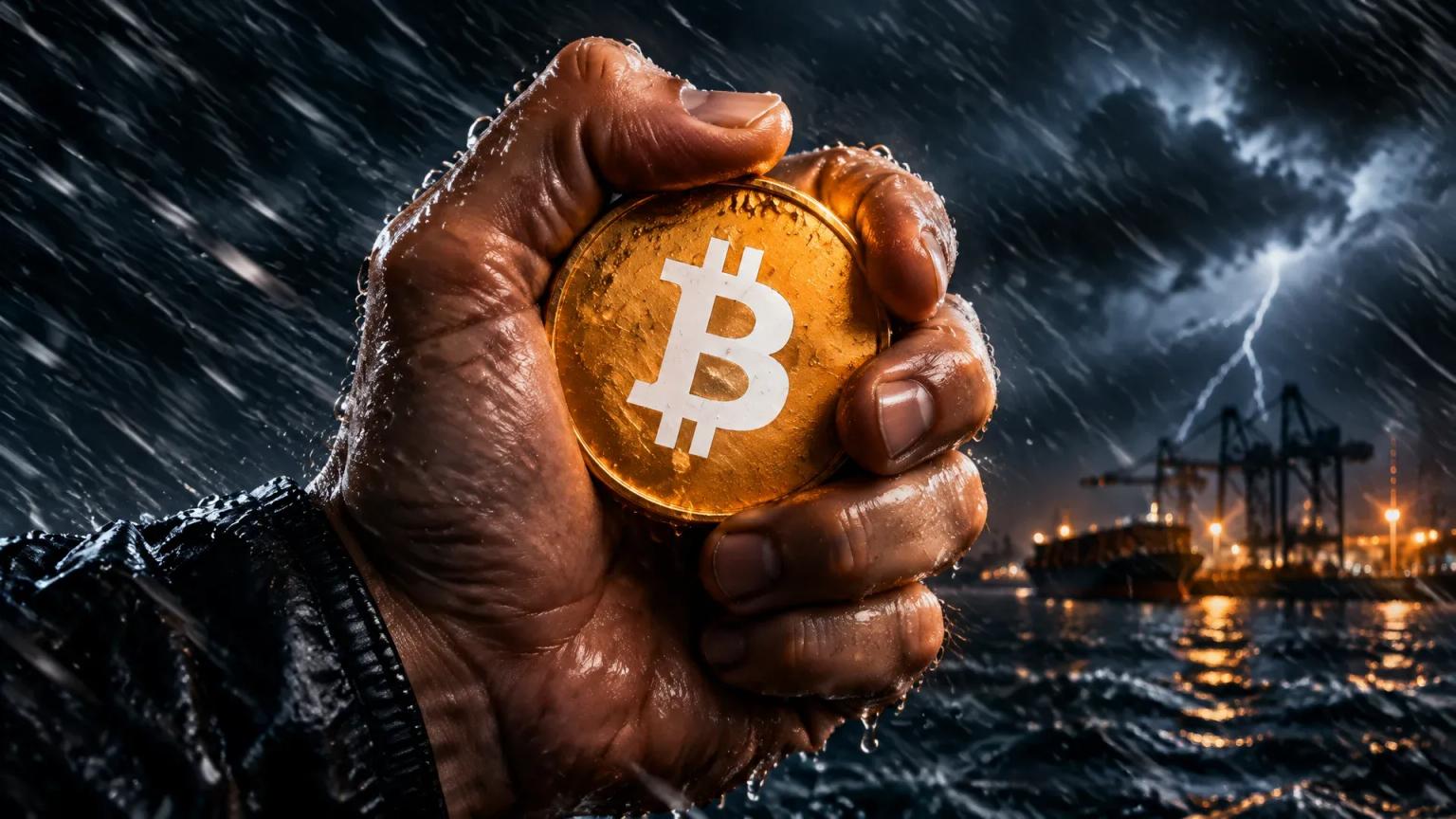

Which topics should we dive deeper into?
Select what genuinely interests you. Your picks feed directly into our editorial planning.
Crypto news that's actually worth your time.
Weekly. 60 seconds. Carefully curated by our editors: no hype, no promo flood, no spam.
HODL means buying cryptocurrencies and holding them for a long time, even when the price falls sharply. The term comes from a typo in a Bitcoin forum in December 2013 and was only later reinterpreted as the acronym “Hold On for Dear Life”. When people say HODL, they mean an investment strategy: betting on a long time horizon and sitting out short-term price swings.
For investors in Germany, holding has a second, very practical core. Under current law, anyone who holds coins as private assets for more than a year can sell them tax-free. That makes HODL more than a meme of the crypto community. The term lies behind many decisions to buy on a crypto exchange or through a savings plan. What holding has actually delivered in recent years is shown further down in our own analysis of daily prices.
HODL meaning: holding instead of trading, even through price swings
At its core, HODL describes an attitude. A hodler buys a coin, usually Bitcoin, and does not sell it when the market gets nervous. In this logic, price drops of 20 or 30 percent are part of the journey. The opposite approach is active trading, where investors try to catch highs and lows.
As a verb, the term has become part of everyday crypto language: you “hodl” your coins, you are “hodling”, or you call yourself a hodler. Writing it in capital letters is common because it recalls the origin. On forums and on X, HODL today often serves as shorthand for conviction: anyone who hodls believes in the long-term value of an asset, whatever the price happens to be doing.
The distinction from classic buy and hold on the stock market matters. The idea is the same; only the volatility differs. Volatility measures how strongly a price fluctuates around its average. For Bitcoin it has been well above that of major stock indices for years, and that is exactly why HODL in crypto demands more patience than an index fund.
“I AM HODLING”: the Bitcointalk post of December 18, 2013
The history of the term can be traced to the minute. On December 18, 2013, a user named GameKyuubi published a post on the Bitcointalk forum with the title “I AM HODLING”. He meant “I am holding”. In the very first sentence, the author admits that he typed the title twice and it was still wrong.
The backdrop was a price crash. Bitcoin had cost more than $1,000 for the first time at the end of November 2013 and climbed once more to just over $1,130 in early December, then the price slid; on the Bitstamp exchange it closed at $520 on December 18. In his post, GameKyuubi says, in essence, that he is a bad trader and knows it. Good traders could spot highs and lows, everyone else should hold, because in a zero-sum game traders can only take your money if you sell. He also openly admitted to having been drinking whisky at the time.
The text became a meme. Images with the HODL lettering, reworked film scenes and slogans spread through the crypto scene within days. The post itself is still online today, and according to the forum's own counter it has been viewed almost 800,000 times.
Hold On for Dear Life: why the acronym only came later
Many explainer pages trace HODL back to the abbreviation “Hold On for Dear Life”. That is an interpretation after the fact. The expression does not appear in the original post; the acronym emerged in the community long after the typo had become well known. It fits well because it describes the attitude: clinging on when the market is in a storm.
For the meaning, the difference matters little. Anyone who wants to understand where crypto terms come from should know it, though. An acronym is a word formed from the initial letters of several words. HODL is in fact what is known as a backronym: the word came first, and the matching long form was invented later.
HODL strategy versus trading strategy: what sets the approaches apart
The HODL strategy is deliberately passive. You buy, store and wait. A trading strategy, by contrast, relies on many transactions, technical analysis and often leverage as well. Both approaches have their logic, but they demand very different skills and generate different costs.
The case for holding
- Lower fees, because there is hardly any trading. Every purchase and sale costs a spread and order fees.
- No pressure to hit the right moment. The Bitcointalk post describes exactly this point.
- In Germany, tax-free gains after a holding period of more than one year.
The case against
- Long stretches in which the portfolio sits deep in the red.
- No protection against the total loss of an individual coin. Many projects from 2017 no longer exist today.
- Gains remain paper gains for as long as you never realise them.
The tax differences between the two approaches are an important factor in their own right and are covered in the section on the holding period below.

Bitcoin held since 2013: roughly 146 times the money in dollars
How much holding has paid off can be recalculated using Bitstamp's daily closing prices. Anyone who bought one Bitcoin on December 18, 2013, the day of the forum post, at the closing price of $520 now owns a coin worth about $75,850 (as of November 7, 2026). That is roughly 146 times the original stake, before fees.
This calculation is the nicest side of the story, but not the whole of it. It assumes that someone did not sell the coin for twelve years, did not lose it and did not leave it on an exchange that later went bust. The Mt. Gox exchange, then the largest in the world, halted trading just two months after the post.
More telling than a single lucky day is the question of how often holding has worked over a given period. To answer it, we ran the numbers in euros for every day since April 2016 as a possible purchase date:
| Holding period | Purchase days in profit | Share |
|---|---|---|
| 30 days | 2,183 of 3,828 | 57 percent |
| 1 year | 2,392 of 3,493 | 68.5 percent |
| 2 years | 2,535 of 3,128 | 81 percent |
| 4 years | 2,397 of 2,397 | 100 percent |
| 5 years | 2,029 of 2,032 | 99.9 percent |
The pattern is clear. Over one month it was almost a coin toss; over one year, a good one in three purchase days ended in the red. With a four-year holding period, every single entry in this period ended in profit, and with five years almost every one. This is a look back at just under eleven years and not a promise for the next four.
 Buy Bitcoin on a licensed exchange
Buying at the all-time high: how long hodlers had to wait to get back to their entry price
The toughest test for any HODL strategy is buying at the peak. An all-time high is the highest price a coin has ever reached up to that day. Measured in euros, there were three such peaks over the past nine years:
| High (closing price) | Price | Regained | Wait | As of November 7, 2026 |
|---|---|---|---|---|
| December 16, 2017 | €16,105 | November 24, 2020 | 1,074 days | +323 percent |
| November 8, 2021 | €58,248 | March 4, 2024 | 847 days | +17 percent |
| October 6, 2025 | €106,307 | not yet | 397 days so far | −36 percent |
Anyone who bought at the peak in December 2017 waited almost three years to break even. The buyer from November 2021 needed a little over two years and four months. And anyone who bought in October 2025 at the record so far of just over €106,000 is now at €68,125, roughly 36 percent below their entry.
For hodlers, this means the timing of the purchase determines less about the final result than about the length of the dry spell. If you cannot sit out that dry spell because you need the money, pure holding is the wrong strategy for you.

Drawdowns of more than 80 percent: the flip side of patience with Bitcoin
A drawdown measures how far a price falls from its last high to the following low. For hodlers it is the most important number, because it shows how large a paper loss you have to endure. For Bitcoin, the figures were enormous in every major cycle:
- December 2013 to January 2015: minus 85 percent in dollars.
- December 2017 to December 2018: minus 82 percent in euros.
- November 2021 to November 2022: minus 74 percent in euros.
- October 2025 to the end of June 2026: minus 52 percent in euros.
A decline of 82 percent means that €10,000 temporarily turns into €1,800. To get back to the starting value from there, the price has to more than quintuple. It is precisely in such phases that many investors who previously called themselves hodlers sell.
An honest question to yourself in advance helps: would you sleep soundly with a loss of 70 percent? If not, the position is too large. With hodling, position size is the real risk control, because this strategy has no stop-loss.
Bitcoin savings plan as a HODL variant: €100 a month since 2016
Many long-term investors combine HODL with a savings plan. With dollar-cost averaging, you buy a fixed amount at fixed intervals. If the price falls, you get more fractions of a Bitcoin; if it rises, fewer. This automatically spreads your entry point over many months.
We recalculated this as well, using prices at the start of each month in euros, €100 on the first of every month, before fees:
| Savings plan from | Paid in | Bitcoin held | Value on November 7, 2026 | Result |
|---|---|---|---|---|
| May 2016 | €12,700 | 2.917 BTC | about €198,700 | +1,465 percent |
| November 2021 (high) | €6,100 | 0.152 BTC | about €10,350 | +70 percent |
| January 2024 | €3,500 | 0.052 BTC | about €3,570 | +2 percent |
| October 2025 (high) | €1,400 | 0.021 BTC | about €1,420 | +1 percent |
The comparison with a one-off purchase is revealing. Anyone who invested everything at once on November 8, 2021, is now 17 percent ahead. Anyone who started a savings plan in the same month is 70 percent ahead, because they picked up the cheap prices of 2022. And even a savings plan that began at the October 2025 high is slightly in profit despite the slide, while a one-off purchase on the same day has lost 36 percent. Which providers offer savings plans and at what fees is shown in our Bitcoin savings plan comparison.
 Set up a Bitcoin savings plan and compare fees
Holding period under Section 23 EStG: HODL is tax-free in Germany after one year
In Germany, cryptocurrencies held as private assets count for tax purposes as “other assets”. A sale is a private disposal transaction under Section 23 of the Income Tax Act, but only if no more than one year passes between purchase and sale. Anyone who holds for longer sells tax-free. This one-year period is called the holding period.
Within the period, an exemption limit applies: gains from private disposal transactions remain tax-free if their total for the calendar year is less than €1,000. An exemption limit is not an allowance. If the gain exceeds it by even one euro, the entire amount is taxed at your personal rate. Where the same coin has been bought several times, the tax authorities generally apply the FIFO method, first in, first out: whatever was bought first is deemed to have been sold first.
That is exactly why HODL fits German tax law so well. In the end, what counts for the tax office is proof. You should keep purchase receipts, wallet addresses and transaction lists even after the period has expired. An overview of all the rules is provided in our guide to crypto tax in Germany.
The planned reform affects future purchases
According to consistent media reports, the federal government wants to abolish the holding period for crypto assets and tax gains in future much like capital income. Nothing has been decided yet: as of November 5, the cabinet had not passed a resolution, according to our reporting. Reportedly, only coins bought after a cut-off date are to be affected. Under current law, nothing changes for holdings you already own.
Custody for long-term investors: exchange account or hardware wallet
If you hold for years, sooner or later you have to think about custody. On an exchange, coins are convenient, but within the provider's reach. If the exchange fails or is hacked, the balance can be frozen. The story of Mt. Gox in February 2014 is the oldest example, and the collapse of FTX in November 2022 the best known.
A hardware wallet is a small device that stores the private keys offline. For hodlers it is the standard tool, because coins can sit there for years without a connection to the internet. What matters is the seed phrase, a sequence of usually 24 words with which the wallet can be restored. If you lose it, you lose the coins. Which devices are suitable is shown in the comparison in the final section.
Crypto terms around HODL: diamond hands, weak hands and FUD
The forum post has spawned an entire vocabulary. The most important expressions in brief:
- Diamond hands: investors who do not sell even during severe price declines. The counterpart to paper hands.
- Weak hands or paper hands: those who sell at the first setback. GameKyuubi already spoke of “weak hands” in his post.
- HODL waves: a chart based on blockchain data that shows how long Bitcoin has been sitting unmoved in addresses.
- To the moon: the expectation of a steep rise, often used ironically.
- FUD: fear, uncertainty and doubt, meant to push hodlers into selling.
HODL in practice: since 2016, every purchase was in profit after four years
HODL is a decision about time, position size and custody. The figures since 2016 show that patience with Bitcoin has been rewarded so far, but also that declines of half or more are part of the normal course. Three steps to make holding something you can plan:
- Choose your entry: Buy through a regulated platform with low fees. Which providers are licensed in Germany is shown in our comparison of the best crypto exchanges.
- Spread your timing: Instead of waiting for the perfect day, spread your purchase over many months with a Bitcoin savings plan.
- Store securely: Anything you plan to hold for more than a year belongs in your own wallet after the purchase. You will find suitable devices in the hardware wallet comparison.
(As of November 7, 2026. This article is not investment advice. Prices and fee structures change; check the terms with the provider before you buy.)
Frequently asked questions about HODL
Transparency note: This article was produced with the assistance of artificial intelligence and reviewed by our editorial team before publication. All figures and claims were checked against the primary sources linked in the text. The feature image was generated with AI.
Related articles
- Bitcoin or Stablecoins: Which Is the Best to Hold in 2025?
- What Is Bitcoin? Bitcoin Explained: Halving, Supply and How to Buy
- XRP Price Prediction: Can XRP Price Skyrocket By A 10000% Surge?
- Bitcoin Price Prediction: How Will September Unfold For BTC Price?
- Bear market: what it means, how long it lasts and where stocks and Bitcoin stand in 2026
Which topics should we dive deeper into?
Select what genuinely interests you. Your picks feed directly into our editorial planning.
Crypto news that's actually worth your time.
Weekly. 60 seconds. Carefully curated by our editors: no hype, no promo flood, no spam.

February 19, 2025 7:00 AM
Best Bitcoin Strategy: 21 Rules of Bitcoin by Michael Saylor
The best Bitcoin strategy by the Founder of Strategy, with his 21 rules of Bitcoin, amid a bullish Bitcoin price prediction from Standard Chartered.
March 11, 2025 6:01 AM

Smart Investments for the Future: Top 3 Altcoins to Buy Today for Long-Term Growth
Looking for the best crypto investments for long-term growth? Here are the top 3 altcoins that stood out as smart investment choices for the future.
January 9, 2025 3:30 PM
2025 Bitcoin Price Prediction: What if BTC Price breaks below $90K Support?
The 2025 Bitcoin price prediction hinges on its critical $90,000 support level. Will it hold, or could we see declines to lower levels? Explore key insights shaping the short-term Bitcoin trajectory.

November 24, 2024 10:08 AM
How to Invest in Bitcoin in 2025: A Comprehensive Guide for Beginners
Curious about Bitcoin? Get to know its history, why it’s a great investment, and how to get started in 2025.

October 22, 2026 12:31 AM
What Is Bitcoin Mining? How It Works and When It Pays Off
Miners secure the Bitcoin network and earn 3.125 BTC per block. How proof of work functions, what an ASIC costs in electricity in Germany and at what power price mining breaks even.
December 25, 2025 2:54 PM
Bitcoin Price Prediction for 2026: What History Told Us, and How the Year Is Going
At the end of 2025 we asked what history says about Bitcoin in 2026. Nine months in, the bearish scenario has played out: BTC fell to about $58,600 in July and trades near $84,200.

November 6, 2026 7:24 PM
Bitcoin mining app: even a fast phone would need 20 million years to find one block
A bitcoin mining app does not turn your smartphone into a miner: even with generously assumed performance, a phone earns around 0.00003 euros a day. We run the numbers, explain the app store rules and show where payouts from such apps really come from.
September 24, 2026 10:19 PM
Bitcoin for Retirement: What Applies from 2027 and What You Decide Now
Bitcoin is not permitted in any state-subsidised retirement product, including the new retirement savings account from 2027. Anyone who still wants to use crypto assets for their own pension goes through private assets, and there a cutoff date at the end of 2026 is shifting the tax rules right now.
January 29, 2025 8:00 AM

FOMC and Crypto: How Can the First FOMC Meeting Under Trump Affect the Crypto Market?
The first FOMC meeting under President Trump is set to take place tomorrow. Discover all possible scenarios and their impact on Bitcoin and the crypto market.
September 17, 2026 7:12 PM

Gifting Bitcoin to Children: Allowance, Holding Period and the Tax Office Report
Transferring Bitcoin to your child hands over your holding period and your entry price along with the coins. This guide sets out what really applies in Germany on the allowance, the reporting deadline, representation and custody.
August 5, 2024 10:58 AM

What Are The Reasons Driving The CRYPTO MARKET CRASH?
The recent crypto market crash, starting with the major fall of Bitcoin and followed by major Altcoins has been fueled by multiple factors...Here are the major ones...

July 15, 2018 3:08 PM

Liquid Network Upgrade Gives Bitcoin Long Term Viability
Blockstream has just brought upgrades to the Liquid Network that will help Bitcoin Core keep up with the competitive ICO and tokenization market.

November 7, 2026 1:12 PM

Shiba Inu price slips below $0.0000045 as SHIB falls twice as hard as Bitcoin
Analysis: Shiba Inu drops below $0.0000045 in thin Saturday trading and has lost twice as much as Bitcoin over 30 days. For buyers from November 2025, the one-year holding period expires at the same time.
October 25, 2026 3:28 AM

Hard fork or soft fork: what happens to your coins in a split?
A hard fork can split a blockchain in two, and you then hold the same number of coins on each side. A soft fork changes nothing in your wallet. How to tell the two apart, and what the German finance ministry has settled on the holding period for the new coins.
September 22, 2026 1:37 AM

Swapping Bitcoin for Gold: What Happens for Tax in Germany
Moving from coins into gold is a sale in the eyes of the tax office, and the one-year period decides the bill. Where bars, gold ETCs and tokenised gold diverge for tax, and which records you need.
July 18, 2026 12:46 PM
US National Debt Hits Record $39.5 Trillion — What It Means for Your Wallet and Your Crypto
The US debt just set a fresh all-time high near $39.5 trillion. Here's how it hits normal households — and why it matters for $BTC and crypto.

May 25, 2026 10:18 AM
Crypto News Today: Consolidation Ties Down Top Tokens, Should You HODL or Trade?
Crypto news today points to a heavy sideways market. As top crypto prices compress, find out if you should hold for the long term or trade the ranges.
March 18, 2023 1:32 PM

Bitcoin vs Ethereum – Which is BETTER to hold for the Long Term?
Which one is better to hold, Bitcoin or Ethereum? Let's get into a quick analysis of Bitcoin and Ethereum.
August 2, 2024 10:32 PM
Ethereum Price Crash: What Next Support Levels For ETH Price Below $3K?
Ethereum fees just hit their lowest since late 2023, and now Ethereum price is trading near $3K with a high potential to drop below it... What's next?
August 18, 2026 4:22 AM

Bitcoin for gold: is the swap taxable in Austria?
Swapping bitcoin directly for gold? In Austria this can already trigger 27.5 percent tax on the capital gain. What investors should know.
April 30, 2024 2:52 PM

What Bitcoin Strategy yields $400M in Profits?
A Bitcoin Strategy adopted by a major company's co-founder reported to have earned him $400M in profits: Fact or Fiction?
February 15, 2025 11:34 AM
Bitcoin Price Surges Amid International Governmental Adoption - Can It Break $100K?
Bitcoin price is on the rise, fueled by massive international adoption and growing interest in crypto custody services. Will these developments push Bitcoin past the elusive $100K mark?
September 4, 2024 8:10 PM
Bitcoin Price Volatility Is Moving BTC Price Down, But For How Long?
As Bitcoin price faces market turbulence, the factors driving its recent volatility, from stock market impacts to key technical indicators signaling potential price shifts are highly important...
October 27, 2026 12:17 AM
Strategy pauses its Bitcoin buying: $204.9 million into its own shares
Strategy bought no Bitcoin at all in the week of October 19 to 25, 2026 and put $204.9 million into repurchasing its own STRC preferred shares instead. The stack stays at 848,517 Bitcoin, while free cash fell by about 46 percent.
More from CryptoTicker