
Source of Funds at a Crypto Exchange: Why a Deposit Can Freeze Your Account for 15 Days
OKX chief Star Xu described on September 2 what an unusual deposit sets off: reviews of 15 days and longer, during which balances and account functions can be restricted. What that means for investors in Germany, and which documents you should keep to hand.



Which topics should we dive deeper into?
Select what genuinely interests you. Your picks feed directly into our editorial planning.
Crypto news that's actually worth your time.
Weekly. 60 seconds. Carefully curated by our editors: no hype, no promo flood, no spam.
Anyone who deposits cryptocurrency on an exchange tends to assume the balance will be available immediately afterwards. That is true less and less often. If an incoming payment triggers an anti-money-laundering review, access to the account can be restricted for two weeks or longer, and in confirmed cases the business relationship ends altogether. OKX co-founder Star Xu described this practice publicly on September 2, 2026, saying out loud what many providers handle quietly.
For you as an investor in Germany, that means the question of where your coins came from is no longer a formality that surfaces at some point on a tax form. It decides whether you can reach your money. This article explains what triggers a review, what happens while one is running, which documents you should keep to hand, and who you can turn to if your account is already frozen.
What Star Xu announced on September 2
Star Xu, co-founder and chief executive of the exchange OKX, replied on X on September 2, 2026 to a user whose transfer from a sports betting platform had triggered a risk review. His answer was more explicit than such answers usually are. Deposits from addresses classified as risky could trigger stricter anti-money-laundering and risk checks; those checks could take 15 days or longer, and during that time account functions and balances could be restricted. Where illegal activity is confirmed, the exchange could terminate services for an account entirely. The trade publication crypto.news has documented the statement and what prompted it.
Xu named two channels explicitly: escrow deals run in Telegram groups and the payment networks known as Huiwang, along with their offshoots. What he did not say matters for the interpretation. The 15 days describe a guide figure that depends on the circumstances; treat them neither as a guaranteed maximum nor as a fixed minimum. A review can end sooner. It can also run longer.
The procedure itself is not what is new here. What is new is that the head of an exchange has put a number on the duration. Until now, provider terms mostly said only that accounts could be restricted "to the extent required" and "for the duration of the review". A figure turns that into something you can plan around.
Source of funds and source of wealth: what exchanges mean by these terms
Source of funds refers to the question of where the specific money or the specific coin you are depositing right now came from. Source of wealth is the wider question of how you built up your overall assets. The distinction sounds academic, but in practice it determines which papers are demanded of you.
For source of funds, the trail of a single payment is usually enough: the purchase confirmation from another exchange, the bank statement showing the transfer, the transaction history of the sending wallet. Source of wealth is more onerous, because it can call for payslips, sales contracts, inheritance papers or tax assessments. The second question typically arises only for larger amounts, or for an account whose turnover does not match the profile on file.
Both terms are drawn from anti-money-laundering law rather than from customer service. They are the reason an exchange asks you for things that feel like an imposition: it is legally obliged to obtain the answer and to assess it.
Why a deposit triggers a risk review at all
Crypto exchanges use analytics providers that screen every incoming address against databases. Flagged there are sanctions lists, darknet marketplaces, known fraud addresses, mixers and the addresses of gambling or betting operators, among others. A hit does not mean you have done anything wrong. It means the incoming payment sits in a chain that has touched a flagged point somewhere.
That is the heart of the problem, and it catches bystanders. How easily it happens was on display at Kraken in late August, when close to 12,000 tiny amounts arrived from wallets that analytics providers assigned to a sanctioned exchange, and the automated check then froze the accounts of customers who had nothing to do with it. We worked through the case in our report on the dust attack on Kraken.
With a deposit you initiated yourself, a second trigger comes into play: the pattern. An account that lies dormant for months and suddenly receives a five-figure sum stands out. An account where amounts arrive and leave again in quick succession stands out as well. What is assessed, then, is less the individual payment on its own than how it fits the behaviour so far.
15 days and longer: what happens to your balance during a review
The most important practical point in Xu's statement is the state of affairs while the review runs. The balance has not vanished, it is still in the account, and you can see it. What is missing is access. Depending on the provider and the case, withdrawals are blocked, sometimes trading as well, occasionally the entire account.
This distinction is more than a nicety. Anyone who wanted to sell part of their holdings at a particular price cannot do so during a freeze, and the market does not wait. Anyone who had earmarked the amount for a payment has to make other arrangements. Two weeks is a long time in a market that runs seven days a week.
What you can do in this phase is limited, but it is not nothing. Respond to queries quickly and completely, because every unanswered question extends the review. Supply evidence as legible documents rather than as a photographed screen. And keep a record of the correspondence, with date and time, because you will need it later if you file a complaint.
Telegram escrow, P2P trading and betting platforms: the channels with the highest risk
Star Xu named two channels, and both deserve an explanation, because they are less familiar in Germany than their spread would suggest.
A Telegram escrow is a trust arrangement settled through a private chat group: buyer and seller agree terms, a third person holds the amount and releases it. The procedure has a practical appeal for those involved, because it works without registration and without a copy of an identity document. For the receiving exchange it creates a double problem. The address the money comes from often belongs to the escrow holder rather than to the actual counterparty, and nothing at all is on file about that counterparty's identity. The path of the money can therefore hardly be evidenced after the event, and that evidence is exactly what the exchange demands.
Huiwang stands for a family of payment networks that settle transfers between local currencies and stablecoins, mainly in Southeast Asia, and that are regularly linked to fraud infrastructure in investigative reports. For you in Germany, this channel is rarely the direct route. It can, however, sit at the far end of a P2P chain without you ever finding out.
That leaves the case that set the whole thing off: a payout from a betting or gambling platform straight into an exchange account. That is entirely legal in Germany, as long as the operator is licensed here. For the exchange's risk rating, though, legality plays only a secondary role. Gambling counts as elevated risk in almost every analytics model, because it lends itself to concealment. If your route runs through such a platform, the detour via your current account is the quieter one.
Section 46 of the German Money Laundering Act: why a German provider has to wait three working days
To put the 15 days in context, it helps to look at what German law prescribes. Under section 10 paragraph 1 of the Money Laundering Act, general due diligence includes the continuous monitoring of the business relationship, including the transactions carried out in the course of it. A provider may not, then, check once at account opening and look away afterwards; it has to keep matching turnover against what it knows about you.
Where a suspicious activity report goes to the Financial Intelligence Unit, a separate mechanism applies. Under section 46 of the Money Laundering Act, the reported transaction may be executed at the earliest once the Financial Intelligence Unit or the public prosecutor has consented, or once the third working day after the day the report was sent has passed without execution being prohibited. Saturday expressly does not count as a working day.
Those three working days are a statutory waiting period for a reported transaction, and they are no ceiling for a provider's internal review. Setting the two figures side by side shows the gap between what the legislator provides for as a procedural step and what an internationally active exchange actually needs for organisational reasons. So do not expect a freeze to lift by itself after three days simply because a three appears in a statute.
Which source of funds documents you should keep to hand
The most effective moment to collect evidence is before the first query. Anyone who only starts hunting once the account is already frozen extends the freeze by exactly the time the hunting costs. These papers are the useful ones above all:
- bank statements showing the transfer to the sending exchange, with date and amount
- purchase and sale statements from the providers where you originally acquired the coins
- a complete transaction history of every wallet and account you deposit from
- for larger amounts, additional source of wealth evidence such as payslips, a sales contract or a tax assessment
- for a payout from a betting or gaming platform, that platform's statement
The complete history is the point where most people come unstuck. Anyone who has been active across several exchanges and several wallets over the years can hardly assemble it after the event, because providers change their export functions, close accounts or disappear from the market altogether. A portfolio tracker that records the history as it goes solves this problem as a by-product; the overview in our comparison of crypto tax tools and portfolio trackers shows which providers deliver complete exports. You will need the same dataset a second time in any case, namely for your tax return.
Why your exchange's registered seat decides where the complaint goes
One point many people discover only in a dispute: your contractual counterparty is often a European subsidiary based in another member state rather than the brand shown in the app. At OKX that is OKX Europe Limited, which holds its authorisation as a crypto-asset service provider under the EU's MiCA regulation from the Maltese supervisor MFSA and serves German customers through the European passport.
Legally this is expressly provided for and is no defect. In practice it shifts responsibility. Ongoing supervision of a provider licensed in Malta falls to the Maltese authority and not to BaFin, even though you live in Germany and deposit in euros. A complaint addressed to the wrong body costs you weeks.
So check three things before you complain: which company is named as your contractual counterparty in your terms of use? In which country is it licensed? And is it listed as an authorised provider in the public register of the European Securities and Markets Authority, ESMA? If you would rather avoid that detour from the outset, our overview of the best regulated crypto exchanges lists the providers together with the supervisor standing behind them.
 Record your transaction history without gaps
What you can do if your account is already frozen
Once the freeze is active, indignation helps little and an orderly approach helps a great deal. Start by requesting reasons in writing, and ask explicitly which papers are required and when a conclusion can be expected. That request costs you ten minutes and produces a document you can refer back to later.
Supply the evidence demanded of you completely and in one go. At many providers, late additions restart the internal processing clock, which makes an incomplete first answer more expensive than two extra days of collecting. If no response comes, set a reasonable deadline, usually two weeks, and give notice that you will then turn to the competent supervisor.
If that too leads nowhere, the route runs to the supervisory authority of the country where your contractual counterparty is licensed. For larger amounts, legal help is sensible, particularly where a suspicion is in play, because at that stage it is no longer just a matter of customer service. And reckon with the possibility that a review goes against you: the claim to payment survives even then, but it may have to be enforced in court.
A side note that overlaps with this subject: freezes also loom next year for an entirely different reason. Under the Crypto Asset Tax Transparency Act, providers must obtain a tax self-certification from all existing customers by January 1, 2027; anyone who fails to respond is barred from trading. We described the deadlines in our piece on self-certification at the crypto exchange. Deal with both subjects together and you only have to assemble the paperwork once.
Checking crypto deposits: what to take away
- Look at where your last deposits came from. If a route runs through P2P trading without an identity check, through an escrow group in a messenger, or straight from a gaming platform, that is the route with the highest freeze risk. For your next deposit, choose a source whose path you can evidence with a bank statement, and buy through a provider under European supervision, as listed in our comparison of the best crypto exchanges.
- Set up a document folder before anyone asks for one. Bank statements, purchase statements and a complete transaction history belong in it. A tool from our comparison of crypto tax tools and portfolio trackers records that history as it goes, so that in an emergency you export it instead of reconstructing it.
- Look up who your contractual counterparty is and who supervises it. The name is in the terms of use, the licence in the ESMA register. If you notice in the process that you cannot name your main provider's supervisor, that is a good moment to work through the overview of the best regulated crypto exchanges and move at least part of your holdings there.
The real finding of this week is not that a single exchange checks more strictly. It is that the check now starts at the deposit and no longer only at the withdrawal. That shifts what you hold in your own hands: the decision it all hangs on is the one you make at the moment you choose where to transfer from.
(As of September 3, 2026. This article is not investment advice. Prices and fee structures change; check the terms with the provider before you buy.)
Transparency note: This article was produced with the assistance of artificial intelligence and reviewed by our editorial team before publication. All figures and claims were checked against the primary sources linked in the text. The feature image was generated with AI.
Related articles
- Crypto Exchange Account Frozen: Why Nobody Tells You Why, and What Actually Helps
- Bank Closed Your Account Over Crypto: Your Rights and the Route to a Replacement Account
- Bybit's Counterparty List Runs to Over 50 Names: What to Check on Balances, Withdrawals and Custody
- BREAKING: Binance CEO Changpeng Zhao to Resign and Plead Guilty
- MEXC Refunds $340,000: The Attacker's API Key Survived the Account Freeze
Which topics should we dive deeper into?
Select what genuinely interests you. Your picks feed directly into our editorial planning.
Crypto news that's actually worth your time.
Weekly. 60 seconds. Carefully curated by our editors: no hype, no promo flood, no spam.

September 27, 2026 4:11 PM
Ripple Cannot Freeze 83 Million Dollars in Stolen XRP: What to Check in Custody and Deposits
The attacker from the Bitget incident has moved around 83 million dollars in XRP, and Ripple has no technical means to stop it. What can be frozen, what cannot, and why an account freeze also hits investors with no connection to the case.
September 25, 2026 4:13 PM
Crypto Exchange Protection Funds Recalculated: What Really Covers Your Balance After the Bitget Hack
The $351.6 million attack on Bitget would eat up three quarters of the exchange's in-house protection fund. We retrieved the protection promises of several exchanges ourselves and measured them against deposit insurance and MiCA liability.
October 6, 2026 10:32 AM

FinCEN drops the reporting duty for withdrawals to private wallets: what matters now for European investors
The US anti-money-laundering agency FinCEN withdrew two proposals on October 5, 2026 covering the reporting duty for self-custodied wallets and for mixers. In the EU the development runs in exactly the opposite direction: proof of ownership from 1,000 euros today, a ban on anonymous accounts from July 2027.
September 25, 2026 4:11 AM
Bitget Pauses Withdrawals: Where Existing Customers in Europe Stand
Bitget reports unauthorised outflows of around $351.6 million (later revised to $387.5 million) and has suspended withdrawals. For existing customers in Europe, that closes the one route MiCA had left them.

September 20, 2026 4:13 AM
Zcash Above $1,500: What ZEC Holders Should Check on Tax and Custody
Zcash rose above $1,500 on September 19 for the first time since 2016 and, after an intraday high of $1,590.80, trades back at around $1,474. For German holders three questions hang on that jump: the one-year holding period, the planned year-end cut-off and the EU anti-money-laundering regulation from July 2027.

August 20, 2024 11:07 AM
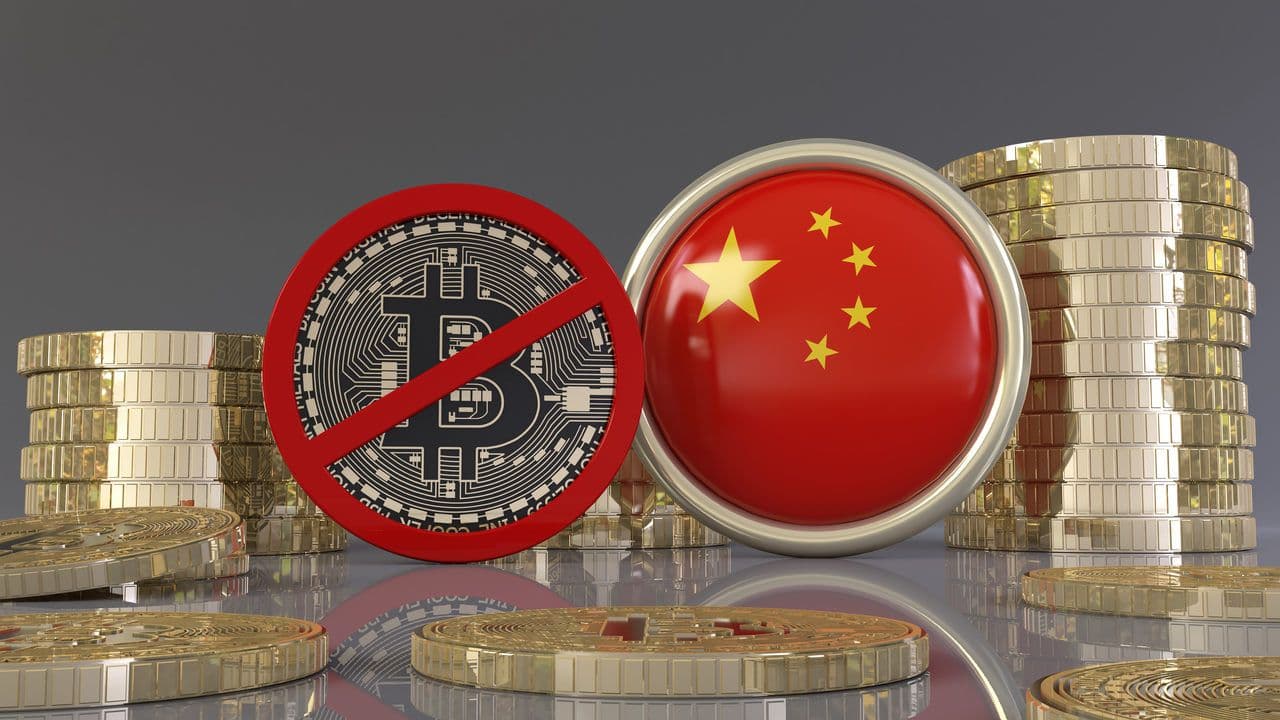
China Labels Crypto Transactions as Money Laundering in New AML Law
China has just updated its anti-money laundering laws to classify crypto transactions as money laundering. Find out what this means for the crypto world!
September 11, 2026 1:40 PM

Inactivity Fees at Crypto Exchanges: How to Check Whether Your Dormant Account Loses Money Every Month
Two providers have just raised their rates for dormant accounts, one of them to as much as 52 US dollars a month. Our own survey of 15 fee pages shows why you will almost never find the answer for your account without logging in.
August 21, 2026 4:14 AM

Euro Deposit to a Crypto Exchange Rejected: Why the Transfer Fails and What You Can Do
Since October 9, 2025 your payment service provider matches the payee name against the IBAN on every euro transfer. On deposits to an exchange account that is precisely where the payment most often comes to a halt.

June 20, 2025 11:00 PM
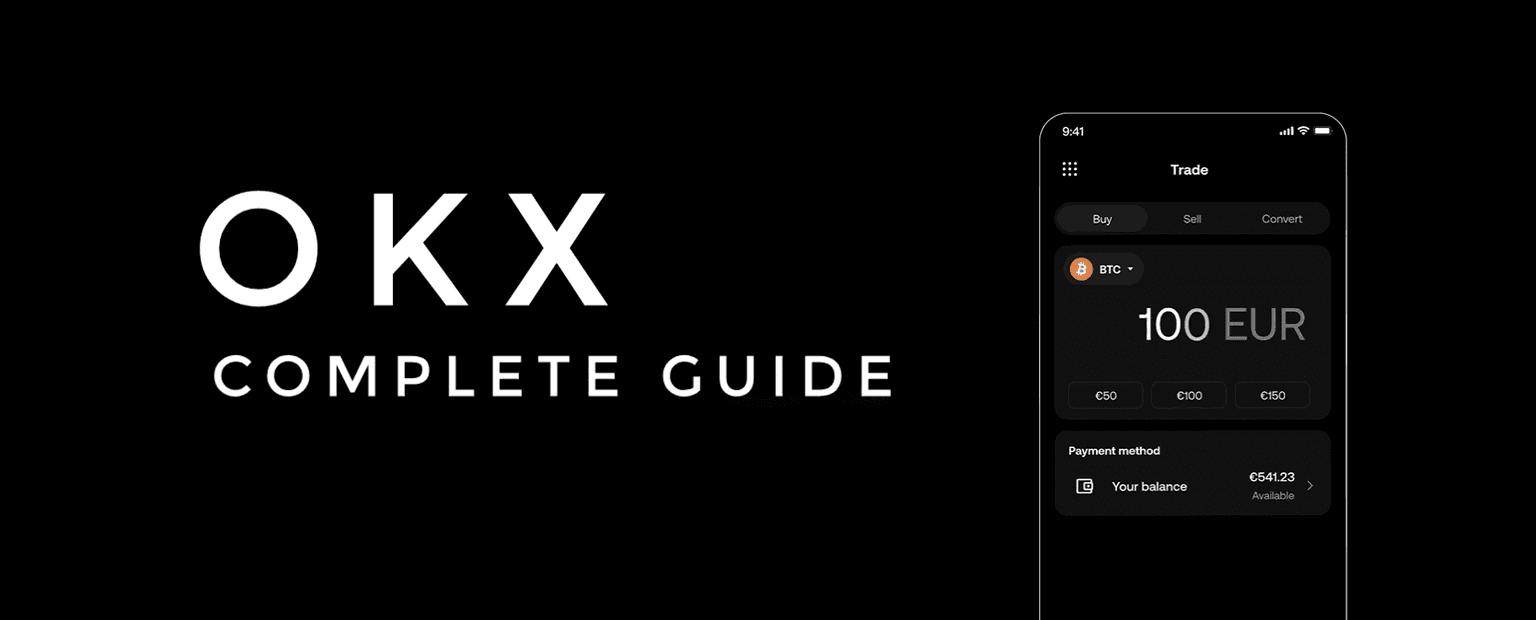
Why OKX Might Be the Best Crypto Exchange in Europe – Hands-On Experience
Looking for a beginner-friendly, low-fee crypto platform? In this OKX review, we explore everything from sign-up to crypto trading, earning, and how to get €10 in Bitcoin with our exclusive CryptoTicker referral link.
June 30, 2026 11:20 PM

How to Switch from Binance to a MiCA Regulated Crypto Exchange
Binance is winding down EU services after missing the MiCA deadline. Here's why it's happening and how to move your funds to a regulated platform safely.
May 18, 2026 8:15 AM
Bitget Review 2026: Fees, Safety After the $388M Hack and Who Can Use It
Bitget review for October 2026: fees, the $388 million hack, withdrawals, Proof of Reserves and the countries where Bitget cannot be used.
September 16, 2026 1:28 PM
Crypto Withdrawal to Your Own Wallet: Ten Providers Checked, Three Will Not Let Your Coins Out
Seven of ten providers available in Germany offer a payout to a wallet address you control yourself; three do not. Our survey of September 16, 2026, shows how to spot the difference before you buy, and why the question matters right now.
September 25, 2026 4:20 AM
Crypto as a Down Payment for a German Mortgage: What Banks Require
Since April 2023 a house in Germany can no longer be paid for in Bitcoin; section 16a of the Money Laundering Act bans it outright. Your crypto holdings still work as a down payment, provided you take the route through the euro and prove the origin without gaps.
October 1, 2026 4:21 AM

Velocity Replaces Drift After the 285 Million Dollar Hack: What Changes for Investors in Germany
The Solana perp DEX Drift is back as Velocity, and since September 29, 2026 a new team has been running it. What the overhaul after the outflow of 285 million dollars means for your deposits, for settlement in USDT and for the legal position in Germany.

July 2, 2026 8:59 PM
Binance Is Out of the EU: How to Move to a MiCA-Regulated Exchange
Binance has left the EU market. Which exchanges hold a MiCA licence, how to verify an authorisation is real, and how to move your holdings across step by step.
October 6, 2026 10:36 PM
Buying Monero in Germany: six major exchanges no longer list XMR
On October 5, 2026, of eight trading venues checked only two still carry an XMR pair, and neither is open to German customers. MiCA Article 76(3) explains the delistings, and Article 79 of the anti-money-laundering regulation sets the tougher limit from July 10, 2027.
September 30, 2026 4:15 PM

Zcash today: 2,746 ZEC from the Bitget hack vanish into the Ironwood pool
Wallets from the Bitget break-in pushed 2,746 ZEC into Zcash's Ironwood pool on Wednesday morning, roughly $3.9 million. What the shielding means for tracing, and what applies to your exchange account from July 2027.
September 26, 2026 4:14 PM
Bitget Withdrawals Resume on September 28: What to Check on a Residual Balance Now
Bitget is releasing the withdrawals frozen after the September 24 incident in four stages from September 28. For a residual balance held from Germany that is a deadline, not a reason to wait.
September 20, 2026 10:11 PM
Kraken Review: Fees, MiCA Licence and Withdrawals in Euro
A purchase through Kraken's standard interface costs 1 percent plus spread; on Kraken Pro it is 0.40 to 0.80 percent. What deposits, trading, withdrawals and tax records really cost at the crypto exchange, with the numbers from the official fee schedule.
August 19, 2026 7:16 AM

Crypto Exchange Deadlines in August: What Still Applies Now the Seven Cut-Off Dates to August 31 Have Passed
Recap as of September 27, 2026: between August 17 and August 31, 2026, deadlines expired at seven providers that affected investors in Germany. We had recorded the dates ourselves on August 16. Only the withdrawal of the six tokens delisted by Binance remains open, possible until October 17, 2026 at 03:00 UTC.
May 30, 2024 2:46 PM
How to Buy Ethereum (ETH) on eToro: A Comprehensive Guide
How to buy Ether (ETH) on eToro is made simple, with our step-by-step guide. From account creation to making your first purchase, we cover all you need to know...
October 1, 2020 6:37 PM

Bitcoin Dumps As CFTC Indicts BitMEX Founder Arthur Hayes
U.S. prosecutors have filed criminal charges citing four founders and managers of the BitMEX cryptocurrency exchange of neglecting to take adequate steps to prevent money laundering. According to the U.S. Department of Justice and the Commodity Futures Trading Commission (CFTC), […]
July 8, 2025 10:36 PM

Win a Free McLaren F1 Cap and VIP Zandvoort Experience with OKX – Here’s How
OKX just launched an epic promo across Europe! Trade crypto, claim an official McLaren F1 cap, and stand a chance to win VIP tickets to the Zandvoort F1 Experience this August.
September 19, 2026 4:11 PM
MiCA Consultation Closes September 30: What to Check and Submit Before Then
The European Commission is reviewing the MiCA crypto regulation and will accept submissions until September 30, 2026 at 23:59 CEST. Staking, DeFi, lending, stablecoins and custody are all under examination, and you can take part without a lawyer.
August 11, 2026 9:18 AM

Your Crypto Exchange Is Telling You to Withdraw: How to Spot Phishing After the MiCA Deadline
Unauthorised crypto providers now have to tell their EU customers to withdraw, which leaves fraudsters an easy run with faked requests. Here is how to check in two minutes whether the message is genuine.

More from CryptoTicker