
Crypto exchanges without KYC: under MiCA, every licensed exchange asks for your ID
Since the MiCA transition periods ended, there is no longer any EU-licensed crypto exchange without KYC. Which routes without ID remain, from DEX to P2P, and where the risks, limits and tax obligations lie.


Which topics should we dive deeper into?
Select what genuinely interests you. Your picks feed directly into our editorial planning.
Crypto news that's actually worth your time.
Weekly. 60 seconds. Carefully curated by our editors: no hype, no promo flood, no spam.
There is no crypto exchange without KYC that is licensed in Germany. Every provider that runs an account for crypto assets for you in the EU has to identify you first, which means checking your ID and address. Without ID you can only trade outside this framework: on decentralised exchanges (DEX) directly from your wallet, on perp DEXs for derivatives, in trading between private individuals (P2P) or via the swap function of a software wallet. Each of these routes has limits, and almost all of them start with a step where you do have to identify yourself: buying with euros.
This guide explains why the requirement has applied without exception since MiCA, which routes without ID exist, what they cost and where the risks lie. It is expressly not a guide to circumventing obligations. If you stay with a regulated provider, the overview of MiCA licensing and obligations sets out the rules licensed exchanges have to follow.
KYC at crypto exchanges: identity checks as part of anti-money laundering
KYC stands for “Know Your Customer”. It means the identity check a financial service provider carries out before entering into a business relationship with you. At crypto exchanges it usually happens digitally: you photograph your ID card or passport, take a selfie or a short video and confirm your address.
KYC is part of anti-money laundering, AML for short. AML is the umbrella term for all obligations against money laundering and terrorist financing. Besides identification, these include ongoing transaction monitoring, suspicious activity reports and record keeping.
In Germany, the basic obligation is set out in the Money Laundering Act (GwG). Under Section 10 GwG, the general due diligence obligations start with “the identification of the contracting party”. Crypto-asset service providers are among the obliged entities. An exchange that lets you trade without ID therefore breaks the law in force, provided it falls under German or European supervision at all.
What data an exchange requests for KYC
Typically name, date of birth, place of birth, nationality, home address and the details of your ID document. Many providers also ask about your occupation and source of funds. For larger amounts the exchange can request evidence, such as a payslip, a bank statement or records of earlier crypto gains. This extended check is called source of funds.
MiCA and the Money Laundering Act: why licensed exchanges may not onboard you without ID
MiCA is the European regulation on markets in crypto-assets (Regulation (EU) 2023/1114). For crypto-asset service providers, CASPs for short, it has applied since December 30, 2024. The transition periods, during which existing providers could keep operating without a new licence, ended earlier depending on the member state, but no later than July 1, 2026. Since then, every exchange serving customers in the EU needs a MiCA licence from a member state.
MiCA itself governs authorisation, custody, capital and consumer protection. The identification requirement comes from anti-money laundering law, which applies alongside MiCA. A MiCA licence and an account without KYC are therefore mutually exclusive. Anyone promising you both either has no licence or is not telling you the whole truth.
You can check the licence yourself. German providers are listed in BaFin's company database, providers from other EU states in the register of the European Securities and Markets Authority, ESMA. According to our analysis of October 28, 2026, BaFin listed 98 crypto-asset service providers at that time. Our guide to checking MiCA authorisation shows how to read an entry and how to spot fake licence numbers. You can find the register itself on ESMA's MiCA page.
What MiCA prescribes for anonymising coins
MiCA already stipulates in Article 76(3) that trading platforms may not admit crypto assets with a built-in anonymisation function to trading unless their holders and transaction history can be identified. That is why several regulated exchanges have delisted so-called privacy coins.
Transfer of Funds Regulation: the travel rule from the first euro and the €1,000 threshold
The second pillar is the Transfer of Funds Regulation (Regulation (EU) 2023/1113), TFR for short. It implements the so-called travel rule: the obligation to send information on the originator and beneficiary with every transfer of crypto assets, much as with a bank transfer.
Since December 30, 2024 this has applied between two providers with no lower limit, so from the first euro. More relevant for you is the case of a self-hosted wallet: if you send more than €1,000 to your own address or receive such an amount from it, the exchange must check whether the address belongs to you or is controlled by you. Common methods are a signed message from the wallet, a screenshot or a small test transfer. We describe the process in detail in our guide on withdrawing crypto to your own wallet.
For the no-KYC route this means: the link between your regulated account and your private wallet is documented. If you buy bitcoin on a licensed exchange and then move it to your own wallet, you leave a traceable trail, even if you only trade on decentralised venues afterwards.
What the exchange does with this information
The exchange stores the information, checks it against sanctions lists and reports anything unusual to the Financial Intelligence Unit. If information is missing, it may hold back or reject a transfer. That is not the exchange being arbitrary; the law requires it.
Offshore exchanges without ID: the risks of providers without a MiCA licence
If you search for a crypto exchange without KYC, you will mainly find platforms based outside the EU. Many advertise that you only sign up with an email address and can withdraw up to a certain amount per day. For users in Germany this model has several catches.
First, there is no supervision. A provider that actively targets customers in the EU without a MiCA licence has not been allowed to do so since the transition periods ended. The only exception, in Article 61 MiCA, covers the case where you approach a provider on your own initiative without it having solicited you. This so-called reverse solicitation is narrowly defined. The rule only determines when the provider does not need a licence; it contains no protection for you.
Second, such platforms regularly reserve the right in their terms of use to demand identification at any time. That often happens precisely when you want to withdraw. Until you submit the documents, your balance stays frozen.
Third, there is no legal recourse. In the event of a hack, an account freeze or insolvency, the law of the country of incorporation applies. There is no deposit guarantee for crypto assets anyway, and a German consumer protection body can hardly help you with a platform that has no European licence.

 Compare licensed crypto exchanges
Decentralised exchanges (DEX): swapping without an account, straight from your wallet
A decentralised exchange, or DEX, is a program on a blockchain that settles token swaps without a central operator. Instead of an order book with an account, most DEXs use so-called liquidity pools: users deposit token pairs, and a smart contract calculates the price from the ratio of the holdings. You connect your wallet, confirm the swap, and the tokens land straight back with you.
Because there is no account, there is no KYC either. Recital 22 of MiCA excludes services provided in a fully decentralised manner without an intermediary. Where the line lies in individual cases is not yet conclusively settled in law, for example with websites through which a company offers access to a DEX.
Where the DEX reaches its limits
The most important limit is the on-ramp. A DEX swaps tokens for tokens. It does not accept euros. To get crypto assets into your wallet in the first place, you almost always go through a regulated exchange, a broker or a payment service, and there you are identified. In practice, the no-KYC route therefore usually begins with a purchase with KYC.
Then there are technical risks. Network fees can rise sharply when the network is busy, the price can shift between order and execution (slippage), and faulty or fake smart contracts have already cost many users money. Particularly dangerous are approvals with which you allow a contract to move tokens out of your wallet. Fake websites exploit exactly these approvals for theft.
Perp DEX: derivatives trading without an account, and with leverage risk
A perp DEX is a decentralised platform for perpetual futures, futures contracts with no expiry date. You post collateral, usually stablecoins, and use leverage to bet on rising or falling prices. You do not need an account with ID for this; the wallet is enough.
This is where the biggest risk in this guide lies. Regulated providers may offer retail clients leverage of no more than 2 to 1 on contracts for difference on crypto assets. Much higher leverage is possible on a perp DEX. If the price moves against you, the position is liquidated automatically and the collateral is lost. Our perp DEX comparison explains how funding rates, liquidation and fees work and which platforms exist.
Nor is trading any simpler for tax purposes. In Germany, gains from futures transactions are treated differently from gains on selling coins, and a perp DEX does not issue a tax certificate. Recording every position remains your job.
P2P bitcoin trading: private individuals, Bisq and the limits of anonymity
P2P stands for peer-to-peer: direct trading between two private individuals with no exchange in between. You sell or buy Bitcoin and pay by bank transfer, cash or another agreed method. Decentralised programs such as Bisq broker such deals and secure them with a deposit that both sides put up.
Anyone who occasionally sells their own coins to another private individual is not a crypto-asset service provider within the meaning of MiCA. That changes when someone buys and sells commercially and regularly. A licensing requirement can then arise, and anyone trading without a licence risks criminal proceedings.
Why P2P is rarely truly anonymous
If you pay by SEPA transfer, your trading partner sees your name and bank details, and your bank sees the recipient. With cash meetings the trail disappears, but the personal risk rises. There are also well-known fraud patterns in which a transfer comes from a third-party source and is later reversed. The seller has then lost the coins and may have to explain to the bank where the money came from.
 Compare perp DEX platforms
Swaps in the wallet: swap function, fees and third-party providers
Many software wallets have a built-in swap function. You choose two tokens, the wallet fetches a quote and executes the swap. Technically, behind it sits either a DEX, an aggregator that compares several DEXs, or a centralised instant swap service.
It is convenient, but rarely cheap. On top of the network fee there is often a wallet service fee, which can be hidden in the quoted rate. So compare the amount that actually arrives, not just the stated fee. If a centralised swap service is behind it, its terms of use apply. Many of these services reserve the right to halt unusual swaps and request evidence. A swap without ID thus remains an offer with strings attached.
Privacy coins and AMLR: what changes from July 2027
The EU is tightening anti-money laundering law further. Regulation (EU) 2024/1624, AMLR for short, applies from July 10, 2027. Its Article 79 prohibits banks, financial institutions and crypto-asset service providers from keeping anonymous accounts or accounts that allow transactions to be anonymised. This expressly includes anonymous crypto accounts.
Holding privacy coins in your own wallet remains permitted according to the prevailing reading. The ban is aimed at providers. For you this means: regulated exchanges will no longer trade such coins, and swapping will shift even more towards decentralised routes. Our article on privacy coins and EU anti-money laundering law assesses the consequences for individual coins.
Crypto tax without KYC: holding period, exemption limit and proof for the tax office
Going without ID does not change your tax obligations. In Germany, gains from selling or swapping crypto assets are private disposal transactions under Section 23 of the Income Tax Act (EStG). They remain tax-free if more than one year passes between purchase and sale. Within the holding period, gains are tax-free if total gains from private disposal transactions in the calendar year are below €1,000. That is an exemption limit: if the gain is higher, it is taxable in full.
A swap on a DEX is, for tax purposes, a sale and a new purchase. If you swap a lot, you start a new holding period for the token received each time. The burden of proof for purchase date and price lies with you. Without an exchange account there is no tax certificate, so you have to document transaction IDs, prices and fees yourself.
DAC8: what licensed exchanges have reported since 2026
Since January 1, 2026, crypto-asset service providers in the EU have been collecting data on their customers and their transactions for the tax authorities. The basis is the EU directive DAC8, implemented in Germany through the Crypto-Asset Tax Transparency Act. The first report for 2026 goes to the Federal Central Tax Office by July 31, 2027. If you enter through a regulated exchange, the tax office already knows about you. Later activity on a DEX makes this data patchy at most, and if in doubt, you are the one who explains the gaps.
Data protection in KYC: what data exchanges store and for how long
A common reason for looking for an exchange without KYC is not tax avoidance but data protection. The concern is justified: ID images, selfies and address data are valuable, and there have been several data leaks at exchanges and their service providers.
The Money Laundering Act prescribes how long the documents are kept. Under Section 8(4) GwG, they must be retained for five years and destroyed after ten years at the latest. The period starts at the end of the calendar year in which the business relationship ends. If you no longer use an account, you should therefore actively close it rather than leave it dormant.
You can limit how much of your data is out there: verify yourself only with a few providers holding a European licence, use a separate email address for the exchange and enable two-factor login with an app rather than SMS. Under the General Data Protection Regulation you can request information at any time about what data is stored about you.
What an ID leak means for you
If your ID data falls into the wrong hands, the main threat is targeted fraud attempts: fake support calls, phishing emails containing real data and identity misuse. Under the General Data Protection Regulation, an exchange based in the EU must inform you of such a leak. With a platform without a European licence, you may never find out.
Crypto exchanges without KYC: above €1,000 the exchange checks your wallet
The situation is clear. Licensed exchanges require your ID, offshore platforms without a licence shift the risk onto you, and the decentralised routes only work once you already own crypto assets. If you want to protect your data and still trade safely, you combine both deliberately:
- Enter through an exchange with a MiCA licence: Buy with euros where supervision and legal recourse apply, and check the entry in the register. You will find a selection in the comparison of regulated crypto exchanges.
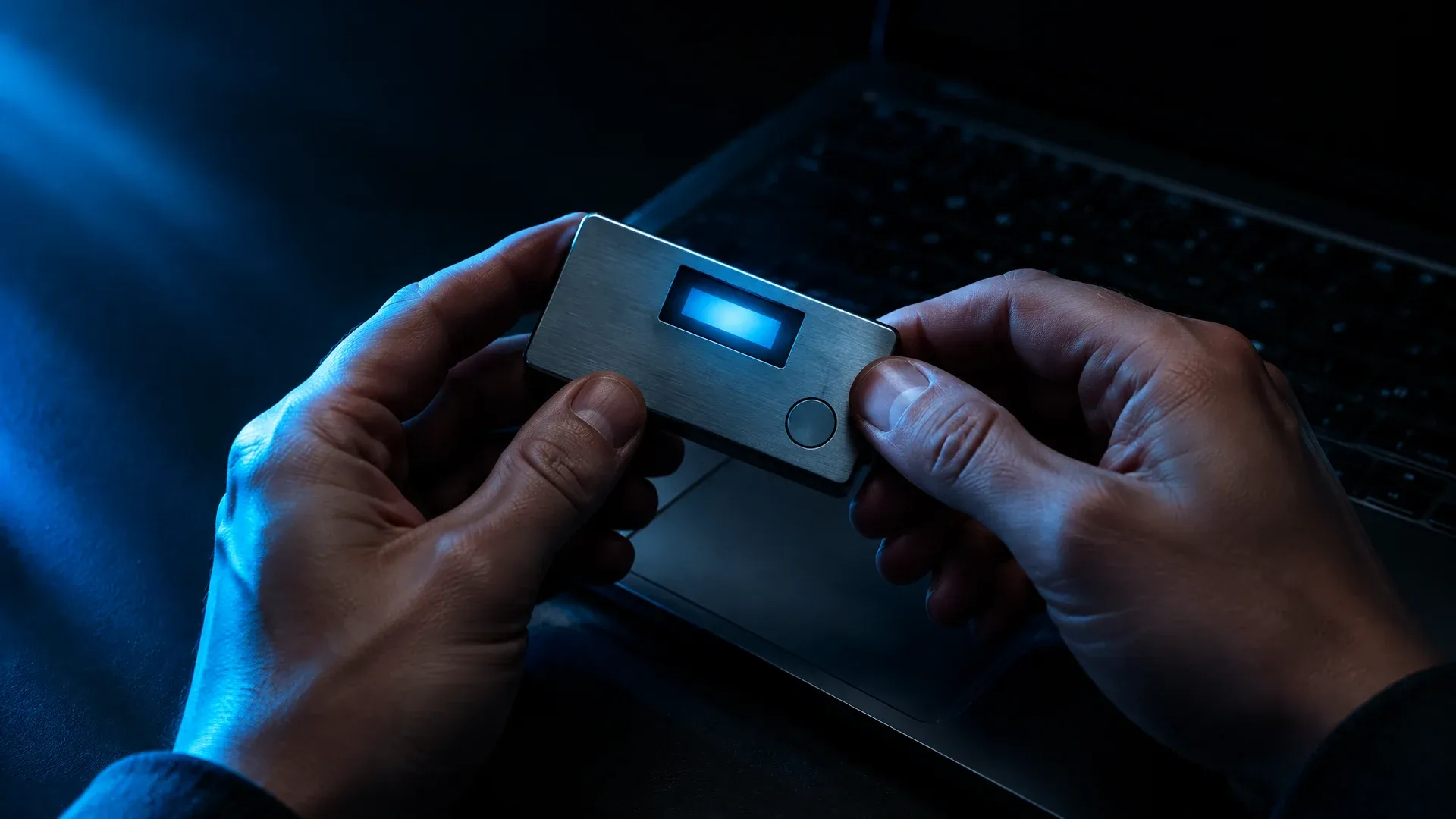
- Self-custody and prepare the proof of ownership: If you transfer more than €1,000 to your wallet, the exchange will ask for proof. A hardware wallet protects the keys offline; models and prices are in the hardware wallet comparison.
- Document every transaction: Swaps on a DEX also count towards the holding period and the exemption limit. A tax tool reads wallet addresses and produces the report for the tax office; our overview of crypto tax tools compares providers.
If you are specifically interested in Bitcoin, our earlier guide buying Bitcoin without KYC from June 2026 covers the practical routes and their costs. The legal situation has tightened further since then with the end of the transition periods.
(As of November 4, 2026. This article is not investment advice. Prices and fee structures change; check the terms with the provider before you buy.)
Frequently asked questions about crypto exchanges without KYC
Transparency note: This article was produced with the assistance of artificial intelligence and reviewed by our editorial team before publication. All figures and claims were checked against the primary sources linked in the text. The feature image was generated with AI.
Related articles
- How to Buy Bitcoin with No KYC in 2026: 3 Ways to Do It
- Crypto Withdrawals to Your Own Wallet: Why Exchanges Demand Proof of Address Ownership Above €1,000
- Crypto Withdrawal to Your Own Wallet: Ten Providers Checked, Three Will Not Let Your Coins Out
- FinCEN drops the reporting duty for withdrawals to private wallets: what matters now for European investors
- Source of Funds at a Crypto Exchange: Why a Deposit Can Freeze Your Account for 15 Days
Which topics should we dive deeper into?
Select what genuinely interests you. Your picks feed directly into our editorial planning.
Crypto news that's actually worth your time.
Weekly. 60 seconds. Carefully curated by our editors: no hype, no promo flood, no spam.

June 30, 2026 11:20 PM

How to Switch from Binance to a MiCA Regulated Crypto Exchange
Binance is winding down EU services after missing the MiCA deadline. Here's why it's happening and how to move your funds to a regulated platform safely.

August 21, 2026 4:14 AM

Euro Deposit to a Crypto Exchange Rejected: Why the Transfer Fails and What You Can Do
Since October 9, 2025 your payment service provider matches the payee name against the IBAN on every euro transfer. On deposits to an exchange account that is precisely where the payment most often comes to a halt.
August 14, 2026 6:18 PM

Bitcoin From a Foreign Exchange to Austria: Which Tax Data You Need
Transferring Bitcoin from a foreign exchange to an Austrian platform: which tax data can be missing for the withholding tax. And what investors need to watch out for.
October 21, 2026 7:16 AM

FinCEN crypto fraud report: what 33,904 filings and $12.7 billion actually show
FinCEN reviewed 33,904 suspicious activity filings covering $12.7 billion in activity. Why the data are a warning signal but not a confirmed loss statement.
October 15, 2026 7:29 AM

17 of 20 top coins down, Ethereum at $2,380: where the sell-off is measured
Ether loses 5.41 percent over 24 hours and falls to a daily low of $2,332.43. Our own count of the 25 largest cryptocurrencies shows how broadly the sell-off really carries.
August 21, 2026 1:26 PM

Crypto Exchange Account Frozen: Why Nobody Tells You Why, and What Actually Helps
If you get no explanation after a freeze, it feels like arbitrary treatment. In fact the German Money Laundering Act forbids the provider from telling you. What happens in that time, which deadlines apply and which documents shorten the process.

July 2, 2026 8:59 PM
Binance Is Out of the EU: How to Move to a MiCA-Regulated Exchange
Binance has left the EU market. Which exchanges hold a MiCA licence, how to verify an authorisation is real, and how to move your holdings across step by step.
August 6, 2026 3:05 PM
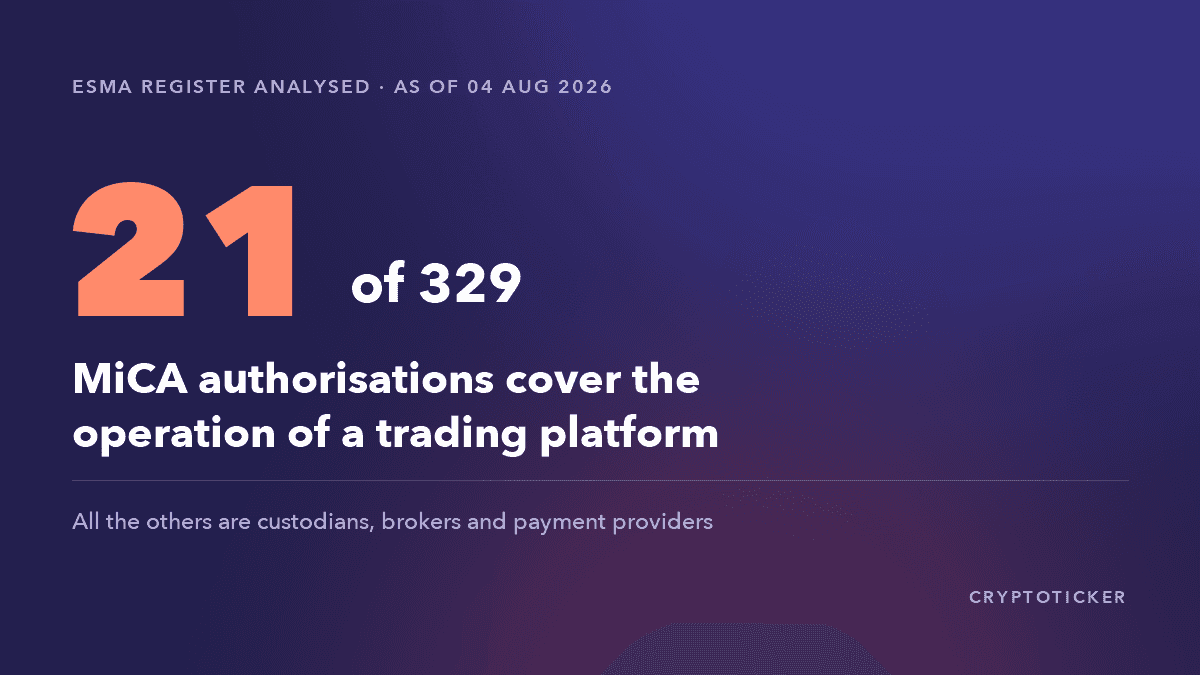
MiCA Register 2026: Only 21 of 329 Licences Are Real Exchanges
ESMA publishes the register of MiCA-authorised providers as an open file. We worked through all of it — and the result is not what the phrase “licensed crypto exchange” suggests.

May 26, 2025 11:00 PM
Inside Bitget: How COO Vugar Usi Zade Is Shaping the Future of Crypto Trading
From Bitget Seed and AI-powered tools to regulatory strategy and mass adoption, COO Vugar Usi Zade reveals how Bitget is building the next era of crypto trading.
September 19, 2026 7:12 PM

Bitcoin Sold Without Austrian Tax Withheld: What to Do Next
Sold Bitcoin but no Austrian capital gains tax was withheld? That does not make the sale tax free. When investors have to declare the gain themselves at 27.5 percent.
September 2, 2026 1:43 AM
Peach Bitcoin Suspends Its Escrow Mode: 500 Franc Cap and New Rules for Sellers
The P2P marketplace has stopped co-signing releases as of September 1, 2026, while a Swiss supervisory body reviews its 2022 compliance framework. Purchases are capped at 500 francs, and only sellers meeting certain conditions may still post offers.
October 19, 2026 7:51 AM

Euro balances on a crypto exchange: what to watch after the ESMA answer on MiCA article 70
The European securities regulator ESMA spelled out on October 16, 2026 where a crypto asset service provider may hold your euro balance. A payment service provider without a banking licence is only a staging post of at most one business day.
September 25, 2026 4:13 PM

Crypto Exchange Protection Funds Recalculated: What Really Covers Your Balance After the Bitget Hack
The $351.6 million attack on Bitget would eat up three quarters of the exchange's in-house protection fund. We retrieved the protection promises of several exchanges ourselves and measured them against deposit insurance and MiCA liability.
August 28, 2026 10:15 AM
Selling Bitcoin Privately: What Tax Applies in Austria
Selling bitcoin directly to another person? In Austria, private sales can still trigger 27.5 percent tax on the realised gain.
November 1, 2026 3:36 PM

Instant transfer to a crypto exchange: the bank matches the payee name
Since October 2025 every bank in the euro area has had to offer instant transfers and to match the payee name before releasing them. On deposits to trading venues that is exactly what produces warnings, even though the account details are correct.
October 1, 2026 4:21 AM

Velocity Replaces Drift After the 285 Million Dollar Hack: What Changes for Investors in Germany
The Solana perp DEX Drift is back as Velocity, and since September 29, 2026 a new team has been running it. What the overhaul after the outflow of 285 million dollars means for your deposits, for settlement in USDT and for the legal position in Germany.
September 29, 2026 10:33 AM
ESMA puts reverse solicitation on its 2027 watch list: what investors need to know about exchanges without an EU licence
ESMA presented its work programme for 2027 on September 28, 2026 and made reverse solicitation a supervisory priority. What that means if your coins sit with a provider without EU authorisation, and which three steps make sense now.
September 25, 2026 4:20 AM

Crypto as a Down Payment for a German Mortgage: What Banks Require
Since April 2023 a house in Germany can no longer be paid for in Bitcoin; section 16a of the Money Laundering Act bans it outright. Your crypto holdings still work as a down payment, provided you take the route through the euro and prove the origin without gaps.
July 10, 2026 10:30 AM
Binance Reveals Where Its EU Users Went After MiCA
Binance just revealed where most departing EU users moved their crypto after MiCA — and the answer is raising hard questions about the new rulebook.
September 26, 2026 4:11 AM

Shielded Bitcoin: what the privacy proposal means for your Bitcoin addresses
Three researchers published a draft for encrypted Bitcoin transfers without a soft fork on September 24, 2026. What Shielded Bitcoin hides, what stays public and which points you can check on your own wallet today.
October 22, 2026 7:25 PM

Crypto market loses 4.2 percent in a day: why Ethereum is giving up 5.4 percent
Nasdaq down 2.1 percent, Brent crude at a five-month high: the crypto market gives up 4.2 percent, and Ether falls considerably harder than Bitcoin, by 5.4 percent. What set off the sell-off, and what can actually be checked today.
August 21, 2026 10:27 AM

Complaining About a Crypto Exchange: the Deadlines Article 71 MiCAR Sets and Why BaFin Will Not Decide Your Case
Authorised crypto providers have to run a formal complaints procedure, and Delegated Regulation (EU) 2025/294 sets a hard limit of two months for it. Our own analysis of the ESMA list shows at the same time that no complaints link is on file for Germany to this day.
August 11, 2026 4:35 PM
Russia Clears Bitcoin, Ethereum and USDT for Public Trading: What It Means for Prices
The Bank of Russia named BTC, ETH and USDT for public circulation on exchanges. Retail buyers face a $3,690 annual cap. Bitcoin barely moved.
July 28, 2026 5:16 PM
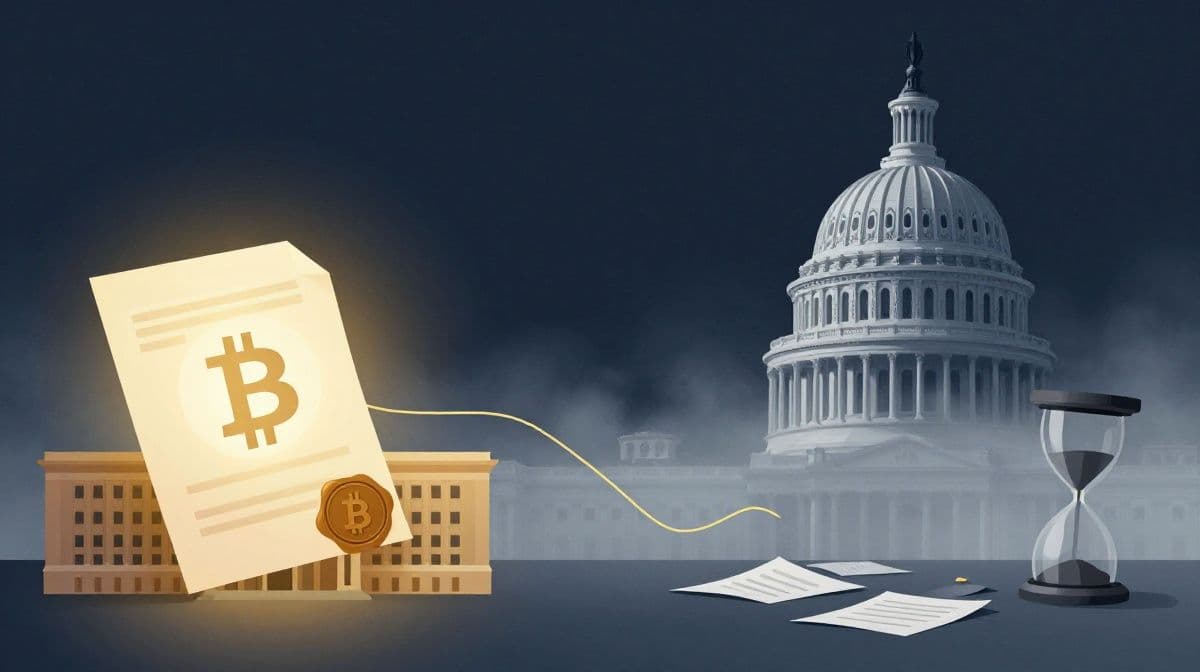
Russia Just Passed Its Own Crypto Clarity Act While the US Senate Keeps Stalling
Russia's crypto trading law is on its way to Putin's desk while the US CLARITY Act sits unvoted on a shelf. Here is what the split means for prices.

August 31, 2023 9:24 AM
Top 5 Bitcoin ETFs You Can’t Afford to Miss!
The most optimal Bitcoin exchange-traded funds provide a pricing exposure. This article is all about the top 5 Bitcoin ETFs.
October 24, 2026 4:12 AM

Coinbase Ireland accepts a 3.25 million euro fine and admits the breaches: “We have no tolerance for weaknesses in safeguarding arrangements”
The Central Bank of Ireland has fined Coinbase Ireland Limited 3,252,618 euros because the e-money institution failed to safeguard client funds adequately and did not control the outsourcing to its US parent. European customers are tied to that very entity through the EU passport, and their euro balance is not a bank deposit.

September 19, 2026 7:17 AM

Chainlink Jumps Above $12: What LINK Holders Should Check Now
Chainlink trades at $12.34, 7.4 percent higher than yesterday. What part of the move is the broad market rally, what Chainlink itself contributes, and the three things you should check as a LINK holder.
More from CryptoTicker