
Crypto Regulation News: MiCA, SEC and Policy
This page collects every CryptoTicker.io story on the regulation of cryptocurrencies: MiCA and exchange licensing in the EU, decisions by regulators such as the SEC, the CFTC and Germany’s BaFin, US legislation such as the GENIUS Act and the CLARITY Act, court rulings against founders and exchanges, and elections in which crypto plays a role. The newest articles are at the top.
Regulation decides which exchanges may accept customers in your country, how stablecoins must be backed and which data reaches the authorities. Our stories explain who a new rule affects and when it applies.
All crypto regulation news
New crypto regulation stories appear here as soon as they are published.

Gibraltar Crypto License: GFSC Fees, Application Process and MiCA Limits
A Gibraltar crypto license is a permission from the Gibraltar Financial Services Commission (GFSC), formally a Part 7 permission, either as a distributed ledger technology (DLT) provider or, since October 2025, as a provider of virtual asset arrangements (VAA). Applying costs £45,000, annual GFSC fees run from £44,454 to £137,154, and the license gives no access to EU customers under MiCA.

yesterday

Terra Luna Classic after the Do Kwon verdict: LUNC vs LUNA compared
After the verdict against Do Kwon, Terra Luna Classic (LUNC) carries on as a community blockchain with no company behind it, and the burn tax reduces supply by around 0.6 percent a year. Here is what separates LUNC from LUNA and why the ticker is often called LUNA on exchanges.
10 days ago

Do Kwon sentenced to 15 years: the Terra collapse verdict and the cases still open
Terra founder Do Kwon is serving 15 years in a US prison after pleading guilty to fraud. This explainer covers the collapse of UST and LUNA, the sentence, the cases still open and what MiCA does differently today.
14 days ago

Germany's account lookup to cover crypto accounts: draft allows five-working-day freezes
Germany's account lookup system is set to cover crypto accounts: exchanges would report account ID, holder and opening dates, but no balances. At the same time, the FIU would be allowed to freeze a crypto account for up to five working days, and an objection would not lift the freeze.
15 days ago

Bitstamp exchange review: a 0.40 percent taker fee and a MiCA licence from Luxembourg
Bitstamp has belonged to Robinhood since June 2025 and has held a MiCA licence from Luxembourg since May 2025, which also applies in Germany. This profile covers order book fees, the more expensive ways to buy, SEPA costs, custody and what matters for tax.
15 days ago

Blockpit pricing: the crypto tax report costs €49 to €549 per tax year
Blockpit prices its crypto tax report by the number of your transactions in the tax year, from €49 to €549. On top come the Blockpit Plus subscription at €59 and an Expert Service from €99, neither of which you need for the report itself.
16 days ago



MEXC FinCEN Order: Washington Cuts the Exchange Off From US Dollar Channels
The US Treasury is cutting crypto exchange MEXC Global off from the US financial system with a FinCEN order that takes effect 30 days after publication in the Federal Register. For customers in Germany the account remains accessible, but dollar routes are narrowing, and MEXC has no EU authorisation.
17 days ago

Midterms Recap: The Crypto Roadmap to January 3, When the CLARITY Act Expires
Democrats take over both chambers of the US Congress in January. For the CLARITY Act that is a hard deadline: if the Senate does not act by January 3, the bill expires. The roadmap and what it means for crypto investors.
19 days ago
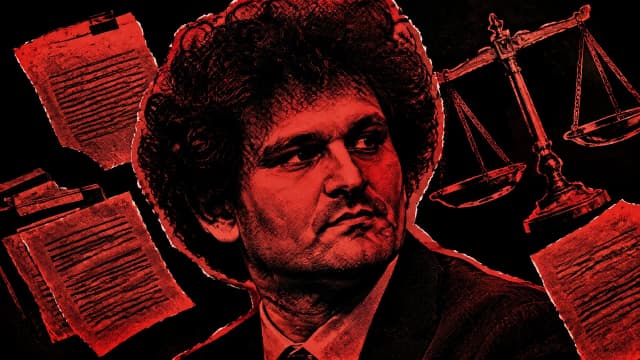
Sam Bankman-Fried: 25-year sentence for the FTX founder, and his case is now at the Supreme Court
Sam Bankman-Fried moved billions in FTX customer funds to Alameda Research and is serving 25 years in prison for it. After his failed appeal, his case sits with the Supreme Court, while FTX customers receive 105 percent of their 2022 dollar claims.
20 days ago
Frequently asked questions about crypto regulation
What is MiCA?
MiCA (Markets in Crypto-Assets) is the EU regulation for crypto assets. Its stablecoin rules have applied since 30 June 2024 and its rules for exchanges, brokers and custodians since 30 December 2024. Crypto exchanges and other crypto-asset service providers need a CASP licence, which is valid in every member state; banks and investment firms notify their supervisor instead.
Do all crypto exchanges in the EU need a MiCA licence now?
Yes. Providers that were already operating under national law before MiCA could continue without a MiCA licence until 1 July 2026 at the latest, and many member states shortened this transition period. Since then, only providers with a MiCA licence may offer crypto services in the EU; for banks and investment firms, the notification is enough.
Which crypto exchanges have a MiCA licence?
The European Securities and Markets Authority (ESMA) keeps a register of all licensed crypto-asset service providers. Our comparison of regulated exchanges shows which exchanges hold a MiCA licence.
Who regulates crypto in the United States?
In the US, the SEC oversees crypto assets that count as securities, while the CFTC oversees futures and other derivatives on commodities such as Bitcoin. For stablecoins, the GENIUS Act, signed into law in July 2025, sets federal rules.