
Sam Bankman-Fried: 25-year sentence for the FTX founder, and his case is now at the Supreme Court
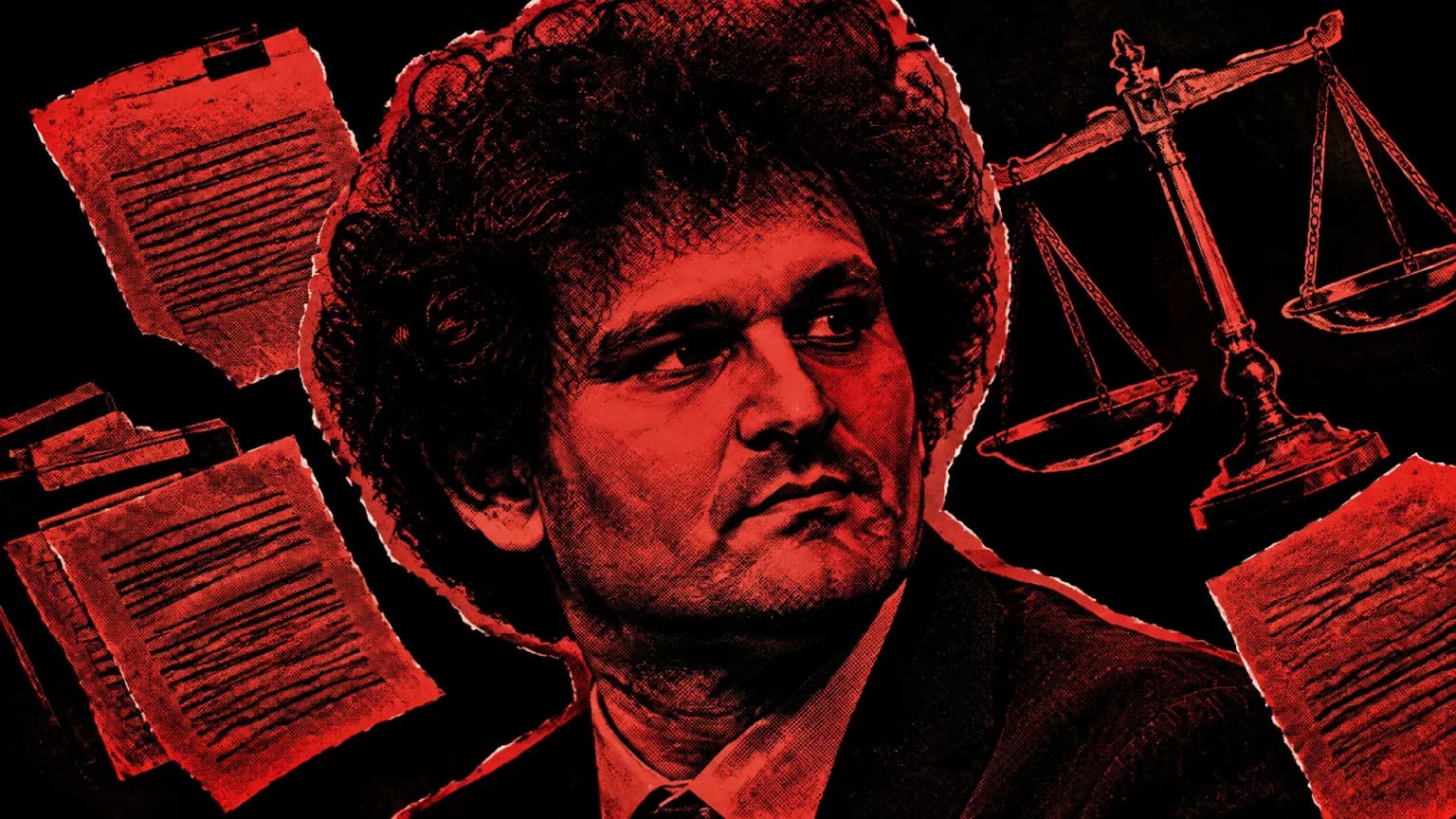
Sam Bankman-Fried moved billions in FTX customer funds to Alameda Research and is serving 25 years in prison for it. After his failed appeal, his case sits with the Supreme Court, while FTX customers receive 105 percent of their 2022 dollar claims.

Which topics should we dive deeper into?
Select what genuinely interests you. Your picks feed directly into our editorial planning.
Crypto news that's actually worth your time.
Weekly. 60 seconds. Carefully curated by our editors: no hype, no promo flood, no spam.
Sam Bankman-Fried is the founder of the crypto exchange FTX and has been serving a 25-year prison sentence since 2024. A jury in Manhattan found him guilty on seven counts in November 2023 for moving billions in FTX customer funds to his trading firm Alameda Research. In June 2026, a US appeals court upheld the verdict, and since September his petition has been with the Supreme Court. For investors in Europe the case is more than a courtroom story: it shows why a balance on an exchange is, legally, a claim against the operator, and why the EU's MiCA regulation requires customer funds to be held separately.
This overview traces Bankman-Fried's path, from celebrated founder to failed appeal. It explains how FTX customers are being repaid, why 105 percent is less than it sounds, and what the collapse teaches you about holding Bitcoin and other coins yourself. It is based on court rulings, statements from US prosecutors and the publications of the FTX Recovery Trust.
Who is Sam Bankman-Fried? From quant trader to FTX founder
Sam Bankman-Fried, known in the industry simply as SBF, grew up as the son of two Stanford University law professors and studied physics at MIT. He then traded exchange-traded funds at the trading firm Jane Street. A quant trader exploits price differences using mathematical models and automated strategies rather than gut feeling.
In 2017, Bankman-Fried founded the trading firm Alameda Research. At first it made money from the so-called kimchi premium, the fact that bitcoin traded at a higher price on South Korean exchanges than in the US. In 2019 came the crypto exchange FTX, based in the Bahamas, which specialised in derivatives such as futures and perpetuals. Within three years FTX rose to become one of the largest exchanges in the world. In early 2022, investors valued the company at $32 billion.
In public, Bankman-Fried presented himself as the opposite of the crypto fortune hunter cliché. He championed effective altruism, a school of thought that directs donations according to measurable impact, spoke to the US Congress about regulation and gave large sums to politicians of both parties. FTX bought the naming rights to a basketball arena in Miami and advertised with sports stars. That image made the later collapse all the more unexpected for many customers.
Alameda Research and FTX: how customer funds flowed to the hedge fund
The core of the case lies in the link between the exchange and the trading firm. Formally, FTX and Alameda Research were separate companies, but Bankman-Fried owned the majority of both. According to the findings of the criminal trial, Alameda enjoyed special privileges on FTX: the trading firm was allowed to run a negative balance without the system force-closing its positions, and in effect had a line of credit funded by customer deposits.
The US Attorney's Office for the Southern District of New York put the damage at around $8 billion in customer funds. According to the indictment, the money went into Alameda's losses, into real estate in the Bahamas, into venture investments and into political donations. Customers knew nothing about it. Most assumed that their deposits sat at FTX and could be withdrawn at any time.
The exchange's own token, FTT, played an important role. Alameda held large amounts of it and used it as collateral for loans. The value of that collateral depended entirely on confidence in FTX. An exchange token is a coin issued by a trading platform itself, usually offering fee discounts or other perks on that platform. When confidence in the exchange falls, the token falls with it, and so does any collateral built on it.
FTX collapse in November 2022: nine days to the bankruptcy filing
On November 2, 2022, the trade publication CoinDesk reported on an Alameda balance sheet in which a large share of the assets consisted of FTT. A few days later, Binance chief Changpeng Zhao announced that Binance would sell its FTT holdings. Customers then pulled out billions within a short time. FTX halted withdrawals, and an announced rescue takeover by Binance collapsed after one day.
On November 11, 2022, FTX, Alameda Research and around 130 affiliated companies filed for creditor protection in Delaware under Chapter 11 of the US Bankruptcy Code. Chapter 11 is a procedure in which a company is restructured or wound down under court supervision while creditors wait for an orderly distribution. Bankman-Fried stepped down as chief executive. His successor, John J. Ray III, a restructuring specialist who had previously overseen the wind-down of Enron, spoke of a failure of corporate controls unlike anything he had ever seen.
That cut-off date later became decisive for every customer. The bankruptcy process values each claim as of November 11, 2022, the day of the filing. At the time, bitcoin traded at around $17,000. What that means for today's repayment is explained further below. We have explained how customer balances are treated legally when an exchange goes bankrupt in a separate guide.

Guilty on seven counts: the 2023 criminal trial in Manhattan
In December 2022, Bankman-Fried was arrested in the Bahamas and extradited to the United States. The trial began in October 2023 before the federal district court in Manhattan under Judge Lewis Kaplan. The indictment comprised two counts of fraud and five counts of conspiracy, including conspiracy to defraud customers and lenders and to commit money laundering.
Three former confidants who had previously pleaded guilty testified against him: Caroline Ellison, head of Alameda Research, FTX co-founder Gary Wang and engineering chief Nishad Singh. Bankman-Fried himself took the stand. He admitted mistakes in running the company but denied having stolen money. On November 2, 2023, after only a few hours of deliberation, the jury found him guilty on all seven counts.
His co-defendants received much lighter sentences because they had cooperated with prosecutors. Ellison was sentenced to two years in prison in September 2024, while Wang and Singh avoided further prison time. Ryan Salame, a former FTX executive, received seven and a half years in May 2024 for illegal campaign contributions and for operating an unlicensed money transmitting business.
A 25-year sentence and $11 billion in forfeiture
On March 28, 2024, Judge Kaplan handed down the sentence: 25 years in prison and the forfeiture of around $11 billion. Forfeiture is a court order to surrender assets derived from a crime to the state. In the US, that money can flow to victims through a separate procedure. Prosecutors had asked for 40 to 50 years, the defence for no more than six and a half.
Kaplan justified the sentence by saying that Bankman-Fried had known his actions were wrong. In the judge's words, he had made a very bad bet about whether he would get caught. According to Reuters, Bankman-Fried is held in a low-security federal prison near Santa Barbara, California. If the verdict stands, Reuters reports, he will be released in 2044 at the earliest.
 Find an exchange with a MiCA licence
Appeal rejected: the Second Circuit upholds the verdict
Bankman-Fried appealed both the verdict and the sentence to the US Court of Appeals for the Second Circuit in New York. His lawyers argued that Judge Kaplan had wrongly excluded evidence showing that FTX had enough assets to repay all customers. They also argued that Kaplan had restricted the defendant's own testimony too heavily.
On June 12, 2026, a three-judge panel unanimously rejected the appeal. Judge Barrington Parker described the prosecution's evidence as robust, to put it mildly. Bankman-Fried, he wrote, had publicly assured customers, investors and regulators that their funds were safe while using FTX as his personal piggy bank.
One sentence in the ruling is decisive in legal terms: FTX customers were defrauded the moment their money flowed to Alameda, no matter how firmly Bankman-Fried believed they would later be repaid. This means it makes no difference to his criminal liability that customers are now getting back more than their dollar claims. As we had already reported in April 2024 when the appeal proceedings began, the defence was relying on exactly that argument.
Supreme Court and a pardon: Bankman-Fried's last options
On September 10, 2026, Bankman-Fried petitioned the Supreme Court to hear his case. The petition challenges the conviction and the $11 billion forfeiture, which in the defence's view violates the ban on excessive fines in the Eighth Amendment to the US Constitution. The nine justices decide at their own discretion whether to take a case. Four of them must agree, and the court accepts only around 1 percent of the petitions it receives. As of early November, no decision on the petition had been made.
There is also the political route. According to the Office of the Pardon Attorney at the US Department of Justice, as cited by Reuters in June, Bankman-Fried has asked President Donald Trump for a pardon. Whether that will happen is unclear. In 2025 Trump pardoned Binance founder Changpeng Zhao, although Zhao's conviction concerned violations of anti-money laundering rules and not fraud against customers. Neither the White House nor the Department of Justice has commented. You should treat reports of an imminent pardon without an official source as rumours.
FTX repayment: 105 percent based on 2022 dollar values
Alongside the criminal case, the wind-down of FTX continues. The bankruptcy plan has been in force since January 2025, and the FTX Recovery Trust handles the payouts. According to trade media, it had distributed around $10.3 billion to creditors by the end of June 2026. On March 31, 2026, the fourth round paid out around $2.2 billion, followed by around $900 million in the fifth round on July 31.
After the fifth round, customers of the international platform FTX.com, class 5A in the plan, stand at 105 percent of their allowed claim. Customers of the US platform are also at 105 percent, general unsecured creditors at 103 percent, and small claims, the so-called convenience claims, at 120 percent. As of early November, no date for a sixth round had been published.
The percentages refer to the dollar value as of November 11, 2022. Anyone who held one bitcoin on FTX at the time has a claim of around $17,000 and receives 105 percent of it, or just under $18,000. In early November, one bitcoin cost between $77,000 and $81,000. Measured in coins, such a customer therefore gets back less than a quarter of their former holdings. For Solana the gap is even wider: SOL cost less than $20 in November 2022 and just under $100 in early November 2026. Creditors challenged this valuation in court, but bankruptcy law prescribes the cut-off date.
FTX customers in Europe: FTX EU, Backpack and the claims portal
For customers in Germany and the rest of the EU there are two routes, depending on which FTX entity held the account. FTX EU was a subsidiary licensed in Cyprus that the provider Backpack Exchange acquired from the bankruptcy estate. Backpack has set up its own refund procedure with identity verification for euro balances at FTX EU, separate from the bankruptcy plan in the US. EU customers who registered with FTX before March 7, 2022, on the other hand, count as customers of FTX International and go through the general procedure.
For the general procedure, you have to log in to the claims.ftx.com portal, complete identity verification, submit tax forms and choose one of the three distribution agents, BitGo, Kraken or Payoneer. Only then does the trust pay out on the next distribution date. According to reports on the trust's quarterly report, $59 million was still set aside at the end of June for creditors who had not completed these steps.
How the German tax office treats a repayment from the FTX proceedings has not been conclusively settled. Among other things, it depends on when you bought the coins and whether you have already claimed a loss. Keep account statements, the claim confirmation and every payment from the trust on file before you submit your tax return.
 Secure your coins on a hardware wallet
The lesson from FTX: what MiCA requires for the custody of customer funds
The collapse of FTX came at a time when the EU was working on its Markets in Crypto-Assets Regulation, MiCA for short. The regulation requires providers to hold their customers' crypto assets and funds separately from their own and prohibits them from using them for their own account. That separation is exactly what was missing at FTX. Since the end of the transition period, exchanges serving customers in Germany need a MiCA licence. We summarise the obligations that come with a MiCA licence on a separate page.
A licence does not make an exchange invulnerable, but it does change the starting position. A supervisor such as Germany's BaFin or its sister authorities in other EU countries examines capital, custody and management, and segregated custody makes it easier to return assets to customers in an emergency. When you choose a platform, a look at the comparison of regulated crypto exchanges should therefore be the first step, before fees and coin selection.
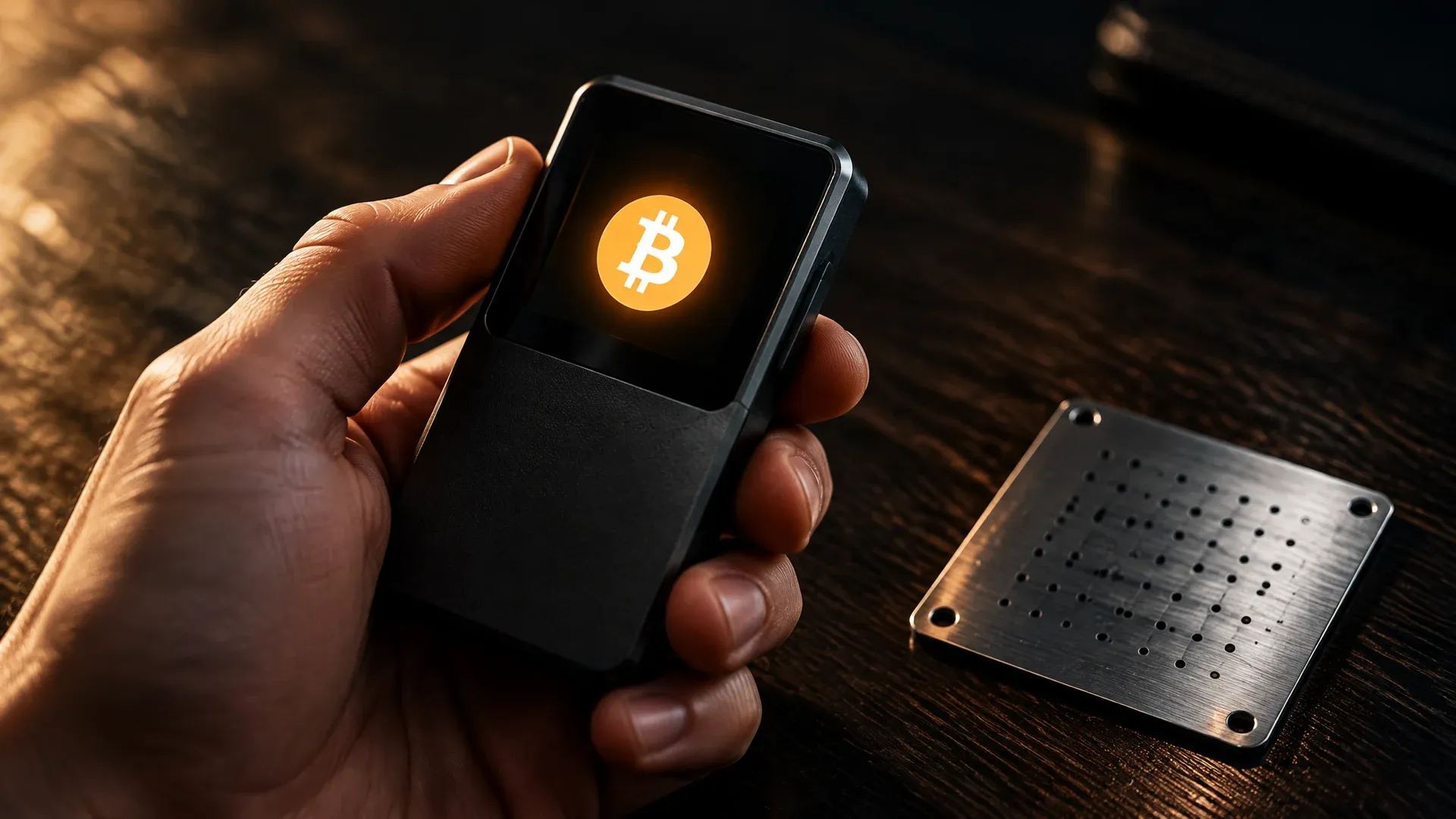
The second lesson concerns self-custody. Coins on an exchange are, legally, a claim against the operator. Coins in your own wallet, whose private key only you know, belong to you. A hardware wallet is a small device that stores this key offline and signs transactions only after you confirm them on the device. For amounts you are not actively trading, this is the form of custody that rules out a case like FTX.
Sam Bankman-Fried: free in 2044 at the earliest, but the lesson applies today
Whether the Supreme Court takes the case will be decided in the coming months, and a pardon remains speculation. Neither changes much for investors. The case points to three concrete steps for how you hold your own assets:
- Keep holdings off the exchange: What you hold for the long term belongs in your own wallet. The hardware wallet comparison shows devices, prices and the differences in how they secure the key.
- Trade only with licensed providers: Before opening an account, check whether the exchange has a MiCA licence and where it is supervised. You will find an overview by fees and licensing in the crypto exchange comparison.
- Document every transaction: In an emergency, a complete record determines your claim and its tax treatment. A tool from the crypto tax software comparison records purchases, sales and holdings automatically.
(As of November 4, 2026. This article is not investment advice. Prices and fee structures change; check the terms with the provider before you buy.)
Frequently asked questions about Sam Bankman-Fried
Transparency note: This article was produced with the assistance of artificial intelligence and reviewed by our editorial team before publication. All figures and claims were checked against the primary sources linked in the text. The feature image was generated with AI.
Related articles
- What Happens If Sam Bankman-Fried Gets a Pardon From TRUMP?
- FTT Price Explodes 90% as Sam Bankman-Fried Files for Presidential Pardon
- Sam Bankman-Fried Challenges Fraud Conviction, Seeks New Trial
- U.S. Government Wants $13 Million in Political Donations Back from Former FTX Leaders
- FTX Founder Sam Bankman-Fried Gets 25-Year Sentence for Fraud
Which topics should we dive deeper into?
Select what genuinely interests you. Your picks feed directly into our editorial planning.
Crypto news that's actually worth your time.
Weekly. 60 seconds. Carefully curated by our editors: no hype, no promo flood, no spam.

August 13, 2023 2:59 PM
Sam FTX News: Sam Bankman-Fried is Going BACK to JAIL?
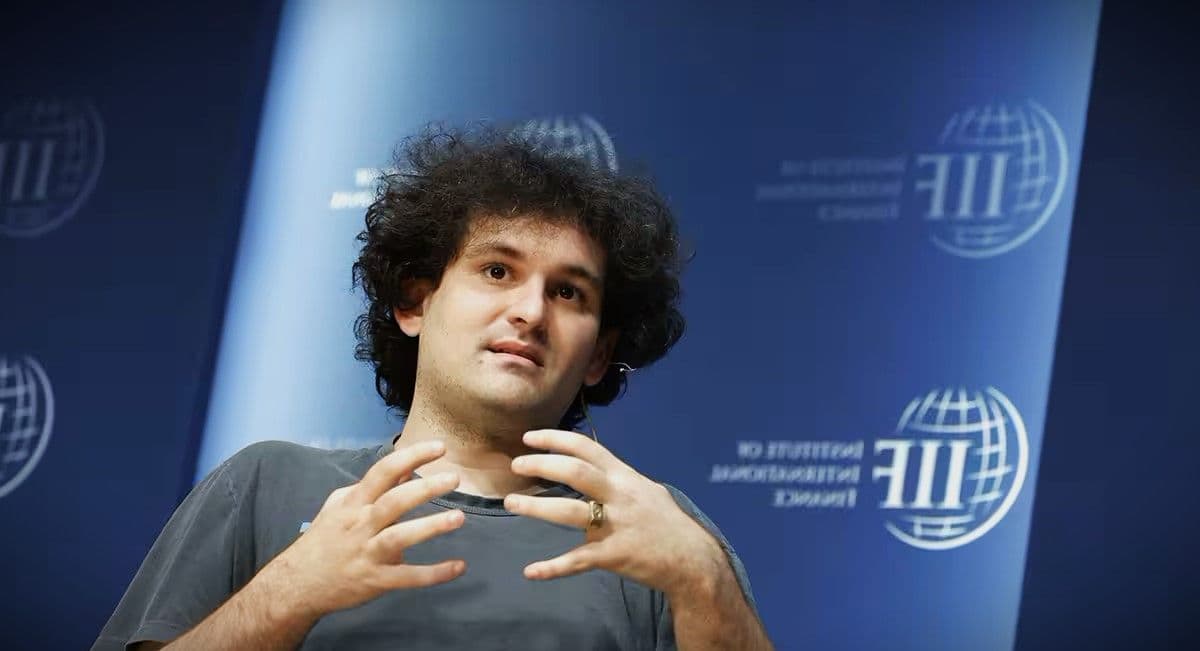
Sam FTX new: Sam Bankman-Fried, the influential founder of FTX, has had his bail revoked by the courts. Why is SBF going back to jail?
November 11, 2022 11:44 PM
FTX Update: This User withdrew MILLIONS from FTX, and SBF to Prison?
What will happen to FTX in the future? Let's try to answer as many questions as possible given the current situation and news of today.

September 6, 2020 11:14 AM

SushiSwap Founder gives the Project Control to FTX CEO Sam Bankman-Fried
Chef Nomi, the anonymous founder of SushiSwap has given the project control of SushiSwap to FTX CEO, Sam Bankman-Fried. SushiSwap is in the middle of the migration and synthesis of innovations. Chef Nomi Tweeted: I'm transferring control to @SBF_Alameda now. […]
May 16, 2025 7:54 AM

FTX to Start $5 Billion Repayment Plan for Creditors on May 30
FTX and the FTX Recovery Trust have officially announced a $5 billion repayment plan, set to begin on May 30, 2025. This marks a major milestone in the ongoing bankruptcy proceedings following the platform’s dramatic collapse in November 2022.

April 12, 2024 5:10 PM

Sam Bankman-Fried Appeals 25-Year Sentence
Sam Bankman-Fried isn't going down without a fight. Discover how the former FTX CEO is challenging his 25-year sentence.
April 5, 2024 11:07 PM
FTX Founder Sam Bankman-Fried Gets 25-Year Sentence for Fraud
Sam Bankman-Fried sentenced to 25 years for FTX fraud, ordered to pay $11B. A wake-up call for crypto, highlighting the need for integrity.
November 5, 2023 1:48 AM
Sam Bankman-Fried: The Crypto Industry’s Wake-Up Call
Unpacking Sam Bankman-Fried's fall and its impact on crypto's future, advocating for transparency and regulatory compliance.
April 22, 2026 3:49 PM

FTX Sold Cursor for $200K — Now SpaceX Wants It for $60B
FTX sold its Anysphere stake for $200K. Now SpaceX has an option to acquire Cursor for $60B, reviving one of crypto’s wildest missed bets.
January 25, 2023 7:33 AM
BlockFi’s Financials Show $1.2B FTX Exposure
BlockFi had more than $1.2 billion tied to FTX and Alameda. Updated 2026: how the bankruptcy ended and why customers got 100% back in dollars, but fewer coins.

November 2, 2026 3:22 AM

FTX distributions: Creditors who miss the January 31 onboarding deadline risk losing the July payout
FTX creditors who do not complete onboarding with BitGo, Kraken or Payoneer within six months of July 31, 2026 can lose that distribution. Germany is served by all three providers, but the steps in the customer portal carry deadlines of their own.
May 18, 2024 2:39 PM

Will Genesis Pay Back The Creditors After Bankruptcy Filing?
Did Genesis Global Capital secure a court approval for its Chapter 11 repayment plan? And what challenges does it face with Digital Currency Group, its parent company?
November 22, 2024 11:30 AM
Why is FTX Token (FTT) Price UP?
After nearly two years of waiting, FTX creditors finally see light at the end of the tunnel. The reorganization plan is set to begin in January 2025.
September 9, 2026 4:11 AM
Mt. Gox Repayment Deadline on October 31, 2026: What Creditors Need to Check Now
The Mt. Gox repayment deadline ends on October 31, 2026, Japan Time, which for you means 16:00 CET on October 30. What creditors have to have completed by then, and what the date means for every other bitcoin holder.
October 19, 2026 4:23 PM

Mt. Gox pushes repayment to October 31, 2027: what changes for creditors
The insolvency trustee has moved the deadline for the base repayment, the early lump-sum payment and the intermediate repayment back by a year, from October 31, 2026 to October 31, 2027. What that means for creditors, for tax and for the Bitcoin price.
February 20, 2026 4:38 PM
Breaking: Supreme Court Strikes Down Trump Tariffs...Bad for Cryptos?
SCOTUS rules Trump’s IEEPA tariffs unconstitutional. A potential $175B refund could spark a massive liquidity surge for Bitcoin and global markets.
January 14, 2026 2:47 PM
Crypto Markets on Edge on 14 January 2026: US PPI Surprise Ahead of the Tariff Ruling
Hot US producer prices and a pending Supreme Court tariff ruling kept crypto on edge on 14 January 2026. The ruling came on 20 February, and the Fed later raised rates.
January 13, 2026 7:13 PM
Did Tariff News Stop the Crypto Bull Run? The January 2026 Rally Revisited
On 13 January 2026 Bitcoin pushed towards $94,000 ahead of an expected Supreme Court tariff ruling. The ruling came on 20 February, and by then the rally was long over.
October 5, 2023 5:44 PM

FTX Collapse: New Revelations Inside the Alameda Secret Backdoor
Latest on the FTX collapse: shocking Alameda backdoor scandal reshaping the crypto world. Stay updated with the newest FTX news.
October 5, 2023 4:50 AM

Binance’s CZ Turns Down $40M Futures Exchange Proposal from Ex-FTX CEO SBF
In 2019, Binance's CZ made waves by declining a $40M futures exchange offer from ex-FTX CEO, SBF. Dive deep into their differing visions, the birth of FTT token, and the subsequent shifts in the crypto world.

January 7, 2025 7:45 AM
Breaking News: FTX is Acquired and Investors to get refunded...Here's How
Backpack Exchange, a fully regulated global cryptocurrency exchange, today announced the successful acquisition of FTX EU, the MiFID II-licensed former European arm of FTX.
October 13, 2024 12:34 PM

How The Delayed Mt. Gox Bitcoin Repayment Is A Good Decision for Bitcoin Price
Mt. Gox's expected Bitcoin repayment has been delayed. When will this decision take effect, and how could it affect the crypto market and Bitcoin price?
June 2, 2024 4:37 PM

Defunct FTX to Gain $800M from Anthropic Stake Sale
Defunct FTX is poised to earn $800 million by selling its stake in the Anthropic.
January 17, 2025 11:00 PM

20% of Gen Z and Alpha Open to Crypto-Based Pensions, Bitget Research Finds
A new report from Bitget Research's analytical division reveals a significant shift in retirement planning trends among younger generations.
October 8, 2024 2:17 PM

Delaware Judge Clears FTX Bankruptcy Plan
FTX creditors are set to receive all their money back in cash, plus a little extra.

More from CryptoTicker