
Crypto Exchange Account Frozen: Why Nobody Tells You Why, and What Actually Helps
If you get no explanation after a freeze, it feels like arbitrary treatment. In fact the German Money Laundering Act forbids the provider from telling you. What happens in that time, which deadlines apply and which documents shorten the process.



Which topics should we dive deeper into?
Select what genuinely interests you. Your picks feed directly into our editorial planning.
Crypto news that's actually worth your time.
Weekly. 60 seconds. Carefully curated by our editors: no hype, no promo flood, no spam.
The information provided in this article is for informational purposes only and does not constitute financial advice. Investing in cryptocurrencies carries a high level of risk.
The withdrawal is stuck, the account is frozen, and support keeps answering in building blocks: "A review is under way, we are not permitted to give further details." It looks like evasion. It is precisely what the law requires.
Anyone who receives no explanation after a freeze is not facing arbitrary treatment. They are facing Section 47 of the German Money Laundering Act, the GwG. That provision expressly prohibits the provider from telling you about a suspicious activity report it intends to file or has already filed, and equally about any investigation that follows from it. Once you know this, you stop asking the wrong question and start asking the right one.
Account frozen: the key points
- Under Section 47 GwG the provider must not inform you about a suspicious activity report. The silence is a legal duty, not bad service.
- Under Section 46 GwG a reported transaction may be executed at the earliest once the consent of the Financial Intelligence Unit or of the public prosecutor has been passed to the provider, or once the third business day after the day the report was sent has elapsed without the transaction being prohibited.
- For this deadline, Saturday does not count as a business day (Section 46 (1) sentence 2 GwG).
- Crypto providers licensed in the EU are obliged entities under Section 2 (1) no. 2 GwG. The reporting duty and the ban on tipping off apply to them just as they do to banks. The report goes to the Financial Intelligence Unit, the FIU, and not to BaFin.
- A second reporting duty has to be kept apart from this one, and the two are often confused. Since December 30, 2024, providers have had to report suspected market abuse to BaFin under Article 92 MiCAR. That has nothing to do with money laundering, and nothing to do with your freeze.
- Nothing works as well as an unbroken record of where the funds came from. A letter of complaint achieves far less.
- A freeze has to stay proportionate. If it drags on for months with no discernible reason, the route via a BaFin complaint and legal representation is open.
Account frozen: what actually runs in the background
In Germany, crypto service providers are obliged entities under anti-money-laundering law by virtue of Section 2 (1) no. 2 GwG. It is the same category of duties that applies to banks, merely a separate number in the statute. If a transaction gives rise to reasonable suspicion, the provider is not merely entitled but obliged to file a report with the Financial Intelligence Unit, and to halt the transaction for the time being.
What triggers this is often a pattern rather than a specific allegation against you: an unusually large withdrawal after a long quiet spell, inflows from an environment classified as high risk, a change of residence, a change of device, a trade between private individuals.
The fact that you learn nothing is part of the design. A suspicious activity report the subject is told about would be worthless.
Account frozen: which deadlines really apply
This is worth a close look, because a great deal of vagueness circulates online.
| What | Rule | Legal basis |
|---|---|---|
| Halting the transaction | until the consent has been passed on or until the deadline expires | Section 46 (1) GwG |
| Deadline without a response | third business day after the day the report was sent | Section 46 (1) no. 2 GwG |
| Saturday | does not count as a business day | Section 46 (1) sentence 2 GwG |
| Informing the customer | prohibited | Section 47 (1) GwG |
| Exception to the deferral | permitted where a deferral is not possible or would obstruct the investigation; the report is then filed afterwards | Section 46 (2) GwG |
What matters is the scope. The three-business-day deadline applies to the reported transaction. It does not mean that an account automatically reopens after three days. If the public prosecutor prohibits execution or opens proceedings, the rules of those proceedings apply, and they know no such deadline.
This is why those affected go through two very different experiences. Some cases are settled within a few days, others drag on for months. Which one your own case will be cannot be told from the outside, and the provider is not allowed to say.
Account frozen: what you can do yourself
The decisive point is unspectacular. What shortens a review is a clean, documented path for the money, from the original source through to the transaction under scrutiny.
What belongs in it:
- Purchase records. Bank statements for the initial deposit, invoices, statements from the exchange where you bought.
- The path in between. Wallet addresses and transaction IDs showing how the funds travelled from there to here. Gaps are the real problem, not the amounts.
- Tax classification. A tax return schedule or a summary from a tax tool creates plausibility, and portfolio tools deliver the history at the push of a button.
- One matter-of-fact covering sentence that ties the two together: "Please find attached the evidence on the origin of the funds for the transaction of ...".
What does not help: pressure via social networks, chasing support every day, or asking for the reason. Support is not permitted to answer, and it is not the body that decides.
If nothing moves, the route leads through a formal complaint to BaFin and, where larger amounts are at stake, through legal representation. A freeze has to remain proportionate, which means that occasion, scope and duration have to fit together. This article is no substitute for legal advice.
Account frozen: what this says about choosing a provider
Two things differ markedly between providers, and both become apparent only when it matters.
The first is access to a genuine review unit, meaning whether there is a way to submit documents in structured form or only a form that leads nowhere. The second is the supervisory framework. With a provider licensed in the EU there is a supervisory authority you can turn to and a clear legal route. With a provider outside the EU there is neither.
Which providers hold an EU licence is set out in the overview of regulated crypto exchanges. A licence does not prevent a freeze. It determines who you have claims against.
The related and worse case is the insolvency of the provider. What happens to holdings then, and how losses are classified for tax purposes, we have written up separately: Crypto exchange insolvent, are lost coins tax-deductible?
Account frozen: frequently asked questions
Is the exchange allowed to freeze my account just like that? Where there is reasonable suspicion it is in fact obliged to. That is not without limits: occasion, scope and duration have to be proportionate.
Why does nobody tell me the reason? Because Section 47 GwG prohibits it. The provider may mention neither the report nor any investigation that follows from it.
Surely the account has to be open again after three business days? No. The deadline applies to the reported transaction, not to the account. If proceedings are opened, their rules apply.
Is there any point in filing a criminal complaint against the exchange? As a rule there is not, because the freeze rests on a statutory duty. Proof of the origin of the funds is more effective, and where necessary a complaint to the supervisory authority.
Can I move my balance to another provider? Not while a review is under way. That is precisely why holding your entire stack with a single provider is risky.
Sources
- Section 46 GwG, execution of transactions
- Section 47 GwG, prohibition of disclosure
- Section 2 (1) GwG, obliged entities
- BaFin: suspicious transaction reports under Article 92 (1) MiCAR (market abuse, not money laundering)
Transparency note: This article was produced with the assistance of artificial intelligence and reviewed by our editorial team before publication. All figures and claims were checked against the primary sources linked in the text. The feature image was generated with AI.
Related articles
- Source of Funds at a Crypto Exchange: Why a Deposit Can Freeze Your Account for 15 Days
- Bank Closed Your Account Over Crypto: Your Rights and the Route to a Replacement Account
- BREAKING: Binance CEO Changpeng Zhao to Resign and Plead Guilty
- Crypto Withdrawal to Your Own Wallet: Ten Providers Checked, Three Will Not Let Your Coins Out
- Complaining About a Crypto Exchange: the Deadlines Article 71 MiCAR Sets and Why BaFin Will Not Decide Your Case
Which topics should we dive deeper into?
Select what genuinely interests you. Your picks feed directly into our editorial planning.
Crypto news that's actually worth your time.
Weekly. 60 seconds. Carefully curated by our editors: no hype, no promo flood, no spam.

October 16, 2026 4:19 PM

NEAR gains 15.9 percent as the confidential SOL vault cites a 5.12 percent yield: what to watch now
NEAR trades at $5.27, 15.87 percent above yesterday's level. The day before, NEAR launched a deposit service for Solana that hides the wallet address and cites an example yield of 5.12 percent. What of it is substantiated, and which EU rules apply to investors in Germany.

September 30, 2026 4:15 PM

Zcash today: 2,746 ZEC from the Bitget hack vanish into the Ironwood pool
Wallets from the Bitget break-in pushed 2,746 ZEC into Zcash's Ironwood pool on Wednesday morning, roughly $3.9 million. What the shielding means for tracing, and what applies to your exchange account from July 2027.

September 20, 2026 4:13 AM
Zcash Above $1,500: What ZEC Holders Should Check on Tax and Custody
Zcash rose above $1,500 on September 19 for the first time since 2016 and, after an intraday high of $1,590.80, trades back at around $1,474. For German holders three questions hang on that jump: the one-year holding period, the planned year-end cut-off and the EU anti-money-laundering regulation from July 2027.
September 25, 2026 4:20 AM

Crypto as a Down Payment for a German Mortgage: What Banks Require
Since April 2023 a house in Germany can no longer be paid for in Bitcoin; section 16a of the Money Laundering Act bans it outright. Your crypto holdings still work as a down payment, provided you take the route through the euro and prove the origin without gaps.
August 21, 2026 4:17 PM

Crypto Withdrawals to Your Own Wallet: Why Exchanges Demand Proof of Address Ownership Above €1,000
Above €1,000 your provider has to establish whether the destination address really belongs to you. Article 14(5) of the transfer of funds regulation, five permitted methods, and the reason a withdrawal stalls without this step.
August 21, 2026 7:46 AM

Crypto Job Offers Using Your Own Bank Account: How the Money Mule Scheme Works and Why Money Laundering Starts With Negligence
On August 18, 2026 BaFin warned about job offers in which applicants are to pass third-party payments through their own account and exchange them into crypto-assets. Anyone taking part risks criminal proceedings for money laundering, and gross negligence is already enough.
August 21, 2026 4:14 AM

Euro Deposit to a Crypto Exchange Rejected: Why the Transfer Fails and What You Can Do
Since October 9, 2025 your payment service provider matches the payee name against the IBAN on every euro transfer. On deposits to an exchange account that is precisely where the payment most often comes to a halt.
October 6, 2026 10:32 AM

FinCEN drops the reporting duty for withdrawals to private wallets: what matters now for European investors
The US anti-money-laundering agency FinCEN withdrew two proposals on October 5, 2026 covering the reporting duty for self-custodied wallets and for mixers. In the EU the development runs in exactly the opposite direction: proof of ownership from 1,000 euros today, a ban on anonymous accounts from July 2027.
June 30, 2026 11:20 PM

How to Switch from Binance to a MiCA Regulated Crypto Exchange
Binance is winding down EU services after missing the MiCA deadline. Here's why it's happening and how to move your funds to a regulated platform safely.
October 6, 2026 10:36 PM
Buying Monero in Germany: six major exchanges no longer list XMR
On October 5, 2026, of eight trading venues checked only two still carry an XMR pair, and neither is open to German customers. MiCA Article 76(3) explains the delistings, and Article 79 of the anti-money-laundering regulation sets the tougher limit from July 10, 2027.
September 26, 2026 10:23 AM
Trive: Client Funds Frozen - What Holders of Crypto CFDs Can Check Now
The Maltese supervisor MFSA has instructed Trive Financial Services Europe to freeze client funds; BaFin speaks of numerous affected clients in Germany. Why a crypto CFD is treated differently from a coin in your own wallet, and which steps are possible now.
August 19, 2026 4:45 PM

E-Evidence From August 18: Which User Data Investigators Can Request From Crypto Exchanges
From August 18, 2026 public prosecutors can request user data directly from service providers in other EU states, without the detour through mutual legal assistance. Article 2 of the regulation, however, contains a sector exemption for financial services, and the German implementing act limits the role of the tax authorities to criminal tax proceedings.
August 19, 2026 10:24 AM

Privacy Coins and EU Anti-Money-Laundering Law: An Assessment of the Ban From July 2027
Article 79 of the EU anti-money-laundering regulation bars crypto service providers from keeping accounts that obscure transactions, and it names anonymity-enhancing cryptocurrencies explicitly. This assessment separates the documented wording, including the 10 July 2027 application date, from what follows for individual coins.

August 20, 2024 11:07 AM
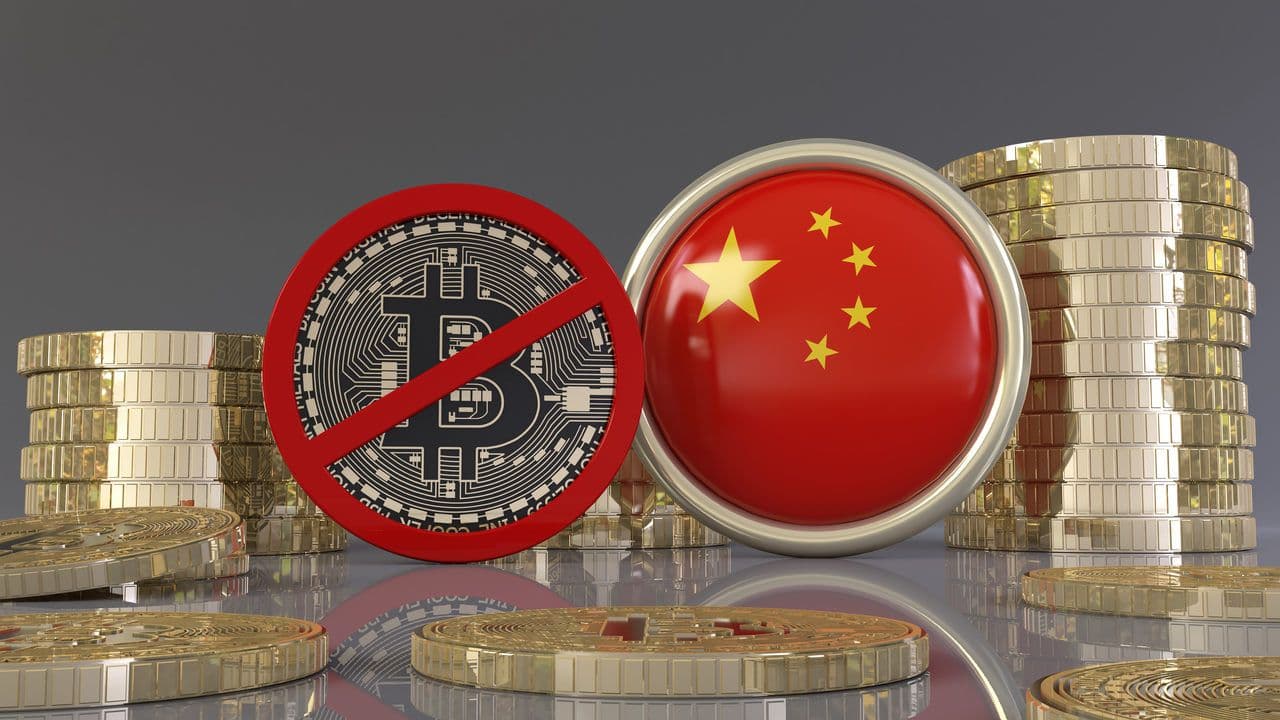
China Labels Crypto Transactions as Money Laundering in New AML Law
China has just updated its anti-money laundering laws to classify crypto transactions as money laundering. Find out what this means for the crypto world!
October 1, 2020 6:37 PM

Bitcoin Dumps As CFTC Indicts BitMEX Founder Arthur Hayes
U.S. prosecutors have filed criminal charges citing four founders and managers of the BitMEX cryptocurrency exchange of neglecting to take adequate steps to prevent money laundering. According to the U.S. Department of Justice and the Commodity Futures Trading Commission (CFTC), […]
September 11, 2026 1:40 PM

Inactivity Fees at Crypto Exchanges: How to Check Whether Your Dormant Account Loses Money Every Month
Two providers have just raised their rates for dormant accounts, one of them to as much as 52 US dollars a month. Our own survey of 15 fee pages shows why you will almost never find the answer for your account without logging in.
August 11, 2026 9:18 AM

Your Crypto Exchange Is Telling You to Withdraw: How to Spot Phishing After the MiCA Deadline
Unauthorised crypto providers now have to tell their EU customers to withdraw, which leaves fraudsters an easy run with faked requests. Here is how to check in two minutes whether the message is genuine.
September 27, 2026 4:20 PM

Bybit's Counterparty List Runs to Over 50 Names: What to Check on Balances, Withdrawals and Custody
Bybit has published a list of more than 50 platforms, services and organisations whose involvement can, under its own rules, lead to an account freeze. What decides the outcome is not your next trade but the payment history you already have.
September 29, 2026 7:12 PM
MEXC Refunds $340,000: The Attacker's API Key Survived the Account Freeze
During an account takeover at MEXC, an attacker created an API key with withdrawal rights that the exchange did not revoke when it restored the account. Twenty-seven minutes after the withdrawal freeze expired, roughly $340,000 was gone.
May 18, 2026 8:15 AM
Bitget Review 2026: Fees, Safety After the $388M Hack and Who Can Use It
Bitget review for October 2026: fees, the $388 million hack, withdrawals, Proof of Reserves and the countries where Bitget cannot be used.

May 26, 2025 11:00 PM
Inside Bitget: How COO Vugar Usi Zade Is Shaping the Future of Crypto Trading
From Bitget Seed and AI-powered tools to regulatory strategy and mass adoption, COO Vugar Usi Zade reveals how Bitget is building the next era of crypto trading.
September 8, 2026 7:23 AM
Compensation After an Exchange Hack: What Twelve Crypto Providers Really Promise German Customers
After $322 million in losses in a single September week, the question is who replaces stolen coins. On September 8, 2026 we retrieved the security and legal pages of twelve providers and evaluated what is promised there.
October 19, 2026 7:51 AM

Euro balances on a crypto exchange: what to watch after the ESMA answer on MiCA article 70
The European securities regulator ESMA spelled out on October 16, 2026 where a crypto asset service provider may hold your euro balance. A payment service provider without a banking licence is only a staging post of at most one business day.

October 12, 2026 6:50 PM
Kraken Lands Full Dubai Licence: Dirham Trading Goes Live for UAE Crypto Investors
Kraken has won full VARA approval in Dubai, clearing the way for dirham trading, margin, staking and tokenized stocks. Here is what UAE traders get.
September 25, 2026 4:13 PM
Crypto Exchange Protection Funds Recalculated: What Really Covers Your Balance After the Bitget Hack
The $351.6 million attack on Bitget would eat up three quarters of the exchange's in-house protection fund. We retrieved the protection promises of several exchanges ourselves and measured them against deposit insurance and MiCA liability.
January 21, 2025 6:44 PM
Banks Are READY Yet Awaiting Crypto Regulations Under Trump's Pro-Crypto Administration, Says Bank of America CEO
Bank of America CEO Brian Moynihan discusses Trump’s economic policies and the banking industry’s readiness to adopt cryptocurrency. But with no regulations to date, what about the future of Crypto?
More from CryptoTicker