
FinCEN crypto fraud report: what 33,904 filings and $12.7 billion actually show
FinCEN reviewed 33,904 suspicious activity filings covering $12.7 billion in activity. Why the data are a warning signal but not a confirmed loss statement.


Which topics should we dive deeper into?
Select what genuinely interests you. Your picks feed directly into our editorial planning.
Crypto news that's actually worth your time.
Weekly. 60 seconds. Carefully curated by our editors: no hype, no promo flood, no spam.
FinCEN has published a striking financial trend analysis on crypto fraud: 33,904 filings covering around $12.7 billion in reported financial activity tied to digital asset investment fraud. Press coverage usually rounds those numbers to 33,000 filings and $13 billion. FinCEN is the US agency charged with combating financial crime, and it draws on reporting data from across the financial sector. So what do these FinCEN filings really say about scam centres, crypto scams and possible money flows, and what do they not say? One point first: crypto as a whole is not under blanket suspicion. What the agency analyses is suspicious, reported activity in specific risk contexts.
The numbers are a risk signal, not a loss statement
The FinCEN analysis rests on BSA filings, reports made under the Bank Secrecy Act, submitted between September 8, 2023 and December 31, 2025. The precise values are 33,904 filings and around $12.7 billion in reported financial activity. Rounding that to “more than 33,000” and “about $13 billion” is a journalistic shorthand, not an extra finding.
That sum cannot be equated with actual fraud losses. It can include attempted and completed transactions, inflows and outflows, transfers between accounts held by the same customer, repeat or supplementary filings, erroneous entries and even lawful activity in the vicinity of a suspicious event, as FinCEN notes in its financial trend analysis. Because the agency sorts by filing date, the underlying incidents may have begun well before the window under review. For readers, that means a high volume of filings mainly shows that financial institutions are spotting recurring risk patterns. It is not a precise map of every perpetrator, victim or actual loss.

 Compare MiCA-regulated crypto exchanges
Why a suspicious activity report is not a verdict
A suspicious activity report means that an institution subject to reporting duties has informed the competent authority about a transaction where there may be knowledge, suspicion or reasonable grounds to suspect financial crime. FinCEN filings are therefore leads for analysis and investigation, not evidence, and certainly not criminal convictions. A filing can trigger an investigation, but it has to be tested against additional proof before it becomes a solid finding.
One simple test helps place any headline of this kind: is this a filing, an administrative finding or a court ruling? In earlier remarks FinCEN itself stressed that suspicious activity reports serve as starting information for investigations rather than as verified findings of fact. The $12.7 billion is therefore neither an amount seized nor a fraud loss established in court.
How cross-border fraud networks operate
Scam centres are organised, often cross-border structures that can run or support digital fraud through a division of labour. The operating model frequently follows a similar pattern, without allowing any sweeping claims about particular groups or countries: victims are approached through fake contacts or phishing, payment processing follows, and the funds are then passed on and obscured across accounts, wallets, service providers or different jurisdictions. Alongside the fraud operations themselves, FinCEN describes supporting service networks for account opening, phishing and money laundering, as well as professional launderers.
Money laundering means deliberately concealing the origin of unlawfully obtained assets. Fraud and money laundering are legally distinct areas of assessment, yet they often overlap in the practical transaction chain. That is precisely why individual wallet freezes achieve only so much: authorities and platforms also have to examine the pooling of funds, transfers across several addresses, switches between services and cross-border payout routes, as FinCEN sets out in its alert on scam centres. As a documented risk that cannot be generalised, INTERPOL also reports that scam centres have in some cases been linked to human trafficking and forced online fraud work, which cannot be read across to every site or every worker.
Find the right exchange for your tokensWhat prevention and controls can achieve
Consumer protection at system level covers education, transparent reporting channels, risk-based checks and cooperation between platforms, payment service providers and authorities. Concrete control measures, which are not to be read as individual investment or legal advice, include monitoring unusual transaction patterns, identity and account verification, scrutiny of unusual conversion or payout routes, and escalation to the competent bodies where risk signals are solid.
In Europe, EU Regulation 2023/1113 requires crypto asset service providers to supply information on the originator and the beneficiary for certain crypto transfers, and to apply risk-based procedures where that information is missing. Anomalies can feed into the decision on whether to file a report, and depending on the risk, suspending, rejecting or returning a transfer comes into consideration, as the relevant EU regulation provides. Prevention can lower risk and make money flows visible earlier. Criminal assessment, confiscation and prosecution, however, remain the task of the competent authorities and courts.
FinCEN data: the reading that holds up
The FinCEN report on crypto fraud points to a substantial, internationally organised risk. The 33,904 filings and around $12.7 billion in reported activity are relevant warning signals, but not a court-proof attribution of every single transaction. Crypto scams, money laundering and scam centres are connected parts of a possible payment chain that still have to be kept analytically apart. Durable consumer protection comes from prevention and robust platform processes, while unpicking complex networks additionally requires cross-border cooperation and investigations that stand up.
Transparency note: This article was produced with the assistance of artificial intelligence and reviewed by our editorial team before publication. All figures and claims were checked against the primary sources linked in the text.
Related articles
- Germany's account lookup to cover crypto accounts: draft allows five-working-day freezes
- Eurojust raid on fake trading platforms: more than 100 servers seized, seven arrests
- Russia Opens Crypto to Retail Investors on November 17: What Bitcoin, Ethereum and USDT Access Really Means
- MEXC FinCEN Order: Washington Cuts the Exchange Off From US Dollar Channels
- What is KYC in crypto? The five details no exchange will let you trade without
Which topics should we dive deeper into?
Select what genuinely interests you. Your picks feed directly into our editorial planning.
Crypto news that's actually worth your time.
Weekly. 60 seconds. Carefully curated by our editors: no hype, no promo flood, no spam.

November 5, 2026 8:13 AM

Crédit Mutuel Arkéa hack: French bank confirms cyberattack as ZachXBT traces $133 million
French bank Crédit Mutuel Arkéa has confirmed a cyberattack involving fraudulent operations and says customer assets were not affected. Investigator ZachXBT is tracing more than $133 million that allegedly left via crypto exchanges and Monero.
November 4, 2026 11:36 AM

Crypto exchanges without KYC: under MiCA, every licensed exchange asks for your ID
Since the MiCA transition periods ended, there is no longer any EU-licensed crypto exchange without KYC. Which routes without ID remain, from DEX to P2P, and where the risks, limits and tax obligations lie.
November 2, 2026 9:18 AM
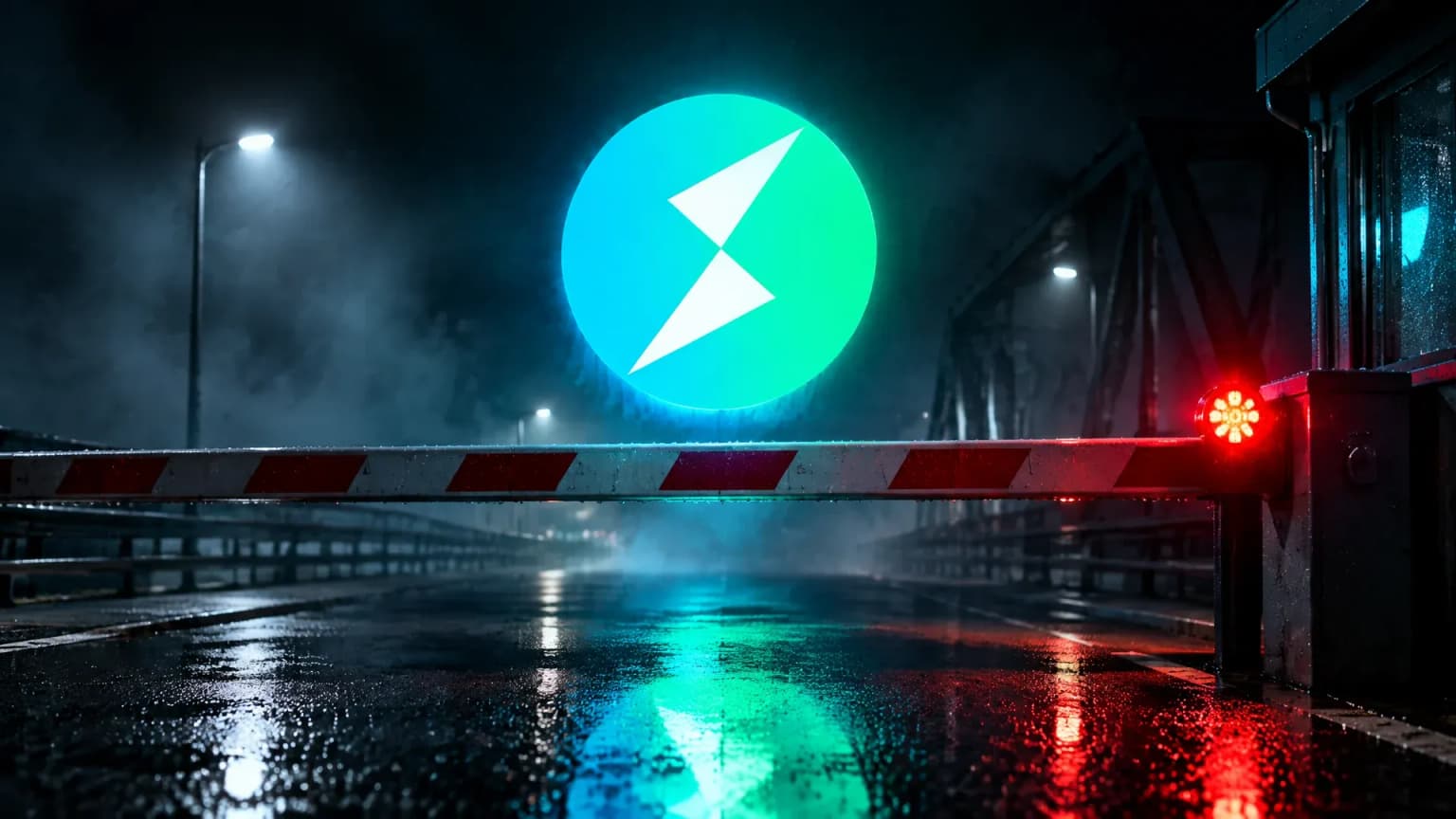
THORChain halts Bitcoin and Ether swaps: Binance loot stalls, RUNE down 18 percent
An Ethereum reorg has halted swaps on ten blockchains at THORChain, and Bitcoin, Ether and Solana remain blocked. That also stalls a route used to launder the loot from the Binance hack, and the RUNE price is down more than 18 percent.
November 1, 2026 3:36 PM

Instant transfer to a crypto exchange: the bank matches the payee name
Since October 2025 every bank in the euro area has had to offer instant transfers and to match the payee name before releasing them. On deposits to trading venues that is exactly what produces warnings, even though the account details are correct.
October 24, 2026 4:12 AM

Coinbase Ireland accepts a 3.25 million euro fine and admits the breaches: “We have no tolerance for weaknesses in safeguarding arrangements”
The Central Bank of Ireland has fined Coinbase Ireland Limited 3,252,618 euros because the e-money institution failed to safeguard client funds adequately and did not control the outsourcing to its US parent. European customers are tied to that very entity through the EU passport, and their euro balance is not a bank deposit.
October 23, 2026 10:40 PM

Account terminated over a money laundering suspicion: the three working days cover only the transfer
On October 20, BaFin warned about job offers under which other people's money is to be exchanged for crypto assets through your own account. Those who go along with it often lose their bank account: this guide separates an account block, a termination and the three-working-day deadline in Germany's Money Laundering Act.
October 22, 2026 1:36 PM

What is an issuer? Meaning, examples and issuer risk
Context: who the issuer is in the case of a share, an ETF, an ETN, a certificate, a stablecoin and a stock token, what MiCA and prospectus law understand by it, and what an issuer insolvency leaves of 10,000 euros. With tables and a worked example.
October 21, 2026 10:13 PM

Revolut wins a crypto licence in Gibraltar, but your German account stays with Cyprus
The Gibraltar Financial Services Commission has authorised Revolut Global Digital Assets Limited for order execution, custody and staking. For customers in Germany the Cypriot EU entity remains the counterparty, and that is what decides which regulator and which MiCA rights apply to your balance.
October 20, 2026 10:27 PM
Ethereum from the Drift hack: the attacker moves up to $61 million into Tornado Cash
Wallets attributed to the Drift attacker forwarded between 13,400 and 25,700 ether to Tornado Cash on October 20 after two quiet months. Around 81,500 ether still sit with the attacker.
October 19, 2026 7:51 AM

Euro balances on a crypto exchange: what to watch after the ESMA answer on MiCA article 70
The European securities regulator ESMA spelled out on October 16, 2026 where a crypto asset service provider may hold your euro balance. A payment service provider without a banking licence is only a staging post of at most one business day.

October 16, 2026 4:19 PM

NEAR gains 15.9 percent as the confidential SOL vault cites a 5.12 percent yield: what to watch now
NEAR trades at $5.27, 15.87 percent above yesterday's level. The day before, NEAR launched a deposit service for Solana that hides the wallet address and cites an example yield of 5.12 percent. What of it is substantiated, and which EU rules apply to investors in Germany.
October 16, 2026 1:35 PM

Kraken parent Payward buys Saldo Bank: the first crypto firm with a bank of its own in the EU
Payward, the parent of Kraken, agreed on October 14 to buy the Lithuanian Saldo Bank and would be the first crypto firm with a bank of its own in the EU. What is established, what stays open until the planned completion in 2027 and what may change for the protection of your euros.
October 16, 2026 4:15 AM
241 scam sites taken offline, the recovery scam lives on: what to check now
The Brooklyn District Attorney and the FBI shut down a fraud network of 241 websites and 112 servers on 14 October 2026; the second stage of the scheme was a purported recovery service. Five days earlier, German regulator BaFin had warned about exactly this pattern at a purported bank.
October 13, 2026 10:37 PM

ESMA will supervise only 10 to 15 of 360 crypto firms: your exchange stays with its home regulator
On October 9, 2026 EU finance ministers agreed to place only the largest crypto service providers under direct ESMA supervision. For the vast majority of the roughly 360 authorised firms, the national authority stays in charge, in Germany BaFin.
October 6, 2026 10:36 PM

Buying Monero in Germany: six major exchanges no longer list XMR
On October 5, 2026, of eight trading venues checked only two still carry an XMR pair, and neither is open to German customers. MiCA Article 76(3) explains the delistings, and Article 79 of the anti-money-laundering regulation sets the tougher limit from July 10, 2027.
October 6, 2026 10:32 AM

FinCEN drops the reporting duty for withdrawals to private wallets: what matters now for European investors
The US anti-money-laundering agency FinCEN withdrew two proposals on October 5, 2026 covering the reporting duty for self-custodied wallets and for mixers. In the EU the development runs in exactly the opposite direction: proof of ownership from 1,000 euros today, a ban on anonymous accounts from July 2027.
September 30, 2026 4:15 PM

Zcash today: 2,746 ZEC from the Bitget hack vanish into the Ironwood pool
Wallets from the Bitget break-in pushed 2,746 ZEC into Zcash's Ironwood pool on Wednesday morning, roughly $3.9 million. What the shielding means for tracing, and what applies to your exchange account from July 2027.
September 26, 2026 4:21 AM
Operation Herakles disconnects 13,888 phone numbers: what to check on crypto investment calls
Six authorities have disconnected 13,888 phone numbers used by investment fraudsters to call their victims in Operation Herakles, 9,304 of them in the past three months alone. What the Federal Network Agency now requires of telecoms providers and which three checks protect you from the scheme.
September 24, 2026 10:29 AM

Bank Closed Your Account Over Crypto: Your Rights and the Route to a Replacement Account
After a withdrawal from a crypto exchange, banks repeatedly end the banking relationship, usually without giving a reason. What the German Payment Accounts Act guarantees you anyway, which notice period applies, and in what order you approach the supervisor, arbitration and the courts.

September 20, 2026 4:13 AM
Zcash Above $1,500: What ZEC Holders Should Check on Tax and Custody
Zcash rose above $1,500 on September 19 for the first time since 2016 and, after an intraday high of $1,590.80, trades back at around $1,474. For German holders three questions hang on that jump: the one-year holding period, the planned year-end cut-off and the EU anti-money-laundering regulation from July 2027.
September 19, 2026 7:17 AM
Chainlink Jumps Above $12: What LINK Holders Should Check Now
Chainlink trades at $12.34, 7.4 percent higher than yesterday. What part of the move is the broad market rally, what Chainlink itself contributes, and the three things you should check as a LINK holder.
September 16, 2026 1:28 PM
Crypto Withdrawal to Your Own Wallet: Ten Providers Checked, Three Will Not Let Your Coins Out
Seven of ten providers available in Germany offer a payout to a wallet address you control yourself; three do not. Our survey of September 16, 2026, shows how to spot the difference before you buy, and why the question matters right now.
September 4, 2026 4:39 AM
Source of Funds at a Crypto Exchange: Why a Deposit Can Freeze Your Account for 15 Days
OKX chief Star Xu described on September 2 what an unusual deposit sets off: reviews of 15 days and longer, during which balances and account functions can be restricted. What that means for investors in Germany, and which documents you should keep to hand.
August 21, 2026 4:17 PM

Crypto Withdrawals to Your Own Wallet: Why Exchanges Demand Proof of Address Ownership Above €1,000
Above €1,000 your provider has to establish whether the destination address really belongs to you. Article 14(5) of the transfer of funds regulation, five permitted methods, and the reason a withdrawal stalls without this step.
August 21, 2026 1:26 PM
Crypto Exchange Account Frozen: Why Nobody Tells You Why, and What Actually Helps
If you get no explanation after a freeze, it feels like arbitrary treatment. In fact the German Money Laundering Act forbids the provider from telling you. What happens in that time, which deadlines apply and which documents shorten the process.
August 21, 2026 4:14 AM

Euro Deposit to a Crypto Exchange Rejected: Why the Transfer Fails and What You Can Do
Since October 9, 2025 your payment service provider matches the payee name against the IBAN on every euro transfer. On deposits to an exchange account that is precisely where the payment most often comes to a halt.
August 19, 2026 10:24 AM

Privacy Coins and EU Anti-Money-Laundering Law: An Assessment of the Ban From July 2027
Article 79 of the EU anti-money-laundering regulation bars crypto service providers from keeping accounts that obscure transactions, and it names anonymity-enhancing cryptocurrencies explicitly. This assessment separates the documented wording, including the 10 July 2027 application date, from what follows for individual coins.
More from CryptoTicker