
Bitcoin mining calculator 2026: why a miner in Germany loses money on grid power
Bitcoin mining calculator for Germany: revenue, power costs and break-even for five current Antminers, the formula to work it out yourself, and dogecoin mining.




Which topics should we dive deeper into?
Select what genuinely interests you. Your picks feed directly into our editorial planning.
Crypto news that's actually worth your time.
Weekly. 60 seconds. Carefully curated by our editors: no hype, no promo flood, no spam.
A bitcoin miner in Germany makes no profit in November 2026 as long as it runs on grid electricity. At the difficulty of November 3, 2026, Bitmain's air-cooled Antminer S21 XP mines bitcoin worth €7.91 a day and uses 87.5 kilowatt hours to do so. It only turns a profit up to an electricity price of 9.04 cents per kilowatt hour. Household electricity in Germany cost 36.18 cents in the first half of 2026, according to Eurostat, so the device loses €23.74 a day. Our mining calculator shows these figures for five current devices and three electricity prices, plus the formula to work it out yourself.
Bitcoin mining calculator 2026 at a glance: the key figures
- At the difficulty of 148.36 trillion on November 3, 2026, one terahash per second earns €0.0293 a day, one petahash $32.79.
- In the week to November 3, each block paid an average of 3.1432 bitcoin: 3.125 from the block reward and 0.0182 from fees.
- The five devices in our calculator only turn a profit up to an electricity price of between 7.63 and 13.72 cents per kilowatt hour.
- An Antminer S21 XP needs 23.8 years on average to mine a whole bitcoin.
- For the cost of one day's electricity you get four times as much bitcoin on the market as the device mines in the same time.
- The next halving at block 1,050,000 is expected to cut the reward to 1.5625 bitcoin in April 2028.
How bitcoin mining works technically, from proof of work to pools, is explained in our guide What is bitcoin mining?. This article is about the numbers.
Bitcoin mining calculator: revenue, power and break-even per device
For the calculator we ran the numbers for devices from Bitmain's shop using the difficulty of November 3, 2026 and a bitcoin price of €68,761. Revenue is the expected value before pool fees: it holds on average over many blocks, while on individual days it fluctuates with the pool's luck.
| Device | Hashrate | Power draw | Efficiency | Price | Revenue per day | Break-even |
|---|---|---|---|---|---|---|
| Antminer S23 XP Hyd. (water, pre-order) | 600 TH/s | 5,340 W | 8.9 J/TH | €13,675 | €17.58 | 13.72 ct/kWh |
| Antminer S21 XP Hyd. (water) | 473 TH/s | 5,676 W | 12.0 J/TH | €7,187 | €13.86 | 10.18 ct/kWh |
| Antminer S21 XP Imm. (immersion) | 300 TH/s | 4,050 W | 13.5 J/TH | €2,145 | €8.79 | 9.04 ct/kWh |
| Antminer S21 XP (air) | 270 TH/s | 3,645 W | 13.5 J/TH | €4,102 | €7.91 | 9.04 ct/kWh |
| Antminer S21 Imm. (immersion) | 215 TH/s | 3,440 W | 16.0 J/TH | €1,153 | €6.30 | 7.63 ct/kWh |
Bitmain quotes its prices in US dollars; we converted them to euros at the day's exchange rate, with customs, shipping and import VAT on top. The break-even point is the electricity price at which revenue and power costs are equal. Water-cooled and immersion devices need a cooling circuit or an oil bath and are built for data centres. Only the air-cooled model is an option for a socket at home, and even that draws 3.6 kilowatts around the clock, just under 32,000 kilowatt hours a year.
That is the basic problem: every device sits far below German household electricity prices and also below the commercial rate of 23.66 cents net that Eurostat reports for businesses using 20 to 499 megawatt hours a year. Bitcoin mining therefore only pays in places with very cheap power: at hydroelectric plants, at gas fields with surplus gas and at solar parks with peak power.
How to calculate bitcoin mining revenue yourself
A miner's revenue follows from three numbers: its hashrate, the network difficulty and the reward per block. The formula for expected blocks per day is: hashrate in hashes per second times 86,400 seconds, divided by difficulty times 2 to the power of 32. Multiply the result by the reward per block, currently a little over 3.14 bitcoin.
| Calculation step, Antminer S21 XP | Value |
|---|---|
| Hashrate | 270 TH/s = 270 trillion hashes per second |
| Difficulty on November 3, 2026 | 148.36 trillion |
| Expected blocks per day | 0.0000366 |
| Bitcoin per day (times 3.1432 BTC per block) | 0.0001151 BTC |
| Revenue per day (price €68,761) | €7.91 |
| Power per day (3.645 kW times 24 hours) | 87.5 kWh |
| Break-even (€7.91 divided by 87.5 kWh) | 9.04 ct/kWh |
The current difficulty and the date of the next adjustment are shown by mempool.space. The service expects the next adjustment at block 975,744, currently with a drop of 2.19 percent. From your result you still deduct your pool's fee, which is usually charged as a percentage of the payout.

Mining calculator for Germany: 30 days on household, commercial and solar power
Bitcoin mining on grid power does not pay in Germany, either for households or for typical businesses. Only those who use their own solar power, giving up the feed-in tariff in return, end up slightly in the black. The example shows the Antminer S21 XP, the most efficient air-cooled device, over 30 days.
| Antminer S21 XP, 30 days | Household power | Commercial power (net) | Own solar power |
|---|---|---|---|
| Price per kWh | 36.18 ct | 23.66 ct | 7.70 ct |
| Revenue (0.003452 BTC) | €237.37 | €237.37 | €237.37 |
| Power (2,624 kWh) | €949.51 | €620.93 | €202.08 |
| Result | −€712.14 | −€383.56 | +€35.29 |
For solar power we use as the price what you forgo: the feed-in tariff of 7.70 cents that the Federal Network Agency lists for rooftop systems up to 10 kilowatts commissioned from August 2026. Even then, an S21 XP needs around 9.5 years to earn back its purchase price, and only if difficulty and price stay the same. There is also a practical problem: the device needs 87.5 kilowatt hours a day, around the clock. A solar system on a detached house only delivers that much power in the bright hours of a summer day; at night the miner runs on grid power.
What tips the balance is therefore your own electricity bill: if your unit price is above the break-even point from our mining calculator, you lose money with every hour of operation. Add noise and waste heat, because air-cooled miners are built for warehouses. The basics of photovoltaics and mining are covered in our article on bitcoin mining with solar power. How mined coins are taxed is explained in our guide to crypto mining and tax.
How long does it take to mine one bitcoin? The numbers for solo mining and pools
An Antminer S21 XP mines an average of 0.0001151 bitcoin a day. It therefore needs 23.8 years for a whole bitcoin, and the water-cooled S23 XP Hyd. still 10.7 years. The time lengthens with every upward difficulty adjustment and with every halving.
In solo mining, a device computes on its own and only receives something if it finds a block itself. At 270 terahash, the chance of that is 1 in 3.9 million per block. On average it succeeds once in 75 years, but then with the full reward of a little over 3.1 bitcoin. Solo mining is therefore a lottery with a very high electricity stake.
That is why almost all miners join a mining pool. The pool combines the computing power of many devices, finds blocks regularly and distributes the reward according to each member's share of computing power. Revenue thus becomes predictable and matches the expected value from our calculator, minus the pool fee.
What hashrate and the 2028 halving mean for the mining maths
Computing power in the bitcoin network has more than doubled in three years. On a seven-day moving average it rose, according to mempool.space, from 452 exahash per second in November 2023 to 1,069 exahash in early November 2026. Derived from the difficulty, it is currently around 1,062 exahash. Because the number of blocks is fixed, the same reward is shared across ever more computing power.
On top of that, the reward halves every 210,000 blocks. At the halving on April 20, 2024, it fell at block 840,000 from 6.25 to 3.125 bitcoin. The next bitcoin halving comes at block 1,050,000. On November 3, 2026, 75,676 blocks remained until then; at ten minutes per block that point is reached in April 2028. From then on, transaction fees matter more for miners; they currently account for only 0.6 percent of revenue per block.
For any mining calculation this means: without a rising price, revenue per terahash falls over time. A device that barely pays its way today will make a loss after the next halving unless bitcoin has become significantly more expensive by then. We track how the difficulty has jumped this autumn on an ongoing basis, most recently in our bitcoin price prediction on mining difficulty.
Dogecoin mining, Litecoin and Monero in the mining calculator
Besides bitcoin, other cryptocurrencies are mined by proof of work, each with its own algorithm and hardware. That changes little in the basic calculation: here too, the electricity price decides.
Dogecoin mining and Litecoin: both coins use the Scrypt algorithm and are mined together, so one miner works for both networks at once. According to network data from Blockchair, an Antminer L9 with 16 gigahash per second and 3,360 watts produced an average of 61.7 dogecoin and 0.0204 litecoin a day on November 3, 2026, worth €5.08 in total. 81 percent of that comes from dogecoin, whose block reward is fixed at 10,000 DOGE. The L9's break-even point is 6.30 cents per kilowatt hour; on German household electricity it loses €24.10 a day. How the budget splits between the two coins is shown in our analysis of dogecoin mining and Litecoin's share.
Monero: with its RandomX algorithm, Monero deliberately relies on ordinary processors rather than specialist devices and pays out a permanent 0.6 XMR per block. Per 10 kilohash per second, at the difficulty of November 3 and a price of €540.38, that yields €0.36 a day. On German household electricity this only pays if the computer needs less than 41 extra watts for those 10 kilohash.
Kaspa and Ethereum Classic: Kaspa is now mined with dedicated ASIC devices, and Bitmain lists the coin as a separate category in its shop. For Ethereum Classic, Bitmain sells the Antminer E11 with 9.5 gigahash per second and 2,470 watts. Ethereum itself can no longer be mined since the Merge in September 2022. If you would rather rent computing power, you will find the maths and the typical contract traps in our guide to cloud mining without your own hardware.
Buying bitcoin instead of mining: what the same power costs get you on the market
For the electricity an Antminer S21 XP uses in one day on household power, you pay €31.65. For the same amount you get 0.00046 bitcoin on November 3, 2026, four times as much as the device mines in that time. With no device, no noise and no maintenance.
Advertisement: Bitpanda and Coinbase are licensed in the EU under the MiCA crypto regulation, Bitpanda by the Austrian Financial Market Authority and Coinbase by Luxembourg's CSSF. With both you can buy bitcoin by bank transfer or card and set up a savings plan. All providers with their licences, fees and security features are listed in our comparison of regulated crypto exchanges.
Whether bought or mined: larger holdings belong in your own wallet, whose keys only you know. We compare devices for secure storage in our hardware wallet comparison.
Our view: when bitcoin mining pays in 2026
Bitcoin mining has become an industry. It pays where electricity flows at a fraction of the German household price and thousands of devices are cooled together. For private individuals in Germany, a miner is an expensive lesson: fascinating for understanding how the network is secured, but as an investment clearly worse than buying directly.
Our recommendation: before any purchase, run the numbers with your own electricity price, the current difficulty and the next halving; the formula is above. If your electricity price is above the break-even point, buying bitcoin directly is cheaper. Mining remains interesting as a way to use your own surplus power when the feed-in tariff is low and the device is already there.
Cryptocurrencies and mining involve high risks, and price and difficulty can change quickly. This guide is not investment advice. The links to Bitpanda and Coinbase are partner links; they cost you nothing extra.
(As of November 3, 2026. This article is not investment advice. Prices and fee structures change; check the terms with the provider before you buy.)
Frequently asked questions about the bitcoin mining calculator
Transparency note: This article was produced with the assistance of artificial intelligence and reviewed by our editorial team before publication. All figures and claims were checked against the primary sources linked in the text. The feature image was generated with AI.
More on Bitcoin: All Bitcoin news at a glance
Related articles
- What Is Bitcoin Mining? How It Works and When It Pays Off
- Dogecoin Mining vs. Bitcoin Mining: Which Is More Profitable in 2025?
- Bitcoin Mining Rig: How to Mine Bitcoin in 2024?
- Why Bitcoin Price Drops: Middle East Tensions, Mining Struggles Or Massive Liquidations?
- Bitcoin Mining in Austria: How Mining Rewards Are Taxed
Which topics should we dive deeper into?
Select what genuinely interests you. Your picks feed directly into our editorial planning.
Crypto news that's actually worth your time.
Weekly. 60 seconds. Carefully curated by our editors: no hype, no promo flood, no spam.

September 16, 2023 8:24 PM

Can you STILL Mine Bitcoin Today? Here’s the Answer!
Many wonder if Bitcoin mining remains doable for the average Joe. Can you still mine Bitcoin? Is Bitcoin mining profitable today?

October 13, 2026 10:28 PM
5.5 percent more difficulty from Friday: Bitcoin miners face the year's third-largest step up
On October 16 the Bitcoin network raises mining difficulty by 5.49 percent, the third-largest increase of the year. What that means for miners' costs, for the levels around $81,000 and for your purchase fees.

September 9, 2026 7:18 PM
Calculating Crypto Tax in Germany: Formula, Worked Example and 2026 Tax Table
Sale price minus acquisition cost minus fees: the formula is simple, the order of consumption and the tariff are not. With a Bitcoin example at 2026 prices, an exact tax table and the point where the solidarity surcharge hits hardest.
October 23, 2026 4:30 PM
Cloud mining without your own hardware: $35.60 per petahash a day before fees
Context: Binance is discontinuing Binance Pool, Cloud Mining and the Transaction Accelerator on November 10, 2026, which removes one of the large routes into mining without your own devices. This article works out what bought hash rate currently earns, and separates the documented figures from this newsroom's assessment.
October 25, 2026 12:18 PM
Bitcoin price prediction: difficulty climbs 5 percent on Thursday
Computing power in the Bitcoin network sits 16 percent above its level of 30 days ago, the price 4.9 percent below it. On Thursday mining difficulty follows, and that shifts the economics for mining operations.
August 20, 2023 3:22 PM

Is it Profitable to Mine Bitcoin in Lebanon? Latest Findings Revealed…
The profitability of Bitcoin mining hinges significantly on regional electricity costs. Is it Profitable to Mine Bitcoin in Lebanon?
October 24, 2026 10:14 PM
159,000 Blocks to the Next Litecoin Halving: Reward Drops to 3.125 LTC
The next Litecoin halving cuts the block reward from 6.25 to 3.125 LTC. It is triggered by block 3,360,000, and on October 24, 2026 roughly 159,000 blocks were still missing.
October 22, 2026 1:45 PM
Cryptocurrency explained: how digital money works without a bank
A cryptocurrency is an entry in a public ledger that neither a bank nor a central bank controls on its own. This piece explains how that ledger works, what separates Bitcoin from the euro, and which rules apply in Germany to buying, custody and tax.
November 12, 2024 10:49 AM

Bitcoin Price Hits $90K And... BTC Price Rally Coming To An End?
Bitcoin price hits $90,000 today, marking a record rally. But failing to maintain this level for longer than a few minutes... Could it be the end of the BTC price rally?
July 27, 2024 2:34 PM

Why Is The Crypto Market Up TODAY?
With the Bitcoin 2024 Conference taking place now in Nashville, the crypto market is showing bullish signals, intriguing traders around the future of Bitcoin and Altcoins.
September 10, 2024 1:54 PM

Bitcoin Price Analysis: Why Is BTC Price Up TODAY?
Why Bitcoin price surged today, and was it driven by market anticipation of U.S. inflation data and the Trump vs. Harris debate?
October 12, 2026 10:27 AM
Is Bitcoin Still a Good Investment in October 2026?
Spot ETFs have changed who sets the Bitcoin price, and the easy repricing is behind us. What still supports BTC, what could break it, and how much belongs in a portfolio today.
July 28, 2026 11:53 AM
Why Is Crypto Down Today? The Reasons Behind Every Crypto Sell-Off
Why crypto is falling today, updated with every major move: the current trigger, the six forces behind almost every crypto sell-off, a five-minute checklist and a timeline of the 2026 drops.
June 15, 2024 3:00 PM
Bitcoin Price Prediction in June 2024: Why is Bitcoin Price Down?
Bitcoin's recent plunge from its psychological price of $70,000 to $66,250 has triggered widespread concern in the cryptocurrency market. Why is Bitcoin price down?
November 3, 2026 8:28 AM
Why Is Crypto Down Today? The 5 Reasons Behind the November 3 Sell-Off
Why is crypto down today? Bitcoin sits near $76,000 after the Binance hack, a hawkish Fed and a Nasdaq slide. The five drivers, explained.
September 25, 2026 10:14 PM
Sequans sells its last 314 bitcoin: what to check if you hold a treasury stock
Semiconductor maker Sequans has wound down its bitcoin reserve completely, 15 months after setting a target of one hundred thousand coins. What the case reveals about treasury stocks, and which tax rule applies to the share and to the coin.
February 23, 2026 6:00 AM
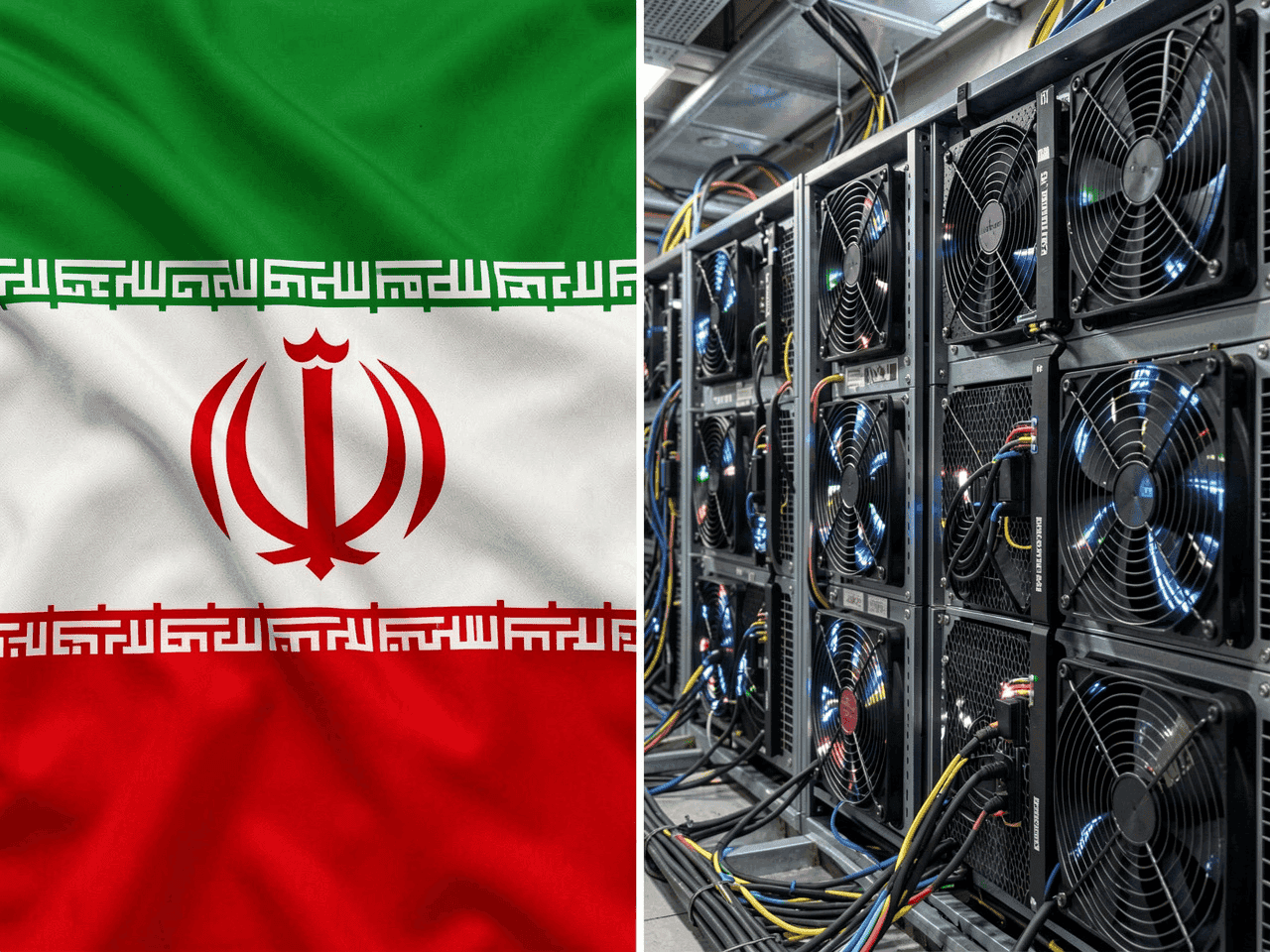
Is Iran Still the Cheapest Place to Mine Bitcoin in 2026?
Mining 1 Bitcoin in Iran costs just $1,320 due to subsidized power. Explore how miners achieve a 50x ROI despite government crackdowns and sanctions.
October 16, 2026 10:33 AM
Mining difficulty jumps almost 6 percent today: why Bitcoin miners have no cushion this time
Bitcoin network mining difficulty rises by almost 6 percent on Friday afternoon, the steepest step up since June. Because transaction fees carry only 0.65 percent of mining revenue, the cost jump hits miners without any cushion at all.
June 25, 2024 11:00 PM
How to Buy Bitcoin on Bitget: A Step-by-Step Guide
Want to buy Bitcoin and still confused about which platform to use? Look no further! Check Bitget, and this full guide, step by step...

April 3, 2023 7:05 AM

Is Bitcoin Mining Dangerous?
With any new technology, there are questions about its safety. In this article, we'll explore the question: is Bitcoin mining dangerous?
February 27, 2022 12:41 PM

Is Bitcoin Mining Illegal? Here’s Everything you Need to Know in 2022
Is Bitcoin mining illegal? In this article, we're going to see where Bitcoin is illegal, where it is legal, and how bans affect Bitcoin prices.

November 1, 2026 3:45 PM
Dogecoin is 84 blocks short a day: why fewer DOGE arrive than planned
Analysis: the Dogecoin network produced 1,356 blocks in 24 hours instead of the intended 1,440. Over 30 days, 2,176 blocks are missing, and with them fewer new Dogecoin are created than the standard calculation assumes.
October 20, 2026 10:38 AM
Crypto Crash Today: Why Is Bitcoin Stuck Below $82,000?
Bitcoin can't hold $82K, Ethereum is down 20% in 2026 and ETF money keeps leaving. Here is what is really behind the crypto crash today.
October 11, 2026 1:16 AM
Dogecoin Carries 83.5 Percent of the Mining Budget It Shares With Litecoin: How to Check What Miners Earn per Day
The same machines secure Dogecoin and Litecoin, yet 83.5 percent of the shared mining budget comes from Dogecoin. The arithmetic behind it sits openly on the chain and can be recalculated in two minutes.
September 19, 2026 4:19 AM

Bitcoin Cash Jumps by Double Digits: What the Grayscale ETF Filing Really Means for You in Germany
Bitcoin Cash gained double digits on September 18 because Grayscale wants to convert its BCH trust into an exchange-traded product. The filing itself, however, states that the basis for it has not been approved at all.



More from CryptoTicker