
Uniswap rises almost 9 percent although the Binance attacker dumped 7 million UNI: stronger than the market
UNI gains 8.98 percent in 24 hours while Bitcoin loses 2.53 percent. The attacker sold off the stolen UNI at $5.65, and Standard Chartered sees the breach as a reason for trading to shift towards decentralised venues.





Which topics should we dive deeper into?
Select what genuinely interests you. Your picks feed directly into our editorial planning.
Crypto news that's actually worth your time.
Weekly. 60 seconds. Carefully curated by our editors: no hype, no promo flood, no spam.
Uniswap's price stands at $6.99 on October 30, 2026, 8.98 percent above where it was 24 hours earlier. Over the same period, Bitcoin lost 2.53 percent. The reason for this gap is established and has two parts: the attacker who drained Binance's holdings is done with the stolen UNI and is no longer selling, and investment bank Standard Chartered cites precisely this breach as the reason why trading is likely to run more through decentralised venues in future. What this means for your holdings depends less on the daily price than on where you will trade in future and who holds your keys while you do.
A word of context first: the 8.98 percent is a comparison with an already depressed starting point. Over 30 days, Uniswap is still down 21.33 percent. Today's rise is a recovery from the hole, not a return to the level of early October.
UNI at $6.99: the numbers behind the Uniswap price on October 30
UNI is trading at $6.99. The intraday low was $6.28 and the high $7.14. Measured from the low, that is an 11.3 percent recovery within a single trading day.
Market capitalisation is $4.362 billion, which means rank 25. Trading volume over the past 24 hours is $979 million. There are 624,158,422 UNI in circulation. The all-time high of $44.92 dates from May 2, 2021, and is therefore a long way off.
For comparison, the same period for the large coins: Bitcoin stands at $76,894, down 2.53 percent, and Ether at $2,234.60, down 1.66 percent. A second DeFi value stands out: Aave gains 7.00 percent to $128.44. So the recovery is not limited to UNI but covers a whole group of tokens tied to decentralised applications. That is the first sign that more than a single price move is under way here.
Over seven days, UNI is down 2.12 percent, over 30 days 21.33 percent. At the end of September the token was still trading above $10, according to crypto.news. Reading today's 8.98 percent as a trend reversal overstretches the number.
7.02 million UNI for $39.63 million: what Lookonchain traced from the attacker
After the unauthorised transfers from Binance wallets on October 29, the attacker sold the stolen altcoins. The analytics service Lookonchain tracked these sales on the blockchain; crypto.news lists its figures. According to them, the attacker sold 7.02 million UNI for $39.63 million, at an average price of $5.65 per token.
UNI was the largest single item. In total, according to the same breakdown, the attacker swapped seven different altcoins into 70,480 Ether, worth $158.25 million combined. Besides UNI, the list included Ethena, Pepe, Chainlink and Aave. The selling pressure was therefore spread across several tokens at once, which explains why DeFi tokens in particular fell more than average on October 29 and early October 30.
To put the scale in context, calculated from the figures given: 7.02 million UNI equal around 1.12 percent of the 624,158,422 tokens in circulation. Measured against daily turnover of $979 million, the $39.63 million made up about 4.0 percent. That is noticeable, but it is not an amount that holds a market down for long. The price action shows exactly that: once the selling was done, the pressure fell away.
One caveat applies to the reliability of these figures. Lookonchain analyses publicly visible transactions and attributes them to addresses. Independent confirmation of the totals by a second forensics firm is not yet available for the altcoin sales. The attribution of the addresses to the attacker rests on the trail from the Binance wallets.
An average of $5.65: the attacker exited below today's price
The average price of $5.65 deserves a paragraph of its own, because it explains the day's move. UNI now stands at $6.99. Compared with the attacker's exit price, that is 23.7 percent more, calculated from the two figures given.
Anyone pushing a large position into the market within a few hours under time pressure gets worse prices than someone who can wait. One observer counted 7,018,792 tokens sold in the UNI portion within 51 minutes, with the last swap about 21 percent worse than the first. This figure comes from the same coverage and is an observation, not a verified settlement.
For you as a holder, one thing above all matters here: the selling pressure from this source is over. What is driving the price today is no longer the attacker but the question of how the market assesses the role of decentralised venues after the breach.
Standard Chartered sticks to its $100 price target for 2030
Geoffrey Kendrick, global head of digital assets research at Standard Chartered, commented on Uniswap on October 30. According to Cointelegraph, he is sticking to his $100 price target for UNI in 2030 and even considers the forecast possibly too low after the Binance breach.
His reasoning rests on the security record. Kendrick said of Uniswap: "The decentralized exchange (DEX) has never had any exploits." Behind this lies his longer-term assumption that value locked in decentralised applications will grow to $2.7 trillion by 2030, with Uniswap becoming a central trading venue for tokenised assets.
It is worth noting that Kendrick explicitly counsels patience. He expects further price losses in the short term and says a new base will only form later: "Only after assets are unfrozen and more detail of the hack emerges will we find a new base." That is the individual view of a named analyst, not a market forecast that could be verified. A price target for 2030 says nothing about the coming weeks.
One objection to the thesis is that a $100 target implies a fourteenfold increase from today's level, and that the protocol's security record says nothing about the security of the wallet you use to access it. That is where the greater risk lies in practice.

 Compare the best crypto exchanges now
DEX share at 23.5 percent: trading is shifting away from centralised exchanges
The figure on which the thesis rests comes from CoinGecko and is cited in the Cointelegraph report: the ratio of spot trading on the ten largest decentralised exchanges to that on centralised exchanges stood at 23.5 percent in the second quarter of 2026. That is an increase of 2.1 percentage points on the first quarter of 2026.
This shift has been under way for years and accelerated after the breach at Binance. The logic is simple: if you keep your balance on a centralised exchange, you are trusting its key management to hold. If that trust breaks, traders look for routes where their balance never leaves their own wallet.
A caveat belongs here. A quarterly figure from the second quarter of 2026 does not describe where things stand today, and a rising share does not prove that the movement will continue. In earlier cycles there were similar spikes after exchange collapses that receded again after a few months.
Liquidity pools and automated market makers: how a DEX works without an order book
A decentralised exchange, or DEX, is a program on a blockchain that swaps two tokens against each other without a company holding the balances. There is no order book in which buy and sell orders meet.
Instead, an automated market maker does the work: a formula that calculates the price from the ratio of two tokens in a shared pot. This pot is called a liquidity pool and is filled by users who receive a share of the trading fees in return. The more capital there is in a pool, the less a single swap moves the price.
This price shift is called slippage: the difference between the price you see when you submit and the price at which the swap is actually executed. With small amounts in large pools it is barely noticeable, but with large amounts in thin pools it costs real money.
What such a venue looks like in everyday use and how it differs from a traditional exchange is explained in more detail in our guide to the decentralised crypto exchange.
MiCA and decentralised exchanges: why a DEX holds no BaFin licence
This is the point where the situation for investors in Germany differs from the general market story. The EU's Markets in Crypto-Assets Regulation, MiCA for short, is aimed at providers of crypto-asset services. It presupposes a company that applies for authorisation, segregates client funds, handles complaints and is liable.
A protocol without an operator does not fit this framework. Anyone who swaps via a decentralised exchange therefore trades without the protection that an authorised exchange provides: no deposit protection for crypto assets, no complaints procedure and no supervisor that steps in in a dispute. If a swap goes to the wrong address or you grant a malicious approval, there is nobody who can reverse it.
That is no reason to avoid decentralised exchanges, but it is a reason to keep the two routes deliberately separate. For regular purchases in euros, for savings plans and for everything that later has to be properly documented for the tax office, an authorised provider remains the calmer route. Our overview of the best regulated crypto exchanges shows which providers hold a MiCA licence and how their terms differ. The authorisation itself can be looked up in BaFin's register.

Holding period and tax: every swap on a DEX is a disposal
For investors in Germany, this section is the most expensive part of the topic, and it is almost never mentioned in price reports. Under current practice in Germany, gains from selling crypto assets count as private disposals. If more than twelve months lie between acquisition and disposal, the gain is tax-free. Within that period it is taxable as soon as the total of all private disposals in a year exceeds the exemption limit.
The crucial point is this: a token-for-token swap is a disposal. Anyone who swaps UNI for Ether on a decentralised exchange sells UNI and buys Ether. For the UNI given up, the holding period ends; for the Ether received, a new one begins. That applies even if no euro ever changes hands.
This creates a practical problem. Anyone trading actively via a DEX generates many small disposals, and each one needs a date, amount, euro price at the time of the swap and the associated costs. A centralised exchange usually provides a statement for this. A protocol does not. The record-keeping lies entirely with you, and while the transactions are on the blockchain, they are not in a form that a tax office will accept without processing.
If you switch to a wallet, you should also know about a common misconception: simply moving your own tokens from an exchange to your own wallet is not a sale and does not interrupt the holding period. Only a swap or a sale triggers it. You do, however, have to keep track of the acquisition dates yourself, because they do not travel with the tokens automatically.
 Find the right perp DEX for your trading
Gas fees, slippage and token approvals: the costs not shown in the price
A swap on a decentralised exchange costs more than the protocol's trading fee. On top comes the gas fee, the charge for the blockchain's computing power. It depends on network load rather than on the size of your swap, which is why small amounts become proportionally much more expensive.
Then there is the slippage already mentioned. Most interfaces let you set a cap on it; if it is set too high, your swap will go through even if the price has moved sharply against you.
The third item is technical and the one most often overlooked: the token approval. Before a protocol may move a token out of your wallet, you grant it permission. Many interfaces suggest an unlimited approval, because it saves fees on future swaps. But this permission remains in force even if you never use the protocol again. If an interface is later manipulated, or if you have accidentally used a fake site, an open approval can be exploited. Existing approvals can be viewed in common wallets and via checking tools and revoked one by one.
Levels above and below: $6.28, $7.14 and the 200-day line at $5.60
On the upside, the first level is the intraday high of $7.14. Above that, crypto.news names the round levels of $7.50 and $8.00 as the next resistance. Only above $10 would the level of late September be reached again.
On the downside, the intraday low of $6.28 is the first support. The support zone named there lies at $6.25 to $6.50, followed by the round level of $6.00. As a longer-term line, the 200-day average at around $5.60 is cited, which is strikingly close to the attacker's average selling price of $5.65.
These levels come from a chart analysis and are not a prediction. They serve as a guide to the price at which today's recovery would have been more than a pullback in a down month.
What the shift means for your balance on an exchange
As long as tokens sit on an exchange, the operator holds the keys. That is convenient, because trading is fast and the records are kept automatically. It is also the point at which the Binance breach struck. A complete move into self-custody is not a sensible step for most investors, because it merely shifts the risk from a company to you. A split between a trading balance and long-term holdings usually fits the situation better.
What belongs in your own records
For each transaction you need the date and time, the amount of both tokens, the euro price at the time of the swap, the gas fee and the counterparty address. These details can only be reconstructed later with considerable effort, and for swaps within the holding period they determine how much tax you pay.
Uniswap price: the recovery only begins above $7.14
The day's move has an established cause and an open outcome. The attacker's selling pressure is gone, the shift to decentralised venues is measurable at 23.5 percent in the second quarter of 2026, and UNI is nonetheless 21.33 percent below its level of 30 days ago. Three steps make sense now:
- Review your wallet and open approvals. Check which protocols your wallet has still granted unlimited token approvals to, and revoke what you no longer use. Our comparison of software wallets shows which wallet apps are suited to this.
- Separate long-term holdings from the exchange. Whatever you want to hold for months does not belong in a trading account. The differences between devices are set out in the hardware wallet comparison.
- Record swaps without gaps. File the date, amount, euro price and fee for each swap while the data is still to hand. Tools that analyse blockchain addresses automatically can be found among the crypto tax tools and portfolio trackers.
Whether the recovery becomes a trend will be decided above $7.14. Until then, UNI remains a token that was stronger than the market on a weak day, and nothing more.
(As of October 30, 2026. This article is not investment advice. Prices and fee structures change; check the terms with the provider before you buy.)
Frequently asked questions about Uniswap and decentralised exchanges
Transparency note: This article was produced with the assistance of artificial intelligence and reviewed by our editorial team before publication. All figures and claims were checked against the primary sources linked in the text. The feature image was generated with AI.
Related articles
- Uniswap jumps above $9: what UNI holders should check on the fee switch now
- Perp DEX Explained: How Funding Rate, Liquidation and Taxes Work on Perpetual Futures
- Velocity Replaces Drift After the 285 Million Dollar Hack: What Changes for Investors in Germany
- Uniswap takes fees from seven outside pools: the next step
- Binance Alternatives: 4 MiCA-Licensed Exchanges Compared
Which topics should we dive deeper into?
Select what genuinely interests you. Your picks feed directly into our editorial planning.
Crypto news that's actually worth your time.
Weekly. 60 seconds. Carefully curated by our editors: no hype, no promo flood, no spam.

October 15, 2026 7:29 AM

17 of 20 top coins down, Ethereum at $2,380: where the sell-off is measured
Ether loses 5.41 percent over 24 hours and falls to a daily low of $2,332.43. Our own count of the 25 largest cryptocurrencies shows how broadly the sell-off really carries.

November 27, 2024 7:01 PM

Uniswap Bug Bounty: The 'Largest Bug Bounty in History' ahead of v4 Core Contracts Release
Uniswap Labs has launched the largest bug bounty in crypto history, a groundbreaking $15.5 million bug bounty program to secure its upcoming v4 core contracts. Full details here...

September 24, 2026 10:19 AM

Uniswap Falls 11.8 Percent After a 114 Percent Month: What to Check on Profit Taking, Holding Period and Leverage
UNI lost 11.75 percent on Wednesday morning but is still up 113.85 percent over the month. Anyone realising gains now almost certainly triggers a taxable disposal in Germany.

February 24, 2024 5:42 AM

Breaking News: Uniswap Price Soars with Proposed Staking Rewards. What’s Next?
Uniswap (UNI) just got a major boost in its price! Let's take a look at this Uniswap price article in more detail.
September 27, 2022 5:37 PM

Uniswap Price Prediction – Glorious +20% Week! Better Days Ahead?
UNI token grew 20% since last week. Why is Uniswap up? Is Uniswap a good buy? Let's analyze UNI in this Uniswap price prediction article.
June 17, 2026 7:21 PM

Binance EU Access at Risk: What MiCA Could Mean for BNB and Crypto Users
Binance is facing one of its biggest regulatory tests in Europe as the MiCA deadline approaches. Could this put BNB and EU crypto users under pressure?

October 31, 2026 11:36 PM
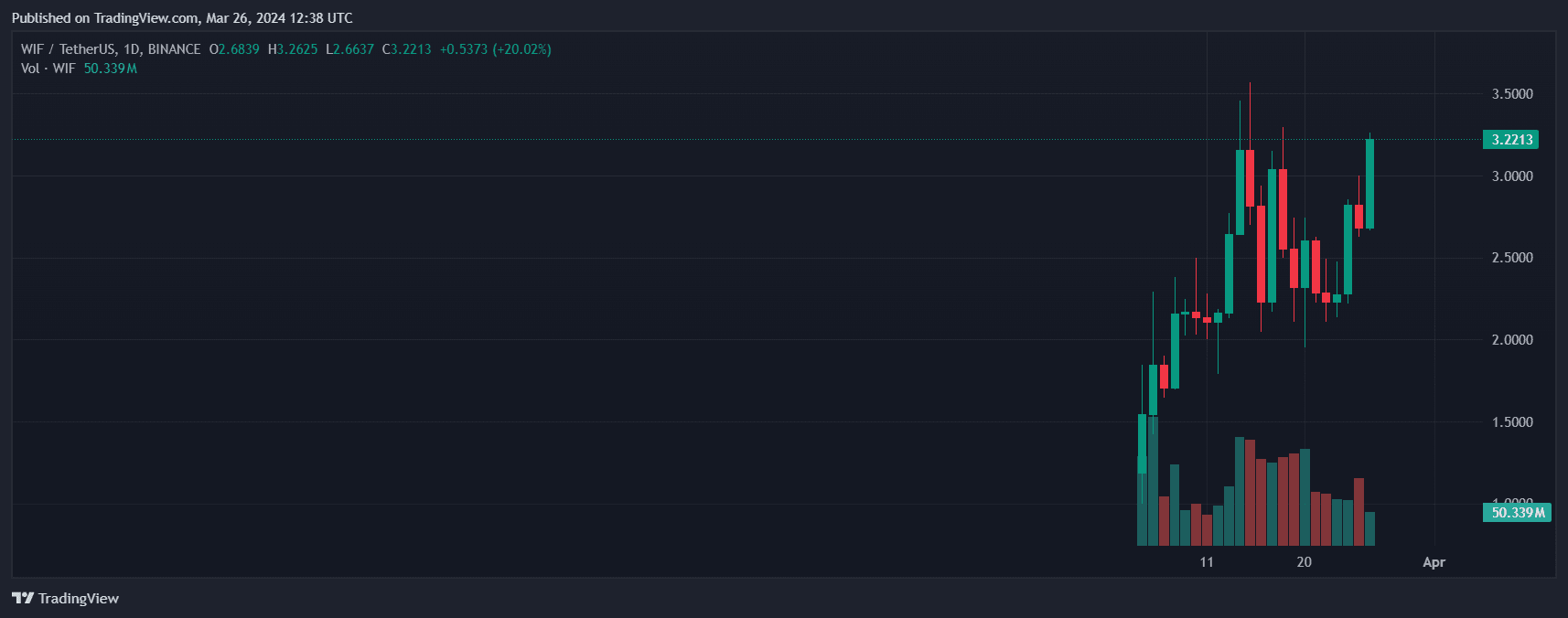
Tron Price Falls Below Pre-Hack Level: Binance Attacker Still Holds 475 Million TRX
TRX has erased its post-hack spike and trades at $0.302, below the $0.331 before the Binance attack and the lowest since March. The attacker still holds about 475 million TRX and sells them every 96 seconds. Why the market discounts ten times the stash, and which levels matter now.
August 26, 2026 4:21 AM

Is Uniswap a Good Buy at Current Prices?
Uniswap has gained about three quarters since August, and the trend test we set back then has been passed. What the fee switch, CME futures and the correction since September mean now: is Uniswap a good buy at current prices?
July 2, 2026 8:59 PM
Binance Is Out of the EU: How to Move to a MiCA-Regulated Exchange
Binance has left the EU market. Which exchanges hold a MiCA licence, how to verify an authorisation is real, and how to move your holdings across step by step.
February 19, 2025 7:00 AM
Best Bitcoin Strategy: 21 Rules of Bitcoin by Michael Saylor
The best Bitcoin strategy by the Founder of Strategy, with his 21 rules of Bitcoin, amid a bullish Bitcoin price prediction from Standard Chartered.
September 4, 2024 5:21 PM

Uniswap (UNI) Price Prediction: Here’s Why UNI Price is Rising?
Uniswap's native token, UNI, has seen a significant boost, jumping 5.72% in just the last 24 hours.
October 30, 2026 9:14 AM

How Much Would It Take to Bankrupt Binance? The $6 Billion Hack Explained
Binance lost $6.3 billion in the biggest crypto hack ever. How much would it take to bankrupt the exchange, and what does it mean for the crypto market?
June 30, 2026 11:20 PM
How to Switch from Binance to a MiCA Regulated Crypto Exchange
Binance is winding down EU services after missing the MiCA deadline. Here's why it's happening and how to move your funds to a regulated platform safely.
October 30, 2026 3:32 PM

Binance puts the hack at $6.3 billion: what you can do now
Binance names a cause itself for the first time: a compromised laptop belonging to a DevOps engineer is said to have opened access to a service container, while private wallet keys are said not to have leaked. The exchange estimates the total damage at around $6.3 billion, with about $3 billion considered frozen.
October 29, 2026 9:59 PM
BNB Crash: Binance Coin Drops 6% After the Hack. Is This Another FTT Moment?
BNB fell 6.3% within 35 minutes after a Binance hot wallet was drained, the worst performer of the top ten cryptocurrencies. Not one BNB was stolen. Why the token falls anyway, how it compares with FTT in 2022 and which price levels matter now.
October 29, 2026 9:54 PM
Biggest Crypto Hack Ever? Binance Joins the List of Exchange Hacks
At about $2.8 billion the suspected Binance hack would be the largest theft a crypto exchange has ever suffered. The biggest crypto hacks at a glance, why exchanges are hit more often, what Tornado Cash has to do with it and what past cases meant for prices.
October 30, 2026 8:02 AM
Bitcoin Price After Binance Hack: Only 2% Down. What Comes Next?
Bitcoin fell only 2% after the biggest crypto hack ever drained $2.8 billion from Binance. Here are the higher and lower Bitcoin price targets now.
June 26, 2026 5:35 PM
Binance Is Leaving the EU on July 1 — What It Means for Your Funds
Binance will stop serving EU customers from July 1 after failing to secure a MiCA licence. Here's what it means for your funds and your next move.
October 7, 2026 10:33 AM

Why the burn does not carry the UNI price: 38,000 UNI in a day is 0.0061 percent of the supply
An on-chain analysis of our own shows how much UNI the Uniswap burn mechanism really destroys in a day. The amount is smaller than its reputation, and it explains why the reduction in supply does not carry the price on this day.
July 10, 2026 10:30 AM
Binance Reveals Where Its EU Users Went After MiCA
Binance just revealed where most departing EU users moved their crypto after MiCA — and the answer is raising hard questions about the new rulebook.
October 29, 2026 9:38 PM
Binance Hack: Around $2.8 Billion Drained From a Hot Wallet
On Thursday evening, roughly $2.8 billion left the Binance wallet “Binance 14” within minutes. The attacker had tied the wallet to their own contract via EIP-7702. Tether and Circle have frozen about $2.4 billion, and Binance says it is investigating.
September 10, 2026 1:21 AM

Crypto Exchanges Head to Head: Which Pairing Is Cheaper Where
Before opening an account, the question is rarely which exchange is best overall, but whether it should be this one or that one. This article sorts through the most searched head-to-heads, puts the cost per 1,000 euros side by side and explains the most expensive mix-up: one provider with two interfaces and a factor of seventeen between them.
October 31, 2026 3:15 PM

$6.34 Billion Buffer: Binance Promises a Full Proof of Reserves by Monday
Binance says it will present a full proof of reserves by Monday and has set aside more than $6.34 billion for it. What a proof of reserves proves, what it leaves open and how you find your own balance in it.
October 29, 2026 9:55 PM
Solana Crash: SOL Falls Below $100. Is $80 Next?
Solana lost 3.3% within an hour after the Binance hack and slid to $95.64, although not a single SOL was stolen. Why Solana falls anyway, why it was already weak before and which price levels matter now.
October 10, 2026 7:40 PM

Decentralised Crypto Exchanges (DEX): Network Fee Against Pool Fee, and Why Custody Decides
On Ethereum a swap through a decentralised exchange currently costs three to five cents in network fees, while the fee for the liquidity pool runs between 0.01 and 1.00 percent depending on the pair. That leaves both routes level on cost, and what comes afterwards decides: custody, supervision and records.
August 22, 2026 1:23 AM

Binance Withdrawal Deadline September 9: What ALCX, ARDR, NFP and POND Holders Should Know Now It Has Passed
Recap as of September 27, 2026: Binance had announced it would stop withdrawals of ALCX, ARDR, NFP and POND on September 9, 2026 at 03:00 UTC. Spot trading in these tokens had been suspended since July 10, and the exchange is winding down its EU business. This article describes the situation before the deadline.
More from CryptoTicker