
Binance hacker sold 499.9 billion SHIB in eight minutes, and the Shiba Inu price barely moved
Analysis: the Binance hacker sold all 499.9 billion SHIB within eight minutes in the early hours of October 30 via ShibaSwap and Uniswap, at a discount of around 14 to 15 percent. The wallet is empty, and the price stands at $0.00000463 on Tuesday evening.




Which topics should we dive deeper into?
Select what genuinely interests you. Your picks feed directly into our editorial planning.
Crypto news that's actually worth your time.
Weekly. 60 seconds. Carefully curated by our editors: no hype, no promo flood, no spam.
What is confirmed: the Binance attacker sold his entire 499.9 billion Shiba Inu (SHIB) in the early hours of October 30, 2026, in 13 transfers within eight minutes, and the wallet has not held a single SHIB since. Our assessment follows further down: the sale barely moved the price because it went into two trading pools and was small relative to daily volume, and the overhang from this address has now been cleared.
On Tuesday evening, November 3, SHIB trades at $0.00000463 according to data from CoinGecko, roughly €0.00000414. Over 24 hours it is up 1.2 percent, over seven days down 4.6 percent and over 30 days down 20.4 percent. Market capitalisation is around €2.44bn, putting Shiba Inu in 36th place among the largest cryptocurrencies.
Binance attacker wallet: 499.9 billion SHIB in three transfers
Binance reported an attack on its hot wallets on October 29, meaning the exchange wallets permanently connected to the internet from which withdrawals are served. The exchange puts the damage at around $6.3bn. Among the tokens taken was Shiba Inu, which runs as an ERC-20 token on the Ethereum blockchain and can therefore be traced through any Ethereum address.
The address where the SHIB landed is labelled “Binance Hot Wallet Exploiter 2” by the block explorer Etherscan. It starts with 0x5227 and ends in 2f8c; its full history is shown on the address page on Etherscan. The tokens arrived on the evening of October 29 in three transfers from the Binance wallet that Etherscan lists as “Binance 14”:
- at 9:24 pm German time, 499.07 billion SHIB, the bulk of the haul,
- at 10:04 pm, a straggler of 24.5 million SHIB,
- at 10:44 pm, a further 834.5 million SHIB.
Together that comes to 499,926,072,560 SHIB. Measured against the circulating supply of 589.2 trillion SHIB that CoinGecko showed on Tuesday evening, that is just under 0.085 percent. Several industry outlets cite 0.05 percent; they calculate against the original supply of one quadrillion SHIB, a large share of which has been burned since launch.
Sale via ShibaSwap and Uniswap: 13 transfers in eight minutes
Almost four hours after the last deposit, the sell-off began. Between 2:26 am and 2:34 am German time on Friday, October 30, the address sent the SHIB on in 13 steps, to exactly two recipients:
| Recipient | Transfers | Amount in SHIB | Share |
|---|---|---|---|
| ShibaSwap pool SHIB/WETH | 10 | 300.53 billion | 60.1% |
| Uniswap pool (version 3) | 3 | 199.40 billion | 39.9% |
| Total | 13 | 499.93 billion | 100% |
ShibaSwap is the decentralised exchange from the Shiba Inu project's orbit, while Uniswap is the largest decentralised exchange on Ethereum. Neither uses an order book. A liquidity pool is a smart contract that holds two tokens, in this case SHIB and WETH, the tradable version of ether. Anyone who puts SHIB into the pool gets WETH out according to a fixed formula. There is no sign-up, no identity check and no freeze, which is exactly why attackers turn to such pools after an exchange hack.
Since the last of these steps at 2:34 am, the address has held 0 SHIB according to Ethereum blockchain data, plus a residue of 0.0022 ether for fees. Inflows and outflows balance down to the last digit.
cryptoticker.io compiled this analysis itself on November 3, 2026. It is based on the 16 SHIB transactions of the attacker's address on the Ethereum blockchain, three inflows and 13 outflows, and on the holdings of the two receiving pool contracts.

Proceeds of 873 ETH: around 14 to 15 percent below the market price
What the attacker received for the SHIB was analysed by the on-chain analytics service Lookonchain. According to its analysis of November 1, cited by U.Today, the 499.9 billion SHIB brought back 873 ETH, worth around $1.96mn at the time. In total, the attacker is said to have swapped more than 130 different altcoins into roughly 123,400 ETH and 1.69 million USDC, together about $279mn.
These figures allow the average sale price to be recalculated. $1.96mn divided by 499.9 billion SHIB gives $0.0000039 per token. At the hour of the sale, 2 am German time, SHIB stood at $0.00000457 according to CoinGecko. The attacker therefore sold on average 14 to 15 percent below the market price, depending on which of the night's ether prices is used to convert the proceeds.
That discount is the price of haste. In a liquidity pool, every tranche sold worsens the price of the next, because after each swap the pool holds more SHIB and less WETH. Pushing 300 billion SHIB into a single pool moves its price massively. What evidently mattered to the attacker was turning the tokens into ether quickly, before exchanges and analytics services flagged the address widely.
 Compare hardware wallets for your SHIB
Liquidity pool and arbitrage: how the selling pressure was spread
A look at the current holdings shows how little of the pressure stayed in the pool. On Tuesday evening, according to Ethereum blockchain data, the ShibaSwap pool holds 278.7 billion SHIB and 563 WETH. That is less SHIB than the attacker put into this pool alone. The Uniswap pool holds 25.7 billion SHIB and 47 WETH.
Arbitrage explains where the tokens went. As soon as the pool price fell below the price on large centralised exchanges after the sale, trading bots bought the cheap SHIB from the pool and sold them on exchanges at the higher price. This mechanism pulls the pool price back to the market price and spreads the extra supply across many venues. The sale thus hits the whole market, but diluted and delayed, rather than as one large order in a single order book.
Shiba Inu price on the night of the sale: down 1.5 percent, then a recovery
CoinGecko's hourly prices show that the real slump came from the hack itself, not from the sale. On the evening of October 29, in the hour when the SHIB left the Binance wallet, the price fell from $0.00000494 to $0.00000467, a drop of 5.5 percent within an hour.
| Time (German time) | Event | SHIB in dollars |
|---|---|---|
| Oct 29, 9 pm | before the outflow from Binance | 0.00000494 |
| Oct 29, 10 pm | after the outflow from Binance | 0.00000467 |
| Oct 30, 2 am | shortly before the sale | 0.00000457 |
| Oct 30, 3 am | after the sale | 0.00000450 |
| Oct 30, 7 am | recovery | 0.00000470 |
| Nov 3, 11:40 pm | Tuesday evening | 0.00000463 |
The hour of the sale itself cost 1.5 percent. A good four hours later, at 7 am, SHIB stood at $0.00000470, higher than before the sale. Friday's daily low was $0.00000446 according to U.Today, another 0.9 percent below the post-sale level. The price has since returned to a narrow range: in the 24 hours to Tuesday evening it moved between $0.00000453 and $0.00000465.
Daily volume of $40mn: the sale carried little weight
A second reason for the muted effect is scale. In the 24 hours to Tuesday evening, SHIB worth $40.3mn changed hands according to CoinGecko. Around the turn of the month, volume at times reached up to $110mn within 24 hours. The attacker's proceeds of $1.96mn thus equalled, depending on the day, just under 2 to just under 5 percent of a single day's volume.
By comparison, a hack in which stolen coins sit in a known wallet for days often weighs on a price for longer than the sale itself. Traders know the supply could arrive at any moment and hold back on buying. With SHIB, this overhang lasted only about five hours, from the first deposit at 9:24 pm to the last sale at 2:34 am.

Since the burn standstill of November 1: what has changed for SHIB
On Sunday we reported on the standstill in SHIB burns: no burn transaction had been recorded since October 31. SHIB stood at around $0.0000047 at the time; on Tuesday evening it is $0.00000463, down 1.5 percent. The main development since then is access at Binance: since Tuesday, 5 am German time, SHIB can be withdrawn there again, as our analysis of the Binance reopening from that morning describes.
By then the attacker's sales had long been completed. Anyone who sees the reopening as a possible trigger for fresh selling pressure therefore has to keep two sources apart: customers who can move their SHIB after a five-day freeze, and the loot that has already been swapped into ether since October 30.
 Find a regulated exchange for your SHIB
Our assessment: the overhang from the attacker wallet has been cleared
In the editorial team's view, the sale is a relief rather than a burden for SHIB holders. Three documented points support this: the address has held 0 SHIB since October 30, the sale pushed the price down by 1.5 percent in its hour and was recovered after a good four hours, and it amounted to at most about 5 percent of a day's volume. A risk that hung over this address has therefore disappeared.
Against this stands the fact that the price is still not rising. SHIB is 20.4 percent below its level 30 days ago, and the $0.0000045 mark, which only just held on Friday, remains the next support. According to Lookonchain, the attacker also still holds around 123,400 ETH. Where they go next affects the ether price and thus, indirectly, the entire altcoin market, even though SHIB itself is no longer in the wallet. No recommendation to buy or sell follows from any of this.
SHIB at Binance: withdrawals open, proof of reserves on November 4
For investors in Germany who hold SHIB at Binance, the practical situation has been clearer since Tuesday. By its own account, the exchange replaced around 95 percent of the missing holdings from company funds by November 1. It has set Wednesday, November 4, as the next cut-off date for its proof of reserves; the evaluation is expected to take 40 to 50 hours.
If you do not want to leave your SHIB on an exchange, you can now move them into self-custody. A hardware wallet stores the private key offline, so a hack at an exchange can no longer reach those coins. Which devices support SHIB as an ERC-20 token and what they cost is shown in our hardware wallet comparison. When withdrawing: choose the Ethereum network, check the destination address character by character against the device display before sending, and send a small test amount first.
Etherscan: how to verify an address yourself
To retrace the figures in this article you do not need an account. Enter the address on Etherscan, read the current balance under “Token Holdings” and the individual transactions, with time, amount and recipient, under “Token Transfers (ERC-20)”. The times there are in UTC; in Germany it has been one hour later since the clocks changed on October 25.
Holding period and losses: the German tax angle on moving coins to your own wallet
A transfer from an exchange to your own wallet is not a sale and does not trigger any tax in Germany. The holding period under Section 23 of the Income Tax Act keeps running as long as the coins belong to you; after one year, a gain on SHIB is tax-free. What matters is that you can document the purchase date and price, even once the coins have left the exchange.
A swap is different. If you exchange SHIB for another cryptocurrency, as the attacker did with ether, you dispose of the SHIB for tax purposes. Within the one-year period, that produces a gain or a loss. Gains from such private disposals remain tax-free as long as they total less than €1,000 in the year. Losses within the period can be offset against gains from other private disposals in the same year, which may matter for a coin that is down 20 percent in 30 days ahead of the year-end. Crypto tax tools and portfolio trackers that combine exchange and wallet data help you keep track of purchase dates and deadlines.
SHIB after the hacker sale: $0.0000045 remains the level
The sale is complete and documented on the blockchain, and its effect on the price was small and short-lived. For the coming days, Binance's proof of reserves and whether SHIB stays above $0.0000045 matter more. Three steps follow from this:
- Check where you buy: if you want to buy or move SHIB, use an exchange licensed under the EU's MiCA regulation. Which providers have one is shown in the comparison of regulated crypto exchanges.
- Decide on storage: SHIB you intend to hold for longer belong in a wallet whose keys you control yourself, such as a hardware wallet from the hardware wallet comparison.
- Document deadlines: purchase date and purchase price belong in a tax tool, so that the one-year period remains provable even after switching exchanges; the selection is in the tax tool comparison.
(As of November 3, 2026. This article is not investment advice. Prices and fee structures change; check the terms with the provider before you buy.)
Frequently asked questions about Shiba Inu and the Binance hack
Transparency note: This article was produced with the assistance of artificial intelligence and reviewed by our editorial team before publication. All figures and claims were checked against the primary sources linked in the text. The feature image was generated with AI.
Related articles
- Binance reopens Shiba Inu withdrawals five days after the hack
- Shiba Inu Price Prediction for March 2025 Amid Community Warnings
- Shiba Inu Price Prediction: SHIB Coin Drops 5% as Bitcoin Price Adjusts
- Shiba Inu Analysis: SHIB Inflows Spike—Is a 53,000% Burn Rate Enough?
- Shiba Inu today: lowest daily level since September 18
Which topics should we dive deeper into?
Select what genuinely interests you. Your picks feed directly into our editorial planning.
Crypto news that's actually worth your time.
Weekly. 60 seconds. Carefully curated by our editors: no hype, no promo flood, no spam.

April 22, 2024 6:42 PM

Does Shiba Inu have its OWN Blockchain?
Shiba Inu's recent $12 million investment is paving the way for a privacy-centric blockchain, poised to revolutionize decentralized finance with enhanced security and user privacy.

February 10, 2026 4:30 PM
Shiba Inu Price Prediction: Is SHIB Still a Good Investment in 2026?
Shiba Inu faces a critical juncture in 2026. In this Shiba Inu price prediction, we share ecosystem updates and a technical analysis to see if SHIB is still a buy.
October 12, 2026 10:40 PM
Shiba Inu and the Fake Airdrop of October 12: “no such airdrop. this is a drainer”
An account on X advertised a supposed SHIB airdrop on October 12. An adviser to the project calls the page a wallet drainer. What is behind it and how to check and revoke your token approvals.
September 18, 2024 7:57 PM
FACT: Will Shiba Inu Coin reach $1 during the next Bullrun?
Will Shiba Inu coin reach $1 during the next bullrun? Let's analyze in this Shiba Inu coin price prediction.
June 29, 2024 4:49 PM

Shiba Inu Price Prediction: Will Shiba Inu Coin CRASH Soon?
Shib coin news: With Bitcoin hovering around $60,000 and Shiba Inu striving to reach the significant $0.000020 mark, what does the future hold for SHIB price?
October 31, 2026 11:36 PM
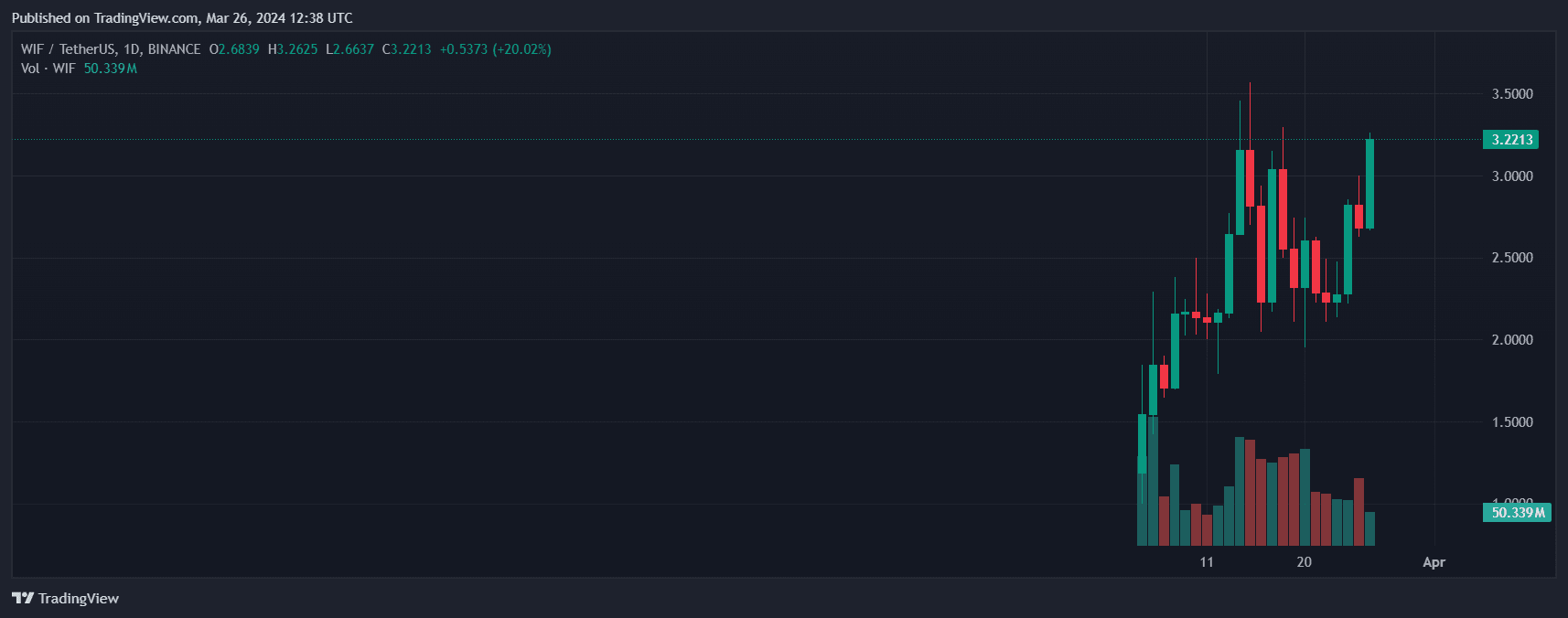
Tron Price Falls Below Pre-Hack Level: Binance Attacker Still Holds 475 Million TRX
TRX has erased its post-hack spike and trades at $0.302, below the $0.331 before the Binance attack and the lowest since March. The attacker still holds about 475 million TRX and sells them every 96 seconds. Why the market discounts ten times the stash, and which levels matter now.

September 21, 2024 12:21 PM
SHIBA INU Price Moonshot to $1? Unleashing the SHIB price Analysis
It is essential to consider the factors that could potentially propel SHIB. Let's take a look at this SHIB price article in more detail.
November 26, 2024 6:01 PM
Shiba Inu Price Prediction: New Rewards & Token Burns vs Market Crash
With news about new rewards unveiling, token burns, and an optimistic 200% Shiba Inu price prediction, could it be enough for the SHIB price to recover?
September 26, 2024 2:31 PM

Shiba Inu Ecosystem Explosive Growth: Shibarium Fees Surge and SHIB Price Breaks Out
Shiba Inu ecosystem explosive growth: 2,190% jump in Shibarium fees and a 203% surge in trading volumes. Why this renewed interest in SHIB?
September 27, 2024 9:34 AM
Shiba Inu Leads As Meme Coins Dominate The Market: Why Did SHIB Price Surge?
Shiba Inu has taken the crypto world by storm with its explosive SHIB price surge. What’s driving this rally, and could SHIB price erase another zero?
October 29, 2026 9:38 PM
Binance Hack: Around $2.8 Billion Drained From a Hot Wallet
On Thursday evening, roughly $2.8 billion left the Binance wallet “Binance 14” within minutes. The attacker had tied the wallet to their own contract via EIP-7702. Tether and Circle have frozen about $2.4 billion, and Binance says it is investigating.
July 5, 2025 4:27 PM
Is Shiba Inu Ready for a 20% Rally?
Traders are watching a tight price range and critical support levels that could decide whether SHIB surges 20% higher or drops to new lows.
June 22, 2025 1:49 PM

Is This the Best Time to Buy SHIB in 2025?
Shiba Inu (SHIB) is testing key support levels after weeks of decline. With RSI screaming “oversold,” is a bounce finally coming?
March 29, 2025 2:32 PM

Shiba Inu Price Prediction: Can SHIB Crash to $0 in This Bearish Market?
Shiba Inu (SHIB) is under pressure as a bearish sentiment dominates the crypto market. Could SHIB crash to $0.000001, or is a reversal still in play? Here’s what to expect as volatility rises.

September 29, 2026 7:30 PM
Shiba Inu Holds 5.50 Millionths of a Dollar: Stronger Than Dogecoin Over 30 Days
Shiba Inu stands at 5.742 millionths of a dollar on Tuesday evening. What decides matters, though, is the depth of the euro order book: it carried only 28 percent of the dollar turnover, and at the best ask price it held around 10 euros.
September 26, 2026 4:24 PM
Shiba Inu Price: Which Marks and Which Spread to Check Before Your Next Order
Shiba Inu is quoted at $0.00000589 on September 26, 2026, 7.54 percent higher than seven days earlier. Which three marks count now, why the same purchase costs thirty times the spread depending on the exchange, and what to check on custody and the one-year period.
October 6, 2026 10:13 PM

Shiba Inu Price at $0.00000578 and €0.00000514, Seven Days Down in Dollars and Up in Euros: Which Levels Decide Now
The Shiba Inu price stands at around $0.00000578 and €0.00000514 on Tuesday evening. Read the same week in euros and the sign flips — and the levels that count next hang on exactly that.
September 14, 2025 7:37 AM
Will Shiba Inu Price Finally Reach $1?
In this analysis, we’ll break down how the Fed’s dovish policy shift is fueling risk appetite, what SHIB’s daily chart reveals.
July 30, 2025 10:02 AM

Will SHIB Price Crash to 0 in August?
SHIB just torched over 600 million tokens in 24 hours, but the Shiba Inu price is still sliding.
July 13, 2025 1:02 PM

SHIB Set to Explode? Watch This Critical Level
With RSI heating up and price hovering just under resistance, SHIB could be gearing up for a breakout rally.
April 3, 2025 3:42 PM
Buy SHIB Now or Regret Later? This Chart May Have the Answer!
SHIB is heating up again! Is this your last chance to buy before a big breakout? This chart might hold the answer.
March 25, 2025 9:41 AM

Shiba Inu (SHIB) Price Prediction: Is a Massive Surge Coming Soon?
Shiba Inu (SHIB) is showing signs of life after months of decline but is this just a fakeout or the beginning of a massive breakout?
March 10, 2025 10:53 AM

SHIB Price: Will Shiba Inu Price Crash to Zero?
With SHIB struggling to hold key support levels and bearish momentum building, investors are wondering will it crash to zero.
November 12, 2024 8:42 AM

Shiba Inu Price Prediction: Will SHIB Reach $1 After Bitcoin Frenzy?
Shiba Inu (SHIB) is on the rise! In the last 24 hours, its price jumped by 16%, now sitting at $0.00002913.
October 17, 2024 4:19 PM

Shiba Inu Price Prediction: Whales Are Rapidly Buying
If big investors continue buying Shiba Inu, it could boost interest in the market, helping SHIB break through its price limit and rise higher.


More from CryptoTicker