
Ethereum mining after the Merge: 36 percent of all ETH is now locked in staking
Ethereum has not been mineable since September 15, 2022, when validators replaced miners. This guide covers the income options for ETH holders in Germany, the electricity bill for Ethereum Classic mining and the tax rules for staking.

Which topics should we dive deeper into?
Select what genuinely interests you. Your picks feed directly into our editorial planning.
Crypto news that's actually worth your time.
Weekly. 60 seconds. Carefully curated by our editors: no hype, no promo flood, no spam.
Ethereum mining has not been possible since September 15, 2022. On that day, Ethereum switched its consensus from proof of work to proof of stake in what became known as the Merge. Since then, new blocks have been produced by validators that put up ETH as collateral, not by graphics cards. Anyone who wants a running income from ETH today therefore ends up with staking. Anyone who wants to keep mining with hardware has to move to other networks, Ethereum Classic above all.
The difference is more than a technical footnote. On November 5, 2026, data from Validator Queue shows around 44.4 million ETH in staking, just over 36 percent of the total supply. The queue for new validators holds just over one million ETH, so long that a newcomer currently waits about 18 days before their stake starts working. That demand shows exactly where the capital of former miners has gone.
This guide explains what happened at the Merge, which income options ETH holders in Germany have, what mining on Ethereum Classic costs in electricity and how the German tax office treats staking rewards.
From proof of work to proof of stake: the Ethereum Merge on September 15, 2022
Proof of work is a method in which computers race to solve a cryptographic puzzle; whoever finds a valid solution first may append the next block and collects the reward. Until the Merge, Ethereum ran exactly this way, and because its Ethash algorithm was designed around graphics memory, mining was done mostly with graphics cards.
Proof of stake replaces computing power with deposited capital. A validator locks up ETH as a pledge and is chosen at random to propose or confirm blocks. Validators that misbehave lose part of that pledge, a process known as slashing.
The Merge joined the original Ethereum blockchain with the Beacon Chain, which had been running in parallel. According to the explainer page at ethereum.org, this cut the network's energy consumption by around 99.95 percent, and mining has no longer been the means of producing valid blocks ever since. Nothing changed for ETH holders' balances: no action was needed, and all coins remained accessible in their wallets.
What happened to the Ethereum miners
The graphics cards that had computed Ethereum blocks until September 14, 2022 lost their source of income overnight. Part of the hashing power migrated to other proof-of-work networks, while much of the hardware ended up on the second-hand market. Mining pools shut down their ETH operations because there were simply no more blocks to find.
Validators instead of miners: how Ethereum blocks are produced today
A validator is a program that takes part in consensus with deposited ETH. Running your own validator requires at least 32 ETH. Since the Pectra upgrade of May 2025, a single validator may bundle up to 2,048 ETH, so large providers need to run fewer validators in parallel. The minimum entry amount stayed at 32 ETH.
A validator does not need a graphics card, but a reliable computer with a fast SSD and a stable internet connection. It runs around the clock, because a validator that is offline misses duties and receives small penalties. Its power consumption is closer to that of a router than a mining rig.
Validators are rewarded from two sources: newly issued ETH for their consensus work and transaction fees paid by users. Part of those fees has been burned since 2021. How much a validator ultimately earns therefore also depends on how busy the blockchain is.

Ethereum staking in 2026: 44.4 million ETH and a 2.44 percent annual yield
The staking yield falls as more ETH is staked, because the issuance of new coins is spread across more participants. Validator Queue puts the annual yield at 2.44 percent on November 5, 2026. On 1 ETH, that works out at around 0.024 ETH a year, before any provider fees.
The figures at a glance, as of November 5, 2026:
- Staked: around 44.4 million ETH, 36.33 percent of supply
- Annual yield according to Validator Queue: 2.44 percent
- Entry queue: around 1.04 million ETH, a wait of just over 18 days
- Exit queue: around 19,000 ETH, a wait of just over one day
The long entry queue has a practical consequence. Anyone who starts a validator today, or has a provider stake on their behalf, earns nothing for the first two and a half weeks because the stake is still waiting. Many exchanges nevertheless credit the yield from day one, because they use validators that are already running. The terms and conditions show when rewards start to accrue.
 Find the best staking yields for your coins
Three routes into Ethereum staking: solo validator, pool and exchange
ETH holders in Germany have three routes, which differ clearly in effort, minimum amount and risk.
Solo staking with your own validator
With solo staking, you run the validator yourself and keep full control of your keys. You need 32 ETH, a computer that runs permanently and a technical understanding of client software and updates. In return, the entire reward goes to you, with no commission for a service provider. You bear the slashing risk yourself, for example if the same validator accidentally runs on two machines at once.
Liquid staking and pools
Liquid staking protocols pool the ETH of many users, run validators with it and in return issue a token representing the claim on the staked ETH plus rewards. The best known is Lido's stETH. You can start with small amounts, and the token can be traded. This adds further risks: bugs in the smart contract and a token price that can temporarily trade below the value of the deposited ETH.
Staking through an exchange
The most convenient option is staking through an exchange or broker. One click is enough, often from just a few euros. The platform runs the validators and keeps part of the reward. Your ETH sit with the platform, so you hand over custody. Under MiCA, providers in the EU need authorisation as a crypto-asset service provider; which platforms hold one and what they charge is shown in our comparison of crypto exchanges.
Ethereum Classic as the proof-of-work offshoot: ASICs instead of graphics cards
Ethereum Classic is the original Ethereum blockchain, which carried on without a rollback after the DAO hack of 2016. It has stayed with proof of work and was the obvious destination for former Ethereum miners after the Merge. Its algorithm is called Etchash, a variant of the former Ethash.
Specialised machines now dominate the network. An ASIC is a chip built for a single algorithm, which it computes far more efficiently than a graphics card. Comparison sites such as AsicMinerValue list, for example, Bitmain's Antminer E11 with 9 GH/s at 2,340 watts. A single graphics card manages a fraction of that. For GPU miners, Ethereum Classic is therefore no longer a substitute for the former ETH mining.
A second point concerns security: smaller proof-of-work networks are more vulnerable to attacks using rented hashing power. Ethereum Classic was hit several times in 2019 and 2020 by such 51 percent attacks, in which an attacker takes over the majority of hashing power and can rewrite transactions.
Electricity costs in Germany: what an ETC miner uses per day
For mining in Germany, the electricity price ultimately decides. The industry association BDEW puts the 2026 household average at around 37 cents per kilowatt hour, and the Federal Statistical Office at just under 38 cents for all running contracts in the first half of 2026.
Our calculation for an Antminer E11 drawing 2,340 watts in continuous operation:
- Consumption per day: 2.34 kilowatts times 24 hours equals 56.2 kilowatt hours
- Electricity cost per day at 37 to 38 cents: around 20.80 to 21.30 euros
- Electricity cost per month (30 days): around 620 to 640 euros
For comparison, a 200-watt graphics card costs around 1.80 euros a day in continuous operation. These costs are set against income that depends on the ETC price, the network difficulty and your own hardware. What such calculations look like for Bitcoin is shown in our Bitcoin mining calculator for Germany. The basics of the process are explained in the article What is Bitcoin mining. On household electricity, proof-of-work mining in Germany rarely pays off, though solar power from your own roof shifts the numbers.
Ethereum mining apps and cloud mining: promises without substance
Apps and websites still advertise "ETH mining" on a smartphone or in the cloud. Since the Merge, no such product can exist technically, because nothing is mined on Ethereum any more. In such cases, payouts come from other sources, for example from the deposits of later customers.
Ethereum.org explicitly warns that there is no "old ETH" and "new ETH" and no exchange of "Eth1" for "Eth2". According to the site, anyone offering something like that is probably a scammer. How to tell legitimate offers from dubious ones is covered in our guide to cloud mining alternatives.
 Find the right tool for your crypto taxes
Tax on staking rewards: Section 22 EStG and the 256-euro exemption limit
Germany's Federal Ministry of Finance summarised the taxation of crypto assets in its circular of March 6, 2025. For private investors, three rules follow from it.
- Income on receipt: Staking rewards count as other income under Section 22 No. 3 of the Income Tax Act (EStG). What matters is the market value in euros at the moment the reward reaches you.
- Exemption limit of 256 euros: If all income of this kind stays below 256 euros in a year, it is tax-free. Once the limit is reached, the entire amount is taxable, not just the part above it.
- The holding period stays at one year: Staking does not extend the speculation period of the ETH used to ten years. For the rewards received, a separate one-year period starts on receipt.
An example: at a 2.44 percent yield, 5 ETH bring in around 0.12 ETH a year. At an assumed ETH price of 2,000 euros, that would be about 244 euros, just below the exemption limit. Other service income, for instance from lending or private mining, does count towards it, however.
Mining is classified in a similar way. Occasional mining as part of private assets also falls under other income, while anyone mining permanently, with a profit motive and on a larger scale quickly ends up running a business. The distinction is explained in our article on commercial crypto mining.
Graphics cards after Ethereum mining: sell or repurpose
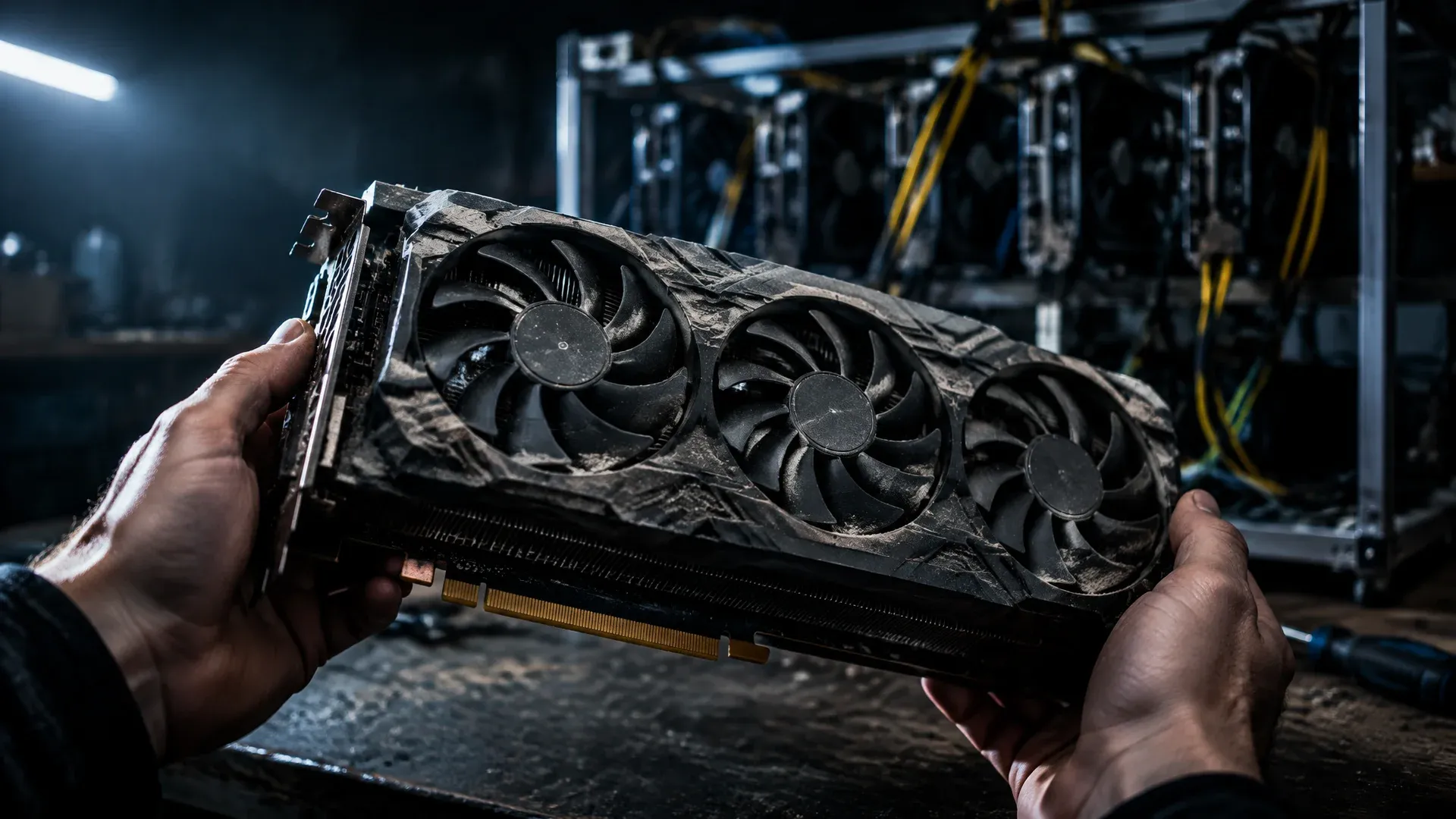
Anyone who still owns hardware from before the Merge essentially has two options. Selling on the second-hand market brings money back, especially for cards with plenty of graphics memory. Buyers often ask about a card's mining history, because fans and thermal paste can be worn after years of continuous operation.
The second option is to run the cards on other proof-of-work networks that are still designed for graphics cards. The same electricity costs as above apply, and the income from small coins fluctuates sharply. Anyone taking this route should not leave the coins on an exchange but keep them in self-custody.
Ethereum since 2022: income now comes from staking, not the graphics card
Mining is history for Ethereum; income comes from staking. Three steps to get started:
- Choose a provider: Compare the yields, commissions and lock-up periods of the platforms in our comparison of staking providers.
- Record your rewards: Note every reward with its date and euro value so you keep track of the 256-euro exemption limit. The crypto tax tools in our comparison help with this.
- Settle custody: If you want to keep control of your ETH, they belong on a device of your own. A selection is shown in our hardware wallet comparison.
(As of November 5, 2026. This article is not investment advice. Prices and fee structures change; check the terms with the provider before you buy.)
Frequently asked questions about Ethereum mining
Transparency note: This article was produced with the assistance of artificial intelligence and reviewed by our editorial team before publication. All figures and claims were checked against the primary sources linked in the text. The feature image was generated with AI.
Related articles
- 100% in 7 Days – Ethereum Miners Moving to mine Ravencoin after ETH Proof-of-Stake Merge?
- Ethereum Proof-of-Stake Merge Countdown! What is Ethereum Merge? : The Ultimate Guide
- Which is Better: Proof of Work or Proof of Stake (PoW vs PoS)?
- ConsenSys Ethereum 2.0 Staking Survey – 65% ETH Holders Plan To Stake
- Ethereum Merge: Is Ethereum Mining Still Worth it?
Which topics should we dive deeper into?
Select what genuinely interests you. Your picks feed directly into our editorial planning.
Crypto news that's actually worth your time.
Weekly. 60 seconds. Carefully curated by our editors: no hype, no promo flood, no spam.

August 17, 2022 2:46 PM

What is Proof of Stake?
The proof of stake method is drawing a lot of recognition these days, with Ethereum shifting over to this method from the proof of work method.

August 2, 2022 11:06 AM

Does MATIC have a Future after Ethereum Merge?
Now that Ethereum is making the move towards PoS, can Polygon still exist? Does MATIC have a future after Ethereum Merge? Let's find out!
April 1, 2026 1:06 PM

Major Security Breach: Ethereum Blockchain "Hacked" Following 2026 Roadmap Update
Reports of a fundamental compromise of the Ethereum blockchain sent shockwaves through the DeFi ecosystem today, sparking a massive sell-off before the truth emerged.
September 15, 2022 3:52 PM
How was Ethereum Merge? Here’s a Quick Summary
In this article, we'll give you a detailed summary on how was Ethereum merge, the events surrounding the merge, and future expectations.

October 29, 2019 2:55 PM
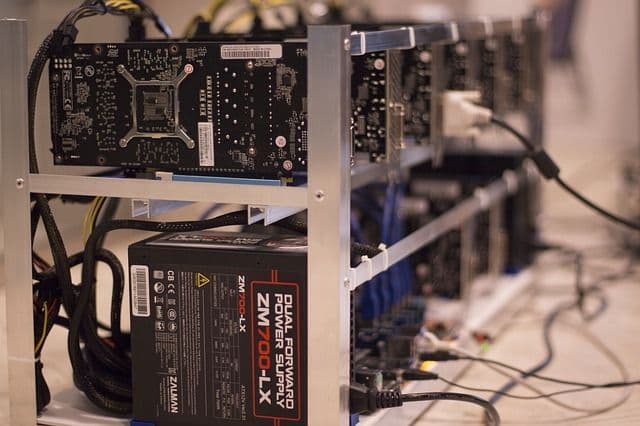
Top 4 Cryptocurrency Staking Pools: A-Z Guide
At a high level, staking as a service is basically when a firm (i.e., a cryptocurrency asset custodian) posts the ‘stake’ or ‘bond’ required to validate transactions and receives the requisite return via a PoS-based protocol network. Staking Pools require […]
October 10, 2023 4:07 PM

This Study Shows that Ethereum is becoming Centralized! Here’s Why…
Recent upgrades to Ethereum, specifically the Merge and Shanghai, have reportedly led to an increased centralization of the network.
May 21, 2023 7:30 AM

Top 10 Crypto Assets by Staking Market Cap
This article is all about the top 10 crypto assets by staking market cap. Let's take a look at it in more detail.
September 25, 2019 2:39 PM

What is Proof of Burn?
While most blockchain arrangements either adopt a Proof of Work (PoW) or a Proof of Stake (PoS) consensus algorithm, the Proof of Burn (PoB) is being examined as a viable option to those. Proof of burn is one of the […]

August 20, 2026 7:39 AM

Ethereum Staking Queue: 2.23 Million ETH Wait Around 39 Days for Activation
On 17 August 2026, 2,229,411 ETH sat in Ethereum's entry queue while exactly two validators stood in the exit queue. We measured both queues directly against the chain and worked out what the waiting time means for the first year's reward.
March 7, 2021 8:07 PM

Crypto Staking – The DEFINITE Guide on How to MAKE money staking
If you want to know how to make money with cryptos, this is your complete guide to staking on Binance & earn passive income. What is Staking?
March 19, 2022 6:01 PM
When is Ethereum 2.0 coming? – 2022 update on the Development State
Despite Ethereum's size and influence, Ethereum network still has some problems to solve. Ethereum 2.0 update should solve them all!
February 13, 2020 4:18 PM
Top 3 Ethereum Mining Pools
Ethereum is one of the most popular cryptocurrencies. There are many advanced features which make this coin as one of the best coins to invest. The Ethereum miner is a person that dedicates time and power to classifying through blocks. […]
April 27, 2020 9:50 AM

Cryptocurrency Staking : Tezos Leads With $1.38B Locked, EOS Second
CryptoDiffer released a report based on data from Staking Rewards on Apr 24, detailing the crypto-assets employing Proof of Stake (POS) consensus mechanism and their ranking, based on the percentage of the circulating supply and the resultant USD value of […]
October 30, 2026 9:39 AM

NEAR Protocol explained: how sharding and 2.5 percent staking work
NEAR Protocol is a layer-1 blockchain that spreads its work across sections running in parallel and is secured by stakes. What the NEAR token does, how staking and custody work and what to check before you buy.

November 16, 2022 11:56 PM

Cardano News Ticker – CryptoTicker
Cardano is a delegated Proof of Stake blockchain (dPoS), that supports smart contracts similar to Ethereum. Get all the news here.
April 3, 2022 3:04 PM
What is Cardano Staking? Here’s a Guide to Earning JUICY INTEREST!
Cardano is a project that gained many loyal followers over time. Cardano staking is an interesting aspect of the project, let's talk about it.

June 4, 2021 7:14 PM

Charles Hoskinson says: “Cardano isn’t killing Ethereum. Ethereum is killing itself”
Cardano’s founder has made some vital points recently in the interview with Yahoo finance about how Cardano is more sustainable. Is it true?

September 30, 2026 10:15 AM

Ethereum Price Prediction: 1.6 Million ETH Face a 28-Day Wait for Activation, and What You Can Do Now
1,603,958 ETH are standing in the entry queue for Ethereum staking and waiting almost 28 days for activation. What that tied-up supply means for the price levels, for your yield and for the 256 euro exemption limit at the German tax office.
March 29, 2026 2:07 PM

Is Ethereum a Good Store of Value?
Is Ethereum a reliable store of value? We analyze ETH price history, the "ultrasound money" narrative, and its long-term potential for 2026 and beyond.
March 31, 2026 8:12 AM

Is Ethereum Insanely Undervalued? Bitmine’s $6.7 Billion Staking Bet Says Yes
Bitmine has staked 3.31 million Ethereum worth $6.72 billion. Here's why institutional giants are betting on ETH being undervalued and what it means for the price.
August 21, 2026 5:08 PM
Ethereum Price Above $2,300: 3 Reasons Why ETH Is Leading This Rally
Ethereum jumped past $2,300 and is now testing $2,400. ETH is outpacing Bitcoin, and the reasons are specific to Ethereum.
October 10, 2026 7:49 PM

252,402 ETH Gone From the Staking Buffer: Ethereum at $2,507 and 24 Days in Both Queues
Ether trades at $2,507 on Saturday afternoon while something shifts in the queues of the staking system: the lead of the entry queue over the exit queue has shrunk by 252,402 ETH since October 4. What the 24 days of waiting in both directions mean for your stake, and why a full queue still does not support the price.
February 15, 2025 3:01 PM
Ethereum News: NYSE Proposes Staking Rule and Pectra Launches on Sepolia while ETH Price Defends Key Zone
Ethereum is making headlines with its latest news, the NYSE rule change proposal in Grayscale's Spot Ether ETF, and Pectra launch ready on Sepolia in March 2025. All that while ETH defends a critical price zone amid market volatility...
October 28, 2026 9:27 PM
Ethereum staking at 2.63 percent: what investors need to know
Analysis: the Fed left the policy rate at 3.75 to 4.00 percent on Wednesday evening, and two members even wanted a hike. For Ether this decision counts for more than it does for Bitcoin, because the staking yield of 2.63 percent competes directly against the money-market rate.
June 14, 2025 3:30 PM

Ethereum to $10,000 in 2025? Why Institutions Are Betting Big on ETH
Ethereum is being loaded up by smart money—and not just for spot ETFs. With BlackRock and others buying $240M in ETH, the $10K target for 2025 might not be so far-fetched. Here’s why.
September 24, 2026 10:36 PM
Ethereum Price Prediction: What to Check on Staking, Leverage and Where You Buy After Three Attempts at $2,800
Ether stands at $2,700 and has bounced off the zone around $2,800 three times in thirty days, without a single daily close above it. What our own count shows, and the three things to settle before the next attempt.
September 18, 2026 9:15 PM
Ethereum Breaks Through the $2,600 Mark: What Is Behind the Short Squeeze and What to Check Now
Ethereum rises almost 7 percent to $2,616 and clears the mark it failed at only days ago. Short positions worth $85 million were forcibly closed in the process. What that reveals about the rally and what you should check now.
More from CryptoTicker