
Bitcoin price at $81,685 and a one-satoshi network fee: 12 cents per withdrawal
Bitcoin is trading at around $81,685 on Sunday morning, and a transfer across the network costs as little as it rarely does: one satoshi per virtual byte, roughly twelve cents for a standard withdrawal. The mempool is anything but empty, and that is exactly what makes the picture interesting.

Which topics should we dive deeper into?
Select what genuinely interests you. Your picks feed directly into our editorial planning.
Crypto news that's actually worth your time.
Weekly. 60 seconds. Carefully curated by our editors: no hype, no promo flood, no spam.
Bitcoin traded at about $81,685 on Sunday morning. Kraken showed $81,684.70 at the hour, Coinbase $81,718, and the average over the past 24 hours sits at $81,398. Overnight the range ran from $80,655 to $81,961, a spread of just over 1.6 percent between low and high. For a Sunday, that is a quiet move.
A different number is the more interesting one this morning: sending bitcoin across the network currently costs as little as it possibly can. The fee estimate from mempool.space for the next half hour stands at one satoshi per virtual byte, the technical floor that nodes on the network will still relay. A standard withdrawal from an exchange to your own wallet therefore costs around 12 cents.
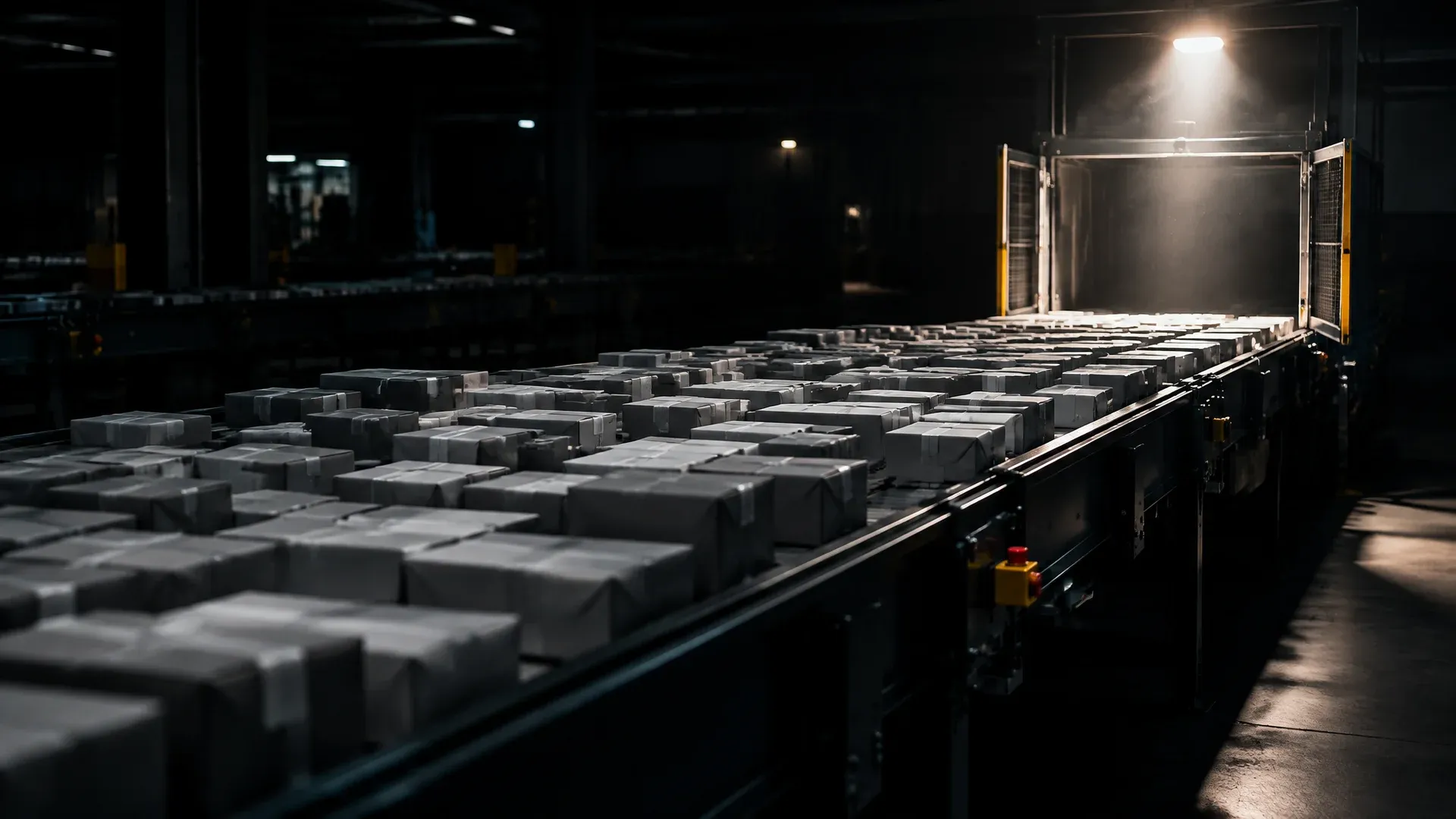
The striking part: the mempool, the queue of transactions still waiting for confirmation, is far from empty. 71,454 transactions are queuing there for space in the next block, 39.1 million virtual bytes in total. That is roughly 39 full blocks, about six and a half hours of work for miners. The fast lane still costs almost nothing. That contradiction is the heart of this morning, and it resolves cleanly.
Where the Bitcoin price stands on Sunday morning
Little has changed since Saturday. On Friday morning bitcoin stood at $81,437, when we covered the start of Deutsche Bank's custody service. That leaves about $250 of gains across two days, less than two tenths of a percent. The level that should shape the start of the week is the overnight high at $81,961: while the price stays below it, it moves inside the range that has held since Friday. On the downside the overnight low sits at $80,655, and only below that does the technical picture turn murky.
Trading volume on Kraken came to roughly 657 bitcoin over 24 hours. That is thin and fits the weekend: the spot market is resting, the traditional futures exchanges are closed, and there are no fund flows on Saturdays and Sundays in any case. There is no impulse to be had before Monday.
One satoshi per byte, and what that unit measures
The bitcoin network fee does not depend on the amount you send. Whether you move 50 euros or 50,000 euros makes no difference to the cost. You pay for space, measured in virtual bytes. A standard withdrawal with one input and two outputs takes up about 141 virtual bytes. A block holds roughly one million of them.
The fee rate therefore states how many satoshi you are willing to pay per byte of space used. A satoshi is one hundred-millionth of a bitcoin, about $0.0008 at today's price. Miners sort the mempool by that rate and fill the next block from the top down. Bid more and you sit further forward. Bid too little and you wait until the crowd thins out.
One satoshi per byte is not simply a low number, it is the floor: the default setting on most nodes will not even relay transactions below it. With the estimate for the next half hour sitting on exactly that value, the minimum is currently enough to make the next block. For the fastest tier the estimate stood at two satoshi this morning, and even that comes to 23 cents.
The mempool backlog is large and the fee is still minimal
This is where it gets interesting if you have ever waited on a confirmation. A full mempool was long read as a warning sign: many transactions queuing, so high fees. This morning that does not hold, and the reason lies in the distribution.
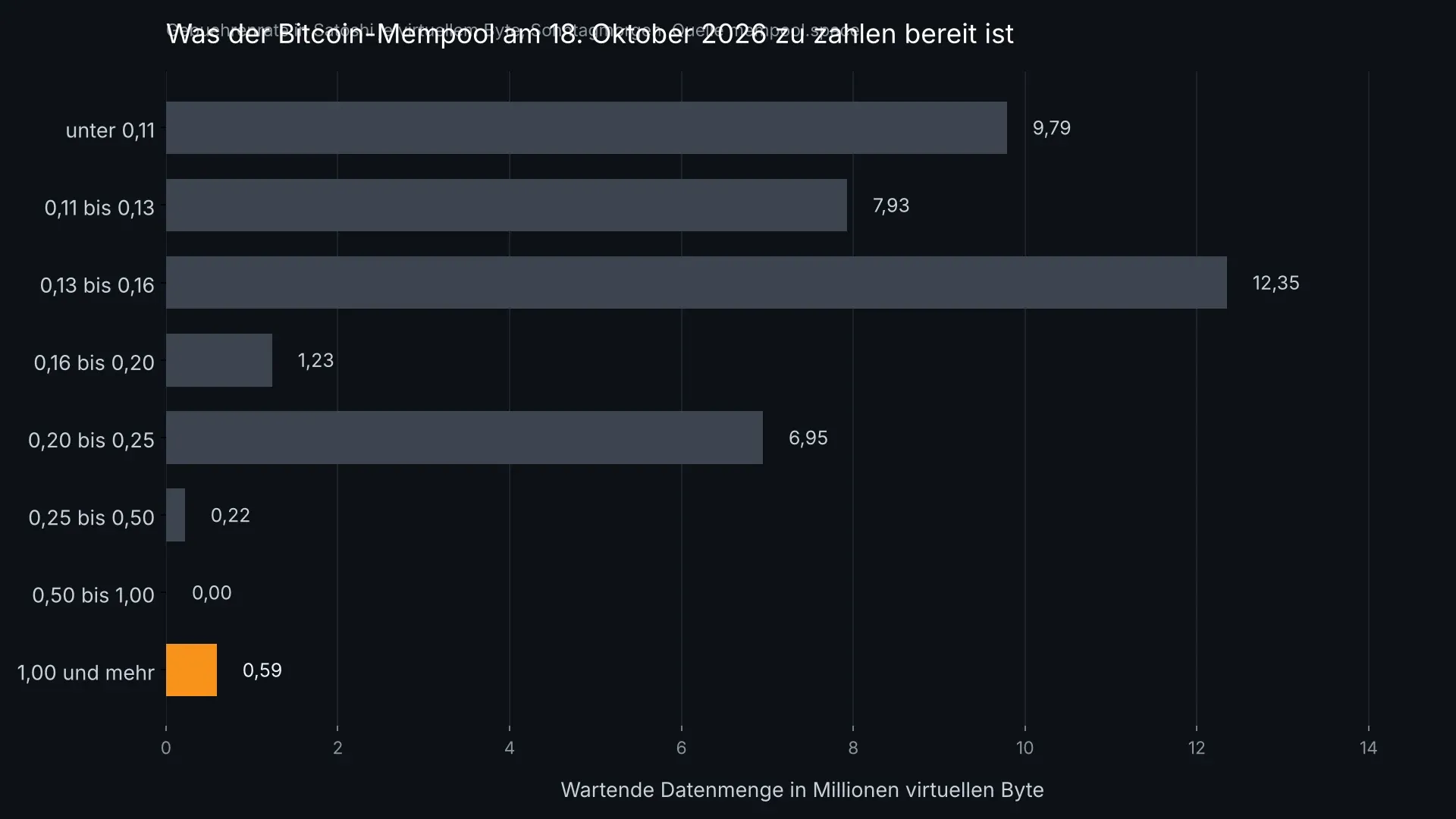
Of the 39.1 million virtual bytes in the mempool, 38.5 million are waiting at rates below one satoshi per byte. That is 98.5 percent of the entire backlog. Only 589,557 virtual bytes, or 1.5 percent, bid one satoshi or more. The average rate across the whole mempool is 0.167 satoshi per byte.
Translated into plain terms: the queue consists almost entirely of transactions that deliberately bid very little and are waiting for better conditions, often from batch processing or from applications that park data on the blockchain. Pay one satoshi per byte today and you overtake all of them, while the data competing with you amounts to about 0.59 of a single block. The backlog does not hold you up, it simply stands beside you.
What a Bitcoin withdrawal really costs today
Concretely, calculated at this morning's price:
- A standard withdrawal from an exchange to your wallet, one input and two outputs, takes up about 141 virtual bytes. At one satoshi per byte it costs 11.5 cents.
- A transaction with two inputs and two outputs, for instance when you merge two older amounts, takes up about 222 virtual bytes and costs 18 cents.
- Consolidating ten small amounts at once takes up about 722 virtual bytes and costs 59 cents.
For comparison, the same three operations at a rate of 20 satoshi per byte, which is usual in busy phases: $2.30, $3.63 and $11.80. At 50 satoshi per byte it would be $5.76, $9.07 and $29.49. The factor between today and a busy Tuesday therefore runs from twenty to fifty.
 Compare crypto exchange withdrawal fees
How to check the network fee before you withdraw
The figure in this article is a snapshot from Sunday morning. Before you send anything, your own look is worth the effort, and it takes under a minute.
- Open the fee estimate on your own node or on a public mempool service. It usually shows three tiers: the fast lane for the next block, the middle one for about half an hour, and the economical option. If all three sit close together, the network is quiet.
- Compare that figure with what your wallet suggests. Many wallets add a safety margin and offer two to three times the going rate. In quiet phases you pay that for nothing.
- See whether your wallet lets you set the fee rate by hand. If it only offers "fast", "normal" and "slow" without a number, you have no control over the price.
- Look for replace-by-fee support in your wallet. It lets you resend a transaction that went out too cheaply with a higher fee, instead of leaving it stuck for days.
Why your exchange often charges more than the Bitcoin network
One item is missing from the calculation above, and it hits most retail investors harder than any network fee: the exchange's withdrawal fee is a separate number. Many venues charge a flat amount per withdrawal, regardless of what the network costs at the time. Amounts in the range of a few euros are common, or a fixed satoshi figure calibrated to busy periods, which on a morning like this comes to a multiple of the actual network cost.
The cheap window in the network therefore only helps you if your exchange passes it on. Some venues bill dynamically and charge the real network price, others keep the flat fee constant all year. The terms a provider runs are set out in its fee schedule, and reading it before you move is time well spent. To see the different models side by side, the crypto exchange comparison breaks the fee structures down.
There is a second lever. Some exchanges offer withdrawals over the Lightning network. The blockchain fee does not arise there at all, but you need a wallet that speaks Lightning, and you tie yourself to your provider's channel structure. For small amounts that is often the cheaper route, for larger sums the direct path over the blockchain remains the sounder choice.
Consolidating ten small amounts in one go
Who gains most from this morning: months of savings-plan buys, each one moved to your own wallet, leave you sitting on many small pieces. In the Bitcoin network they are called unspent outputs, and every one of them takes up space later, when you sell or reshuffle.
Merging ten such pieces into a single one takes up about 722 virtual bytes. Today that costs 59 cents. In a busy phase at 50 satoshi per byte it would be $29.49. If the housekeeping is on your list anyway, a quiet weekend handles it far more cheaply than a weekday.
A tax note before you start: merging your own amounts into the same wallet is no sale and triggers no taxable event. It can, however, make the allocation of acquisition dates harder if your wallet or your tax software does not track the origin of the individual pieces cleanly. Write down beforehand which amounts you bought when.
The next difficulty adjustment falls on October 30
A look ahead that ties into the fee picture. Mining difficulty governs how hard it is to find a block, and it is retuned every 2,016 blocks. On October 16 it jumped by almost six percent, 5.92 percent to be exact. Average block time has sat at 10.21 minutes since then, slightly above the ten-minute target.
The estimate for the next adjustment stands at minus 1.77 percent. It takes effect at block height 973,728, expected on October 30. The blockchain currently stands at height 971,946, so about 1,780 blocks are missing.
The link to the fee is indirect but real. Longer block times mean fewer blocks per day and therefore less space. With strong demand that would push fees up. That rates sit at the floor despite slightly slower blocks shows how thin demand for block space really is right now.
Our take: the lull makes the window
From the newsroom's perspective this morning is a good window for anything that costs space on the blockchain, and at the same time a weak signal for activity on the network. The evidence lines up: an average of 0.167 satoshi per byte across the whole mempool, only 1.5 percent of the backlog above the minimum rate, and trading volume of 657 bitcoin in 24 hours on Kraken are three numbers that say the same thing. There is little going on.
The case for using the window: moving to self-custody or consolidating old amounts costs a twentieth to a fiftieth of what it costs midweek. The case against turning that into a statement about the price: low fees are no buy signal. What they measure is demand for block space, not demand for bitcoin. The two have often diverged in the past, and treating them as one reads a market claim out of a technical metric that cannot carry it.
How long the window holds cannot be forecast seriously. Experience says rates pick up as soon as the venues start working through their batches on Monday. If you have something planned, there is time until then.
Find a crypto exchange with an EU licenceHow the one-year holding period relates to moving your Bitcoin
A point that concerns German investors and comes up with every wallet move: shifting your own bitcoin from an exchange to your own wallet is no sale. It is not a disposal, it triggers no tax, and it does not interrupt the one-year holding period. What counts is the acquisition date, not the place of custody.
You still need records, though. The tax office sees only a blockchain transaction, not the intention behind it. Keep the exchange's withdrawal confirmation with date, amount and destination address, along with your purchase receipts. Document that cleanly and you can later show that more than a year lay between purchase and sale. What lawmakers plan to do with the holding period is gathered in our piece on the current state of the holding-period reform.
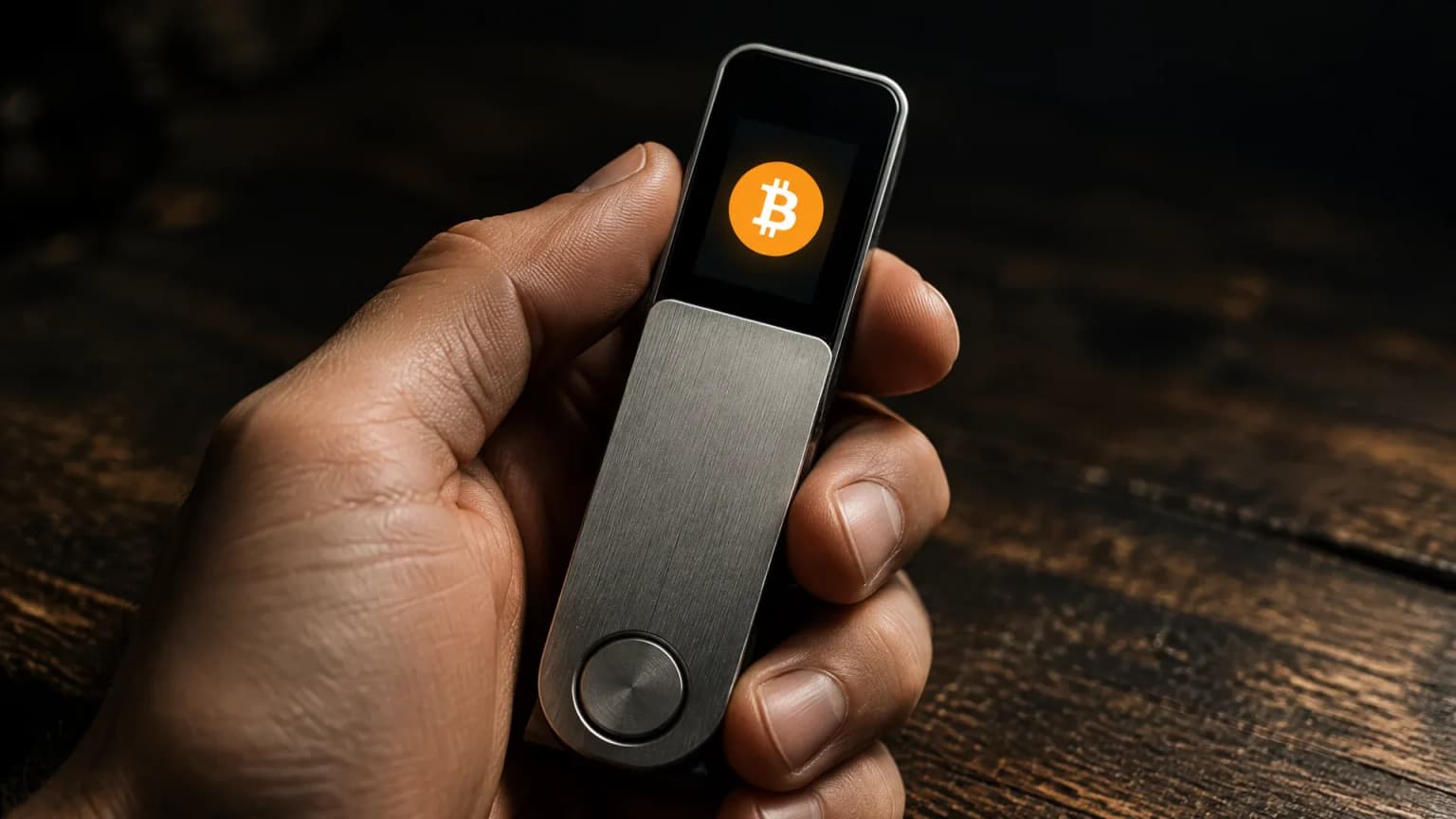
On custody itself: a hardware wallet keeps the keys off your computer, and that is the real reason the move is worth making. Which devices support which blockchains, and how they differ in securing the recovery words, is set out in the hardware wallet comparison. One thing matters above all: write the recovery words down by hand and store them separately from the device. No photo, no cloud, no text file.
What is on the calendar for Monday
The start of the week brings back the data that moves the price. Fund flows into the US spot products are reported again from Monday, the futures market opens, and the venues' batch processing fills the mempool. For the fee picture that means today's rates are more the exception than the rule for the coming week.
For the price the two overnight levels remain: $81,961 on the upside, $80,655 on the downside. A break out of that range would be the first solid signal of the new week.
Bitcoin network fee on October 18: 12 cents per withdrawal
The situation turns into something concrete in three steps:
- Look up the fee yourself before you send. The estimate for the next half hour stands at one satoshi per virtual byte. If your wallet sets more, correct the figure by hand where it allows that.
- Hold your exchange's withdrawal fee against the network price. If your provider bills a flat amount, you pay a multiple of the real cost today. Your provider's fee schedule names the model.
- Get the housekeeping done on a quiet weekend. Merging ten small pieces costs 59 cents today instead of almost $30 in a busy phase. Suitable devices for self-custody are in the hardware wallet comparison.
(As of October 18, 2026. This article is not investment advice. Prices and fee structures change; check the terms with the provider before you buy.)
Frequently asked questions about the Bitcoin network fee
Partner links: some links on this page are partner links. If you become a customer through one of them, we may earn a commission at no extra cost to you. Selection, ratings and ranking are decided independently by our editorial team. Ethics and Independence · Ownership and Funding
Transparency note: This article was produced with the assistance of artificial intelligence. Figures and claims are based on the primary sources linked in the text. The feature image was generated with AI.
For later? Save this article and find it again in your profile.
More on Bitcoin: All Bitcoin news at a glance
Related articles
- What Is the Mempool? Bitcoin Fees, Wait Times and Stuck Transactions Explained
- Dogecoin price: 91 satoshis, weakest against bitcoin since January 2021
- Adam Back: the inventor of Hashcash is cited in the bitcoin white paper and runs Blockstream
- Hal Finney: ten bitcoin from Satoshi and the first transaction in history
- OKX Fees: Trading, Futures and Withdrawal Fees by Region
Which topics should we dive deeper into?
Select what genuinely interests you. Your picks feed directly into our editorial planning.
Crypto news that's actually worth your time.
Weekly. 60 seconds. Carefully curated by our editors: no hype, no promo flood, no spam.

November 4, 2026 5:29 PM

Dogecoin price against Bitcoin: one DOGE now costs just 96 satoshi
Analysis: against Bitcoin (BTC), Dogecoin (DOGE) is now worth just 96 satoshi, down from 160 a year ago. Why the post-election recovery does not change that, which levels around $0.0775 matter and what swapping into Bitcoin means for tax.

November 4, 2026 5:13 PM
BitMart hacked mid-restructuring: $391,000 drained, revised creditor plan due in November
BitMart has confirmed a second hack, with around $391,000 drained across three layer-2 networks according to Bitquery. This guide puts the incident in context, explains the three options in the restructuring plan and shows how to document your claim.
November 3, 2026 11:35 PM

Bitcoin whitepaper explained: what Satoshi Nakamoto described on nine pages in 2008
On October 31, 2008, Satoshi Nakamoto published nine pages on which every bitcoin still rests today. We go through the Bitcoin whitepaper section by section and show what it says and what was only added later.
November 3, 2026 9:29 PM

Binance withdrawals phase 2: Cardano and Litecoin only via BEP20 for now
Binance has been reopening more withdrawals since November 3, but Cardano, Litecoin, Polkadot and three other coins only come out as BEP20 tokens on BNB Smart Chain. Pick the wrong network or use a Cardano-only wallet, and the coins may never arrive.
October 29, 2026 3:15 AM

Bitvavo delists PTB on November 6: trading ends at 2 p.m., payouts at 3 p.m.
Bitvavo removes Portal to Bitcoin from trading on November 6, 2026. Trading ends at 2 p.m. CET and withdrawals at 3 p.m., and whatever is left after that the exchange converts into euros automatically.

October 26, 2026 12:00 PM

Bitcoin Wallet Bug: Why Speeding Up a Payment Could Drain Your Wallet
A Bitcoin wallet bug let rogue servers swap a real payment for a fake one and trick users into signing it. How the fee bump trap works and how to stay safe.
October 25, 2026 3:31 PM
Electrum wallet vulnerable before version 4.8.3: what you can do now
Electrum released version 4.8.3 on October 23, 2026 and closed a flaw that malicious servers had already exploited. It does not harvest your keys; it targets the moment you speed up a stuck transaction.
October 24, 2026 1:20 PM

Canton (CC): universal burn approved, burning starts under the 2027 roadmap
The Super Validators of the Canton Network approved proposal CIP-0129 on October 21: dedicated synchronizers will no longer pay a licence fee to Digital Asset but will burn Canton Coin for their traffic. Under the roadmap this takes effect only in 2027, and the network currently mints about twice as much CC as it burns.
October 24, 2026 4:22 AM

Sophon names November 25 as its withdrawal deadline: what happens to your tokens now?
Sophon is shutting down its Ethereum layer-2 blockchain and names November 25 on X as the last day for withdrawals. The project's own documentation still says there is no fixed date — and there is no emergency exit via Ethereum here.

October 21, 2026 4:24 PM

SpaceX and Tesla merger with 30,221 bitcoin: “at the end of the day, the shareholders have to be supportive of this”
Context: Elon Musk has confirmed on SpaceX's quarterly call that both companies are exploring a merger. Together they hold 30,221 bitcoin. What is documented, what stays open, and what decides whether a share works as a detour to the coin.
October 18, 2026 4:33 AM
Bitcoin Cash (BCH): 131 blocks instead of 144 in a day, here are the reasons
Bitcoin Cash produced 131 blocks in 24 hours instead of the targeted 144, and average block time stands at 11.0 minutes. The price is almost unchanged at $275.66, yet every deposit and withdrawal now keeps you waiting longer.
October 17, 2026 4:30 PM
Does swapping Bitcoin for WBTC restart the one-year holding period?
Converting Bitcoin into WBTC triggers a private disposal transaction under one reading and restarts the one-year clock. Under the other the transaction stays tax-neutral: what the statute says, what the Finance Ministry leaves open and which records count either way.
October 16, 2026 10:33 AM
Mining difficulty jumps almost 6 percent today: why Bitcoin miners have no cushion this time
Bitcoin network mining difficulty rises by almost 6 percent on Friday afternoon, the steepest step up since June. Because transaction fees carry only 0.65 percent of mining revenue, the cost jump hits miners without any cushion at all.
October 12, 2026 7:32 PM

WhiteBIT Coin (WBT): Lightning Brings Bitcoin Withdrawals at 0.15 Percent, What You Can Do Now
The crypto exchange WhiteBIT has accepted Bitcoin over the Lightning Network since October 8 and pays it out the same way, for 0.25 and 0.15 percent respectively. Because both rates are percentages, the size of your withdrawal decides whether the new route is cheaper than the main chain.
October 11, 2026 7:17 PM

Ethereum price $2,504 as the base fee drops to a sixth: will the $2,495 level hold?
Ethereum traded at $2,504 on Sunday afternoon, with the daily range down to 0.63 percent. More telling than the chart is the block data: the base fee is 0.0673 gwei, a sixth of the weekly average, and the burn now offsets just 0.49 percent of new issuance.
October 11, 2026 4:35 PM
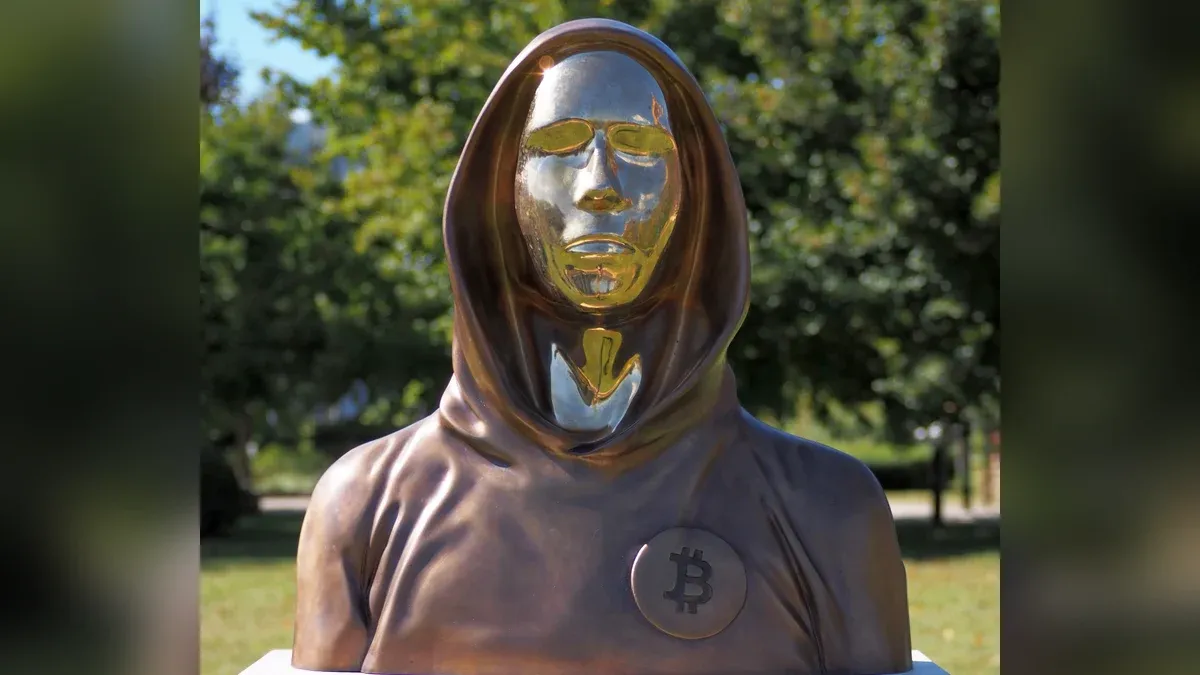
Satoshi's bitcoin: why 1.1 million coins could be frozen
Around 1.1 million bitcoin, worth a good $91 billion today, are attributed to Bitcoin's inventor Satoshi Nakamoto. A draft from Bitcoin developers would freeze them before a quantum computer can steal them. What lies behind BIP-361, what argues against it, and which addresses of yours would also be affected.
October 4, 2026 1:13 AM

EGLD withdrawals frozen, Upbit decides from October 19: What is going on with MultiversX?
The MultiversX chain is running again, but not every exchange is: EGLD transfers are frozen at Bitvavo and on Binance's native network, while Kraken has been open since October 1. Upbit decides between October 19 and October 23 whether trading continues.
September 30, 2026 1:32 PM
100 Euros Into Bitcoin Without Fees: What Actually Arrives at Five Providers
Five providers serving German retail customers, €100 invested: after the disclosed fee, between €98.50 and €100 is left. Only one provider names the spread as well, and with it the whole price.
September 23, 2026 4:26 PM

Paid in Bitcoin: How to Tax Crypto Income as a Self-Employed Freelancer
A fee in Bitcoin is perfectly ordinary business income, valued at the euro price on the day it reaches you. The decisive trap comes afterwards: business assets carry no one-year holding period, so every later price move stays taxable.
September 22, 2026 1:28 PM
Selling Bitcoin and Cashing Out in Euros: How It Works in Germany
Between the sell order and the euros in your current account stand the exchange, your bank and the tax office. Knowing the order of events saves fees, waiting time and, in the best case, the entire tax on the gain.
September 13, 2026 4:12 PM
Bitcoin Transaction Stuck: How to Free It Again With RBF and CPFP
The Bitcoin network's waiting area is full, yet the recommended fee still sits at the minimum. We evaluated 75,903 waiting transactions and 15 blocks to show when you can simply wait and when you have to step in yourself.
September 12, 2026 4:31 AM

After the BitMEX Closure on September 23: How to Check Whether Your Remaining Balance Can Be Withdrawn at All
As of September 27, 2026: trading on BitMEX ended for good on September 23 at 04:00 UTC. According to the operator, withdrawals remain possible via the website, and an account fee of 1 percent a year, or at least $50, applies to remaining balances. Our own review of the wallet interface on September 11 showed that on 14 of 62 withdrawal routes the network fee reached or exceeded the minimum amount.
September 11, 2026 10:18 AM

Bitcoin Tax Audit: What Proof Austria Requires
Which bitcoin records can the Austrian tax office examine? Purchase dates, wallet transfers, acquisition costs and sale proceeds are what count.
September 9, 2026 10:42 PM
Bitcoin Network Fee at 1 sat/vB: When Consolidating Your UTXOs Pays Off Now
On September 9, 2026 we analysed the fee rate of 1,105 data points from three months of Bitcoin blocks ourselves. In 90.4 percent of the points it stood at two satoshis per virtual byte or below, and that shifts the arithmetic for anyone wanting to consolidate their amounts or pull them into their own wallet.
August 20, 2026 1:17 AM

Crypto Withdrawal Fees: What Moving Coins to Your Own Wallet Really Costs
We measured the withdrawal fees for 475 assets on August 17, 2026 and set them against the actual network fee. For Bitcoin, the exchange charged eight to sixteen times what a transaction cost in the same minute.
More from CryptoTicker