
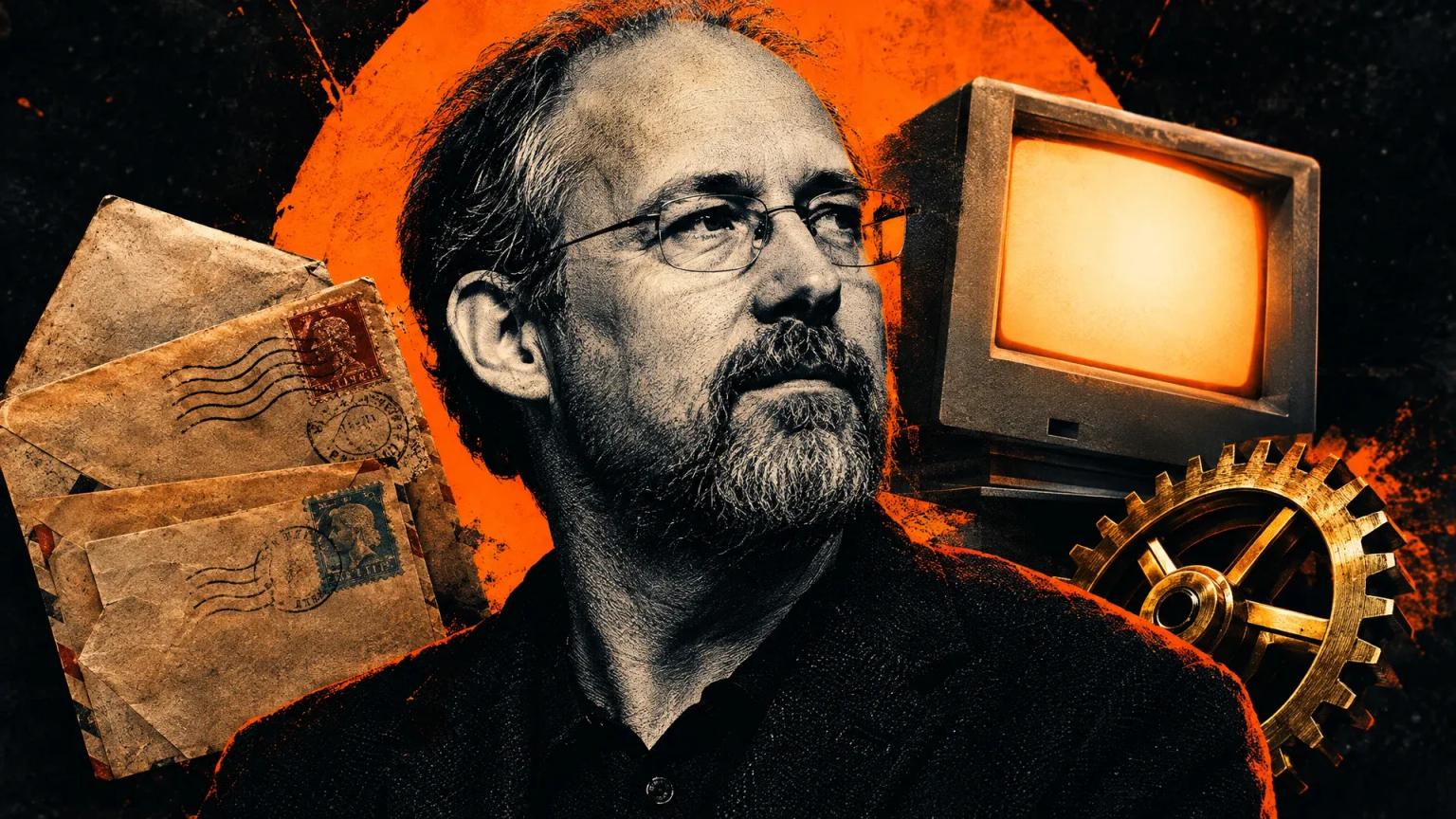
Adam Back: the inventor of Hashcash is cited in the bitcoin white paper and runs Blockstream
Adam Back invented Hashcash in 1997, the model for bitcoin mining, and founded Blockstream in 2014. This profile explains his invention, his company's products, the attack on Liquid and the Satoshi theory.

Which topics should we dive deeper into?
Select what genuinely interests you. Your picks feed directly into our editorial planning.
Crypto news that's actually worth your time.
Weekly. 60 seconds. Carefully curated by our editors: no hype, no promo flood, no spam.
Adam Back is the British cryptographer who in 1997 invented Hashcash, the computational method on which bitcoin mining still rests today. Satoshi Nakamoto cites him by name in the 2008 bitcoin white paper. Since 2014 Back has been building infrastructure for bitcoin with the company Blockstream: the Liquid sidechain, a satellite service and the Jade hardware wallet. In April 2026 he also moved to the center of the question of who Satoshi is. He denies it.
For investors, Back is more than a footnote in crypto history. Anyone buying bitcoin today relies on a security model whose core he described almost three decades ago. How to buy bitcoin and what providers charge is shown in our buy bitcoin comparison. This profile sets out what Back invented, what Blockstream does and what there is to the Satoshi theory.
Who is Adam Back? Cryptographer, cypherpunk and Blockstream chief
Adam Back comes from Britain and belongs to the generation of the cypherpunks. That was the name of a loose group of programmers and cryptographers in the 1990s who saw strong encryption as a tool for privacy and digital freedom and debated on a shared mailing list. Many of the ideas that later came together in bitcoin originated in this circle: digital signatures, anonymous electronic cash and, indeed, computational work as proof.
Blockstream lists Back on its company website as co-founder and CEO and describes him as the inventor of Hashcash, the proof-of-work algorithm that bitcoin uses. The company names Adam Back, Erik Svenson, Pieter Wuille and others as its founders, with 2014 as the year it was established.
| Year | Milestone in Adam Back's career |
|---|---|
| 1997 | Invents Hashcash as a tool against spam |
| 2002 | Paper "Hashcash – a denial of service counter-measure" |
| 2008 | The bitcoin white paper cites Hashcash as the model for proof of work |
| 2014 | Co-founds Blockstream |
| 2017 | Launch of Blockstream Satellite |
| 2018 | Launch of the Liquid Network sidechain |
| 2021 | Unveiling of the Jade hardware wallet |
| April 2026 | The New York Times names him as Satoshi Nakamoto; Back disputes it |
Hashcash in 1997: proof of work as a tool against spam
Hashcash is a method in which a sender has to perform a measurable amount of computational work before their message is accepted. According to the Hashcash project site, Adam Back invented Hashcash in 1997. The idea: a computer keeps searching for a number until the hash of a message begins with a certain number of zeros. That takes a moment. Verification by the recipient, by contrast, takes only a fraction of that time, because they recompute the hash once.
A hash function is a mathematical function that turns any data into a fixed-length checksum that cannot be reversed. According to the project site, Hashcash works with hash functions such as SHA-1 or SHA-256. For a single sender the effort is tiny. But anyone wanting to send millions of spam emails would have to solve millions of these puzzles. Computational work thus becomes a small postage stamp that spammers cannot afford.
Hashcash never caught on widely as a spam filter. The project site itself notes, however, where the method is used most today: as bitcoin's mining function.
The bitcoin white paper: Satoshi cites Adam Back at a key point
In the bitcoin white paper of October 2008, Satoshi Nakamoto describes how the network agrees on the order of transactions without a central authority. The decisive sentence in the section on proof of work reads: "To implement a distributed timestamp server on a peer-to-peer basis, we will need to use a proof-of-work system similar to Adam Back's Hashcash". In the list of references, Back's 2002 paper is source number six.
This passage is the reason Back appears in almost every history of bitcoin. Satoshi adopted the principle but changed its purpose: in bitcoin, the computational work protects not inboxes but the shared ledger. Anyone wanting to alter a confirmed transaction after the fact would have to redo all the computational work since that block and be faster than all honest miners combined.
Besides Back, the white paper names other forerunners, including Wei Dai with his b-money concept. The role the early pioneers played is also covered in our overview of the Satoshi suspects.
From the Hashcash stamp to bitcoin mining: what proof of work does today
Proof of work means exactly that: a participant proves, by solving a computational puzzle, that they have committed resources. In bitcoin these participants are called miners. Miners bundle new transactions into a block and search for a number that brings the block's double SHA-256 hash below a target value. Whoever finds it first may append the block and receives the block reward plus fees.
The difference from Hashcash lies in the difficulty. For a spam stamp, a puzzle that a laptop solves in seconds is enough. In bitcoin, the network adjusts the difficulty every 2,016 blocks so that a block is produced every ten minutes on average, no matter how much computing power is connected worldwide. This has given rise to an industry of its own, with specialized machines and large data centers.
For you as an investor, this means the security of your bitcoin is determined by the computing power of the entire network, not by any single company. This computational work also ensures that new bitcoin are created only on a fixed schedule. How many there are and how many are considered lost we calculated in our explainer How many bitcoin are there?.
 Buy bitcoin: compare providers and fees
Blockstream since 2014: sidechains, satellite and a hardware wallet
With Blockstream, Back founded a company that develops software and infrastructure around bitcoin. According to the company website, it offers several products that bitcoin users should know:
- Blockstream Satellite (since August 2017): The service broadcasts the bitcoin blockchain via satellite, so that a node can receive new blocks even without internet access. The second version has been running since May 2020.
- Liquid Network (since October 2018): A sidechain is a separate blockchain connected to bitcoin. You swap real bitcoin for so-called L-BTC and can move them there faster and more confidentially. The Tether stablecoin was added to Liquid in July 2019.
- Blockstream App (since March 2019): A software wallet for bitcoin and Liquid on smartphones.
- Jade (since January 2021): A hardware wallet that Blockstream describes as fully open source. Its successor, Jade Plus, came out in January 2025.
Liquid works differently from bitcoin itself. The real bitcoin backing L-BTC are held by a federation: a group of selected companies that jointly decide over the reserves by multisignature. That makes Liquid faster but requires trust in this group. How sensitive that point is became clear in the autumn of 2026.
Liquid Network: the September 6 attack and the return to full backing
On September 6, 2026, around 4,000 bitcoin, then worth about $320 million, flowed out of Liquid's federation wallet. We reported on it on September 7 in our article on the Liquid Network hack. According to Cointelegraph, the reserve had previously held around 4,200 bitcoin. The attackers described themselves as white hats and sent back 3,400 bitcoin on September 7, after Blockstream had secured the affected bridge nodes. They kept around 598 bitcoin.
Blockstream said on September 11 that it would not pay a ransom for the remaining coins, according to The Block. On November 3 the Liquid federation reported that the reserves were fully backed again, one to one for all L-BTC. The federation did not say where the missing roughly 600 bitcoin came from. Samson Mow, a member of the federation's board, named Blockstream as the source, according to The Block and Decrypt, paid in three tranches of 50, 300 and 250 bitcoin.
For sidechain users there is a lesson. Anyone who swaps bitcoin for L-BTC takes on an additional risk: that of the federation, its software and its bridge back to bitcoin. This time no damage was done because the attackers and the operators reached an agreement and Blockstream made up the rest. That is no guarantee for future cases.

The Satoshi theory: The New York Times versus Adam Back's denial
On April 8, 2026, The New York Times published an investigation by two-time Pulitzer Prize winner John Carreyrou. According to Decrypt, Carreyrou concluded after 18 months that Adam Back is Satoshi Nakamoto. He had compared up to 620 suspects on the basis of their writing from years of forum posts and emails. Quirks in spelling, errors and technical vocabulary reportedly pointed to Back. In addition there were conversations with Back himself, including in El Salvador.
Back contradicted it on X the same day. According to Decrypt, he wrote that he is not Satoshi and called the investigation a combination of coincidence and similar phrasing by people with similar experience and similar interests. He spoke of a degree of confirmation bias on the author's part. As early as 2020, Back had denied creating bitcoin in an interview with Bloomberg.
Only one thing is solid to this day: no one has presented cryptographic proof. Such proof would be, for example, a signature with a key from the first bitcoin blocks attributed to Satoshi. Style comparisons can provide clues but do not replace that proof. The question therefore remains open, and Back himself answers it in the negative.
 Store your own bitcoin: compare hardware wallets
What investors can take from Back's work: mining security, Liquid and self-custody
Back's work yields three practical points for bitcoin investors. First, proof of work secures the network: the more computing power is connected, the more expensive an attack on the blockchain becomes. That is one of the reasons bitcoin is considered particularly robust, and it is an argument that holds regardless of the price.
Second, Liquid shows that additional layers bring convenience and add risks. Anyone holding L-BTC should know that a federation stands behind it. For long-term investment, bitcoin on your own address is the simpler solution.
Third, Blockstream stands for the idea of self-custody: you hold your private keys yourself instead of leaving your coins with an exchange. A hardware wallet stores the key on a separate device that is not connected to the internet. Jade is one of several options. Which devices exist and how they differ is shown in our hardware wallet comparison.
Adam Back: the Hashcash of 1997 is in every bitcoin block
Satoshi or not, Back's contribution to bitcoin is written in the white paper and in every block that is found. If you want to draw something from it for your own investment, there are three steps:
- Buy bitcoin from a vetted provider: fees, spreads and the licensing of providers are set out in our buy bitcoin comparison.
- Invest regularly instead of all at once: a savings plan spreads your entry over many prices. Which providers offer one and from what amount is shown in the bitcoin savings plan comparison.
- Hold your coins yourself: larger holdings belong on a hardware wallet whose keys only you know. You can find an overview of the devices in the hardware wallet comparison.
(As of November 14, 2026. This article is not investment advice. Prices and fee structures change; check the terms with the provider before you buy.)
Frequently asked questions about Adam Back
Partner links: some links on this page are partner links. If you become a customer through one of them, we may earn a commission at no extra cost to you. Selection, ratings and ranking are decided independently by our editorial team. Ethics and Independence · Ownership and Funding
Transparency note: This article was produced with the assistance of artificial intelligence and reviewed by our editorial team before publication. All figures and claims were checked against the primary sources linked in the text. The feature image was generated with AI.
For later? Save this article and find it again in your profile.
More on Bitcoin: All Bitcoin news at a glance
Related articles
- Will Bitcoin Go Back Up? Three Scenarios to Year-End: $70,000, $80,000 or $100,000
- Bitcoin whitepaper explained: what Satoshi Nakamoto described on nine pages in 2008
- Liquid Network closes the 602 BTC gap: L-BTC is fully backed again
- $6.34 Billion Buffer: Binance Promises a Full Proof of Reserves by Monday
- NEAR Protocol explained: how sharding and 2.5 percent staking work
Which topics should we dive deeper into?
Select what genuinely interests you. Your picks feed directly into our editorial planning.
Crypto news that's actually worth your time.
Weekly. 60 seconds. Carefully curated by our editors: no hype, no promo flood, no spam.

October 30, 2026 9:14 AM

How Much Would It Take to Bankrupt Binance? The $6 Billion Hack Explained
Binance lost $6.3 billion in the biggest crypto hack ever. How much would it take to bankrupt the exchange, and what does it mean for the crypto market?

October 22, 2026 1:36 PM

What is an issuer? Meaning, examples and issuer risk
Context: who the issuer is in the case of a share, an ETF, an ETN, a certificate, a stablecoin and a stock token, what MiCA and prospectus law understand by it, and what an issuer insolvency leaves of 10,000 euros. With tables and a worked example.

October 22, 2026 12:31 AM
What Is Bitcoin Mining? How It Works and When It Pays Off
Miners secure the Bitcoin network and earn 3.125 BTC per block. How proof of work functions, what an ASIC costs in electricity in Germany and at what power price mining breaks even.

October 11, 2026 4:35 PM
Satoshi's bitcoin: why 1.1 million coins could be frozen
Around 1.1 million bitcoin, worth a good $91 billion today, are attributed to Bitcoin's inventor Satoshi Nakamoto. A draft from Bitcoin developers would freeze them before a quantum computer can steal them. What lies behind BIP-361, what argues against it, and which addresses of yours would also be affected.
October 6, 2026 7:35 PM

CFTC Opens a 60-Day Consultation on Leveraged Crypto Trading: “The American People Deserve Clarity, Reliability and Consumer Protection”
The US futures regulator CFTC published a 109-page paper on leveraged crypto trading on October 5, 2026. It is a consultation with a 60-day comment period, not a finished rule, and for investors in Germany MiCA and the BaFin general administrative act remain decisive.
October 6, 2026 1:17 PM

Dogecoin price at $0.0948, no native staking in the protocol: what to watch on DOGE yield offers
Dogecoin was quoted at 0.084357 euros on Tuesday morning. Holders looking for a yield on their balance run into offers with the word staking in the name. The Dogecoin chain has no staking at all, and every one of those yields is a lending transaction with its own rules on liability and tax.
October 6, 2026 10:32 AM

FinCEN drops the reporting duty for withdrawals to private wallets: what matters now for European investors
The US anti-money-laundering agency FinCEN withdrew two proposals on October 5, 2026 covering the reporting duty for self-custodied wallets and for mixers. In the EU the development runs in exactly the opposite direction: proof of ownership from 1,000 euros today, a ban on anonymous accounts from July 2027.
September 30, 2026 5:03 PM
Bitget after the hack: withdrawals are back and the Protection Fund is above $300 million
Six days after the attack, Bitget is back with strong numbers: withdrawals for Bitcoin, Ether and USDT are running again, the Protection Fund was refilled two days ahead of its own deadline, and the proof of reserves shows 131 percent coverage.
September 25, 2026 4:20 AM
Crypto as a Down Payment for a German Mortgage: What Banks Require
Since April 2023 a house in Germany can no longer be paid for in Bitcoin; section 16a of the Money Laundering Act bans it outright. Your crypto holdings still work as a down payment, provided you take the route through the euro and prove the origin without gaps.
September 24, 2026 10:29 AM

Bank Closed Your Account Over Crypto: Your Rights and the Route to a Replacement Account
After a withdrawal from a crypto exchange, banks repeatedly end the banking relationship, usually without giving a reason. What the German Payment Accounts Act guarantees you anyway, which notice period applies, and in what order you approach the supervisor, arbitration and the courts.
September 16, 2026 1:28 PM
Crypto Withdrawal to Your Own Wallet: Ten Providers Checked, Three Will Not Let Your Coins Out
Seven of ten providers available in Germany offer a payout to a wallet address you control yourself; three do not. Our survey of September 16, 2026, shows how to spot the difference before you buy, and why the question matters right now.
September 7, 2026 7:17 PM
L-BTC Backing Explained: How Much Bitcoin Really Sits Behind the Liquid Network
After the peg-out of September 6, just 197 Bitcoin in reserve stand against 4,205 L-BTC issued, a backing ratio of 4.70 percent. Here is how to recalculate that number yourself from two public endpoints and what it means for your balance.
September 7, 2026 1:27 PM
Liquid Network: Around 4,000 Bitcoin Drained via a Peg-Out, and What L-BTC Holders Must Check Now
Around 4,000 Bitcoin drained out of the Liquid Network federation wallet on September 6, even though no key was stolen. The network is halted and redemption is blocked. Here is what you should check now as an L-BTC holder.
September 7, 2026 11:06 AM
Liquid Network Hack: $320 Million In Bitcoin Walked Out, And The Hacker Wants To Give It Back
Nearly 4,000 BTC left Liquid Network's federation wallet. The attacker says he is a white hat and is negotiating with Blockstream on-chain.
August 21, 2026 4:17 PM
Crypto Withdrawals to Your Own Wallet: Why Exchanges Demand Proof of Address Ownership Above €1,000
Above €1,000 your provider has to establish whether the destination address really belongs to you. Article 14(5) of the transfer of funds regulation, five permitted methods, and the reason a withdrawal stalls without this step.
August 10, 2026 9:15 PM
Selling Bitcoin at an ATM: Tax Rules in Austria
Selling bitcoin for cash at an ATM: when the 27.5 percent rate applies in Austria and which records you need to keep.
July 5, 2026 7:10 PM
Should Satoshi's Bitcoin Be Frozen? CZ's Quantum Warning Splits the Industry
Binance's CZ says Satoshi's 1.1M BTC should be frozen before quantum computers can steal it. Top developers and investors are deeply divided — here's why it matters.
March 29, 2026 2:07 PM
Is Ethereum a Good Store of Value?
Is Ethereum a reliable store of value? We analyze ETH price history, the "ultrasound money" narrative, and its long-term potential for 2026 and beyond.
February 5, 2026 5:29 AM

Jeffrey Epstein and the Bitcoin Conspiracy: Hidden Ties to the Digital Currency Initiative
New revelations explore the murky connections between Jeffrey Epstein and early Bitcoin development at the MIT Media Lab.
October 7, 2024 10:06 AM
Is Len Sassaman Satoshi Nakamoto? HBO Documentary Might Answer That TOMORROW
Will the mask fall off tomorrow and reveal the identity of Satoshi Nakamoto, or will it fuel more mystery? Here is what to expect...
September 26, 2024 2:31 PM

Shiba Inu Ecosystem Explosive Growth: Shibarium Fees Surge and SHIB Price Breaks Out
Shiba Inu ecosystem explosive growth: 2,190% jump in Shibarium fees and a 203% surge in trading volumes. Why this renewed interest in SHIB?
August 29, 2024 11:34 AM

Stacks Layer-2 Network Kicks Off Nakamoto Upgrade
Stacks, the Bitcoin layer-2 network, has started the Satoshi upgrade, which separates its block production schedule from Bitcoin's.
July 12, 2024 7:00 AM

Animoca Token Is LIVE: How To Buy MOCA On Bitget?
Here is how the new MOCA token, launched by Animoca Brands and Moca Network is set to revolutionize the Web3 landscape with its unique utilities.
May 9, 2024 2:57 PM

Who Is Satoshi Nakamoto? Candidates, Evidence and His Bitcoin Holdings
White paper, genesis block, last email: what is established about Bitcoin's inventor Satoshi Nakamoto, which candidates are named and how large his holdings really are.


More from CryptoTicker