
Binance MiCA License: Did Lagarde Personally Block Binance From the EU?
The WSJ says ECB chief Christine Lagarde asked Greece not to approve Binance's MiCA license. Here is what happened, and why the ECB had no formal say.




Which topics should we dive deeper into?
Select what genuinely interests you. Your picks feed directly into our editorial planning.
Crypto news that's actually worth your time.
Weekly. 60 seconds. Carefully curated by our editors: no hype, no promo flood, no spam.
What Did Lagarde Reportedly Do to Binance's MiCA License?
Binance filed for a MiCA license in Greece in January 2026. By early June the process was almost over the line. Greece's Hellenic Capital Market Commission had reviewed the application, was preparing to approve it, and notified ESMA of that intention.
Then, according to a Wall Street Journal report published on 18 September 2026, one phone call changed everything. A vice chair of the HCMC reportedly told Binance that ECB President Christine Lagarde had asked Greek Prime Minister Kyriakos Mitsotakis not to approve the application, and that the regulator could not proceed without his support. A week later the HCMC told Binance the license would not go ahead, and Binance withdrew its application on 24 June, one week before MiCA's licensing deadline for existing crypto firms.
The WSJ also reported that a senior Greek regulator told Binance that Lagarde wanted the decision delayed until ESMA takes over licensing decisions for crypto exchanges under a proposed EU reform that has not yet been adopted.
Why Would the ECB Care About Binance at All?
Two reasons, and neither is about Greece.
The first is stablecoins. Lagarde was reportedly concerned that Binance's scale as the world's largest crypto exchange could deepen the use of dollar-based stablecoins in Europe, undermining the digital euro project and euro-denominated alternatives. The framing in her public position has been the threat of "digital dollarisation" and a loss of monetary sovereignty when stablecoins are issued in foreign currencies.
The second is Binance's record. In 2023 Binance agreed to pay a $4.3 billion fine after pleading guilty to breaches of the US Bank Secrecy Act. Founder Changpeng Zhao served a four-month sentence in 2024 and was pardoned by Donald Trump in October 2025. The WSJ reported separately that ESMA privately advised national regulators to reject Binance's MiCA applications over its past compliance issues.
Does the ECB Have Any Power Over MiCA Licensing?
No, and that is the whole story.
Under MiCA, approval is granted by the financial regulator of an individual EU member state, and approval in one country gives the recipient a passport to operate across the entire bloc. The ECB does not formally authorize crypto-asset service providers. That responsibility sits with national authorities such as the HCMC.
As German crypto analyst Robin Klement put it on X, the ECB does not issue MiCA licenses at all, which raises serious questions about political influence over national supervisory authorities.
That is the part worth sitting with. If the report is accurate, a legally complete application was stopped by informal pressure rather than by the process MiCA was designed to run.

What Did the Failed License Actually Cost Binance?
Real users, immediately. MiCA's Article 143 allowed eligible firms operating under older national rules to continue only until 1 July 2026, or until regulators granted or refused authorization, whichever came first. When the transition period closed, Binance had no license, and its French entity halted spot, margin and futures trading, cutting off roughly 2 million users.
A Greek approval would have given Binance passport access to 450 million EU residents. Instead the largest exchange in the world is locked out of the single market it most wanted.
How Has Binance Responded to the Lagarde Report?
Carefully. "We will not comment on speculation," a Binance spokesperson said, adding that the exchange remains committed to operating on a long-term, compliant basis under MiCA. When it withdrew in June, Binance cited the status and timeline of the Greek process rather than any intervention, and did not mention Lagarde or the ECB.
Everyone else has gone quiet too. The account has not been publicly confirmed by Lagarde, the ECB or the Greek regulator. An HCMC spokesperson said its officials did not make the comments attributed to them and that the application was assessed independently, while an adviser to Greece's finance minister said the government played no role.
What Happens Next for Binance in Europe?
Binance says it will seek authorization in another EU jurisdiction. The problem is that the alleged playbook works anywhere: if a central bank president can informally lean on one national regulator, the passporting model that makes MiCA attractive also makes it a single point of political failure. Binance has to find a member state willing to approve an application that ESMA has reportedly advised against, while the proposed shift of supervisory power to ESMA itself keeps advancing.
Related articles
- Binance EU Access at Risk: What MiCA Could Mean for BNB and Crypto Users
- ECB Prepares for Potential Digital Euro Launch Amid Trump’s Crypto Revolution
- Binance Anticipates Delisting Stablecoins Due to Upcoming MiCA Regulation
- Digital Euro Holding Limit: What the Planned Cap Means for Your Account and Your Crypto
- MiCA Wiped Out 92% of Europe's Crypto Firms: Here's Who Survived and Who's Cashing In
Which topics should we dive deeper into?
Select what genuinely interests you. Your picks feed directly into our editorial planning.
Crypto news that's actually worth your time.
Weekly. 60 seconds. Carefully curated by our editors: no hype, no promo flood, no spam.

July 21, 2024 6:37 PM

MAJOR Ripple News: How Will These Developments Impact XRP Price?
New developments involving Ripple could have a huge impact on XRP price. What are they and how will XRP price react to this?

September 17, 2026 10:11 AM

Digital Euro: the ECB Opens Its Pilot Project, Two Dates in October 2026
The ECB is looking for merchants for its digital euro pilot project and is inviting anyone interested to an information session on October 6, 2026, consumers included. Both dates appear only on the English version of the ECB page.
October 8, 2026 10:14 PM

ESMA stablecoin deadline of January 8, 2027: what you can do with USDT now
ESMA decided on October 8, 2026 that authorised EU platforms should no longer offer services for stablecoins that do not comply with MiCA. For USDT, only selling, swapping, transferring and withdrawing remain until January 8, 2027.

June 30, 2026 11:20 PM

How to Switch from Binance to a MiCA Regulated Crypto Exchange
Binance is winding down EU services after missing the MiCA deadline. Here's why it's happening and how to move your funds to a regulated platform safely.
June 25, 2026 11:19 AM
Binance Pulls Its EU Licence Bid: What It Means for Your Crypto
Binance just withdrew its MiCA licence application in Greece days before the EU deadline. Here's what it means for users, your funds, and the crypto market.
July 10, 2026 10:30 AM
Binance Reveals Where Its EU Users Went After MiCA
Binance just revealed where most departing EU users moved their crypto after MiCA — and the answer is raising hard questions about the new rulebook.
July 2, 2026 8:59 PM
Binance Is Out of the EU: How to Move to a MiCA-Regulated Exchange
Binance has left the EU market. Which exchanges hold a MiCA licence, how to verify an authorisation is real, and how to move your holdings across step by step.
August 6, 2026 3:05 PM
MiCA Register 2026: Only 21 of 329 Licences Are Real Exchanges
ESMA publishes the register of MiCA-authorised providers as an open file. We worked through all of it — and the result is not what the phrase “licensed crypto exchange” suggests.
October 2, 2026 10:28 PM

GENIUS Act stablecoin rules: what applies today and what stays open until 2027
The GENIUS Act creates the US framework for payment stablecoins. Which proposals are already on the table, why the OCC matters and what stays open until January 2027.
July 6, 2026 11:17 AM
XRP Just Got a Massive EU Green Light — But There's a Catch Nobody's Talking About
Ripple scored preliminary MiCA approval to run crypto services across all 30 EEA countries — and $XRP is up ~8% this week. Here's what it really means.
March 22, 2026 8:26 PM

The Silent Takeover: How Stablecoins Are Becoming the New Global Dollar
Stablecoins are expanding globally as PayPal and US regulators push adoption. Are they becoming the new digital dollar system?
August 2, 2024 3:57 PM

SEC Retracts Token Security Classification in Major Crypto Victory
In a landmark decision, the SEC has withdrawn its attempt to classify popular tokens like Solana, Cardano, and Polygon as securities in its lawsuit against Binance.
August 19, 2026 7:17 PM

MiCA Register of Stablecoin Issuers: 23 Authorised Firms, 43 White Papers and Two Dead Links
The official ESMA register lists 23 authorised issuers of e-money tokens and 43 notified white papers. We called up every document address stored there ourselves and show where the record leads nowhere.
October 1, 2026 2:16 PM

Open USD is live but absent from the EU register: what matters now for investors in Europe
The dollar stablecoin Open USD launched on September 30, 2026, backed by Coinbase, Mastercard, Shopify, Stripe and Visa. On October 1, 2026 the token was not notified in the MiCA register, and that decides what you can do with it in Europe.

September 6, 2025 11:00 PM

CONF3RENCE 2025: Dortmund Hosted Germany’s Successful Crypto Event
CONF3RENCE 2025 in Dortmund doubled in size, featuring OKX, Bitvavo, Tangem, Strategy, Robinhood, and key discussions on MiCA.
May 15, 2025 6:24 PM
Mastercard and MoonPay Partnership: A Game-Changer for Stablecoins and Crypto Adoption
The new Mastercard and MoonPay partnership brings stablecoins into everyday transactions, unlocking massive potential for crypto adoption across 150 million merchants worldwide.
March 13, 2025 11:00 PM
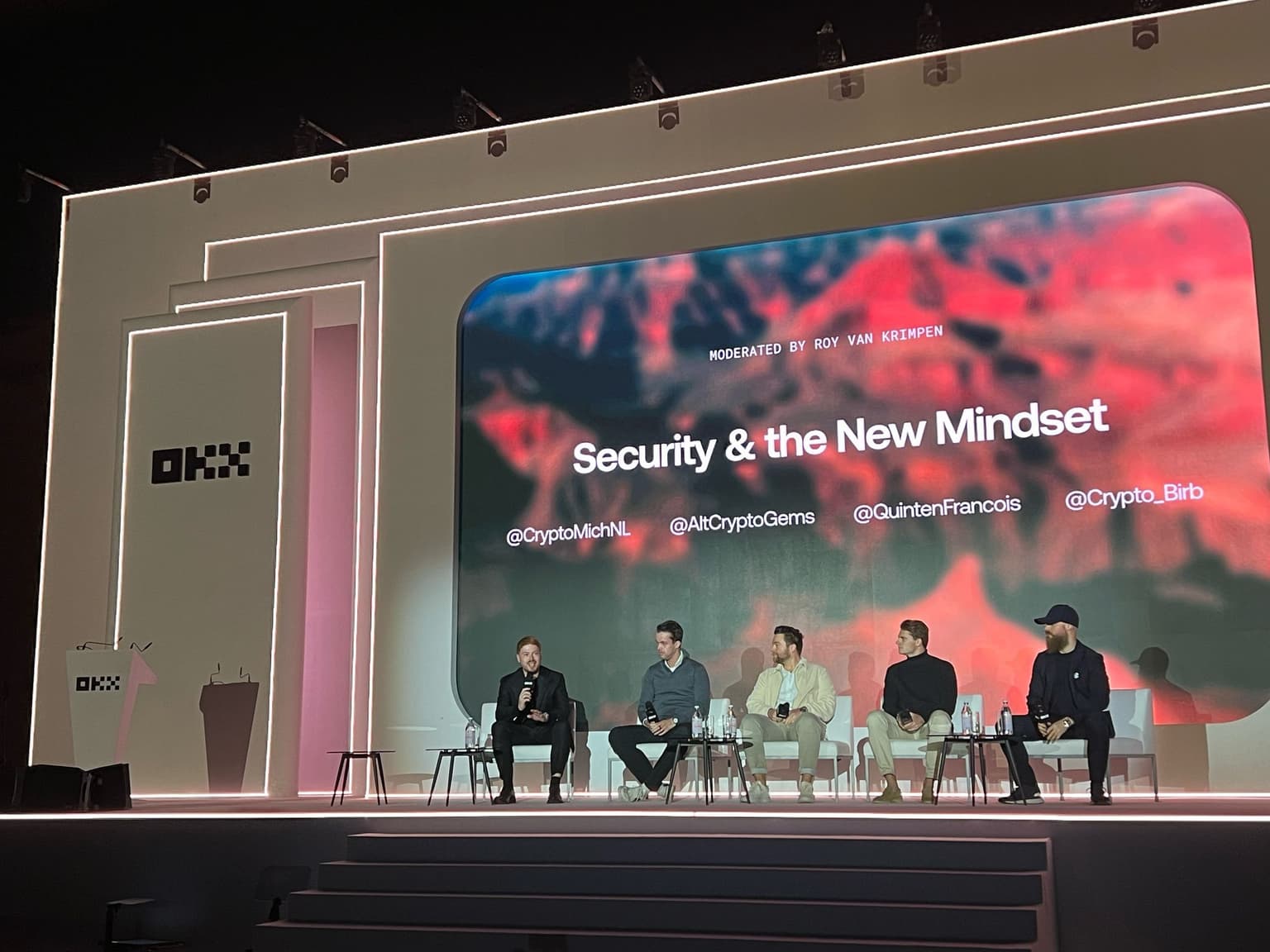
OKX Event in Malta: A New Contender for Crypto in Europe
OKX celebrated a major milestone at Fort Manoel in Malta, announcing its full MiCA and MIFID2 licenses and plans to expand compliant crypto trading across Europe.

November 30, 2023 7:30 AM

Binance Faces Trouble in the Philippines
Philippines SEC moves to block Binance for lacking a license, underscoring legal compliance in crypto trade.
November 21, 2023 11:55 AM

Binance to Pay $4B to end U.S Criminal Case
Discover how the U.S. Justice Dept's $4B case against Binance is reshaping the world of crypto regulation.

June 7, 2023 6:56 AM

Crypto On The Crosshairs: A Deep Dive Into The SEC’s Crackdown on Binance, Coinbase, and The Rebirth of FTX 2.0
Recently, a seismic shift has occurred as the SEC announced lawsuits against Binance and Coinbase, two titans of the crypto world.
March 28, 2023 6:21 AM

Binance and CEO Changpeng Zhao Hit with CFTC Charges for Operating Illegal Crypto Derivatives Platform
The Commodity Futures Trading Commission (CFTC) has announced a civil enforcement action against Binance and its CEO, Changpeng Zhao.
September 19, 2026 4:11 PM

MiCA Consultation Closes September 30: What to Check and Submit Before Then
The European Commission is reviewing the MiCA crypto regulation and will accept submissions until September 30, 2026 at 23:59 CEST. Staking, DeFi, lending, stablecoins and custody are all under examination, and you can take part without a lawyer.
August 20, 2026 10:24 PM

MiCA Review: What the European Commission Could Change About the EU Crypto Rules
The European Commission has reopened MiCA for review after barely two years and is asking 86 questions covering the stablecoin interest ban, staking, lending and DeFi. Brussels is taking responses until September 30, 2026.
August 19, 2026 4:14 AM

Digital Euro and Stablecoins: Why the Bank of England Is Testing Both Forms of Money in a Single Payment
In the Bank of England's Digital Pound Lab, a consortium around NOBO Finance, Dun & Bradstreet and Polygon has rehearsed how an exporter receives an advance in a stablecoin while the importer settles the final payment in digital central bank money. Why the difference between private and public money also matters for your stablecoin balance in Germany.
July 2, 2025 8:25 PM
Ripple Applies for U.S. Banking License – A New Era for Crypto?
Ripple just took a major step into traditional finance by applying for a U.S. banking license. Could this move redefine the stablecoin and crypto payments industry?
April 6, 2025 12:47 PM
Big Win for Crypto: SEC Says Dollar-Backed Stablecoins Are Not Securities
The U.S. SEC just made a game-changing move. Stablecoins backed by actual dollars and easily converted to cash are officially not securities. What does that mean for the crypto industry in the USA? Let’s break it down.
September 25, 2026 4:46 PM

Binance Funding Account Becomes Stocks Account: What to Check Before September 29
From September 29, 2026, Binance moves crypto balances out of the Funding Account into the Spot Account; in January 2027 the account is renamed Stocks Account. What to check beforehand, why an outdated app version hides your balance, and what happens to savings plans and API connections.
More from CryptoTicker