
ECB rate decision on October 29: what it means for your crypto portfolio
On October 29, 2026 the ECB Governing Council decides on euro area interest rates, a day after the US Federal Reserve. The deposit rate has stood at 2.50 percent since September 16, above the yield from Ethereum staking.




Which topics should we dive deeper into?
Select what genuinely interests you. Your picks feed directly into our editorial planning.
Crypto news that's actually worth your time.
Weekly. 60 seconds. Carefully curated by our editors: no hype, no promo flood, no spam.
On Thursday, October 29, 2026, the Governing Council of the European Central Bank decides on euro area interest rates. The decision falls on the second day of the meeting, after which ECB President Christine Lagarde steps in front of the press. For your crypto portfolio this ECB rate decision matters for a reason that has little to do with the price on the day: the risk-free rate in euros now sits above the yield Ethereum staking delivers. Hold crypto and from this autumn you are no longer comparing against zero but against 2.5 percent.
This piece sets the date in context: where the rates stand today, why the central bank raised them at all, what a further step would mean for the price, for staking yields and for leveraged positions, and which points can be settled calmly in the ten days before the meeting. You will not find price forecasts for October 29 here. Anyone telling you how Bitcoin reacts to a decision nobody yet knows is guessing.
The Governing Council of the European Central Bank meets on October 28 and 29
The meeting calendar of the European Central Bank lists October 28 as day one of the monetary policy meeting in Frankfurt and October 29 as day two, followed by the press conference. That is the usual sequence: deliberation starts on Wednesday, the decisions and their reasoning come on Thursday. The decision is published in the early afternoon Central European Time, with the press conference following a good half hour later.
What matters for planning is the date after it. The next monetary policy meeting of the Governing Council is not in the calendar until December 16 and 17, 2026. Whatever is decided on October 29 therefore holds for around seven weeks. There is normally no interim decision; the central bank departs from that only in severe market disruption.
Deposit rate 2.5 percent: where the policy rates have stood since September 16
The ECB steers the money market through three rates. The most important is the deposit facility rate, the rate banks receive for overnight deposits with the Eurosystem. Since the decision of September 10, 2026, effective from September 16, the central bank's official rate table carries these values:
- Deposit facility: 2.50 percent. The rate that overnight money and short-term euro deposits take their bearings from.
- Main refinancing operations: 2.65 percent. The rate at which banks borrow weekly against collateral.
- Marginal lending facility: 2.90 percent. The overnight credit rate, the ceiling of the corridor.
The path to those levels explains why the subject counts right now. In June 2025 the deposit rate stood at 2.00 percent, the trough of the easing cycle. On June 17, 2026 the ECB lifted it to 2.25 percent, and on September 16 to 2.50 percent. Two increases in one year, after years of falling rates: since the summer of 2026 the euro area has been in a tightening cycle again, not in a phase of cuts.
Inflation at 3.8 percent: the reason for September's rate step
Price developments supply the reasoning. On October 16 Eurostat confirmed the annual euro area inflation rate for September 2026 at 3.8 percent, after 3.2 percent in August. That is the highest reading since September 2023 and sits well above the two percent target the central bank has set itself.
The rise comes almost entirely from one direction. Energy grew 18.9 percent more expensive within a year and so accounted for the bulk of the jump; without that rise in energy prices the rate would sit close to target. Core inflation excluding energy, food, alcohol and tobacco, by contrast, edged up only slightly to 2.5 percent. For Germany, Eurostat reports 3.3 percent.
That breakdown is decisive for assessing the date. A central bank can treat inflation driven mostly by energy prices differently from inflation that has settled into wages and services. Energy prices act with a lag and can fall back just as quickly. Whether the Governing Council adds another step on October 29 or waits hangs on precisely that question.

Fed on the 28th, ECB on October 29: two rate decisions in 24 hours
The week carries a peculiarity that often gets lost in European calendars. The US Federal Reserve meets on October 27 and 28 according to its own meeting calendar, the ECB on October 28 and 29. About a day lies between the two decisions.
For the crypto market the order carries weight. The Fed decides first, and the crypto market trades in US dollars: Bitcoin dominance stood at 60.2 percent on October 19, with total market capitalisation at around $2.77 trillion. If a marked move runs through the market on the evening of October 28, it very probably originates in Washington rather than Frankfurt. The ECB decision lands the following day on a market that has already priced the Fed in.
In practice that means anyone planning an order or a savings plan execution around those days should reckon with two jolts rather than one. And anyone seeing a large move on Thursday should check first whether it has anything to do with the ECB at all.
 Compare staking yields against the ECB rate
ECB rate decision and crypto: the three channels the policy rate works through
The link between monetary policy and cryptocurrencies runs through three channels, and none of them is magic.
The price of money
A higher policy rate makes credit more expensive. Companies and households have less free money, and some of it would otherwise have flowed into risky assets. Crypto sits well down that order of preference, behind equities and bonds. It shows up in inflows from companies and funds, not in a single day's price.
The alternative without price risk
As long as overnight money paid nothing, holding Bitcoin cost no forgone interest. At a deposit rate of 2.50 percent that changes. Any asset delivering no running income now competes with a rate you receive without price risk. The same applies to Bitcoin and to gold. Specialists call it opportunity cost.
The euro-dollar exchange rate
If euro area rates rise faster than US rates, the euro tends to firm against the dollar. Bitcoin is quoted in US dollars. A firmer euro lowers the euro price of a coin even when the dollar quote does not move. On October 19 Bitcoin stood at around $82,700 and around €73,700; Ethereum at about $2,428 and €2,164. Count in euros, then, and you never see exactly the same move as an observer watching the dollar quote.
Staking yield against the risk-free rate: 2.20 against 2.50 percent
This is where the rate decision gets concrete for crypto investors. The yield from Ethereum staking currently sits below the ECB deposit rate. DefiLlama data show an annual yield of around 2.20 percent for Lido, the largest liquid staking provider, on roughly $23.4 billion of deposited capital, and around 1.98 percent for Rocket Pool. Our own measurement of October 18 came to 2.21 percent and set it against the ECB rate of 2.50 percent; the assessment is in our analysis of the staking yield below the ECB rate.
The comparison limps in one place by design, and that belongs in the picture. A staking yield accrues in ether and carries the cryptocurrency's full price risk, plus smart contract risk and, at some providers, a withdrawal period. The central bank's deposit rate, by contrast, is interest on euro balances. Two yields in two different currencies with two different risks cannot be set cleanly against each other.
Something shifts nonetheless. Hold ether solely for the staking yield and above a certain rate level the argument weakens. If the ECB raises again on October 29, that gap widens. Which platform pays out how much and which lock-up periods apply is shown in our comparison of staking platforms; a look at the actual net yield after fees pays off before any renewal.
Bitcoin on rate days: leverage and liquidation in a thin order book
Dates with a fixed time create a pattern of their own. Ahead of publication many traders pull their orders out of the book, because nobody wants to stand on the wrong side of a surprise. The order book thins out, and in a thin book the same order size moves the price further than usual.
For leveraged positions that is the dangerous part. A liquidation is the forced closing of a position when the margin no longer suffices. It is triggered by the brief spike in between, not by the closing price. Trade with leverage and you check the distance between the current price and your own liquidation price before days like these, then decide deliberately whether that buffer is enough for a rate decision.
Without leverage the subject is calmer. A spot holding survives a swing of a few percent without consequence, as long as you do not have to sell.

Euro balances, stablecoins and overnight deposits between the dates
A rising deposit rate also affects the money sitting on an exchange between two purchases. Three routes are open, and they differ in one point that is easily overlooked.
A euro balance in a German overnight deposit account earns interest, and the level follows the central bank's deposit rate at some remove. A euro balance on a crypto exchange as a rule earns nothing; it sits there ready as a means of payment. Euro stablecoins, in turn, are tokenised euro claims; the interest income from the backing reserves accrues to the issuer, not to the holder.
At a deposit rate near zero that difference was immaterial. At 2.50 percent, a larger balance sitting unremunerated on a trading platform for months costs noticeable money. Leave longer gaps between purchases and you move the part you do not need back to the bank account. Which venues offer a euro deposit without the detour through a stablecoin is set out in our crypto exchange comparison.
 Find an exchange with direct euro deposits
Analysts' expectations point to December, not to October
A rate decision cannot be predicted, but it is possible to show what professional observers reckon with. In its Kapitalmärkte Weekly of October 2, 2026, LBBW writes that it expects two further increases of 25 basis points each in the euro area by the end of the first quarter of 2027; the bank sees the peak at a deposit rate of 3.00 percent. It names the Governing Council's December meeting as the most likely date for the next step.
Against an increase as early as October 29 stands the composition of the inflation: the jump to 3.8 percent came from energy prices, while the core rate stayed comparatively calm at 2.5 percent. For it stands the fact that the headline rate sits as far above target as it last did in 2023, and that the central bank has already acted twice this year. Both readings are defensible, and the Council takes the decision with data that will be fresher on October 29 than it is today.
For your own planning, then, a different question is more useful than the one about the outcome: what changes in the portfolio if the deposit rate stays at 2.50 percent, and what if it rises to 2.75 percent? Think both cases through once beforehand and there is nothing to decide on the day.
Rate rise or rate cut: why both directions count for assets without interest
The effect of monetary policy on crypto fits into one sentence: rising rates raise the price of parking money in an asset with no running income, falling rates lower it. The crypto market shares that role with gold, which also pays no interest and whose course is routinely watched on rate days.
So for assets without interest a cut usually works in the opposite direction from a rise, and through the same mechanism. Financial markets trade the deviation from expectations, not the decision itself: a rate that comes in exactly as priced moves little. What counts is the tone of the reasoning, that is, whether the central bank signals further measures or hints at the end of the cycle.
For investors in Europe a second factor comes on top that does not apply in the United States. The rate decisions of the ECB and the Fed have not moved in step since 2026, and the gap between the two rate levels helps set the euro-dollar rate. Live in the EU and pay in euros, and you carry that exchange rate influence with every purchase, regardless of how the dollar quotes of the cryptocurrencies develop.
The position in the autumn of 2026 is therefore unusual: two large central banks are tightening at the same time, and the ECB deposit rate sits above the yield of the largest staking market for the first time in years. What effect that has on inflows into crypto products can only be measured credibly over several quarters, not on a decision day.
The US Federal Reserve moves the crypto market more than the ECB
A look at coverage over past years shows a stable pattern: European crypto media mostly pick up ECB rate decisions the day after, and the market reactions come out weaker than after Fed dates. There are two sober reasons for that.
First, the crypto market trades predominantly in US dollars and is moved by US capital. Second, the greater part of institutional demand flows through US products such as the spot ETFs. Fed monetary policy therefore acts more directly on liquidity and risk appetite in the crypto market than the ECB's does.
It does not follow that the ECB rate decision is irrelevant to you. It acts less through the daily price and more through your own arithmetic: through the interest on your euro account, through the yield your crypto holding has to deliver against it, and through the cost of a loan if you have one running. That effect is slower and more durable than any price swing on a Thursday afternoon.
The tax view before year-end belongs in the same planning
Two months lie between October 29 and the end of the year, and in exactly that window more is decided for German investors than on the rate date itself. Under current German tax law, gains from selling cryptocurrencies are tax-free as a private disposal after a holding period of one year; within the period the personal income tax rate applies, provided the exemption threshold is exceeded. What governs in each case is the acquisition date of the individual position.
Anyone wanting to shift part of a holding into euros because rates have risen therefore looks at the purchase date first, not at the price. A sale eleven months after the purchase can cost more than the same sale four weeks later, and no rate decision makes up for that. The evidence sits in the transaction data of your trading venues; tools that bring that data together we have set side by side in our comparison of tax tools. These lines do not replace tax advice.
ECB rate decision: ten days of lead time remain until October 29
The date is fixed, the decision is not. Three steps can be dealt with calmly in the days beforehand, and none of them calls for an opinion on how the meeting turns out.
- Set your holding's yield against the euro rate. Note what your staking or lending positions actually deliver after fees, and put the deposit rate of 2.50 percent beside it. What the platforms currently pay out and which lock-up periods apply is shown by the comparison of staking platforms.
- Go through the euro balance on the trading platform. Amounts you will not need over the coming weeks sit better in an interest-bearing account than unremunerated on the exchange. Which venues allow direct euro deposits and withdrawals is in the exchange comparison.
- Sort purchase dates and holding periods before you sell anything. For every position its own acquisition date counts. A portfolio tracker gives you that overview; the selection is in the comparison of tax tools and trackers.
On October 29 itself little then remains to be done: read the decision, add the reasoning from the press conference, and run your own arithmetic through once with the new rate. The next date is not until December 17.
(As of October 19, 2026. This article is not investment advice. Prices and fee structures change; check the terms with the provider before you buy.)
Frequently asked questions about the ECB rate decision
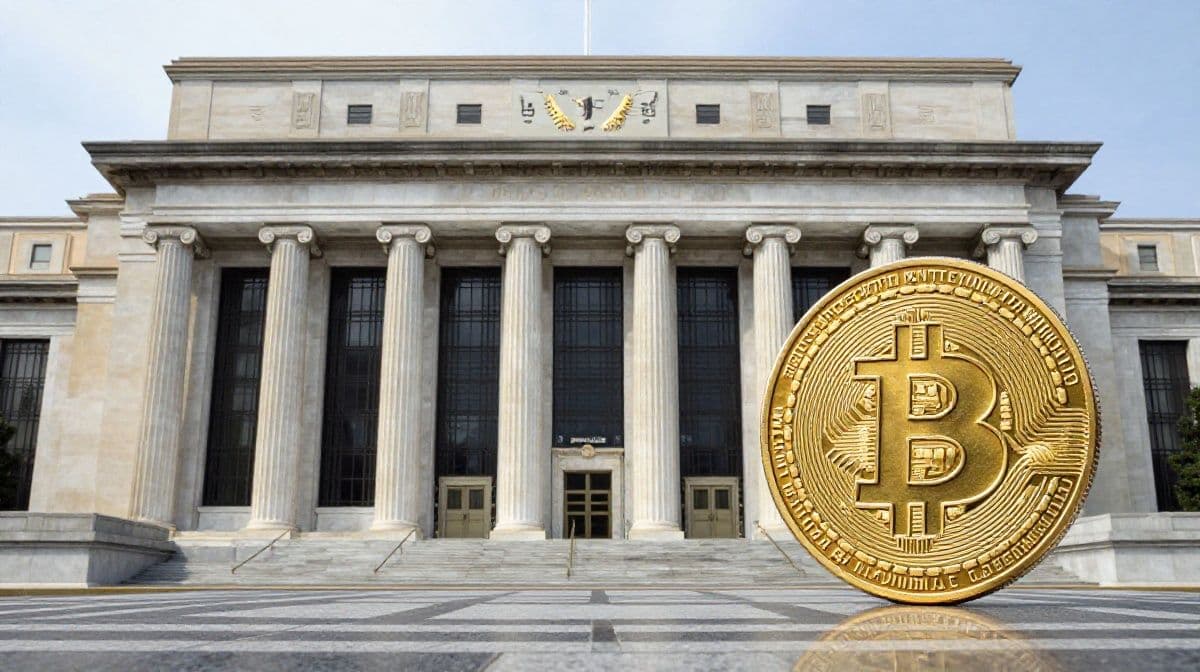
Transparency note: This article was produced with the assistance of artificial intelligence and reviewed by our editorial team before publication. All figures and claims were checked against the primary sources linked in the text. The feature image was generated with AI.
Related articles
- Crypto Price Today: Market Slides Again as Bitcoin Fails at $67,000
- Crypto Market Up: Bitcoin Breaches $71K, Altcoins Follow Suit, Eyes on New Highs
- US inflation rises to 3.7 percent, core rate above forecast: what matters now for Bitcoin
- Crypto Market DOWN As Bitcoin Price Slides, Ethereum Price Consolidates, And XRP Price Nears New Lows
- Oil Crashes 38% to a 3.5-Month Low — Why This Is Bullish for Crypto
Which topics should we dive deeper into?
Select what genuinely interests you. Your picks feed directly into our editorial planning.
Crypto news that's actually worth your time.
Weekly. 60 seconds. Carefully curated by our editors: no hype, no promo flood, no spam.

September 14, 2024 12:01 PM
Bitcoin Surges Past $60K: The Start of a Major Rally or Just Another Bull Trap?
Bitcoin has surged past $60,000, sparking optimism among investors. But with looming market volatility and whale activity, is this the start of a new rally or just another bull trap?
February 20, 2026 4:38 PM

Breaking: Supreme Court Strikes Down Trump Tariffs...Bad for Cryptos?
SCOTUS rules Trump’s IEEPA tariffs unconstitutional. A potential $175B refund could spark a massive liquidity surge for Bitcoin and global markets.
June 26, 2024 5:00 PM

Bitcoin Price Prediction: The Tenfold Surge SOON?
After the Fall, the Surge? Bitcoin's tenfold potential predicted by experts: Could Bitcoin surpass $100K?
November 11, 2025 10:25 AM

US Government Reopens After 41 Days – What It Means for Bitcoin, Crypto, and Global Markets
The US government reopens after a record 41-day shutdown. Rate cuts, QT ending, and new crypto laws could reshape markets—here’s what investors must know.
January 21, 2026 5:32 PM

EU–US Economic Conflict Sparks Sharp Crypto Market Sell-Off
Crypto markets sold off sharply as EU–US economic tensions escalated, triggering volatility across Bitcoin, Ethereum, and major altcoins.
October 8, 2026 4:38 AM

Crypto Market Slides: Bitcoin Loses 4.2 Percent and $651 Million of Long Bets Are Liquidated
Bitcoin has lost 4.2 percent since Tuesday afternoon, and ether and XRP more still. Three reasons can be documented: outflows from the US ETFs, $651 million of forcibly closed long bets and Fed minutes holding out the prospect of another rate rise. A crash it is not, and what to check before buying more is set out here.
March 3, 2025 6:01 AM

Bitcoin Price Prediction: BTC Price to Surpass $100K BEFORE or AFTER the Crypto Summit?
Minutes after Trump's crypto reserve announcement and less than a week to the Crypto Summit, the global crypto market triggered an over 11% in total market cap surge, but...
January 30, 2026 7:20 PM

Copper Price Slides as Gold and Silver Crash — What It Signals for Crypto and Markets
Copper prices are sliding as gold and silver suffer a historic selloff. What copper’s weakness reveals about growth, rates, and crypto.

April 29, 2026 11:33 AM
Fed Interest Rate Decision Today: How the FOMC Announcement Will Move Crypto
The Fed rate decision is today, April 29, 2026. Stay ahead of the market and see how Jerome Powell's final FOMC announcement affects Bitcoin and crypto prices.
January 25, 2026 3:00 PM

NY Fed Signals Yen Intervention: Why This Macro Shift Could Spark a Crypto Rally
The NY Fed is signaling a major shift by supporting the Japanese Yen. Why is this dollar devaluation the ultimate catalyst for Bitcoin price to go higher?
January 14, 2026 2:47 PM

Crypto Markets on Edge on 14 January 2026: US PPI Surprise Ahead of the Tariff Ruling
Hot US producer prices and a pending Supreme Court tariff ruling kept crypto on edge on 14 January 2026. The ruling came on 20 February, and the Fed later raised rates.
July 8, 2024 7:51 AM
Crypto Market Crash News As BTC Price Crash Back To 56K
With the crypto market crash, and Bitcoin price drop to below 56k with recent dormant BTC whales activity, what comes next: a correction or further crash soon?
July 27, 2024 2:34 PM

Why Is The Crypto Market Up TODAY?
With the Bitcoin 2024 Conference taking place now in Nashville, the crypto market is showing bullish signals, intriguing traders around the future of Bitcoin and Altcoins.
October 14, 2026 7:24 PM

Bitcoin below $82,000, Ether below $2,500: Will the $81,000 level hold?
The crypto market has lost 4.50 percent within 24 hours, with Bitcoin at $81,712 and Ether at $2,420. The US price report on Wednesday came in above forecast and turns rate expectations, while leverage on the futures market has largely been worked off. This piece sorts out both: prices, liquidations and ETF flows are sourced and linked, and the assessment at the end is the newsroom's own view.
April 16, 2026 11:26 AM
Crypto News Today: Bitcoin Holds $74,000 as iShares Launches ETH Staking
Bitcoin eyes $75,000 while BlackRock's iShares partners with Coinbase for ETH staking. Explore the latest market shifts and SEC regulatory updates for April 2026.
February 23, 2026 4:46 PM

Crypto Market Watch: Volatility Returns as Trump’s Tariff Jolts Bitcoin Below $65,000
Bitcoin drops below $65,000 on Feb 23, 2026, as President Trump’s 15% tariff hike sparks market volatility. Discover the latest on BTC, ETH, and institutional moves.
September 17, 2026 12:32 PM

Trump Says Oil Will Tumble When the Iran War Ends: What That Would Mean for Crypto
Trump expects the Iran war to end after the midterms and oil to fall hard. Oil is near a four-month high instead. Here is why crypto should still care.
September 17, 2026 10:40 AM

Crypto News Today: Bitcoin Holds $76,000 After Fed Hike and CLARITY Act Collapse
The CLARITY Act died in the Senate, the Fed hiked for the first time since 2023, and Zcash ripped anyway. Here is the full crypto market update.
September 3, 2026 4:04 PM

Bitcoin Price Smashes Back Through $80,000: Here Is What Just Set It Off
Bitcoin price surged to $80,477 in a matter of hours after a dovish Fed signal crushed rate hike bets. Here is the chart and the real driver.
January 30, 2026 11:40 AM
New Fed Chair: Will It Be Kevin Warsh — and What Would That Mean for Crypto?
Markets brace for a new Fed Chair as Bitcoin drops below $82K. With Kevin Warsh leading the odds, what could his appointment mean for crypto?
September 24, 2026 10:11 PM

Bitcoin Price Prediction: What to Check on Levels, Holding Period and Leverage Before the October 28 Rate Decision
Bitcoin is trading at around $83,800, a third below its October 2025 high, while the sentiment index reads greed. Which dates, levels and deadlines over the coming weeks really decide your net gain, and which of them you steer yourself.
September 15, 2026 4:24 PM
Why Is Crypto Crashing Today? Bitcoin Slides to $76,000 as the CLARITY Act Vote Wobbles
Bitcoin slid to $76,000 and the entire top 20 turned red as CLARITY Act odds collapsed before today's Senate vote. Here is what is really driving it.
April 28, 2026 8:36 AM
Kevin Warsh for Fed Chair: Could the First "Bitcoin-Friendly" Chair End the Crypto Crashes?
Kevin Warsh’s nomination for Fed Chair marks a shift toward pro-crypto leadership. Can he break the historical trend of Bitcoin crashes during Fed transitions?
March 15, 2025 5:40 PM

Bitcoin Price Prediction March 2025 with FOMC and TRUMP in Play
Bitcoin price prediction for March 2025 is one to expect, ahead of the upcoming FOMC meeting and Trump's strategic crypto reserve. What to expect for BTC price?
May 15, 2026 9:47 AM

Top 10 Altcoins to Buy in May 2026 as Bitcoin Recovers
Here are the top 10 altcoins to buy in May 2026 as Bitcoin rebounds near $80K and market momentum shifts.


More from CryptoTicker