
What Is Bitcoin? Bitcoin Explained: Halving, Supply and How to Buy
Analysis: What Bitcoin is and how it works, explained simply with current figures on supply, halving and hash rate, plus how to buy, store and tax bitcoin and our view on the risks.

Which topics should we dive deeper into?
Select what genuinely interests you. Your picks feed directly into our editorial planning.
Crypto news that's actually worth your time.
Weekly. 60 seconds. Carefully curated by our editors: no hype, no promo flood, no spam.
Updated on 22 October 2026: fully rewritten with current figures on price, supply, halving and hash rate, plus buying, storing and taxing bitcoin. Corrected: the earlier version said Satoshi Nakamoto developed the currency in November 2008, but the white paper appeared on 31 October 2008 and the software in January 2009; it also gave the block reward as 12.5 bitcoin, which has been 3.125 bitcoin since the halving of 20 April 2024. An unsourced claim that most investors bought bitcoin with illicit money has been removed.
Bitcoin is a digital currency that works without a bank, government or central bank. Thousands of computers around the world keep a shared public ledger, the blockchain, that records every transfer, and so-called miners secure new entries with computing power. There will never be more than 21 million bitcoin, and about 20.1 million have already been issued. On 22 October 2026 one bitcoin cost about $84,040 (€74,800), according to CoinMarketCap, and you can buy small fractions of a coin for a few euros or dollars.
Bitcoin was invented by a person or group using the name Satoshi Nakamoto, and the network has been running since 3 January 2009. This guide explains bitcoin in plain terms: how the blockchain works, why the supply is capped, where to buy bitcoin, how to store it safely and when gains are tax-free in Germany. Our buy bitcoin comparison lines up providers and fees, and our Bitcoin price prediction collects scenarios for the price. The record shows that bitcoin has lost more than half its value seven times since 2011 and set new highs after each of the six earlier crashes; our own assessment of the risks follows further down, clearly labelled.
Bitcoin explained: The key facts at a glance
- Origin: Satoshi Nakamoto published the white paper on 31 October 2008, and the first block was mined on 3 January 2009.
- Supply: A maximum of 21 million bitcoin, of which about 20.1 million, or 95.7 percent, are in circulation (22 October 2026).
- Halving: The reward per block last fell to 3.125 bitcoin on 20 April 2024; the next halving is due around April 2028.
- Market value: About $1.69 trillion, number one among all cryptocurrencies with a 60 percent share of the total market (22 October 2026).
- Volatility: From its record close of $124,753 on 6 October 2025, the price fell 53.1 percent by 30 June 2026.
- Tax in Germany: Gains on bitcoin held for more than a year are tax-free (Section 23 of the Income Tax Act, as of October 2026).
Bitcoin in numbers: Key data for October 2026
The table shows bitcoin's key figures on 22 October 2026 at around midnight UTC. Price, market value and supply come from CoinMarketCap, network data from the block explorer mempool.space.
| Metric | Value on 22 Oct 2026 | What it means |
|---|---|---|
| Price | $84,042 (€74,804) | Price of one whole bitcoin |
| Market capitalisation | $1.69 trillion | Price times supply, number one of all cryptocurrencies |
| Circulating supply | 20.10 million of 21 million BTC | 95.7 percent has already been issued |
| Block height | 972,546 | Number of blocks since the launch in 2009 |
| Hash rate | about 1,055 exahashes per second | Computing effort an attacker would have to outpace |
| Block reward | 3.125 BTC | New bitcoin per block since 20 April 2024 |
| Next halving | Block 1,050,000 | Around 11 April 2028 at ten minutes per block |
 Compare where to buy Bitcoin
How does Bitcoin work? Blockchain, mining and keys explained
Bitcoin works like a ledger that is not kept by a bank but copied across thousands of computers known as nodes. Every transfer is broadcast to all nodes, checked and written into a block. Roughly every ten minutes a new block is added, and each block contains a digital fingerprint of the one before it. Anyone trying to forge an old entry would have to recompute every later block faster than the rest of the network.

Miners do this computing work. Specialised machines try trillions of random numbers per second until a block produces a check value below a set target. The method is called proof of work. Whoever finds a valid block first receives the block reward, currently 3.125 bitcoin, plus the fees of the transfers it contains. Every 2,016 blocks, roughly every two weeks, the network adjusts the difficulty so that the ten-minute rhythm holds; it last rose by 5.9 percent on 16 October 2026. Our guide What is Bitcoin mining? works out how much power this takes and when mining pays off.
Ownership of bitcoin rests on pairs of keys. Every bitcoin address has a private key, a long random number used to sign transfers. Whoever knows the key controls the balance; whoever loses it can never get it back. There is no bank to reset a password, and a transfer cannot be reversed once it sits in a block. The smallest unit is called a satoshi and equals 0.00000001 bitcoin, so even amounts of a few euros or dollars can be sent.
Who invented Bitcoin? Satoshi Nakamoto and the 2008 white paper
Bitcoin was invented by Satoshi Nakamoto, a pseudonym that may stand for one person or a group; who is behind it has never been proven. On 31 October 2008 Nakamoto presented the nine-page white paper "Bitcoin: A Peer-to-Peer Electronic Cash System" on a cryptography mailing list. The idea was electronic cash that two people can exchange directly, without a payment company in between.
At 18:15 UTC on 3 January 2009 the first block was created, the so-called genesis block. It carries a headline from The Times of the same day about a second bailout for the banks, a nod to the financial crisis in which bitcoin was born. On 8 January 2009 Nakamoto announced the first software release, version 0.1. At the end of 2010 Nakamoto withdrew from the public forums; since then volunteers and paid developers have maintained the open-source software, known as Bitcoin Core since 2014.
Bitcoin halving: Why there will never be more than 21 million bitcoin
The supply is fixed in the code: every 210,000 blocks, or about every four years, the reward for new blocks is cut in half. This halving makes the number of new bitcoin grow ever more slowly until the last satoshi is issued around the year 2140. On 22 October 2026 just under 900,000 bitcoin remained to be mined before the cap. The most recent halving took place at block 840,000 on 20 April 2024.
| Event | Date | Block | New bitcoin per block |
|---|---|---|---|
| Launch (genesis block) | 3 January 2009 | 0 | 50 |
| 1st halving | 28 November 2012 | 210,000 | 25 |
| 2nd halving | 9 July 2016 | 420,000 | 12.5 |
| 3rd halving | 11 May 2020 | 630,000 | 6.25 |
| 4th halving | 20 April 2024 | 840,000 | 3.125 |
| 5th halving (expected) | around April 2028 | 1,050,000 | 1.5625 |
The date of the next halving is an estimate, not a fixed appointment: from block 972,546 there are 77,454 blocks to go until block 1,050,000. At exactly ten minutes per block that would be reached around 11 April 2028. Because blocks have recently arrived every nine and a half minutes on average, it could come a few weeks earlier. The halving cuts new supply; it does not set demand.
How to buy Bitcoin: Exchange, broker or ETF
The simplest way to buy bitcoin is through a crypto exchange or broker. In the European Union these providers need a licence under the MiCA regulation. Signing up usually takes a few minutes but requires an ID document, because providers must follow anti-money-laundering rules. Fees, payment methods and minimum amounts differ widely; our overview of the best crypto exchanges sets them side by side and shows how many coins each platform lists. Which providers hold a MiCA licence is shown in our comparison of regulated crypto exchanges.
If you want to invest small amounts regularly, a bitcoin savings plan can start from a few euros a month. You can also get exposure without a wallet through a brokerage account: spot bitcoin ETFs have traded in the United States since 11 January 2024, after the US Securities and Exchange Commission approved them on 10 January 2024. Retail investors in Germany usually turn to exchange-traded notes on bitcoin instead. How these funds are built and what they cost is covered in our guide Bitcoin ETFs explained.
How to store Bitcoin safely: Exchange or your own wallet
After you buy, your bitcoin first sits with the exchange, which manages the private keys for you. That is convenient, but you are trusting the provider. The collapses of Mt.Gox in February 2014 and FTX in November 2022, when customers could not reach their funds for years, showed how costly that can be. Many investors therefore keep larger amounts in a wallet of their own.

A software wallet is an app on your phone or computer, free and quick to set up; our overview of software wallets compares the options. A hardware wallet stores the private key on a separate device that never connects to the internet directly; models and prices are listed in our hardware wallet comparison. Both types give you a recovery phrase of 12 or 24 words. It replaces the device in an emergency and belongs on paper or metal, never in a cloud drive, an email or a photo.
Paying with Bitcoin and accepting Bitcoin in your business
Paying with bitcoin works with a QR code: the recipient shows their address and the amount as a code, and the payer scans it with a wallet and confirms. On the blockchain itself the first confirmation takes ten minutes on average, and the fee depends on how busy the network is. On 22 October 2026, according to mempool.space, 5 satoshis per virtual byte were enough for the next block, so a simple transfer of about 140 bytes cost roughly 700 satoshis, or $0.59. For small everyday amounts there is the Lightning Network, which settles payments in seconds for a fraction of a cent.
A shop that wants to accept bitcoin needs three things: a wallet or a payment provider, a till or app that creates a QR code with the right amount for every purchase, and a visible sign for customers. Payment providers can convert incoming bitcoin into euros or dollars straight away, so price moves between sale and settlement do not matter. For bookkeeping, the sale remains ordinary revenue in your home currency, and you record the exchange rate at the time of payment.
Bitcoin tax in Germany: Holding period and reform status
In Germany, gains on bitcoin held privately are tax-free if more than a year passes between purchase and sale. This is set out in Section 23 of the Income Tax Act on private sales. If you sell earlier, the gain is taxed at your personal rate, unless all your private sale gains in a year stay below the exemption limit of €1,000. Swapping bitcoin for another cryptocurrency also counts as a sale.
A draft bill from the Federal Ministry of Finance dated 30 September 2026 would abolish the one-year period for coins acquired from 1 January 2027. It has not been adopted: the federal cabinet did not approve it on 14 October 2026, and no new date is known. We track the latest status in our article on the crypto holding period reform. The CryptoTicker tax calculator works out your gains and the tax due; it does not replace individual tax advice.
Bitcoin risks: Price swings, total loss and scams
The bitcoin price swings more than shares or gold. On 6 October 2025 bitcoin closed at $124,753, its highest daily close so far. By 30 June 2026 the price had fallen to $58,559, a drop of 53.1 percent; on 22 October 2026 it stood about 33 percent below the record. Bitcoin has fallen more than 50 percent seven times since 2011, and the deepest crash, in 2011, cost about 93 percent.
There are also risks that have nothing to do with the price: a lost key, a transfer to the wrong address that cannot be recalled, and scammers who use invented returns or fake support messages to get hold of recovery phrases. Unlike a bank account, bitcoin has no deposit insurance.
Our assessment: After almost 18 years of operation, with spot ETFs in the United States and a hash rate above 1,000 exahashes per second, bitcoin is no longer an experiment. That does not make it a safe asset. The 53.1 percent fall to June 2026 shows that even a mature market can lose half its value, and after the major crashes it has so far taken up to just over three years to go from one record to the next. Only invest money you can do without for a long time, and be prepared for a total loss.
Bitcoin since 2009: A scarce network with big price swings
Bitcoin is a capped digital currency with fixed rules: 21 million units, one block every ten minutes, a halving every four years, the next around April 2028. For investors in Germany three points matter: a provider with a MiCA licence, control of your own keys and the one-year holding period for as long as it applies. The price does not change the rules: even after the next halving the cap stays at 21 million bitcoin.
(As of 22 October 2026. This article is not investment advice. Prices and fee structures change; check the terms with the provider before you buy.)
 Compare crypto exchanges and fees
Frequently asked questions about Bitcoin
Transparency note: This article was produced with the assistance of artificial intelligence and reviewed by our editorial team before publication. All figures and claims were checked against the primary sources linked in the text. The feature image was generated with AI.
More on Bitcoin: All Bitcoin news at a glance
Related articles
- What is Bittensor (TAO)? A market for AI computing power with 21 million tokens
- With just 0.3 bitcoin you could be a millionaire in future: we do the maths
- Bitcoin halving explained: at block 1,050,000 the reward drops to 1.5625 BTC
- Will Bitcoin Go Back Up? Three Scenarios to Year-End: $70,000, $80,000 or $100,000
- HODL Meaning: A 2013 Typo and a 146-Fold Bitcoin Gain Since
Which topics should we dive deeper into?
Select what genuinely interests you. Your picks feed directly into our editorial planning.
Crypto news that's actually worth your time.
Weekly. 60 seconds. Carefully curated by our editors: no hype, no promo flood, no spam.

November 6, 2026 1:20 PM
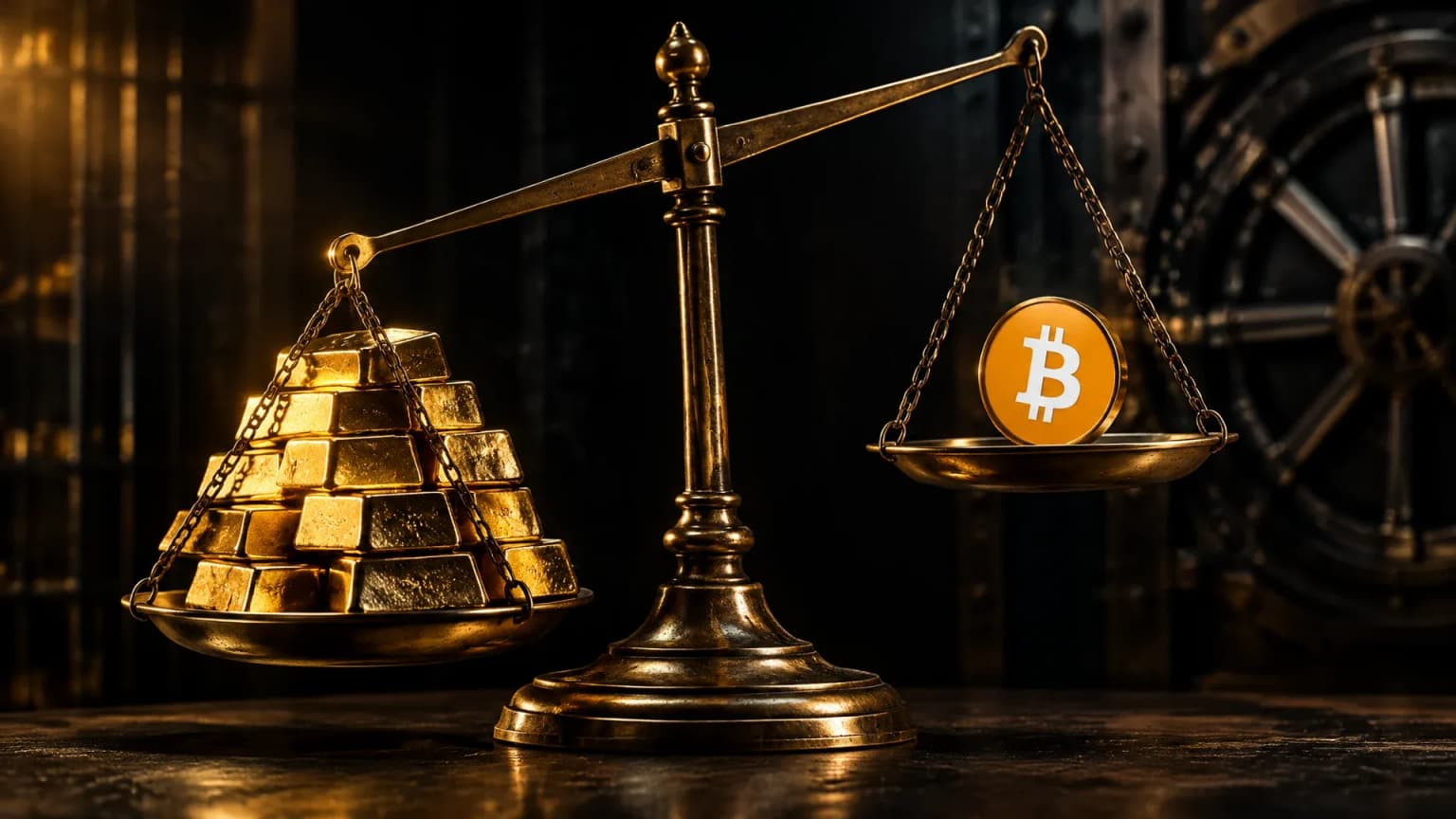
Crypto market cap explained: Bitcoin vs gold and Apple
Market capitalization shows how large a coin is valued in the market and exposes the fallacy of cheap unit prices. We explain the formula, Bitcoin dominance and FDV with current figures and show why Bitcoin, at $1.53 trillion, trails far behind gold.
November 6, 2026 5:32 AM

Bear market: what it means, how long it lasts and where stocks and Bitcoin stand in 2026
Bitcoin has been in a bear market since November 2025, and the Nasdaq 100 is closing in on the threshold. What a bear market is, how long it lasts on average, how to spot its end and what you can do now, worked out from 27 S&P 500 bear markets since 1928.
November 5, 2026 5:36 PM
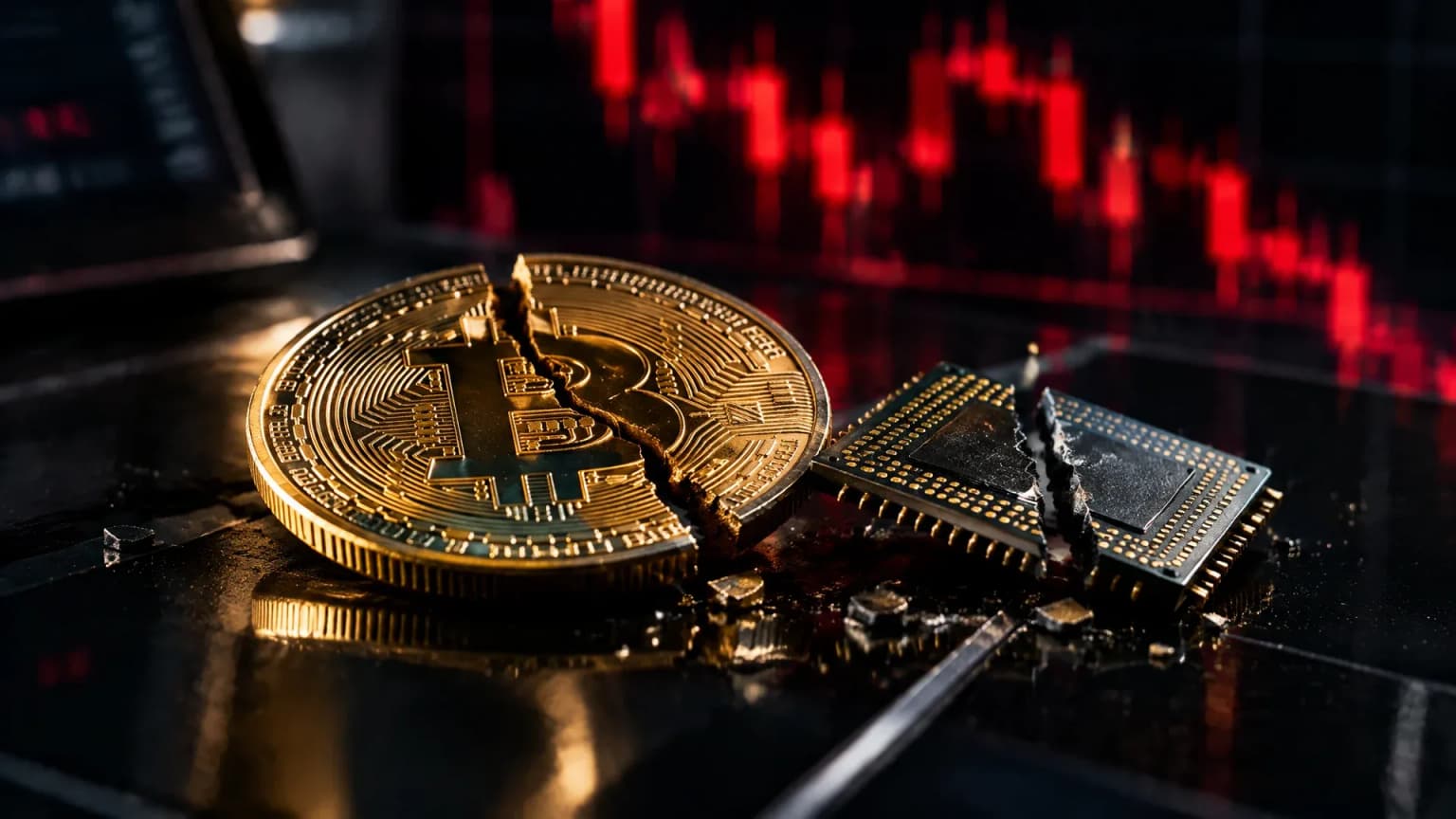
Bitcoin Crash: Why BTC Fell to $75,568, How Low It Could Go and How to Hedge
Bitcoin (BTC) lost more than $5,000 in under a day as a Nasdaq chip rout wiped out leveraged longs. The reasons, the levels that count now, what 23 earlier 5 percent days show, and how to earn and hedge in this market.
November 4, 2026 1:19 PM

What is XRP? 100 billion coins, one ledger and the role of Ripple
XRP is the cryptocurrency of the XRP Ledger, built for payments in seconds and without mining. This profile explains Ripple, escrow, the SEC case and what to watch for when buying in Germany.
November 3, 2026 11:35 PM
Bitcoin whitepaper explained: what Satoshi Nakamoto described on nine pages in 2008
On October 31, 2008, Satoshi Nakamoto published nine pages on which every bitcoin still rests today. We go through the Bitcoin whitepaper section by section and show what it says and what was only added later.
November 2, 2026 5:52 PM
What is Hedera (HBAR)? Hashgraph, the corporate council and what HBAR is used for
Hedera orders transactions with a hashgraph method instead of blocks, and the network is governed by a council of 33 companies. This profile explains the technology, HBAR supply, fees and the tax rules that apply in Germany.
October 29, 2026 9:49 PM
Is This the End? How Low Bitcoin Could Fall After the Binance Hack
About $2.8 billion left a Binance hot wallet and Bitcoin slid below $79,000. Whether this turns into a real crash depends on one question. Three scenarios, the key price levels for Bitcoin, Ethereum and Solana and what to do now.
October 27, 2026 3:16 AM
Buying Bitcoin under 18 in Germany: what parents and exchanges can do
Under 18 there is no account of your own at the large crypto exchanges in Germany, and a purchase without parental consent stays provisionally invalid. This guide shows what the pocket-money rule covers, how a gift to a child works and who pays the tax in the end.

October 26, 2026 12:00 PM
Bitcoin Wallet Bug: Why Speeding Up a Payment Could Drain Your Wallet
A Bitcoin wallet bug let rogue servers swap a real payment for a fake one and trick users into signing it. How the fee bump trap works and how to stay safe.
October 26, 2026 3:16 AM
What is Chainlink? Oracles, the LINK token and why banks use the network
Chainlink gives smart contracts the data a blockchain cannot see on its own. What the oracle network does, what the LINK token is paid for and what applies when you buy in Germany.
October 25, 2026 3:28 AM

Hard fork or soft fork: what happens to your coins in a split?
A hard fork can split a blockchain in two, and you then hold the same number of coins on each side. A soft fork changes nothing in your wallet. How to tell the two apart, and what the German finance ministry has settled on the holding period for the new coins.
October 24, 2026 10:14 PM
159,000 Blocks to the Next Litecoin Halving: Reward Drops to 3.125 LTC
The next Litecoin halving cuts the block reward from 6.25 to 3.125 LTC. It is triggered by block 3,360,000, and on October 24, 2026 roughly 159,000 blocks were still missing.
October 23, 2026 4:21 AM
What is Solana? The blockchain behind SOL: no supply cap, 589 million tokens in circulation
Solana settles payments in milliseconds and swapped out its voting mechanism on October 21, 2026. What the network is, what SOL is needed for, and what applies in Germany for buying, custody and tax.
October 22, 2026 1:45 PM
Cryptocurrency explained: how digital money works without a bank
A cryptocurrency is an entry in a public ledger that neither a bank nor a central bank controls on its own. This piece explains how that ledger works, what separates Bitcoin from the euro, and which rules apply in Germany to buying, custody and tax.

October 22, 2026 1:26 PM
381 days after the high: why the Bitcoin cycle is running differently this time
Context: the last three cycle highs came 526, 548 and 534 days after the respective halving, and the high of October 2025 fits that series exactly. What no longer fits is the depth of the fall: at 33 percent below the record, Bitcoin stands markedly better on the same cycle day than in the three cycles before, where it was 72 to 80 percent.
October 22, 2026 12:31 AM
What Is Bitcoin Mining? How It Works and When It Pays Off
Miners secure the Bitcoin network and earn 3.125 BTC per block. How proof of work functions, what an ASIC costs in electricity in Germany and at what power price mining breaks even.
October 15, 2026 4:32 AM
Which cryptocurrency to buy? Five criteria that matter before the coin
22,260 cryptocurrencies are on sale across 1,504 trading venues, and most guides start with the name. We reverse the order and set out the five criteria, from market capitalisation to the holding period, that come before the coin.
October 12, 2026 10:27 AM
Is Bitcoin Still a Good Investment in October 2026?
Spot ETFs have changed who sets the Bitcoin price, and the easy repricing is behind us. What still supports BTC, what could break it, and how much belongs in a portfolio today.
October 11, 2026 10:20 PM

QNT token: a £100 Overledger licence a year, 14.88 million supply cap
The QNT token pays the annual licence for Overledger and is to carry the fee for gas and execution in the Fusion Rollup. What it does, where the cap sits and why circulating supply differs by 2.47 million tokens depending on the source.

October 11, 2026 4:35 PM
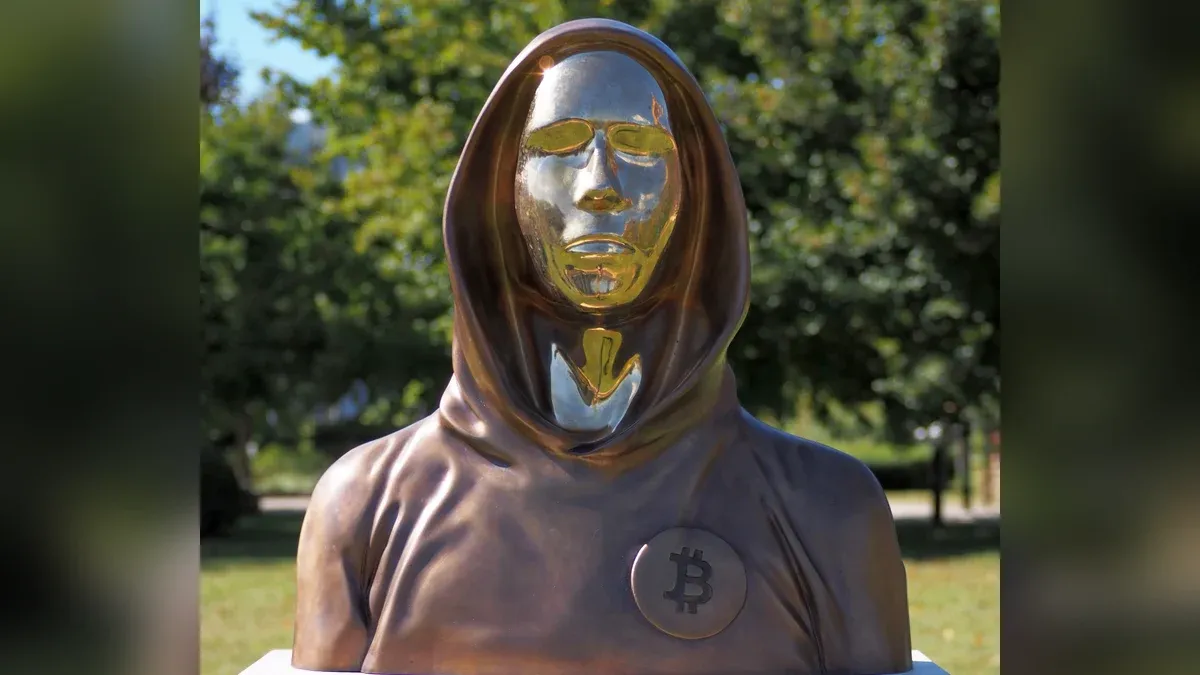
Satoshi's bitcoin: why 1.1 million coins could be frozen
Around 1.1 million bitcoin, worth a good $91 billion today, are attributed to Bitcoin's inventor Satoshi Nakamoto. A draft from Bitcoin developers would freeze them before a quantum computer can steal them. What lies behind BIP-361, what argues against it, and which addresses of yours would also be affected.
October 11, 2026 4:50 AM
90 Crypto Kidnappings and Robberies in 7 Months: Why France Is the Most Dangerous Country for Bitcoin Holders
France logged 90 crypto kidnappings, extortions and violent thefts this year, one every 2.5 days. Leaked tax data is to blame. Here is how to protect yourself.
October 9, 2026 5:36 PM
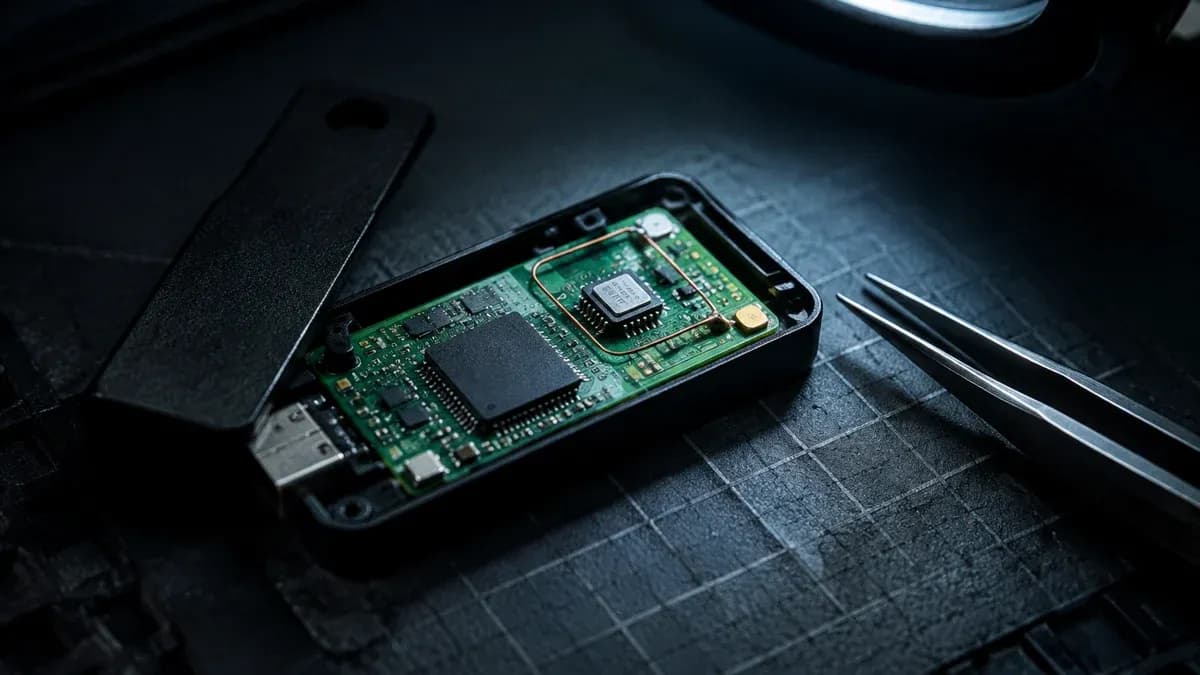
Ledger Hack? $86 Million Drained: What Is Behind the Tampered Wallets From Southeast Asia
Since Friday, Ledger users in Southeast Asia have been reporting empty wallets, and analysts count more than $86 million. Ledger has halted the reseller CryptoBilis. An implant inside the device reportedly reads the seed phrase. What is known, what CZ advises and what you should do now.
October 6, 2026 4:32 AM
Bitcoin for a gift card: what paying with crypto means for your holding period
Paying for a gift card with Bitcoin is a sale for tax purposes. What counts as the disposal proceeds, when the twelve-month holding period bites, and the four records the tax office expects.
October 5, 2026 10:32 AM
Joint bitcoin wallet: who owns the coins for tax purposes?
Bitcoin on a joint marital wallet: for tax purposes it is not access to the wallet alone that decides, but who the coins are economically attributable to.
September 11, 2026 10:18 AM

Bitcoin Tax Audit: What Proof Austria Requires
Which bitcoin records can the Austrian tax office examine? Purchase dates, wallet transfers, acquisition costs and sale proceeds are what count.

More from CryptoTicker