
BNB zero fees for USDC and USD1 until October 31: what changes for investors in Germany
On the BNB Smart Chain, withdrawals and wallet transfers in USDC, USD1 and U cost no gas until October 31. The 37th auto-burn is also due, and total supply still sits 33.16 million tokens above the target of 100 million.




Which topics should we dive deeper into?
Select what genuinely interests you. Your picks feed directly into our editorial planning.
Crypto news that's actually worth your time.
Weekly. 60 seconds. Carefully curated by our editors: no hype, no promo flood, no spam.
Moving stablecoins across the BNB Smart Chain currently costs no gas. That exemption ends on October 31, 2026 at 23:59 UTC. After that the normal network fees apply again. The price of BNB stands at $742.83, 5.15 percent lower than a week ago.
The operator calls the campaign the "0 Fee Carnival" and has already extended it several times. It covers three stablecoins, seven trading venues and two bridge providers. For investors in Germany this is less a question of price than of cost: anyone who already planned to pull a balance off an exchange and onto an address of their own has a good two weeks left in a window without transfer fees.
Zero fees on BNB Chain: what runs without gas until October 31
According to the BNB Chain announcement, the campaign covers three tokens: USDC, USD1 and U. Three kinds of movement are therefore gas-free, namely withdrawals from participating exchanges, direct wallet-to-wallet transfers on the BNB Smart Chain, and bridging USDC in from other blockchains over two specific bridges.
The operator states that it has already covered more than $4.5 million in gas fees for users as part of the campaign. That figure comes from the platform itself and cannot be verified from the outside; it describes the order of magnitude, no more.
What gas normally costs on the BNB Smart Chain
Gas is the fee a blockchain charges for executing a transaction, paid in the network's own currency. On the BNB Smart Chain it falls due in BNB. It has sat in the range of fractions of a dollar there for years, and is therefore markedly lower than on Ethereum. For a single transfer the saving is hardly noticeable. It becomes tangible for users who make many small movements. Every individual fee can be read up in the network's block explorer, which lists each transaction with the amount actually paid.
These seven exchanges cover the withdrawal fee
According to the operator's list, the withdrawal fee for the named tokens is waived at Binance, Bitget, MEXC, Ourbit, BingX, LBank and HTX. Some of those withdrawals also run over opBNB, the network's second layer; which routes are open depends on the individual venue.
Two restrictions matter. First, the waiver applies only to the listed assets and networks, not to arbitrary tokens and not to every blockchain an exchange offers. Second, the platforms require minimum amounts which, according to the operator, run roughly between five and twenty dollars per provider. Withdraw smaller sums and you drop out of the campaign and pay the regular fee.
That an exchange pays out without a fee says nothing about its licence, incidentally. Which venues hold a MiCA permission in Germany, and what to look at when choosing, is broken down in our comparison of the best crypto exchanges.
Wallet transfer: two free transactions a day for USDC
For direct transfers between two addresses the waiver applies exclusively on the BNB Smart Chain. USD1 and U are unlimited here, while USDC allows two free transfers per user per day. The minimum amount is ten cents. Supported wallets include Binance Wallet, Trust Wallet, SafePal, TokenPocket, Coin98 and imToken, according to the operator.
Bridge: two providers, different mechanics
For bringing USDC onto the BNB Smart Chain the campaign distinguishes two routes. Celer cBridge charges zero fee for USDC from Ethereum, Arbitrum, Polygon, Avalanche and Optimism, according to the operator. Meson.fi works with a full rebate instead and additionally accepts Tron as a source network. The difference is relevant in practice: a rebate presupposes that you front the fee first.

BNB price $742.83: the week in figures
BNB trades at $742.83, according to Coinpaprika as of 17:58 on Tuesday. Over 24 hours that works out at minus 0.19 percent, over seven days at minus 5.15 percent. Market capitalisation stands at roughly $98.9 billion, trading turnover over the past 24 hours at roughly $621 million.
The week split in two. In the daily candles of the trading platform Kraken, the weekly high sits at $779.42 on October 7 and the weekly low at $716.63 on October 8. Between those two days the price fell by a good $60, before steadying in the range between $730 and $760. On Tuesday itself the span ran from $721.76 to $746.84.
One date on the side puts the picture in context: the all-time high of $1,370.98 dates from October 13, 2025 and is therefore exactly a year old. The price currently sits 45.84 percent below that record.
 Compare the best crypto exchanges now
Supply is shrinking, but slowly: 133.16 million BNB in circulation
The second half of this week's BNB story has to do with supply. Total supply stands at 133,158,616 BNB. It is reduced through two separate mechanisms, which are often confused.
The first is the quarterly auto-burn. It destroys an amount determined by a formula built from the BNB price and the number of BNB Smart Chain blocks produced in the quarter. The sum is therefore not at the operator's discretion. The second mechanism runs permanently in the background: a fixed share of the gas fees of every block is destroyed for good, and the size of that share is steered by the validators through the network's governance.
The 36th burn as a yardstick
The 36th auto-burn destroyed roughly 1.62 million BNB, worth about $932 million according to crypto.news. Total supply fell to 133,166,127.91 BNB as a result. The 37th auto-burn is expected in mid-October on the quarterly rhythm. There is no officially confirmed date so far, and certainly no amount, and neither can be calculated seriously in advance because the price feeds into the formula. What the coming burn could mean for the price levels is handled separately in our assessment of the 37th burn.
Our own calculation: 33.16 million BNB left to the burn target
The stated goal of the auto-burn is a total supply of 100 million BNB, half of the 200 million originally created. The tracking site bnbburn.info names that target explicitly. From today's total supply a simple calculation follows: 33,158,616 BNB still have to disappear to reach the goal, which is 24.9 percent of today's supply.
Taking the size of the 36th burn of 1.62 million BNB as the yardstick, roughly twenty more quarters would be needed. That amounts to about five years. The calculation is an extrapolation and not a forecast: if the price falls, the formula destroys more tokens for the same dollar value; if it rises, correspondingly fewer. It does show the order of magnitude at stake in the tightening, though, and it makes clear that a single burn changes supply by a good one percent.
The price and supply figures in this article were collected by cryptoticker.io itself on October 13, 2026. The basis is the seven daily candles from October 7 to October 13 and the total supply of 133,158,616 BNB.
The levels after midweek: $716 below, $779 above
Two traceable points of orientation emerge from the week. On the downside the weekly low of $716.63 is the next place where it shows whether buyers step in again; below that lies the round $700 level, which market participants tend to watch. On the upside the weekly high of $779.42 marks the area where the price turned last week, followed by the $800 mark.
Those are observations from the price action, not price targets and not a recommendation. Working with levels also means bearing in mind that a quarterly burn without a fixed date is an event that can widen the range in the short term.

Dates that count in the coming weeks
Two dates are firm enough to note down. The first is October 31, 2026 at 23:59 UTC, the end of the zero-fee campaign. The second is the turn of the quarter: on the rhythm so far, the 37th auto-burn falls in the second half of October, and the operator usually publishes the transaction only once it has been executed.
A third point is not a date but an ongoing change: with the Pasteur hard fork the BNB Smart Chain has processed 28 percent more gas per block, according to the operator. More capacity per block generally means steadier fees at load peaks, and it is the reason the network can carry the zero-fee campaign at all.
 Find the right hardware wallet for your coins
The route to buy under MiCA: what is open in Germany
Since January 1, 2026 a provider offering crypto services in Germany needs authorisation as a crypto-asset service provider under MiCA, or a valid notification. In practice that means buying BNB at a venue that can show that permission, and checking it before the first deposit rather than after. A waived withdrawal fee weighs far less in that decision than the licence.
A second point concerns the stablecoins themselves. Under MiCA, venues licensed in the EU may only offer e-money tokens for purchase if they meet the regulation's requirements. The European supervisor ESMA set a deadline for that on October 8, 2026: providers are to wind down business in non-compliant stablecoins by January 8, 2027, while holding, receiving and sending remain possible. The details are set out in our piece on ESMA's stablecoin deadline. That a fee campaign promotes a token says nothing about that token's licensing status. Check with the provider which of the three tokens you are pulling into your wallet.
Custody: the transfer is only half the way
A gas-free withdrawal moves a balance from the exchange to an address you control yourself. Responsibility for the keys moves with it. The two mistakes that cost money here are the wrong network and the lost recovery phrase. Check before sending that receiving address and network match, because a sum sent on the BNB Smart Chain reaches no address that exists only on Ethereum.
For larger amounts a hardware solution is the more usual route, because the keys never leave the device. Which devices prove themselves in everyday use and how they differ is shown in our hardware wallet comparison.
Leverage and liquidation
BNB also trades as a futures contract. There the rule is unchanged: leverage magnifies gain and loss in equal measure, and liquidation does not come at the end of a day but in the moment the collateral no longer covers the position. With an asset that fell from $779 to $717 within two trading days, that sits closer than a weekly balance of minus 5.15 percent suggests. The difference between a price decline and a forced closure is exactly that span inside the week.
Tax: holding period, exemption threshold and the stablecoin swap
In Germany, gains from selling crypto assets are free of tax after a holding period of one year; inside the year an exemption threshold of €1,000 per year applies to private disposal transactions. The point that matters for this article is one that easily goes missing in fee campaigns: a swap from one stablecoin into another is a disposal like any other swap. That the transfer costs nothing changes none of it.
A pure move between two of your own addresses, by contrast, is not a sale and triggers no tax. It does not interrupt the holding period, but it should be documented so that the acquisition data stay intact. Tools that keep exactly this history are set side by side in our comparison of crypto tax tools and portfolio trackers.
From the 2026 reporting year onwards, providers report their customers' data to the tax administration in any case, with the first transmission to the Federal Central Tax Office scheduled for mid-2027. Keeping your transfers in order therefore adds no work, it saves work later.
Our assessment: a cost campaign, not a price story
Two things about this week are documented: a deadline on October 31 up to which certain transfers cost no gas, and a supply of 133.16 million BNB that keeps falling on schedule through the auto-burn. Both can be looked up.
Our assessment of it, and this is explicitly an assessment: for the price, the fee campaign is the smaller theme. It lowers friction in the network's payment traffic and fits the direction the operator has taken with more block capacity. What would matter for the price is whether this usage volume stays after October 31, once the fee sits with the user again. Only the November transaction figures will answer that.
BNB zero fees: after October 31 the gas is on you again
- Bring forward open transfers. If you want to pull a balance in USDC, USD1 or U off one of the seven named exchanges anyway, do it before the deadline and mind the provider's minimum amount. Whether your venue is licensed in Germany at all is settled beforehand through our exchange comparison.
- Prepare the destination. Set up the receiving address on the BNB Smart Chain and send a small amount first, before the whole sum goes. For amounts meant to be held longer, a device from the hardware wallet comparison is the sounder place than an exchange app.
- Take the records with you. Note the date, amount and equivalent value of every movement, including fee-free transfers between your own addresses. A tool from the comparison of tax tools takes over the bookkeeping, as long as the data are imported in full.
(As of October 13, 2026. This article is not investment advice. Prices and fee structures change; check the terms with the provider before you buy.)
Frequently asked questions about BNB
Transparency note: This article was produced with the assistance of artificial intelligence and reviewed by our editorial team before publication. All figures and claims were checked against the primary sources linked in the text. The feature image was generated with AI.
Related articles
- 44 Percent Below the Record: BNB's 37th Burn Follows in Mid-October
- BNB Is Back Above $100 Billion: What Is Really Behind Binance Chain's Lead
- Binance Launches US Stock Trading with Upcoming bStocks Tokenization on BNB Chain
- Top 10 Altcoins to Buy in May 2026 as Bitcoin Recovers
- Crypto Withdrawal Fees: What Moving Coins to Your Own Wallet Really Costs
Which topics should we dive deeper into?
Select what genuinely interests you. Your picks feed directly into our editorial planning.
Crypto news that's actually worth your time.
Weekly. 60 seconds. Carefully curated by our editors: no hype, no promo flood, no spam.

September 22, 2026 10:25 PM
Binance Buys Into Circle: What the USDC Deal Means for Your Balance
Binance is taking a $100 million stake in Circle and extending the USDC agreement by five years. For investors in Germany, the sum matters less than the question of who earns money from stablecoins left sitting idle.
September 12, 2026 4:49 AM

USDC Bridge CCTP V1 Is Shutting Down: How to Check Whether Your Stablecoin Can Still Change Chain From December
Circle halts the old version of its official USDC bridge on December 1, 2026, and the caps start falling on October 31. Our own count shows which 29 chains already have the successor, which two are left out, and how much USDC still sits on the discontinued chain Noble today.

October 8, 2026 10:18 AM
Solana Price at $115.23, Samsung Brings USDC to 82 Million Galaxy Phones: US Only at Launch
Samsung Wallet is set to settle USDC transfers over Solana from the last week of October, starting on 82 million Galaxy devices in the United States. Nothing changes for holders in Germany for now, and the price barely moved on Thursday.
July 25, 2026 12:44 PM
Samsung Puts Stablecoins in Its Wallet: What It Means for Crypto Prices
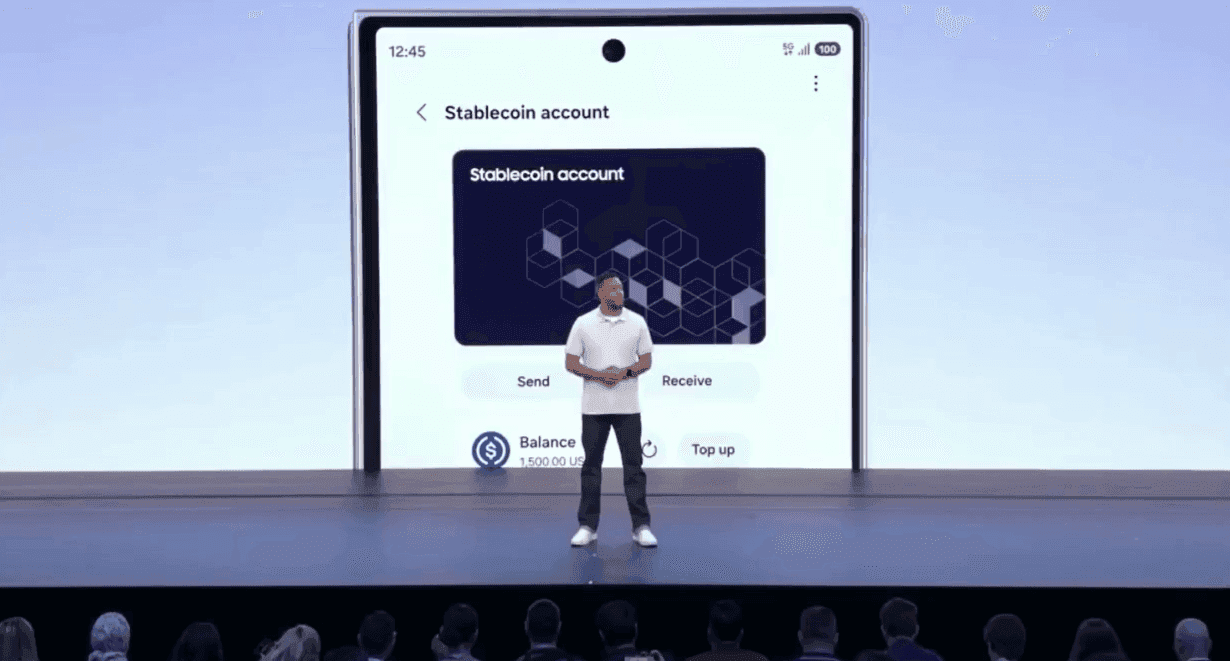
Samsung Wallet is getting native stablecoin support, with USDC demoed on stage. No launch date yet — but the distribution potential is real.
March 2, 2026 11:30 AM
How to Generate a Steady Income During Crypto Market Volatility
Crypto market crashing hard? Learn how to use stablecoins to generate a reliable income while protecting your capital from market swings.

September 21, 2026 10:24 PM

Four of the Five Largest Coins at a Three-Month High: Only XRP Is Missing
Bitcoin, Ethereum, Solana and BNB trade above every hourly price of the past 90 days, while XRP sits almost ten percent below. Measured against the hourly series rather than sentiment: which highs are real, which exist only in daily closes, and what a $648 million short squeeze has to do with it.
August 22, 2026 1:17 PM

BNB Pasteur Hardfork of August 25, 2026: What Holders, Traders and Delegators Should Know Afterwards
Recap as of September 27, 2026: BNB Smart Chain had scheduled the Pasteur hardfork for August 25, 2026. This article describes the situation before that date: what holders, delegators and senders of BEP20 transfers should do, what happened automatically and how to recognise the actual activation time.
October 2, 2026 4:18 AM

AVAX withdrawals: C-Chain vs X-Chain, and which address yours needs
Avalanche runs three blockchains, and only the C-Chain carries tokens, smart contracts and DeFi. This guide shows how to recognise a C-Chain address, what a transfer costs and how to trace it in Snowtrace.
October 11, 2026 7:17 PM

Ethereum price $2,504 as the base fee drops to a sixth: will the $2,495 level hold?
Ethereum traded at $2,504 on Sunday afternoon, with the daily range down to 0.63 percent. More telling than the chart is the block data: the base fee is 0.0673 gwei, a sixth of the weekly average, and the burn now offsets just 0.49 percent of new issuance.
September 27, 2026 4:23 AM

Polkadot Price Recovers 43 Percent: What Is Behind the DOT Rally
DOT stands 43.2 percent higher than 30 days ago, and unlike many price jumps there is a documented trigger for it: Referendum 1944 on the network's own dotUSD stablecoin. What the proposal would do, why 98 percent approval means less than it sounds, and how you buy DOT in Germany.

September 20, 2026 7:15 PM

When Does the Shiba Inu Rocket Launch? We Did the Math on What Burning Really Achieves
For years the SHIB community has hoped that enough tokens would be burned to lift the price. We measured the past 30 days against the circulating supply. The result is sobering, but it finally explains why the rocket never launches.
October 10, 2026 1:24 PM
TRON (TRX): Polygon Opens Its Payment Stack to $93.44 Billion in USDT: What Matters Now
Polygon opened its Open Money Stack to TRON on October 8: companies can now settle stablecoin payments entirely over the chain. We checked how much USDT really sits there, and show what decides whether it turns into demand for TRX.
September 29, 2026 4:14 AM
Stellar rises more than 8 percent as the network clears 41 transactions per second: what you can do now
XLM climbs 8.1 percent in 24 hours to $0.2329. We measured 999 ledgers and 2,000 transactions on the Stellar network: 41 transactions per second, a 22.4 percent failure rate and a fee that most often matches the minimum rate exactly.
September 24, 2026 1:11 PM
Stellar Becomes a Payment Rail at Mastercard's BVNK: What XLM Holders Should Check on Buying Route, Memo and Holding Period
BVNK has switched on Stellar as a payment rail for business customers in more than 130 countries. On the same trading day XLM falls by around seven percent — we separate what the news means from what the pullback means for your portfolio.
September 21, 2026 4:19 PM

Arbitrum Up 150 Percent In A Month: Is Robinhood Carrying The Price?
ARB is the strongest performer of the past four weeks. Behind the advance sit Robinhood's own chain and trading in tokenised assets. Two dates decide whether the rally holds.
March 24, 2026 4:06 PM
Circle (CRCL) Stock Plummets 17% on Stablecoin Yield Crackdown Fears
Circle Internet Group (CRCL) shares dropped 17% today following reports of a potential legislative crackdown on stablecoin yields. USDC remains pegged to $1 (for now).
June 7, 2025 12:19 PM
Circle Stock Explodes After IPO: What’s Behind USDC's Wild Debut?
Circle, the company behind USDC, just made Wall Street history. After pricing its IPO at $31, the stock soared to over $100. But what’s driving the hype—and is it sustainable?
October 12, 2026 7:32 PM
WhiteBIT Coin (WBT): Lightning Brings Bitcoin Withdrawals at 0.15 Percent, What You Can Do Now
The crypto exchange WhiteBIT has accepted Bitcoin over the Lightning Network since October 8 and pays it out the same way, for 0.25 and 0.15 percent respectively. Because both rates are percentages, the size of your withdrawal decides whether the new route is cheaper than the main chain.
October 7, 2026 10:33 AM

Why the burn does not carry the UNI price: 38,000 UNI in a day is 0.0061 percent of the supply
An on-chain analysis of our own shows how much UNI the Uniswap burn mechanism really destroys in a day. The amount is smaller than its reputation, and it explains why the reduction in supply does not carry the price on this day.
October 1, 2026 7:16 AM

Bitway (BTW) hits a record $1.43: 27 percent in a week while the market stood still
Bitway marked an all-time high of $1.43 on Monday and trades at $1.32 after a weekly gain of around 27 percent, while the broader market stood still. What carried the jump, when the incentive campaign ends, and what applies to circulating supply, authorisation and tax in Germany.
October 1, 2026 4:30 AM

228 Million CRO Up for Burning: the Cronos Vote Ends on Saturday
Until early Saturday, CRO stakers are voting on two proposals: a burn of 228 million CRO and a commitment to put all revenue from two products into buybacks. The quorum is reached and there are no votes against. What the figures mean relative to supply, and what investors in Germany should check.
October 1, 2026 4:13 AM
Pump.fun (PUMP): A Sixth of All Tokens Burned, Price Up 50 Percent in a Week
Pump.fun has now destroyed almost 17 percent of its maximum supply, and the PUMP price rose by half in seven days. On top of that came a clarification from the US Securities and Exchange Commission on buyback programs that frees up less than many headlines claim. Here are the week's figures, the levels and what investors in Germany should check.
September 30, 2026 4:25 PM
Shiba Inu price 4.9 percent below the month high: Why SHIB is falling
Shiba Inu trades at $0.00000581 on Wednesday afternoon, 4.9 percent below the high of September 23, even though the coin is up 17.0 percent over 30 days. The reasons are not in the chart but in the network data and in the cost structure of trading.
September 30, 2026 1:32 PM
100 Euros Into Bitcoin Without Fees: What Actually Arrives at Five Providers
Five providers serving German retail customers, €100 invested: after the disclosed fee, between €98.50 and €100 is left. Only one provider names the spread as well, and with it the whole price.
September 29, 2026 1:35 PM

Seven Days of Waiting: Base, Basescan and the Cheapest Way Onto Coinbase's Network
You get onto the Base network in minutes for fractions of a cent; getting back to Ethereum takes seven days. We walk through the chain ID, the fees, Basescan and the traps in bridging.
September 28, 2026 7:16 AM
Ethereum Gas at One Cent: What Gwei and Etherscan Mean for Your ERC20 Transfers
An ether transfer cost around one cent on September 27, 2026, while a swap on a decentralised exchange cost eight. This guide explains how gas is billed in gwei, what to look up on Etherscan and which three mistakes are the most common in an ERC20 transfer.
September 19, 2026 1:38 AM

Uniswap jumps above $9: what UNI holders should check on the fee switch now
The UNI price gains 18.67 percent within 24 hours, driven by the active fee switch and a new exemption from the US securities regulator. What of that can be recalculated, what remains pure expectation, and which three things you should settle now as an investor in Germany.
More from CryptoTicker