
Who Is Satoshi Nakamoto? Candidates, Evidence and His Bitcoin Holdings
White paper, genesis block, last email: what is established about Bitcoin's inventor Satoshi Nakamoto, which candidates are named and how large his holdings really are.




Which topics should we dive deeper into?
Select what genuinely interests you. Your picks feed directly into our editorial planning.
Crypto news that's actually worth your time.
Weekly. 60 seconds. Carefully curated by our editors: no hype, no promo flood, no spam.
Updated on October 22, 2026: completely rewritten with the London High Court ruling against Craig Wright, the New York Times investigation into Adam Back, new estimates of Satoshi's bitcoin holdings and the BIP-361 debate. The previous version predated the 2024 court ruling and still described Craig Wright's claim as unresolved.
Satoshi Nakamoto is the pseudonym of the person or group who published the Bitcoin white paper on October 31, 2008 and launched the network on January 3, 2009. Who is behind the name has never been proven: nobody has ever produced a publicly verifiable signature with a key from the earliest blocks, and the only person who made the claim in court, Craig Wright, was ruled not to be Satoshi by the High Court in London in 2024. Satoshi stepped away in April 2011 and is believed to hold around 1.1 million bitcoin that have barely been touched since they were mined in 2009 and 2010.
This guide sets out what is actually established about the inventor of Bitcoin, the first cryptocurrency, which names keep coming up, what speaks for and against each of them, and why Satoshi's coins are back on developers' agendas.
Satoshi Nakamoto: the key facts
- October 31, 2008: Satoshi Nakamoto sends the nine-page white paper "Bitcoin: A Peer-to-Peer Electronic Cash System" to a cryptography mailing list.
- January 3, 2009: The first block of the Bitcoin blockchain carries a headline from The Times of London about a second bank bailout.
- April 23, 2011: In the last known email, Satoshi writes that he has moved on to other things.
- Around 1.1 million bitcoin: That is the common estimate of Satoshi's holdings, about 5.5 percent of the 20.10 million bitcoin in circulation.
- May 20, 2024: The High Court in London sets out in writing why Craig Wright is not Satoshi Nakamoto and did not write the white paper.
- April 8, 2026: The New York Times names Adam Back as the most likely candidate, and Back denies it the same day.
Satoshi Nakamoto from 2008 to 2011: what is on the record
The solid evidence is what Satoshi left behind: emails, forum posts, code and entries in the blockchain. Every item in the table can be checked in public archives or directly in the blocks.
| Date | Event | Source |
|---|---|---|
| October 31, 2008 | White paper sent to the Cryptography Mailing List | metzdowd.com mail archive |
| January 3, 2009, 18:15 UTC | Genesis block with the Times headline | Block 0 on mempool.space |
| January 8, 2009 | Bitcoin v0.1 released as a download | Mailing list post "Bitcoin v0.1 released" |
| January 12, 2009 | First transfer between two people: 10 bitcoin to Hal Finney in block 170 | Blockchain, block 170 |
| December 12, 2010 | Last post on the Bitcoin forum, about version 0.3.19 | Satoshi Nakamoto Institute archive |
| April 23, 2011 | Last known email, to developer Mike Hearn | email thread published by Hearn |
The line in the first block reads "The Times 03/Jan/2009 Chancellor on brink of second bailout for banks". It proves the block cannot have been created before that day, and it is still read as a comment on the financial crisis. In the white paper Satoshi describes a payment system with no bank in the middle, secured by computing work, the principle known today as bitcoin mining.

On April 23, 2011, Satoshi wrote to Mike Hearn "I've moved on to other things" and added that the project was in good hands with Gavin Andresen and the other developers. Nothing that can be clearly attributed to that address followed. A post reading "I am not Dorian Nakamoto" on the old P2P Foundation profile in March 2014 cannot be verified; the same account was hacked in September 2014. The only self-description is in that profile: it listed a birth date of April 5, 1975 and Japan as the place of residence, neither of them backed by any evidence.
 Find a crypto exchange with an EU licence
Who is Satoshi Nakamoto? The best-known candidates
Seven names come up again and again. There is no proof for any of them, there is a court ruling against one, and every living candidate has denied being Satoshi. The table separates what is documented from what speaks against each theory.
| Candidate | What is documented | What speaks against it |
|---|---|---|
| Hal Finney (1956 to 2014) | Received the first 10 bitcoin from Satoshi on January 12, 2009 and ran the software from the first version | Described Satoshi as a separate person in 2013; ran a ten-mile race on April 18, 2009 while Satoshi was sending emails |
| Nick Szabo | Designed the "bit gold" concept in 1998; Aston University linguists found the closest stylistic match to the white paper in 2014 | Has repeatedly denied it; style comparisons are not proof |
| Adam Back | Invented Hashcash in 1997, which the white paper cites; the New York Times has called him the most likely candidate since April 2026 | Denies it; produced emails in which Satoshi contacted him as a stranger in August 2008 |
| Craig Wright | Has claimed to be Satoshi since 2016 | High Court in London, 2024: not the author of the white paper and not Satoshi; the court found he had forged documents |
| Len Sassaman (1980 to 2011) | Cryptographer from the cypherpunk scene, died in July 2011, just over two months after Satoshi's last known email | His widow Meredith Patterson says he was not Satoshi |
| Peter Todd | Named by the HBO documentary "Money Electric: The Bitcoin Mystery" in October 2024 | Denies it; experts consider the film's evidence thin |
| Dorian Nakamoto | Presented as the inventor by Newsweek on March 6, 2014 | Denied it at once; a day later the old Satoshi profile carried the line "I am not Dorian Nakamoto" |
Hal Finney and Nick Szabo: the early favourites
Hal Finney was the first person besides Satoshi to run Bitcoin and for a long time the most obvious candidate. In his look back, "Bitcoin and me" from March 2013, he describes Satoshi as a counterpart he exchanged emails with about bugs in the code. In 2023 developer Jameson Lopp matched the timing of a running race in Santa Barbara against Satoshi's emails: Finney was on the course for about 78 minutes on April 18, 2009, while Satoshi was writing to Mike Hearn. Finney died of ALS in August 2014.
Years before Bitcoin, Nick Szabo described a scarce digital currency based on computing work with bit gold. In 2014 forensic linguists at Aston University compared the white paper with texts by eleven candidates and landed on him, as CoinDesk reported at the time. A style comparison shows similarity, not authorship, and Szabo has rejected any role as Satoshi.
Adam Back and the New York Times investigation
On April 8, 2026, the New York Times published an investigation by reporter John Carreyrou, who after a year and a half of work considers Adam Back the most likely candidate. Back is the chief executive of Blockstream and the inventor of Hashcash, an early proof-of-work scheme the white paper refers to. He pushed back the same day with the words "I am not Satoshi", as Decrypt documented. Back points to emails from August 2008 in which Satoshi asked him for the correct citation before publishing.
Craig Wright and the High Court ruling
Craig Wright is the only person who has actively claimed to be Satoshi, and he fought for it in court. At the end of the trial on March 14, 2024, Mr Justice James Mellor declared that Wright did not write the white paper, did not operate under the pseudonym and did not create Bitcoin. The written judgment of May 20, 2024 records that Wright lied to the court extensively and forged documents to support his claim. In December 2024 he received a twelve-month suspended prison sentence for contempt of court after filing another Bitcoin-related claim in breach of a court order.
Len Sassaman, Peter Todd and Dorian Nakamoto
Before the HBO documentary, most bettors on Polymarket backed Len Sassaman, because his death came so soon after Satoshi's withdrawal. His widow Meredith Patterson told DL News that he was not Satoshi. Cullen Hoback's film then named Canadian developer Peter Todd, based largely on a forum post from 2010. Todd rejects the claim. Dorian Nakamoto, an engineer from California, dismissed Newsweek's story of March 2014 straight away, as TechCrunch reported at the time. Ripple's chief technology officer David Schwartz shows how quickly new names appear: after speculation in May 2024 he called the idea "not true, but plausible" and said he only came across Bitcoin in 2011. The post below is one example of that speculation.
How Satoshi Nakamoto could prove his identity
Proof would be simple and publicly verifiable: a message signed with the private key of an address from the earliest blocks. Satoshi demonstrably moved the coins from block 9 himself when he sent Hal Finney the first 10 bitcoin in block 170. Whoever holds that key can sign any message, and anyone can check the signature in seconds.
That is exactly where Craig Wright failed: his demonstrations in 2016 took place in a small circle, and he never produced a valid, publicly verifiable signature. Our view: until someone signs in that way, every attribution remains a chain of circumstantial evidence, however long it is. For more on Satoshi's early correspondence, see our report on the emails published by early developer Martti Malmi.
How many bitcoin does Satoshi Nakamoto own?
The usual figure is around 1.1 million bitcoin, but it is not certain. Satoshi never disclosed any addresses, so the estimate rests on a pattern in the early blocks. Depending on how strictly that pattern is read, the holdings range from just under 0.9 million to around 1.17 million bitcoin.
In 2013, computer scientist Sergio Demian Lerner found a signature in the random values of the first blocks that points to a single, very early miner. He called it "Patoshi". In a follow-up analysis in 2019 he attributed around 22,000 blocks with a combined total of close to 1.1 million bitcoin to this miner, 99.9 percent of which have never moved. The analytics firm Bitquery rebuilt the pattern from raw data in 2026 and agrees with Lerner's list on 99.2 percent of the blocks, as Cointelegraph reported in September 2026.
| Reading of the Patoshi pattern | Bitcoin | Share of 20.10 million in circulation | Value in US dollars | Value in euros |
|---|---|---|---|---|
| strict (Bitquery) | just under 0.9 million | 4.5% | 75.8 billion | 67.5 billion |
| common estimate (Lerner) | around 1.1 million | 5.5% | 92.7 billion | 82.5 billion |
| generous (Bitquery) | around 1.17 million | 5.8% | 98.5 billion | 87.7 billion |
Values as of October 22, 2026, at a bitcoin price of $84,227 or €74,974 according to CoinMarketCap. Where the price stands today and which ranges analysts expect is covered in our bitcoin price prediction.

The estimate has three layers of very different strength. It is well established that a single machine produced these blocks. That this machine belonged to Satoshi is only circumstantial: the pattern starts with the first block, and Lerner himself speaks of compelling reasons, not proof. Whether Satoshi still holds the keys today cannot be tested at all.
Satoshi Nakamoto and BIP-361: freezing the old coins
Satoshi's coins sit in an early address format in which the public key is visible on the blockchain. A sufficiently powerful quantum computer could derive the private key from it. The draft BIP-361, added to the official repository in February 2026 with developer Jameson Lopp as lead author, would therefore lock such coins after several years of notice.
The plan has two stages. Around three years after activation, or 160,000 blocks to be precise, the network would stop accepting payments to vulnerable addresses. About two years later, the old signatures would only be valid through a recovery procedure that, according to the authors, does not work for Satoshi's address format. His coins would then stay frozen, unless a separate proposal known as "Hourglass" creates a slow spending path for such legacy outputs, which the authors explicitly support. The draft still carries the status "Draft", and a soft fork lacks broad support. We have set out the arguments on both sides in our piece on why 1.1 million of Satoshi's coins could be frozen.
Satoshi Nakamoto's coins and the market: what a movement would mean
If a coin from a Patoshi block moves, everyone sees it immediately, because every transaction is public. Nobody can see who triggered it: Satoshi, an heir, or an attacker who has cracked a key. And a movement is not yet a sale.
There are solid comparisons for the scale. The estimated holdings of around 1.1 million bitcoin equal roughly three times the 24-hour trading volume CoinMarketCap reported on October 22, 2026 ($30.6 billion). In July 2025, Galaxy Digital sold more than 80,000 bitcoin for a Satoshi-era investor, worth over $9 billion at the time and one of the largest bitcoin sales ever. Satoshi's estimated holdings are almost 14 times as large.
Our view: more than 16 years of inactivity allow three explanations, lost keys, a deliberate decision not to spend, or an inventor who does not want to be found, and none of them can be tested from the outside. For anyone holding bitcoin, the case carries a practical lesson: whoever holds the key owns the coins. You can find devices for safe storage in our hardware wallet comparison and vetted providers for getting started in our guide to buying bitcoin.
Satoshi Nakamoto: without a signature, every name is a guess
After 15 years of silence, the picture is clear. The white paper, the code, the emails and the first blocks are documented, Craig Wright has been ruled out by a court, and all the other candidates have denied it, in their lifetime or through their families. Bitcoin has worked without its inventor since January 3, 2009, and the open question is shifting: away from the person and towards the coins, and whether the network protects them from quantum computers or freezes them.
 Compare the best hardware wallets
Frequently asked questions about Satoshi Nakamoto
Transparency note: This article was produced with the assistance of artificial intelligence and reviewed by our editorial team before publication. All figures and claims were checked against the primary sources linked in the text. The feature image was generated with AI.
Related articles
- Is Len Sassaman Satoshi Nakamoto? HBO Documentary Might Answer That TOMORROW
- Should Satoshi's Bitcoin Be Frozen? CZ's Quantum Warning Splits the Industry
- Satoshi's bitcoin: why 1.1 million coins could be frozen
- The dispute between Craig Wright and Vitalik Buterin escalates
- What Is Bitcoin? Bitcoin Explained: Halving, Supply and How to Buy
Which topics should we dive deeper into?
Select what genuinely interests you. Your picks feed directly into our editorial planning.
Crypto news that's actually worth your time.
Weekly. 60 seconds. Carefully curated by our editors: no hype, no promo flood, no spam.

April 1, 2025 12:55 PM
Satoshi Nakamoto Reveals His Identity – And It’s Jeff Bezos?!
After years of speculation, the mystery is finally solved—Bitcoin’s creator, Satoshi Nakamoto, has stepped forward, and it turns out to be none other than Jeff Bezos!

July 27, 2024 2:34 PM

Why Is The Crypto Market Up TODAY?
With the Bitcoin 2024 Conference taking place now in Nashville, the crypto market is showing bullish signals, intriguing traders around the future of Bitcoin and Altcoins.

February 5, 2026 5:29 AM

Jeffrey Epstein and the Bitcoin Conspiracy: Hidden Ties to the Digital Currency Initiative
New revelations explore the murky connections between Jeffrey Epstein and early Bitcoin development at the MIT Media Lab.

February 24, 2024 5:11 PM
Who is Satoshi Nakamoto?: Satoshi’s Emails Unveil Early Bitcoin Secrets
Loads of juicy details about the beginnings of cryptocurrency just came to light. Let's take a look at this Satoshi Nakamoto Emails
June 23, 2024 2:57 PM
Bitcoin Price Crash: Who is Buying the Dip?
Bitcoin price crashed and fell below its psychological price of $70,000. Despite this price dip, some investors are still buying Bitcoin. Who are they?
August 12, 2026 5:53 PM

Bitcoin's Quantum Problem: Why 6.7 Million Coins Could Be Frozen Forever
A third of all Bitcoin sits in addresses a future quantum computer could crack. The proposed fix would lock those coins permanently. Here is the plan.
October 6, 2024 7:28 AM
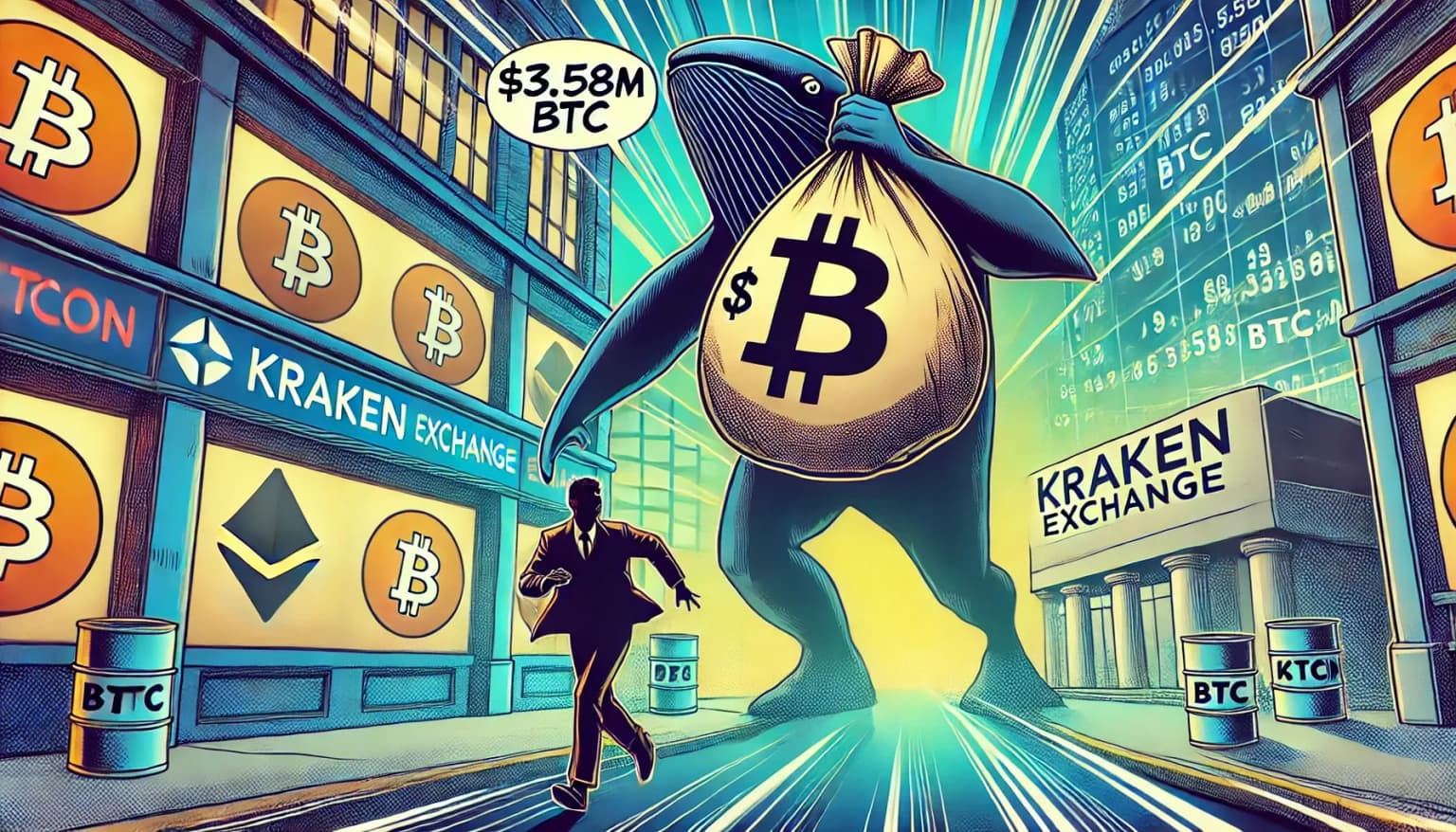
Early Bitcoin Whale Moves More 2009 Mined BTC: Arkham
A mysterious Bitcoin whale just moved $3.58 million worth of BTC to the Kraken exchange, according to Arkham Intelligence. What's behind this big move?
August 29, 2024 11:34 AM

Stacks Layer-2 Network Kicks Off Nakamoto Upgrade
Stacks, the Bitcoin layer-2 network, has started the Satoshi upgrade, which separates its block production schedule from Bitcoin's.
January 9, 2024 5:59 AM
27 Bitcoins Sent to Satoshi Nakamoto Address – What’s Behind This Cryptic Move?
The transfer of 27 Bitcoins to the wallet associated with Bitcoin's creator, Satoshi Nakamoto, has caught attention.
May 22, 2023 3:20 PM
Bitcoin Pizza Day: Celebrating a Revolutionary Transaction
This article delves into the origins of Bitcoin Pizza Day, its significance, and its impact on the cryptocurrency landscape.
January 3, 2023 6:42 PM
Bitcoin turns 14 years old: Happy Birthday Bitcoin! Who’s Celebtrating?
What is a Bitcoin Birthday? Who's celebrating it? In this article, we go over a quick brief on Bitcoin and its start which marks a Bitcoin Birthday.
October 9, 2024 4:51 PM
Peter Todd Denies Being Satoshi Before HBO Doc Release
HBO's "Money Electric" hints that Bitcoin developer Peter Todd might be Satoshi Nakamoto. Todd denied it.
October 5, 2024 2:48 PM
HBO Joins the Hunt for Bitcoin's Satoshi Nakamoto – Will They Succeed?
A new documentary claims to reveal the mysterious person behind Bitcoin's creation. Could the true identity of its creator finally be uncovered?
October 31, 2023 7:13 PM
Celebrating 15 Years of Bitcoin: A Revolutionary Journey
Authored by the pseudonym Satoshi Nakamoto, the white paper titled "Bitcoin: A Peer-to-Peer Electronic Cash System.
April 8, 2023 7:11 AM
Is Steve Jobs Satoshi Nakamoto? The Tale UNVEILS!
Steve Jobs may have been the mysterious creator of Bitcoin. How are people speculating about that? Is Steve Jobs Satoshi Nakamoto?
December 6, 2018 6:30 PM
The Cryptocurrency Timeline
A decade ago, Bitcoin’s secret founder Satoshi Nakamoto promulgated a paper called “Bitcoin: A Peer-to-Peer Electronic Cash System.” For those who haven’t been following crypto world closely, below is the timeline of the history of the crypto world so far. […]

November 13, 2018 11:44 AM

Japan and Crypto: A unique case
Japan, the spiritual home of Cryptocurrency where Bitcoin.com is headquartered, the crypto exchange Mt. Gox was established, the mysterious creator of Bitcoin Satoshi Nakamoto’s name comes from, and where cryptocurrencies are legal. Yet, all the development made in the land […]

August 7, 2018 5:25 PM
Will Blockchain Do to Banks What the Internet did to Conventional Media?
Marking the ninth anniversary of Satoshi Nakamoto’s revolutionary white paper, the CBOE Global Markets and the CME Group decided to introduce Bitcoin to their futures trading platform. This unprecedented move by some of the largest financial institutions in the world […]
August 11, 2026 5:14 AM
Bitcoin Bought Before March 2021: Is the Sale Tax-Free in Austria?
Bought Bitcoin before March 2021? Why legacy holdings can still be sold tax-free in Austria in 2026, and which exceptions apply.
September 10, 2024 1:54 PM

Bitcoin Price Analysis: Why Is BTC Price Up TODAY?
Why Bitcoin price surged today, and was it driven by market anticipation of U.S. inflation data and the Trump vs. Harris debate?

October 22, 2026 12:31 AM
What Is Bitcoin Mining? How It Works and When It Pays Off
Miners secure the Bitcoin network and earn 3.125 BTC per block. How proof of work functions, what an ASIC costs in electricity in Germany and at what power price mining breaks even.
October 12, 2026 10:27 AM
Is Bitcoin Still a Good Investment in October 2026?
Spot ETFs have changed who sets the Bitcoin price, and the easy repricing is behind us. What still supports BTC, what could break it, and how much belongs in a portfolio today.
July 28, 2026 11:53 AM
Why Is Crypto Down Today? The Reasons Behind Every Crypto Sell-Off
Why crypto is falling today, updated with every major move: the current trigger, the six forces behind almost every crypto sell-off, a five-minute checklist and a timeline of the 2026 drops.
June 15, 2024 3:00 PM
Bitcoin Price Prediction in June 2024: Why is Bitcoin Price Down?
Bitcoin's recent plunge from its psychological price of $70,000 to $66,250 has triggered widespread concern in the cryptocurrency market. Why is Bitcoin price down?
June 25, 2024 11:00 PM
How to Buy Bitcoin on Bitget: A Step-by-Step Guide
Want to buy Bitcoin and still confused about which platform to use? Look no further! Check Bitget, and this full guide, step by step...
More from CryptoTicker