
How to Check a Crypto Project: Nine Checks Before You Buy an Unknown Coin
An unknown token can be checked in half an hour, without specialist knowledge and without a subscription. These nine checkpoints run from the European MiCAR register through the spread of holdings to the exit route on selling.




Which topics should we dive deeper into?
Select what genuinely interests you. Your picks feed directly into our editorial planning.
Crypto news that's actually worth your time.
Weekly. 60 seconds. Carefully curated by our editors: no hype, no promo flood, no spam.
An unknown token can be put through its paces in about half an hour, and doing so requires neither programming skills nor a subscription. The core of the exercise comes down to three questions: who stands behind the project, who owns the tokens, and how much of that can be looked up independently?
This guide works through nine checkpoints in order, from the European register to how holdings are spread across a handful of addresses. What it produces at the end is not a verdict on individual projects but a procedure you can apply again to every token that follows.
Why Due Diligence on Crypto Assets Works Differently Than on Equities
With a share, the capital market supplies the homework: audited annual accounts, notification thresholds, ad hoc disclosure duties, plus a supervised trading venue. With a freely traded token, that substructure is largely absent. The figures usually come from the project itself, and the cross-check is yours to organise.
That does not mean there is nothing to check. On the contrary: a public blockchain exposes things that would never be visible at a company. How many tokens exist, where they sit and when they last moved can be looked up by anyone. The skill lies in looking in the right places.
One point up front that puts the whole exercise in perspective: even a project that passes every checkpoint can end up worthless. These checks weed out the obvious cases and make the rest comparable. A total loss remains possible with any crypto asset, including the largest ones.
Checkpoint 1: Is the Provider Listed in the European Register?
The first look is not at the token but at the place where you intend to buy it. Since 30 December 2024, a company that holds, exchanges or brokers crypto assets for clients has needed authorisation under the European regulation on markets in crypto-assets. The European securities regulator ESMA maintains a central register under MiCAR for this, listing authorised service providers alongside whitepapers and companies that have drawn attention.
For issuers themselves, the rules differ by token type. For asset-referenced tokens the regulation requires authorisation from BaFin under Article 16(1)(a) MiCAR; for e-money tokens the procedure runs via a notification. Both categories can be viewed in ESMA’s interim register. What the duties for companies cover in detail we have compiled in our overview of the MiCA licensing obligations.
The opposite direction is just as revealing: supervisory authorities keep warning lists of providers operating without authorisation. How extensive that list has become and where the entries come from is set out in our article on the EU warning list for crypto providers. A hit there ends the review immediately.
Checkpoint 2: Is There a Whitepaper, and Does It Contain Anything Verifiable?
A whitepaper is a project’s self-description. Under MiCAR it is, for publicly offered crypto assets, a formalised document with fixed mandatory disclosures, and the supervisor expressly does not approve it: responsibility for the content stays with the provider.
Read it all the same, with one simple question in mind: which statement in here could be demonstrably false in twelve months? A document consisting solely of intentions, vision and market size contains nothing anyone could be held to. Concrete details on issue volume, use of funds, lock-up periods and responsibilities are the opposite of that.
Checkpoint 3: Who Are the People, and Are There Any at All?
Names on a project page are not evidence. It becomes verifiable only once those names can be found independently: in commercial register entries, in professional networks with a history, in conference programmes, in source code contributions with a long back story. If every trace outside the project’s own channels is missing, that is a serious signal.
Anonymity alone is no disqualifier, and the industry’s history demonstrates that vividly: Bitcoin came from a pseudonym. The difference lies in whether the work can be verified. Where nobody is liable, the program code must be open and the distribution of power must be auditable. An anonymous team plus closed source plus central control over the tokens is the combination at which a review ends.
 Regulated Crypto Exchanges in Germany
Checkpoint 4: How Many Tokens Exist, and Who Owns Them?
The decisive figure is rarely the price but the distribution. Two terms help here:
- Total supply: how many units will exist in all.
- Circulating supply: how many of those are freely tradable today.
If the two diverge widely, a large share of the supply is still waiting for the market. Every later release increases supply without anything needing to change on the demand side. A look at the release schedule therefore belongs to every review.
Concentration in a Few Addresses
Public blockchains allow something no annual report offers: you can look up how the holdings are spread. Every block explorer shows the largest holders of an address. If eighty percent of the supply sits on a handful of addresses, the price hangs on the behaviour of a few participants. Strip out addresses that clearly belong to a trading platform, because those pool the holdings of many customers. Which tools make such analyses accessible without specialist knowledge is shown in the overview of analytics platforms.
Checkpoint 5: Does the Trading Volume Hold Up, or Is It Manufactured?
A high reported volume looks reassuring and is easy to produce. Trading against yourself generates turnover with no economic substance. Three cross-checks that cost little time:
- Count the venues. If the entire volume runs through a single, unfamiliar trading venue, the figure carries little weight.
- Look at the order book. Check how far the price would move on an order the size of your intended purchase. A book that already gives way noticeably at small amounts is thin, whatever the daily statistics say.
- Check the ratio. Daily turnover on the order of the entire market value is unusual in established assets and deserves an explanation.
The practical test remains the same as with any new account: a small amount in, a small amount back out. A trading venue where the return path stalls is finished, regardless of any metric.
Checkpoint 6: What Happens Technically When You Connect?
With tokens traded on decentralised venues, a further danger arises that need have nothing to do with the project itself. Connecting a wallet to an unfamiliar application grants approvals, and some of them are unlimited. An approval once granted keeps working, long after you have closed the page.
Two rules suffice for everyday use: for such experiments connect only a separate wallet with a small balance, and read what the confirmation window actually says. What exactly is being signed there, and how an abusive approval can be recognised, we broke down in our article on wallet drainers and signature approvals.
Checkpoint 7: How Is It Being Marketed?
The marketing often reveals more than the product. Four patterns that show up regularly in supervisory practice:
- Return promises with a figure and a timeframe. Anyone guaranteeing a fixed return is making a statement about the future that nobody can keep.
- Time pressure. Countdown, limited places, bonus today only: pressure replaces the argument.
- Advertising through fame. Prominent faces and supposed media reports are interchangeable and often used without the knowledge of those concerned.
- Referral chains. When the reward depends above all on recruiting new participants, the earnings lie in the recruiting and not in the product.
None of these patterns is proof on its own. When several appear together, the probability is high enough to skip the purchase.
 Analytics Platforms Compared
Checkpoint 8: Can the Token Actually Be Sold Again?
Getting in is easy with every project; getting out is not. So check before buying what the return path looks like: which venues list the pair against the euro or against an established asset? How deep is the book there? Are there lock-up periods during which a sale is ruled out? And does the platform impose conditions for withdrawal that did not apply at the time of purchase?
A common pattern with questionable offerings: deposits work smoothly, and only on withdrawal do fees, taxes or verifications appear that were nowhere to be seen beforehand. Additional demands at the moment of payout are an alarm signal, not a formality.
Checkpoint 9: What Applies for Tax If It Does Go Wrong?
This point comes last because it is readily forgotten. Crypto assets held privately fall in Germany under private disposal transactions pursuant to section 23 of the Income Tax Act. A gain is taxable if no more than a year lies between acquisition and sale, and remains tax free if the total gain from all private disposal transactions in a year stays below 1,000 euros.
What matters on the loss side is that it can be evidenced at all. So from the very first purchase, record when you bought at what price, through which platform and to which address. Anyone wanting to claim a loss later needs exactly these records, and retrospectively they are often no longer obtainable once a platform has disappeared.
A word on expectations: a token that has become worthless does not automatically disappear from your tax file, and the treatment of such cases is disputed in detail in Germany. Anyone with larger amounts at stake settles that with tax advice rather than with a forum post.
The Half Hour in the Right Order
Taken together, this yields a sequence that sticks in the mind because it works from the outside in:
- Look up the trading venue in the European register and cross-check the warning lists.
- Read through the whitepaper for verifiable commitments.
- Search for the team outside the project’s own channels.
- Compare total supply, circulating supply and the release schedule.
- Look at the distribution of the largest holdings in the block explorer.
- Cross-check trading volume and order book depth.
- Read and limit the approvals when connecting the wallet.
- Put the marketing patterns in context.
- Settle the return path and the record-keeping before any money moves.
One failed point is not yet a verdict. Three failed points give you a decision, and a reasoned one.
Checking a Crypto Project: What to Take Away
- Check the trading venue first, not the token. An authorised provider removes no price risk, but it removes the question of whether your money even arrives where it is meant to. The overview of regulated crypto exchanges is the starting point for that.
- Look at the distribution before you look at the price. Total supply, circulating supply, the release schedule and the largest holders say more about the risk than any forecast. What lets you analyse that without specialist knowledge is set out in the comparison of analytics platforms.
- Settle the return path and the custody in advance. Check trading pairs, lock-up periods and withdrawal conditions, and decide where the tokens should sit after the purchase. For longer-term holdings, the hardware wallet comparison is worth a look.
(As of September 23, 2026. This article is not investment advice. Prices and fee structures change; check the terms with the provider before you buy.)
Transparency note: This article was produced with the assistance of artificial intelligence and reviewed by our editorial team before publication. All figures and claims were checked against the primary sources linked in the text. The feature image was generated with AI.
Related articles
- How to Identify Fake TRUMP tokens: A Guide to Staying Safe in the Crypto World
- Best Yield Stablecoins 2025: Where to Earn Safely and Profitably
- TURBO AI Comeback with 20% Surge: Is the Meme Coin Hype Back?
- Top 5 Cryptos to BUY Under $1 Before the Bullrun
- 5 Crypto Coins to Watch Next Week During the Crypto Crash
Which topics should we dive deeper into?
Select what genuinely interests you. Your picks feed directly into our editorial planning.
Crypto news that's actually worth your time.
Weekly. 60 seconds. Carefully curated by our editors: no hype, no promo flood, no spam.

May 20, 2024 10:19 AM
Will Dogwifhat (WIF) Price Still Go Up To Reach $5?
Dogwifhat (WIF), a meme coin based on a viral Shiba Inu meme, is making headlines with its skyrocketing value. What price to expect and what are the support levels now?
October 11, 2026 4:50 AM
90 Crypto Kidnappings and Robberies in 7 Months: Why France Is the Most Dangerous Country for Bitcoin Holders
France logged 90 crypto kidnappings, extortions and violent thefts this year, one every 2.5 days. Leaked tax data is to blame. Here is how to protect yourself.
February 18, 2026 11:00 AM

Top 5 Tax Reporting Tips to Prepare for the 2026 Season
Prepare for the 2026 crypto tax season with our top 5 tips on reporting, tax-loss harvesting, and new IRS rules to avoid penalties.
August 28, 2024 10:33 PM
How to Migrate from MATIC to POL: Full Guide
How to update and migrate Polygon Tokens from MATIC to POL, when and why? Here is all you need to know...

September 16, 2026 1:28 PM
Crypto Withdrawal to Your Own Wallet: Ten Providers Checked, Three Will Not Let Your Coins Out
Seven of ten providers available in Germany offer a payout to a wallet address you control yourself; three do not. Our survey of September 16, 2026, shows how to spot the difference before you buy, and why the question matters right now.
August 11, 2026 9:18 AM

Your Crypto Exchange Is Telling You to Withdraw: How to Spot Phishing After the MiCA Deadline
Unauthorised crypto providers now have to tell their EU customers to withdraw, which leaves fraudsters an easy run with faked requests. Here is how to check in two minutes whether the message is genuine.
July 2, 2026 8:59 PM
Binance Is Out of the EU: How to Move to a MiCA-Regulated Exchange
Binance has left the EU market. Which exchanges hold a MiCA licence, how to verify an authorisation is real, and how to move your holdings across step by step.
April 11, 2025 4:00 AM
Buy the Dip with These Top 3 Altcoins
The US-China tariff war triggered a harsh market correction despite the 90-day pause that briefly reignited momentum. Still, savvy investors are spotting a buy-the-dip opportunity in three standout altcoins. Can you guess which tokens made the list?
September 13, 2026 1:13 PM
Sparkasse Crypto Custody: Why You Get No Key to Your Bitcoin and What to Check First
From October, Sparkasse customers are to be able to buy Bitcoin and Ether inside their own banking app, with DekaBank acting as custodian. What you get is a custody position rather than a private key. What that means in practice and what you should settle before your first purchase.

February 7, 2026 6:56 AM
Crypto Trading 101: How to Spot High-Probability Setups During Volatility
Master crypto trading 101 and learn how to trade Bitcoin during volatility. Here are professional crypto trading tips to spot high-probability setups now.
April 9, 2025 4:00 AM
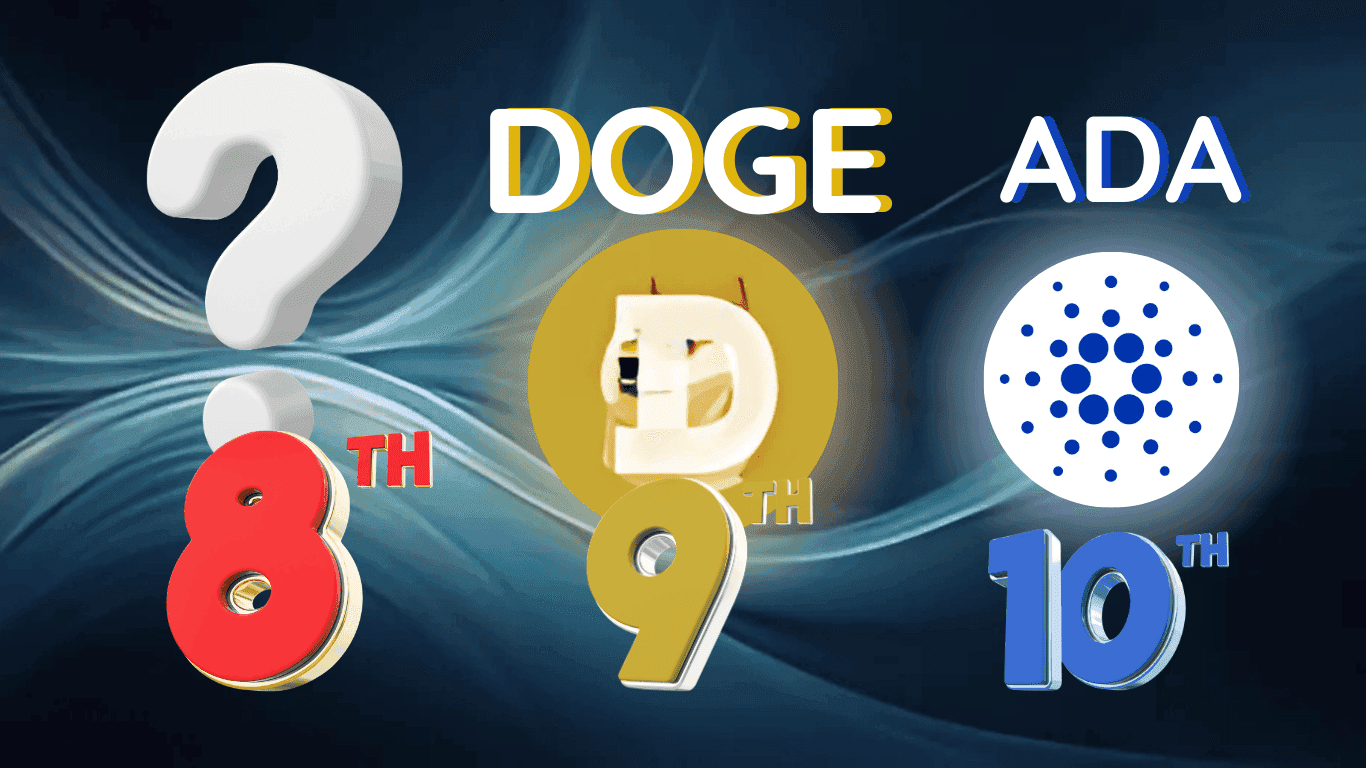
What Happened to Dogecoin and Cardano Today?
After the recent crypto market crash, uncertainty looms over the top 10 cryptos. With Dogecoin (DOGE) and Cardano (ADA) already flipped in rankings, could Solana (SOL) be next?
November 25, 2024 12:16 PM
Top 3 Tokens Under $1 to Watch for in 2025
Can you guess which 3 tokens made it into our 2024 top 3 performers' list? Take a guess and find out in our article!
June 4, 2024 2:41 PM
Top 3 Ethereum Meme Coins to Buy in June
Have you missed out on the PEPE coin surge? Here is your second chance with other meme coins. Check these top 3 Ethereum meme coins to invest in this June and capitalize on the latest crypto market trends!
April 29, 2024 12:54 AM
How to Find CHEAP Cryptos with CryptoRank
There are many ways to find crypto gems that are cheap today, but with big potential tomorrow. Here's how to find cheap cryptos with CryptoRank.
September 23, 2026 4:12 AM
How to Set Up a Crypto Wallet: Securing Your Coins in Seven Steps
Your own crypto wallet is set up in twenty minutes, yet a single step decides everything that follows. This guide takes you through wallet type, recovery words and the test amount, and sets out what BaFin and the tax office expect.
September 13, 2026 4:33 AM
Your Volksbank's Crypto Licence: Why You Have to Check Custody Separately
14 of the 16 newest CASP entries in the ESMA register were German cooperative banks, and each one carries order execution only. Our count of the BaFin database shows that not one of the 21 cooperative institutions is registered as a crypto custodian.
September 11, 2026 4:13 PM

How to Calculate Your Liquidation Price: When the Exchange Closes Your Leveraged Position
The liquidation price is the level at which your exchange force-closes a leveraged position. Here are the formula for long and short, a worked example, and the cost items that squeeze the buffer tighter in practice than the arithmetic suggests.
August 21, 2026 7:17 AM

Checking a MiCAR White Paper: What the First Published MiCA Penalty Against Bitpanda Means for Investors
Austria's FMA has fined Bitpanda GmbH 70,000 euros because a crypto-asset white paper was filed late and advertised before it had been published. We explain what rights this mandatory document gives you, and called up all 972 white papers held in the ESMA register to see whether they can be reached at all.
August 19, 2026 10:26 PM

EU warning list for crypto providers: 167 entries, 165 of them from Italy, none from BaFin
ESMA maintains a Europe-wide register of non-compliant crypto providers. We counted it on August 16, 2026 and called up every web address stored in it. Three of 30 supervisory authorities supply any entries at all, and BaFin is not among them.
April 15, 2026 12:00 PM
Bitcoin Price Corrects After $76,000 High: Is This a Consolidation or a Crash?
Bitcoin price faces a healthy correction after hitting $76,000. Learn how to trade consolidation phases and use support and resistance levels effectively.
August 30, 2025 11:00 PM

Bitcoin Robot That Trades for You Making Big Gains, Read On...
Here's how to start bot trading on OKX, the world’s leading crypto exchange. Automate your trades, save time, and unlock up to 60,000 USDC in rewards.

June 23, 2025 11:00 PM

Manchester City x OKX Campaign: Win VIP Tickets and Signed Jerseys with This Exclusive Promo
OKX and Manchester City have teamed up for an exciting new campaign across Europe. Join now to win VIP box tickets and signed jerseys by Gündoğan, Haaland, or Akanji.
June 5, 2024 5:52 PM
Floki Inu (FLOKI) Skyrockets Like Pepe (PEPE): Will PlayDoge Follow?
Floki Inu reaches a new high, but is PlayDoge the next meme coin to explode? Here are the similarities, potential, and why experts are bullish on both and you decide!
August 28, 2026 10:15 AM
Selling Bitcoin Privately: What Tax Applies in Austria
Selling bitcoin directly to another person? In Austria, private sales can still trigger 27.5 percent tax on the realised gain.
March 9, 2026 4:21 PM
Breaking: 20 Million Bitcoin Supply Reached! Here is How Many Are Left
Bitcoin just crossed the 20 million supply milestone. With 95.2% of BTC already mined, find out exactly how many coins are left and why the rest takes 114 years.
March 26, 2025 7:01 PM
Can Dogecoin Price Hit $1 and Be the Surprise Winner of 2025?
DOGE price is climbing fast—could Dogecoin hit $1 in 2025? Here are the latest price analyses, bullish signals, and the key role of Elon Musk and X Payments in DOGE’s next moonshot.

June 3, 2019 8:38 AM
How is the Circulating Supply of Cryptocurrencies Calculated?
The cryptocurrency world is full of surprises and turns. People who are new or who want to invest in this world always find it difficult to understand the market cap of cryptocurrencies. All cryptocurrencies are capped to specific quantities. There […]
More from CryptoTicker