
Bybit Card: 0.9 percent on crypto payments and 2 percent at cash machines above €100
The Bybit Card from Bybit EU has no annual fee but charges 0.9 percent on payments from crypto balances. Fees, limits, cashback and tax consequences at a glance.

Which topics should we dive deeper into?
Select what genuinely interests you. Your picks feed directly into our editorial planning.
Crypto news that's actually worth your time.
Weekly. 60 seconds. Carefully curated by our editors: no hype, no promo flood, no spam.
The Bybit Card carries no annual fee in Germany, and both the virtual card and the first physical card are free. Fees only arise when you use it: 0.9 percent when a payment is funded from a crypto balance, 0.5 percent on transactions in a foreign currency and 2 percent at cash machines once more than €100 is withdrawn in a month. For customers in the European Economic Area the card is issued by Bybit EU, the exchange's Vienna-based subsidiary, which holds an authorisation under the EU's MiCA regulation. That is what the Bybit EU fee schedule says, last updated on October 8, 2026.
Who is the card for? Mainly for anyone who already has a Bybit EU account and wants to use balances in euros, stablecoins or bitcoin in everyday life without selling manually first. If you only want to pay with crypto now and then, set the fees against those of other crypto cards; our comparison of crypto credit cards gives an up-to-date overview.
Bybit Card in Germany: a Mastercard debit card from MiCA-licensed Bybit EU
The Bybit Card is a debit card on the Mastercard network. A debit card charges every payment immediately to the linked balance; there is no credit line as with a classic credit card. Payments come out of the funding account of your Bybit EU account, either in euros or in crypto assets that are sold automatically at the moment of payment. The card is available as a virtual version for online shopping and as a physical card for tills and cash machines; both share a single spending limit.
The provider for customers in Germany is Bybit EU GmbH, based in Vienna. The Austrian Financial Market Authority FMA granted it authorisation as a crypto-asset service provider (CASP) on May 28, 2025. A CASP is a company that may hold, exchange or transfer crypto assets under MiCA and needs a licence from an EU supervisor to do so. The entry appears in the MiCA register of the European Securities and Markets Authority ESMA and is valid throughout the European Economic Area. Our overview of the MiCA licence explains the obligations such a licence brings.
Important when choosing an account: customers from the EEA are served via bybit.eu, not via the global platform bybit.com. The fees and limits in this article refer exclusively to the Bybit EU card. Our assessment of the exchange itself, with trading fees and product range, can be found in our Bybit review.
Bybit Card fees: 0.5 percent on foreign currency and 0.9 percent on crypto conversion
Bybit EU's fee structure is lean. According to the official Bybit Card fee schedule, these items apply as of October 8, 2026:
| Type of fee | Amount |
|---|---|
| Annual fee | none |
| Inactivity fee | none |
| Virtual card | free |
| Physical card, first issue | free |
| Physical card, replacement | €5 |
| Foreign currency fee | 0.5 percent on the Mastercard exchange rate |
| Crypto conversion fee | 0.9 percent on Bybit EU's One-Click-Sell rate |
| Cash machine | 2 percent after the first €100 a month |
The crypto conversion fee is the surcharge Bybit EU levies when a card payment is funded from a crypto asset rather than from euros. It applies to every transaction paid from non-fiat balances in the funding account, and the minimum amount for a conversion is one euro. If you hold euros in the funding account, you do not pay this fee. Bybit EU also points out that fees and limits may change depending on market conditions.
Worked example of crypto conversion: a €100 payment from USDC
Bybit EU sets out an example in its own schedule. A customer pays €100, and the funding account holds only the stablecoin USDC. The assumed sale rate is €0.93167 per USDC. So 107.33 USDC are sold for the €100, plus a 0.9 percent conversion fee of 0.97 USDC. A total of 108.3 USDC is debited.
The example contains two sources of cost. The visible one is the 0.9 percent fee. The less visible one is the sale rate itself, because Bybit EU uses its own One-Click-Sell rate for this, not an exchange price from the order book. If that rate deviates from the market price, you pay the difference on top. If you pay with the card regularly, it is therefore usually cheaper to convert into euros beforehand and fund the card from your euro balance.
 Compare crypto credit cards
Cash withdrawals with the Bybit Card: €100 free, then 2 percent
You can withdraw cash with the physical Bybit Card. The first €100 in each calendar month are free, and Bybit EU charges 2 percent on every euro above that. If you withdraw €300 in a month, you pay the fee on €200, which comes to €4. If the money comes from a crypto balance, the 0.9 percent conversion fee is added.
Fees from the cash machine operator may come on top. Some machines charge their own fee or offer a conversion into the card currency. Bybit EU recommends reading the on-screen notices carefully. Abroad, you are generally better off declining a conversion offered by the machine, because the operator's rate is rarely better than Mastercard's.
Separate limits apply to withdrawals. At the lowest tier they are €2,000 per transaction and per day, €2,000 a month and €10,000 a year. At the higher tiers the monthly and annual limits rise, while the daily limit stays at €2,000.
Bybit Card spending limits: from €5,000 to €15,000 a day
The spending limits depend on the tier your card account is assigned to. The virtual and physical cards share the same limit:
| Period | Tier 1 | Tier 2 | Tier 3 |
|---|---|---|---|
| per transaction | €5,000 | €10,000 | €15,000 |
| daily | €5,000 | €10,000 | €15,000 |
| monthly | €10,000 | €25,000 | €50,000 |
| annually | €60,000 | €125,000 | €250,000 |
You apply for an increase in the card dashboard via the limit review. If you applied for the card as a regular customer, you can move from tier 1 to tier 2; tier 3 is open only to VIP customers, who start at tier 2. According to Bybit EU, processing takes up to seven working days. For everyday use, tier 1 is enough for most users: €10,000 a month also covers larger purchases.
Bybit Card cashback: between 1 and 10 percent, depending on tier and promotion
On cashback the figures diverge, and this is exactly where it pays to check your own account. In a press release on January 20, 2026, Bybit EU announced that cardholders could choose to receive their cashback in bitcoin or USDC. Depending on the reward tier, the company cited 2 to 10 percent at the time, credited daily to the balance account. New users could receive up to 10 percent on selected categories for a limited period, capped at €150.
In June 2026 the specialist outlet Cryptonomist reported on a new Bybit EU programme with a flat 1 percent cashback on every eligible payment, with no cap. Which structure applies to your card depends on when you applied and on your tier. When deciding, it is prudent to work with the lower figure: 1 percent on €1,000 of monthly spending is €10. If you pay the same amount from a crypto balance, the conversion costs around €9, and barely anything is left of the cashback.

Bybit Card abroad: Mastercard rate plus a 0.5 percent foreign currency fee
The card is denominated in euros. If you pay in another currency, such as dollars, pounds or francs, Mastercard converts the amount at its own reference rate and Bybit EU adds 0.5 percent. Bybit EU says it does not charge an additional safety margin on the rate, known in the trade as FX padding.
The example from the fee schedule: a payment of 69.80 Singapore dollars comes to €49.30 at the assumed Mastercard rate, the foreign currency fee is €0.20, and €49.50 is debited. The amount reserved at authorisation may be slightly higher to cover exchange rate fluctuations until settlement; the surplus then flows back to the funding account.
Whether that is cheap depends on your alternative. Many German girocards charge their own foreign transaction fee outside the euro area, while some direct banks and travel credit cards waive it. Before a longer trip, compare the terms of your own bank.
 Compare regulated crypto exchanges
Crypto cards and tax: every payment from bitcoin is a sale
For tax purposes the Bybit Card is not a special case. If you pay from a crypto balance, Bybit EU sells the required amount at the moment of payment. For the German tax office this is a disposal under Section 23 of the Income Tax Act (EStG). If less than a year has passed between purchase and payment and the price has risen since, a taxable gain arises as soon as all private disposal gains for the year together reach the €1,000 exemption threshold. After a holding period of more than a year, the gain remains tax-free.
If you often pay small amounts from bitcoin or other volatile coins, you create many small taxable events, each of which must be traceable in your tax return. With stablecoins such as USDC, gains and losses usually stay in the cent range, but the sales are reported all the same. Our article on crypto credit cards and tax explains this in detail. As a provider licensed in the EU, Bybit EU is also subject to the DAC8 reporting obligation; the data reach the German tax office via the automatic exchange of information.
Bybit Card or Coinbase Card: how the crypto cards differ
The obvious alternative for customers of a large exchange is the Coinbase card. We broke down its terms in October in our article on the Coinbase Card. In principle, crypto cards differ in three respects: the surcharge when crypto assets are sold, the fees abroad and at cash machines, and the type and size of the reward.
With the Bybit Card, the 0.9 percent crypto conversion carries the most weight, while annual and issuance fees are waived entirely. For users who pay from a euro balance, the costs shrink to the foreign currency fee abroad and the cash machine charge above €100. If, on the other hand, you want to spend crypto assets directly, you should weigh the conversion fee against the cashback. An overview of other providers with their fees and rewards can be found in the card comparison.
Bybit Card: a euro balance saves the 0.9 percent conversion
The Bybit Card is a low-cost crypto card as long as you use it deliberately. Here is how to proceed:
- Compare cards: set the Bybit Card's fees alongside other offers in the comparison of crypto credit cards before you open an account.
- Check the provider: make sure you sign up at bybit.eu, and compare the licence with other regulated crypto exchanges.
- Document payments: every card payment from a crypto balance is a sale. A crypto tax tool imports the export and calculates gains and holding periods.
(As of November 10, 2026. This article is not investment advice. Prices and fee structures change; check the terms with the provider before you buy.)
Frequently asked questions about the Bybit Card
Transparency note: This article was produced with the assistance of artificial intelligence and reviewed by our editorial team before publication. All figures and claims were checked against the primary sources linked in the text. The feature image was generated with AI.
Related articles
- Bitstamp exchange review: a 0.40 percent taker fee and a MiCA licence from Luxembourg
- Swing trading crypto: in Germany every euro counts once annual gains reach €1,000
- OKX Fees: Trading, Futures and Withdrawal Fees by Region
- Bitget Fees: Spot, Futures and How BGB Lowers Them
- Bitrefill review: buying gift cards with crypto when the rate holds for 30 minutes
Which topics should we dive deeper into?
Select what genuinely interests you. Your picks feed directly into our editorial planning.
Crypto news that's actually worth your time.
Weekly. 60 seconds. Carefully curated by our editors: no hype, no promo flood, no spam.

November 7, 2026 4:05 AM
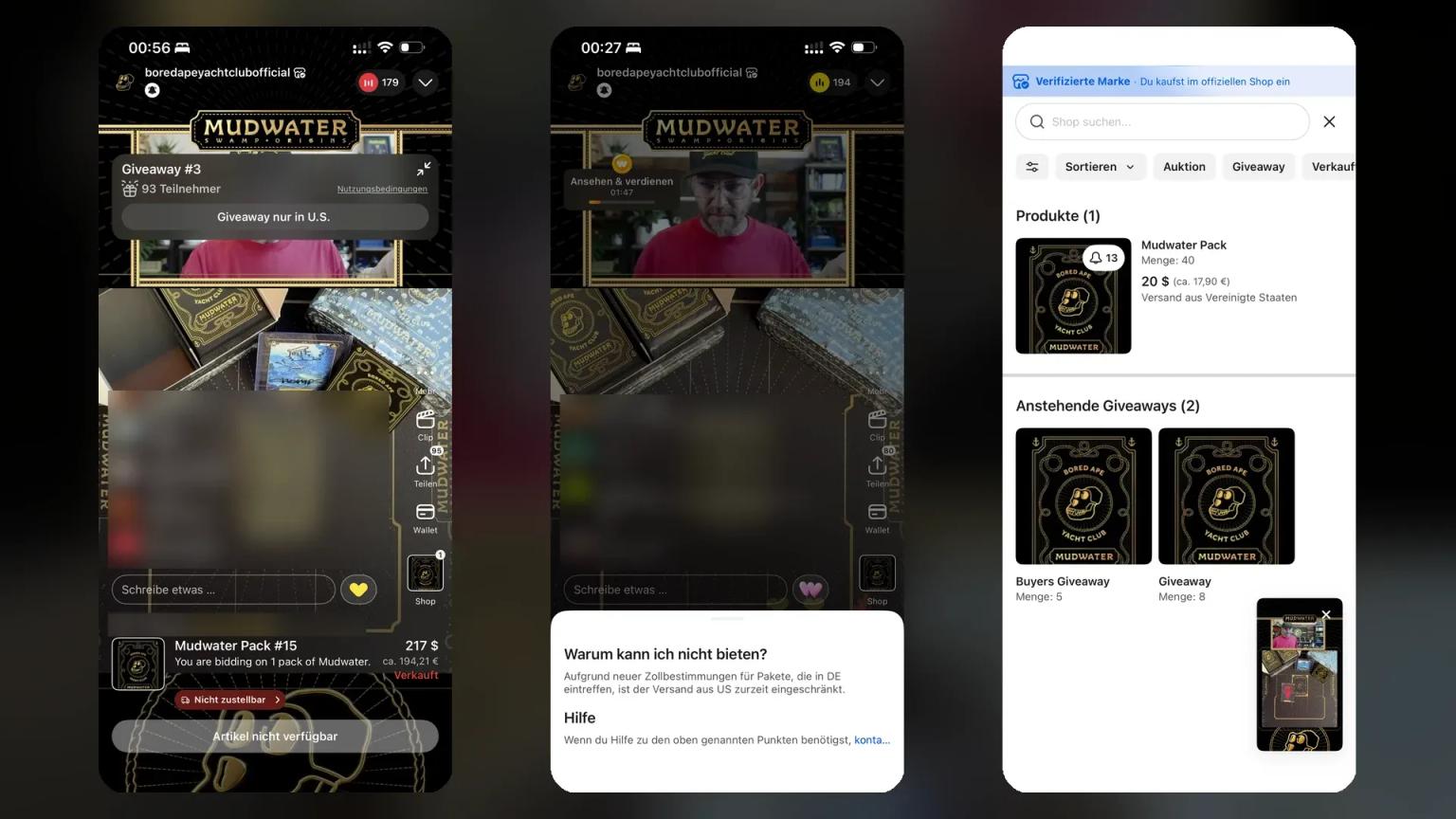
Mudwater on Whatnot: Bored Ape Holders in Europe Could Only Watch the Opening Night
"$100k Bounty" was in the title of the first Mudwater show of the Bored Ape Yacht Club (BAYC) on Whatnot. Watching from Germany, you could not bid, buy or join a single giveaway. A first-hand account from the night.
November 6, 2026 9:12 PM
Gnosis Pay data breach: card customer data exposed ahead of the December 20 shutdown
Gnosis Pay confirmed on November 6, 2026 that attackers accessed the system behind its crypto debit cards and exposed customer data. Funds are not affected, according to the company, but cardholders now face phishing with genuine data and must find a new card by December 20.
November 4, 2026 7:20 AM
Crypto futures in the EU: six licensed exchanges compared, all capped at 10x
As a retail trader in Germany, you can trade crypto futures legally on six exchanges with an EU licence, all capped at 10x leverage for retail clients. The comparison covers contract design, fees, collateral and what ESMA's February statement changes for you.
November 3, 2026 3:15 PM

Suspected crypto theft in the EU: Kraken and Crypto.com freeze funds after $133 million outflow
Blockchain investigator ZachXBT is tracing allegedly stolen crypto worth $133 million from an unnamed entity in the EU. Kraken and Crypto.com have frozen linked accounts and funds and say their customers are not at risk.
November 3, 2026 9:21 AM

Leverage trading in crypto: how margin and the liquidation price work
With leverage you move a larger crypto position than your stake would allow. We work through margin and liquidation price, show the leverage limits in the EU and which licensed providers offer leverage trading.
November 3, 2026 5:30 AM

Crypto options in Germany: Kraken opens bitcoin and ether options, and the gate is a questionnaire
On October 26, Kraken opened options on bitcoin and ether to retail clients in the European Economic Area, with access tied to a derivatives account and a passed appropriateness assessment. For German tax purposes, the one-year holding period does not apply; Section 20 of the Income Tax Act taxes gains at 25 percent from the first euro.
November 1, 2026 3:27 PM
Buying bitcoin at the Sparkasse: 0.99 euros per order plus a spread
Since October 19, 2026 the first Sparkassen have been selling bitcoin in the app. The flat fee is expensive on small purchases and almost irrelevant on large ones, and the coins stay with DekaBank.
October 29, 2026 9:54 PM
Biggest Crypto Hack Ever? Binance Joins the List of Exchange Hacks
At about $2.8 billion the suspected Binance hack would be the largest theft a crypto exchange has ever suffered. The biggest crypto hacks at a glance, why exchanges are hit more often, what Tornado Cash has to do with it and what past cases meant for prices.
October 29, 2026 9:45 PM

How to Short Bitcoin in the Crash: Step by Step on Bitget and OKX
Bitcoin fell below $79,000 after the Binance hack. If you want to bet on falling prices or hedge, a short does exactly that. How it works on Bitget and, for EU readers, on OKX Europe, a worked example at tonight's price and the risks of shorting after a crash.
October 21, 2026 10:13 PM

Revolut wins a crypto licence in Gibraltar, but your German account stays with Cyprus
The Gibraltar Financial Services Commission has authorised Revolut Global Digital Assets Limited for order execution, custody and staking. For customers in Germany the Cypriot EU entity remains the counterparty, and that is what decides which regulator and which MiCA rights apply to your balance.
October 19, 2026 7:51 AM

Euro balances on a crypto exchange: what to watch after the ESMA answer on MiCA article 70
The European securities regulator ESMA spelled out on October 16, 2026 where a crypto asset service provider may hold your euro balance. A payment service provider without a banking licence is only a staging post of at most one business day.
October 11, 2026 4:28 AM
Coinbase Card Without a Transaction Fee: What Investors Need to Know About Conversion and the Holding Period
Coinbase charges no transaction fee for paying with the card. It gets expensive in two places that appear on no receipt: the conversion of the balance and the holding period.

October 6, 2026 1:34 AM

93.56 million dollars out of the Zcash ETF in one week: what changes for ZEC holders in Europe
The Grayscale Zcash ETF lost money for the first time since launch in the week to October 5, 2026, a net $93.56 million. What the figure says about demand and what it means for ZEC holders in Europe.
October 1, 2026 7:15 PM
Bitpanda fees from 0.99 to 2.49 percent: what is behind it
Bitpanda assigns every coin to one of four price tiers, from 0.99 percent for Bitcoin to 2.49 percent for small caps. What 100 euros costs in and out, why the spread is missing from the mandatory document, and where 0.25 percent is enough under the same roof.
September 30, 2026 10:40 PM

ESMA Calls for Advertising Rules on Crypto Influencers: Six Changes Now Sitting With the EU Commission
The EU securities watchdog filed its response to the MiCA review on the final day of the consultation. Among the demands are disclosure on staking, a licensable DeFi gateway and the power to freeze crypto assets.
September 29, 2026 10:33 AM
ESMA puts reverse solicitation on its 2027 watch list: what investors need to know about exchanges without an EU licence
ESMA presented its work programme for 2027 on September 28, 2026 and made reverse solicitation a supervisory priority. What that means if your coins sit with a provider without EU authorisation, and which three steps make sense now.
September 20, 2026 10:11 PM
Kraken Review: Fees, MiCA Licence and Withdrawals in Euro
A purchase through Kraken's standard interface costs 1 percent plus spread; on Kraken Pro it is 0.40 to 0.80 percent. What deposits, trading, withdrawals and tax records really cost at the crypto exchange, with the numbers from the official fee schedule.
September 19, 2026 4:11 PM
MiCA Consultation Closes September 30: What to Check and Submit Before Then
The European Commission is reviewing the MiCA crypto regulation and will accept submissions until September 30, 2026 at 23:59 CEST. Staking, DeFi, lending, stablecoins and custody are all under examination, and you can take part without a lawyer.
September 6, 2026 10:20 PM
Bison App: a 1.25 Percent Spread, 27 Percent of the Staking Rewards and Trading Without an Order Book
The crypto app of Boerse Stuttgart advertises freedom from fees. You pay through the spread instead. What the licences actually cover, why there is no order book, and why the tax report loses its value once you transfer coins out.
September 6, 2026 10:12 PM

MoonPay Fees: Up to 4.5 Percent, a Partner Margin on Top, and a Markup You Never See as a Fee
MoonPay is the buy button built into many crypto wallets. The European price list names four layers of cost, and only three of them show up as line items. What the provider is allowed to do, and what it expressly is not.
September 3, 2026 4:24 AM
Crypto.com Changes Its Card Fees: From October 1 the Paid Tiers Pay a Foreign Transaction Fee Too
From October 1, 2026 the foreign transaction fee on the Crypto.com card also applies to Ruby, Jade and Indigo, and the inactivity fee rises from 5 to 6 euros a month. We checked nine card offers in the European Economic Area to see who discloses such fees at all.
August 20, 2026 10:24 PM

MiCA Review: What the European Commission Could Change About the EU Crypto Rules
The European Commission has reopened MiCA for review after barely two years and is asking 86 questions covering the stablecoin interest ban, staking, lending and DeFi. Brussels is taking responses until September 30, 2026.
August 18, 2026 4:35 PM

Crypto Cards in Everyday Use: What Bitpanda, Crypto.com and Nexo Cost
At the cash machine, on holiday and at the weekend you find out whether a crypto card pays off. Four everyday cases with the terms of Bitpanda, Crypto.com and Nexo, as of 22 October 2026.
August 16, 2026 6:14 AM
Crypto Credit Card Tax in Germany: Why Every Payment Is a Disposal
Paying with a crypto credit card means disposing of your coins for tax purposes. What that means for the holding period, the exemption threshold and your record-keeping duties, and which card design keeps the effort small.

More from CryptoTicker