
Binance Reopens Withdrawals: 15 Networks First, 95% of Stolen Funds Replaced
Three days after the $6.3 billion hack, Binance is reopening withdrawals in phases. Phase one starts on 1 November between 06:00 and 09:00 UTC with Bitcoin, Ether, USDT, USDC, BNB, Solana, XRP and eight more networks. What customers need to know now.

Which topics should we dive deeper into?
Select what genuinely interests you. Your picks feed directly into our editorial planning.
Crypto news that's actually worth your time.
Weekly. 60 seconds. Carefully curated by our editors: no hype, no promo flood, no spam.
Update 14 November, 06:56 UTC: Binance reopens withdrawals on 87 more networks. According to the “Recovery Update” of 14 November, Binance reopened withdrawals on 87 more networks this week, including Cardano (ADA), Litecoin (LTC), Avalanche (AVAX), Cosmos (ATOM), NEAR, Aptos (APT), Stellar (XLM), Bittensor (TAO), Internet Computer (ICP) and Filecoin (FIL), plus the Ethereum networks Linea, Scroll and zkSync Era. Cardano and Litecoin can therefore be withdrawn on their own networks again instead of only as BEP20 tokens on BNB Smart Chain. The exchange aims to reopen all remaining networks and assets by the end of next week. The withdrawal page or the network status page shows whether your token already works on your network; during the rollout a withdrawal may take longer, and if it fails, Binance suggests trying again after a short while. More: Binance withdrawals phase 2.
Update 13 November, 12:54 UTC: Binance has fully covered the losses. According to its announcement of 12 November, the exchange has covered all balances affected by the hack and committed more than $6.34 billion of company funds to do so. Binance bought the missing tokens on the market and over the counter, paid for by part of its user protection fund SAFU, part of its futures insurance fund and its own treasury; it plans to refill SAFU to about $1 billion. A new proof of reserves snapshot taken on 12 November at 00:00 UTC covers 198 tokens. Once the zero-knowledge proof is ready after about 40 to 50 hours, holders of affected tokens can check for themselves that their balance is backed at least 1:1. Binance keeps reopening withdrawals in phases. A very small number of tokens Binance no longer supports were also affected: they go through the usual delisting process, and their holders will be covered too. More: How to check Binance's proof of reserves.
Update 6 November, 06:55 UTC: Binance reopens withdrawals for more tokens. According to “Recovery Update #9”, Binance has been reopening 58 more token and network pairs step by step since 04:00 UTC, including PENDLE, WLFI, SAND and MANA on BNB Smart Chain, VIRTUAL and MORPHO on Base, ETH on Optimism, ETHFI on Arbitrum and FDUSD on Sui, plus pairs on Ethereum, Polygon, Avalanche and Tron. Not all of them are available at once: the exchange enables each pair after a security check and sets the order by user demand over the past week. The withdrawal page for your token and network shows whether it already works; if a withdrawal fails, Binance suggests trying again after a short while. Deposits remain open. More: Binance withdrawals phase 2.
Update 5 November, 21:47 UTC: Binance reopens withdrawals for more tokens. According to “Recovery Update #8”, Binance has been reopening 69 more token and network pairs step by step since 04:00 UTC, including UNI, AAVE, LDO and ENS on Ethereum, AVAX, FIL and INJ on BNB Smart Chain, plus tokens on Base, Tron, Polygon and Sui. Not all of them are available at once: the exchange enables each pair after a security check and sets the order by user demand over the past week. The withdrawal page for your token and network shows whether it already works; if a withdrawal fails, Binance suggests trying again after a short while. Deposits remain open. More: Binance withdrawals phase 2.
Update 4 November, 15:46 UTC: Binance has replaced 98%, new proof of reserves covers 44 tokens. In its “Recovery Update #7” Binance says about 98 percent of the affected amount has been replenished, up from 95 percent. The remaining 2 percent are less liquid tokens the exchange keeps buying on the market and over the counter, which Binance expects to take longer. The new snapshot of 4 November, 00:00 UTC, covers 44 tokens, up from 10. Binance estimates about 50 to 60 hours to generate the proof: after that, anyone holding one of these tokens can check for themselves that their balance is backed at least 1:1. More: Binance's proof of reserves.
Update 3 November, 21:46 UTC: Binance reopens withdrawals for more tokens. In its “Recovery Update #6” Binance sets out the second phase from 04:00 UTC: more tokens on BSC, Ethereum, Solana, XRP Ledger, Sui, Arbitrum, Optimism, Tron and Base. Many well-known coins such as ADA and LTC are listed only under BSC: they come out as BEP20 tokens and need a recipient address on BNB Smart Chain. The rollout is gradual, and the withdrawal page or Binance's network status page shows whether a token is already available on the network you want. Deposits stay open, and Binance says it continues to bear the loss. More: Binance withdrawals phase 2: Cardano and Litecoin only via BEP20 for now.
Update 3 November, 01:03 UTC: Binance's proof of reserves can now be checked by users. In its “Recovery Update #5” of 2 November (12:45 UTC) Binance says the zero-knowledge proof for the 31 October snapshot is complete. Anyone holding BTC, ETH, USDT, BNB, SOL, USDC, XRP, USD1, RLUSD or ZEC on Binance can use the verification tool on the proof of reserves page to check that their balance is backed at least 1:1. The exchange says it has replaced about 95 percent of the stolen amount; the remaining 5 percent are less liquid tokens outside these ten. A new snapshot covering more tokens follows on 4 November, and its proof is expected to take 40 to 50 hours. The next phase of withdrawals for further networks is planned for 3 November. More: How to check Binance's proof of reserves.
Update 1 November, 07:48 UTC: Binance has reopened the first withdrawals. According to Binance's network status, Bitcoin withdrawals on the Bitcoin network have been available again since 07:00 UTC at the latest, and Ether on the Ethereum network, USDT and USDC on Ethereum and BNB Smart Chain, and BNB followed at around 07:48 UTC. Further phase-one networks are following step by step.
Three days after the largest hack in the history of crypto exchanges, Binance is reopening withdrawals. In an announcement on 1 November 2026 at 04:08 UTC, the exchange said the first phase starts on Sunday between 06:00 and 09:00 UTC. The rollout is gradual: Binance checks each network separately and opens it only after security and readiness checks are complete. Deposits continue to work normally, according to the exchange (Binance, Recovery Update #4).
Binance is thereby keeping the timeline it promised after the attack on 29 October. On 30 October at 04:36 UTC it still spoke of "within 48 hours"; on 31 October it confirmed Sunday as the date. At around 20:05 UTC, roughly $6.3 billion was taken from the hot wallets; according to TRM Labs, the trail leads to the North Korean group TraderTraitor. Everything known about the attack is in our overview North Korea behind the Binance hack.
95 percent of the stolen funds have been replaced
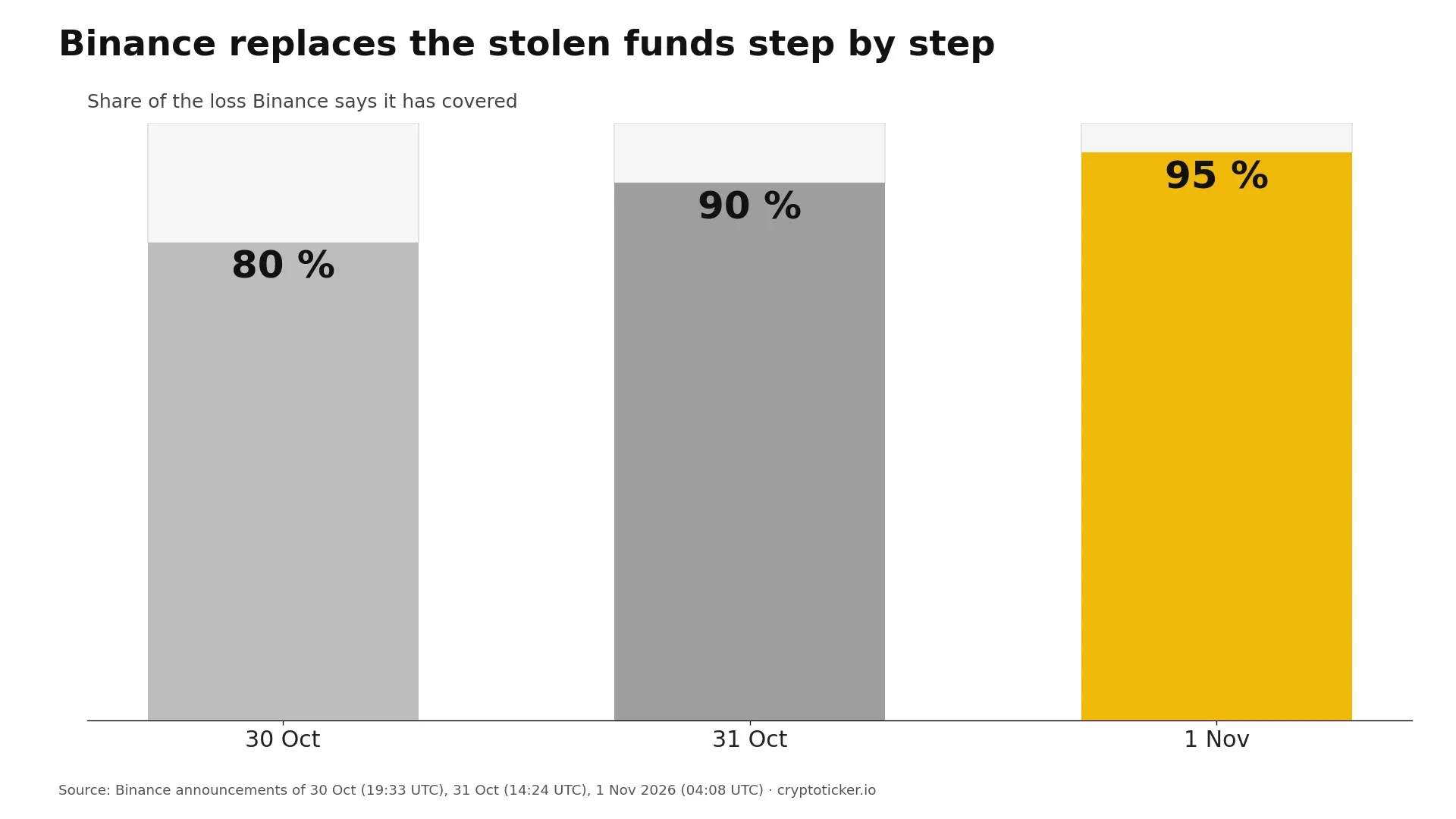
At the same time, Binance is filling the gap out of its own pocket. By the evening of 30 October, about 80 percent of the stolen amount had been replaced, according to the exchange, 90 percent on 31 October and 95 percent on 1 November. Balances in BTC, ETH, USDT, BNB, SOL, USDC, XRP, USD1, RLUSD and ZEC are fully backed, Binance says, documented by a reserve snapshot from 31 October, 00:00 UTC. The missing 5 percent concerns smaller tokens outside the top ten, which can only be bought slowly in the required size. Where the money for the reimbursement comes from is explained in Binance promises full reimbursement.
 Find the right exchange for your tokens
These 15 networks come first
Binance ranked the networks by user demand over the past week. The networks most customers want to withdraw through open first:
| Network | Coins available in phase one |
|---|---|
| Bitcoin | BTC |
| Ethereum | ETH, USDT, USDC |
| BNB Smart Chain | BNB, USDT, USDC |
| Tron | TRX, USDT |
| Solana | SOL, USDT, USDC |
| XRP Ledger | XRP |
| Zcash | ZEC |
| Dogecoin | DOGE |
| TON | USDT, GRAM |
| Polygon | POL, USDT, USDC |
| Avalanche C-Chain | AVAX, USDT, USDC |
| Arbitrum | ETH, USDT, USDC, ARB |
| Base | ETH, USDC |
| Optimism | ETH, USDT, USDC |
| Sui | SUI |
Source: Binance, announcement of 1 November 2026. More networks and coins will follow once their checks are complete, the exchange says. At 04:45 UTC, a little over an hour before the start, Binance's own network status still showed withdrawals as disabled on all Bitcoin and Ethereum networks.
What Binance customers should do now
- Check the network before withdrawing. Whether a coin is already open on the network you want is shown on the coin's withdrawal page or on Binance's network status page. Anyone withdrawing USDT, for example, can choose between nine networks in phase one.
- Expect delays. Binance expects heavy traffic in the first phase. If a withdrawal fails, the exchange says a new attempt after a short while usually helps.
- Only check in the app or on binance.com. After major events, fake emails and websites promise a "fast withdrawal". Check the status only there, never through links in emails or messages.
- Double-check the address. A withdrawal to the wrong network is usually lost. If you are withdrawing to your own wallet for the first time, send a small test amount first.
Regulated crypto exchanges comparedWhat is still open
Three things will decide in the coming days whether trust returns. First, phase two: customers holding coins outside the list are still waiting, and Binance has not yet named a date. Second, the full proof of reserves, which Binance expects on Tuesday, 3 November; it is meant to let customers verify that their balances in the ten main coins are backed at least one to one. What the proof of reserves shows and how to check it is explained in Binance proof of reserves. Third, the report on the attack itself, which the exchange plans to publish once the investigation is complete.
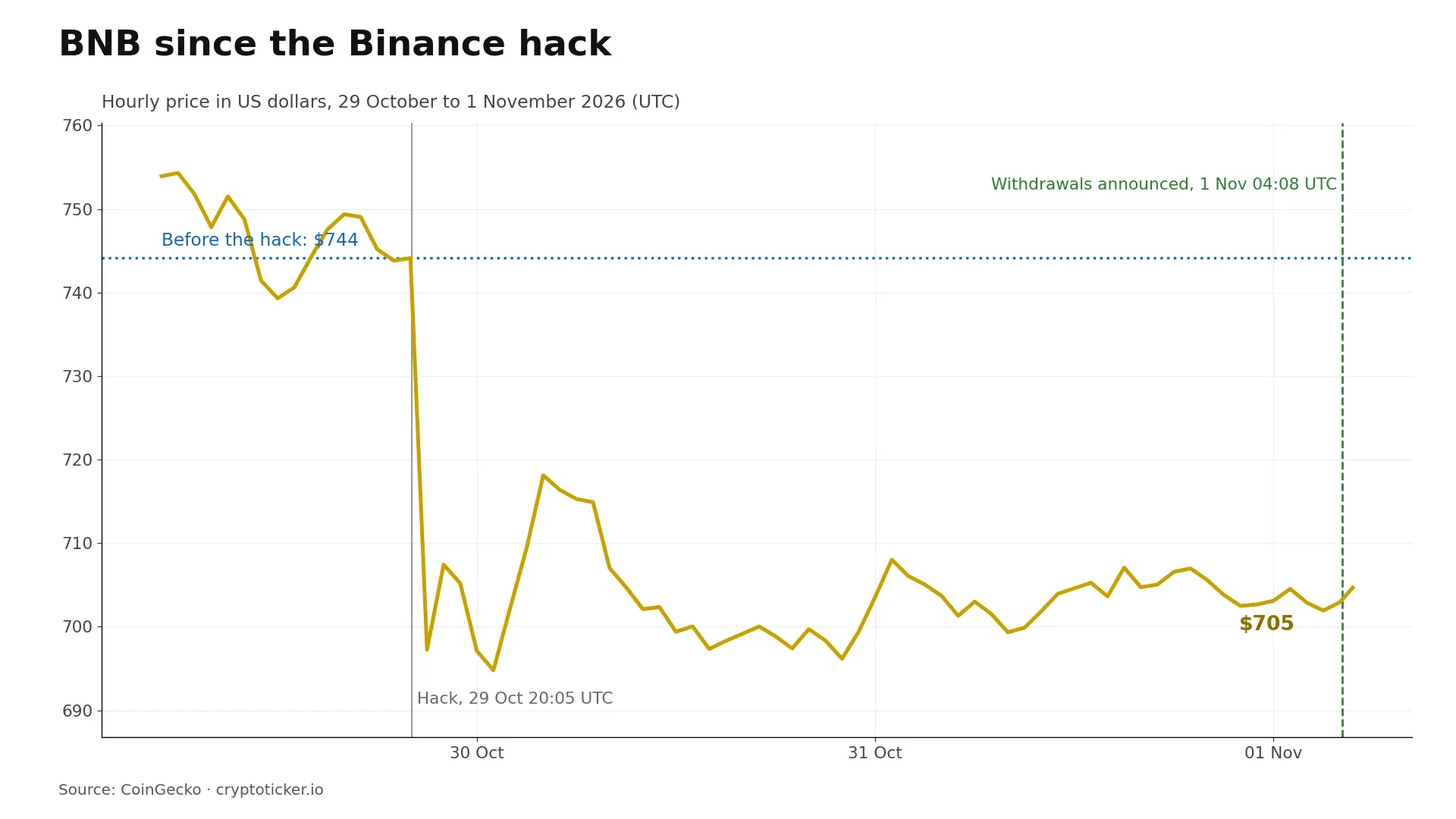
The market has only partly digested the shock. BNB, the exchange's token, fell from $744 to $695 on an hourly basis after the hack and stood at $705 on Sunday morning, a good 5 percent below its level before the attack. Bitcoin traded at about $77,750 at 04:45 UTC. How prices moved in the hours after the hack is shown in our crypto crash timeline.
Our view
So far, Binance is sticking to its own roadmap: reimbursement from its own funds, the reopening on the announced Sunday and a proof of reserves with a fixed date. For customers, the reopening is still a good moment to review how they split their holdings. Coins you do not trade are safer in your own wallet than on any exchange; which devices are suitable is shown in our hardware wallet comparison. Active traders will find the providers with an EU licence in our comparison of regulated crypto exchanges. This article is not investment advice.
FAQ: Binance withdrawals after the hack
Partner links: some links on this page are partner links. If you become a customer through one of them, we may earn a commission at no extra cost to you. Selection, ratings and ranking are decided independently by our editorial team. Ethics and Independence · Ownership and Funding
Transparency note: This article was produced with the assistance of artificial intelligence. Figures and claims are based on the primary sources linked in the text. The feature image was generated with AI.
For later? Save this article and find it again in your profile.
Related articles
- What is Ethereum Classic? The 2016 split and its proof of work
- Shiba Inu price: Binance reports full SHIB reserves, and what it means for holders
- Binance hack: exchange says $6.34 billion in customer losses fully covered
- BNB falls below $650: Binance Coin at its lowest since August
- Binance withdrawals phase 3: HYPE, Aptos and Litecoin due by mid-November
Which topics should we dive deeper into?
Select what genuinely interests you. Your picks feed directly into our editorial planning.
Crypto news that's actually worth your time.
Weekly. 60 seconds. Carefully curated by our editors: no hype, no promo flood, no spam.

November 4, 2026 1:12 PM

Binance Hack One Week Later: The Real Cost of the $6 Billion Heist
One week after the biggest crypto theft ever, Binance has spent half its SAFU Bitcoin, lost billions in deposits and faces a second-wave warning. Full recap.
November 4, 2026 7:42 AM

Bitcoin ETF Outflows Pass $1 Billion: Why Institutions Are Selling After the Midterms
Spot Bitcoin ETFs bled over $1 billion in three sessions as the Binance hack and the midterms spooked institutions. Where does BTC go next?

November 3, 2026 11:22 PM

Binance hacker sold 499.9 billion SHIB in eight minutes, and the Shiba Inu price barely moved
Analysis: the Binance hacker sold all 499.9 billion SHIB within eight minutes in the early hours of October 30 via ShibaSwap and Uniswap, at a discount of around 14 to 15 percent. The wallet is empty, and the price stands at $0.00000463 on Tuesday evening.

November 3, 2026 9:29 PM

Binance withdrawals phase 2: Cardano and Litecoin only via BEP20 for now
Binance has been reopening more withdrawals since November 3, but Cardano, Litecoin, Polkadot and three other coins only come out as BEP20 tokens on BNB Smart Chain. Pick the wrong network or use a Cardano-only wallet, and the coins may never arrive.
November 3, 2026 9:12 PM

Liquid Network closes the 602 BTC gap: L-BTC is fully backed again
Two months after the exploit of September 6, every L-BTC is once again backed by a bitcoin, with the last 550 BTC arriving on November 2. Direct peg-outs through the Federation remain restricted for now, so redemptions run through swap providers.
November 3, 2026 3:21 PM

Binance after reopening: $3.64 billion in net outflows, 2.1 percent of reserves
Binance reports net outflows of $3.64 billion in about nine and a half hours after reopening withdrawals. The full proof of reserves due on Tuesday is meant to show whether customer balances are backed one to one.

November 3, 2026 11:14 AM

Binance reopens Shiba Inu withdrawals five days after the hack
Analysis: since Tuesday morning Binance lets Shiba Inu leave the exchange again, five days after the hack. SHIB trades at $0.00000457, and the $0.0000045 level carries more weight than the reopening itself.
November 3, 2026 1:58 AM

Crypto Hack News: Every Attack Since the Binance Hack and How to Stay Safe
Binance, Mercado Bitcoin, BTCPay Server, a WordPress plugin and hijacked WhatsApp accounts: since 29 October hardly a day has passed without a crypto hack. Every case with its status, the loss and the steps that keep you safe now.
November 2, 2026 6:01 PM
Hyperliquid: why HYPE is up 13 percent while Binance pauses withdrawals
HYPE trades at $89.42, up around 13 percent, while bitcoin loses 4.1 percent and ether 5.3 percent. The trigger is the withdrawal halt at Binance: we counted all 235 markets on Hyperliquid and show what the inflow really means for volume, open interest and funding costs.
November 1, 2026 9:16 AM

Dogecoin price after the Binance reopening: what investors need to know
Context: Binance reopened the first withdrawals on Sunday morning, and the Dogecoin network is in that first phase. DOGE, however, is not on the list of fully backed balances, and for holders that is the more important line.
October 31, 2026 11:36 PM
Tron Price Falls Below Pre-Hack Level: Binance Attacker Still Holds 475 Million TRX
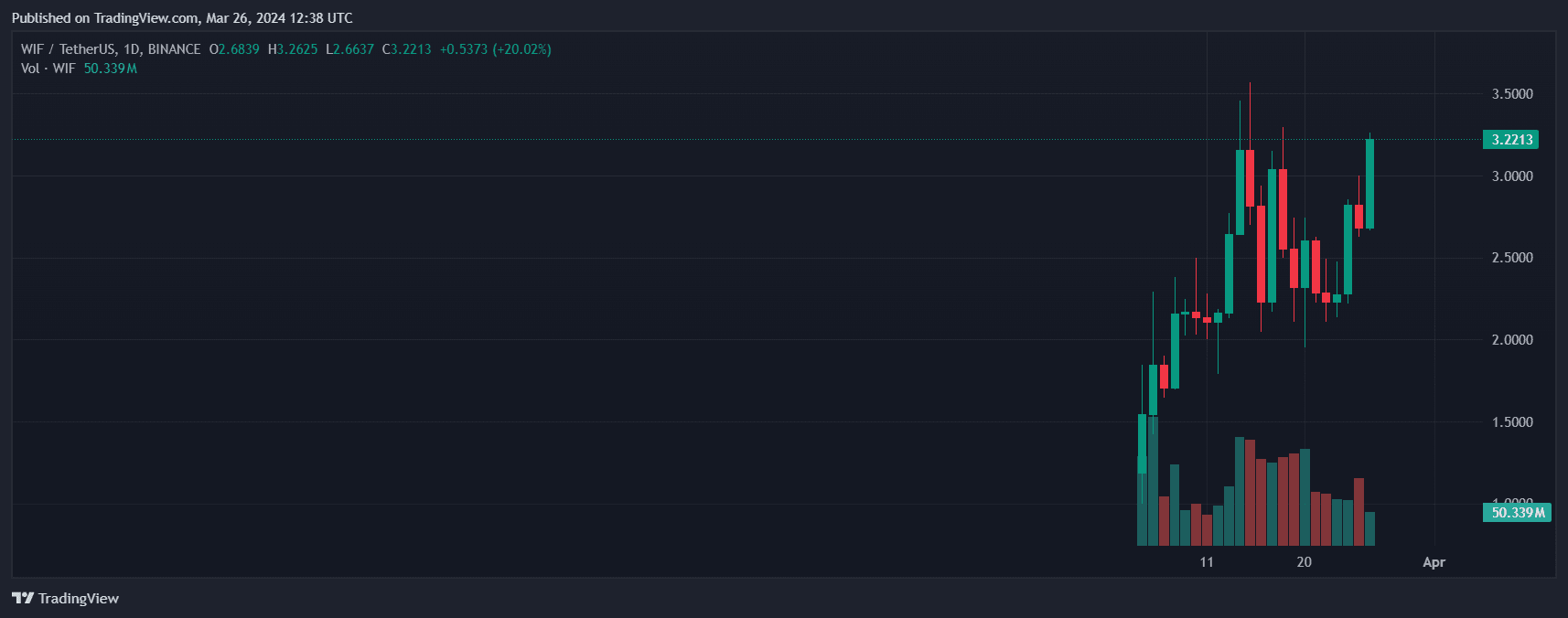
TRX has erased its post-hack spike and trades at $0.302, below the $0.331 before the Binance attack and the lowest since March. The attacker still holds about 475 million TRX and sells them every 96 seconds. Why the market discounts ten times the stash, and which levels matter now.
October 31, 2026 3:15 PM

$6.34 Billion Buffer: Binance Promises a Full Proof of Reserves by Monday
Binance says it will present a full proof of reserves by Monday and has set aside more than $6.34 billion for it. What a proof of reserves proves, what it leaves open and how you find your own balance in it.
October 31, 2026 12:48 AM

Crypto Weekly Recap: Binance Hack, Wall Street Crash and Gold Under Pressure
The largest crypto theft in history, Wall Street's worst day since June and a Fed that turns hawkish: week 44 of 2026 in numbers, the five events that mattered, winners and losers among the top coins and what crypto investors should watch next week.
October 31, 2026 12:37 AM

Binance Hack Conspiracy Theories: Fact-Checking CZ, Trump and the Midterms
Inside job, staged hack, money for the Trump family, timing before the midterms: we checked the theories about the Binance hack against the evidence. What is documented about Binance, CZ and World Liberty, and what is not.
October 30, 2026 3:32 PM

Binance puts the hack at $6.3 billion: what you can do now
Binance names a cause itself for the first time: a compromised laptop belonging to a DevOps engineer is said to have opened access to a service container, while private wallet keys are said not to have leaked. The exchange estimates the total damage at around $6.3 billion, with about $3 billion considered frozen.
October 30, 2026 10:41 AM

North Korea Behind the Binance Hack? Everything We Know About the $6.3 Billion Theft
TRM Labs and Chainalysis see North Korea's TraderTraitor group behind the Binance hack. Everything in one place: how it happened, losses by blockchain, $2.7 billion frozen, withdrawals within 48 hours and what it means for Bitcoin and BNB.
October 30, 2026 9:14 AM

How Much Would It Take to Bankrupt Binance? The $6 Billion Hack Explained
Binance lost $6.3 billion in the biggest crypto hack ever. How much would it take to bankrupt the exchange, and what does it mean for the crypto market?
October 30, 2026 1:50 AM

Binance Hack On-Chain Analysis: 50 Signatures, 197,460 ETH and $2.83 Billion Frozen
What really happened in the Binance hack? We analyzed the blockchain ourselves: 50 signatures in one transaction, $2.83 billion frozen, 197,460 ETH with the attacker and an Aave trick. Plus the key voices from X and our conclusion.
October 29, 2026 10:40 PM
Binance Withdrawals After the Hack: Solana and XRP Paused, Bitcoin and Ethereum Open
Binance has confirmed the hack: co-founder Yi He says the exchange will cover all losses, and deposits and withdrawals are temporarily suspended. What it means for users, which networks were already paused and what to watch out for now.
October 29, 2026 9:49 PM

Is This the End? How Low Bitcoin Could Fall After the Binance Hack
About $2.8 billion left a Binance hot wallet and Bitcoin slid below $79,000. Whether this turns into a real crash depends on one question. Three scenarios, the key price levels for Bitcoin, Ethereum and Solana and what to do now.
October 29, 2026 9:38 PM

Binance Hack: Around $2.8 Billion Drained From a Hot Wallet
On Thursday evening, roughly $2.8 billion left the Binance wallet “Binance 14” within minutes. The attacker had tied the wallet to their own contract via EIP-7702. Tether and Circle have frozen about $2.4 billion, and Binance says it is investigating.
October 6, 2026 7:35 PM

CFTC Opens a 60-Day Consultation on Leveraged Crypto Trading: “The American People Deserve Clarity, Reliability and Consumer Protection”
The US futures regulator CFTC published a 109-page paper on leveraged crypto trading on October 5, 2026. It is a consultation with a 60-day comment period, not a finished rule, and for investors in Germany MiCA and the BaFin general administrative act remain decisive.
September 30, 2026 5:03 PM

Bitget after the hack: withdrawals are back and the Protection Fund is above $300 million
Six days after the attack, Bitget is back with strong numbers: withdrawals for Bitcoin, Ether and USDT are running again, the Protection Fund was refilled two days ahead of its own deadline, and the proof of reserves shows 131 percent coverage.
September 25, 2026 4:46 PM
Binance Funding Account Becomes Stocks Account: What to Check Before September 29
From September 29, 2026, Binance moves crypto balances out of the Funding Account into the Spot Account; in January 2027 the account is renamed Stocks Account. What to check beforehand, why an outdated app version hides your balance, and what happens to savings plans and API connections.
September 25, 2026 4:13 PM

Crypto Exchange Protection Funds Recalculated: What Really Covers Your Balance After the Bitget Hack
The $351.6 million attack on Bitget would eat up three quarters of the exchange's in-house protection fund. We retrieved the protection promises of several exchanges ourselves and measured them against deposit insurance and MiCA liability.
September 25, 2026 4:11 AM
Bitget Pauses Withdrawals: Where Existing Customers in Europe Stand
Bitget reports unauthorised outflows of around $351.6 million (later revised to $387.5 million) and has suspended withdrawals. For existing customers in Europe, that closes the one route MiCA had left them.
September 16, 2026 1:28 PM
Crypto Withdrawal to Your Own Wallet: Ten Providers Checked, Three Will Not Let Your Coins Out
Seven of ten providers available in Germany offer a payout to a wallet address you control yourself; three do not. Our survey of September 16, 2026, shows how to spot the difference before you buy, and why the question matters right now.
More from CryptoTicker