
Tokenomics explained: only 41 percent of Sui tokens are tradable so far
Tokenomics sets how many tokens exist, when new ones are added and who holds them. Using real figures for Bitcoin, Ethereum, Solana, Sui and Arbitrum, we show the points that matter.

Which topics should we dive deeper into?
Select what genuinely interests you. Your picks feed directly into our editorial planning.
Crypto news that's actually worth your time.
Weekly. 60 seconds. Carefully curated by our editors: no hype, no promo flood, no spam.
Tokenomics describes the economic rules of a crypto token: how many units exist, how many of them are already tradable, on what schedule new ones are added or removed, and who holds which share. These rules often drive the price more than any news item, because they determine how much supply will hit the market in the future. An example from November 12, 2026: of the 10 billion Sui tokens, only around 4.14 billion were in circulation according to CoinGecko market data, a good 41 percent. The rest will be released over several years.
The term combines "token" and "economics". It covers a bundle of supply, distribution, emissions and utility. Anyone who wants to buy a cryptocurrency should know these points before looking at the price chart. This guide explains each building block with real figures for Bitcoin, Ethereum, Solana, Sui and Arbitrum.
What is tokenomics? Supply, distribution and utility of a token
Behind every token is a set of rules laid down in the code or in the project's documentation. For Bitcoin, they sit in the protocol itself and can only be changed with broad agreement across the network. For many younger projects, foundations, developer companies or token holder votes set the rules, and they can change later.
Four questions form the core of any tokenomics analysis:
- Supply: Is there a cap, and how much of it is already in circulation?
- Emissions: On what schedule are new tokens created, and does the rate fall over time?
- Distribution: Who holds the tokens, and when may founders and investors sell?
- Utility: What is the token needed for, such as fees, staking or voting?
None of these questions says anything about the future price on its own. Taken together, though, they show whether new supply is coming and whether there is demand that can absorb it.
Circulating, total and max supply: the three supply figures
Circulating supply is the number of tokens that can be freely traded. Total supply also includes tokens that already exist but are still locked. Max supply is the cap that can never be exceeded, provided the project has set one.
How much these figures differ is shown by a comparison on November 12, 2026, based on CoinGecko data:
- Bitcoin: around 20.11 million BTC in circulation against a max supply of 21 million. A good 95 percent has thus already been mined.
- Ethereum: around 122.2 million ETH, with no max supply. Circulating and total supply are identical because no tokens are locked.
- Solana: around 591 million SOL in circulation against a total supply of around 637 million, also without a fixed cap.
- Sui: around 4.14 billion SUI in circulation against a fixed max supply of 10 billion.
- Arbitrum: around 6.89 billion ARB in circulation, against an initial supply of 10 billion.
A fixed max supply is not a mark of quality in itself. The cap makes future supply predictable, nothing more. What matters is how quickly the gap between circulating and max supply closes.

 Compare crypto exchanges to buy tokens
Market cap and FDV: where the valuation can mislead
Market capitalization is the price multiplied by the circulating supply. Fully diluted valuation (FDV), by contrast, multiplies the price by the total or max supply. FDV shows what the project would be worth if all tokens were already tradable and the price stayed the same. How market cap is calculated in detail and what rankings use it for is explained in our article on crypto market cap.
It gets interesting when the two values are far apart. For Bitcoin, Ethereum and Dogecoin they are practically the same. For Sui, market cap stood at around $3.3 billion on November 12, with FDV at around $8.1 billion. Market cap thus reaches only a good 41 percent of FDV. For Arbitrum the figure was around 69 percent ($1.0 billion against $1.5 billion), for Solana just under 93 percent.
Why a low circulation ratio is a risk
The circulation ratio is circulating supply as a share of max or total supply. If it is low, a lot of supply will be added in future. For the price to hold steady, demand has to grow at the same pace. For you as a buyer, that means a token with a low price and a small market cap can still be richly valued if its FDV is a multiple of that. This calculation is one of the criteria we describe in detail in our guide to choosing coins.
Token unlocks and vesting: how unlocks increase supply
Vesting is a lock-up period for tokens received by founders, employees and early investors. Instead of getting everything at once, their tokens are released on a fixed schedule. Each of these releases is called an unlock. A common setup combines an initial lock-up, known as the cliff, with monthly installments afterwards.
Arbitrum is a well-documented example. According to the Arbitrum Foundation's distribution overview, all team and investor tokens are subject to a four-year lock-up. The first release came one year after the token launched on March 16, 2023, followed by monthly installments for three years. The schedule therefore ends in March 2027. Until then, tokens from these pools reach the market every month.
For Sui, the unlock schedule even runs until the end of 2030, according to common unlock trackers. The monthly tranches go to investors, early contributors, the community reserve and staking rewards, among others.
Do unlocks move the price?
An unlock does not automatically mean selling pressure. Holders whose tokens are released do not have to sell them. In practice, traders still watch the dates closely, because early investors often bought in at very low prices and can take profits even after prices have fallen. Large unlocks are therefore often priced in ahead of time.
Emissions and inflation: Bitcoin, Solana and Dogecoin compared
Emissions are the issuance of new tokens, usually as a reward for securing the network. The inflation rate states by what percentage supply grows each year. Three networks show three models:
- Bitcoin halves the block reward roughly every four years. Since the halving in April 2024, miners receive 3.125 BTC per block. Inflation thus falls step by step toward zero until the max supply of 21 million is reached.
- Solana started with inflation of 8 percent, which falls by 15 percent of its value each year until it settles at 1.5 percent. In mid-2026 it stood at around 3.8 percent, according to the data service Solana Compass. The network recently voted on speeding up the reduction.
- Dogecoin issues a fixed 10,000 DOGE per block, around 5.26 billion a year. Because the amount is fixed while total supply grows, percentage inflation still falls slowly.
In networks with staking, most of the emissions go to those who commit their tokens to securing the network. Anyone who does not stake is diluted: their share of total supply shrinks each year by the inflation rate. Which providers offer staking for SOL, ETH or SUI, and with what lock-up periods, is shown in our staking provider comparison.

 Compare staking platforms to offset dilution
Token burn on Ethereum: how EIP-1559 destroys supply
A burn is the permanent destruction of tokens. The tokens are sent to an address no one can access and are thus out of circulation. Since the EIP-1559 upgrade of August 2021, Ethereum has burned the so-called base fee on every transaction. At the same time, new ETH is created as a reward for validators.
Whether supply grows or shrinks therefore depends on network activity. In periods of high fees, more is burned than newly issued, and supply falls. Since many transactions moved to cheaper layer 2 networks, less is being burned, and total supply has risen again. At around 122.2 million ETH, it is now above its level at the switch to proof of stake in September 2022. A burn is therefore no promise of falling supply, but a mechanism whose effect depends on usage.
Some projects also burn tokens through buybacks funded by their revenue. Here it pays to look at the details: is the buyback really funded by revenue, or is the project only burning tokens from its own reserve that were never in circulation anyway?
Token distribution: who got how much at Arbitrum
Distribution shows how concentrated a token's holdings are. For Arbitrum, the foundation gives the following shares of the 10 billion ARB:
- 35.28 percent for the ArbitrumDAO treasury, whose use token holders vote on
- 26.94 percent for the team, employees and advisers
- 17.53 percent for investors
- 11.62 percent as an airdrop for users
- 7.5 percent for the Arbitrum Foundation
- 1.13 percent as an airdrop for other DAOs
Team and investors together thus hold a good 44 percent. That is not unusual for venture-backed projects, but it has consequences: these groups received their tokens at far lower prices than later buyers on exchanges. According to the foundation, supply can also grow by at most 2 percent a year if the DAO decides so.
Token utility: fees, staking and governance as demand
Supply is only one side. The other is why anyone should hold the token. Typical uses are:
- Fees: You need ETH, SOL or SUI to pay for transactions on the respective network.
- Staking: Anyone who commits tokens to securing the network receives part of the emissions and fees.
- Governance: Governance tokens such as ARB give a vote on protocol changes and on the use of the community treasury.
- Security and payment: Bitcoin has no further use in the protocol; its demand rests on its role as a scarce, censorship-resistant store of value.
A pure governance token with no share of revenue has a weaker demand base than a token needed for every transaction. That is a classification, not a rating of individual projects.
Tokenomics under MiCA: white papers and staking income
If you buy tokens in the EU, you will increasingly find tokenomics details in vetted documents. The European crypto regulation MiCA requires providers that want to offer new crypto assets to the public in the EU or have them admitted to trading to publish a crypto-asset white paper. It must describe, among other things, holders' rights, the underlying technology and the risks. There is no such document for Bitcoin, because nobody is offering the coin; for new tokens, however, it is an important source.
Tokenomics also matters for tax, above all with staking rewards; how they are taxed depends on where you live, and tools for keeping records are listed in our crypto tax software comparison.
Tokenomics: the circulation ratio says more than the price
A token's price only shows what one unit costs. Whether it is richly or cheaply valued only becomes clear from the circulation ratio, FDV and unlock schedule. On November 12, 2026, the range stretched from Bitcoin, with a good 95 percent of max supply in circulation, to Sui with a good 41 percent. Three steps help you factor these numbers into your decision:
- Look up supply and unlocks: Compare market cap and FDV and note the next large unlock dates before you buy. The major tokens can be traded with the providers in our crypto exchange comparison.
- Offset dilution: For tokens with high emissions, staking can protect your share. Terms and lock-up periods are in the staking platform comparison.
- Record inflows: Staking rewards and sales belong in a complete record for your tax return. Suitable software is listed in the crypto tax software comparison.
(As of November 12, 2026. This article is not investment advice. Prices and fee structures change; check the terms with the provider before you buy.)
Frequently asked questions about tokenomics
Partner links: some links on this page are partner links. If you become a customer through one of them, we may earn a commission at no extra cost to you. Selection, ratings and ranking are decided independently by our editorial team. Ethics and Independence · Ownership and Funding
Transparency note: This article was produced with the assistance of artificial intelligence and reviewed by our editorial team before publication. All figures and claims were checked against the primary sources linked in the text. The feature image was generated with AI.
Related articles
- Crypto market cap explained: Bitcoin vs gold and Apple
- Starknet (STRK): the November 15 unlock weighs seven times more than October's
- What Is Shiba Inu? SHIB, Shibarium and 410 Trillion Burned Tokens
- Pieverse unlock on November 14: 86 million tokens meet 300 million in circulation
- Shiba Inu: no burn recorded since October 31, what matters now
Which topics should we dive deeper into?
Select what genuinely interests you. Your picks feed directly into our editorial planning.
Crypto news that's actually worth your time.
Weekly. 60 seconds. Carefully curated by our editors: no hype, no promo flood, no spam.

October 27, 2026 12:25 AM
RAIN under pressure: 431 billion tokens are still locked in vesting
RAIN fell 11.4 percent to $0.00760 without a single piece of news behind it. What counts are 431.6 billion locked tokens and a daily volume that reaches only 0.36 percent of market capitalisation.

October 25, 2026 9:36 PM
101.6 million BTW become tradable on November 2: what matters now
Context: the lock-up ends for 101.6 million BTW on November 2. Three data providers name the date and the quantity identically, yet they contradict each other sharply on the recipient and on the circulating supply.
October 25, 2026 3:38 PM
Token burn explained: what do 1.65 million burned BNB really achieve?
A token burn sends coins to an address from which nobody can ever retrieve them. What happens technically, how the BNB Chain calculates its quarterly quantity, and why a smaller supply alone does not yet make for a higher price.
October 22, 2026 10:21 PM

Shiba Inu: 673 million tokens burned in 30 days, one percent of supply would take 714 years
Analysis: 589,876 SHIB were burned in 24 hours, worth roughly three dollars. What that means for circulating supply, and why percentage figures on the burn rate mislead.
October 21, 2026 10:29 PM
275 million ENA unlock on November 1: Ethena's buyback still needs $7.5 billion in USDe
Context: 275,015,625 ENA leave the lock on November 1, roughly $56.9 million at today's price. The agreed buyback only kicks in at $7.5 billion of USDe supply, and $2.84 billion of that is missing.
October 19, 2026 1:16 PM

Cronos (CRO): 1.17 billion tokens leave the Strategic Reserve, eleven times the daily turnover
Overnight into October 17, 1.17 billion CRO left the Strategic Reserve and entered circulation, around 2.33 percent of the circulating supply. Because CRO turns over only $6.2 million a day, the tranche is roughly eleven to twelve times the entire daily turnover.
October 19, 2026 10:24 AM

Token unlock and vesting explained: cliff vs monthly tranches
A token unlock frees tokens that have existed all along but sat locked in a contract. How a cliff differs from linear vesting, which four numbers make a vesting schedule readable, and what counts for tax when the tokens land with you.
October 18, 2026 10:14 PM

Shiba Inu has 99.96 percent of its supply in circulation, XRP only 63.1 percent
Of every Shiba Inu token that can exist, 99.96 percent is in circulation. At XRP it is only 63.1 percent, at Chainlink 76.7. What that difference means for the SHIB price.
October 17, 2026 10:26 PM

Kite unlock in early November: 1.11 billion KITE become tradable, almost half the circulating supply
At Kite the one-year lockup ends in early November, and 1.11 billion KITE come free at once. That is 43 to 46 percent of the circulating supply and the value of almost twelve trading days.
October 17, 2026 1:24 AM
Rain (RAIN) after the unlock: $6.3 billion market cap, $7.1 million in daily turnover
Since the token unlock of October 12, 62.08 percent of the RAIN supply is free and 433.15 billion units remain locked. Against a market value of $6.30 billion stands a daily turnover of $7.14 million, the second thinnest in the top 25.
October 11, 2026 10:20 PM

QNT token: a £100 Overledger licence a year, 14.88 million supply cap
The QNT token pays the annual licence for Overledger and is to carry the fee for gas and execution in the Fusion Rollup. What it does, where the cap sits and why circulating supply differs by 2.47 million tokens depending on the source.
October 10, 2026 1:15 PM

ZRO Unlock on October 20 Hits 5.92 Percent of the Circulating Supply: Hold or Sell?
On October 20 LayerZero makes around 23.63 million ZRO tradable, and all of it comes from insider allocations. Measured against daily trading volume, the tranche weighs about half a trading day.
October 8, 2026 7:21 AM

Allora Unlock on November 11: How to Check What of the 160 Million ALLO Really Reaches the Market
Allora's twelve-month lock-up for core contributors and early backers ends on November 11: 160.2 million ALLO become tradable at once, roughly $41 million against a daily turnover of just over $4 million. Where the figure comes from, why the trackers disagree, and what tells you after the date how much of it was actually sold.
October 5, 2026 4:42 PM

deBridge DBR: 618 million tokens come free on October 17, ten trading days of turnover at once
At deBridge the lock-up on 618.3 million DBR ends on October 17, 2026, the eighth quarterly tranche since the token launch. This piece sets the tranche against daily turnover, shows the six pots behind it and places trading and tax for investors in Germany.
September 30, 2026 10:27 AM

92.6 Million ARB Every Month: When the Arbitrum Lockup Runs Out
Every month exactly 92,645,833 ARB fall out of the lockup at Arbitrum, and only a few tranches are left. We recalculate the monthly instalment from the Arbitrum Foundation's allocation table and name every remaining date.
September 29, 2026 7:13 AM
700 million HYPE sit outside circulation as the September 29 unlock approaches
Several data services list a fresh HYPE release for September 29, yet their figures range from 330,000 to 14.18 million tokens. Our own count of the holdings shows where that spread comes from and which part of HYPE is not in circulation at all.
September 26, 2026 10:33 AM
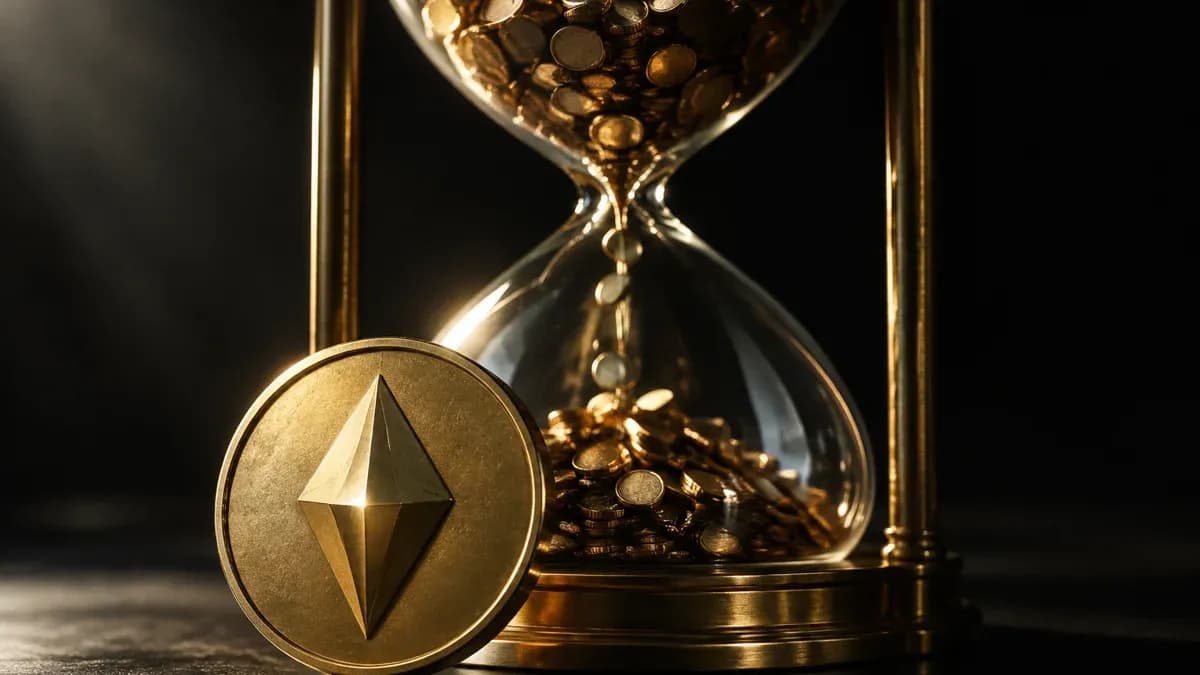
Monad Unlock on November 24: Why 10.7 Billion MON Equal Around 90 Percent of the Circulating Supply
At the first anniversary of the mainnet launch, Monad's one-year lock-up on team tokens ends. This tranche alone reaches around 90 percent of the amount circulating today. What the primary source evidences, which aggregator figure is wrong, and what you can check before the date.
September 26, 2026 7:24 AM
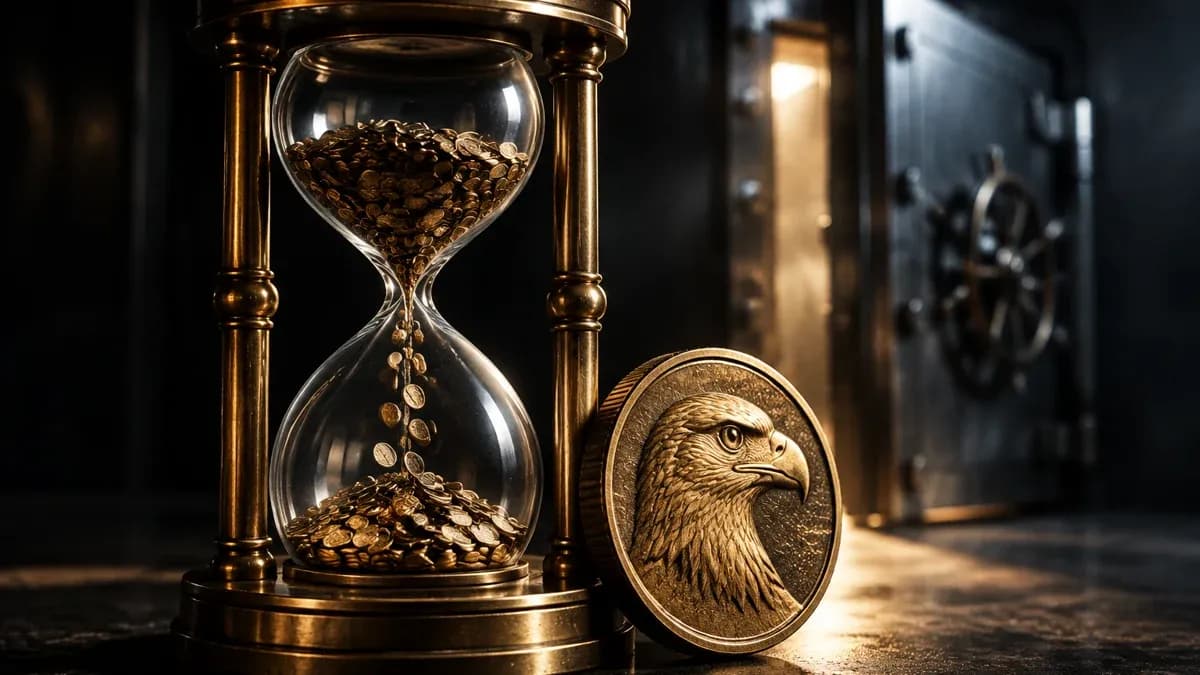
FF Unlock on September 29: What the End of the Lock-Up at Falcon Finance Means
On September 29, 2026, 203 million FF leave the one-year lock-up at Falcon Finance, which is 6.47 percent of circulating supply. What exactly is released, who receives it, and how to recalculate the release schedule yourself instead of trusting a headline.
September 16, 2026 1:11 AM
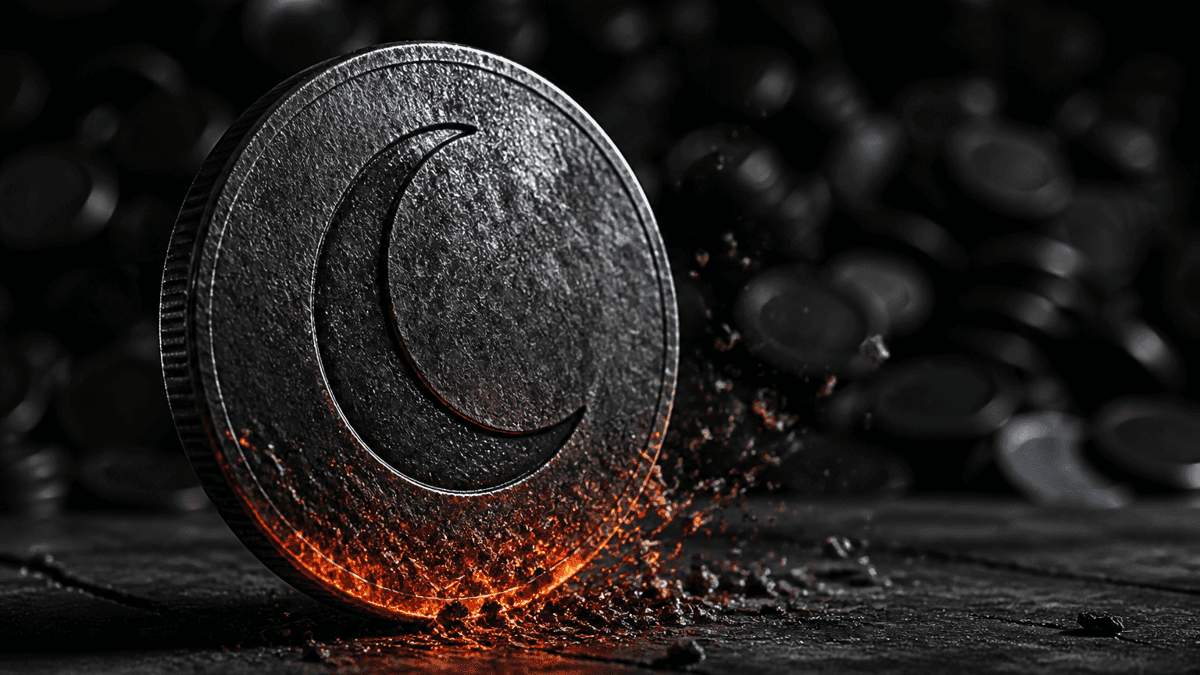
Terra Classic Recalculated: How Much LUNC Burns Really Cut the Supply
Terra Classic tripled its burn tax at the start of August. Six weeks on, the effect on supply can be calculated - along with how long a halving of the circulating supply would take at the measured pace.
September 4, 2026 4:49 AM
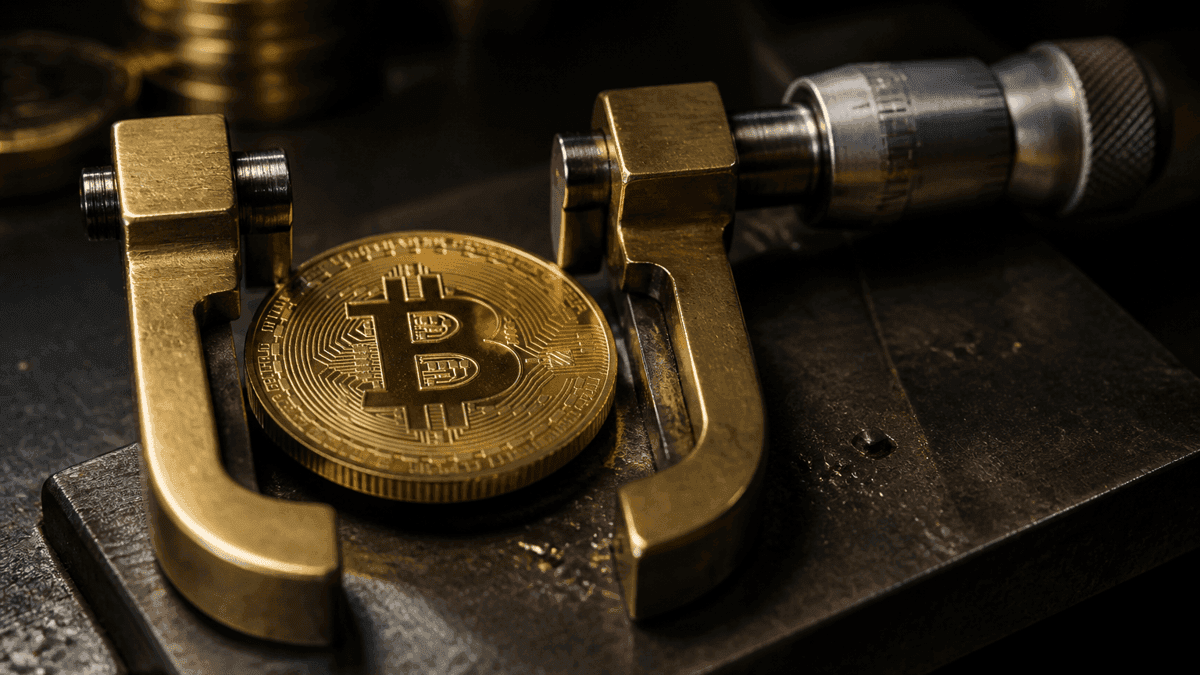
Token Unlock Math: What Comes Free at Capricorn (APR) on October 23
On October 23, 2026 the one-year lock-up for early investors and core developers at Capricorn Tech comes to an end. The project documentation names 92.8 million APR, a widely used unlock calendar almost 150 million — this article shows you how to resolve such contradictions yourself.
September 2, 2026 7:34 AM
DoubleZero Unlock on October 2: 1.655 Billion 2Z Come Free
On October 2, 2026 DoubleZero releases 1.655 billion 2Z from lock-up in one moment, a supply increase of roughly 47.7 percent in a single day. Who receives the tokens, how to calculate the dilution yourself, and why the project publishes no unlock schedule of its own.
September 1, 2026 1:31 PM
Plasma XPL Unlock on September 25: 1.81 Billion Tokens Come Free
On September 25, 2026 Plasma's one-year lock-up for team and investors expires: 1,805,555,556 XPL come free on a single day, around 65 percent of the current circulating supply. Here is where the figure comes from, what follows month by month, and how to verify the date yourself.
August 29, 2026 4:15 PM
MemeCore Unlock on September 2, 2026: What Happens to Your M Tokens
On September 2, 2026, 56,111,112 MemeCore tokens leave lock-up, roughly 2.5 percent of the circulating supply. Ten days earlier a Nasdaq-listed company took over 40.9 percent of that supply; this piece separates the two events using the original filings.
August 29, 2026 10:13 AM

EigenLayer Unlock: What Happens to 39.5 Million EIGEN on September 1
On September 1, 2026, 39,488,745 EIGEN leave lock-up, 4.49 percent of circulating supply. The tranche goes entirely to insiders and is the next instalment in a series running to October 2027.
August 27, 2026 10:24 AM
Hyperliquid Unlock on September 6: How Much HYPE Really Hits the Market
On September 6, Hyperliquid releases around 9.92 million HYPE to the core contributors, nominally a good $800 million. In March, 173,217 tokens of the same tranche were claimed, or 1.75 percent.
August 19, 2026 10:36 PM

FDV and circulating supply: why freshly listed tokens collapse after the exchange debut
A new token starts trading, triples and then loses half its value. Circulating supply, total supply and FDV explain this pattern, and you can look up all three figures yourself in two minutes.
August 19, 2026 4:36 PM

LayerZero Unlock on August 20: How to Calculate ZRO's Monthly Dilution
On August 20, 2026 the next monthly tranche of LayerZero's ZRO token comes off its lock-up, and not for the first time, because no single deadline ends here at once. How to work out the monthly dilution yourself from allocation, total supply and schedule, why the data platforms report different numbers, and why the amount released is rarely the amount sold.
More from CryptoTicker