
Ethereum price prediction: the premium for leveraged buys falls to zero, and $2,311 is the level that decides
Analysis: it is documented that the funding rate for leveraged Ethereum buys on OKX has fallen to zero for the period up to midnight, the first time since October 13, and that Ether is quoted at $2,300 on Saturday evening. Our assessment follows further down: cheap leverage turns no price, and the 100-day line at $2,311 decides the direction.


Which topics should we dive deeper into?
Select what genuinely interests you. Your picks feed directly into our editorial planning.
Crypto news that's actually worth your time.
Weekly. 60 seconds. Carefully curated by our editors: no hype, no promo flood, no spam.
Anyone betting on a rising Ether in the futures market has paid nothing for the privilege since Saturday evening. The funding rate for the ETH perpetual contract on OKX stands at minus 0.00002 percent for the period up to midnight, which arithmetically is zero. It is the first non-positive reading since October 13. Over the seven days before that, buyers paid an average of 0.00579 percent per eight-hour period, or 6.34 percent annualised.
Two things are documented by this: the surcharge for leveraged long positions has disappeared, and the spot price stands at $2,300.13 on Saturday, October 24, at around 6:40 p.m., 4.47 percent below its level 24 hours earlier. Our assessment sits further down in a section of its own, and in one sentence it runs: the vanished premium shows that speculation on rising prices has thinned out, but it is no buy signal.
Where the price can point on a horizon of months is set out in our Ethereum price prediction. This article looks at the futures market, the side that price reports usually leave out.
Ether at $2,300, the funding rate at zero
Ether was quoted at $2,300.13 on Saturday evening. The day's high stood at $2,410.06, the day's low at $2,286.76 according to CoinGecko data, and on Kraken as low as $2,279.80. The market value of all circulating Ether comes to $280.9 billion, trading volume over the past 24 hours to $9.39 billion. The all-time high of $4,946.05 sits 53.5 percent above the price.
The figure that separates this day from the preceding ones does not sit in the price, though, but in the perpetual contract. There, buyers and sellers pay each other, three times a day. Once that payment falls to zero, neither side carries a surcharge any more.
How the funding rate works and who pays it
A perpetual contract, a perpetual in market jargon, is a futures contract without an expiry date. To stop its price drifting away from spot, one side pays the other every eight hours: if the contract trades above spot, the buyers pay, if it trades below, the sellers pay. That payment is the funding rate. It is no fee model of the exchange, but a price the market forms itself.
In terms of interpretation: a high positive rate shows that many are betting on rising prices with leverage and are willing to pay for it. A rate at zero shows that this overhang has been worked off. That is exactly what happened on Saturday, and without any news behind it.
What the three periods of this day show
The three already settled periods of October 24 came in at 0.00188 percent at 00:00, 0.00904 percent at 08:00 and 0.00229 percent at 16:00 UTC. The value for the period up to midnight stands at minus 0.00002 percent. The rate has therefore fallen from its high to zero over the course of the day, in parallel with the slide in the price from $2,410 to $2,300. The current values are public on OKX's funding overview.
6.34 percent a year: what holding a long position has cost so far
With four zeros after the decimal point, the rate sounds like nothing. Extrapolated, it is not. At 0.00579 percent per eight-hour period, it falls due three times a day and therefore 1,095 times a year. That works out at 6.34 percent annualised, measured against the contract size and not against the capital put up.
An example with numbers: hold a long position of $10,000 in ETH at five times leverage and you put up $2,000 of your own money. Funding is measured against the $10,000, so over the past week it cost around $634 a year, or $1.74 a day. Against your own capital that is 31.7 percent a year, before the price has moved at all. At a rate of zero this item disappears, until the rate picks up again.
The level of the rate differs from exchange to exchange, because each runs its own contract and its own index. Traders using leverage look up the terms and the settlement times in their platform's contract specification. Some settle funding hourly rather than every eight hours.
Open interest: $1.44 billion in ETH, $2.43 billion in Bitcoin
The second figure of the futures market is the sum of all open contracts, the open interest. In the ETH perpetual on OKX, 624,274 Ether are open, $1.44 billion at the current price. In the Bitcoin equivalent it is 30,429 BTC and therefore $2.43 billion.
Ether thus carries around 59 percent of Bitcoin's volume in the perpetual, while its market value amounts to only about one sixth. Measured against market value, leverage is stacked considerably more densely on Ether than on Bitcoin. That explains why ETH regularly gives way more sharply on sell-off days: there are more debt-financed positions in place which have to be closed when prices fall.

The options market prices in 55 percent volatility, 39 for Bitcoin
Besides the perpetual, a third source says something about the days ahead: the options market. For that, Deribit publishes the DVOL index, which gives the expected volatility on an annual basis as derived from options prices. For Ether it stood at 55.0 points on Saturday at 18:00, after 51.6 twenty-four hours earlier and 50.7 three days ago. For Bitcoin it stood at 39.1 points.
The gap of 15.9 points is the actual statement. The options market demands a markedly higher risk premium for Ether than for Bitcoin, and this premium has risen over the past three days rather than fallen. The current values are on Deribit's DVOL page.
What 55 points mean in dollars
The expected daily move can be derived from the annual figure by dividing it by the square root of 365. Fifty-five points give 2.88 percent a day, so around $66 at a price of $2,300. Over a week it comes to 7.6 percent, or $175. A leveraged position whose liquidation price sits less than 8 percent away is, by this calculation, within the range of a normal weekly swing.
 Compare the fees of the perp DEXs
The levels: $2,279, the 100-day line at $2,311 and the 200-day line at $2,156
For the levels in this article we recalculated Kraken's daily closing prices over 721 trading days ourselves. The result, as of Saturday evening:
- 20-day line: $2,469.98, with the price 6.73 percent below it.
- 50-day line: $2,545.29, a distance of 9.49 percent. Ether has been quoted below this line for the 17th day running.
- 100-day line: $2,311.21, a distance of only 0.32 percent. That is the level the price is standing at right now.
- 200-day line: $2,156.35, with the price 6.84 percent above it.
The 100-day line is therefore the level for the start of the week. If Ether closes above it, the zone between $2,311 and the 50-day line stays the target. If the price falls below the day's low of $2,279.80, the next well-founded stop is the 200-day line at $2,156, roughly 6 percent lower. The 30-day high sits at $2,776.46 and therefore 20.7 percent above today's price.
What has changed since the options expiry article of October 23
On Friday we reported here on the options expiry of October 30, at which 322,586 ETH run out. That assessment still stands in our analysis of the October 30 expiry date. Three things have changed since then.
First the price: the daily close stood at $2,384.52 on October 23 and at $2,303.76 on October 24. That is 3.39 percent in a single day. Second the deadline: six days now remain to expiry, so the date is moving into the window in which traders roll or close their positions. Third the funding: on Friday, long positions cost between 0.00515 and 0.00686 percent across all three periods, and today nothing at all.
Add to that a piece of news from Saturday morning which we covered separately: the Glamsterdam activation planned for October 26 on the Hoodi testnet was called off. For the price question in this article that changes nothing, for the network's roadmap it does.
Holding period and tax: why the purchase date counts now
For investors in Germany, more hangs on the difference between spot and perpetual than leverage alone. Buy Ether directly and hold it and you fall under the one-year holding period for private assets: once a year has passed, gains from a sale are tax-free, and within the year they are taxable as soon as the threshold is exceeded. Trade a perpetual instead and you are in the territory of forward transactions, for which this period does not apply.
In practical terms: the purchase date of every single addition is the most important record in the portfolio, and it has to be documented with a timestamp. We keep track of the current state of the reform debate on our page on the holding period. A portfolio tracker that counts the periods for each tranche saves you the reconstruction from bank statements if it comes to that; the programs are in the comparison of tax tools.

Routes to a purchase under MiCA: exchange, broker or perpetual
Since the EU's MiCA regulation took full effect, providers of crypto services need an authorisation that is valid in every member state. For the choice of provider, that means less guesswork about where a company is registered and more comparability of obligations. Three routes lead to an Ether position, and they are not the same thing in tax or in technical terms.
A purchase on an authorised exchange with a subsequent withdrawal into your own custody brings real coins, the holding period and the responsibility for the recovery words. A purchase through a broker without a withdrawal option brings a claim against the provider. The perpetual brings no coins, but leverage, funding costs and a liquidation price. Which route fits is decided by the investment horizon, not by the day's move.
 Find a tax tool for your holding period
Our assessment: what argues for and against a floor forming
In the view of this newsroom, the funding rate having fallen to zero is the better argument for the bears, not the bulls. The situation in the options market supports that reading: the DVOL for Ether has risen from 50.7 to 55.0 points in three days, and the gap to Bitcoin, at 15.9 points, is wide. When speculation on rising prices has been worked off and the volatility priced in nevertheless increases, the market is expecting movement without a clear direction.
The arithmetic in the spot market argues against it: the price sits 6.84 percent above the 200-day line, and the 100-day line at $2,311.21 runs 0.32 percent above the current level. As long as these two lines hold, the sell-off is a correction within an intact longer uptrend and no trend reversal. The first daily close of the new week becomes the decisive one: above $2,311 the correction reading stays in place, below $2,279.80 the 200-day line becomes the target.
What we are not claiming: that the rate at zero marks the floor. In October it was negative on the 11th, 12th and 13th as well, and the price fell further afterwards. A single period is a data point, not a signal. This is an assessment of the situation and no recommendation to buy or sell; a total loss is possible at any time with crypto-assets.
Funding rate at zero: the picture only turns above $2,311
Three steps follow from this day's figures.
- Look up the funding costs of your own position. The rate is formed separately for each exchange and each contract and settled three times a day. Traders holding with leverage weigh the distance to their liquidation price against the expected weekly swing of 7.6 percent. The terms are in the comparison of perp DEXs.
- Secure the purchase date for each tranche. The one-year holding period applies per addition, not per portfolio. A tracker that keeps tranches and periods is in the comparison of tax tools.
- Note the two levels. $2,311.21 as the 100-day line and $2,279.80 as the day's low. Those who buy in at fixed amounts place the execution on one of these levels instead of on a round number. Authorised trading venues are in the comparison of crypto exchanges.
(As of October 24, 2026. This article is not investment advice. Prices and fee structures change; check the terms with the provider before you buy.)
Frequently asked questions about Ethereum
Partner links: some links on this page are partner links. If you become a customer through one of them, we may earn a commission at no extra cost to you. Selection, ratings and ranking are decided independently by our editorial team. Ethics and Independence · Ownership and Funding
Transparency note: This article was produced with the assistance of artificial intelligence and reviewed by our editorial team before publication. All figures and claims were checked against the primary sources linked in the text. The feature image was generated with AI.
For later? Save this article and find it again in your profile.
More on Ethereum: All Ethereum news at a glance
Related articles
- Ethereum price prediction: Foundation wallet sells for a fourth time, ETF outflows 87 times larger
- Ethereum Price Crashes Below $2,000: How Low Can ETH Go?
- Bitcoin price prediction: shorts pay the deepest funding in three months as puts gain demand
- Shiba Inu price prediction: funding turns negative as seven in ten accounts stay long
- Ethereum price prediction: Huang's exit pushes ETH below $2,000 as ETF outflows hit day five
Which topics should we dive deeper into?
Select what genuinely interests you. Your picks feed directly into our editorial planning.
Crypto news that's actually worth your time.
Weekly. 60 seconds. Carefully curated by our editors: no hype, no promo flood, no spam.

November 11, 2026 9:25 AM

Cardano open interest climbs to $395 million while ADA falls
Analysis: open interest in the Cardano futures market grows to $395 million while ADA slips below $0.175. What the funding rate, order books and the August low show, and where liquidation looms for leveraged positions.
November 11, 2026 7:14 AM

XRP price prediction: funding rate at a 13-month high, what it means for your coins
Analysis: XRP has lost 30 percent since early October, yet leveraged buyers are paying more in funding than at any point in 13 months. Plus the picture for the spot ETFs and the last emptied wallet of the Binance attacker.

November 10, 2026 3:21 PM
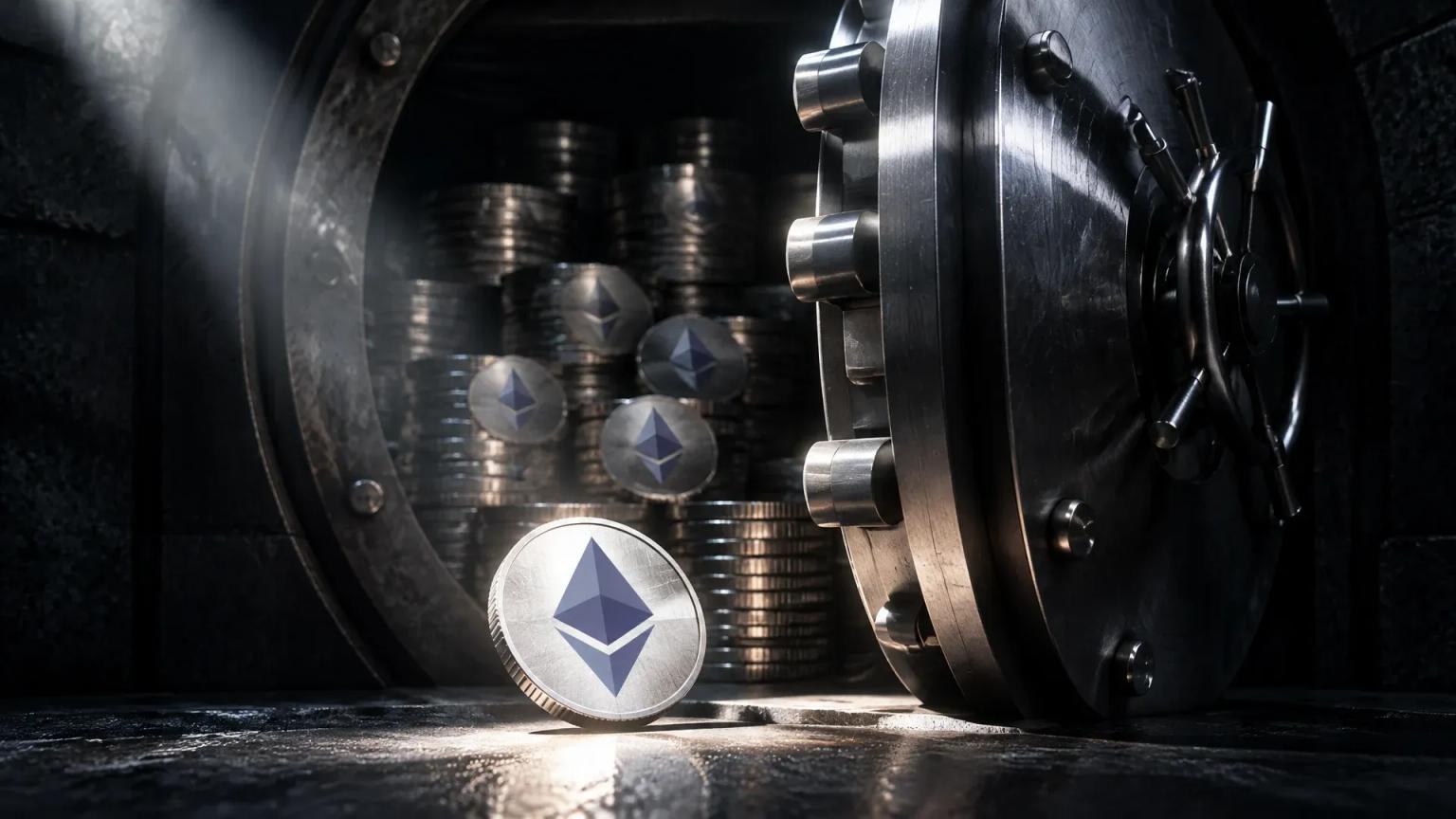
Ethereum price prediction: Buterin bets on store of value as Bitmine adds 9,587 ETH
Analysis: Vitalik Buterin wants Ether valued as a store of value rather than a fee-burning token, and Bitmine now holds 4.97 percent of all ETH. Why the price still sits below the 200-day moving average at $2,154 and which levels matter until Friday's expiry.
November 9, 2026 3:15 PM

Solana price prediction: OKX open interest up 24 percent as SOL breaks below its 200-day average
Analysis: OKX traders hold 24 percent more SOL in open contracts than two weeks ago, even though the price has fallen to $87. What that leverage means for the $85 level, and how leveraged gains are taxed in Germany.
November 8, 2026 7:15 PM

Ethereum Price Prediction: 2,982 New ETH in a Day, Only 10 Burned
Analysis: Ethereum's fee burn has almost died out, and supply is growing by 0.86 percent a year. What that means for the price, staking yield and tax, and which levels matter now.

November 6, 2026 7:17 PM

Ethereum price prediction: 986,847 ETH queue to stake while only 4,320 ETH wait to exit
Close to one million ether is waiting to enter staking, while only 4,320 ETH want out. What that ratio says about ether at $2,229, which levels matter until the end of November and what stakers in Germany need to know about tax.
November 5, 2026 12:07 PM

Ethereum Price Prediction: 77,441 Puts for November 13, Then the Options Market Flips
Ether just gained 5.5 percent, yet the options market is split: for November 13 there are three times as many puts as calls, for November 27 twice as many calls as puts. What that means and which levels count now.
November 4, 2026 7:23 PM

Ether ETF buyers sit at an average of $3,200: the Ethereum price levels that count until then
Analysis: According to an estimate by Bloomberg Intelligence, buyers of the US Ether ETFs paid just under $3,200 on average, while Ether trades at $2,425 after the election jump. We recalculate the funds' paper loss, put the outflows in context and show which levels count on the way to the cost basis.
November 4, 2026 5:20 PM

Ethereum price jumps above $2,400: why Ether is outpacing Bitcoin after the US midterms
Ether (ETH) has recovered almost 8 percent in twelve hours from its US election-night low and is rising faster than Bitcoin (BTC). What is driving the move, which chart levels matter now and what investors in Germany should consider on buying, tax and custody.
November 4, 2026 11:18 AM
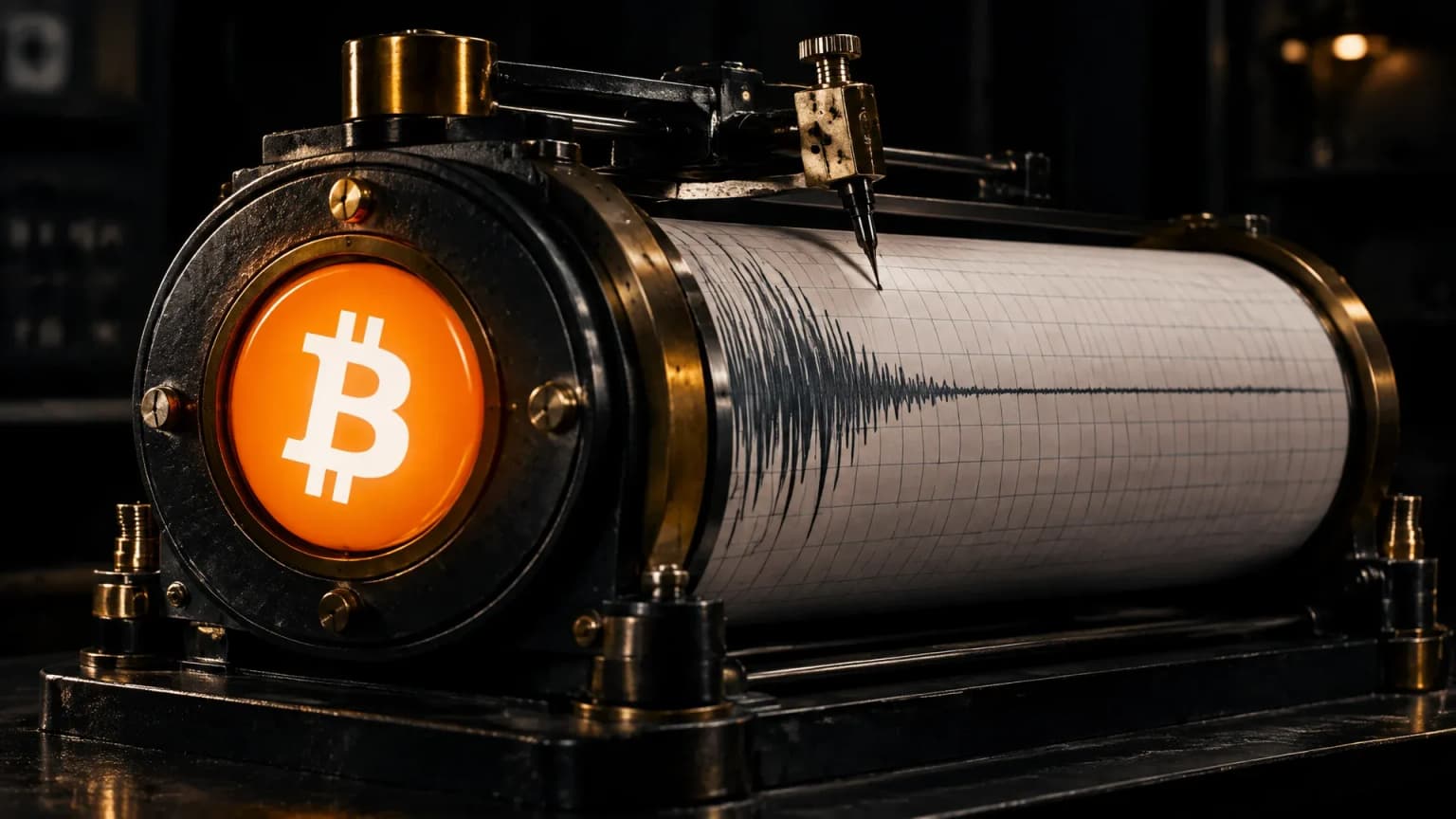
Bitcoin price prediction: DVOL drops to 37 after the election, will the 100-day line hold?
Analysis: after the US election night, the DVOL volatility index has fallen from 40.89 to 37.03 points. What the options market expects for the 100-day line at $76,663 ahead of Friday's $2.46 billion expiry.

November 3, 2026 8:59 AM
Ethereum Price Below $2,300: Is $2,000 Next or Is This the Bottom?
Ethereum price slips toward $2,250 as $3 billion leaves DeFi. Whales are buying the dip. Does ETH hold $2,200 or test $2,000 next?
November 2, 2026 6:01 PM

Hyperliquid: why HYPE is up 13 percent while Binance pauses withdrawals
HYPE trades at $89.42, up around 13 percent, while bitcoin loses 4.1 percent and ether 5.3 percent. The trigger is the withdrawal halt at Binance: we counted all 235 markets on Hyperliquid and show what the inflow really means for volume, open interest and funding costs.
October 29, 2026 12:35 PM

21 million dollars in the SHIB futures market: the level that decides
Analysis: the futures market for Shiba Inu holds 21.1 million dollars across four exchanges, 0.74 percent of market value. The positions are documented; we set out what they mean for the price.
October 28, 2026 9:27 PM

Ethereum staking at 2.63 percent: what investors need to know
Analysis: the Fed left the policy rate at 3.75 to 4.00 percent on Wednesday evening, and two members even wanted a hike. For Ether this decision counts for more than it does for Bitcoin, because the staking yield of 2.63 percent competes directly against the money-market rate.
October 26, 2026 9:32 PM
Ethereum price prediction: the 200-day line is the level that decides
Analysis: Ethereum trades at $2,308 on Monday evening and falls for the fourth day in a row, below the 200-day average of $2,329 for the first time since August 20. Price, averages and the Fed date on Wednesday are documented; the editorial team's assessment stands separately in the text.
October 25, 2026 1:21 AM

XRP price prediction: why 4.8 percent open leverage cushions the fall
XRP sits on its 100-day average on Saturday evening. Only 4.8 percent of its market capitalisation is held in open leveraged positions on the futures market, against more than three times that for Ethereum and Solana.
October 22, 2026 10:13 PM

Solana price prediction: 2.57 long accounts per short as $12.9 million leaves the futures market
Solana's futures market lost $12.9 million in open interest within a day, yet the long ratio holds at 2.57 accounts per short. What that means for the $100 level, and how to work out your own liquidation distance.
October 16, 2026 1:32 AM

US producer prices at 6.3 percent: the $80,000 level decides the leverage question up to October 28
US producer prices rose 1.3 percent on the month and 6.3 percent on the year in September, running well above consumer prices. Bitcoin fell to just under $80,000 while the probability of a rate rise on October 28 jumped from 22 to 47 percent within a day and fell back to 26 percent.
October 15, 2026 10:13 PM

NEAR up 9 percent, and longs pay in 74 of 86 perp markets: What it means for your coins
NEAR trades at around $5.26 on October 15, 2026 and gains 9.25 percent, while Bitcoin adds only 0.96 percent. Our own survey of 86 perpetual markets shows the buy side paying for its position in 74 of them.
October 15, 2026 1:34 PM

$489 million in liquidations in one hour: where your leverage breaks first
Forced closures wiped out around $489 million within one hour on 15 October 2026, more than half the daily total of $942 million. Our analysis of OKX futures market data shows why Ether was hit harder than Bitcoin.
October 14, 2026 10:30 PM

Solana price at $103.82 with 12 percent fewer open futures positions: will the $100 level hold?
Solana traded at $103.82 on Wednesday evening, only 3.7 percent above the $100 mark. On the futures market, open positions have shrunk by 12.1 percent within a week, and the funding rate has tipped to zero.
October 14, 2026 4:44 PM

Ethereum price at $2,417 after 3.7 percent US inflation breaks the $2,495 level
The American inflation rate rose to 3.7 percent in September, above expectations. Ethereum slipped below the $2,495 level that had held twice this week.
October 10, 2026 7:30 PM

Bitcoin Price Prediction: 140,844 BTC Expire on October 30, and What Matters Now at $80,000
On October 30, 140,844 Bitcoin contracts worth $11.69 billion run out, and two thirds of them are bets on higher prices. At both expiry dates the largest hedge sits at $80,000.
September 26, 2026 1:02 PM
Ethereum Price Prediction: ETH Defends Key Support, Is $3,000 Next?
Ethereum is consolidating near $2,700 after a rejection at $2,800. Our Ethereum price prediction looks at what ETH needs for a run at $3,000.
September 22, 2026 4:12 AM

Open Interest Climbs After the Short Squeeze: Why the Longs Are Paying Now
The short squeeze of September 21 wiped out $648 million in bearish bets, yet open interest rose instead of falling. A survey of our own across four exchanges shows the funding rate is positive on 24 of the 25 largest bitcoin perpetuals.
September 9, 2026 1:26 PM

Bitcoin Options Expiry of September 25: What Holders of Leveraged Positions Should Know in Hindsight
Recap as of September 27, 2026: Bitcoin options worth $14.39 billion were due to expire on September 25, alongside Ether options worth $1.81 billion. This article describes the situation before that date, our own count of the derivatives market and what holders of leveraged positions should have checked at the time.
More from CryptoTicker