
Dogecoin ETF Discontinued: Why Bitwise Is Closing BWOW and What Counts in Europe
Bitwise is winding up its Dogecoin ETF: trading ends on October 14, 2026 and the cash payout follows on October 22. Why the product failed for lack of demand, and what is actually tradable for you in Europe.


Which topics should we dive deeper into?
Select what genuinely interests you. Your picks feed directly into our editorial planning.
Crypto news that's actually worth your time.
Weekly. 60 seconds. Carefully curated by our editors: no hype, no promo flood, no spam.
Bitwise is closing its Dogecoin ETF. The fund trading under the ticker BWOW is being wound up: the last trading day on NYSE Arca is October 14, 2026, and anyone who has not sold their shares by then will receive the cash equivalent on October 22, 2026. The provider announced this on September 10, 2026 at 3:28 p.m. New York time.
For most European readers this is not a portfolio question but a market question. BWOW was a US product that a retail investor could not normally reach through a European broker at all. The episode is interesting all the same, because it answers a question that has been hanging over the altcoin funds since they launched: is it enough for a crypto product to be approved and tradable for it to actually be bought? For this fund the answer is demonstrably no. And something practical follows from that for you, whether you buy Dogecoin through a securities wrapper or directly at a crypto exchange.
What “Dogecoin ETF discontinued” means: the three Bitwise dates
Bitwise Investment Advisers, the fund's sponsor, resolved on the liquidation with effect from September 10, 2026. Three dates structure the process, and they appear verbatim in the provider's announcement.
October 14, 2026: the last trading day on NYSE Arca. Until the close on that day, shareholders can sell their shares on the secondary market, that is, on the exchange to another buyer. The same day the fund converts its Dogecoin holdings into cash. After the close it ceases operations.
October 15, 2026: before the opening bell, the creation of new BWOW shares ends. That is the mechanism through which an exchange-traded fund grows; take it away and the product can only shrink.
October 22, 2026: remaining shareholders receive the net asset value of their shares, calculated as of October 21, paid out in cash. Net asset value, usually abbreviated NAV, is the fund's assets divided by the number of shares outstanding, in other words the arithmetic value of a single share.
Bitwise adds one sentence that matters more than it sounds: “Shareholders do not need to take any action during this process.” No application is required; the wind-up runs automatically. Anyone who would rather sell than be paid out, though, has to act by October 14.
Why Bitwise is closing the Dogecoin ETF: 722,000 dollars in fund assets
The official reasoning is brief. Bitwise says it is liquidating the fund “as it continues to optimize its product range to meet evolving investor needs”. The company expressly does not cite trading volume, fund size or outflows as the reason. That reticence is standard in the industry and no reproach in itself.
The fund's figures are public, however, and they are clear. The trade publication Cryptopolitan compiled them on September 11, drawing on the fund documents as well as data from The Block, SoSoValue and ETF.com. According to those, on September 8, 2026 BWOW held assets of around 722,000 US dollars (721,815 dollars precisely) and roughly 8.2 million DOGE. For comparison: Bitwise says it manages around 9 billion US dollars in client money.
The decline can be traced quarter by quarter. At the end of 2025 the fund reported net assets of 1.15 million US dollars; by June 30, 2026 it was 473,547 dollars. In the first half of 2026, according to these documents, no new shares were created while 20,000 shares were redeemed. Cumulative performance since inception stood at minus 45.37 percent in the August monthly data. Part of that is simply how Dogecoin traded over the same period, not a flaw in the product.
Trading stayed thin as well. In its opening week BWOW reached around 3 million US dollars in daily turnover and never came close to that figure again. Bitwise announced the fund on November 25, 2025; trading began on November 26.
What is happening to Dogecoin right now: price, market cap and ETF outflows
The coin itself is technically untouched by the fund closure. Dogecoin traded at around 0.0836 US dollars on September 11, 2026, with a market capitalisation of roughly 14.3 billion US dollars, ranking twelfth among the largest cryptocurrencies, according to Coinpaprika. On the day it was down a good 2 percent. The all-time high of around 0.753 US dollars dates from May 8, 2021 and is therefore more than five years old.
More telling than the daily price is demand through the fund wrapper. Over the preceding 30 days the three US Dogecoin funds together recorded around 670,530 US dollars in net outflows, according to the SoSoValue data cited by Cryptopolitan. Cumulative net inflows since inception added up to a mere 11.77 million US dollars. Across all US Dogecoin products, cumulative trading volume to September 10 came to about 300 million US dollars.
Liquidation explained: what happens to the shares between October 14 and 22
Liquidation at an exchange-traded fund means the fund's assets are sold and the proceeds distributed to shareholders. The fund disappears, the money does not. That is precisely what separates an orderly fund closure from an insolvency, where creditors are served and investors stand in line.
In practice two routes run side by side. Sell on the exchange by October 14 and you get the market price a buyer is paying at that moment. That price can deviate from net asset value in either direction, and with a thinly traded product the deviation tends to be larger. Don't sell, and on October 22 you are wired the NAV as of October 21, carrying the full Dogecoin price risk until then.
Bitwise says it has coordinated the wind-up with the NYSE so that delisting and liquidation proceed in an orderly fashion. The company also filed a Form 8-K with the US securities regulator SEC, according to Cryptopolitan: the mandatory disclosure for material events at a listed issuer.

Why BWOW mostly does not concern you as a European investor
Some context matters here, so that this news does not turn into false urgency. BWOW is a US trust under American securities law, not a fund set up under European rules. For distribution to retail investors in the EU it lacks the key information document required by the PRIIPs regulation, that three-page mandatory document without which a broker may not sell a packaged investment product to retail clients in Europe.
Concretely that means BWOW was, as a rule, not available through a European securities account at a local crypto broker. Those affected are above all investors holding through a US broker. If you are unsure whether that includes you, a sober look at your portfolio overview settles it: no BWOW listed there, and the matter is closed for you.
ETF, ETP and ETN: the difference that counts for a European portfolio
Because the terms get muddled in everyday use, a clean separation is worth the space. An ETF is an exchange-traded investment fund whose assets are legally segregated from the assets of the fund company. An ETP is the umbrella term for exchange-traded products as a whole. An ETN, finally, is an exchange-traded note, that is, a claim against the issuer.
For cryptocurrencies this is not hair-splitting. In Europe, individual coins cannot be packaged as a classic UCITS fund for regulatory reasons, because such a fund has to diversify broadly. That is why local products come almost without exception as collateralised bearer notes: legally you hold a claim that is backed by deposited crypto holdings. If the issuer fails, the collateral is what protects you, not the segregation of fund assets.
Alongside that stands the direct route, where you hold the coins yourself, in your own wallet or at an exchange. Choosing between these routes is a trade-off between portfolio convenience and self-custody, and it has tangible consequences for fees, taxes and for whom you are trusting when it matters.
The 21Shares Dogecoin ETP: what is tradable in Europe and what it costs
Anyone in Europe wanting exposure to Dogecoin through a securities account currently ends up, in practice, at the 21Shares Dogecoin ETP with the ISIN CH1431521033 and the German securities number A4A5WJ. The key data come from the product profile at justETF.
The product was launched in Switzerland on April 8, 2025 and tracks the performance of Dogecoin through a bearer note collateralised with corresponding crypto holdings. Replication is physical and income is accumulated, that is, retained in the product rather than distributed. Fund assets come to around 9 million euros, and the paper is eligible for savings plans.
The most important item sits in the line below: the total expense ratio is 2.50 percent a year. This ongoing fee, usually referred to as the TER, is taken out of the product's value day by day, regardless of whether the price rises or falls. On an investment of 1,000 euros that works out at 25 euros a year for the wrapper alone. It is a multiple of what broadly diversified equity ETFs cost, and it is the price of the convenience of holding a coin in your familiar portfolio. Whether that is worth it depends on how long you intend to hold and how high the fees are on the alternative; a look at an exchange comparison answers the second half of that question.
One note on scale that fits this article's theme: 9 million euros is not an unusual figure for a European crypto ETP, but nor is it a comfortable one. Anyone taking the lesson of BWOW seriously keeps an eye on their product's fund size instead of glancing at it once at purchase.
Approval is not demand: what the SEC listing standards changed in September 2025
The backdrop to the flood of products in recent months is a rule change. On September 17, 2025 the US regulator SEC approved generic listing standards for exchange-traded commodity and trust shares. Since then not every single product needs its own rule-change procedure; if a fund meets the criteria, it can be listed.
That has noticeably increased the number of filings and launches and shortened the time to listing. It has changed nothing about demand. This is exactly the gap that the BWOW closure makes visible: a product can clear every hurdle, list on one of the world's largest exchanges, be reachable through every major US broker, and still be discontinued after ten months for lack of interest.

Where the ETF money went instead: Hyperliquid, Zcash and Chainlink
The figures from the Cryptopolitan analysis allow a comparison within the same product class, and it is unambiguous. To September 10, 2026 the US Dogecoin products reached around 300 million US dollars in cumulative trading volume. Products on Hyperliquid stood at about 2.1 billion over the same period, Zcash products at around 1.5 billion and Chainlink funds at roughly 680 million.
Inflows show the same picture in a different currency. According to estimates compiled by ETF.com and quoted by Cryptopolitan, Solana spot products gathered almost 880 million US dollars in total and XRP products around a billion. Cumulative net inflows across all three US Dogecoin funds came to 11.77 million dollars by contrast.
Putting those numbers in context belongs to the job: they are snapshots from third-party sources, not audited annual accounts, and they measure trading activity and fund flows, not the quality of a network. What they show reliably is a ranking of institutional interest as of the reporting date.

What the closure says about memecoins as an investment product
Dogecoin is the oldest and best known memecoin, meaning a cryptocurrency whose value derives largely from recognition and community rather than from a technical application. At rank twelve and a good 14 billion US dollars in market capitalisation, the coin is anything but a footnote.
That is exactly what makes the finding interesting. A large, visible and loud following evidently does not translate automatically into demand through a securities account. The people who trade Dogecoin mostly do so where they already are: on crypto exchanges, in wallets, through apps. Too little was left over for the route through a fund wrapper with an annual fee.
No verdict on the coin follows from this, and certainly no forecast for its price. What follows is a sober observation about distribution channels: with Dogecoin, demand sits in the crypto-native channel, while for other assets it migrates more strongly into the regulated securities world.
Tax: why a cash settlement can work like a sale
Caution is in order here, in two directions. According to Cryptopolitan's account, the SEC filing notes that the distributions are taxable events. That statement refers to US tax law and to US shareholders. The Bitwise press release itself says nothing about tax treatment; I checked it expressly on that point.
Nothing can be derived from it for taxation in Europe, and I am not claiming anything here either. The general mechanism is no secret, though: when a fund is wound up and you receive a cash payment, your position ends, and an ended position is as a rule a disposal for tax purposes. How it is classified in your specific case depends on the product type, the location of your account and your personal circumstances.
In practice that means: if a wind-up does affect you, collect the settlement statement and the provider's notice for your tax records, and clarify the classification with your tax adviser. Anyone wanting to keep track of many transactions will find suitable support in a specialised tax tool. This article is not tax advice.
How to spot that a crypto product is heading for closure
The warning signs at BWOW sat openly in the documents for months. These patterns transfer to any exchange-traded crypto product you hold.
The first sign is shrinking fund assets. At the Bitwise product, net assets fell from 1.15 million to 473,547 US dollars within six months. Every provider publishes this figure, usually updated daily on the product page.
The second sign is an absence of share creations. In the first half of 2026 not a single new BWOW share was added, while shares were redeemed. A product no fresh money flows into has its growth behind it.
The third sign is thin exchange trading. After an opening week of around 3 million US dollars in daily turnover, the fund never reached that level again. For you as an investor that is doubly unpleasant, because thin trading widens the gap between bid and ask and makes every exit more expensive.
A fourth point concerns the provider's communication: when a product is pulled from marketing material and product overviews, that is often the harbinger. Check these metrics once a quarter and a wind-up will not take you by surprise; you can decide at your own pace instead.
Dogecoin ETF discontinued: what to take away
- Check whether this affects you at all. BWOW is a US product without a PRIIPs key information document and was as a rule not available through European portfolios. If the ticker is not in your portfolio overview, you need do nothing. Anyone holding through a US broker has until October 14, 2026 to choose between selling themselves and the automatic cash payout on October 22. Which providers come into question for the securities route is shown in the crypto broker comparison.
- Compare the cost of your wrapper against the direct route. The Dogecoin ETP tradable in Europe carries an ongoing fee of 2.50 percent a year. Weigh that amount against the fees and effort of buying directly before you settle on a route; the terms offered by the trading venues are in the crypto exchange comparison.
- Keep an eye on fund assets and trading turnover. Shrinking assets, absent share creation and thin trading were readable at BWOW for months. Put a quarterly date in the calendar for that check, and file the statements from any wind-up for tax purposes straight away, for which a portfolio tracker is well suited.
One closing point of context, because it tends to get lost in the excitement around individual products: a fund closure is not a default and not a loss of your money. The process is an orderly retreat in which the assets are sold and paid out. A wind-up only becomes unpleasant when it catches you unprepared and forces you to exit at a bad moment. The story of the first altcoin funds can thus be carried a little further: we covered the launch of the Dogecoin ETF in September 2025, and this is now the other end of the same story.
(As of September 11, 2026. This article is not investment advice. Prices and fee structures change; check the terms with the provider before you buy.)
Sources: press release from Bitwise Investment Advisers of September 10, 2026 on the liquidation of the Bitwise Dogecoin ETF, published via PR Newswire; product profile of the 21Shares Dogecoin ETP (ISIN CH1431521033) at justETF; analysis of the fund data by Cryptopolitan of September 11, 2026 citing The Block, SoSoValue and ETF.com; own price reading at Coinpaprika on September 11, 2026.
Partner links: some links on this page are partner links. If you become a customer through one of them, we may earn a commission at no extra cost to you. Selection, ratings and ranking are decided independently by our editorial team. Ethics and Independence · Ownership and Funding
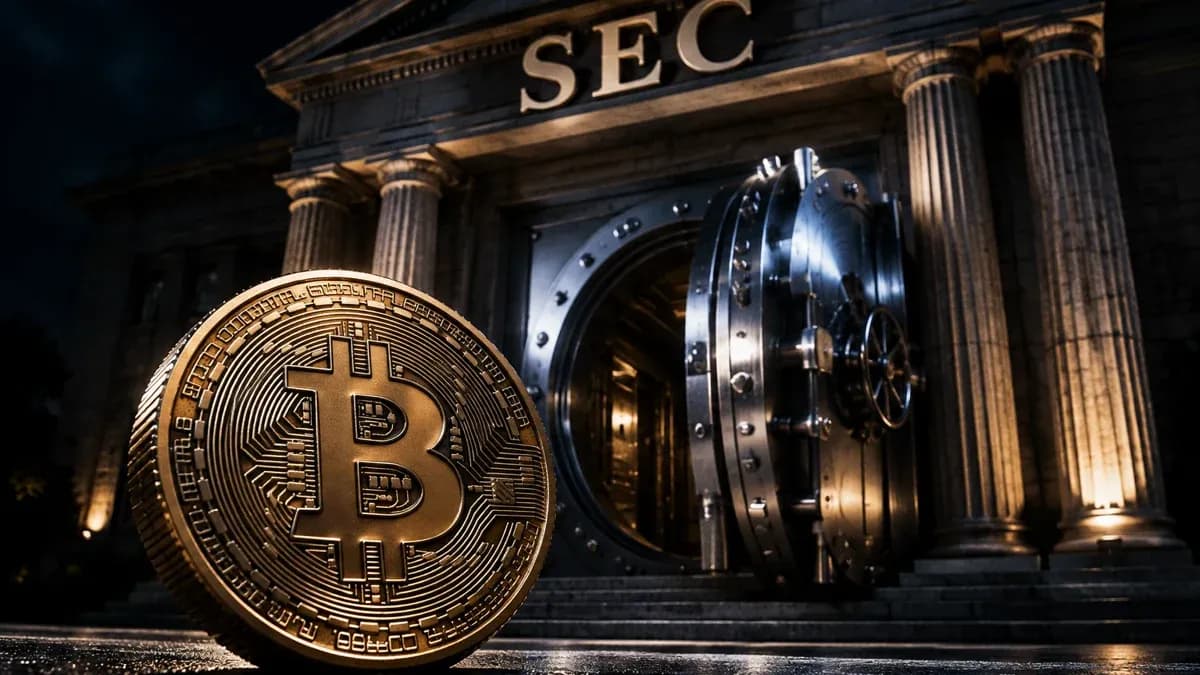
Transparency note: This article was produced with the assistance of artificial intelligence and reviewed by our editorial team before publication. All figures and claims were checked against the primary sources linked in the text. The feature image was generated with AI.
Related articles
- Dogecoin whales sell 750 million DOGE as the price clings to $0.068
- Dogecoin news: 21Shares ends House of Doge's service contract for the TDOG ETF
- House of Doge loses its Nasdaq listing: why the Dogecoin price barely moves at $0.075
- Grayscale files for a Bittensor ETF, with no launch date in the filing
- Dogecoin funding rate at 7.4 percent a year: the next step
Which topics should we dive deeper into?
Select what genuinely interests you. Your picks feed directly into our editorial planning.
Crypto news that's actually worth your time.
Weekly. 60 seconds. Carefully curated by our editors: no hype, no promo flood, no spam.

October 25, 2026 3:15 PM
Dogecoin trademark deal ends: does the 21Shares ETP keep the name?
The exclusive trademark agreement between the Dogecoin Foundation and House of Doge has been over since October 19. Three 21Shares products may keep the name, among them the ETP that trades in euros on Xetra. An exit payment of $400,000 is still outstanding.
October 20, 2026 1:33 PM
60.6 percent down in twelve months and only 12th by market value: what to check before your purchase anniversary
Dogecoin has lost 60.6 percent over twelve months, more than twice as much as Bitcoin, and now ranks only 12th by market value. For investors in Germany the calendar matters more than the next price level: the anniversary of the purchase decides whether a gain stays tax free and whether a loss still counts at all.

October 17, 2026 1:26 PM
Dogecoin: Bitwise pays out in cash on 22 October, what it means for your coins
The Dogecoin fund BWOW is being wound down, and on 22 October the money reaches the last shareholders. What is left of the US fund market, and why in Germany it is the product wrapper that decides the tax.
October 16, 2026 7:16 AM

Staking ETF: the SEC must decide by November 15, and Europe has had the product since January
The SEC has until November 15, 2026 to rule on the first American fund on a liquid staking token, and it can no longer delay. In Europe the same product has been on the shelf since January, with assets of $1.19 million.
October 15, 2026 4:26 PM

Polkadot ETF holds $11.57 million: the US fund vs the European ETP
The first American spot fund on DOT manages $11.57 million after seven months and trades $111,586 in a day, which is 0.069 percent of the spot market. Investors in Germany cannot buy it, and the route that is open to them costs eight times as much.
October 14, 2026 1:19 PM

Solana ETF in Hong Kong at 0.6 percent: what changes for European investors
Hong Kong has launched its second spot ETF on Solana at a management fee of 0.6 percent. You cannot buy it from Europe, but the number throws light on European costs: on Xetra, a full percentage point a year separates two Solana wrappers.
October 13, 2026 7:27 PM
Dogecoin is missing from the new CME index while Chainlink is in, despite being a third larger
Dogecoin trades at $0.0848 on Tuesday afternoon and, at $13.2 billion, is markedly larger than Chainlink. In the new emerging index from CME and CF Benchmarks, Chainlink is in all the same and Dogecoin is not. Why that is, what the usage filter behind it measures, and what follows from it for holders in Germany.
October 12, 2026 4:17 PM
Dogecoin custody: 144.8 million DOGE across two custodians, and what changes for ETP holders
The largest remaining Dogecoin fund in the United States has kept its coins in two places rather than one since this month. For anyone holding a German Dogecoin ETP the question underneath is the same: who holds the keys, and what does the fund wrapper cost per year?

October 10, 2026 10:33 AM

Dogecoin at $0.0862 and Bitwise Winds Down Its DOGE ETF on 14 October: Why That Barely Moves the Price
Bitwise is winding down its Dogecoin ETF BWOW: trading ends on 14 October and the money flows on 22 October. The holding amounts to 0.14 percent of one trading day. What that means for the price and why the German route runs through an ETP costing 2.50 percent a year.
October 8, 2026 1:26 PM
Bitcoin ETFs Lose $487 Million in a Single Day: the Reasons Behind the Outflow
Around $487 million flowed out of the US spot ETFs on Bitcoin on net on October 7, 2026, while the price tests the zone around $82,000. What the figure actually measures, why two data providers give two daily values, and what investors in Germany should check on an ETP.
October 7, 2026 1:18 PM

2,598 dollars and a sixth day of ETF outflows: will Ethereum hold the 2,500 line?
The Ethereum price stands at $2,598 on Wednesday morning, 3.9 percent below the previous day, while the US spot ETFs report a sixth consecutive trading day of net outflows. This article shows which levels below still hold, how far your leverage sits from the liquidation price, and what the German one-year rule under section 23 of the Income Tax Act means for a sale at a loss.
October 7, 2026 7:18 AM

Certificate, Bitcoin ETN or the coin itself: what each route means for tax and custody
A Bitcoin certificate, an ETN and the coin itself all lead to the same price, but to three different tax treatments and three different risks. The comparison shows which route fits your portfolio and why December 31, 2026 becomes the cut-off date.
October 6, 2026 1:34 AM

93.56 million dollars out of the Zcash ETF in one week: what changes for ZEC holders in Europe
The Grayscale Zcash ETF lost money for the first time since launch in the week to October 5, 2026, a net $93.56 million. What the figure says about demand and what it means for ZEC holders in Europe.
October 5, 2026 1:40 AM

Crypto at comdirect: 29 certificates with no order fee in a savings plan, but not a single coin
comdirect puts crypto into your securities account as a certificate, not as a coin. Our count of October 4, 2026 shows 29 securities from five issuers on 12 cryptocurrencies. On a one-off purchase the minimum fee of 9.90 euros amounts to 9.90 percent on 100 euros invested; in a savings plan the 1.5 percent is waived until the end of 2027.
October 4, 2026 10:14 AM

Dogecoin price at $0.0929: why the 200-day line sits at $0.0878 and not at $0.093
Dogecoin trades at $0.0929 on Sunday morning. Market reports put the 200-day line at around $0.093; recalculated from 366 daily closes it sits at $0.0878. Two October dates that matter for investors in Germany run alongside it.
October 4, 2026 4:15 AM

SEC clears six 3x leveraged Bitcoin and Ether ETPs: how to check the daily math
The SEC approved the listing of six triple-leveraged exchange-traded products on October 2, 2026, among them the first ones on bitcoin and ether. Nothing trades yet, and for German accounts a separate hurdle applies.
October 3, 2026 1:41 PM

Dogecoin Price Prediction: $0.10 as the Ceiling, and What to Watch at a 2.5 Percent ETP Fee
Dogecoin trades at $0.0927 on October 3 and therefore sits on its 200-day average. More important than the mark at $0.10 is the route question for German investors: a 2.50 percent fee in the Xetra ETP against the one-year holding period on a direct purchase.
October 2, 2026 10:17 PM
Dogecoin breaks below $0.093: the BWOW fund turns every DOGE into cash on October 14
Dogecoin costs $0.0914 on Friday evening and has lost 3.4 percent in 24 hours. On October 14 the US fund BWOW sells its entire holding, and on the same day the German cabinet takes up the reform of crypto taxation.
October 1, 2026 11:19 AM

Dogecoin at $0.0946: the level that decides before the ETF closes on October 14
Dogecoin stands at $0.0946 on October 1 and fails once again at the zone around $0.098. At the same time a deadline is running: the US ETF BWOW stops trading on October 14. For investors in Germany, though, it is not the fund that decides but the buying route between a direct purchase and a Xetra ETP.
October 1, 2026 1:13 AM

21Shares Pays Out Staking Income From Five Funds: US Distributions vs Xetra Accumulation
21Shares has paid staking income on five US staking funds, with September 30, 2026 as the pay date. The same house's European ETPs on Xetra distribute nothing at all, with consequences for fees, compounding and your tax return.
September 28, 2026 10:12 PM

Dogecoin Futures Hold $1.5 Billion in Open Leverage: What Investors Need to Know
The Dogecoin price fell 4.2 percent on Monday to $0.0932. What matters more is where it is set: $1.5 billion in leveraged positions sit open on the derivatives market, a good tenth of market capitalisation. What that means for leverage, liquidation distance and German tax.
September 26, 2026 4:28 AM
NEAR ETF NRR is approved: what you have to check in Germany instead
The SEC made the registration of the Bitwise NEAR ETF effective on September 24, and NYSE Arca approved the listing under the ticker NRR. The prospectus rules out distribution outside the United States, so these are the routes left to you in Germany.
September 24, 2026 4:22 AM

Options on Crypto ETFs: What the SEC Deadline on September 27 Means for Your ETP
A filing at the SEC would allow options on crypto ETFs through a rule test instead of case-by-case approvals. The regulator extended the September 27 deadline to November 11. Nothing changes in your European portfolio as a result, but the bid-ask spread of your ETP is something you can measure yourself.
September 23, 2026 1:12 AM

Zcash ETP: What to Check on Broker Access, Fees and Tax
The 21shares Zcash ETP (WKN A4AXHY) has traded on Euronext in Amsterdam and Paris since September 22, 2026. Here is what that means for your broker access, the running cost and the open tax question.
September 21, 2026 1:13 PM

Ethereum Rises While ETF Money Leaves: What ETH Holders Should Check Now
US ether funds lost $140 million in the week to September 18, ending four weeks of inflows. The ETH price still gained a good 5 percent.
September 14, 2026 7:12 PM

XRP ETF, Solana ETF, Ethereum ETF: What You Can Actually Buy in Germany
Spot ETFs on XRP, Solana and Ethereum trade in the United States, and your German broker does not carry them. This guide explains the two EU rules behind that, which security does the same job instead, and what to check on backing, delivery claim and costs.
August 21, 2026 7:30 AM

Crypto ETF Approval in the US: Why the SEC Is Rewriting Its Rules for Staking and Altcoin Funds
The US securities regulator has opened a proceeding that will help decide the next generation of crypto funds, and is putting 27 questions on the table. Anyone can file a comment until August 31, 2026, from Europe as much as from the United States.
More from CryptoTicker